Biochemistry
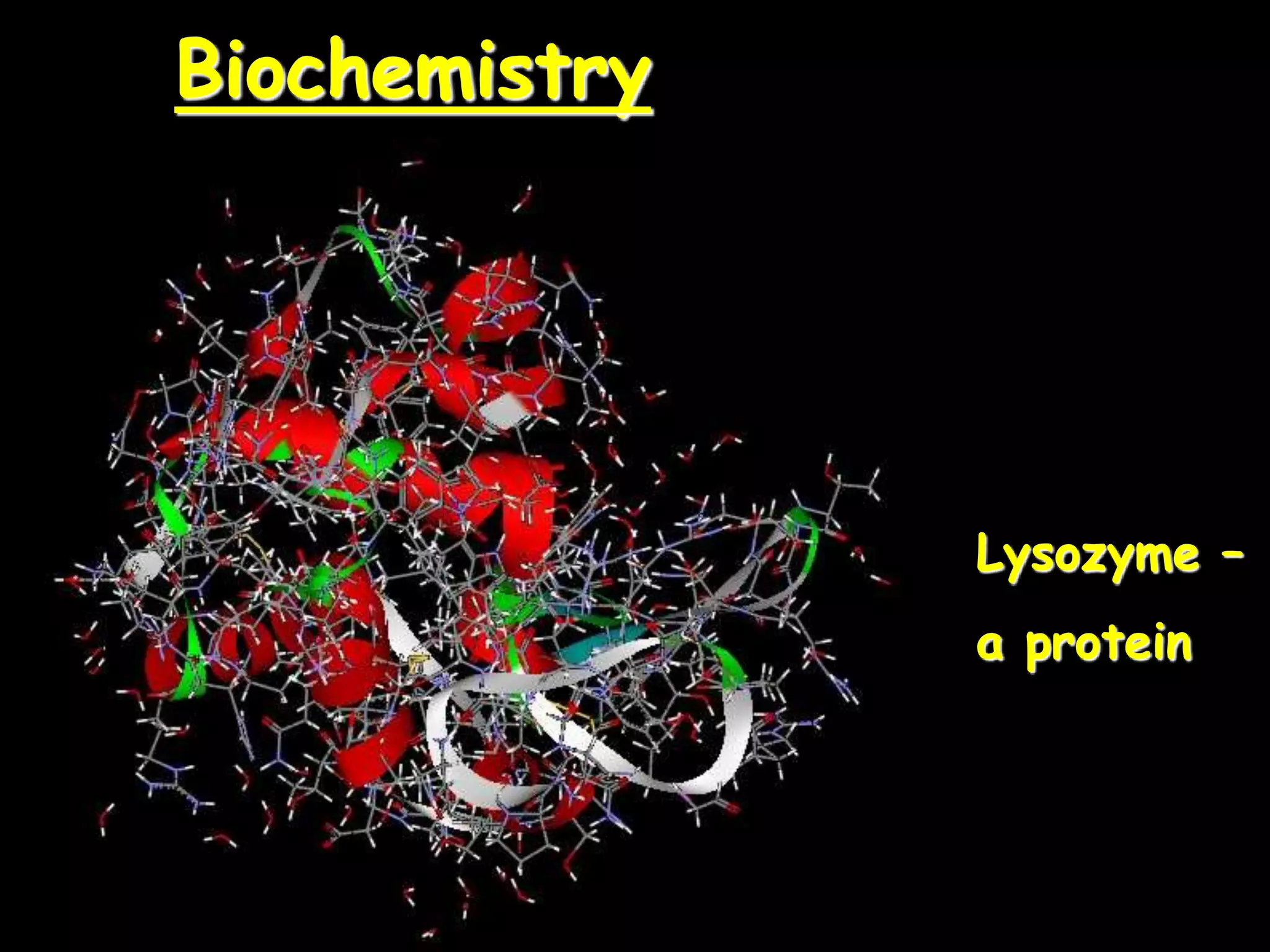
Lysozyme –
a protein
Chemical Bonds
Covalent bonds form between atoms
of nonmetals by sharing of electrons
- Molecules bond covalenty
Ionic bonds form between oppositely
charged ions after the transfer of
electrons
- Salts bond ionically
Organic Molecules
Organic molecules are molecules
composed of carbon and
hydrogen, and often containing
other elements such as
phosphorus, sulfur, oxygen and
nitrogen
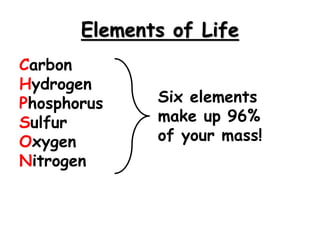
Elements of Life
Carbon
Hydrogen
Phosphorus
Sulfur
Oxygen
Nitrogen
Six elements
make up 96%
of your mass!
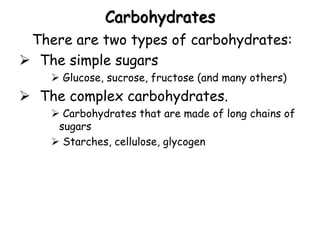
Carbohydrates
There are two types of carbohydrates:
 The simple sugars
 Glucose, sucrose, fructose (and many others)
 The complex carbohydrates.
 Carbohydrates that are made of long chains of
sugars
 Starches, cellulose, glycogen
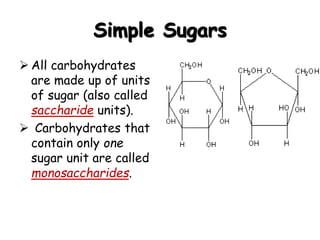
Simple Sugars
 All carbohydrates
are made up of units
of sugar (also called
saccharide units).
 Carbohydrates that
contain only one
sugar unit are called
monosaccharides.
Glucose Fructose
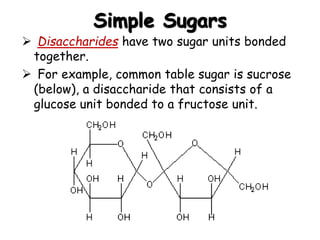
Simple Sugars
 Disaccharides have two sugar units bonded
together.
 For example, common table sugar is sucrose
(below), a disaccharide that consists of a
glucose unit bonded to a fructose unit.
Complex Carbohydrates
 Complex carbohydrates are polymers of
the simple sugars.
 In other words, the complex
carbohydrates are long chains of simple
sugar units bonded together.
 For this reason the complex
carbohydrates are often referred to as
polysaccharides.
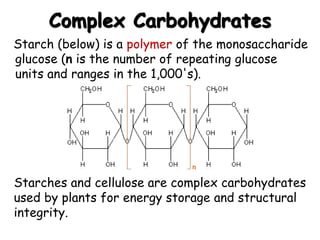
Complex Carbohydrates
Starch (below) is a polymer of the monosaccharide
glucose (n is the number of repeating glucose
units and ranges in the 1,000's).
Starches and cellulose are complex carbohydrates
used by plants for energy storage and structural
integrity.
Complex Carbohydrates
Glycogen, another polymer of glucose, is a
polysaccharide used by animals to store energy.
Both starch and glycogen are polymers of
glucose.
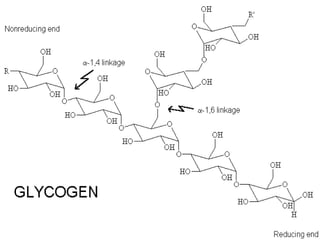
Starch is a long, straight chain of glucose units,
whereas glycogen is a branched chain of glucose
units.
Structure of Glycogen
Proteins
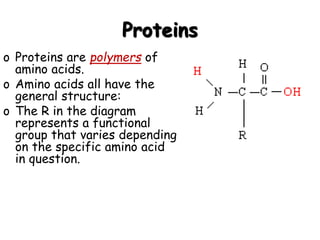
o Proteins are polymers of
amino acids.
o Amino acids all have the
general structure:
o The R in the diagram
represents a functional
group that varies depending
on the specific amino acid
in question.
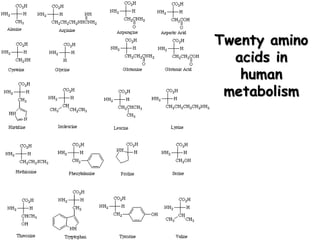
Twenty amino
acids in
human
metabolism
Proteins
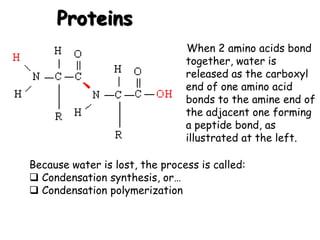
When 2 amino acids bond
together, water is
released as the carboxyl
end of one amino acid
bonds to the amine end of
the adjacent one forming
a peptide bond, as
illustrated at the left.
Because water is lost, the process is called:
 Condensation synthesis, or…
 Condensation polymerization
Proteins
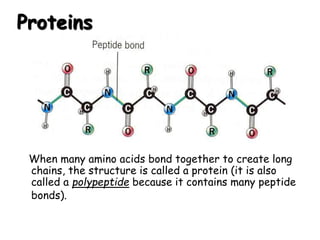
When many amino acids bond together to create long
chains, the structure is called a protein (it is also
called a polypeptide because it contains many peptide
bonds).
Proteins
 Proteins are large molecules that may
consist of hundreds, or even thousands
of amino acids.
 Proteins are important in cell structure,
as enzymes, which speed up reactions in
the body, and as antibodies which fight
infection
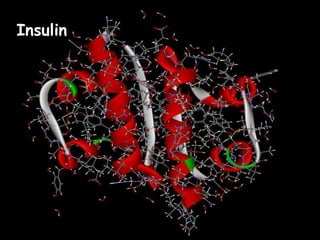
Insulin
Fats
Fats are a sub-group of compounds
known as lipids that are found in the
body and have the general property of
being hydrophobic (meaning they are
insoluble in water).
Other lipids include waxes, and steroids,
such as cholesterol.
Fats
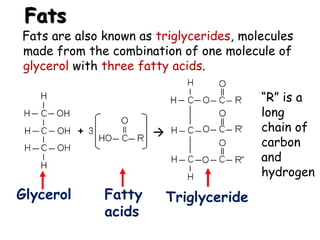
Fats are also known as triglycerides, molecules
made from the combination of one molecule of
glycerol with three fatty acids.
Glycerol Fatty
acids
Triglyceride
“R” is a
long
chain of
carbon
and
hydrogen
Fats
 Fats are concentrated forms of
energy storage
 9 calories per gram
 Fats are components of cell
membranes

Biochem basics

  • 1.
  • 2.
    Chemical Bonds Covalent bondsform between atoms of nonmetals by sharing of electrons - Molecules bond covalenty Ionic bonds form between oppositely charged ions after the transfer of electrons - Salts bond ionically
  • 3.
    Organic Molecules Organic moleculesare molecules composed of carbon and hydrogen, and often containing other elements such as phosphorus, sulfur, oxygen and nitrogen
  • 4.
  • 5.
    Carbohydrates There are twotypes of carbohydrates:  The simple sugars  Glucose, sucrose, fructose (and many others)  The complex carbohydrates.  Carbohydrates that are made of long chains of sugars  Starches, cellulose, glycogen
  • 6.
    Simple Sugars  Allcarbohydrates are made up of units of sugar (also called saccharide units).  Carbohydrates that contain only one sugar unit are called monosaccharides. Glucose Fructose
  • 7.
    Simple Sugars  Disaccharideshave two sugar units bonded together.  For example, common table sugar is sucrose (below), a disaccharide that consists of a glucose unit bonded to a fructose unit.
  • 8.
    Complex Carbohydrates  Complexcarbohydrates are polymers of the simple sugars.  In other words, the complex carbohydrates are long chains of simple sugar units bonded together.  For this reason the complex carbohydrates are often referred to as polysaccharides.
  • 9.
    Complex Carbohydrates Starch (below)is a polymer of the monosaccharide glucose (n is the number of repeating glucose units and ranges in the 1,000's). Starches and cellulose are complex carbohydrates used by plants for energy storage and structural integrity.
  • 10.
    Complex Carbohydrates Glycogen, anotherpolymer of glucose, is a polysaccharide used by animals to store energy. Both starch and glycogen are polymers of glucose. Starch is a long, straight chain of glucose units, whereas glycogen is a branched chain of glucose units.
  • 11.
  • 12.
    Proteins o Proteins arepolymers of amino acids. o Amino acids all have the general structure: o The R in the diagram represents a functional group that varies depending on the specific amino acid in question.
  • 13.
  • 14.
    Proteins When 2 aminoacids bond together, water is released as the carboxyl end of one amino acid bonds to the amine end of the adjacent one forming a peptide bond, as illustrated at the left. Because water is lost, the process is called:  Condensation synthesis, or…  Condensation polymerization
  • 15.
    Proteins When many aminoacids bond together to create long chains, the structure is called a protein (it is also called a polypeptide because it contains many peptide bonds).
  • 16.
    Proteins  Proteins arelarge molecules that may consist of hundreds, or even thousands of amino acids.  Proteins are important in cell structure, as enzymes, which speed up reactions in the body, and as antibodies which fight infection
  • 17.
  • 18.
    Fats Fats are asub-group of compounds known as lipids that are found in the body and have the general property of being hydrophobic (meaning they are insoluble in water). Other lipids include waxes, and steroids, such as cholesterol.
  • 19.
    Fats Fats are alsoknown as triglycerides, molecules made from the combination of one molecule of glycerol with three fatty acids. Glycerol Fatty acids Triglyceride “R” is a long chain of carbon and hydrogen
  • 20.
    Fats  Fats areconcentrated forms of energy storage  9 calories per gram  Fats are components of cell membranes