z
Bioasssy/
Exposure of
toxicant
z
Bioassay
 It is defined as a test to evaluate the relative potential of a
chemical by comparing its effect on a living organism with that of
a standard preparation .
 It is performed to determine the strength of the chemical from
the degree of response included in the test organism and to
estimate the concentration of the chemical that is toxic to those
organisms a toxicity test is performed to measure the degree of
response produced by a specific level of stimulus that is to test
chemical concentration
z
Acute toxicity
 The toxicity that causes injury or that from a single or multiple
exposure over a short period of time usually 24 hours.
 It acute exposure organist can come in contact with the
chemical delivered in single event or in multiple event for
generally hours or days.
 Acute exposure of chemical toxic and also produce harmful
effects immediate to chronic exposure
z
Chronic toxicity
 In chronic exposure to organisms oftoxicconcentration
continuously over a long period of time that is week month or
year chronic toxicity test important tools for understanding in
evaluating the potential hazards to chemical to organise
bioessays mainly done for the two purple detection of polytene
and to determine the event of damage and ill effect
z
Procedure of bioassay
1. Selection of experimental animal
2. safe dose
3. mode of Administration
4. Duration
5. dissection
6. observation
7. conclusion
z
Selection of experimental animal
 The animal upon which experiment has to be
done is selected it should be easy to handle
or not too large or too big less body weight
should be there generally the animal selected
is B rattus norvegicus Albino rat
z
Safe dose
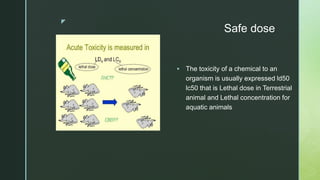
 The toxicity of a chemical to an
organism is usually expressed ld50
lc50 that is Lethal dose in Terrestrial
animal and Lethal concentration for
aquatic animals
z
LD50
 It is the amount of poison for Unit Weight of the organ use which
is required to kill 50% of the test population. It is generally
measured in MG or per kg of body weight therefore ld50 is the
dose required to kill 50% of the animal population
z
LC 50
 It is the concentration of a chemical that could produce a
mortality in 50% of population of their step of the test species it
is calculated in parts per million
z
Mode of Administration
 It is the stuff that the top of the
Cantor chemical is introduced into
the experimental animal by several
means that is oral inhalation
injection ingestion
z
Duration/ Time Period
 It is the time period for the action of public and that is expressed
by LT 50 Lethal time ld50 is the time required for 50% mortality
of test organism
z
Dissection
 The animal is dissected to see
effect of public and on the interior
body of the organs
z
Observation  Animal is observed for the estimation of
toxicity of chemical upon various vital organ
of the body.
 The conclusion that is made after
observation either the chemical is toxicant
or not
Conclusions
z
Application
 Bioassay are frequently used in the pharmaceutical industries to
evaluate the potential of drug and medicine
 Different organisms have been used to study the toxic effects of
the chemical exampleRats,rabbit and monkey .
 Bioassay test are used to estimate acute, subacute, chronic and
subchronic toxicity of Chemical on animals .
 To test toxicity or bioassay of aquatic animal is done by exposing
the toxicant for a definite period in the water
z
Dose response relationship
 Chemical that produce its response or its ill effect when its
concentration in tissues cells or organ attain some critical
minimum level.
 Rate of absorption it is the rate at which the toxic and is
absorbed by the organism inside his body
z
 Rate of expression it is the rate at which the toxic and is
removed from organised body through urine and excreta.
 detoxification the detoxification organ in mammal is liver which
contain cytochrome P450 oxidases, UDP glucuronosyltransferases
which help indetoxification and harmful substance in the
harmless chemical in body .
 hence the amount and rate at which the detoxification is done by
liver also an important factor of dose response relationship
z
 Distribution it means whether the toxicants is distributed in the
whole body or concentration in a particular body parts cell tissue
organ.
 tolerance it is the power of the organ is to with stand the effect
of toxic and for definite time period every organelles has
different body tolerance for different toxicant .
 concentration of dose It is the amount of those given to the
organelles that is quantity of the toxic and duration and time
period did the period for which the toxic and is given that is
acute or chronic

bioassay.pptx

  • 1.
  • 2.
    z Bioassay  It isdefined as a test to evaluate the relative potential of a chemical by comparing its effect on a living organism with that of a standard preparation .  It is performed to determine the strength of the chemical from the degree of response included in the test organism and to estimate the concentration of the chemical that is toxic to those organisms a toxicity test is performed to measure the degree of response produced by a specific level of stimulus that is to test chemical concentration
  • 3.
    z Acute toxicity  Thetoxicity that causes injury or that from a single or multiple exposure over a short period of time usually 24 hours.  It acute exposure organist can come in contact with the chemical delivered in single event or in multiple event for generally hours or days.  Acute exposure of chemical toxic and also produce harmful effects immediate to chronic exposure
  • 4.
    z Chronic toxicity  Inchronic exposure to organisms oftoxicconcentration continuously over a long period of time that is week month or year chronic toxicity test important tools for understanding in evaluating the potential hazards to chemical to organise bioessays mainly done for the two purple detection of polytene and to determine the event of damage and ill effect
  • 5.
    z Procedure of bioassay 1.Selection of experimental animal 2. safe dose 3. mode of Administration 4. Duration 5. dissection 6. observation 7. conclusion
  • 6.
    z Selection of experimentalanimal  The animal upon which experiment has to be done is selected it should be easy to handle or not too large or too big less body weight should be there generally the animal selected is B rattus norvegicus Albino rat
  • 7.
    z Safe dose  Thetoxicity of a chemical to an organism is usually expressed ld50 lc50 that is Lethal dose in Terrestrial animal and Lethal concentration for aquatic animals
  • 8.
    z LD50  It isthe amount of poison for Unit Weight of the organ use which is required to kill 50% of the test population. It is generally measured in MG or per kg of body weight therefore ld50 is the dose required to kill 50% of the animal population
  • 9.
    z LC 50  Itis the concentration of a chemical that could produce a mortality in 50% of population of their step of the test species it is calculated in parts per million
  • 10.
    z Mode of Administration It is the stuff that the top of the Cantor chemical is introduced into the experimental animal by several means that is oral inhalation injection ingestion
  • 11.
    z Duration/ Time Period It is the time period for the action of public and that is expressed by LT 50 Lethal time ld50 is the time required for 50% mortality of test organism
  • 12.
    z Dissection  The animalis dissected to see effect of public and on the interior body of the organs
  • 13.
    z Observation  Animalis observed for the estimation of toxicity of chemical upon various vital organ of the body.  The conclusion that is made after observation either the chemical is toxicant or not Conclusions
  • 14.
    z Application  Bioassay arefrequently used in the pharmaceutical industries to evaluate the potential of drug and medicine  Different organisms have been used to study the toxic effects of the chemical exampleRats,rabbit and monkey .  Bioassay test are used to estimate acute, subacute, chronic and subchronic toxicity of Chemical on animals .  To test toxicity or bioassay of aquatic animal is done by exposing the toxicant for a definite period in the water
  • 15.
    z Dose response relationship Chemical that produce its response or its ill effect when its concentration in tissues cells or organ attain some critical minimum level.  Rate of absorption it is the rate at which the toxic and is absorbed by the organism inside his body
  • 16.
    z  Rate ofexpression it is the rate at which the toxic and is removed from organised body through urine and excreta.  detoxification the detoxification organ in mammal is liver which contain cytochrome P450 oxidases, UDP glucuronosyltransferases which help indetoxification and harmful substance in the harmless chemical in body .  hence the amount and rate at which the detoxification is done by liver also an important factor of dose response relationship
  • 17.
    z  Distribution itmeans whether the toxicants is distributed in the whole body or concentration in a particular body parts cell tissue organ.  tolerance it is the power of the organ is to with stand the effect of toxic and for definite time period every organelles has different body tolerance for different toxicant .  concentration of dose It is the amount of those given to the organelles that is quantity of the toxic and duration and time period did the period for which the toxic and is given that is acute or chronic