1
Binomial Nomenclature
BY:
AJORIA BIBI
F22-1472
ZOOLOGY
(5TH
)
2
Introduction
 Binomial nomenclature is the standardized system
used to name and classify living organisms.
 It provides a universal language that allows
scientists to communicate about the natural world
with precision and clarity.
 The first part of the name identifies the genus, while
the second part identifies the specific species within
that genus.
3
History
Carolus Linnaeus
 In the 18th century, Swedish botanist Carolus
Linnaeus proposed a standardized binomial naming
system that revolutionized the way living
organisms were classified.
4
Principles
Taxonomy
 Binomial nomenclature is based on the hierarchical
system of biological classification, which groups
organisms by their evolutionary relationships.
Latinized Names
 The genus and species names are derived from Latin ,
providing a universal scientific language.
 Italicized Format
 Binomial names are typically written in italics to
distinguish them from common names or descriptive text.
5
Rules for Naming Living Organisms
Internationality
 Binomial names must be recognized and used by the global
scientific community.
Publication
 New species must be formally described and published in
scientific literature.
Regulations
 Naming conventions are governed by the International Code of
Nomenclature.
Uniqueness
 Each binomial name must be unique within its respective genus.
6
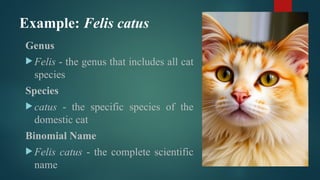
Example: Felis catus
Genus
 Felis - the genus that includes all cat
species
Species
 catus - the specific species of the
domestic cat
Binomial Name
 Felis catus - the complete scientific
name
7

Binomial Nomenclature................................pptx

  • 1.
  • 2.
    2 Introduction  Binomial nomenclatureis the standardized system used to name and classify living organisms.  It provides a universal language that allows scientists to communicate about the natural world with precision and clarity.  The first part of the name identifies the genus, while the second part identifies the specific species within that genus.
  • 3.
    3 History Carolus Linnaeus  Inthe 18th century, Swedish botanist Carolus Linnaeus proposed a standardized binomial naming system that revolutionized the way living organisms were classified.
  • 4.
    4 Principles Taxonomy  Binomial nomenclatureis based on the hierarchical system of biological classification, which groups organisms by their evolutionary relationships. Latinized Names  The genus and species names are derived from Latin , providing a universal scientific language.  Italicized Format  Binomial names are typically written in italics to distinguish them from common names or descriptive text.
  • 5.
    5 Rules for NamingLiving Organisms Internationality  Binomial names must be recognized and used by the global scientific community. Publication  New species must be formally described and published in scientific literature. Regulations  Naming conventions are governed by the International Code of Nomenclature. Uniqueness  Each binomial name must be unique within its respective genus.
  • 6.
    6 Example: Felis catus Genus Felis - the genus that includes all cat species Species  catus - the specific species of the domestic cat Binomial Name  Felis catus - the complete scientific name
  • 7.