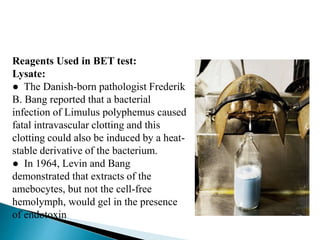
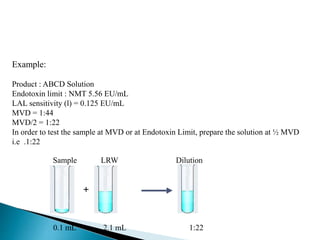
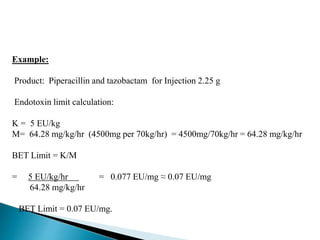
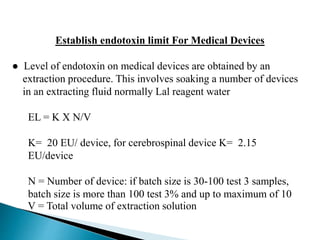
The bacterial endotoxin test (BET) uses Limulus amebocyte lysate (LAL) extracted from horseshoe crab blood cells to detect endotoxins from gram-negative bacteria. The LAL contains enzymes that activate and coagulate in the presence of endotoxins, specifically lipopolysaccharides. To perform the BET, test samples are mixed with LAL and a positive control containing a known amount of endotoxin. If the LAL coagulates for the sample but not the negative control, endotoxins are present in the sample at a level depending on the dilution and lysate sensitivity. The test provides a quantitative measure of endotoxins to ensure safety for medical products.