If a group exists in an organization, its members:
• Are motivated to join
• Perceive the group as a unified unit of interacting people
• Contribute in various amounts to the group processes.
• Reach agreements and have disagreements through various forms of
interaction.
Group Dynamics
• Kurt Lewin, widely recognized as the father of Group Dynamics.
• Popularized the term in the 1930s.
• One view is that group dynamics describes how a group should be
organized and conducted.
• 2nd view of group dynamics is that it consists of a set of techniques. Here,
role playing, brainstorming, focus groups, leaderless groups, group therapy,
sensitivity training, team building, Transactional analysis, and the Johari
window are traditionally equated with group dynamics.
• Recent group technique is called “creative abrasion,” which is the search
for a clash of ideas rather than “personal abrasion,” or the clash of people.
Group Dynamics
• 3rd view Group dynamics are viewed from the perspective of the internal
nature of groups, how they form, their structure and processes, and how
they function and affect individual members, other groups, and the
organization.
• The goal here is to develop greater creativity from the group.
• Group dynamics are the interactions and forces among group members in
social situations.
• Work groups – 1st use - Toyota, Motorola, General Mills, and General
Electric
• Generation X/Echo Generation - low needs for group affiliation, high needs
for individual achievement.
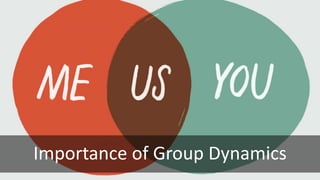
Importance of Group Dynamics
It helps to lead the group
It helps to make decisions.
Helps to bring change in the group.
Helps to establish trust and confidence for
the group
To Achieve Synergy
Resolve Conflicts
Maintain Balance in the group
Research on Fortune 500 Companies shows
Number one reason to get fired from job is
•Inability to get along with others.
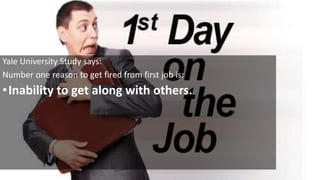
Yale University Study says:
Number one reason to get fired from first job is:
•Inability to get along with others.
According to Resident assistant Study
Number one reason for bad experience of 1st year college students
living in hostels is:
•Inability to get along with others.
Why do individuals form into groups?
Theories
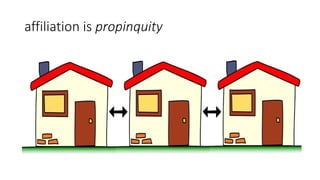
affiliation is propinquity
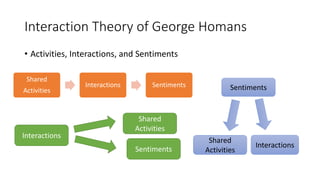
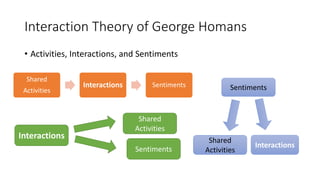
Interaction Theory of George Homans
• Activities, Interactions, and Sentiments
Shared
Activities
Interactions Sentiments
Interactions
Shared
Activities
Sentiments
Sentiments
Shared
Activities
Interactions
Interaction Theory of George Homans
• Activities, Interactions, and Sentiments
Shared
Activities
Interactions Sentiments
Interactions
Shared
Activities
Sentiments
Sentiments
Shared
Activities
Interactions
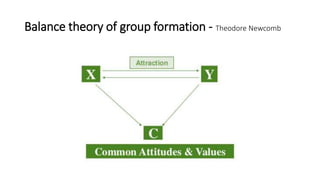
Balance theory of group formation - Theodore Newcomb
Exchange Theory
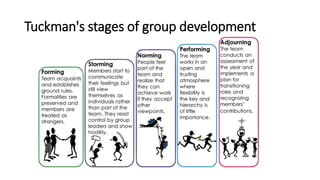
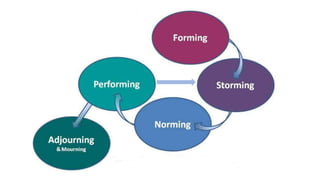
Tuckman's stages of group development
Conclusion
Groups Dynamics are the behavior of individuals in a group or behavior
of one group to other groups. Knowing how one’s group works is key to
success.

Group Dynamics

  • 2.
    If a groupexists in an organization, its members: • Are motivated to join • Perceive the group as a unified unit of interacting people • Contribute in various amounts to the group processes. • Reach agreements and have disagreements through various forms of interaction.
  • 3.
    Group Dynamics • KurtLewin, widely recognized as the father of Group Dynamics. • Popularized the term in the 1930s. • One view is that group dynamics describes how a group should be organized and conducted. • 2nd view of group dynamics is that it consists of a set of techniques. Here, role playing, brainstorming, focus groups, leaderless groups, group therapy, sensitivity training, team building, Transactional analysis, and the Johari window are traditionally equated with group dynamics. • Recent group technique is called “creative abrasion,” which is the search for a clash of ideas rather than “personal abrasion,” or the clash of people.
  • 4.
    Group Dynamics • 3rdview Group dynamics are viewed from the perspective of the internal nature of groups, how they form, their structure and processes, and how they function and affect individual members, other groups, and the organization. • The goal here is to develop greater creativity from the group. • Group dynamics are the interactions and forces among group members in social situations. • Work groups – 1st use - Toyota, Motorola, General Mills, and General Electric • Generation X/Echo Generation - low needs for group affiliation, high needs for individual achievement.
  • 5.
  • 6.
    It helps tolead the group
  • 7.
    It helps tomake decisions.
  • 8.
    Helps to bringchange in the group.
  • 9.
    Helps to establishtrust and confidence for the group
  • 10.
  • 11.
  • 12.
  • 13.
    Research on Fortune500 Companies shows Number one reason to get fired from job is •Inability to get along with others.
  • 14.
    Yale University Studysays: Number one reason to get fired from first job is: •Inability to get along with others.
  • 15.
    According to Residentassistant Study Number one reason for bad experience of 1st year college students living in hostels is: •Inability to get along with others.
  • 16.
    Why do individualsform into groups? Theories
  • 17.
  • 18.
    Interaction Theory ofGeorge Homans • Activities, Interactions, and Sentiments Shared Activities Interactions Sentiments Interactions Shared Activities Sentiments Sentiments Shared Activities Interactions
  • 19.
    Interaction Theory ofGeorge Homans • Activities, Interactions, and Sentiments Shared Activities Interactions Sentiments Interactions Shared Activities Sentiments Sentiments Shared Activities Interactions
  • 20.
    Balance theory ofgroup formation - Theodore Newcomb
  • 21.
  • 22.
    Tuckman's stages ofgroup development
  • 24.
    Conclusion Groups Dynamics arethe behavior of individuals in a group or behavior of one group to other groups. Knowing how one’s group works is key to success.

Editor's Notes

  • #14 Fortune 5 hundred
  • #19 Students in class, workers in plant
  • #20 Students in class, workers in plant
  • #22 Cost and reward
  • #24 Necessary each step