Introduction, local wines & categories
 Of all types of beverages, wines is considered the most
complex and sophisticated alcoholic beverage.
 No wine is produced from the same variety of grapes
and from different location and vintage are alike in
character
 You need knowledge and understanding of wine in
order to appreciate
 The only alcoholic beverage that requires service
procedure if it is served in a formal occasion or dinner
 One common misconception: wines taste better when
kept longer
 Wines with less tannin (compound that contributes to
wines’ astringency and bitterness) = not good to keep
 High tannin, good quality wines = meant for aging to
further improve taste
 Sweet and cheaper wines are preferred by most
Filipinos (Philippine market don’t appreciate tannins
and balsamic smell)
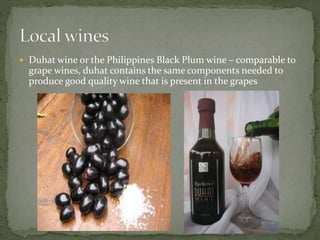
 Duhat wine or the Philippines Black Plum wine – comparable to
grape wines, duhat contains the same components needed to
produce good quality wine that is present in the grapes
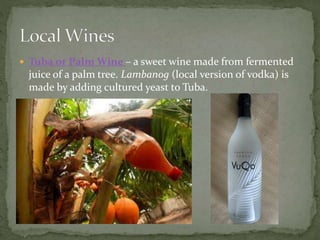
 Tuba or Palm Wine – a sweet wine made from fermented
juice of a palm tree. Lambanog (local version of vodka) is
made by adding cultured yeast to Tuba.
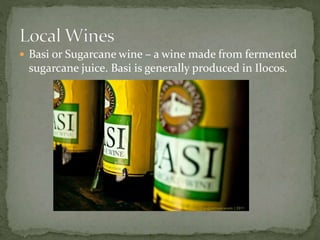
 Basi or Sugarcane wine – a wine made from fermented
sugarcane juice. Basi is generally produced in Ilocos.
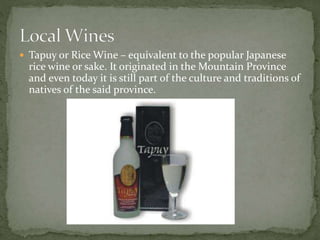
 Tapuy or Rice Wine – equivalent to the popular Japanese
rice wine or sake. It originated in the Mountain Province
and even today it is still part of the culture and traditions of
natives of the said province.
 Wine – alcoholic beverage made by fermenting fruit
juices particularly grape juice
 Vintage – the harvest year
 Wine Terms:
 Vin (Van) – French
 Vino – Italian, Spanish and Portuguese
 Wein (Ven) - German
 Still Wine/table wine – a wine without carbon dioxide
Types:
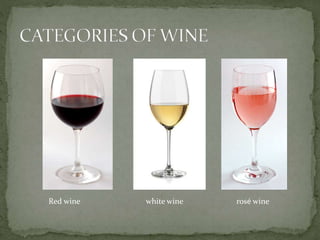
 Unfortified still wine – wine without added alcohol, with
4-14% ABV. Ex: Red wine, rosé wine, white wine,
flavored wine
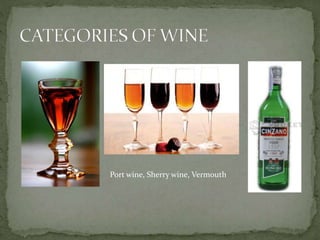
 Fortified still wine – wine with added alcohol with 15-
30% ABV. Ex: Port wine, Sherry wine, Vermouth
Red wine white wine rosé wine
Port wine, Sherry wine, Vermouth
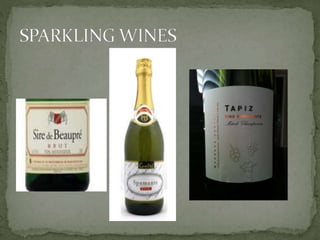
 Sparkling Wine – wine that contains carbon dioxide
 Terms:
 France – “Vin Mousseux”
 Italy – vino spumante
 Spain and Portugal – vino espumante / Cava
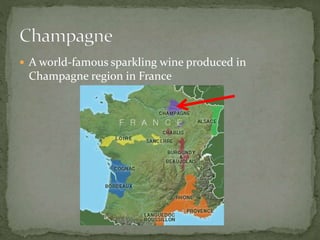
 A world-famous sparkling wine produced in
Champagne region in France
 It is sparkling wine produced with second
fermentation done in a bottle.
 “All Champagnes are sparkling wine but not all
sparkling wines are Champagne”
 Methods of Producing Sparkling Wines:
1. Champagne Method (Methode Champenoise) – also
known as the traditional method. Second fermentation
is done in the bottle.
2. Charmat or the Bulk Process Method – in this method
sparkling wine is produced using second fermentation
in a large stainless steel known as charmat
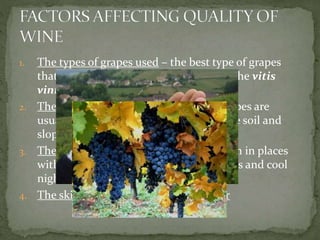
1. The types of grapes used – the best type of grapes
that produces excellent quality wines is the vitis
vinifera
2. The type of soil/location – old world grapes are
usually planted in chalky, sandy and lime soil and
slopes
3. The climate – vitis vinifera are best grown in places
with temperate climate, warm sunny days and cool
nights
4. The skill/knowledge of the wine maker
 Cabernet Sauvignon (Caburney Saw-vin-yon)
 Merlot (Mer-low)
 Pinot noir (pinot nwar)
 Syrah (see-rah) or Shiraz
 Muscat
 Mourvedre (Spain)
 Tempranillo (Spain)
 Sangiovese (Italy)
 Nebbiolo (Italy)
 Chardonnay (Chard’-ney)
 Chenin Blanc
 Riesling
 Saugnon blanc
 Semillon
 Gewurtztraminer
 Pinot Blanc
 Pinot grigio/gris
 Pinotage
 Viognier (viyon-yay)
 Food and Wine Matching - Gordon Ramsay.mp4
 Drinking champagne with Cat Deeley - Gordon
Ramsay.mp4

Basics on Wines

  • 1.
  • 2.
     Of alltypes of beverages, wines is considered the most complex and sophisticated alcoholic beverage.  No wine is produced from the same variety of grapes and from different location and vintage are alike in character  You need knowledge and understanding of wine in order to appreciate  The only alcoholic beverage that requires service procedure if it is served in a formal occasion or dinner  One common misconception: wines taste better when kept longer
  • 3.
     Wines withless tannin (compound that contributes to wines’ astringency and bitterness) = not good to keep  High tannin, good quality wines = meant for aging to further improve taste  Sweet and cheaper wines are preferred by most Filipinos (Philippine market don’t appreciate tannins and balsamic smell)
  • 4.
     Duhat wineor the Philippines Black Plum wine – comparable to grape wines, duhat contains the same components needed to produce good quality wine that is present in the grapes
  • 5.
     Tuba orPalm Wine – a sweet wine made from fermented juice of a palm tree. Lambanog (local version of vodka) is made by adding cultured yeast to Tuba.
  • 6.
     Basi orSugarcane wine – a wine made from fermented sugarcane juice. Basi is generally produced in Ilocos.
  • 7.
     Tapuy orRice Wine – equivalent to the popular Japanese rice wine or sake. It originated in the Mountain Province and even today it is still part of the culture and traditions of natives of the said province.
  • 8.
     Wine –alcoholic beverage made by fermenting fruit juices particularly grape juice  Vintage – the harvest year  Wine Terms:  Vin (Van) – French  Vino – Italian, Spanish and Portuguese  Wein (Ven) - German
  • 9.
     Still Wine/tablewine – a wine without carbon dioxide Types:  Unfortified still wine – wine without added alcohol, with 4-14% ABV. Ex: Red wine, rosé wine, white wine, flavored wine  Fortified still wine – wine with added alcohol with 15- 30% ABV. Ex: Port wine, Sherry wine, Vermouth
  • 10.
    Red wine whitewine rosé wine
  • 11.
    Port wine, Sherrywine, Vermouth
  • 12.
     Sparkling Wine– wine that contains carbon dioxide  Terms:  France – “Vin Mousseux”  Italy – vino spumante  Spain and Portugal – vino espumante / Cava
  • 14.
     A world-famoussparkling wine produced in Champagne region in France
  • 15.
     It issparkling wine produced with second fermentation done in a bottle.  “All Champagnes are sparkling wine but not all sparkling wines are Champagne”  Methods of Producing Sparkling Wines: 1. Champagne Method (Methode Champenoise) – also known as the traditional method. Second fermentation is done in the bottle. 2. Charmat or the Bulk Process Method – in this method sparkling wine is produced using second fermentation in a large stainless steel known as charmat
  • 16.
    1. The typesof grapes used – the best type of grapes that produces excellent quality wines is the vitis vinifera 2. The type of soil/location – old world grapes are usually planted in chalky, sandy and lime soil and slopes 3. The climate – vitis vinifera are best grown in places with temperate climate, warm sunny days and cool nights 4. The skill/knowledge of the wine maker
  • 17.
     Cabernet Sauvignon(Caburney Saw-vin-yon)  Merlot (Mer-low)  Pinot noir (pinot nwar)  Syrah (see-rah) or Shiraz  Muscat  Mourvedre (Spain)  Tempranillo (Spain)  Sangiovese (Italy)  Nebbiolo (Italy)
  • 18.
     Chardonnay (Chard’-ney) Chenin Blanc  Riesling  Saugnon blanc  Semillon  Gewurtztraminer  Pinot Blanc  Pinot grigio/gris  Pinotage  Viognier (viyon-yay)
  • 19.
     Food andWine Matching - Gordon Ramsay.mp4  Drinking champagne with Cat Deeley - Gordon Ramsay.mp4