From Ancient History to the Megaships of today
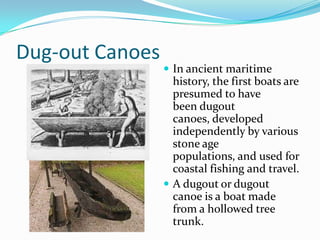
Dug-out Canoes
                  In ancient maritime
                   history, the first boats are
                   presumed to have
                   been dugout
                   canoes, developed
                   independently by various
                   stone age
                   populations, and used for
                   coastal fishing and travel.
                  A dugout or dugout
                   canoe is a boat made
                   from a hollowed tree
                   trunk.
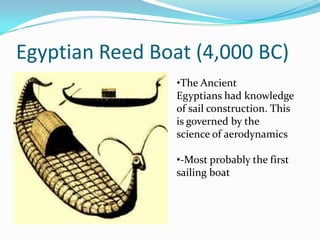
Egyptian Reed Boat (4,000 BC)
                 •The Ancient
                 Egyptians had knowledge
                 of sail construction. This
                 is governed by the
                 science of aerodynamics

                 •-Most probably the first
                 sailing boat
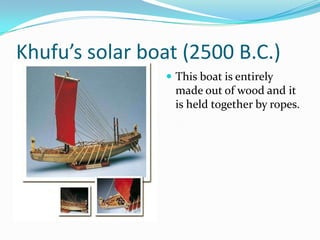
Khufu’s solar boat (2500 B.C.)
                 This boat is entirely
                  made out of wood and it
                  is held together by ropes.
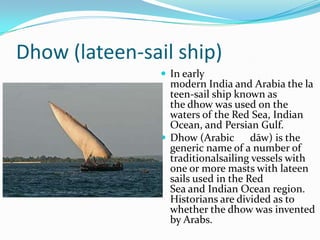
Dhow (lateen-sail ship)
                 In early
                  modern India and Arabia the la
                  teen-sail ship known as
                  the dhow was used on the
                  waters of the Red Sea, Indian
                  Ocean, and Persian Gulf.
                 Dhow (Arabic       dāw) is the
                  generic name of a number of
                  traditionalsailing vessels with
                  one or more masts with lateen
                  sails used in the Red
                  Sea and Indian Ocean region.
                  Historians are divided as to
                  whether the dhow was invented
                  by Arabs.
Medieval Period
 There were also Southeast
  Asian Seafarers and Polynesians, and the Northern
  European Vikings, developed oceangoing vessels and
  depended heavily upon them for travel and population
  movements prior to 1000 AD.
 China's ships in the medieval period were particularly
  massive; multi-mast sailing junks were carrying over
  200 people as early as 200 AD.
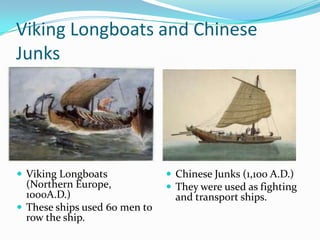
Viking Longboats and Chinese
Junks


 Viking Longboats              Chinese Junks (1,100 A.D.)
  (Northern Europe,             They were used as fighting
  1000A.D.)                      and transport ships.
 These ships used 60 men to
  row the ship.
Medieval Ships
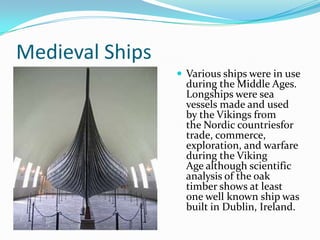
                  Various ships were in use
                   during the Middle Ages.
                   Longships were sea
                   vessels made and used
                   by the Vikings from
                   the Nordic countriesfor
                   trade, commerce,
                   exploration, and warfare
                   during the Viking
                   Age although scientific
                   analysis of the oak
                   timber shows at least
                   one well known ship was
                   built in Dublin, Ireland.
Medieval Ships
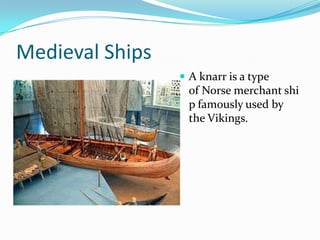
                  A knarr is a type
                   of Norse merchant shi
                   p famously used by
                   the Vikings.
Medieval Ships
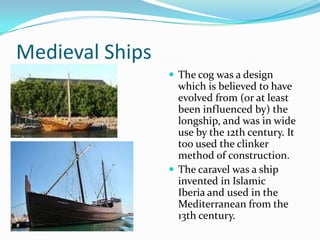
                  The cog was a design
                   which is believed to have
                   evolved from (or at least
                   been influenced by) the
                   longship, and was in wide
                   use by the 12th century. It
                   too used the clinker
                   method of construction.
                  The caravel was a ship
                   invented in Islamic
                   Iberia and used in the
                   Mediterranean from the
                   13th century.
Three & Four Masted Sailing Ships
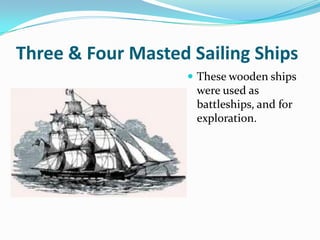
                     These wooden ships
                     were used as
                     battleships, and for
                     exploration.
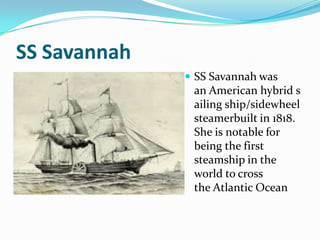
SS Savannah
               SS Savannah was
               an American hybrid s
               ailing ship/sidewheel
               steamerbuilt in 1818.
               She is notable for
               being the first
               steamship in the
               world to cross
               the Atlantic Ocean
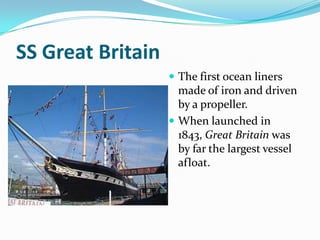
SS Great Britain
                    The first ocean liners
                     made of iron and driven
                     by a propeller.
                    When launched in
                     1843, Great Britain was
                     by far the largest vessel
                     afloat.
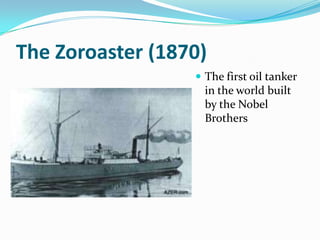
The Zoroaster (1870)
                   The first oil tanker
                    in the world built
                    by the Nobel
                    Brothers
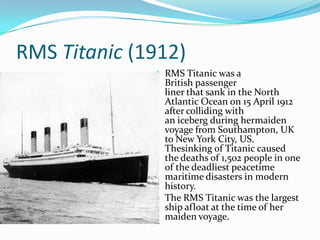
RMS Titanic (1912)
               RMS Titanic was a
                British passenger
                liner that sank in the North
                Atlantic Ocean on 15 April 1912
                after colliding with
                an iceberg during hermaiden
                voyage from Southampton, UK
                to New York City, US.
                Thesinking of Titanic caused
                the deaths of 1,502 people in one
                of the deadliest peacetime
                maritime disasters in modern
                history.
               The RMS Titanic was the largest
                ship afloat at the time of her
                maiden voyage.
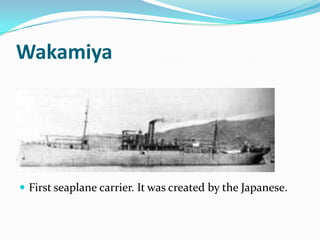
Wakamiya


 First seaplane carrier. It was created by the Japanese.
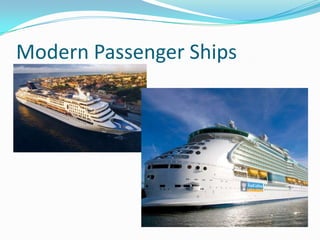
Modern Passenger Ships
Modern Warships
Modern Cargo Ships

Evolution of water transport

  • 1.
    From Ancient Historyto the Megaships of today
  • 2.
    Dug-out Canoes  In ancient maritime history, the first boats are presumed to have been dugout canoes, developed independently by various stone age populations, and used for coastal fishing and travel.  A dugout or dugout canoe is a boat made from a hollowed tree trunk.
  • 3.
    Egyptian Reed Boat(4,000 BC) •The Ancient Egyptians had knowledge of sail construction. This is governed by the science of aerodynamics •-Most probably the first sailing boat
  • 4.
    Khufu’s solar boat(2500 B.C.)  This boat is entirely made out of wood and it is held together by ropes.
  • 5.
    Dhow (lateen-sail ship)  In early modern India and Arabia the la teen-sail ship known as the dhow was used on the waters of the Red Sea, Indian Ocean, and Persian Gulf.  Dhow (Arabic dāw) is the generic name of a number of traditionalsailing vessels with one or more masts with lateen sails used in the Red Sea and Indian Ocean region. Historians are divided as to whether the dhow was invented by Arabs.
  • 6.
    Medieval Period  Therewere also Southeast Asian Seafarers and Polynesians, and the Northern European Vikings, developed oceangoing vessels and depended heavily upon them for travel and population movements prior to 1000 AD.  China's ships in the medieval period were particularly massive; multi-mast sailing junks were carrying over 200 people as early as 200 AD.
  • 7.
    Viking Longboats andChinese Junks  Viking Longboats  Chinese Junks (1,100 A.D.) (Northern Europe,  They were used as fighting 1000A.D.) and transport ships.  These ships used 60 men to row the ship.
  • 8.
    Medieval Ships  Various ships were in use during the Middle Ages. Longships were sea vessels made and used by the Vikings from the Nordic countriesfor trade, commerce, exploration, and warfare during the Viking Age although scientific analysis of the oak timber shows at least one well known ship was built in Dublin, Ireland.
  • 9.
    Medieval Ships  A knarr is a type of Norse merchant shi p famously used by the Vikings.
  • 10.
    Medieval Ships  The cog was a design which is believed to have evolved from (or at least been influenced by) the longship, and was in wide use by the 12th century. It too used the clinker method of construction.  The caravel was a ship invented in Islamic Iberia and used in the Mediterranean from the 13th century.
  • 11.
    Three & FourMasted Sailing Ships  These wooden ships were used as battleships, and for exploration.
  • 12.
    SS Savannah  SS Savannah was an American hybrid s ailing ship/sidewheel steamerbuilt in 1818. She is notable for being the first steamship in the world to cross the Atlantic Ocean
  • 13.
    SS Great Britain  The first ocean liners made of iron and driven by a propeller.  When launched in 1843, Great Britain was by far the largest vessel afloat.
  • 14.
    The Zoroaster (1870)  The first oil tanker in the world built by the Nobel Brothers
  • 15.
    RMS Titanic (1912)  RMS Titanic was a British passenger liner that sank in the North Atlantic Ocean on 15 April 1912 after colliding with an iceberg during hermaiden voyage from Southampton, UK to New York City, US. Thesinking of Titanic caused the deaths of 1,502 people in one of the deadliest peacetime maritime disasters in modern history.  The RMS Titanic was the largest ship afloat at the time of her maiden voyage.
  • 16.
    Wakamiya  First seaplanecarrier. It was created by the Japanese.
  • 17.
  • 18.
  • 19.