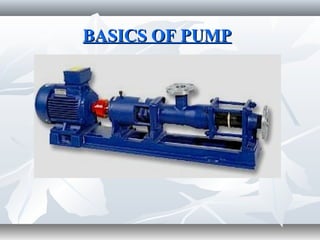
BASICS OF PUMPBASICS OF PUMP
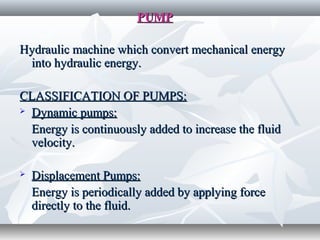
Hydraulic machine which convert mechanical energyHydraulic machine which convert mechanical energy
into hydraulic energy.into hydraulic energy.
CLASSIFICATION OF PUMPS:CLASSIFICATION OF PUMPS:
 Dynamic pumps:Dynamic pumps:
Energy is continuously added to increase the fluidEnergy is continuously added to increase the fluid
velocity.velocity.
 Displacement Pumps:Displacement Pumps:
Energy is periodically added by applying forceEnergy is periodically added by applying force
directly to the fluid.directly to the fluid.
PUMPPUMP
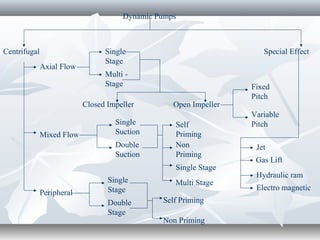
Dynamic Pumps
Centrifugal Special EffectSingle
Stage
Axial Flow
Multi -
Stage
Mixed Flow
Peripheral
Closed Impeller Open Impeller
Fixed
Pitch
Variable
PitchSelf
Priming
Single
Suction
Double
Suction
Non
Priming
Single Stage
Multi StageSingle
Stage
Double
Stage
Self Priming
Non Priming
Jet
Gas Lift
Hydraulic ram
Electro magnetic
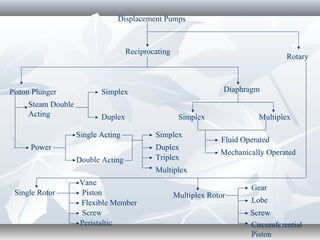
Displacement Pumps
Reciprocating
Rotary
Multiplex
Mechanically Operated
Fluid Operated
Diaphragm
Simplex
Triplex
Multiplex
Piston Plunger
Steam Double
Acting
Simplex
Duplex
Double Acting
Single Acting
Power
Simplex
Duplex
Single Rotor Multiplex Rotor
Vane
Piston
Flexible Member
Screw
Peristaltic
Gear
Lobe
Circumferential
Piston
Screw
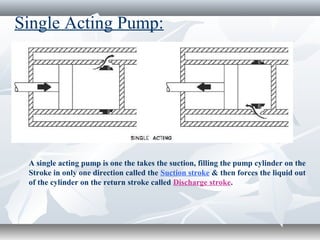
Single Acting Pump:
A single acting pump is one the takes the suction, filling the pump cylinder on the
Stroke in only one direction called the Suction stroke & then forces the liquid out
of the cylinder on the return stroke called Discharge stroke.
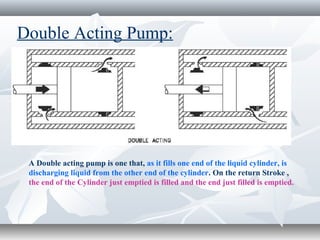
Double Acting Pump:
A Double acting pump is one that, as it fills one end of the liquid cylinder, is
discharging liquid from the other end of the cylinder. On the return Stroke ,
the end of the Cylinder just emptied is filled and the end just filled is emptied.
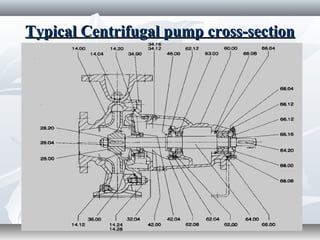
Typical Centrifugal pump cross-sectionTypical Centrifugal pump cross-section
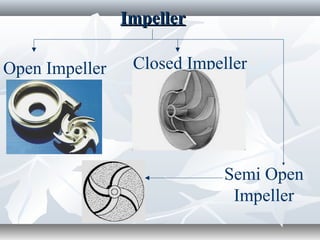
Open Impeller Closed Impeller
Semi Open
Impeller
ImpellerImpeller
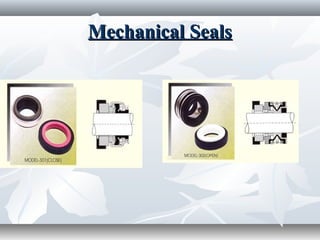
Mechanical SealsMechanical Seals
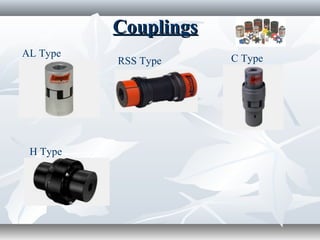
AL Type C Type
H Type
CouplingsCouplings
RSS Type
TERMINOLOGY IN PUMPSTERMINOLOGY IN PUMPS
SUCTION & DISCHARGE HEADSUCTION & DISCHARGE HEAD
DELIVERYDELIVERY
PRIMINGPRIMING
CAVITATIONCAVITATION
NPSHNPSH
PRIMINGPRIMING
PRIMING OF PUMP:PRIMING OF PUMP:
 Filling of pumps suction pipe, casing up to delivery valveFilling of pumps suction pipe, casing up to delivery valve
with liquid .i.e liquid to be pumped by means of externalwith liquid .i.e liquid to be pumped by means of external
source.source.
WHY PRIMINGWHY PRIMING ??
 When the pump is running without liquid that means it isWhen the pump is running without liquid that means it is
running in air, thus the head generated by the pump is inrunning in air, thus the head generated by the pump is in
term of air column.term of air column.
 The generated head of air is very less when compared toThe generated head of air is very less when compared to
water head. Hence the liquid may not be sucked by pump.water head. Hence the liquid may not be sucked by pump.
CAVITATIONCAVITATION
Forming of vapour bubbles and subsequent collapse ofForming of vapour bubbles and subsequent collapse of
the vapour bubbles form high pressure.the vapour bubbles form high pressure.
 Cavitation is an abnormal condition that can result inCavitation is an abnormal condition that can result in
loss of production, equipment damage, and worst of allloss of production, equipment damage, and worst of all
personal injurypersonal injury
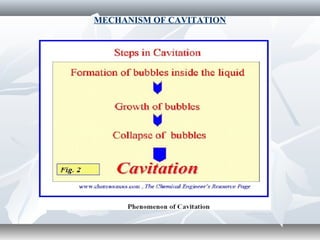
MECHANISM OF CAVITATION
EFFECT OF CAVITATION:EFFECT OF CAVITATION:
 Noise and vibrations.Noise and vibrations.
 Pitting of metal surfaces.Pitting of metal surfaces.
 Efficiency decreases.Efficiency decreases.
GENERAL CHECKLISTGENERAL CHECKLIST
NPSH. (Net Positive Suction Head):NPSH. (Net Positive Suction Head):
 Minimum head required to over come cavitation.Minimum head required to over come cavitation.
HOW TO SPECIFY A PUMPHOW TO SPECIFY A PUMP::
 Discharge Pressure in MLC.Discharge Pressure in MLC.
 Discharge in M3/Hr.Discharge in M3/Hr.
Pump Selection ParametersPump Selection Parameters
Capacity :Capacity :
Capacity of pump depends upon the total quantity of fluid required for the
circulating fluid system and the number of pumps to be provided for the system
It comprises of static head and frictional losses.
Total Head:Total Head:
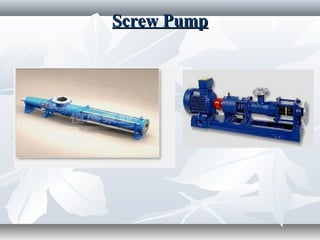
Screw PumpScrew Pump
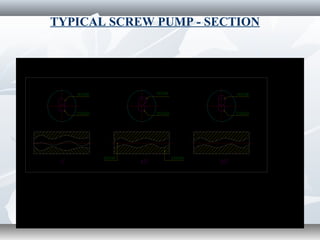
TYPICAL SCREW PUMP - SECTION
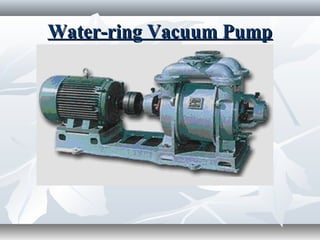
Water-ring Vacuum PumpWater-ring Vacuum Pump
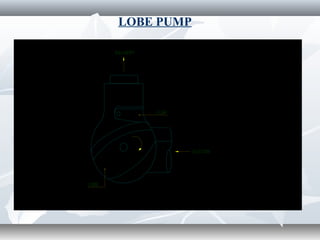
LOBE PUMP
THANK YOUTHANK YOU

Basics of pumps

  • 1.
  • 2.
    Hydraulic machine whichconvert mechanical energyHydraulic machine which convert mechanical energy into hydraulic energy.into hydraulic energy. CLASSIFICATION OF PUMPS:CLASSIFICATION OF PUMPS:  Dynamic pumps:Dynamic pumps: Energy is continuously added to increase the fluidEnergy is continuously added to increase the fluid velocity.velocity.  Displacement Pumps:Displacement Pumps: Energy is periodically added by applying forceEnergy is periodically added by applying force directly to the fluid.directly to the fluid. PUMPPUMP
  • 3.
    Dynamic Pumps Centrifugal SpecialEffectSingle Stage Axial Flow Multi - Stage Mixed Flow Peripheral Closed Impeller Open Impeller Fixed Pitch Variable PitchSelf Priming Single Suction Double Suction Non Priming Single Stage Multi StageSingle Stage Double Stage Self Priming Non Priming Jet Gas Lift Hydraulic ram Electro magnetic
  • 4.
    Displacement Pumps Reciprocating Rotary Multiplex Mechanically Operated FluidOperated Diaphragm Simplex Triplex Multiplex Piston Plunger Steam Double Acting Simplex Duplex Double Acting Single Acting Power Simplex Duplex Single Rotor Multiplex Rotor Vane Piston Flexible Member Screw Peristaltic Gear Lobe Circumferential Piston Screw
  • 5.
    Single Acting Pump: Asingle acting pump is one the takes the suction, filling the pump cylinder on the Stroke in only one direction called the Suction stroke & then forces the liquid out of the cylinder on the return stroke called Discharge stroke.
  • 6.
    Double Acting Pump: ADouble acting pump is one that, as it fills one end of the liquid cylinder, is discharging liquid from the other end of the cylinder. On the return Stroke , the end of the Cylinder just emptied is filled and the end just filled is emptied.
  • 7.
    Typical Centrifugal pumpcross-sectionTypical Centrifugal pump cross-section
  • 8.
    Open Impeller ClosedImpeller Semi Open Impeller ImpellerImpeller
  • 9.
  • 10.
    AL Type CType H Type CouplingsCouplings RSS Type
  • 11.
    TERMINOLOGY IN PUMPSTERMINOLOGYIN PUMPS SUCTION & DISCHARGE HEADSUCTION & DISCHARGE HEAD DELIVERYDELIVERY PRIMINGPRIMING CAVITATIONCAVITATION NPSHNPSH
  • 12.
    PRIMINGPRIMING PRIMING OF PUMP:PRIMINGOF PUMP:  Filling of pumps suction pipe, casing up to delivery valveFilling of pumps suction pipe, casing up to delivery valve with liquid .i.e liquid to be pumped by means of externalwith liquid .i.e liquid to be pumped by means of external source.source. WHY PRIMINGWHY PRIMING ??  When the pump is running without liquid that means it isWhen the pump is running without liquid that means it is running in air, thus the head generated by the pump is inrunning in air, thus the head generated by the pump is in term of air column.term of air column.  The generated head of air is very less when compared toThe generated head of air is very less when compared to water head. Hence the liquid may not be sucked by pump.water head. Hence the liquid may not be sucked by pump.
  • 13.
    CAVITATIONCAVITATION Forming of vapourbubbles and subsequent collapse ofForming of vapour bubbles and subsequent collapse of the vapour bubbles form high pressure.the vapour bubbles form high pressure.  Cavitation is an abnormal condition that can result inCavitation is an abnormal condition that can result in loss of production, equipment damage, and worst of allloss of production, equipment damage, and worst of all personal injurypersonal injury
  • 14.
  • 15.
    EFFECT OF CAVITATION:EFFECTOF CAVITATION:  Noise and vibrations.Noise and vibrations.  Pitting of metal surfaces.Pitting of metal surfaces.  Efficiency decreases.Efficiency decreases.
  • 16.
    GENERAL CHECKLISTGENERAL CHECKLIST NPSH.(Net Positive Suction Head):NPSH. (Net Positive Suction Head):  Minimum head required to over come cavitation.Minimum head required to over come cavitation. HOW TO SPECIFY A PUMPHOW TO SPECIFY A PUMP::  Discharge Pressure in MLC.Discharge Pressure in MLC.  Discharge in M3/Hr.Discharge in M3/Hr.
  • 17.
    Pump Selection ParametersPumpSelection Parameters Capacity :Capacity : Capacity of pump depends upon the total quantity of fluid required for the circulating fluid system and the number of pumps to be provided for the system It comprises of static head and frictional losses. Total Head:Total Head:
  • 18.
  • 19.
  • 20.
  • 21.
  • 22.