Presented by:
Md. Faysal Ah
ID:151-29-760
Sec: B 13th
DIU
Spectroscopy
• Method of “Seeing the “unseeable”
• Using electromagnetic radiation to obtain information about atoms
and molecules that are too small to see.
atoms
molecule
IR spectroscopy
IR spectroscopy is the spectroscopic technique which uses the Infrared light and
studies its interaction with the molecules. The spectra generated can give a lot of
information about the molecule, especially about the functional groups associated.
Basics of IR spectrophotometer
Wave number =
1
Wavelength in centimeters
In the IR spectroscopy, the absorbed energy brings about predominant changes in the
vibrational energy which depends upon three things.
i) Masses of the atoms present in a molecule,
ii) Strength of the bonds
iii) The arrangement of atoms within the molecule.
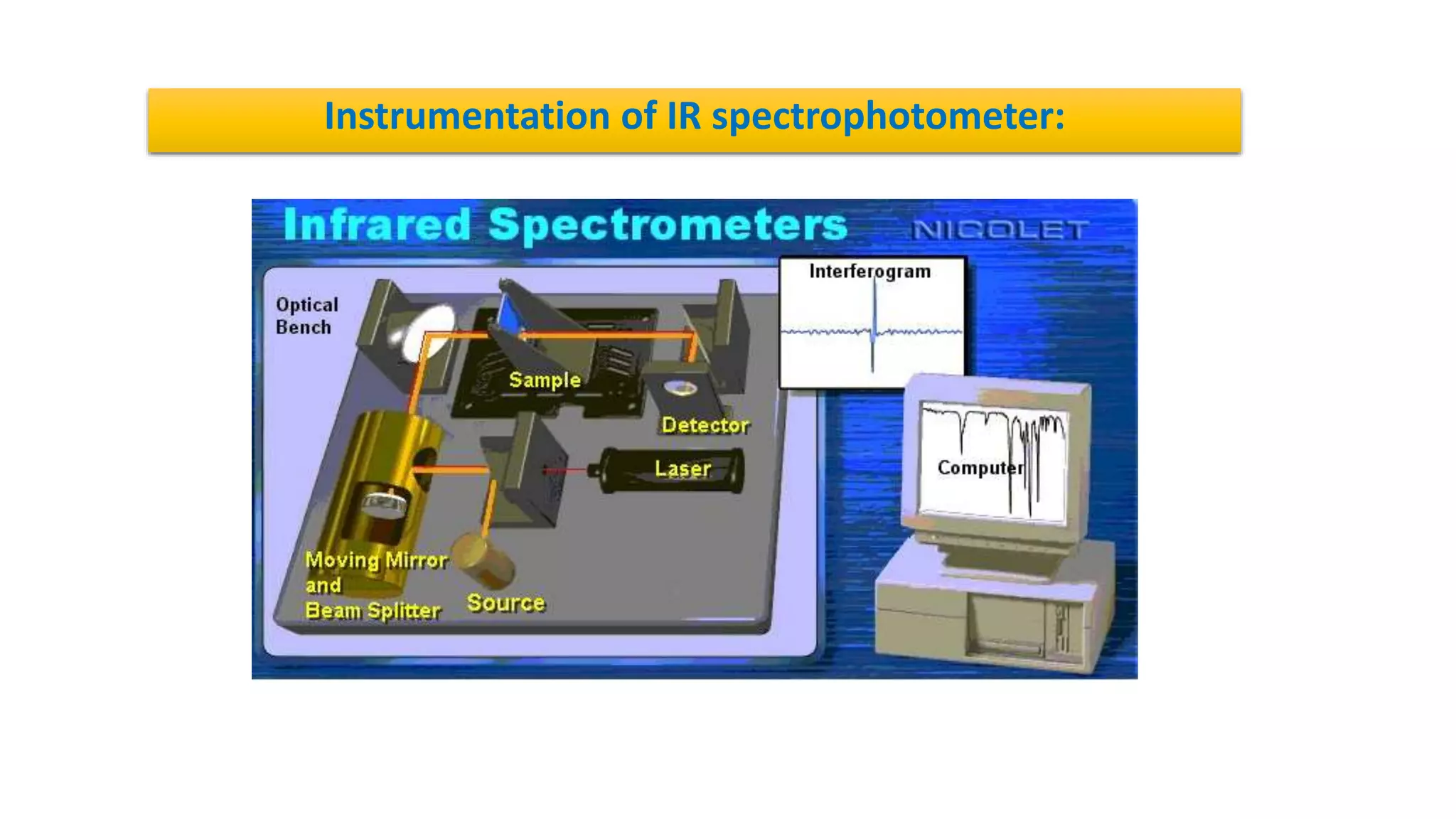
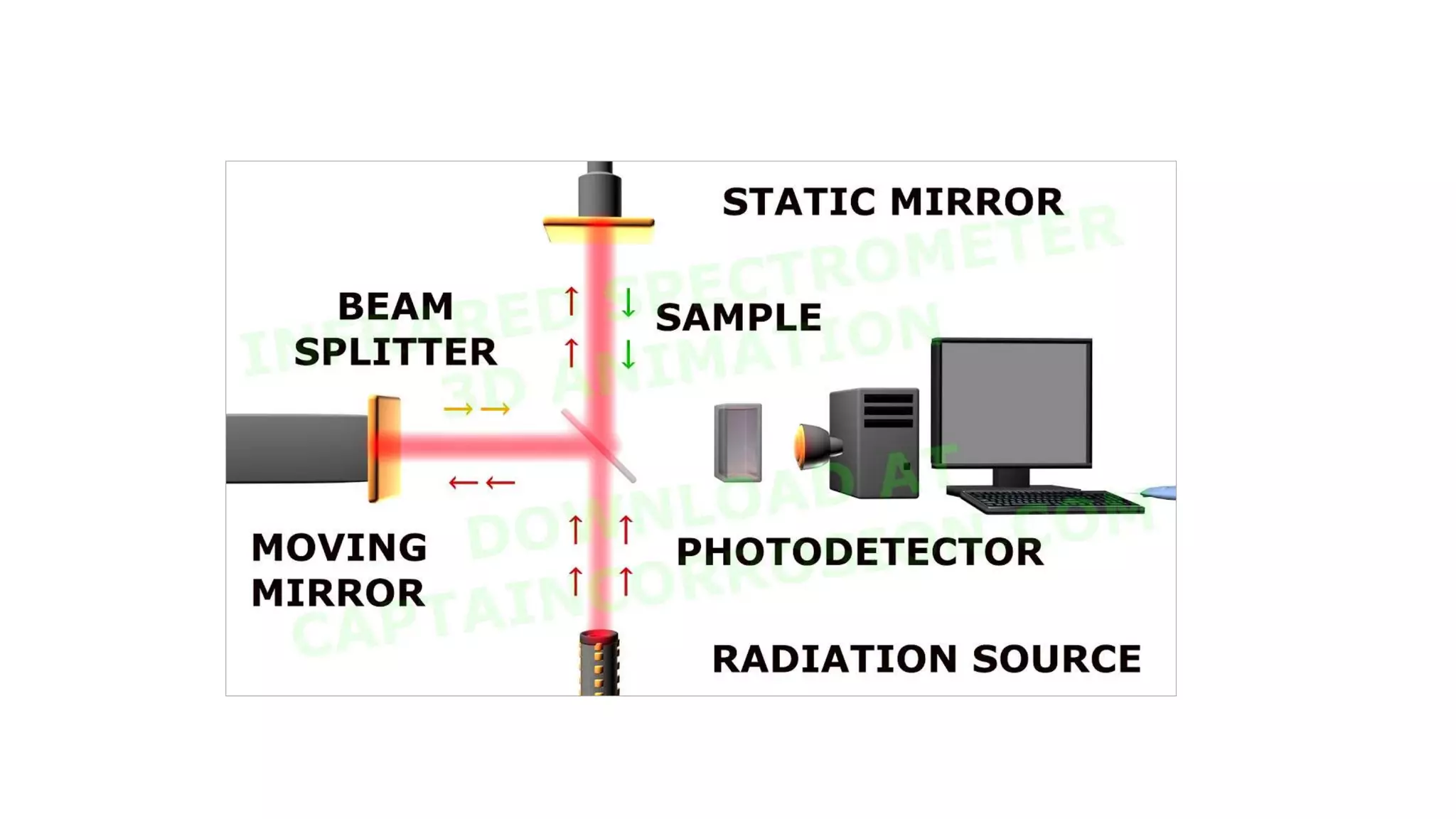
Instrumentation of IR spectrophotometer:
When energy in the form of infrared radiation is applied then it causes the vibration between the
atoms of the molecules and when,
Applied infrared frequency = Natural frequency of vibration
Then, Absorption of IR radiation takes place and a peak is observed.
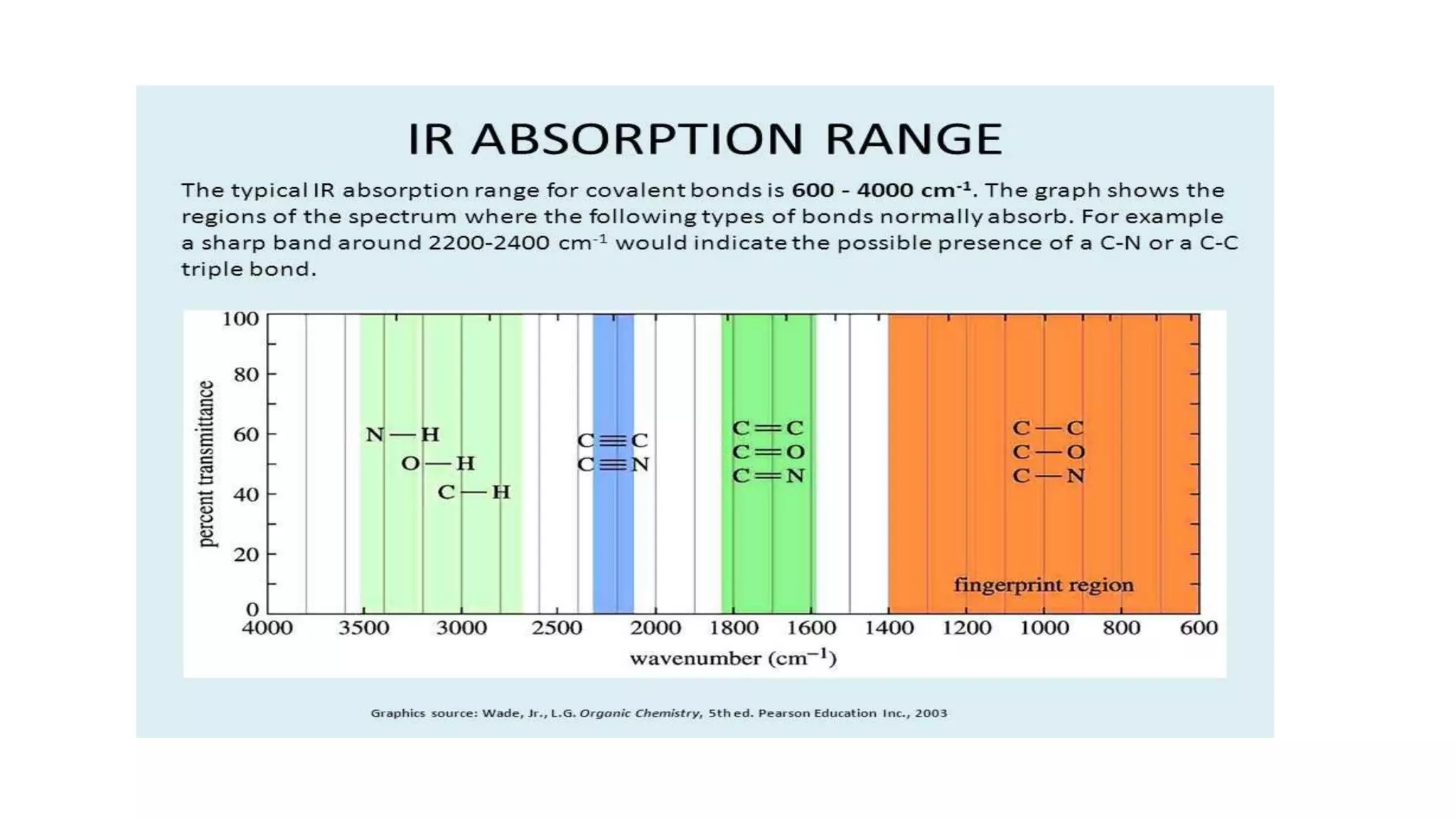
Different functional groups absorb characteristic frequencies of IR radiation. Hence gives the
characteristic peak value.
Therefore, IR spectrum of a chemical substance is a finger print of a molecule for its identification.
Criteria for a compound to absorb IR radiation
1. Correct wavelength of radiation
2. Change in dipole moment
1. Correct wavelength of radiation:
A molecule to absorb IR radiation, the natural frequency of vibrations of some part of
a molecule is the same as the frequency of incident radiation.
2. Change in dipole moment :
• A molecule can only absorb IR radiation when its absorption cause a
change in its electric dipole.
• A molecule is said to have an electric dipole when there is a slight
positive and a slight negative charge on its component of atoms.
Molecular vibrations
There are 2 types of vibrations:
1.Stretching vibrations
2.Bending vibrations
1. Stretching vibrations:
Occurs at higher energy: 4000-1250 cm-1
2 types:
a) Symmetrical stretching
b)Asymmetrical stretching
1. Stretching vibrations:
2. Bending vibrations
The positions of the atom change with respect to the original bond axis.
Occurs at low energy: 1400-666 cm-1 .
• There are 2 types:
a) In plane bending: scissoring, rocking
b) Out plane bending: wagging, twisting
2. Bending vibrations
• IR region: 0.8 µm (800nm) to 1000 µm (1mm)
Sub divided into
1.Near IR: 0.8-2 µm
2.Middle IR: 2-15 µm
3.Far IR: 15-1000 µm
Most of the analytical applications are confined to the middle IR region because absorption
of organic molecules are high in this region.
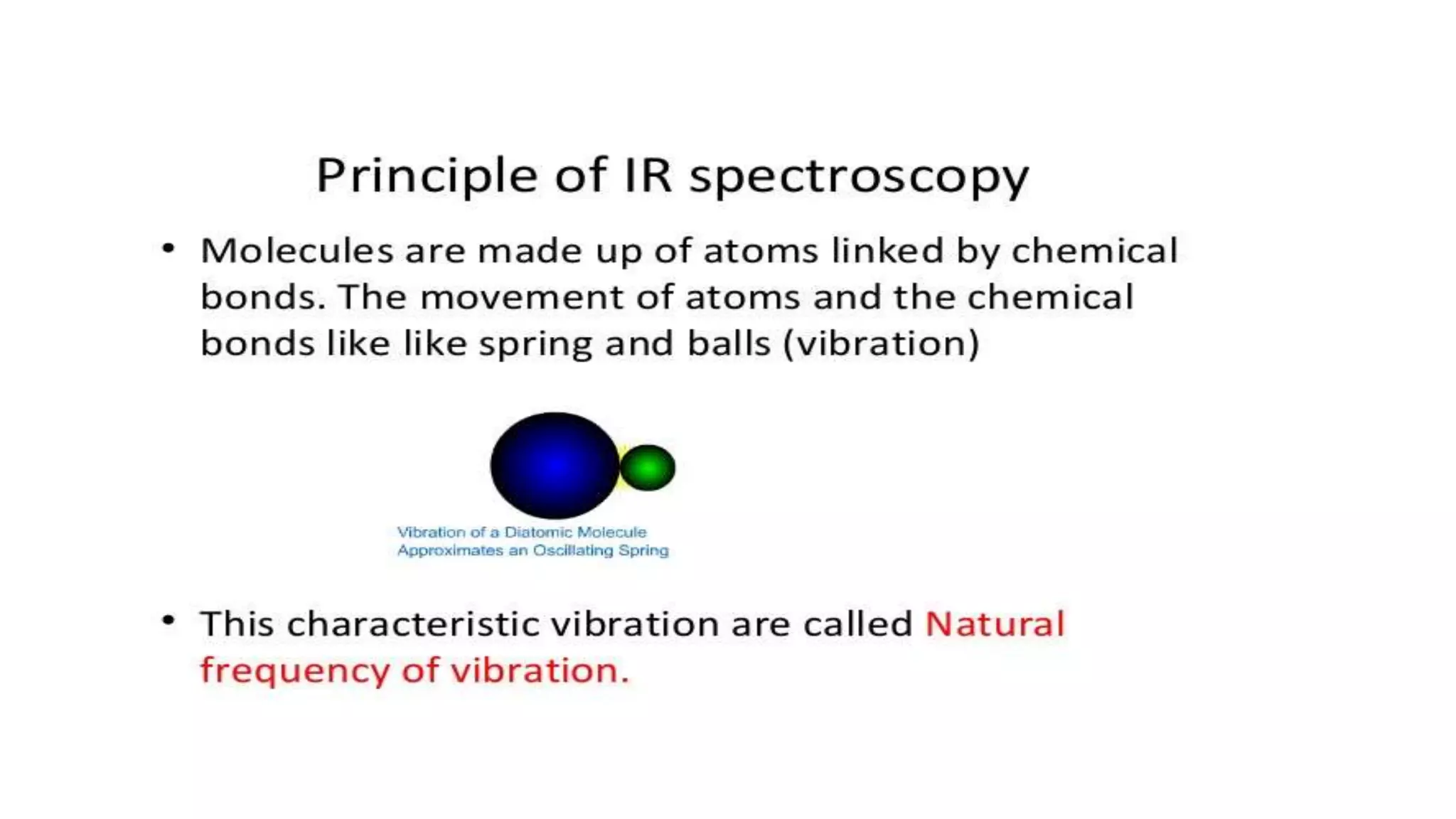
Basic principle of IR spectroscoy

Basic principle of IR spectroscoy

  • 1.
    Presented by: Md. FaysalAh ID:151-29-760 Sec: B 13th DIU
  • 2.
    Spectroscopy • Method of“Seeing the “unseeable” • Using electromagnetic radiation to obtain information about atoms and molecules that are too small to see. atoms molecule
  • 3.
    IR spectroscopy IR spectroscopyis the spectroscopic technique which uses the Infrared light and studies its interaction with the molecules. The spectra generated can give a lot of information about the molecule, especially about the functional groups associated.
  • 4.
    Basics of IRspectrophotometer Wave number = 1 Wavelength in centimeters
  • 5.
    In the IRspectroscopy, the absorbed energy brings about predominant changes in the vibrational energy which depends upon three things. i) Masses of the atoms present in a molecule, ii) Strength of the bonds iii) The arrangement of atoms within the molecule.
  • 6.
    Instrumentation of IRspectrophotometer:
  • 7.
    Instrumentation of IRspectrophotometer:
  • 11.
    When energy inthe form of infrared radiation is applied then it causes the vibration between the atoms of the molecules and when, Applied infrared frequency = Natural frequency of vibration Then, Absorption of IR radiation takes place and a peak is observed. Different functional groups absorb characteristic frequencies of IR radiation. Hence gives the characteristic peak value. Therefore, IR spectrum of a chemical substance is a finger print of a molecule for its identification.
  • 12.
    Criteria for acompound to absorb IR radiation 1. Correct wavelength of radiation 2. Change in dipole moment 1. Correct wavelength of radiation: A molecule to absorb IR radiation, the natural frequency of vibrations of some part of a molecule is the same as the frequency of incident radiation.
  • 13.
    2. Change indipole moment : • A molecule can only absorb IR radiation when its absorption cause a change in its electric dipole. • A molecule is said to have an electric dipole when there is a slight positive and a slight negative charge on its component of atoms.
  • 14.
    Molecular vibrations There are2 types of vibrations: 1.Stretching vibrations 2.Bending vibrations 1. Stretching vibrations: Occurs at higher energy: 4000-1250 cm-1 2 types: a) Symmetrical stretching b)Asymmetrical stretching
  • 15.
  • 16.
    2. Bending vibrations Thepositions of the atom change with respect to the original bond axis. Occurs at low energy: 1400-666 cm-1 . • There are 2 types: a) In plane bending: scissoring, rocking b) Out plane bending: wagging, twisting
  • 17.
  • 18.
    • IR region:0.8 µm (800nm) to 1000 µm (1mm) Sub divided into 1.Near IR: 0.8-2 µm 2.Middle IR: 2-15 µm 3.Far IR: 15-1000 µm Most of the analytical applications are confined to the middle IR region because absorption of organic molecules are high in this region.