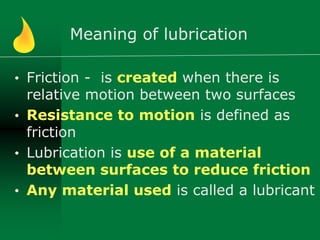
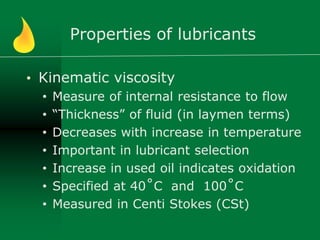
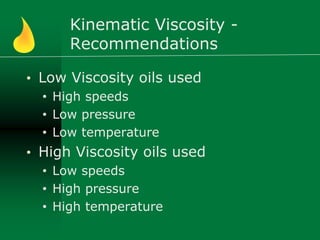
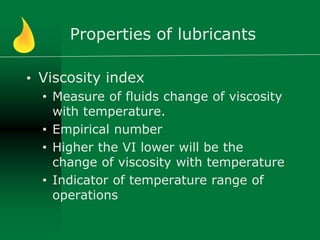
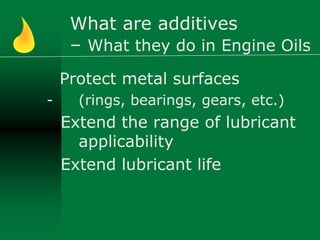
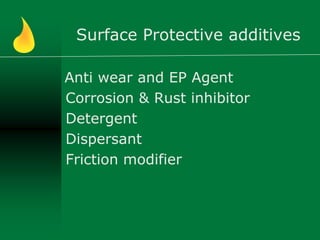
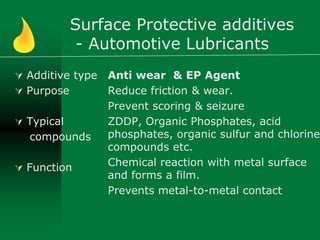
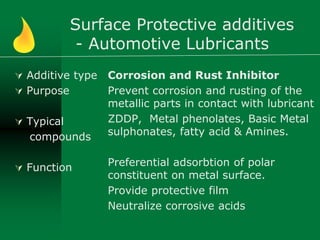
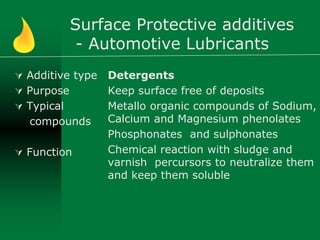
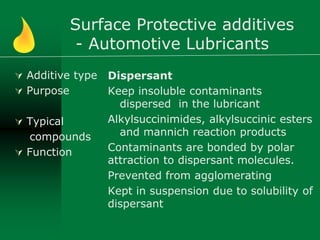
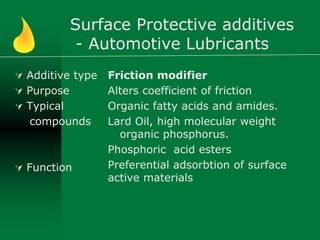
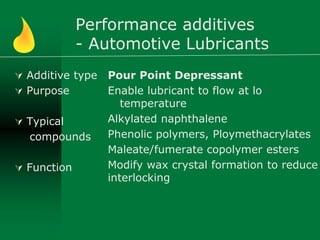
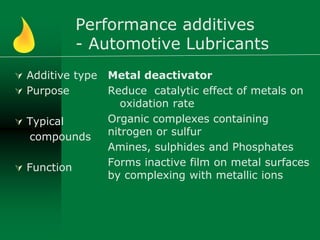
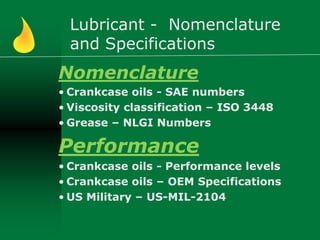
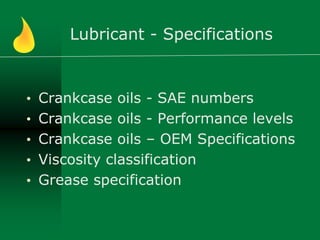
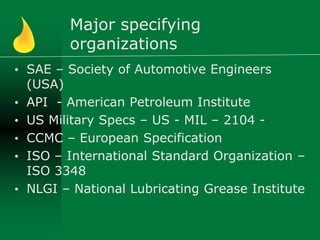
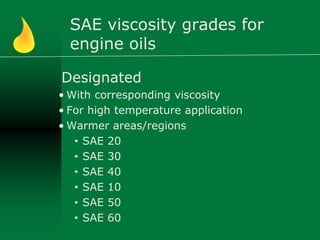
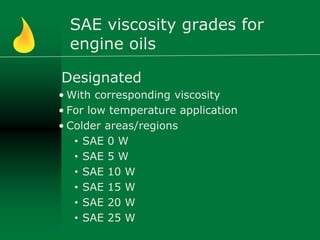
The document discusses the basics of lubrication and lubricants. It defines lubrication as using a material between surfaces to reduce friction. There are two main methods of lubrication - hydrodynamic lubrication and boundary lubrication. Hydrodynamic lubrication occurs when two surfaces are completely separated by a fluid film, while boundary lubrication occurs when hydrodynamic lubrication fails through adsorption or chemical reaction. Common types of lubricants include liquids, solids, and semi-solids. The document also discusses properties of lubricants like viscosity, viscosity index, pour point, and flash point. It provides examples of typical lubricant applications and components like base oils and additives.