Downloaded 312 times





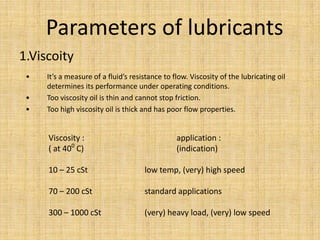
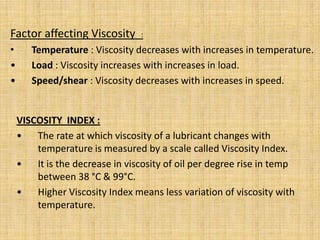
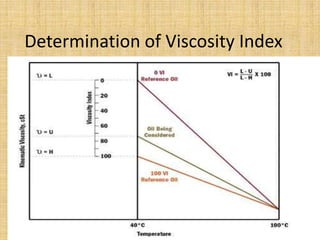
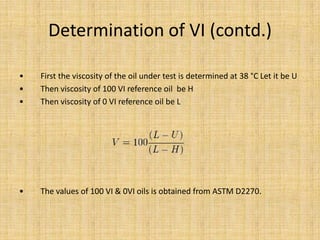

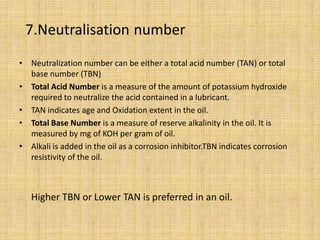
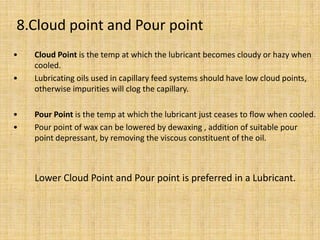


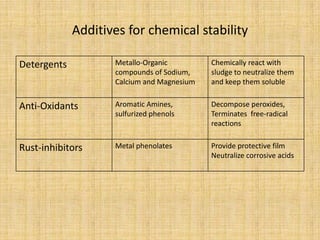
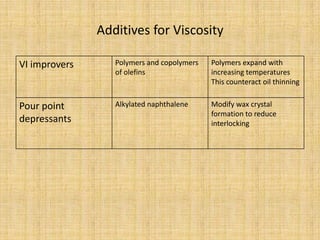
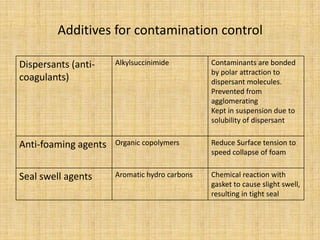
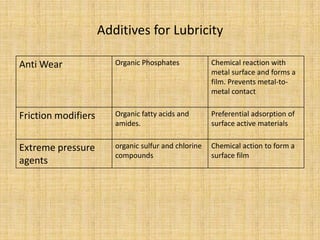
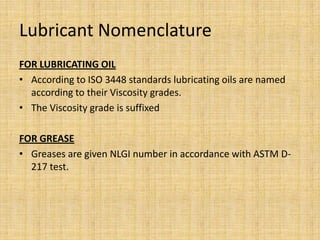
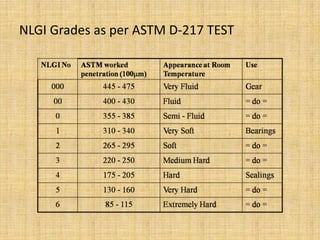
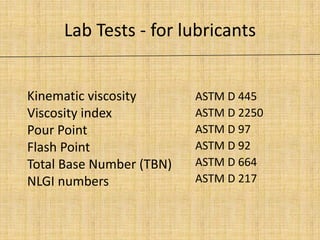
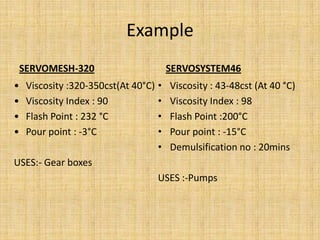


This document discusses lubricants, their functions, properties, types, additives, and testing. The key points are: 1. Lubricants reduce friction and wear between moving parts, protect from corrosion, and carry away heat. The main types are solid, semi-solid (grease), and liquid. 2. Important lubricant properties include viscosity, viscosity index, flash point, pour point, and demulsification number. Additives enhance properties like chemical stability, viscosity, contamination control, and lubricity. 3. Lubricants are tested using standards like ASTM to determine properties. Grease viscosity is indicated using NLGI grades while oil viscosity uses ISO viscosity grades. Tests measure viscosity,


