LUBRICANTS
•Lubricants are substances which
reduce fiction and wear between
two surfaces.
•It is applied at the interface of the
two surfaces.
•Lubricants also help reduce the
heat that is generated at the
interface of the two surfaces that are
in contact with each other and
moving.
Some of the main functions of lubricants are:
 Keep parts moving smoothly.
 Transfer heat to prevent overheating.
 Reduce fiction and increase efficiency.
 Anti stick coating on surfaces that tend to stick to
one another.
 Carry away debris to prevent clogging.
 Protect against wear ad lengthen the life of the
equipment.
 Transmit power from one equipment to another.
Properties of Lubricants:
 High boiling point
 Low freezing point
 High viscosity index
 Thermal stability
 Hydraulic stability
 Demulsibility
 Prevention of corrosion
 High resistance to oxidation
TYPES OF LUBRICANTS BASED
ON THE MOLECULAR
STRUCTURE OF THE
LUBRICANT MATERIAL AS
WELL AS ITS SHEAR
STRENGTH, LUBRICANTS ARE
CLASSIFIED AS FOLLOWS:
SOLID LUBRICANTS
 A solid lubricant is a
solid material which is
applied or inserted
between two moving
surfaces or bearing
surfaces.
 Solid lubricants are
used in a powder form,
as lubricating grease,
in suspensions, in
metallic films, or in
bonded lubricants.
 Solid lubricants are solid materials, which
reduce coefficient of friction and wear of
rubbing parts preventing direct contact
between their surfaces even under high
loads.
 Solid lubricants are generally used when the
conditions are extreme.
ADVANTAGE
 Ability to work under high loads.
 High thermal stability.
 Diversity of the application forms
DISADVANTAGE
 Higher coefficient of friction and wear as
compared to hydrodynamic regime.
 Low stability of the lubrication film.
 Less convenient system of the lubricant
delivery to the friction surfaces. In contrast to
solid lubricants fluid lubricants are
continuously supplied, filtered and cooled.
EXAMPLES OF SOLID LUBRICANTS
GRAPHITE
 A gray crystalline allotropic
form of carbon which occurs as a
mineral in some rocks and can be
made from coke. It is used as a
solid lubricant.
 It is a good conductor of heat and
electricity. Its high conductivity makes it useful
in electronic products such as electrodes, batteries,
and solar panels.
MOLYBDENUM DISULFIDE MOS₂
 Is used to make alloys.
It is used in steel alloys
to increase strength,
hardness, electrical
conductivity and
resistance to corrosion
and wear. These 'moly steel'
alloys are used in parts of engines.
 used as a dry lubricant in, e.g. greases, dispersions,
friction materials and bonded coatings.
LIQUID LUBRICANTS
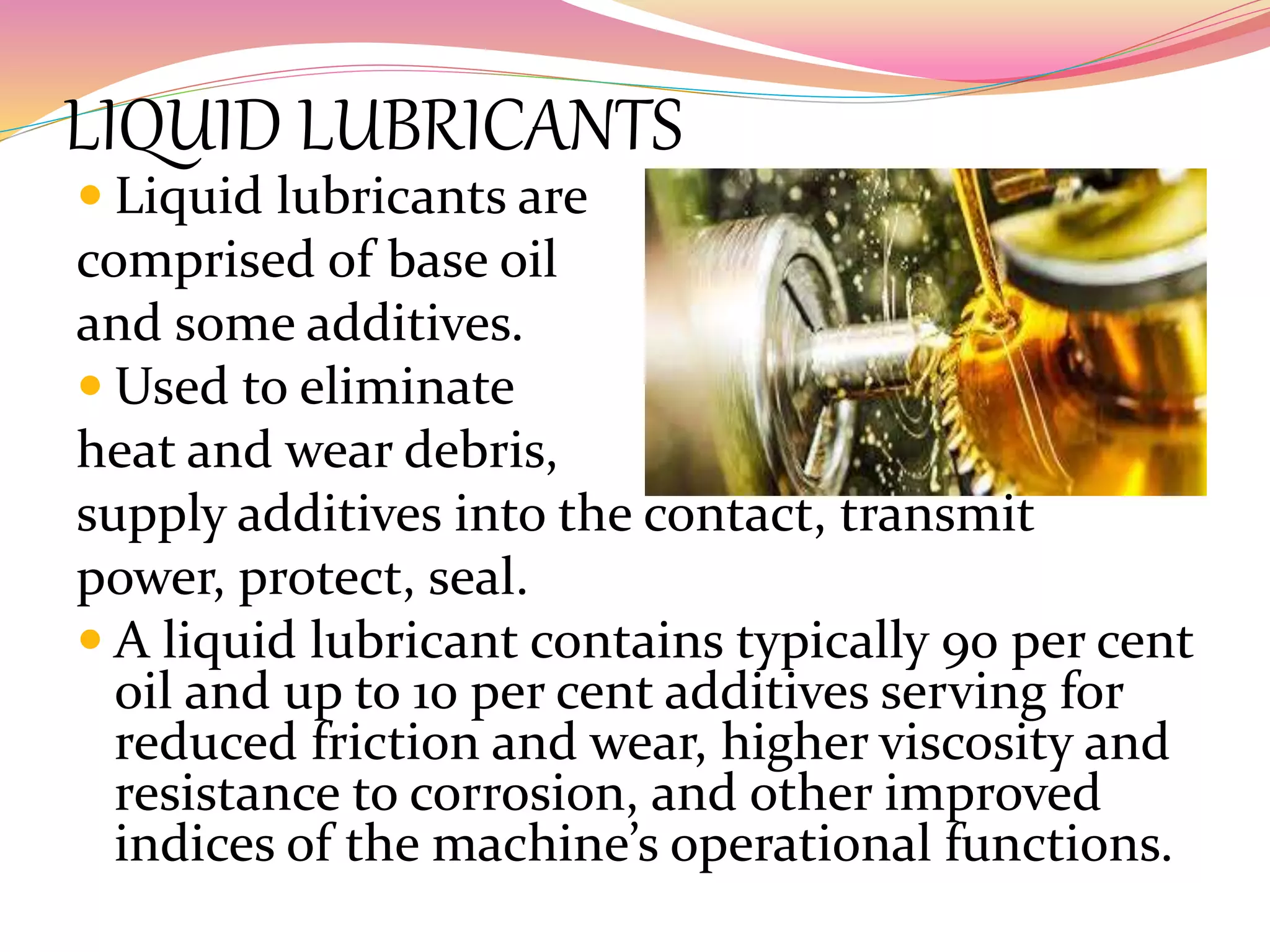
 Liquid lubricants are
comprised of base oil
and some additives.
 Used to eliminate
heat and wear debris,
supply additives into the contact, transmit
power, protect, seal.
 A liquid lubricant contains typically 90 per cent
oil and up to 10 per cent additives serving for
reduced friction and wear, higher viscosity and
resistance to corrosion, and other improved
indices of the machine’s operational functions.
EXAMPLES OF LIQUID LUBRICANTS
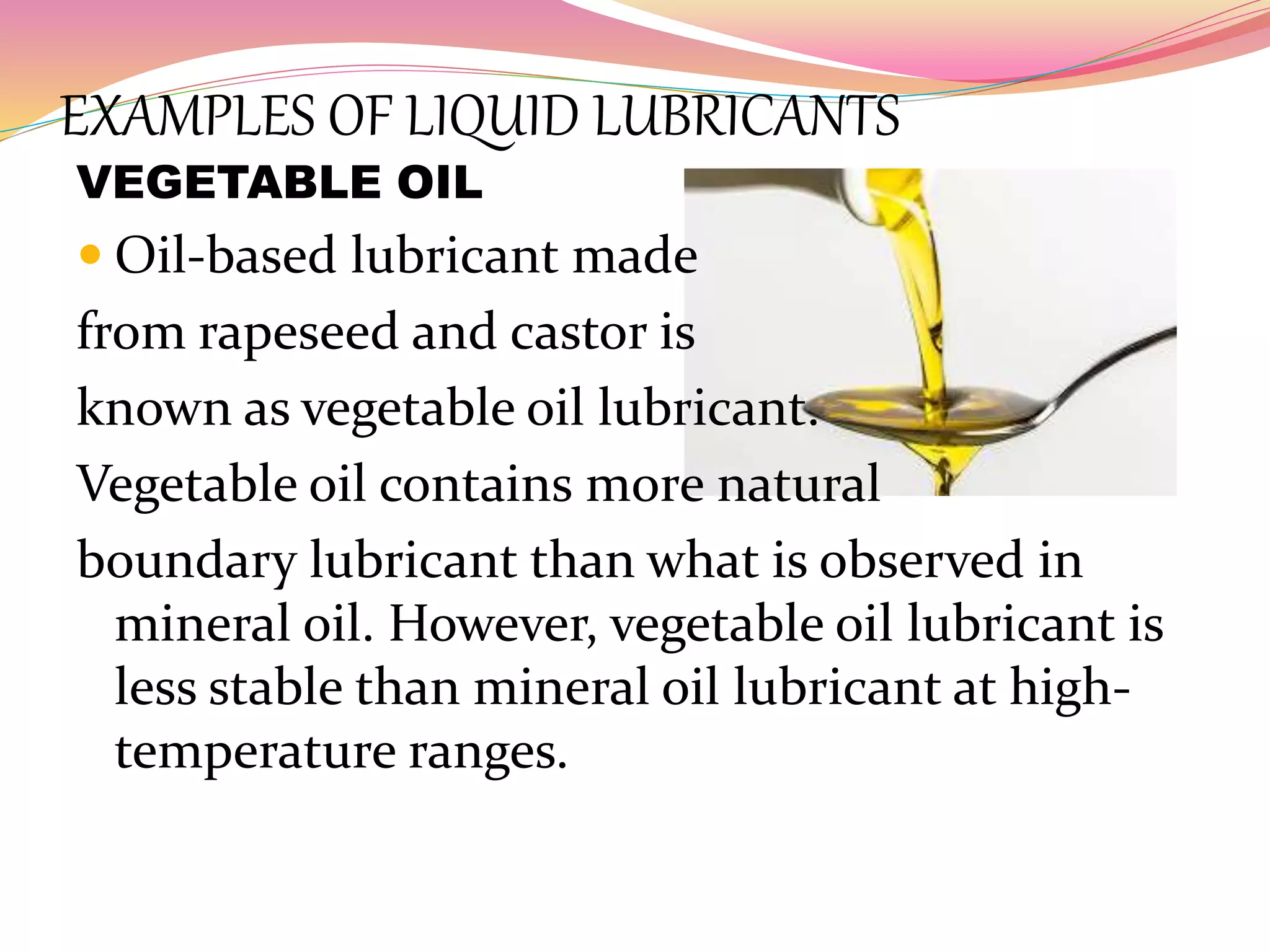
VEGETABLE OIL
 Oil-based lubricant made
from rapeseed and castor is
known as vegetable oil lubricant.
Vegetable oil contains more natural
boundary lubricant than what is observed in
mineral oil. However, vegetable oil lubricant is
less stable than mineral oil lubricant at high-
temperature ranges.
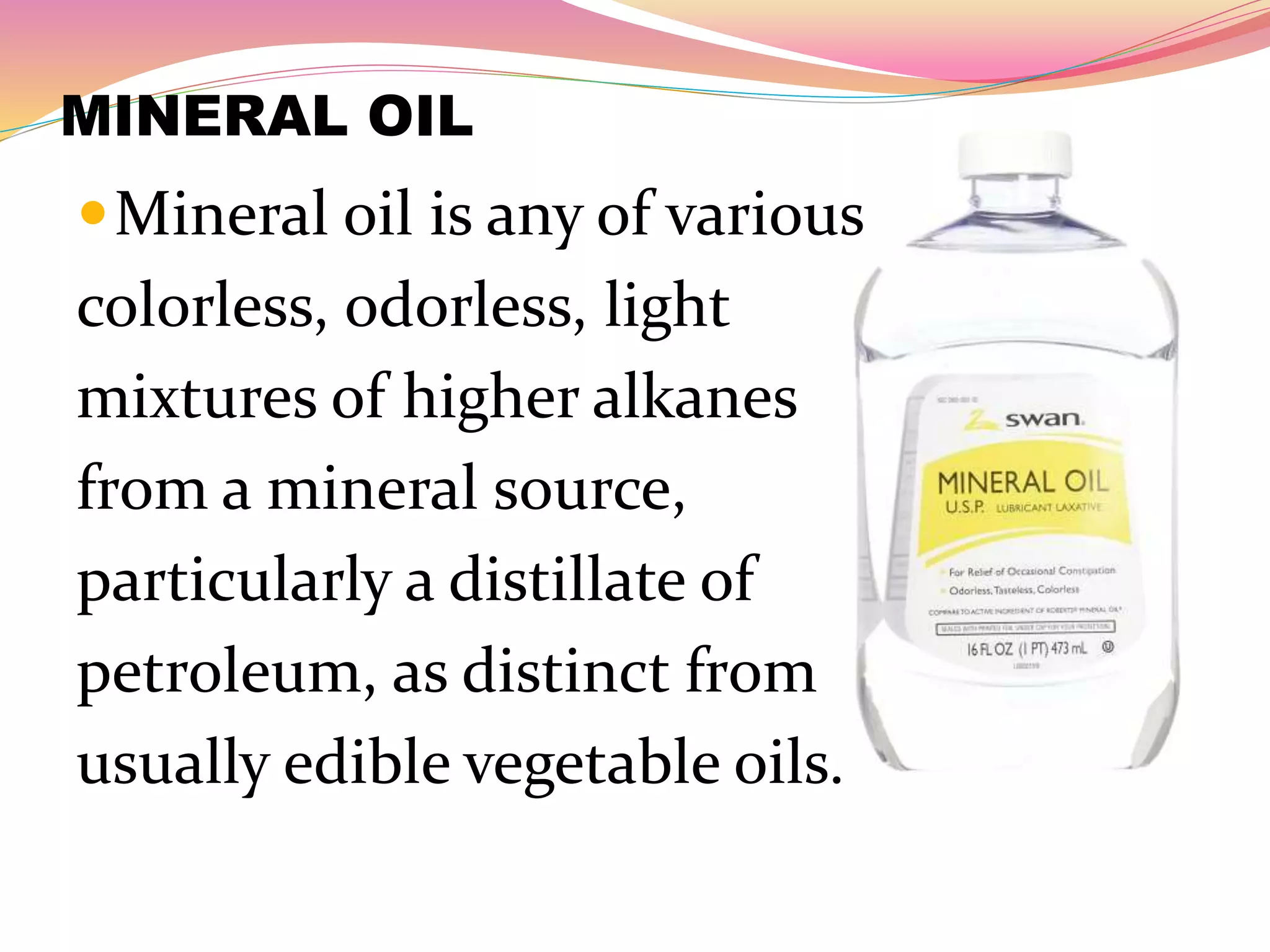
MINERAL OIL
Mineral oil is any of various
colorless, odorless, light
mixtures of higher alkanes
from a mineral source,
particularly a distillate of
petroleum, as distinct from
usually edible vegetable oils.
Mineral-based lubricants are extracted from crude oil.
Mineral oil lubricants are of four types:
The first type is paraffinic oil. It has
good resistance to oxidation. It exhibits
good thermal stability, is less volatile,
and has a high flash point.
The second type of mineral oil lubricant
is naphthenic oil. This type of lubricant
is good for low-temperature
applications. It has a lower flash point
than paraffinic oil lubricant.
The third type of mineral oil lubricant
is multigrade oil. It is made by adding
polymers in mineral oils, thus
enhancing the viscosity index of the
lubricant. These lubricants have
different grade levels whereby a specific
grade of lubricant oil can offer optimal
performance in low temperatures or in
high temperatures.
Lastly, synthetic oil is another type
of mineral oil lubricant. This type
of lubricant was created to
withstand harsh operating
conditions. Jet engines use
synthetic lubricants. These
lubricants are expensive but they
can withstand high levels of heat
and stress.
GASEOUS LUBRICANTS
Gases like nitrogen and helium
are used as lubricants in
applications where film
thickness between tribo-pair is
ultra small.
ADVANTAGE
Large temperature range
No sealing required for lubrication
Very low friction due to low
viscosity
No vaporization
No solidification
No decomposition
DISADVANTAGE
Low load capacity
Lower tolerance for any errors in
load estimation
The need for a specialist designer
in creating smooth surfaces with
low clearance.
THANK YOU!
GOD BLESS 
PRESENTED BY : GROUP 2

Lubricants and Lubrications

  • 1.
  • 2.
    •Lubricants are substanceswhich reduce fiction and wear between two surfaces. •It is applied at the interface of the two surfaces. •Lubricants also help reduce the heat that is generated at the interface of the two surfaces that are in contact with each other and moving.
  • 3.
    Some of themain functions of lubricants are:  Keep parts moving smoothly.  Transfer heat to prevent overheating.  Reduce fiction and increase efficiency.  Anti stick coating on surfaces that tend to stick to one another.  Carry away debris to prevent clogging.  Protect against wear ad lengthen the life of the equipment.  Transmit power from one equipment to another.
  • 4.
    Properties of Lubricants: High boiling point  Low freezing point  High viscosity index  Thermal stability  Hydraulic stability  Demulsibility  Prevention of corrosion  High resistance to oxidation
  • 5.
    TYPES OF LUBRICANTSBASED ON THE MOLECULAR STRUCTURE OF THE LUBRICANT MATERIAL AS WELL AS ITS SHEAR STRENGTH, LUBRICANTS ARE CLASSIFIED AS FOLLOWS:
  • 6.
    SOLID LUBRICANTS  Asolid lubricant is a solid material which is applied or inserted between two moving surfaces or bearing surfaces.  Solid lubricants are used in a powder form, as lubricating grease, in suspensions, in metallic films, or in bonded lubricants.
  • 7.
     Solid lubricantsare solid materials, which reduce coefficient of friction and wear of rubbing parts preventing direct contact between their surfaces even under high loads.  Solid lubricants are generally used when the conditions are extreme.
  • 8.
    ADVANTAGE  Ability towork under high loads.  High thermal stability.  Diversity of the application forms DISADVANTAGE  Higher coefficient of friction and wear as compared to hydrodynamic regime.  Low stability of the lubrication film.  Less convenient system of the lubricant delivery to the friction surfaces. In contrast to solid lubricants fluid lubricants are continuously supplied, filtered and cooled.
  • 9.
    EXAMPLES OF SOLIDLUBRICANTS GRAPHITE  A gray crystalline allotropic form of carbon which occurs as a mineral in some rocks and can be made from coke. It is used as a solid lubricant.  It is a good conductor of heat and electricity. Its high conductivity makes it useful in electronic products such as electrodes, batteries, and solar panels.
  • 10.
    MOLYBDENUM DISULFIDE MOS₂ Is used to make alloys. It is used in steel alloys to increase strength, hardness, electrical conductivity and resistance to corrosion and wear. These 'moly steel' alloys are used in parts of engines.  used as a dry lubricant in, e.g. greases, dispersions, friction materials and bonded coatings.
  • 11.
    LIQUID LUBRICANTS  Liquidlubricants are comprised of base oil and some additives.  Used to eliminate heat and wear debris, supply additives into the contact, transmit power, protect, seal.  A liquid lubricant contains typically 90 per cent oil and up to 10 per cent additives serving for reduced friction and wear, higher viscosity and resistance to corrosion, and other improved indices of the machine’s operational functions.
  • 12.
    EXAMPLES OF LIQUIDLUBRICANTS VEGETABLE OIL  Oil-based lubricant made from rapeseed and castor is known as vegetable oil lubricant. Vegetable oil contains more natural boundary lubricant than what is observed in mineral oil. However, vegetable oil lubricant is less stable than mineral oil lubricant at high- temperature ranges.
  • 13.
    MINERAL OIL Mineral oilis any of various colorless, odorless, light mixtures of higher alkanes from a mineral source, particularly a distillate of petroleum, as distinct from usually edible vegetable oils.
  • 14.
    Mineral-based lubricants areextracted from crude oil. Mineral oil lubricants are of four types: The first type is paraffinic oil. It has good resistance to oxidation. It exhibits good thermal stability, is less volatile, and has a high flash point. The second type of mineral oil lubricant is naphthenic oil. This type of lubricant is good for low-temperature applications. It has a lower flash point than paraffinic oil lubricant.
  • 15.
    The third typeof mineral oil lubricant is multigrade oil. It is made by adding polymers in mineral oils, thus enhancing the viscosity index of the lubricant. These lubricants have different grade levels whereby a specific grade of lubricant oil can offer optimal performance in low temperatures or in high temperatures.
  • 16.
    Lastly, synthetic oilis another type of mineral oil lubricant. This type of lubricant was created to withstand harsh operating conditions. Jet engines use synthetic lubricants. These lubricants are expensive but they can withstand high levels of heat and stress.
  • 17.
    GASEOUS LUBRICANTS Gases likenitrogen and helium are used as lubricants in applications where film thickness between tribo-pair is ultra small.
  • 18.
    ADVANTAGE Large temperature range Nosealing required for lubrication Very low friction due to low viscosity No vaporization No solidification No decomposition
  • 19.
    DISADVANTAGE Low load capacity Lowertolerance for any errors in load estimation The need for a specialist designer in creating smooth surfaces with low clearance.
  • 20.
    THANK YOU! GOD BLESS PRESENTED BY : GROUP 2