BASIC ECONOMIC CONCEPTS
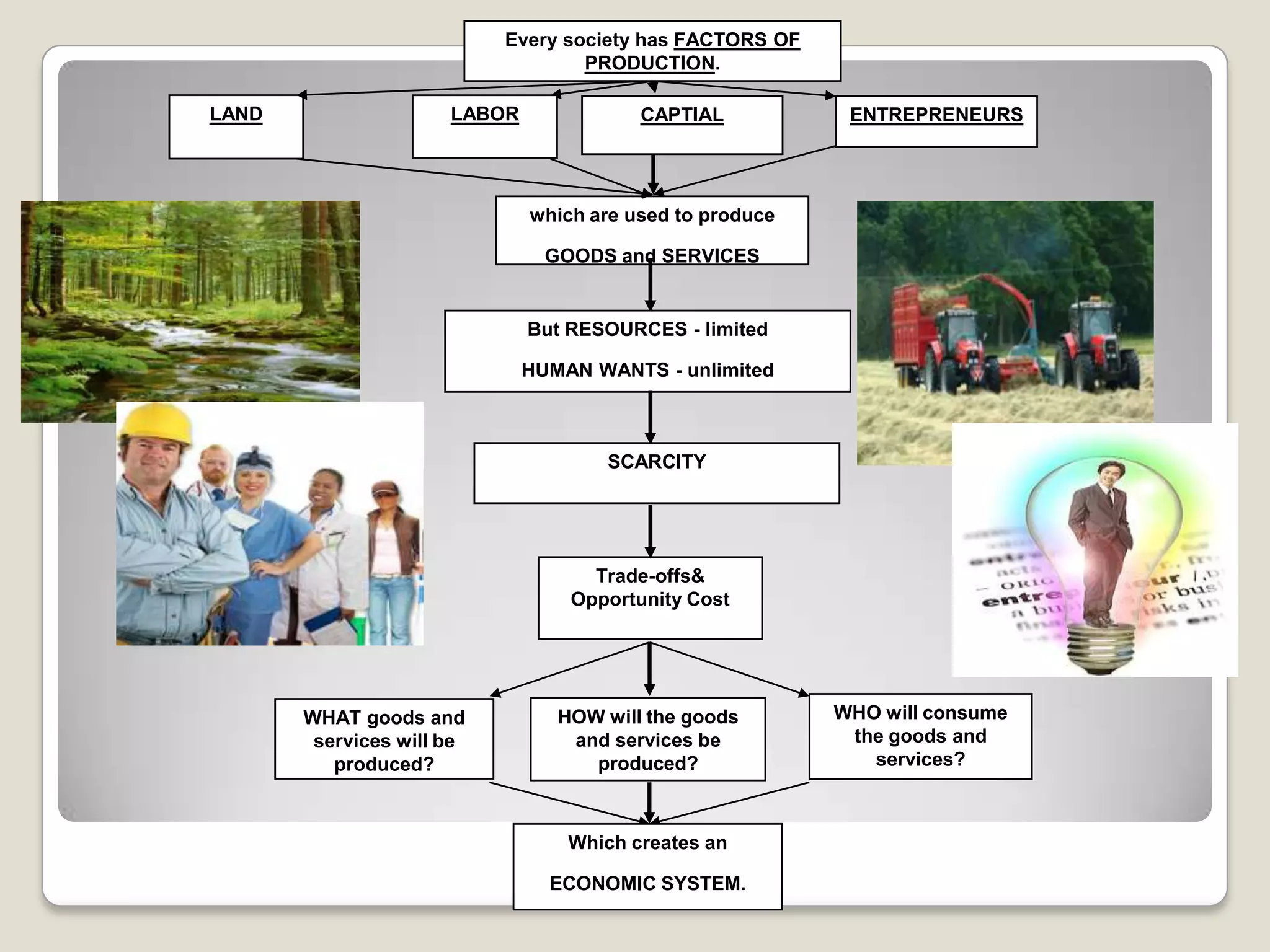
Every society has FACTORS OF
                                   PRODUCTION.

LAND                  LABOR              CAPTIAL           ENTREPRENEURS


                              which are used to produce

                                GOODS and SERVICES


                              But RESOURCES - limited

                              HUMAN WANTS - unlimited


                                     SCARCITY


                                    Trade-offs&
                                  Opportunity Cost


       WHAT goods and            HOW will the goods       WHO will consume
        services will be          and services be          the goods and
          produced?                 produced?                services?


                                  Which creates an

                                ECONOMIC SYSTEM.
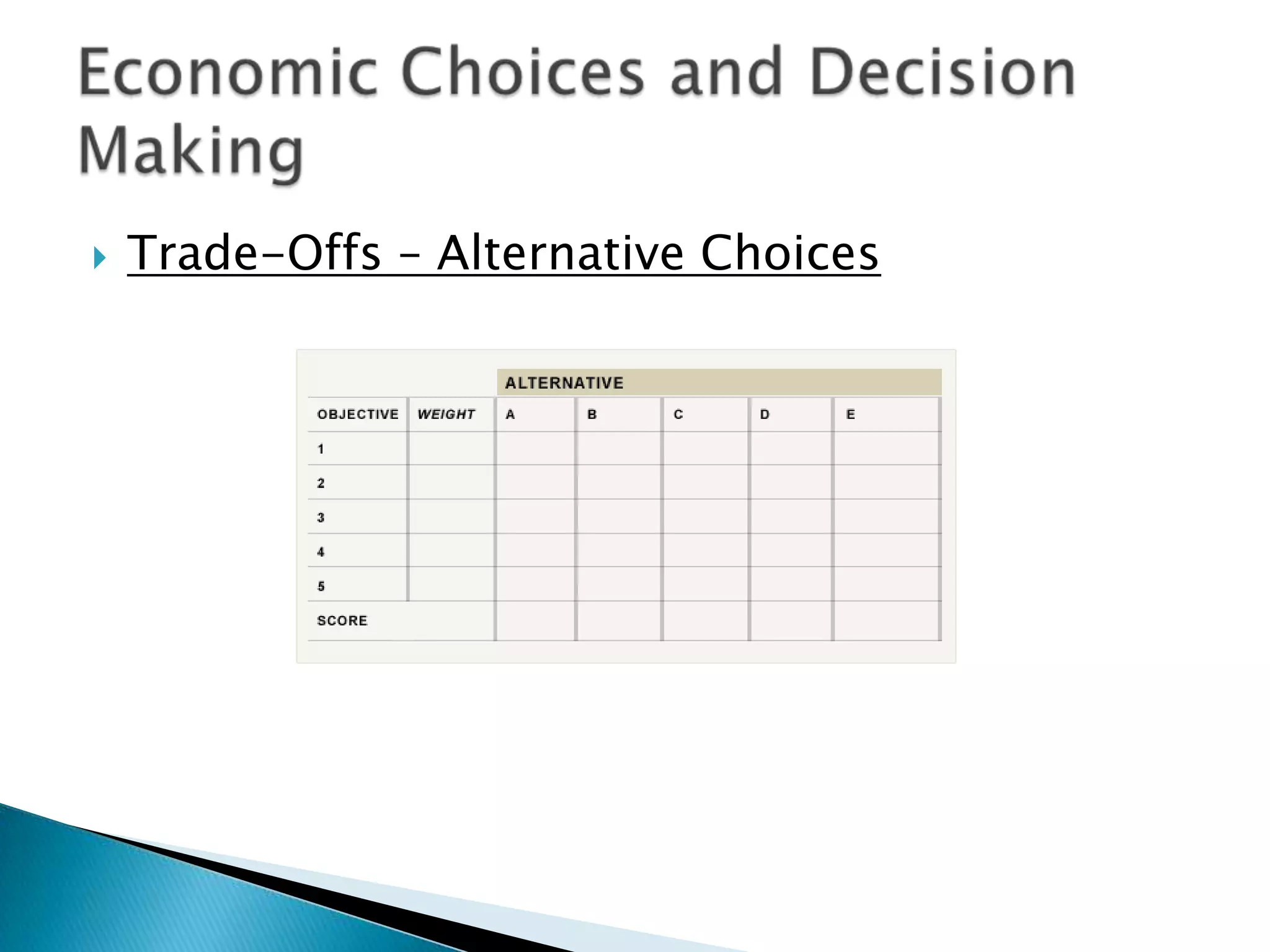
   Trade-Offs – Alternative Choices
   Should I go to the movies with my friends or
    should I do my Economics homework?
   If I do my Eco homework, what is my benefit
    and loss?
   If I go see the Bourne Ultimatum, what is my
    benefit and loss?
   Businesses make trade-offs regarding
    land, labor, and capital everyday.
   A farmer who plants broccoli can not use the
    same space to plant cauliflower .
   A factory that uses all of its machines to
    make chairs can’t make tables.
   Economists often call this “guns or butter”.
   A country that uses most of it’s resources for
    military goods can’t use them for consumer
    goods!
   During WWII, the US needed copper for
    munitions, so pennies were made from
    steel, not copper. (A trade-off)
   Because so many U.S. troops are in Iraq, they
    aren’t available to be sent to Korea, where
    there is a threat of nuclear weapons use or
    production from communist North Korea.
   Instead of considering an invasion the US has
    been negotiating with North Korea.
   All economic knowledge can be boiled down
    to a single phrase:


There is no such thing as a free lunch.
   opportunity cost: what you must give up in order
    to get something.

   Opportunity cost is crucial to understanding
    individual choice:
   Ex.: The cost of attending economics class is
    what you must give up to be in the classroom
    during the lecture.
     Sleep? Watching TV? Work?
   All costs are ultimately opportunity costs.


                                       9
I WOULD RATHER BE SURFING THE INTERNET.

   In fact, everybody thinks about opportunity
    cost.

   The bumper stickers that say:
   “I would rather be
    ….{fishing, golfing, swimming, etc…}” are
    referring to the “opportunity cost.”

   It is all about what you have to forgo to obtain
    your choice.
                                       10
   Production Possibility Curve - Represents
    combinations of goods and services an
    economy can produce when all productive
    resources are fully used

Basic economic concepts

  • 1.
  • 2.
    Every society hasFACTORS OF PRODUCTION. LAND LABOR CAPTIAL ENTREPRENEURS which are used to produce GOODS and SERVICES But RESOURCES - limited HUMAN WANTS - unlimited SCARCITY Trade-offs& Opportunity Cost WHAT goods and HOW will the goods WHO will consume services will be and services be the goods and produced? produced? services? Which creates an ECONOMIC SYSTEM.
  • 3.
    Trade-Offs – Alternative Choices
  • 4.
    Should I go to the movies with my friends or should I do my Economics homework?  If I do my Eco homework, what is my benefit and loss?  If I go see the Bourne Ultimatum, what is my benefit and loss?
  • 5.
    Businesses make trade-offs regarding land, labor, and capital everyday.  A farmer who plants broccoli can not use the same space to plant cauliflower .  A factory that uses all of its machines to make chairs can’t make tables.
  • 6.
    Economists often call this “guns or butter”.  A country that uses most of it’s resources for military goods can’t use them for consumer goods!  During WWII, the US needed copper for munitions, so pennies were made from steel, not copper. (A trade-off)
  • 7.
    Because so many U.S. troops are in Iraq, they aren’t available to be sent to Korea, where there is a threat of nuclear weapons use or production from communist North Korea.  Instead of considering an invasion the US has been negotiating with North Korea.
  • 8.
    All economic knowledge can be boiled down to a single phrase: There is no such thing as a free lunch.
  • 9.
    opportunity cost: what you must give up in order to get something.  Opportunity cost is crucial to understanding individual choice:  Ex.: The cost of attending economics class is what you must give up to be in the classroom during the lecture.  Sleep? Watching TV? Work?  All costs are ultimately opportunity costs. 9
  • 10.
    I WOULD RATHERBE SURFING THE INTERNET.  In fact, everybody thinks about opportunity cost.  The bumper stickers that say:  “I would rather be ….{fishing, golfing, swimming, etc…}” are referring to the “opportunity cost.”  It is all about what you have to forgo to obtain your choice. 10
  • 11.
    Production Possibility Curve - Represents combinations of goods and services an economy can produce when all productive resources are fully used