BASIC ACCOUNTING TERMINOLOGY
Presented by
Vikaash Barnwal
Kashi IT, Varanasi
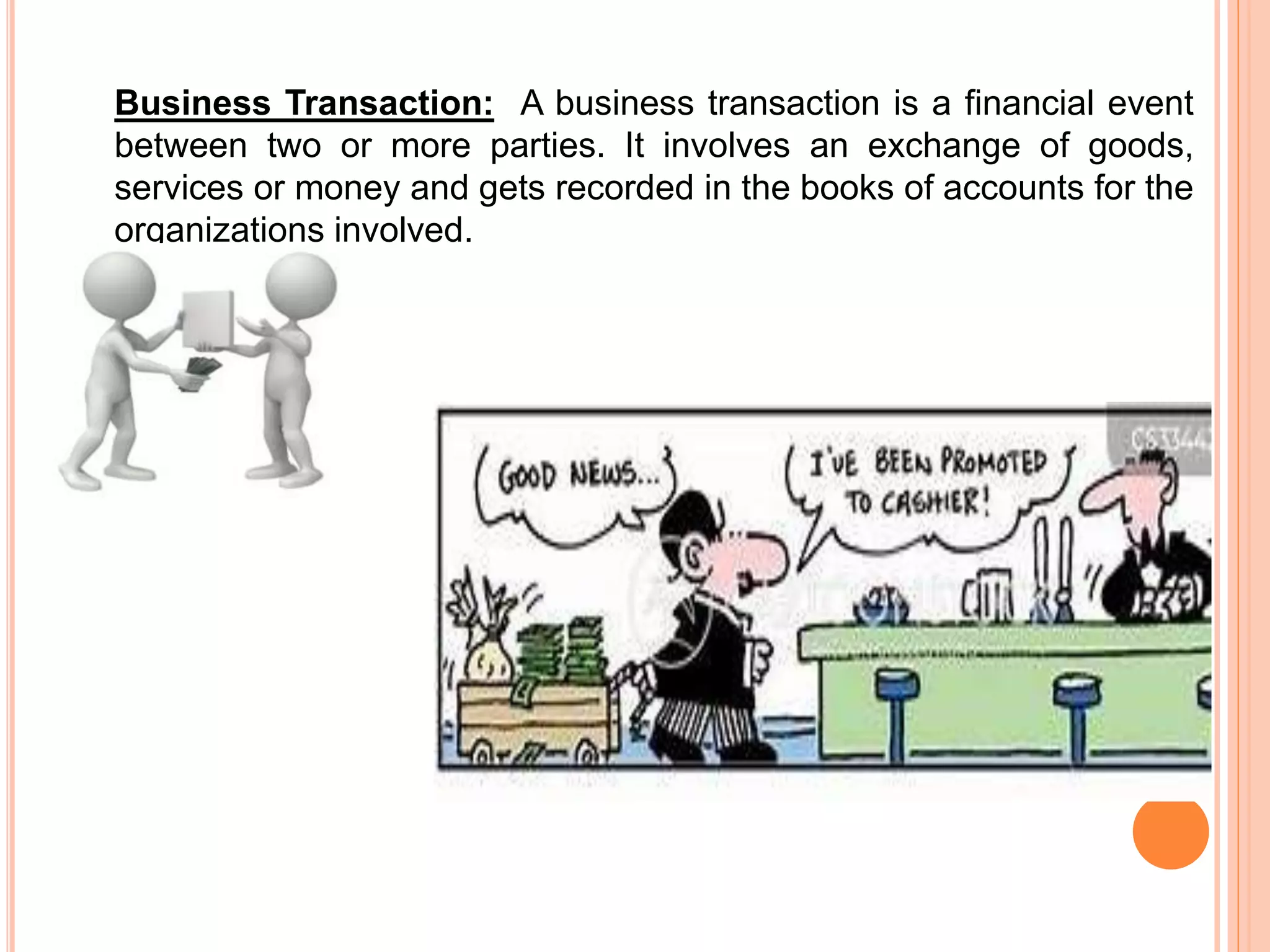
Business Transaction: A business transaction is a financial event
between two or more parties. It involves an exchange of goods,
services or money and gets recorded in the books of accounts for the
organizations involved.
Capital: Capital is a critical component of any business to run its daily
operations and help its future growth. The capital for a business comes
either from its owners or from outsiders (shares, debentures or bonds)
Amount invested at the time of
commencement
Initial investment in business .
Drawings – Drawings refer to the withdrawals made by the
owners of a business for personal use. It gets deducted from the
Owner’s Capital in the Liabilities side of a Balance Sheet.
- A business car using for holiday tour
- Business cash using for personal use
Purchase – Purchase is the activity of buying an item to either use it in
the production of goods and services or resell it to another entity.
Goods purchase
(Purchase)
ASSETS Purchase (Mention
Assets name )
Sales – Sales is an economic activity where a business exchanges
goods or services with another entity for money. It is the primary
source of revenue for any organization.
LIABILITIES
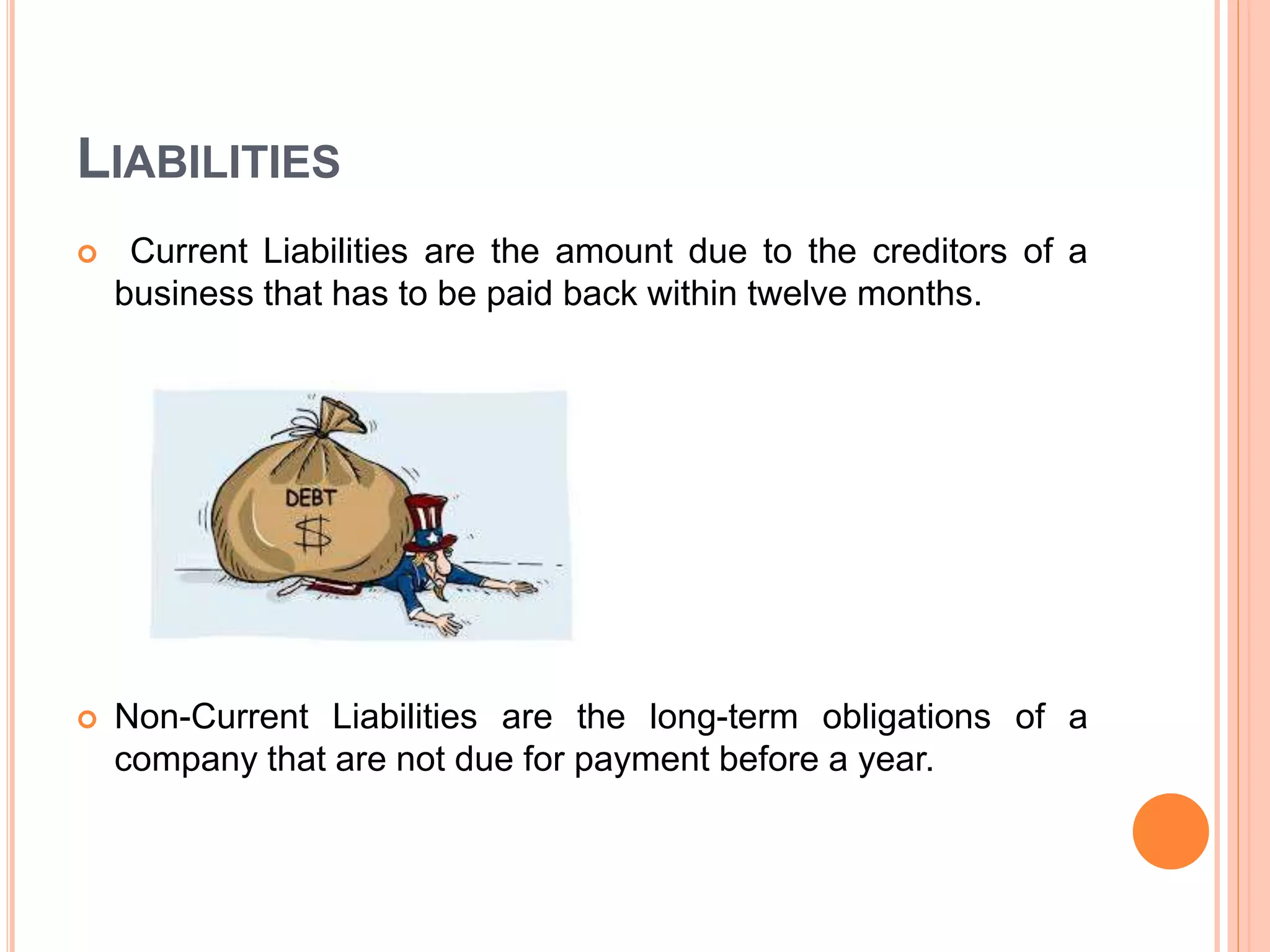
 Current Liabilities are the amount due to the creditors of a
business that has to be paid back within twelve months.
 Non-Current Liabilities are the long-term obligations of a
company that are not due for payment before a year.
Assets (Non-Current and Current) – Current Assets are
the assets that a firm can liquidate within twelve months.
Non-Current Assets are the long-term investments of a
business that they cannot liquidate within a year.
 Fixed assets (Tangible and Intangible) – Tangible Fixed Assets are
the long-term investments of a business that have a physical
existence. Intangible Fixed Assets are the long-term investments
made by a company that doesn’t have a physical existence.
Tangible assets : which we can touch
Intangible Assets: Which we can not touch
 Goods – Goods are the items that a company
manufactures to sell to another entity in exchange for
money.
 When an organization buys goods, it is known as
purchases, and when it sells goods, it is known as sales.
Services are essentially intangible activities which are separately
identifiable and provide satisfaction of wants.
Their purchase does not result in the ownership of anything physical.
Services involve an interaction to be realized between the service
provider and the consumer.
Stock – A stock is a financial instrument that represents
the part ownership of a company. Organisations use this
instrument to raise capital for their business.
 Expense – Expenses in accounting refer to the cost incurred
or money the business owners spend to generate revenue. A
business must keep its expenses under control to generate
profits both in the short and long run.
 Income – Income is the revenue that a business earns from
the sale of its goods or services. It is essential for the survival
and growth of any enterprise, and the failure to generate
revenue can lead to a shutdown of the business.
 Profit – Profit is the positive difference between the
income generated from selling goods or services and the
Expenses incurred to perform that business activity. Profit
is the excess of revenues over the expenses.
 Gain – A Gain is an increase in the total value of an
asset of a business. It takes place when the current price
of the asset exceeds its original purchase price. It can
occur at any time during the useful life of an asset.
 Loss – Loss is the excess of the Expenses incurred from
selling goods or services over the income generated to
perform that business activity. Sustained losses over time
can lead to the shutdown of a business organization.
 Voucher – A Voucher is an internal document that a company uses
as supporting evidence for accounting entries. Businesses treat it as
a redeemable transaction bond as it has a monetary value and is
helpful in specific cases.
An accounting voucher is any written documentation supporting
entries recorded in the accounting books. A voucher is
considered a document that shows the goods purchased or the
services are delivered are paid. The payments are recorded in the
respective ledger accounts
 .
 Outstanding Expense : is a type of expense that is due
but has not been paid.
 Prepaid expenses are future expenses that are paid in
advance and hence recognized initially as an asset.
CASH
 Cash is money in the form of currency, which includes all bills, coins,
and currency notes.
BANK
 The total amount of money held at the bank by a person or
company, either in current or deposit accounts.
 Debtors are individuals or businesses that owe money, whether to
banks or other individuals.
 Debtors are often called borrowers if the money owed is to a bank or
financial institution, however, they are called issuers if the debt is in
the form of securities.
 Creditors are individuals or entities that have lent money to another
individual or entity.
 They typically charge interest and the money is owed back to them.
For example, a bank lending money to a person to purchase a house
is a creditor.
DIFFERENCE BETWEEN DEBTORS AND
CREDITORS
BOOKKEEPING
Bookkeeping is a part of the accounting process that deals
with recording of the transactions. It is the systematic
recording and classification of accounting transactions.
Bookkeeping can be described as an accounting function that
is helpful in the accounting process.
The objectives of bookkeeping are as follows:
1. The primary objective of bookkeeping is recording the
financial transactions in an orderly or systematic manner.
2. To summarise the transactions in a chronological order.
3. To provide financial information to both internal and external
users, which will be beneficial in making future plans.
4. To detect potential errors in recording of information.
Types of Bookkeeping
 Single Entry bookkeeping: Single entry bookkeeping is the recording of
transactions using a single entry. The transactions are either recorded
as incoming or outgoing.
 Double Entry bookkeeping: Double entry bookkeeping is that system of
bookkeeping where two entries are given for a transaction, one will be
debit while the other will be a credit entry.
Importance of Bookkeeping
1. Helps in budgeting: Bookkeeping makes it easier for the business
organisation to plan a budget accordingly.
2. It is easier to calculate tax.
3. Bookkeeping makes it easier for analysing the financial performance of
the company.
4. Bookkeeping makes it easier to present the financial information to
investors, which is helpful in decision making related to investment.

Basic Accounting Terminology.pptx

  • 1.
    BASIC ACCOUNTING TERMINOLOGY Presentedby Vikaash Barnwal Kashi IT, Varanasi
  • 2.
    Business Transaction: Abusiness transaction is a financial event between two or more parties. It involves an exchange of goods, services or money and gets recorded in the books of accounts for the organizations involved.
  • 3.
    Capital: Capital isa critical component of any business to run its daily operations and help its future growth. The capital for a business comes either from its owners or from outsiders (shares, debentures or bonds) Amount invested at the time of commencement Initial investment in business .
  • 4.
    Drawings – Drawingsrefer to the withdrawals made by the owners of a business for personal use. It gets deducted from the Owner’s Capital in the Liabilities side of a Balance Sheet. - A business car using for holiday tour - Business cash using for personal use
  • 5.
    Purchase – Purchaseis the activity of buying an item to either use it in the production of goods and services or resell it to another entity. Goods purchase (Purchase) ASSETS Purchase (Mention Assets name )
  • 6.
    Sales – Salesis an economic activity where a business exchanges goods or services with another entity for money. It is the primary source of revenue for any organization.
  • 7.
    LIABILITIES  Current Liabilitiesare the amount due to the creditors of a business that has to be paid back within twelve months.  Non-Current Liabilities are the long-term obligations of a company that are not due for payment before a year.
  • 8.
    Assets (Non-Current andCurrent) – Current Assets are the assets that a firm can liquidate within twelve months. Non-Current Assets are the long-term investments of a business that they cannot liquidate within a year.
  • 9.
     Fixed assets(Tangible and Intangible) – Tangible Fixed Assets are the long-term investments of a business that have a physical existence. Intangible Fixed Assets are the long-term investments made by a company that doesn’t have a physical existence. Tangible assets : which we can touch Intangible Assets: Which we can not touch
  • 10.
     Goods –Goods are the items that a company manufactures to sell to another entity in exchange for money.  When an organization buys goods, it is known as purchases, and when it sells goods, it is known as sales.
  • 11.
    Services are essentiallyintangible activities which are separately identifiable and provide satisfaction of wants. Their purchase does not result in the ownership of anything physical. Services involve an interaction to be realized between the service provider and the consumer.
  • 12.
    Stock – Astock is a financial instrument that represents the part ownership of a company. Organisations use this instrument to raise capital for their business.
  • 13.
     Expense –Expenses in accounting refer to the cost incurred or money the business owners spend to generate revenue. A business must keep its expenses under control to generate profits both in the short and long run.  Income – Income is the revenue that a business earns from the sale of its goods or services. It is essential for the survival and growth of any enterprise, and the failure to generate revenue can lead to a shutdown of the business.
  • 14.
     Profit –Profit is the positive difference between the income generated from selling goods or services and the Expenses incurred to perform that business activity. Profit is the excess of revenues over the expenses.  Gain – A Gain is an increase in the total value of an asset of a business. It takes place when the current price of the asset exceeds its original purchase price. It can occur at any time during the useful life of an asset.  Loss – Loss is the excess of the Expenses incurred from selling goods or services over the income generated to perform that business activity. Sustained losses over time can lead to the shutdown of a business organization.
  • 15.
     Voucher –A Voucher is an internal document that a company uses as supporting evidence for accounting entries. Businesses treat it as a redeemable transaction bond as it has a monetary value and is helpful in specific cases. An accounting voucher is any written documentation supporting entries recorded in the accounting books. A voucher is considered a document that shows the goods purchased or the services are delivered are paid. The payments are recorded in the respective ledger accounts
  • 16.
     .  OutstandingExpense : is a type of expense that is due but has not been paid.  Prepaid expenses are future expenses that are paid in advance and hence recognized initially as an asset.
  • 17.
    CASH  Cash ismoney in the form of currency, which includes all bills, coins, and currency notes.
  • 18.
    BANK  The totalamount of money held at the bank by a person or company, either in current or deposit accounts.
  • 20.
     Debtors areindividuals or businesses that owe money, whether to banks or other individuals.  Debtors are often called borrowers if the money owed is to a bank or financial institution, however, they are called issuers if the debt is in the form of securities.
  • 21.
     Creditors areindividuals or entities that have lent money to another individual or entity.  They typically charge interest and the money is owed back to them. For example, a bank lending money to a person to purchase a house is a creditor.
  • 22.
  • 23.
    BOOKKEEPING Bookkeeping is apart of the accounting process that deals with recording of the transactions. It is the systematic recording and classification of accounting transactions. Bookkeeping can be described as an accounting function that is helpful in the accounting process. The objectives of bookkeeping are as follows: 1. The primary objective of bookkeeping is recording the financial transactions in an orderly or systematic manner. 2. To summarise the transactions in a chronological order. 3. To provide financial information to both internal and external users, which will be beneficial in making future plans. 4. To detect potential errors in recording of information.
  • 24.
    Types of Bookkeeping Single Entry bookkeeping: Single entry bookkeeping is the recording of transactions using a single entry. The transactions are either recorded as incoming or outgoing.  Double Entry bookkeeping: Double entry bookkeeping is that system of bookkeeping where two entries are given for a transaction, one will be debit while the other will be a credit entry. Importance of Bookkeeping 1. Helps in budgeting: Bookkeeping makes it easier for the business organisation to plan a budget accordingly. 2. It is easier to calculate tax. 3. Bookkeeping makes it easier for analysing the financial performance of the company. 4. Bookkeeping makes it easier to present the financial information to investors, which is helpful in decision making related to investment.