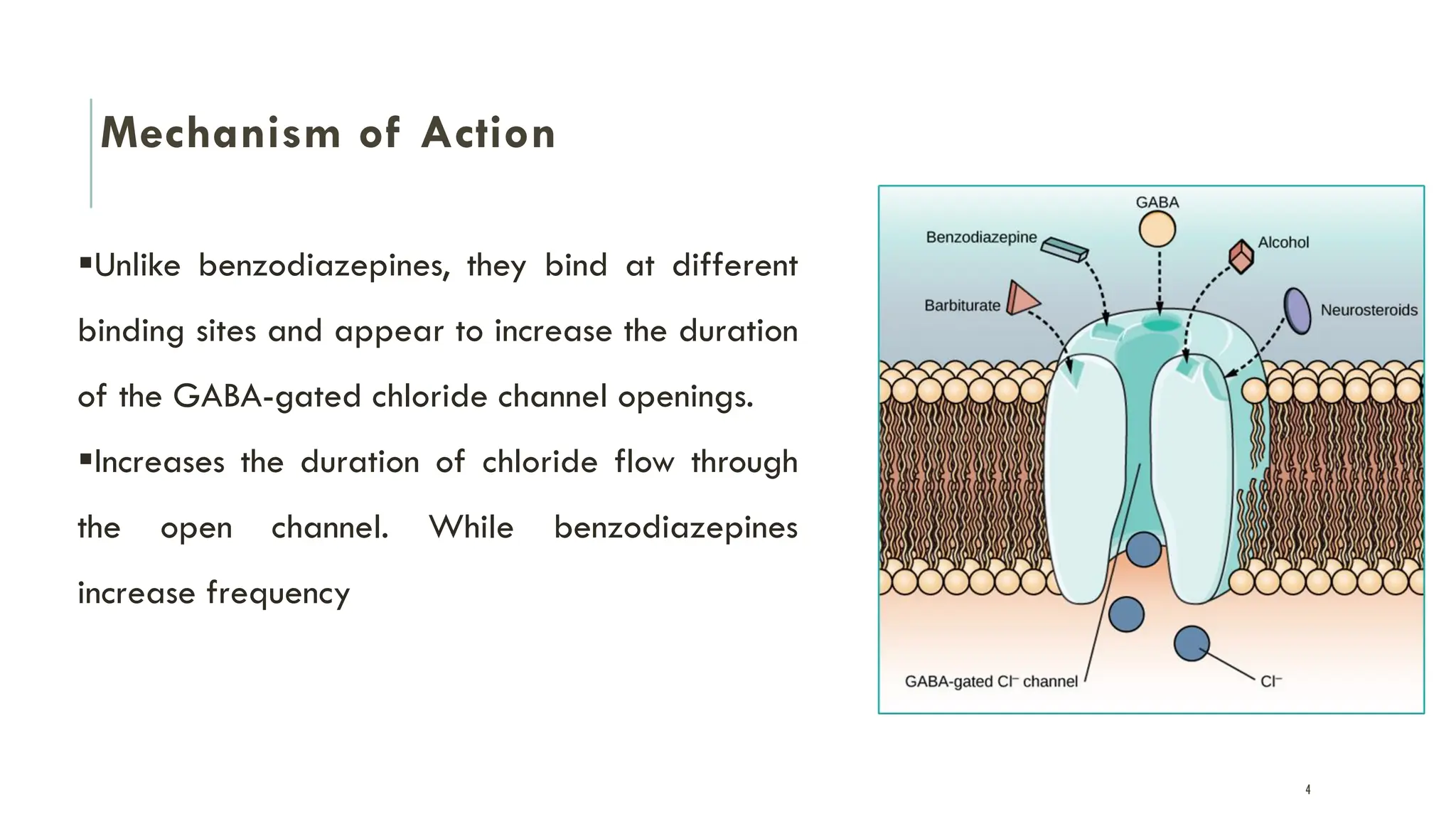
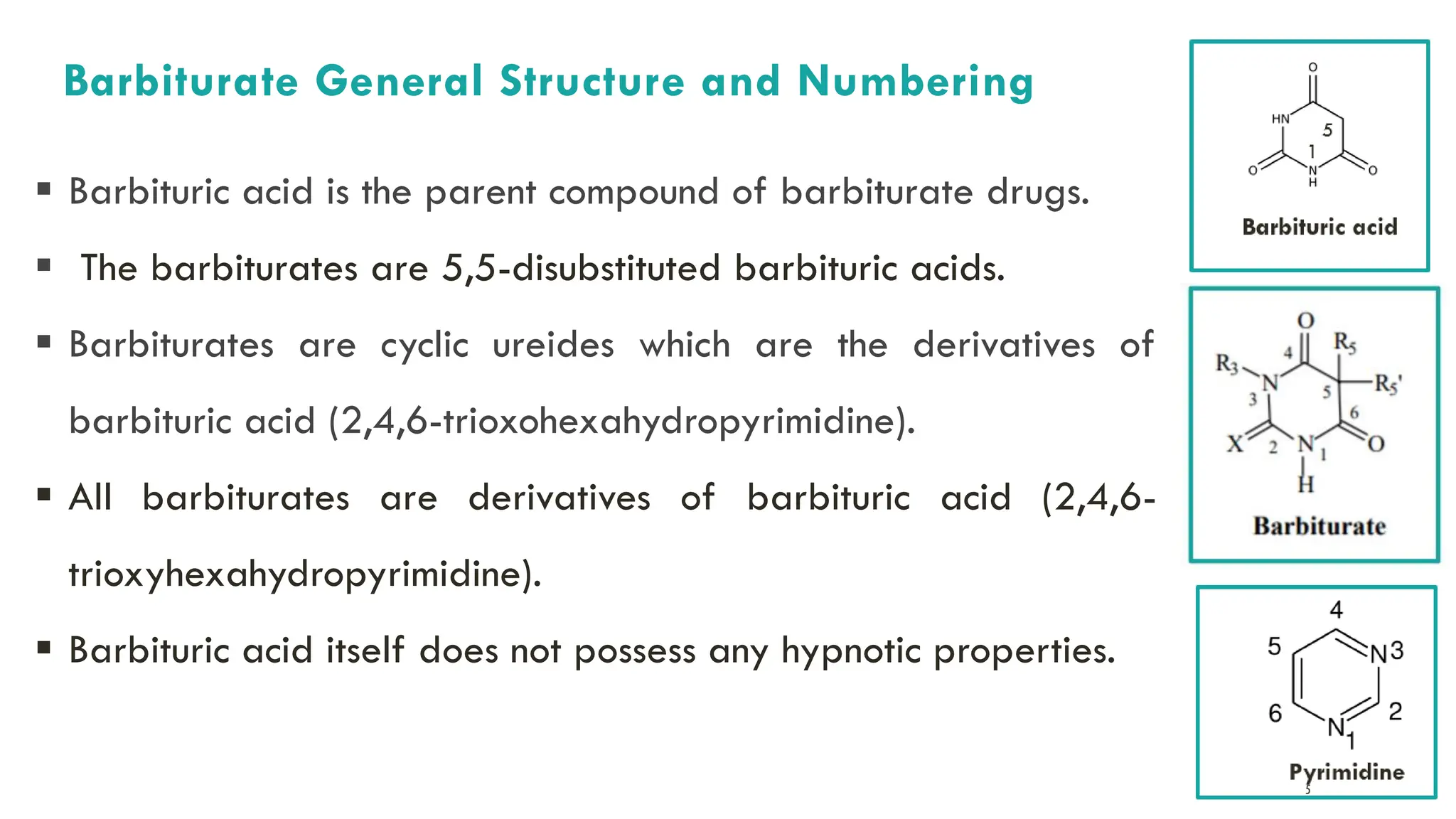
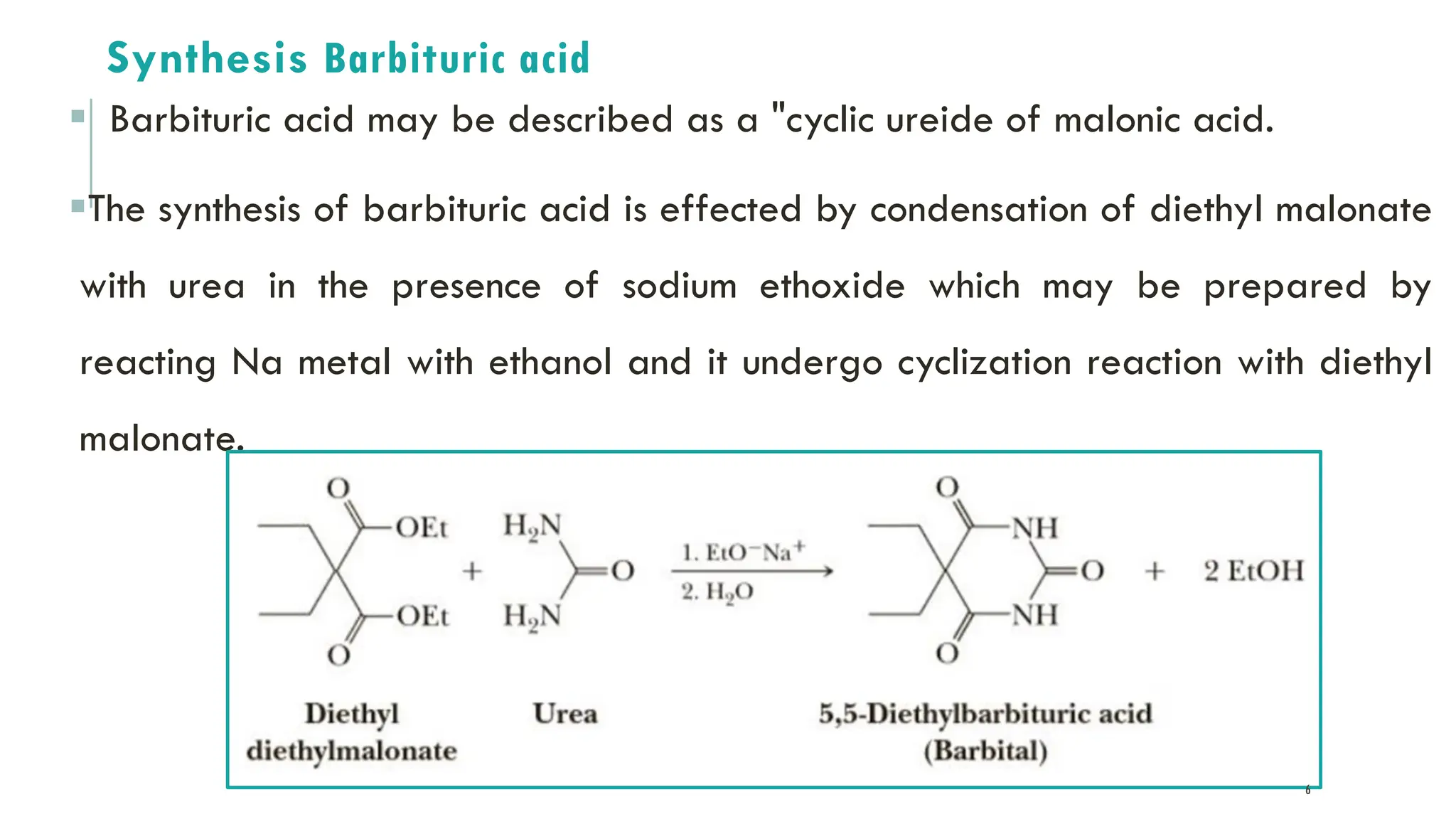
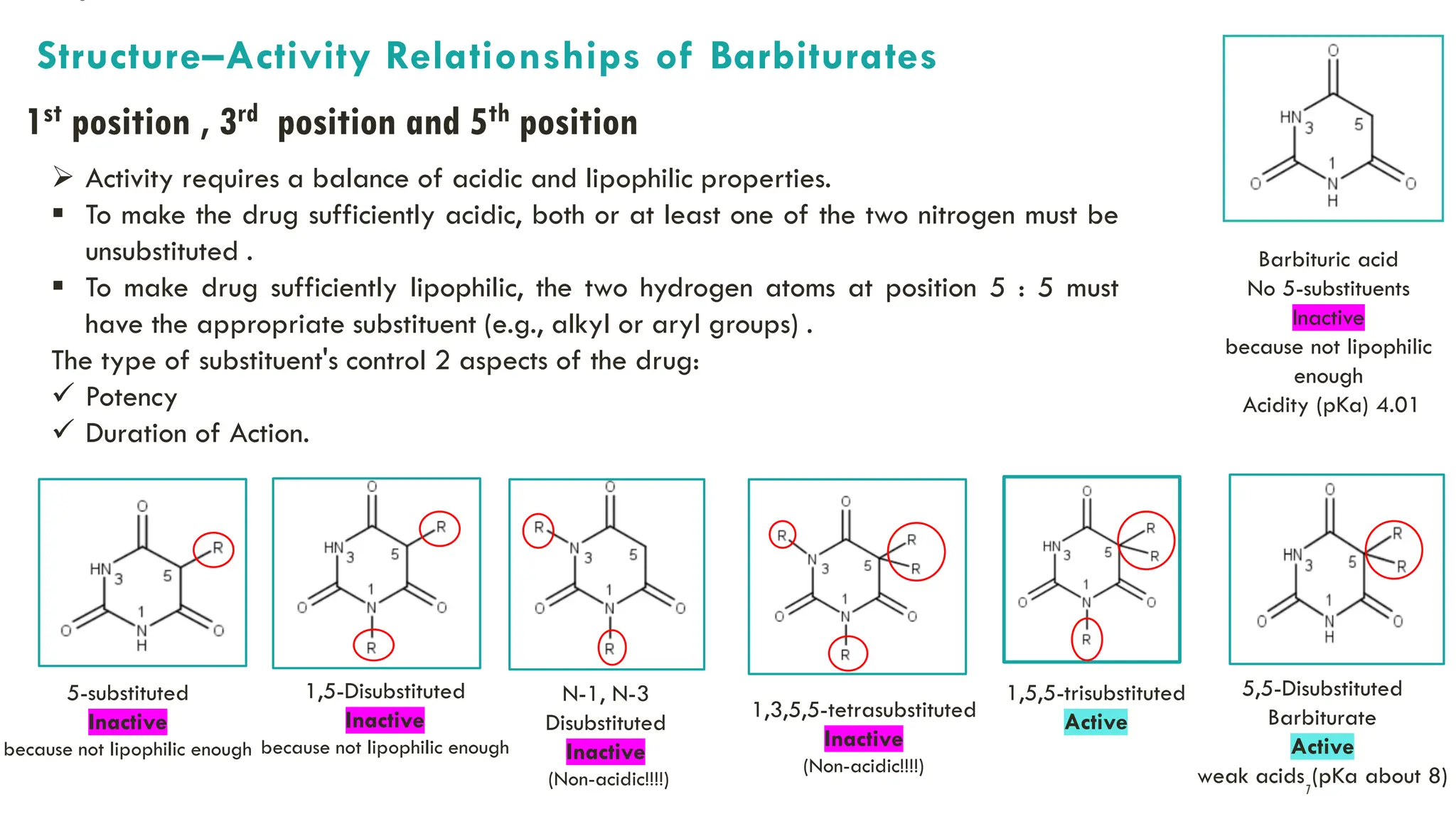
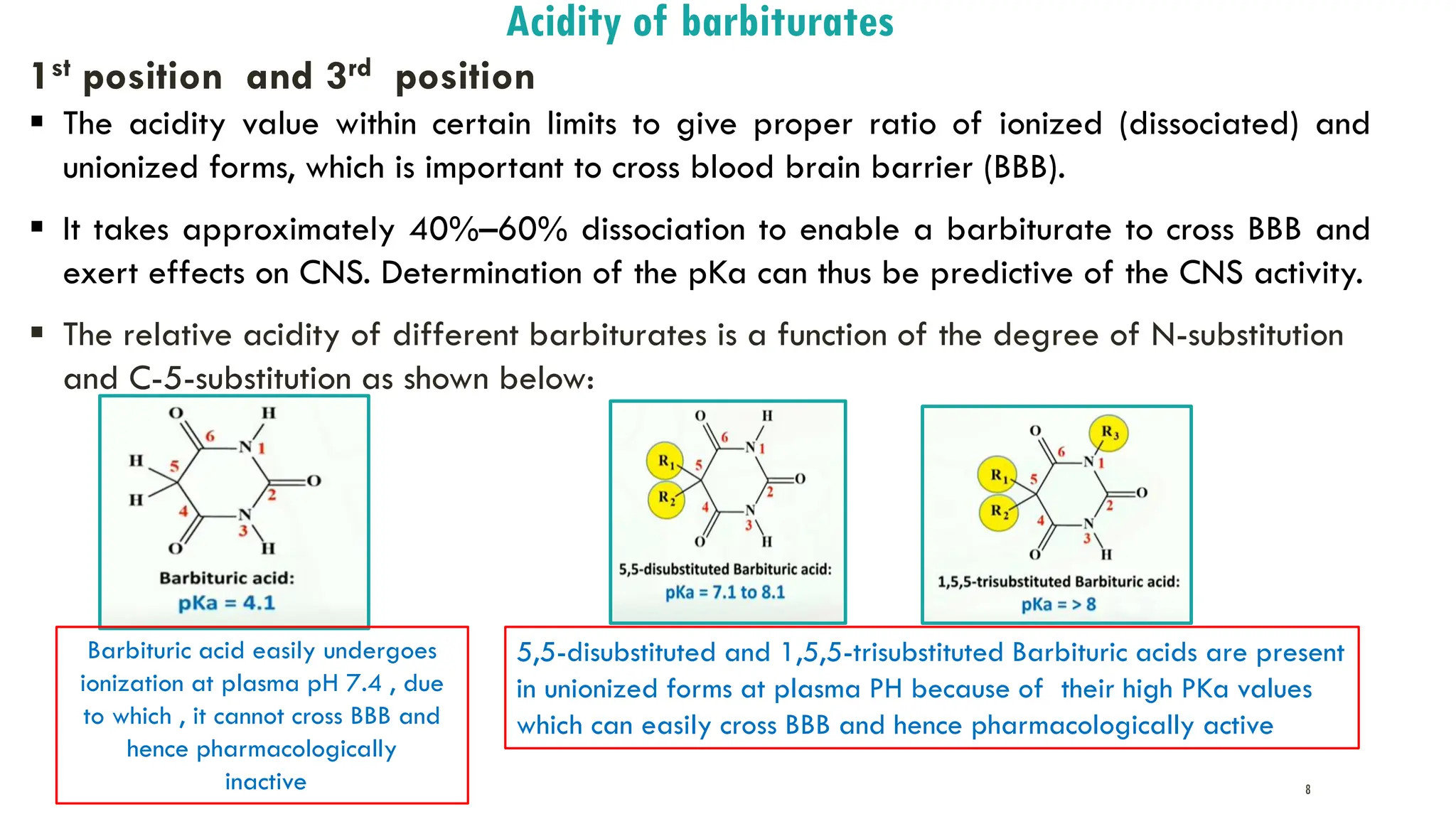
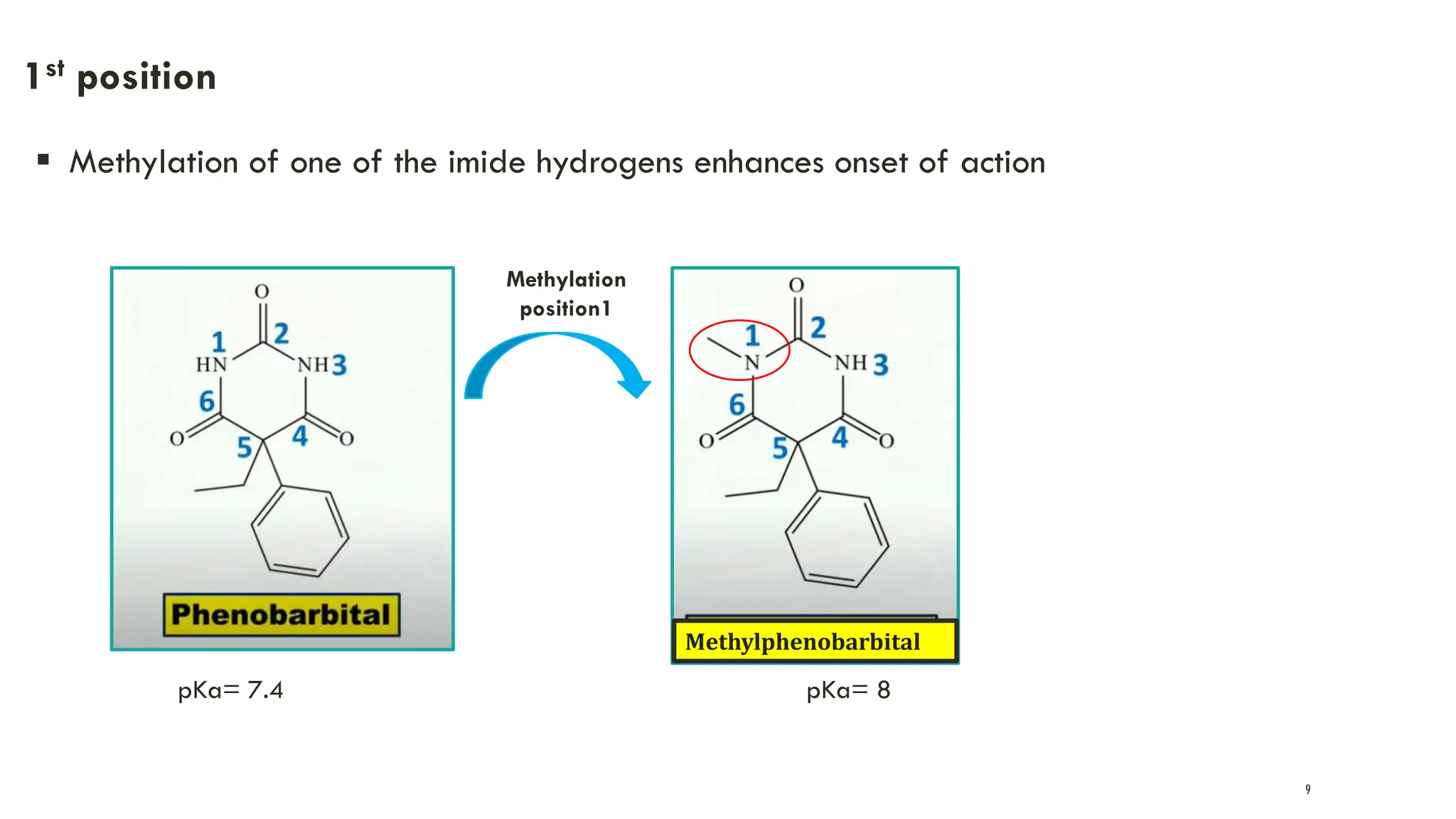
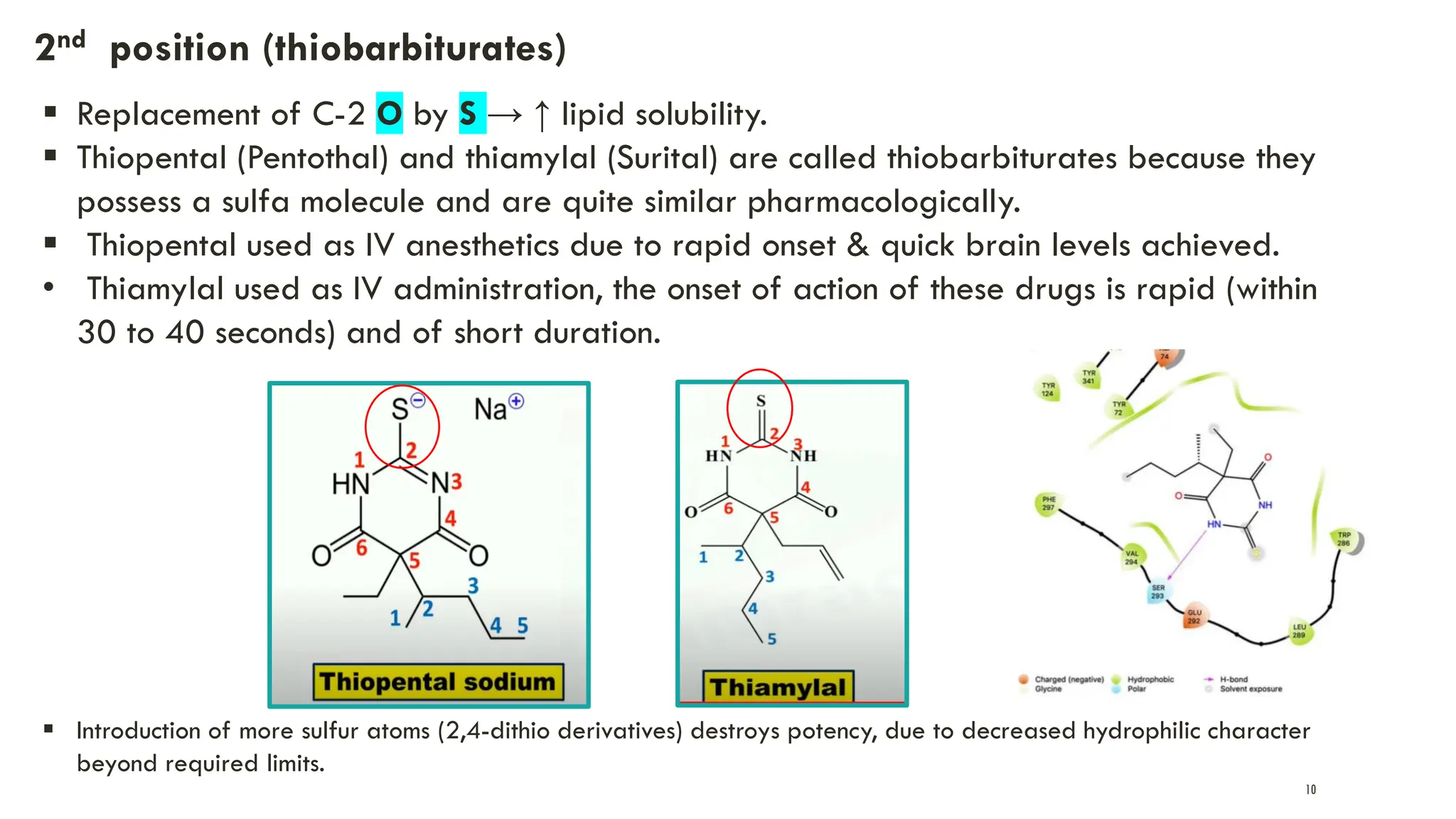
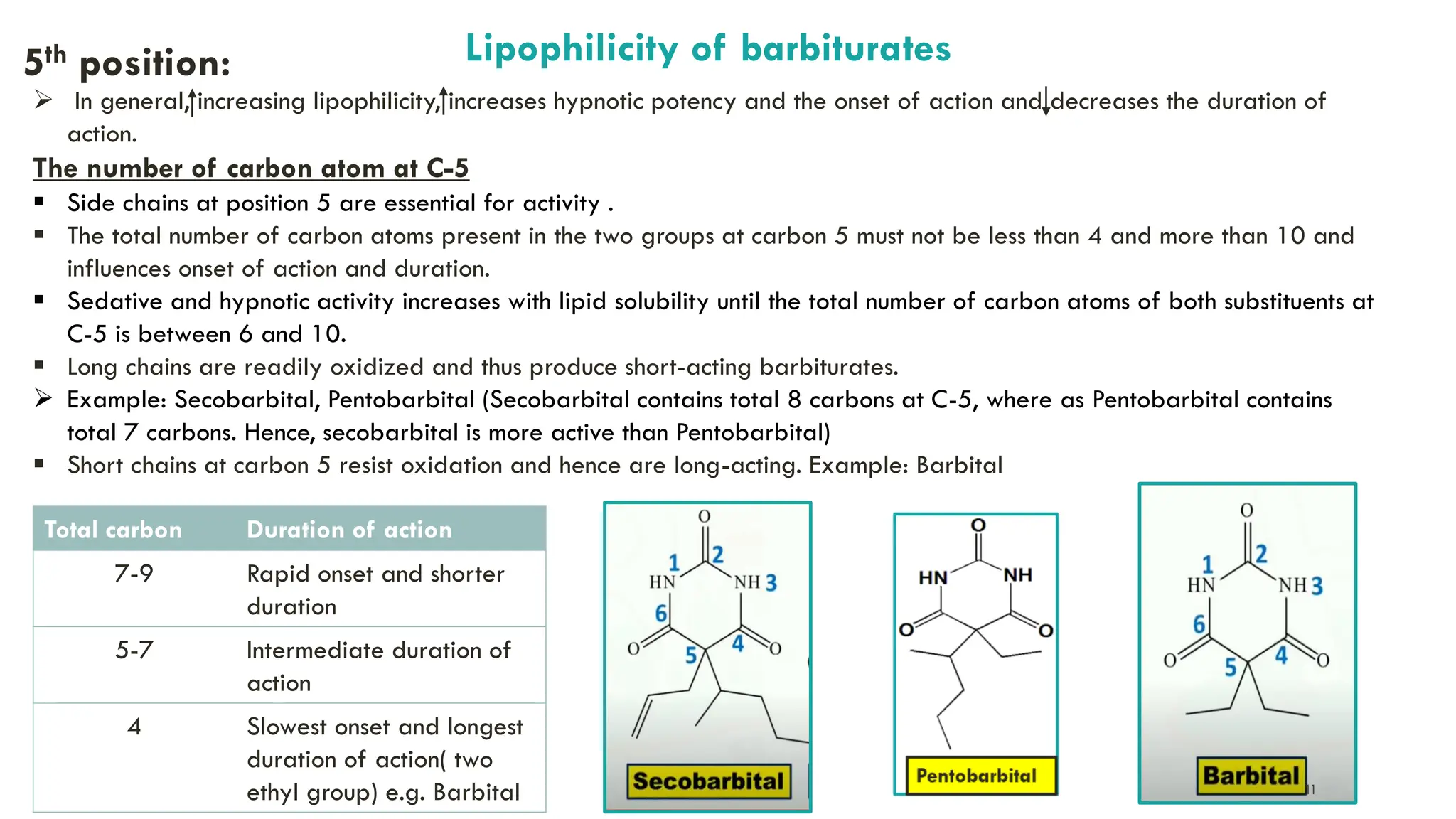
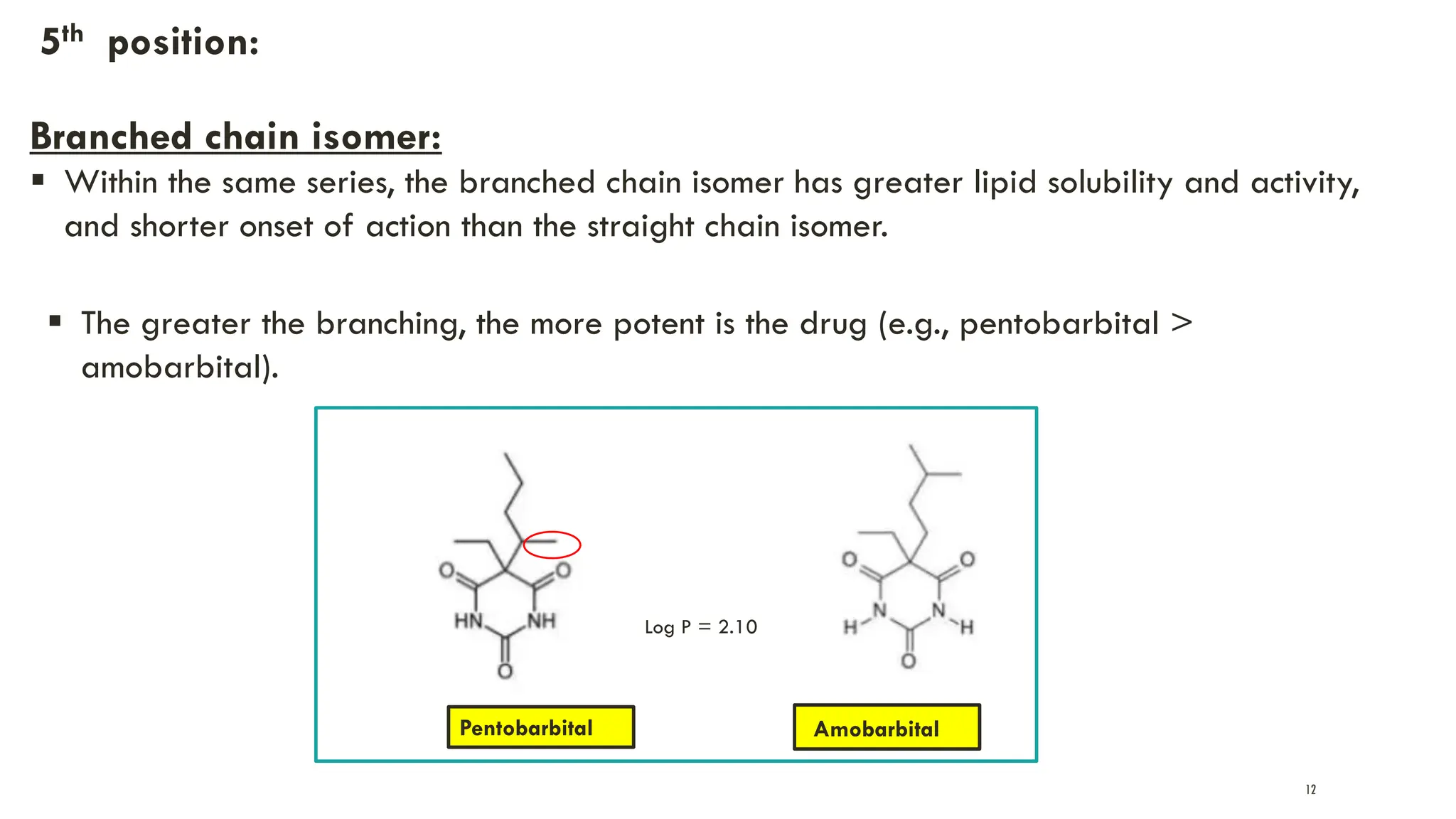
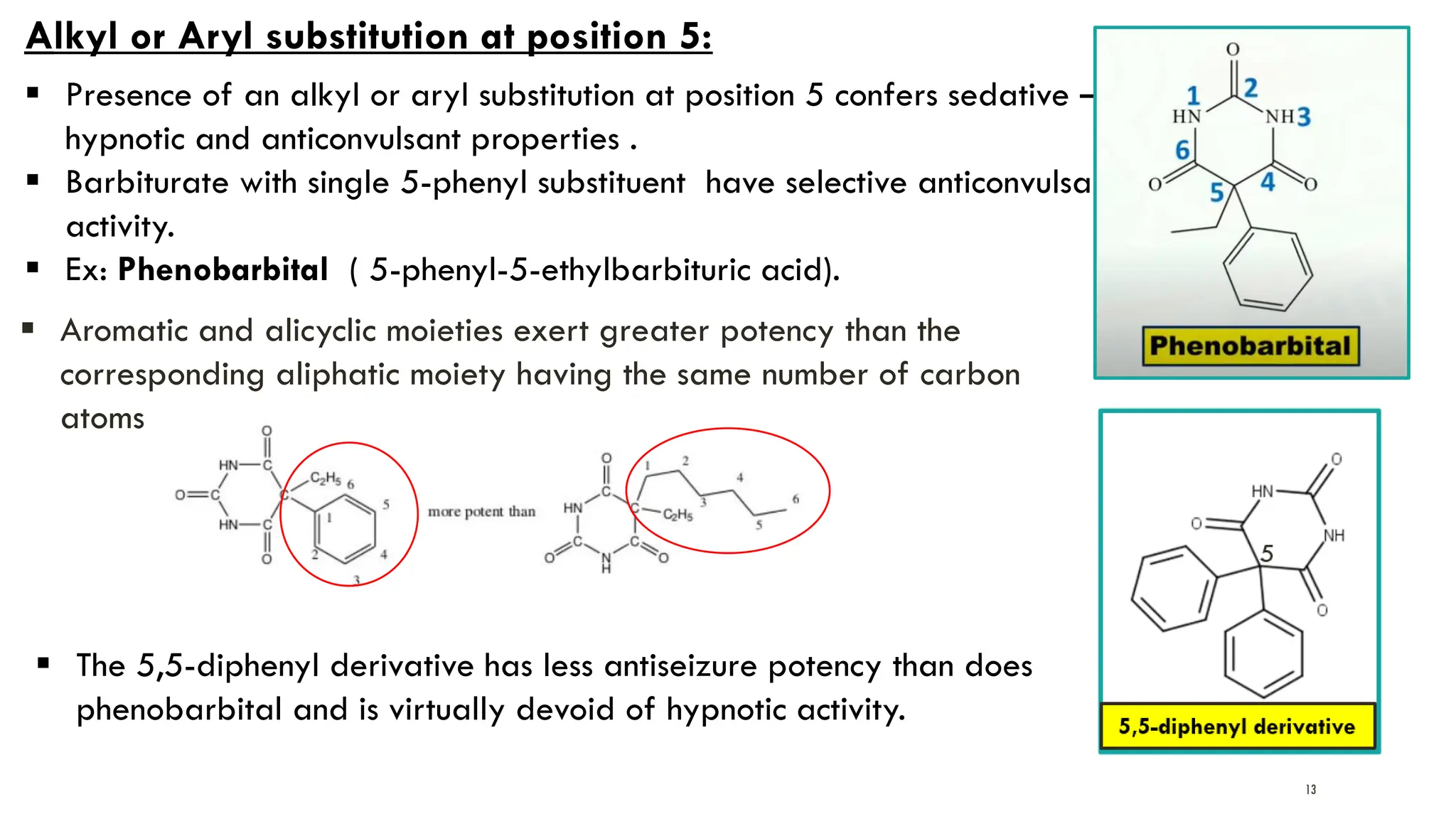
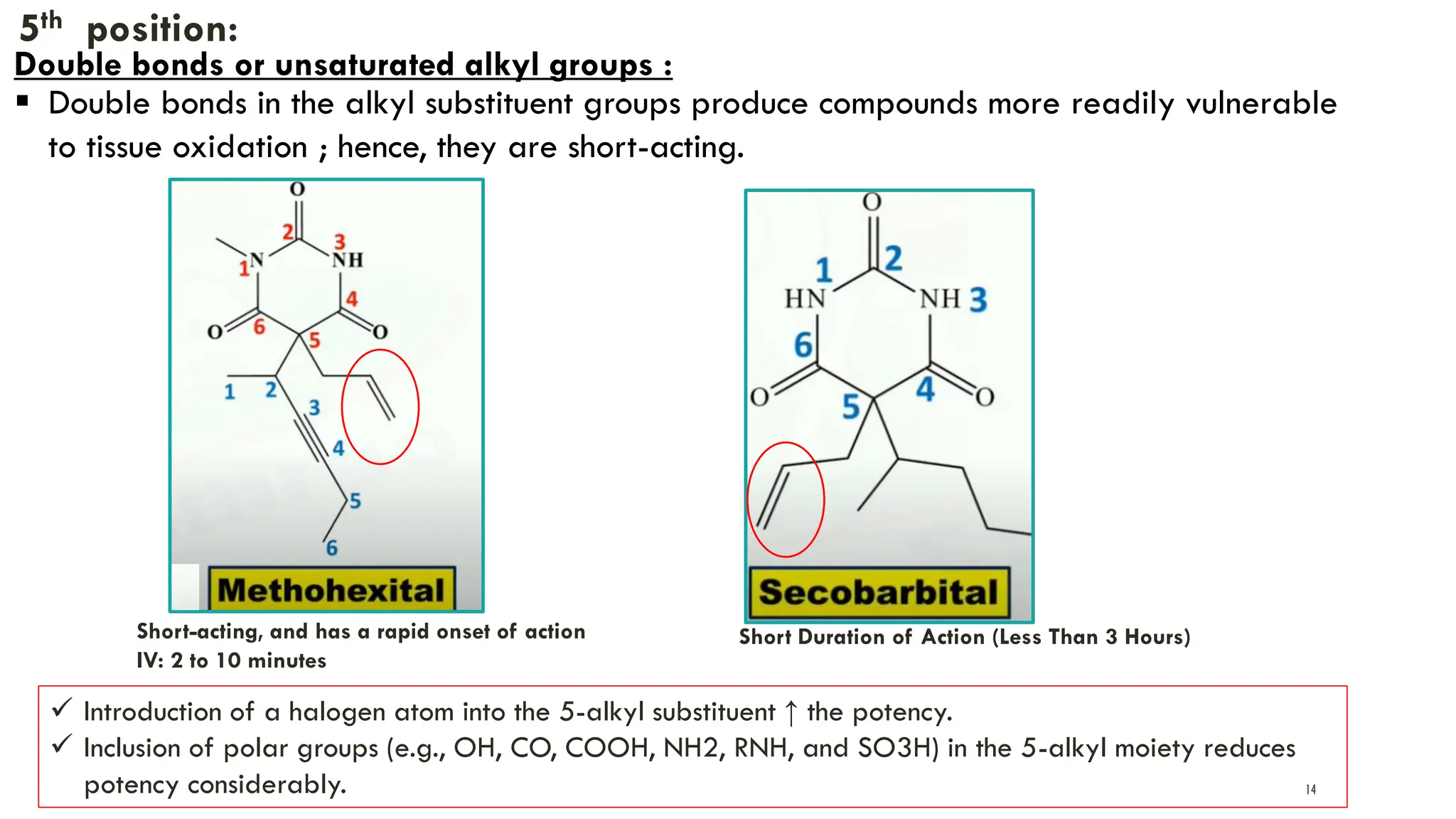
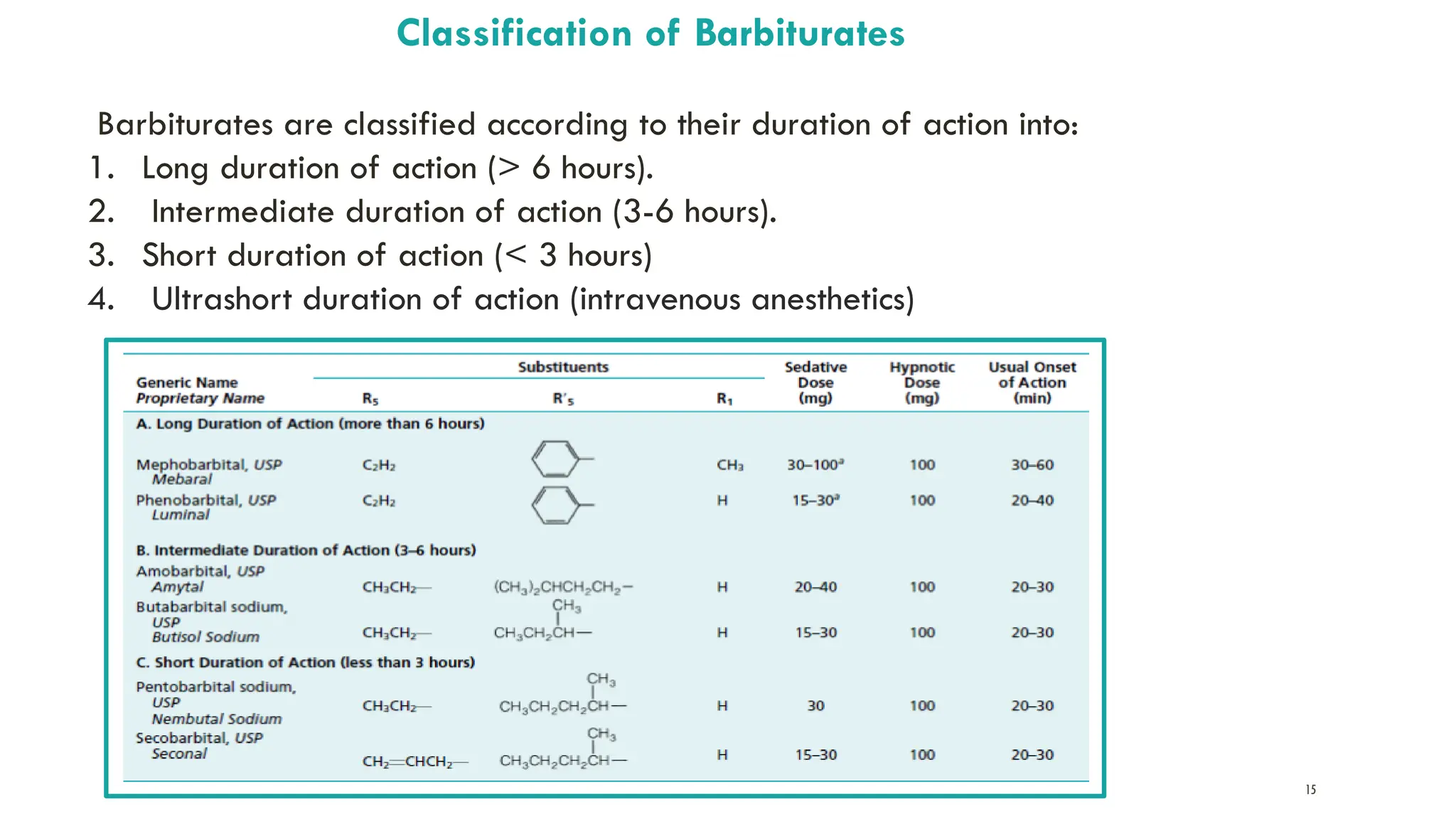
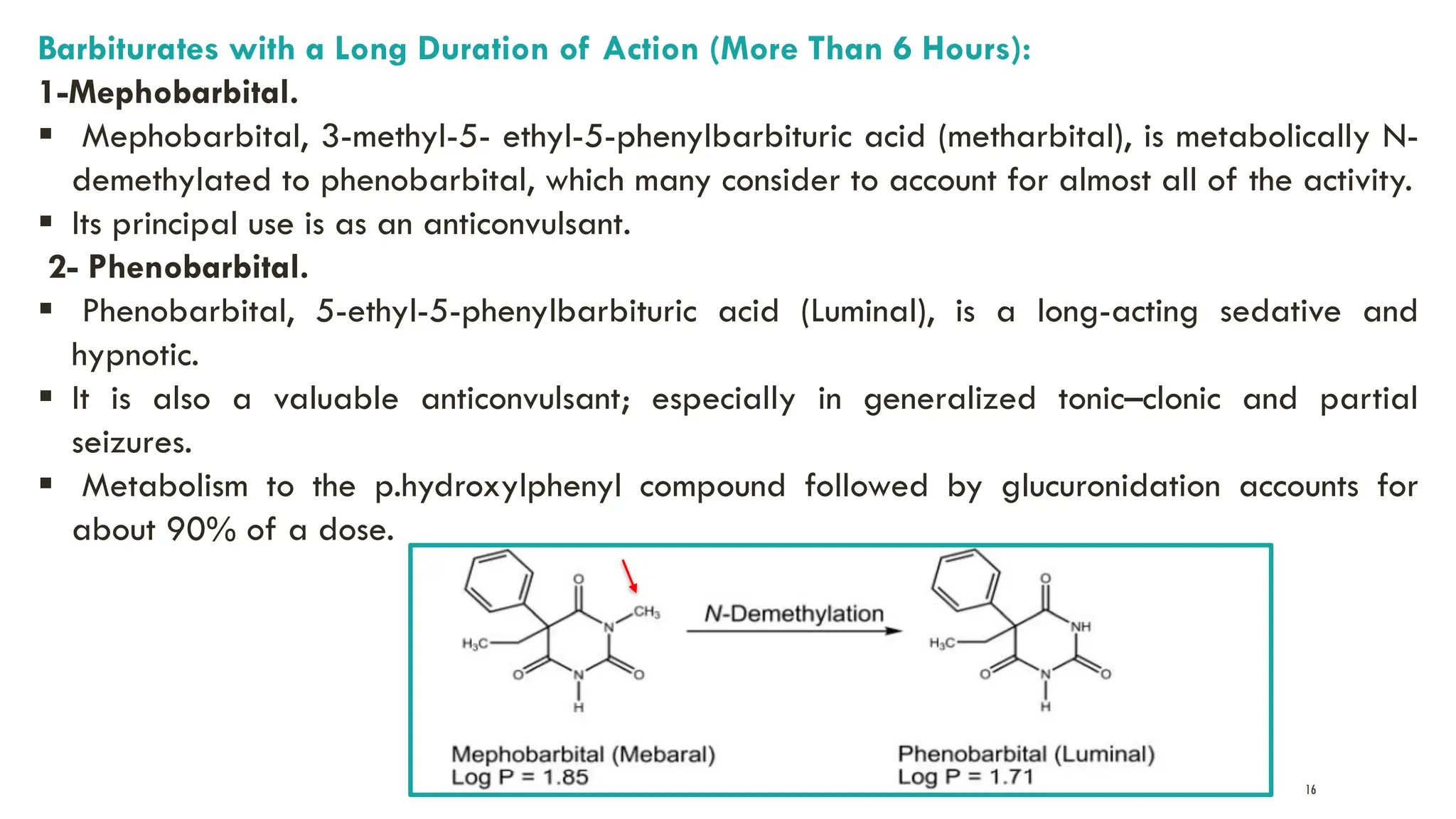
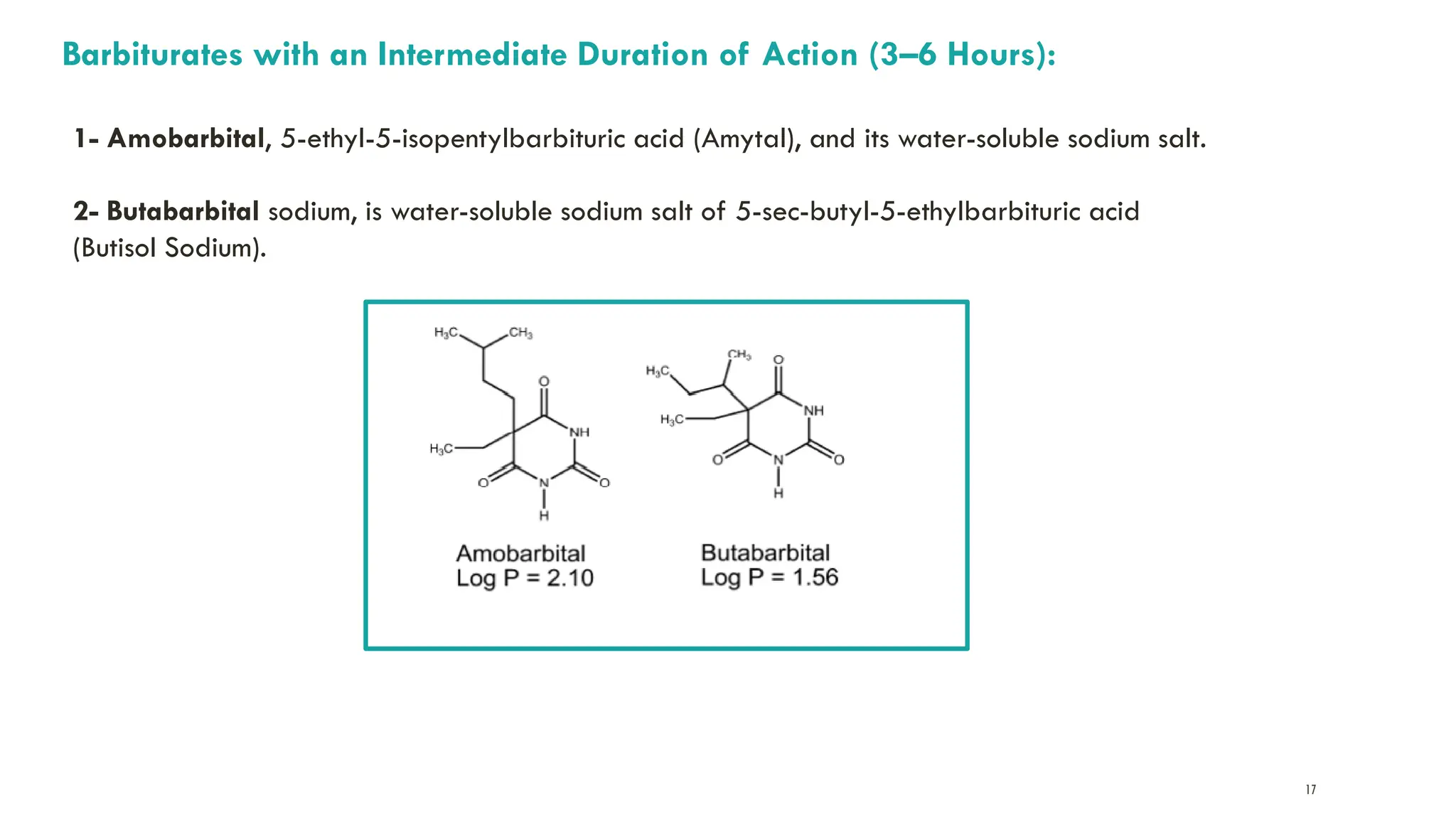
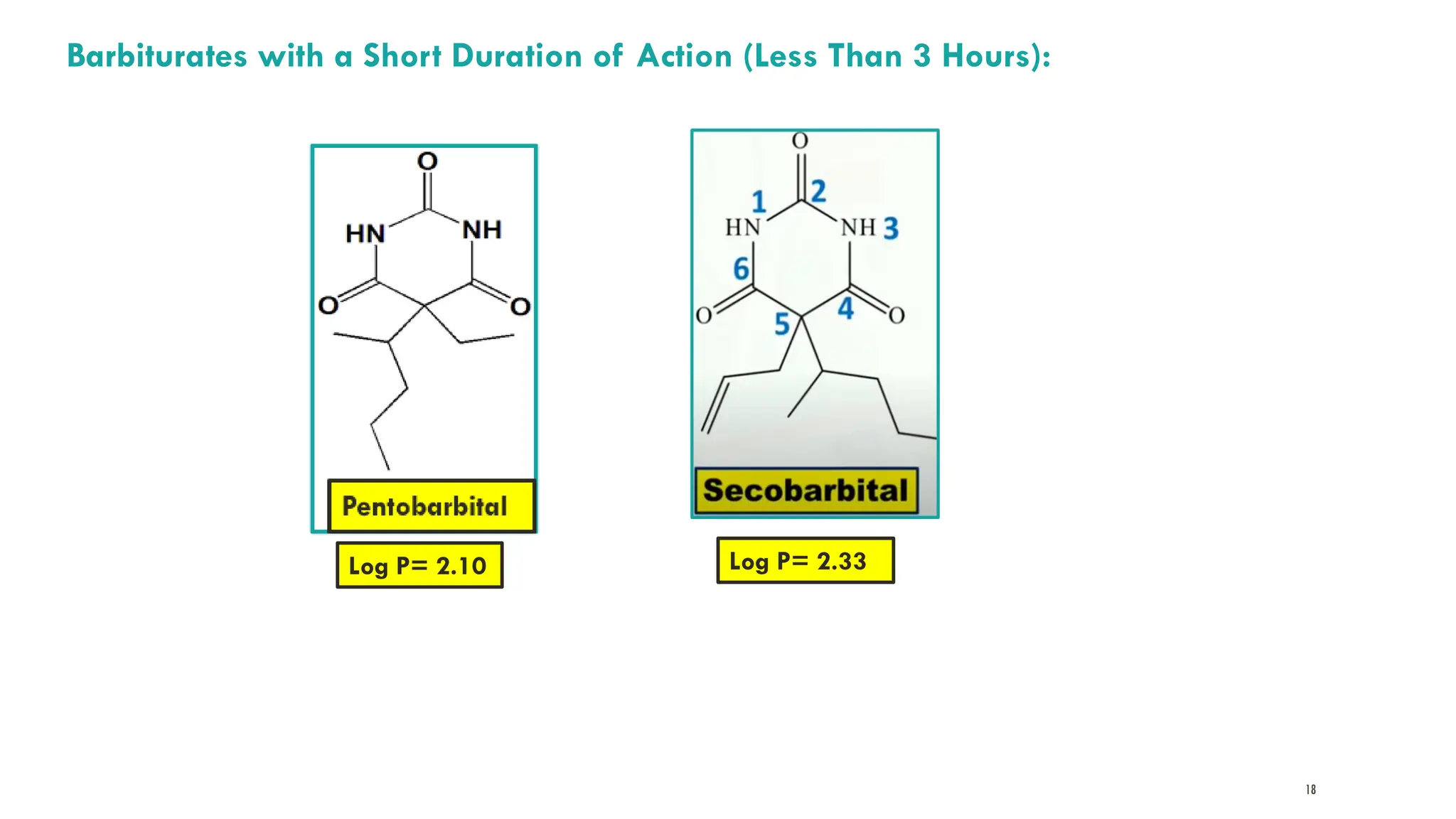
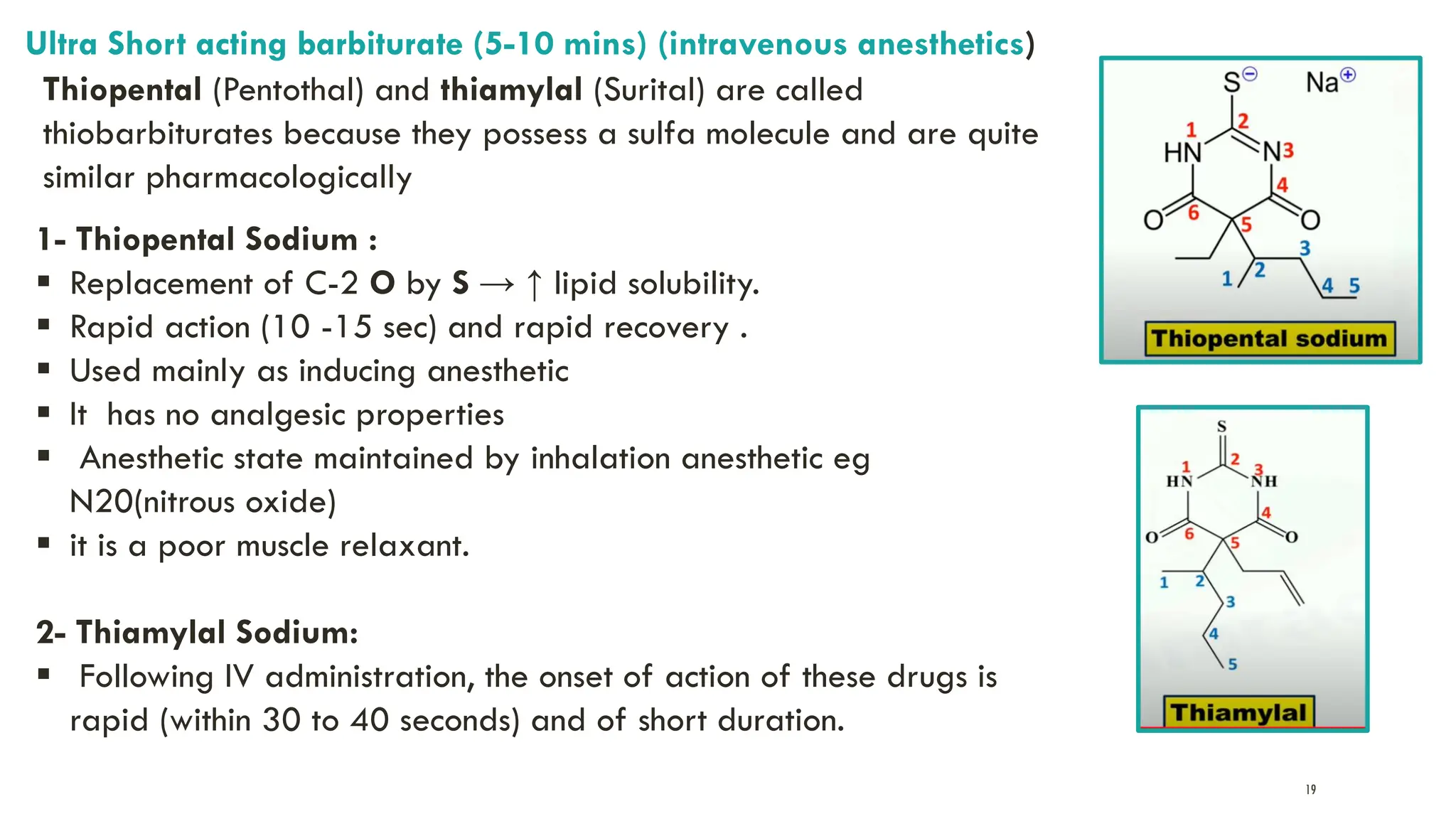
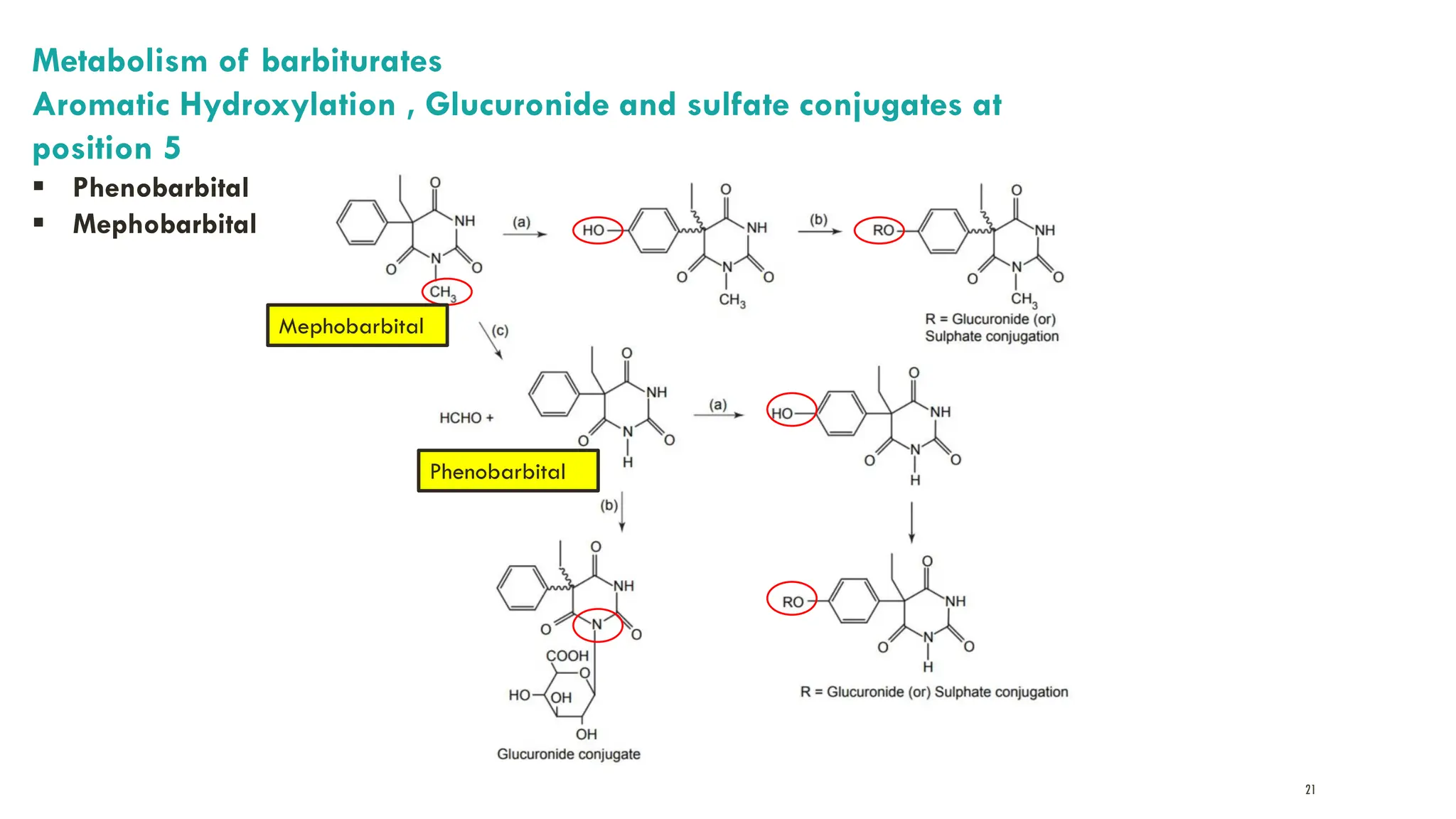
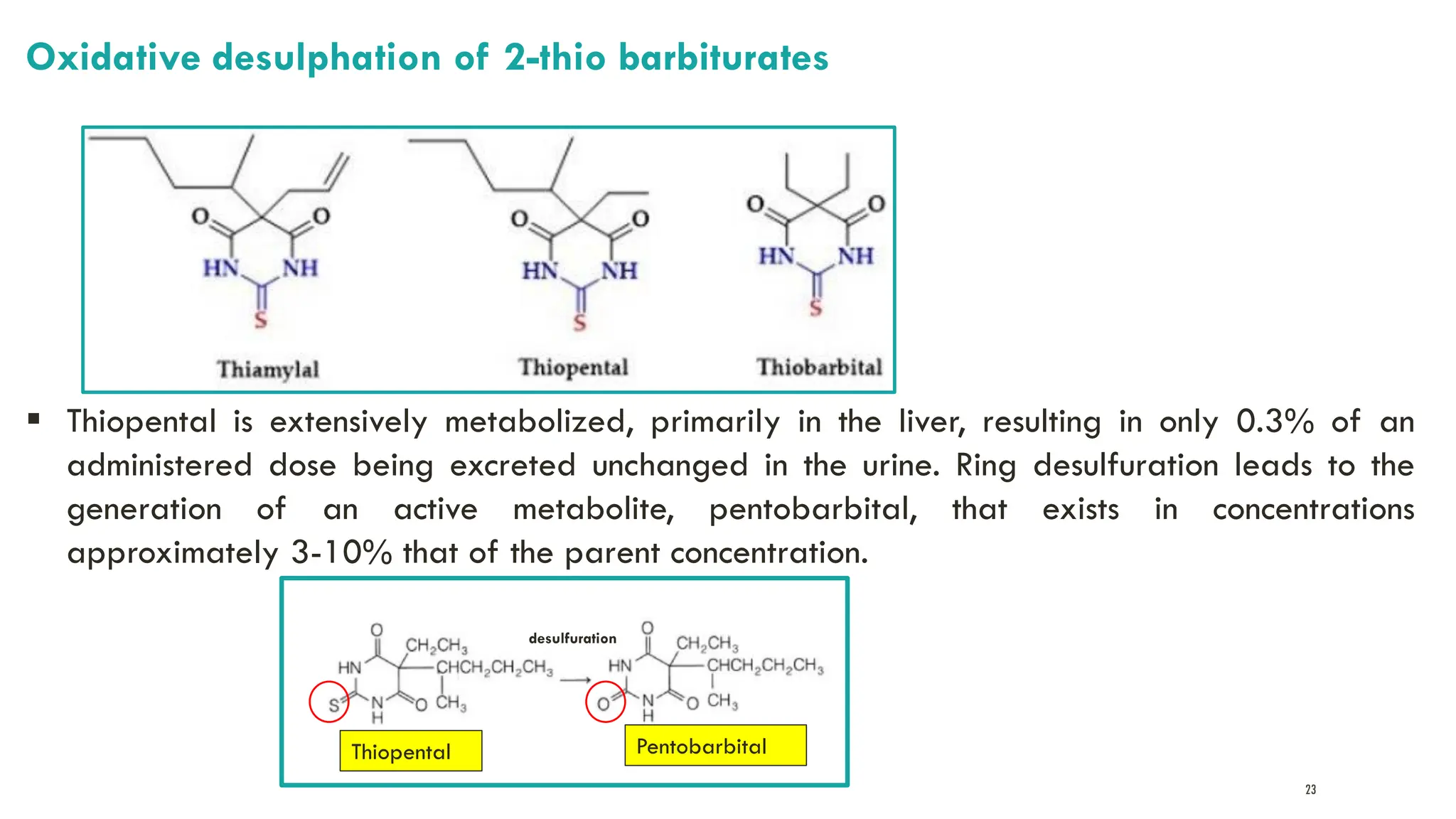
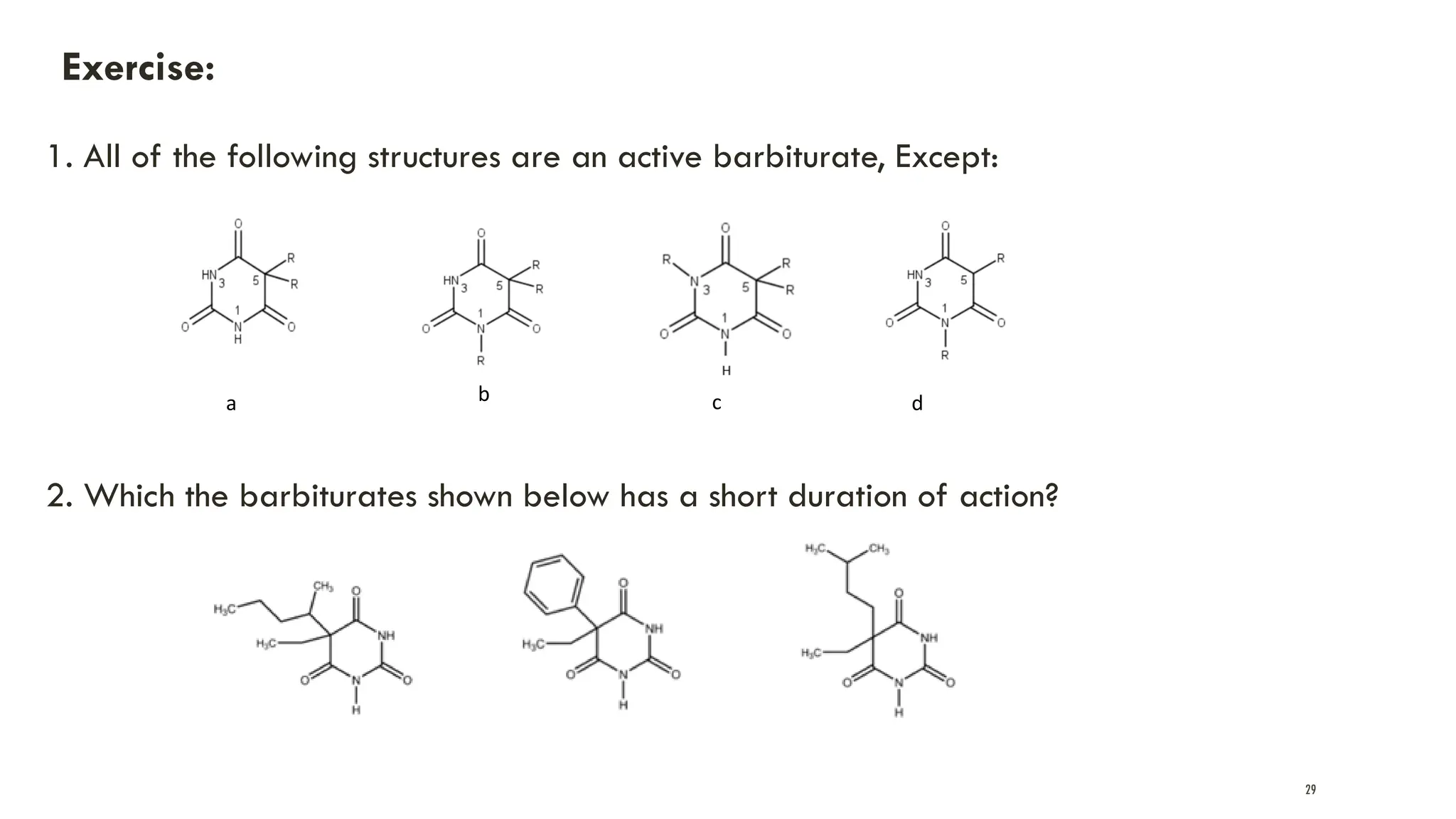
Barbiturates are central nervous system depressants that were historically used as sedatives, hypnotics, and anticonvulsants. They work by enhancing the effects of the neurotransmitter GABA. While largely replaced by safer benzodiazepines, barbiturates are still used for certain medical purposes. Their structure is based on barbituric acid, with activity requiring lipophilic 5,5-disubstitutions for blood-brain barrier crossing. Mechanisms of action, classifications by duration, and metabolism pathways are described.