Bank Fraud & Data ForensicsBank Taxation & Risk Management ForumsNovember 16, 2010 – South Portland, MaineNovember 17, 2010 – Concord, New HampshirePresented By:Bill Brown, CPA, CFFA, CFE Eigen Heald, MsIA, CISSP, GCFATodd Desjardins, CPA, CFE
OverviewIntroductionFraud Considerations for BanksComputer Fraud and Data ForensicsQuestions and Discussion
Terms and DefinitionsFraudFraud investigationForensicsForensic accountingDigital forensics
ReferenceStatistics in this presentation, unless otherwise noted, are from:The Report to the Nations - 2010 Global Fraud Study Study of 1,843 cases of occupational fraudpublished by the Association of Certified Fraud Examiners
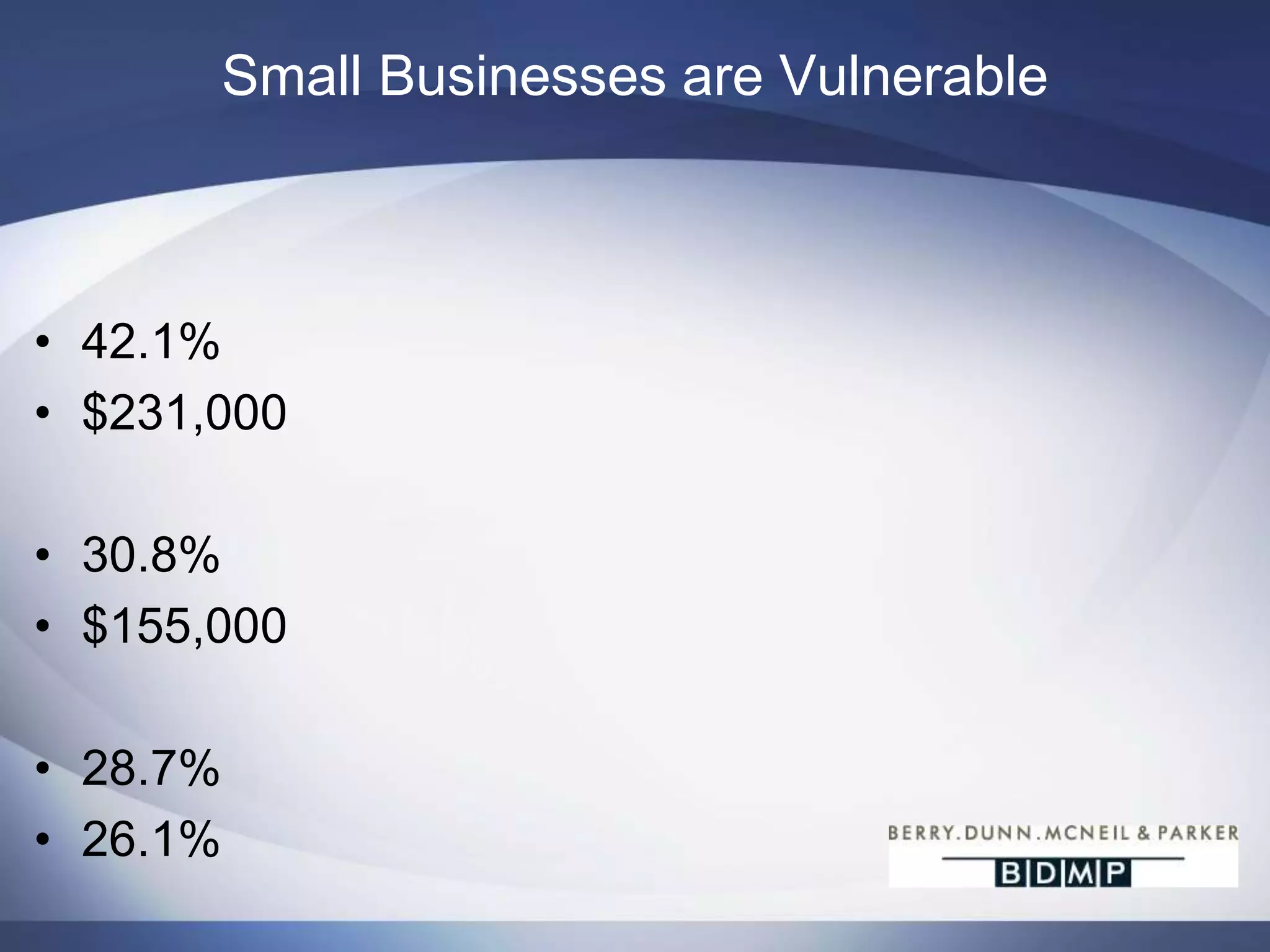
Small Businesses are Vulnerable42.1%$231,00030.8%$155,00028.7%26.1%
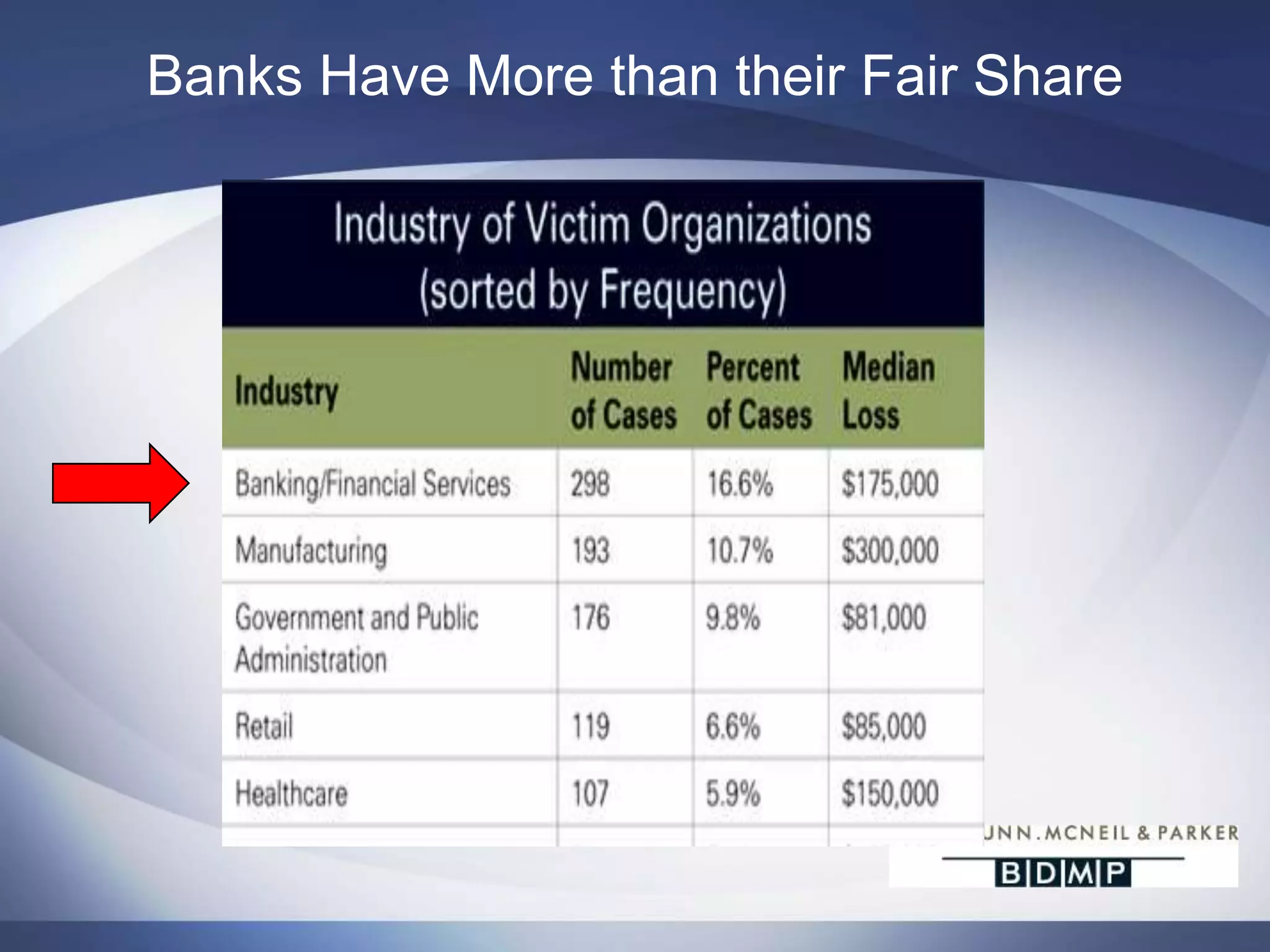
Banks Have More than their Fair Share
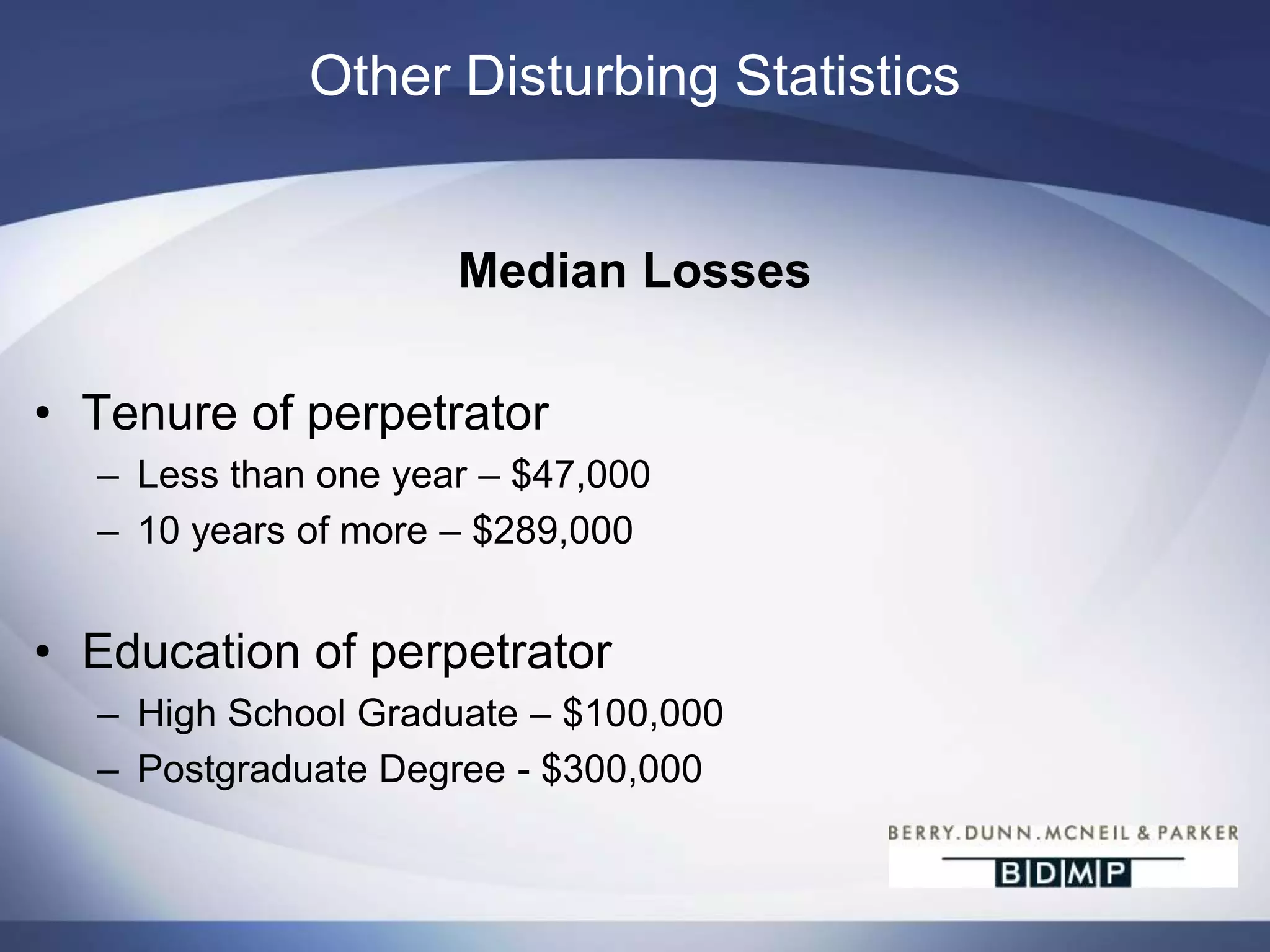
Other Disturbing StatisticsMedian LossesTenure of perpetratorLess than one year – $47,00010 years of more – $289,000Education of perpetratorHigh School Graduate – $100,000Postgraduate Degree - $300,000
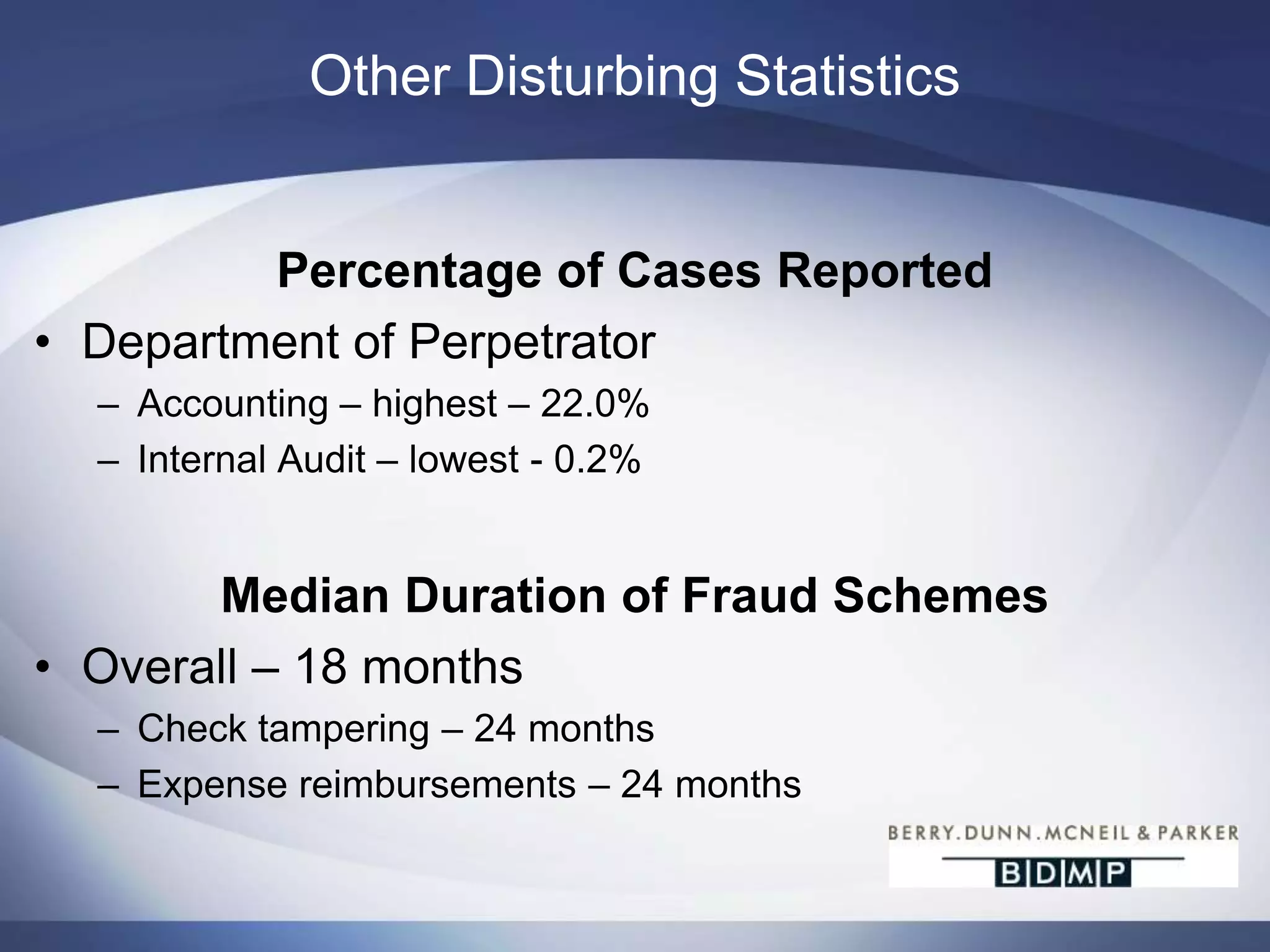
Other Disturbing StatisticsPercentage of Cases ReportedDepartment of PerpetratorAccounting – highest – 22.0%Internal Audit – lowest - 0.2%Median Duration of Fraud SchemesOverall – 18 monthsCheck tampering – 24 monthsExpense reimbursements – 24 months
Risk FactorsFinancial Misstatement FraudComplexityPerverse IncentivesHighly Subjective ValuationAsset MisappropriationComplexityInherent Lack of AccountabilityPersonal Trust
Types of Fraud	External vs. Internal Fraud External – perpetrators are outside the bank
 Internal – fraud is committed by bank personnelExternal FraudPrimarily executed by customers and outsiders, examples include:Wire fraud
Mortgage fraud (material misrepresentation or omission)
Check fraud (forgery, check kiting, altered checks)Internal FraudTwo Types of Internal Fraud:Financial Statement FraudHighest median loss per reported case, however lowest frequency of occurrenceAsset MisappropriationLowest median loss per reported case, however the highest rate of frequencySource: ACFE 2010 Report to the Nations
Financial Statement FraudAsset/Revenue overstatementImproper asset valuationsTiming differencesConcealed liabilities and expensesImproper disclosures
Asset MisappropriationUnauthorized transfers/disbursementsPayroll schemesGhost employeesExpense reimbursement schemesTheft of portable fixed assetsOthers…
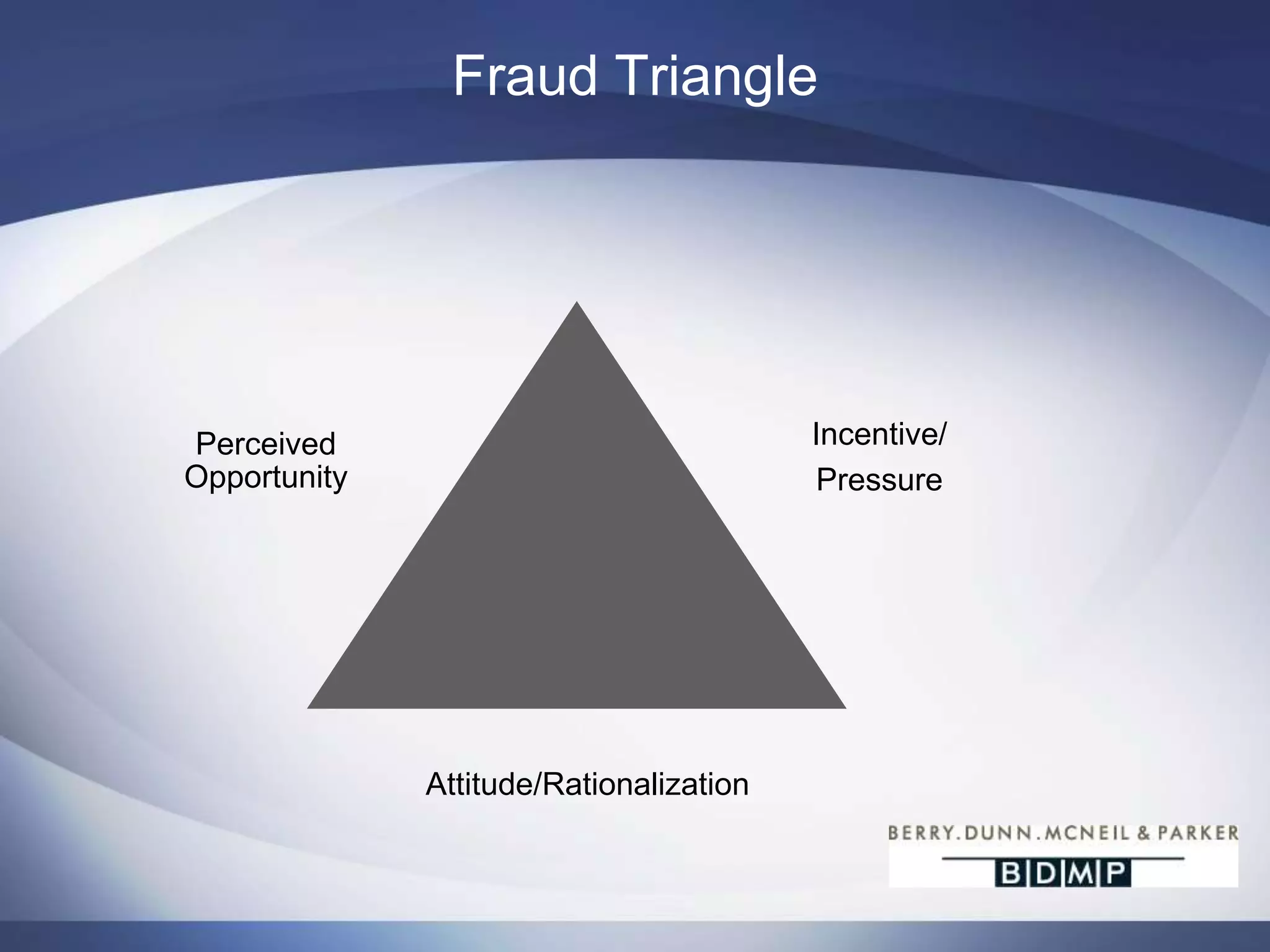
Fraud Triangle
Preventing and Deterring FraudPrevention and DeterrencePerceived opportunity is the aspect of the fraud triangle that is most controlled by employers. Strong internal controls and segregation of dutiesReview access rights on a consistent and periodic basisLimit access to employee accounts (both solely owned or jointly owned)Review employee account activity and teller activityDual control over wire transfersReview of payroll change reports by someone independent of the payroll function
Preventing and Deterring Fraud (Continued)The list continues…Robust review of suspense/clearing account activity – be certain the reconciliation makes sense and items are clearing timely and properlyImplement a fraud reporting mechanism that is anonymousMaintain professional skepticismAttitude and rationalization can be improved within companies by strong “tone at the top” and employee appreciation efforts
Preventing and Deterring Fraud (Continued)Best practice is to have a fraud risk management program in place Brainstorming sessions:
Identify significant risk areas (multiple locations, business segments, etc.)
How is the importance of ethical behavior and appropriate business practices communicated?
What could go wrong?Digital Uses for Forensic ProjectsInappropriate and/or illegal activity E-mail and Internet abuse Unauthorized disclosure of corporate information Hacker Intrusions Intellectual property theftDue diligence and valuation
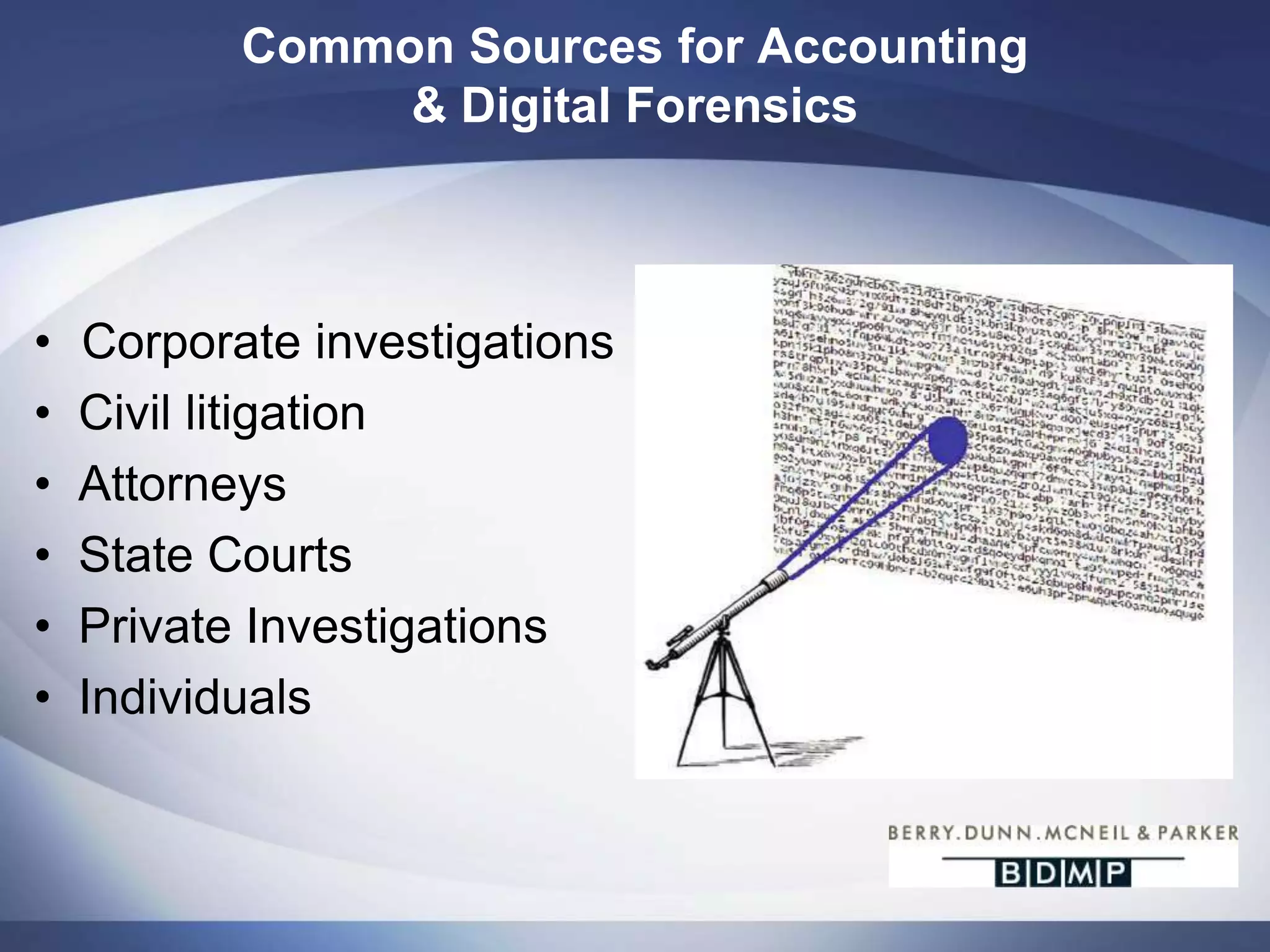
Common Sources for Accounting & Digital Forensics Corporate investigations•  Civil litigation•  Attorneys•  State Courts•  Private Investigations•  Individuals
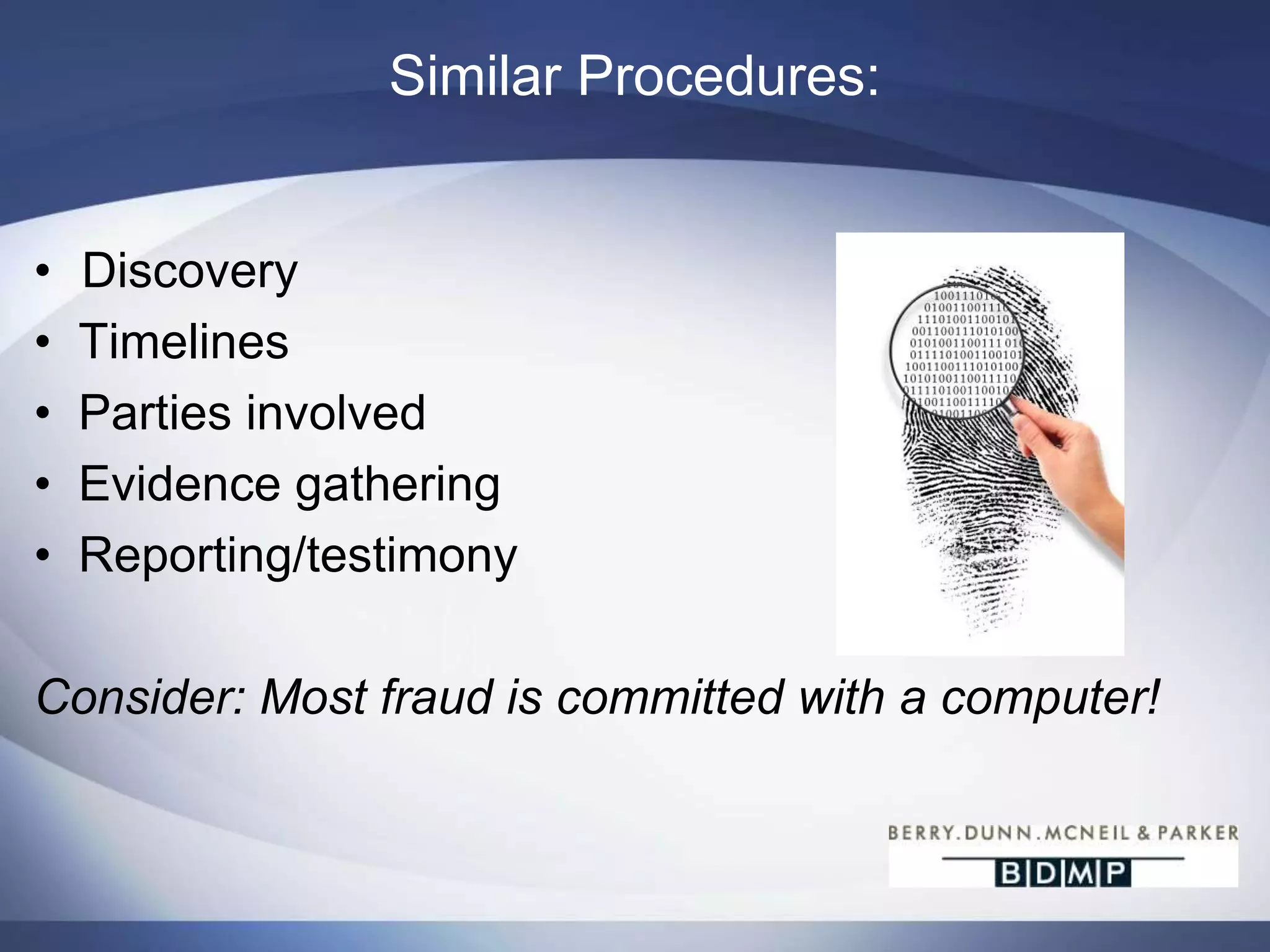
Similar Procedures:Discovery•  Timelines•  Parties involved•  Evidence gathering•  Reporting/testimonyConsider: Most fraud is committed with a computer!
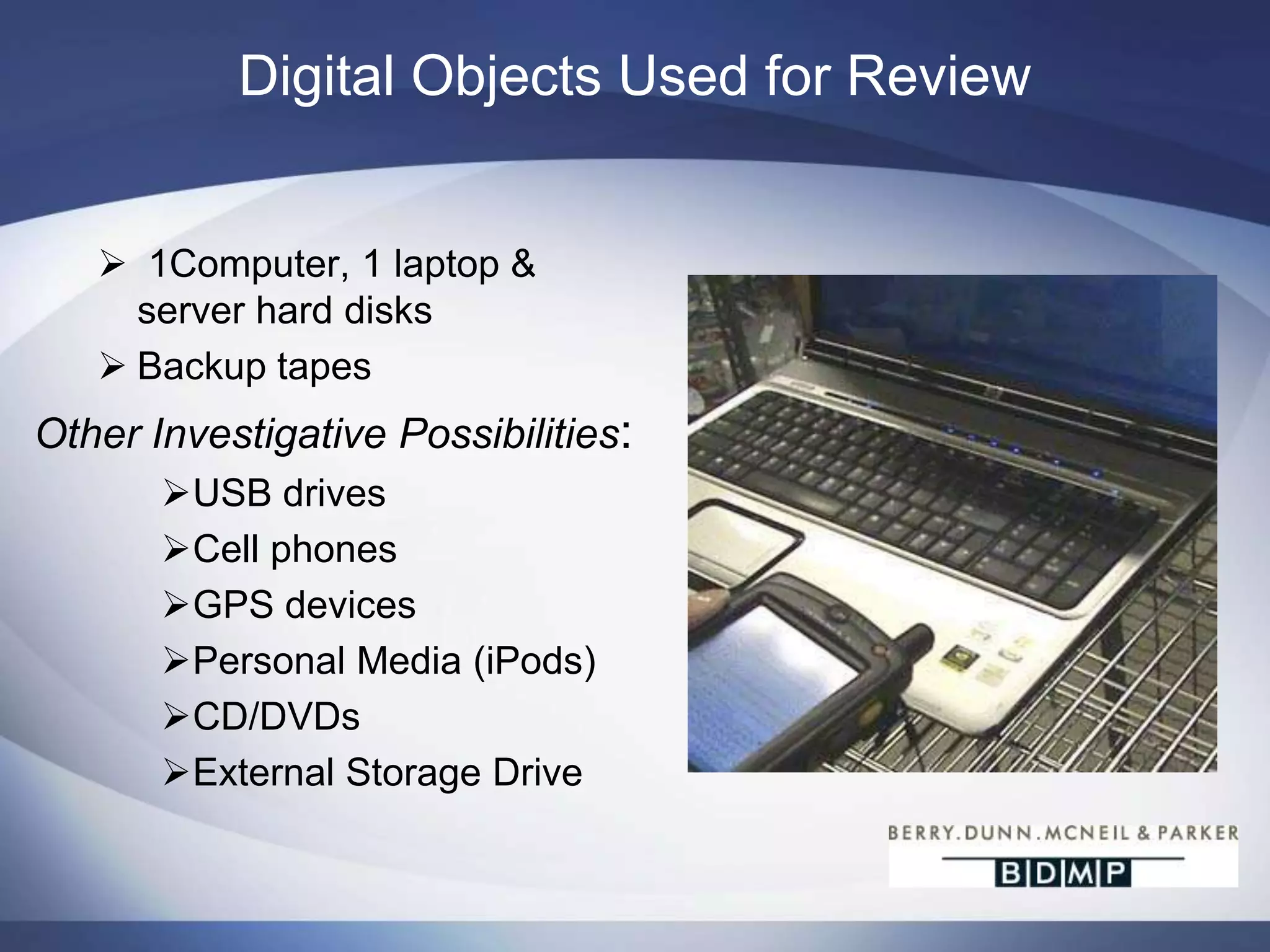
Digital Objects Used for Review 1Computer, 1 laptop &                                                              server hard disks

Bank Fraud & Data Forensics

  • 1.
    Bank Fraud &Data ForensicsBank Taxation & Risk Management ForumsNovember 16, 2010 – South Portland, MaineNovember 17, 2010 – Concord, New HampshirePresented By:Bill Brown, CPA, CFFA, CFE Eigen Heald, MsIA, CISSP, GCFATodd Desjardins, CPA, CFE
  • 2.
    OverviewIntroductionFraud Considerations forBanksComputer Fraud and Data ForensicsQuestions and Discussion
  • 3.
    Terms and DefinitionsFraudFraudinvestigationForensicsForensic accountingDigital forensics
  • 4.
    ReferenceStatistics in thispresentation, unless otherwise noted, are from:The Report to the Nations - 2010 Global Fraud Study Study of 1,843 cases of occupational fraudpublished by the Association of Certified Fraud Examiners
  • 5.
    Small Businesses areVulnerable42.1%$231,00030.8%$155,00028.7%26.1%
  • 6.
    Banks Have Morethan their Fair Share
  • 7.
    Other Disturbing StatisticsMedianLossesTenure of perpetratorLess than one year – $47,00010 years of more – $289,000Education of perpetratorHigh School Graduate – $100,000Postgraduate Degree - $300,000
  • 8.
    Other Disturbing StatisticsPercentageof Cases ReportedDepartment of PerpetratorAccounting – highest – 22.0%Internal Audit – lowest - 0.2%Median Duration of Fraud SchemesOverall – 18 monthsCheck tampering – 24 monthsExpense reimbursements – 24 months
  • 9.
    Risk FactorsFinancial MisstatementFraudComplexityPerverse IncentivesHighly Subjective ValuationAsset MisappropriationComplexityInherent Lack of AccountabilityPersonal Trust
  • 10.
    Types of Fraud Externalvs. Internal Fraud External – perpetrators are outside the bank
  • 11.
    Internal –fraud is committed by bank personnelExternal FraudPrimarily executed by customers and outsiders, examples include:Wire fraud
  • 12.
    Mortgage fraud (materialmisrepresentation or omission)
  • 13.
    Check fraud (forgery,check kiting, altered checks)Internal FraudTwo Types of Internal Fraud:Financial Statement FraudHighest median loss per reported case, however lowest frequency of occurrenceAsset MisappropriationLowest median loss per reported case, however the highest rate of frequencySource: ACFE 2010 Report to the Nations
  • 14.
    Financial Statement FraudAsset/RevenueoverstatementImproper asset valuationsTiming differencesConcealed liabilities and expensesImproper disclosures
  • 15.
    Asset MisappropriationUnauthorized transfers/disbursementsPayrollschemesGhost employeesExpense reimbursement schemesTheft of portable fixed assetsOthers…
  • 16.
  • 17.
    Preventing and DeterringFraudPrevention and DeterrencePerceived opportunity is the aspect of the fraud triangle that is most controlled by employers. Strong internal controls and segregation of dutiesReview access rights on a consistent and periodic basisLimit access to employee accounts (both solely owned or jointly owned)Review employee account activity and teller activityDual control over wire transfersReview of payroll change reports by someone independent of the payroll function
  • 18.
    Preventing and DeterringFraud (Continued)The list continues…Robust review of suspense/clearing account activity – be certain the reconciliation makes sense and items are clearing timely and properlyImplement a fraud reporting mechanism that is anonymousMaintain professional skepticismAttitude and rationalization can be improved within companies by strong “tone at the top” and employee appreciation efforts
  • 19.
    Preventing and DeterringFraud (Continued)Best practice is to have a fraud risk management program in place Brainstorming sessions:
  • 20.
    Identify significant riskareas (multiple locations, business segments, etc.)
  • 21.
    How is theimportance of ethical behavior and appropriate business practices communicated?
  • 22.
    What could gowrong?Digital Uses for Forensic ProjectsInappropriate and/or illegal activity E-mail and Internet abuse Unauthorized disclosure of corporate information Hacker Intrusions Intellectual property theftDue diligence and valuation
  • 23.
    Common Sources forAccounting & Digital Forensics Corporate investigations• Civil litigation• Attorneys• State Courts• Private Investigations• Individuals
  • 24.
    Similar Procedures:Discovery• Timelines• Parties involved• Evidence gathering• Reporting/testimonyConsider: Most fraud is committed with a computer!
  • 25.
    Digital Objects Usedfor Review 1Computer, 1 laptop & server hard disks
  • 26.
    Backup tapesOther InvestigativePossibilities:USB drives
  • 27.
  • 28.
  • 29.
  • 30.
  • 31.
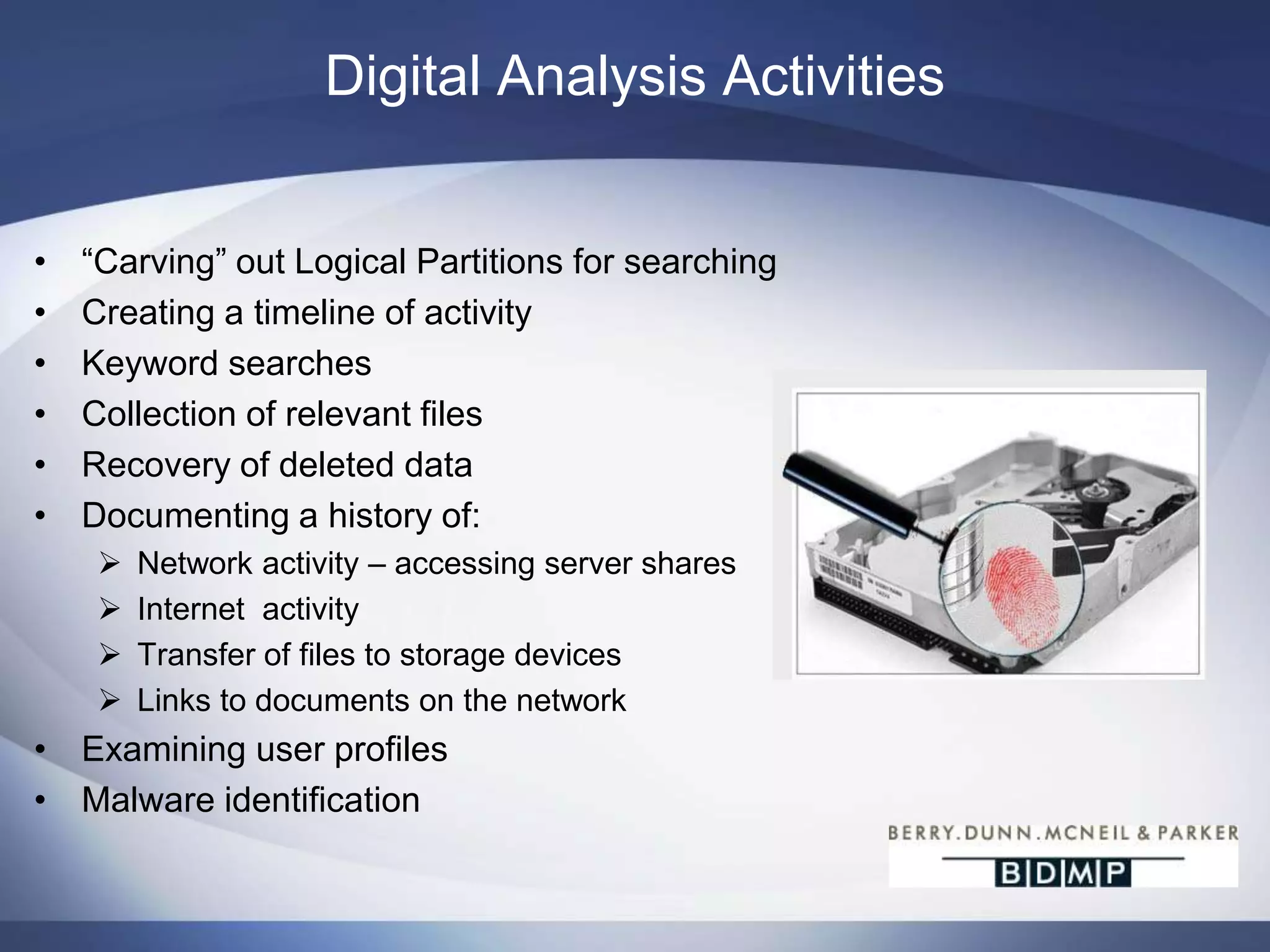
    External Storage DriveDigitalAnalysis Activities“Carving” out Logical Partitions for searchingCreating a timeline of activityKeyword searchesCollection of relevant filesRecovery of deleted dataDocumenting a history of:Network activity – accessing server shares
  • 32.
  • 33.
    Transfer of filesto storage devices
  • 34.
    Links to documentson the networkExamining user profilesMalware identification
  • 35.
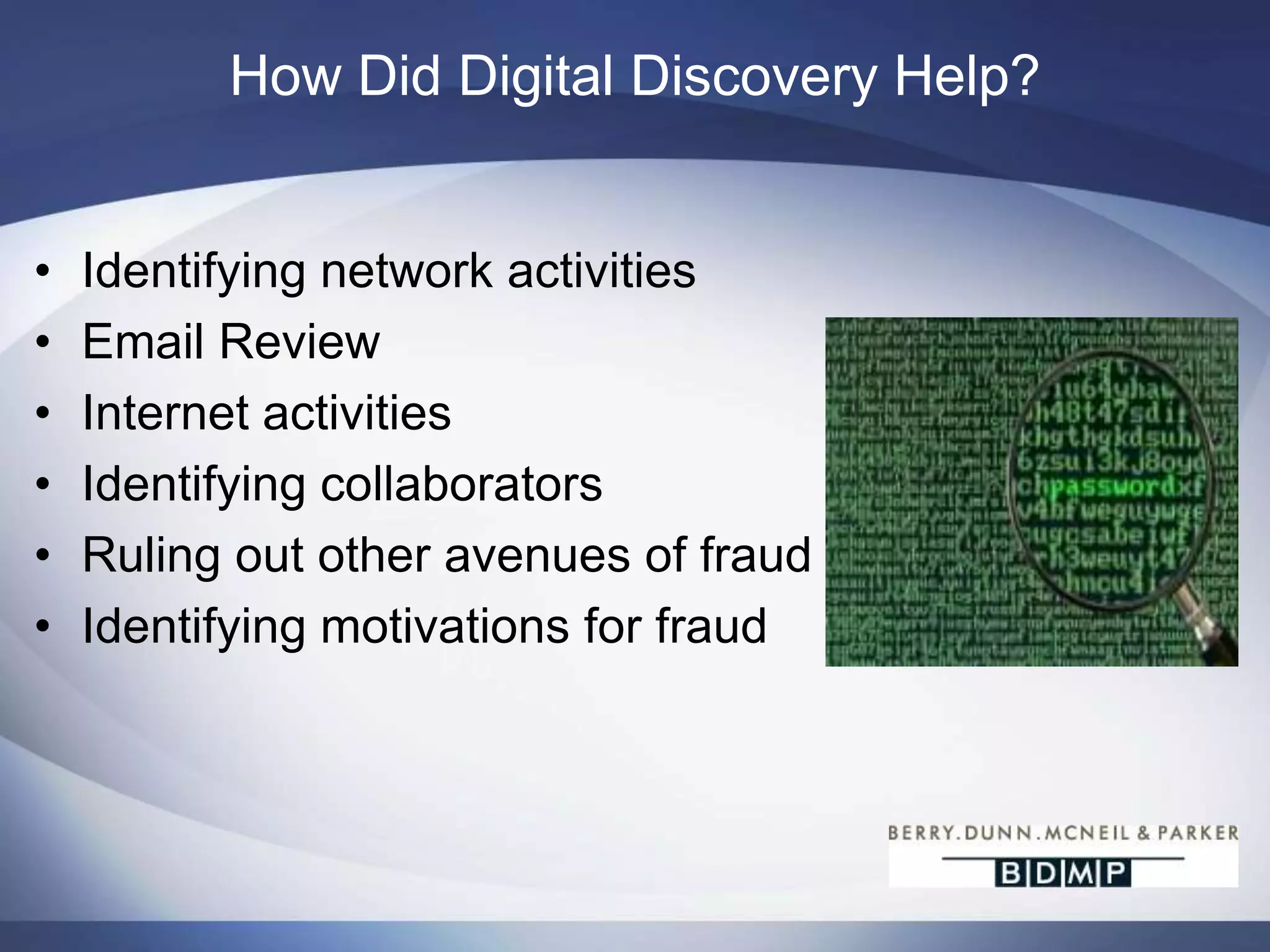
    How Did DigitalDiscovery Help?Identifying network activitiesEmail ReviewInternet activitiesIdentifying collaboratorsRuling out other avenues of fraudIdentifying motivations for fraud
  • 36.
    Contact InformationBill Brownbbrown@bdmp.comEigenHealdeheald@bdmp.comTodd Desjardinstdesjardins@bdmp.com