 Introduction
 Important of ESP
 Advantages and Disadvantages of ESP
 Types of ESP
 Maintenance of ESP
 Safety Precautions of ESP
 Application of ESP in Pollution Control.
 An Electrostatic Precipitator is a device
designed to use an electric charge to remove
certain impurities such as solid particles or
liquid droplets from air or other gases in smoke-
stacks and other flues such as (fumes, soot,
dusts, smokes e.t.c).
 It is majorly a pollution control device. It is a
common particle collection device in the
industries.
 Another name for Electrostatic Precipitator is an
Electrostatic Air Cleaner.
o Electrostatic precipitators are important tools
in the process of cleaning up flue gases.
o It can handle large volume of gas at various
temperatures of flow rates.
o An ESP is also a filtration device that
removes fine particles.
• ESP is used for the collection of both dry and wet
pollutants.
• They are capable of very high efficiencies, even for very
small particles.
• It has a low operating cost and they are economically
feasible.
 An ESP is also a filtration device that removes fine
particles like dust and smoke from a flowing gas using
the force of an induced electrostatic charge minimally
impending the flow of gases through the unit.
 An ESP applies energy only to the particulate matter
being collected and therefore is very efficient in its
consumption of energy (in the form of electricity).
 It has a high capital costs which makes it prohibitive
for small scale industries. They are expensive to
purchase any install.
 It requires a large space to be set up. It is not
feasible once installed. It is
 Ozone is produced by the negatively charge
electrode during gas ionization.
 They are capable of operating under high pressure
of or vacuum conditions. Or anything that is not dry
in the conventional sense.
 It has a low operating cost and they are
economically feasible
 ESPs can be grouped/classified, according to a
number of distinguishing features in their design.
These features include the following:
 The structural design and operation of the discharge
electrodes (rigid-frame, wires or plate) and collection
electrodes (tubular or plate)
 The method of charging (single-stage or two-stage)
 The temperature of operation (cold-side or hot-side)
 The method of particle removal from collection surfaces
(wet or dry)
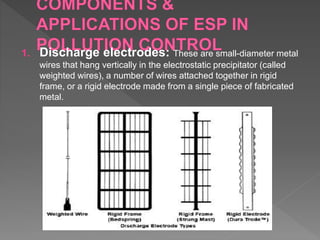
1. Discharge electrodes: These are small-diameter metal
wires that hang vertically in the electrostatic precipitator (called
weighted wires), a number of wires attached together in rigid
frame, or a rigid electrode made from a single piece of fabricated
metal.
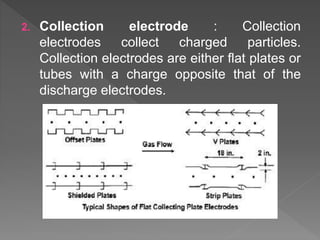
2. Collection electrode : Collection
electrodes collect charged particles.
Collection electrodes are either flat plates or
tubes with a charge opposite that of the
discharge electrodes.
3. High voltage electrical systems: The
transformer allows a high voltage power supply
to operate from a lower voltage source. A high
voltage system carries more than 1000Volts
between conductor and ground.
 The first precaution is to make sure that the electrical
power supplies are off and tagged out.
 The precipitator must be purged completely before
personnel are allowed to enter.
 Adequate ventilation must be maintained because
collected fly ash may give off toxic fumes.
 Short each individual discharge electrode structure to
ground with an appropriate clamp-type shorting shunt.
 Wear hardhat (helmet), safety glasses, lung protection
and gloves as appropriate.
 Make sure there is always someone in talking distance,
either directly or by radio. If you are new at inspections,
work with an experienced partner.
1. The external components should be inspected on a
regular basis as per vendors’ recommendations.
2. In absence of any recommendation by vendor, once a
week inspection is suggested.
3. Rapping system problems are diagnosed by observing
trends in the stack opacity.
4. All motor driven rapping shafts should be checked to
see that they are actually rotating.
5. Do not rely on the on/off indicating lights in the control
room.
6. Vibrators and impact rappers should also be checked
to see that they are in operation.
 ESP prevents the release of particulate matter produced
from industrial plants and during manufacturing processes.
 ESP helps to curb the effect of particulate matters produces
as dust during manufacturing processes in industry as they
may result in poor visibility if not controlled.
 ESP prevents the release of particle into the atmosphere
which can lead to a climatic change.
 ESP prevents the inhalation of the particulates matters by
man which can pose threat to their health such as the lung
damage and bronchitis.
 It functions as flue gas desulfurization (FGD) in fossil fuel
power plant, this helps in controlling the level of sulfur dioxide
emitted from the burning of fossil fuel.
Conclusion & Recommendation
 The Electrostatic Precipitator (ESP) is for now one of the best
equipment to control the presence of particulate matters which
are been generated from the industries today.
 It plays an important role to maintain a clean environment and to
achieve more healthy air quality. Wet ESP, or dry ESP coupled
with a catalyst, can remove small particles and gaseous
pollutants. Due to the increasing concern to human health.
 I recommend that the Government should enforce a law to
governing all industries in other for them to make use of the
Electrostatic Precipitators so as to curb all particulate matters
that are being generated during their production processes and
hence reduce the adverse health implication.
THANKS FOR YOUR
TIME

Balogun mary adefege...

  • 2.
     Introduction  Importantof ESP  Advantages and Disadvantages of ESP  Types of ESP  Maintenance of ESP  Safety Precautions of ESP  Application of ESP in Pollution Control.
  • 3.
     An ElectrostaticPrecipitator is a device designed to use an electric charge to remove certain impurities such as solid particles or liquid droplets from air or other gases in smoke- stacks and other flues such as (fumes, soot, dusts, smokes e.t.c).  It is majorly a pollution control device. It is a common particle collection device in the industries.  Another name for Electrostatic Precipitator is an Electrostatic Air Cleaner.
  • 4.
    o Electrostatic precipitatorsare important tools in the process of cleaning up flue gases. o It can handle large volume of gas at various temperatures of flow rates. o An ESP is also a filtration device that removes fine particles.
  • 5.
    • ESP isused for the collection of both dry and wet pollutants. • They are capable of very high efficiencies, even for very small particles. • It has a low operating cost and they are economically feasible.  An ESP is also a filtration device that removes fine particles like dust and smoke from a flowing gas using the force of an induced electrostatic charge minimally impending the flow of gases through the unit.  An ESP applies energy only to the particulate matter being collected and therefore is very efficient in its consumption of energy (in the form of electricity).
  • 6.
     It hasa high capital costs which makes it prohibitive for small scale industries. They are expensive to purchase any install.  It requires a large space to be set up. It is not feasible once installed. It is  Ozone is produced by the negatively charge electrode during gas ionization.  They are capable of operating under high pressure of or vacuum conditions. Or anything that is not dry in the conventional sense.  It has a low operating cost and they are economically feasible
  • 7.
     ESPs canbe grouped/classified, according to a number of distinguishing features in their design. These features include the following:  The structural design and operation of the discharge electrodes (rigid-frame, wires or plate) and collection electrodes (tubular or plate)  The method of charging (single-stage or two-stage)  The temperature of operation (cold-side or hot-side)  The method of particle removal from collection surfaces (wet or dry)
  • 9.
    1. Discharge electrodes:These are small-diameter metal wires that hang vertically in the electrostatic precipitator (called weighted wires), a number of wires attached together in rigid frame, or a rigid electrode made from a single piece of fabricated metal.
  • 10.
    2. Collection electrode: Collection electrodes collect charged particles. Collection electrodes are either flat plates or tubes with a charge opposite that of the discharge electrodes.
  • 11.
    3. High voltageelectrical systems: The transformer allows a high voltage power supply to operate from a lower voltage source. A high voltage system carries more than 1000Volts between conductor and ground.
  • 12.
     The firstprecaution is to make sure that the electrical power supplies are off and tagged out.  The precipitator must be purged completely before personnel are allowed to enter.  Adequate ventilation must be maintained because collected fly ash may give off toxic fumes.  Short each individual discharge electrode structure to ground with an appropriate clamp-type shorting shunt.  Wear hardhat (helmet), safety glasses, lung protection and gloves as appropriate.  Make sure there is always someone in talking distance, either directly or by radio. If you are new at inspections, work with an experienced partner.
  • 13.
    1. The externalcomponents should be inspected on a regular basis as per vendors’ recommendations. 2. In absence of any recommendation by vendor, once a week inspection is suggested. 3. Rapping system problems are diagnosed by observing trends in the stack opacity. 4. All motor driven rapping shafts should be checked to see that they are actually rotating. 5. Do not rely on the on/off indicating lights in the control room. 6. Vibrators and impact rappers should also be checked to see that they are in operation.
  • 14.
     ESP preventsthe release of particulate matter produced from industrial plants and during manufacturing processes.  ESP helps to curb the effect of particulate matters produces as dust during manufacturing processes in industry as they may result in poor visibility if not controlled.  ESP prevents the release of particle into the atmosphere which can lead to a climatic change.  ESP prevents the inhalation of the particulates matters by man which can pose threat to their health such as the lung damage and bronchitis.  It functions as flue gas desulfurization (FGD) in fossil fuel power plant, this helps in controlling the level of sulfur dioxide emitted from the burning of fossil fuel.
  • 15.
    Conclusion & Recommendation The Electrostatic Precipitator (ESP) is for now one of the best equipment to control the presence of particulate matters which are been generated from the industries today.  It plays an important role to maintain a clean environment and to achieve more healthy air quality. Wet ESP, or dry ESP coupled with a catalyst, can remove small particles and gaseous pollutants. Due to the increasing concern to human health.  I recommend that the Government should enforce a law to governing all industries in other for them to make use of the Electrostatic Precipitators so as to curb all particulate matters that are being generated during their production processes and hence reduce the adverse health implication.
  • 16.