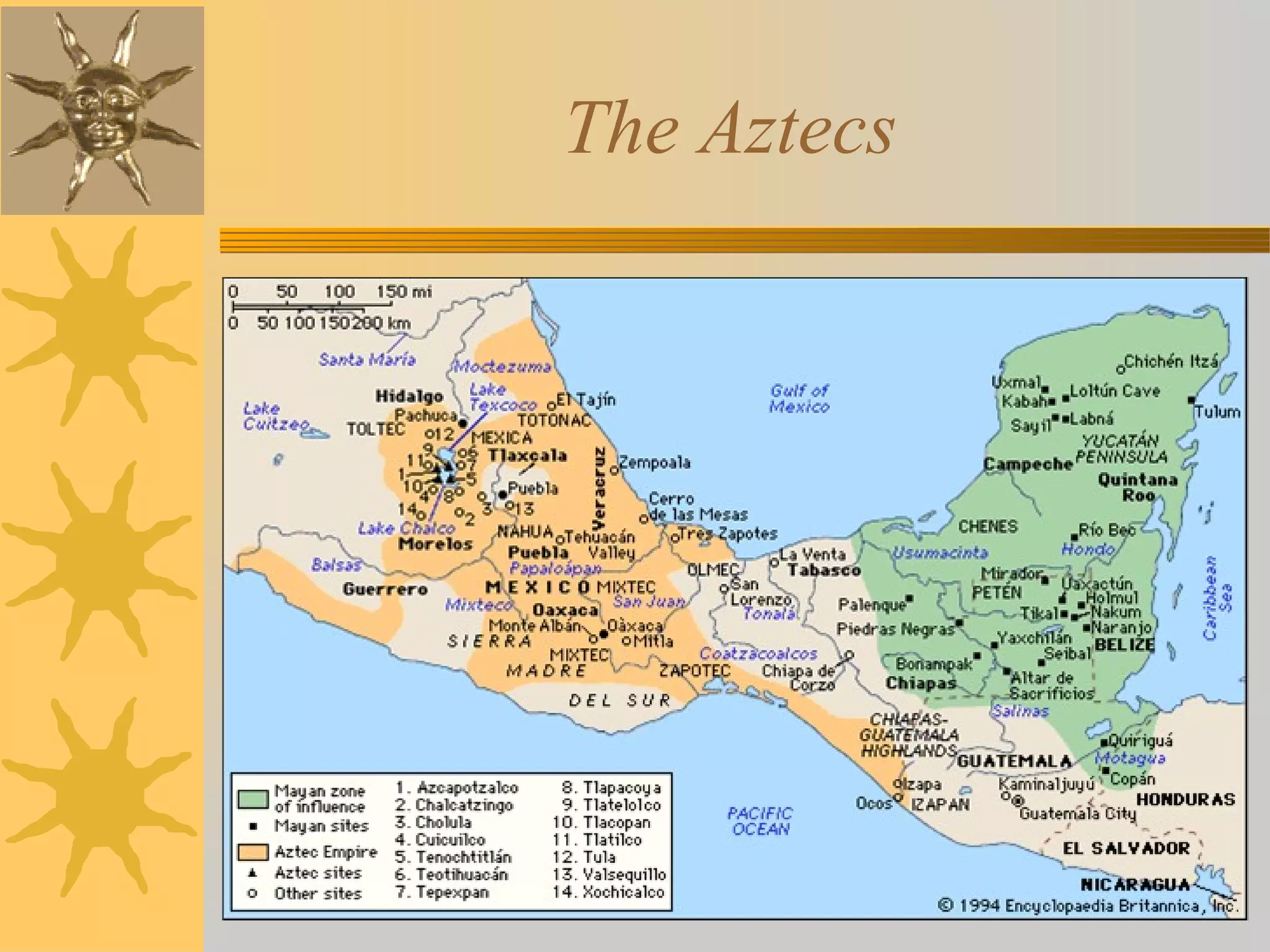
The Aztecs
Rise of the Aztecs
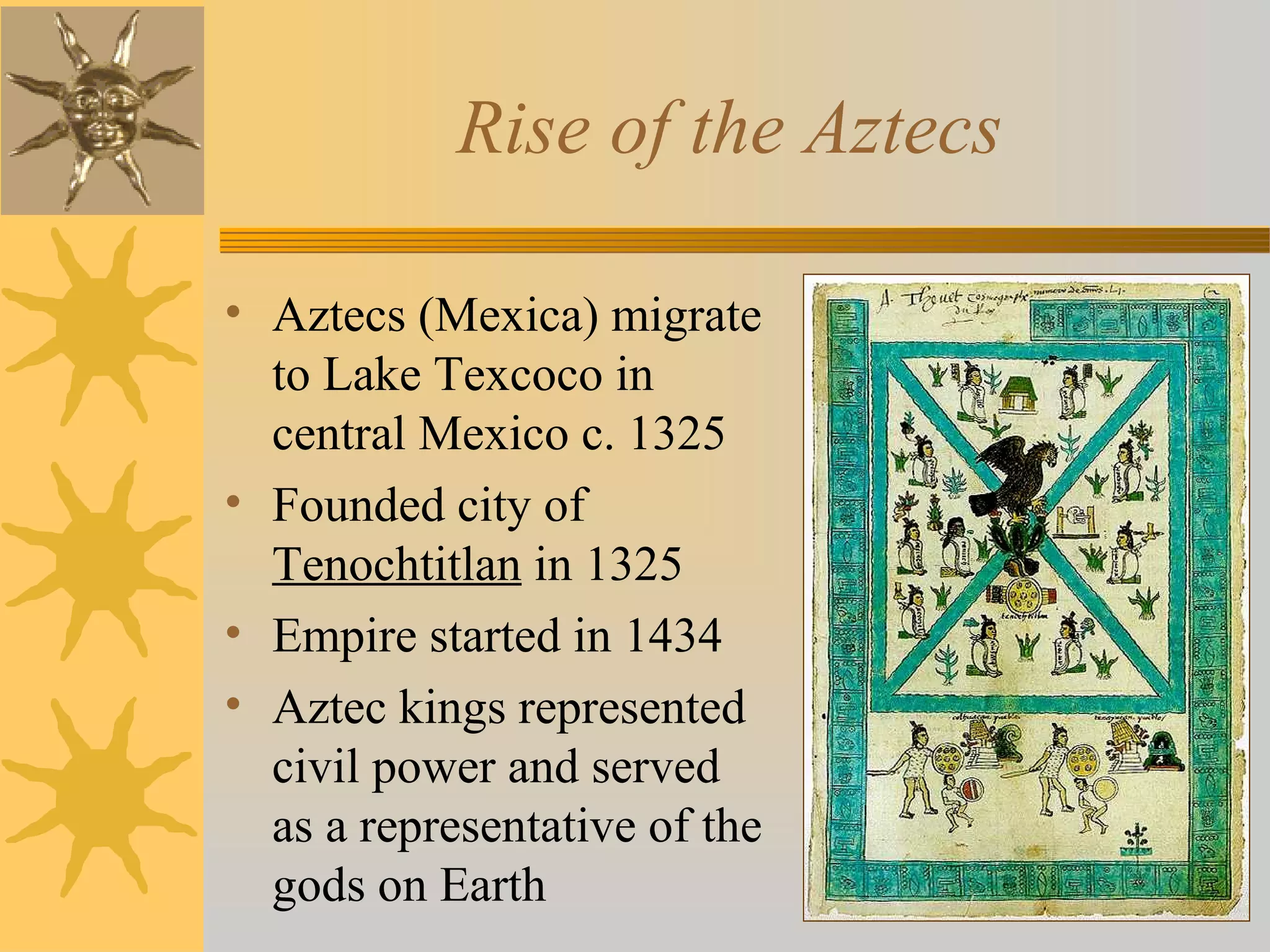
• Aztecs (Mexica) migrate
to Lake Texcoco in
central Mexico c. 1325
• Founded city of
Tenochtitlan in 1325
• Empire started in 1434
• Aztec kings represented
civil power and served
as a representative of the
gods on Earth
Aztec Government
• City-states ruled by a speaker chosen from
the nobility
• The Great Speaker, ruler of Tenochtitlan,
was in effect an emperor
• Increasingly considered a living god
• Conquered peoples maintained some
autonomy if they paid tribute
Aztec Religion
• Aztec maintained
traditional deities of
Mesoamerica
• 128 major deities
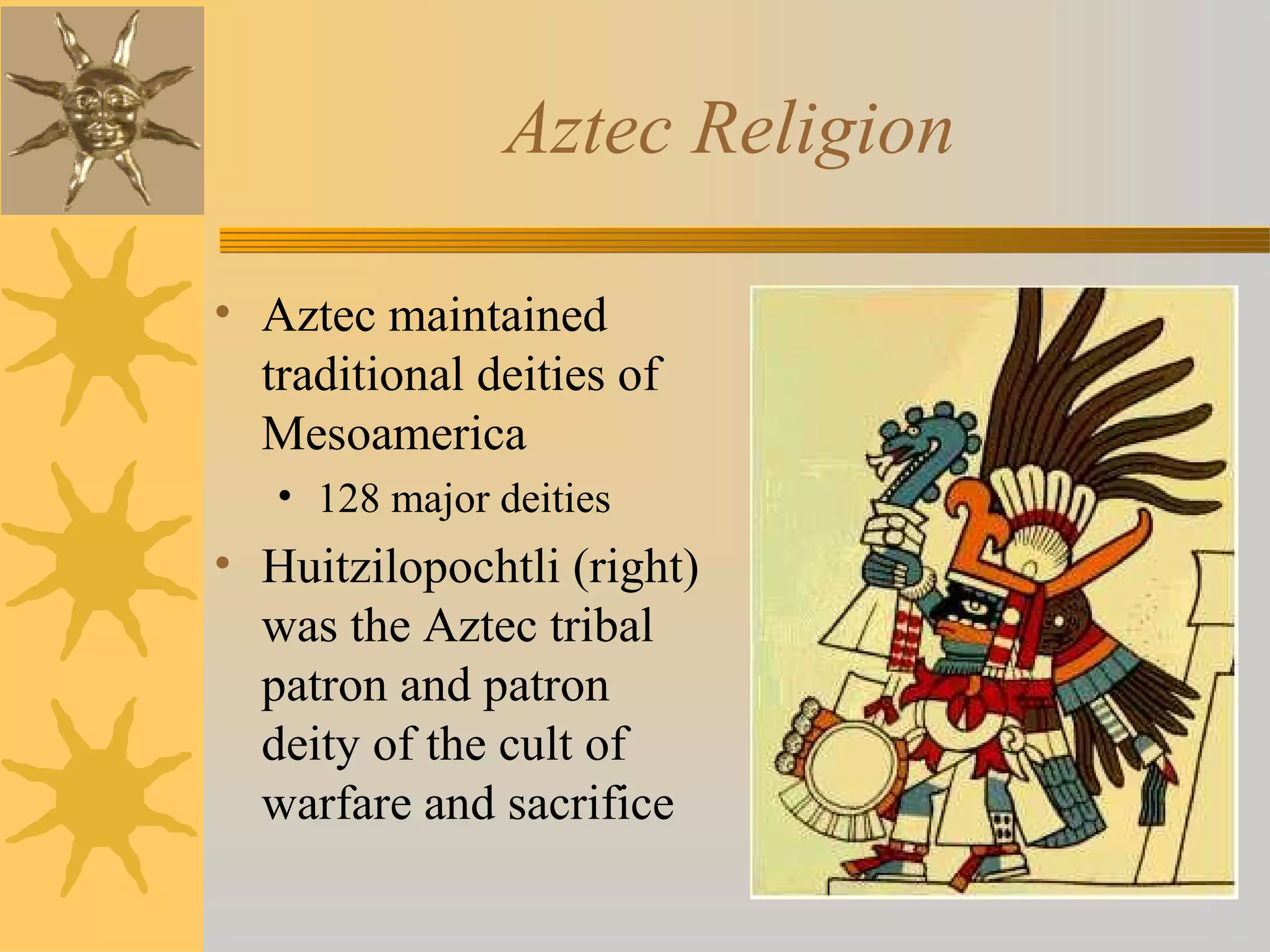
• Huitzilopochtli (right)
was the Aztec tribal
patron and patron
deity of the cult of
warfare and sacrifice
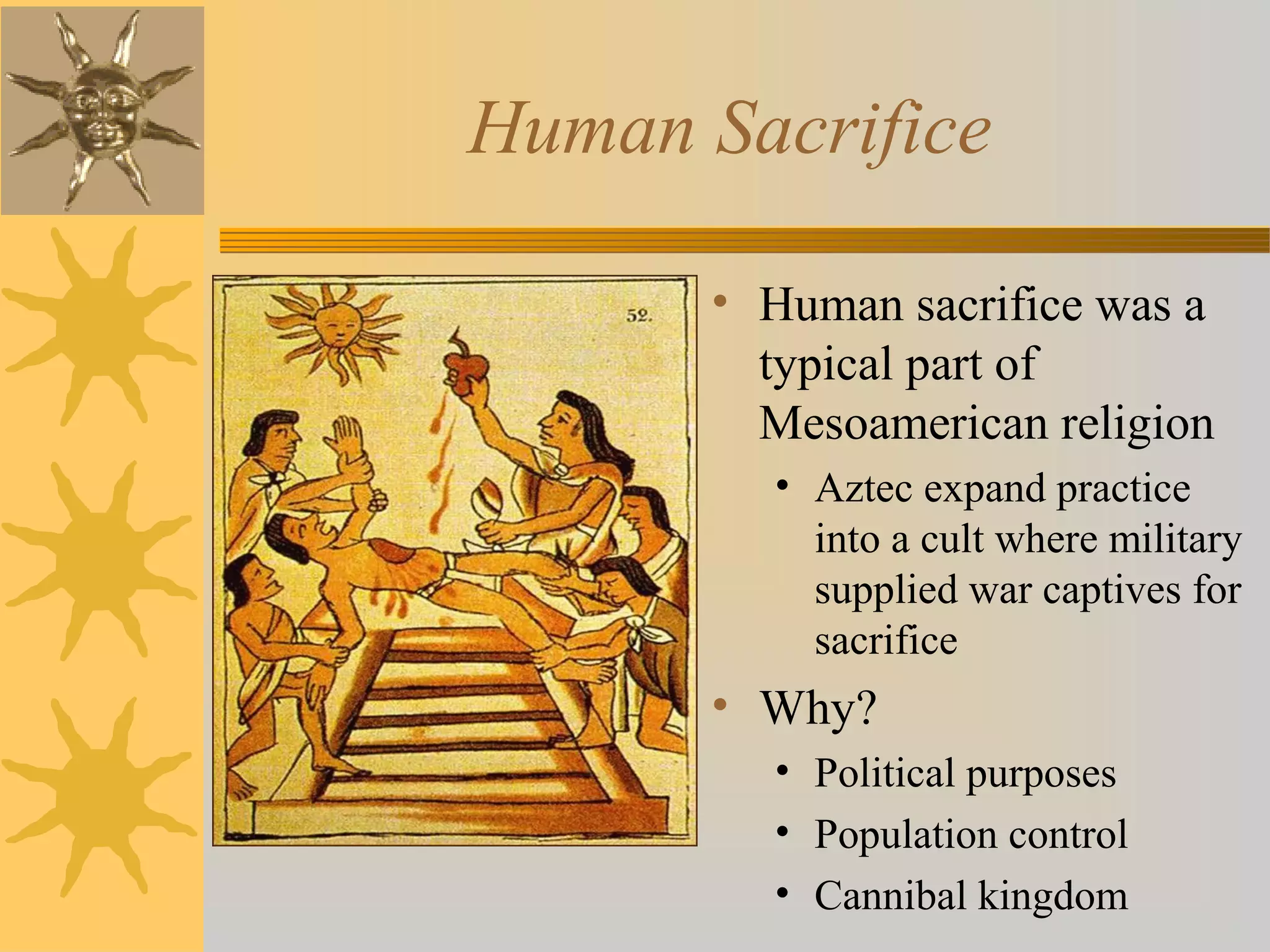
Human Sacrifice
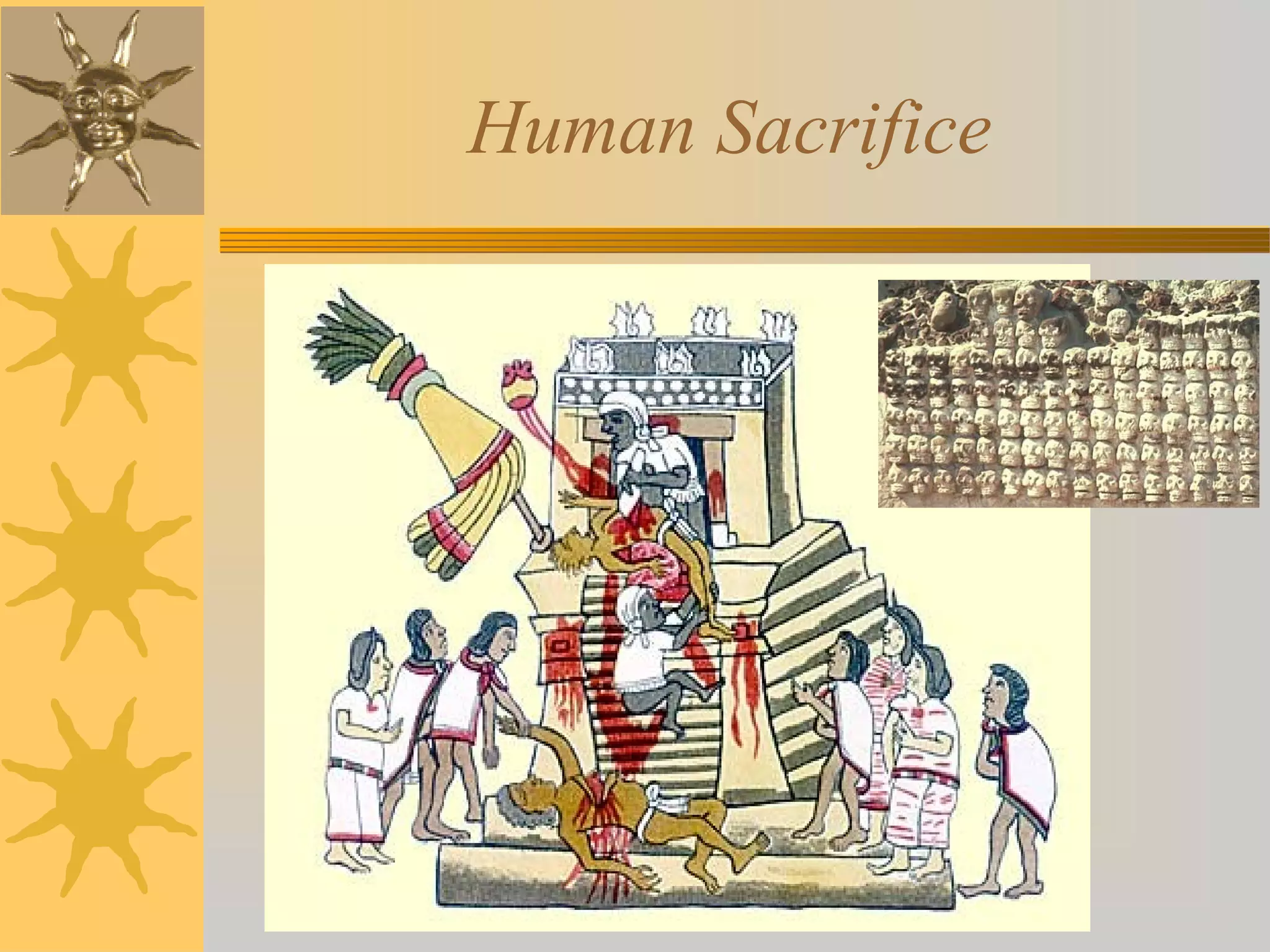
• Human sacrifice was a
typical part of
Mesoamerican religion
• Aztec expand practice
into a cult where military
supplied war captives for
sacrifice
• Why?
• Political purposes
• Population control
• Cannibal kingdom
Human Sacrifice
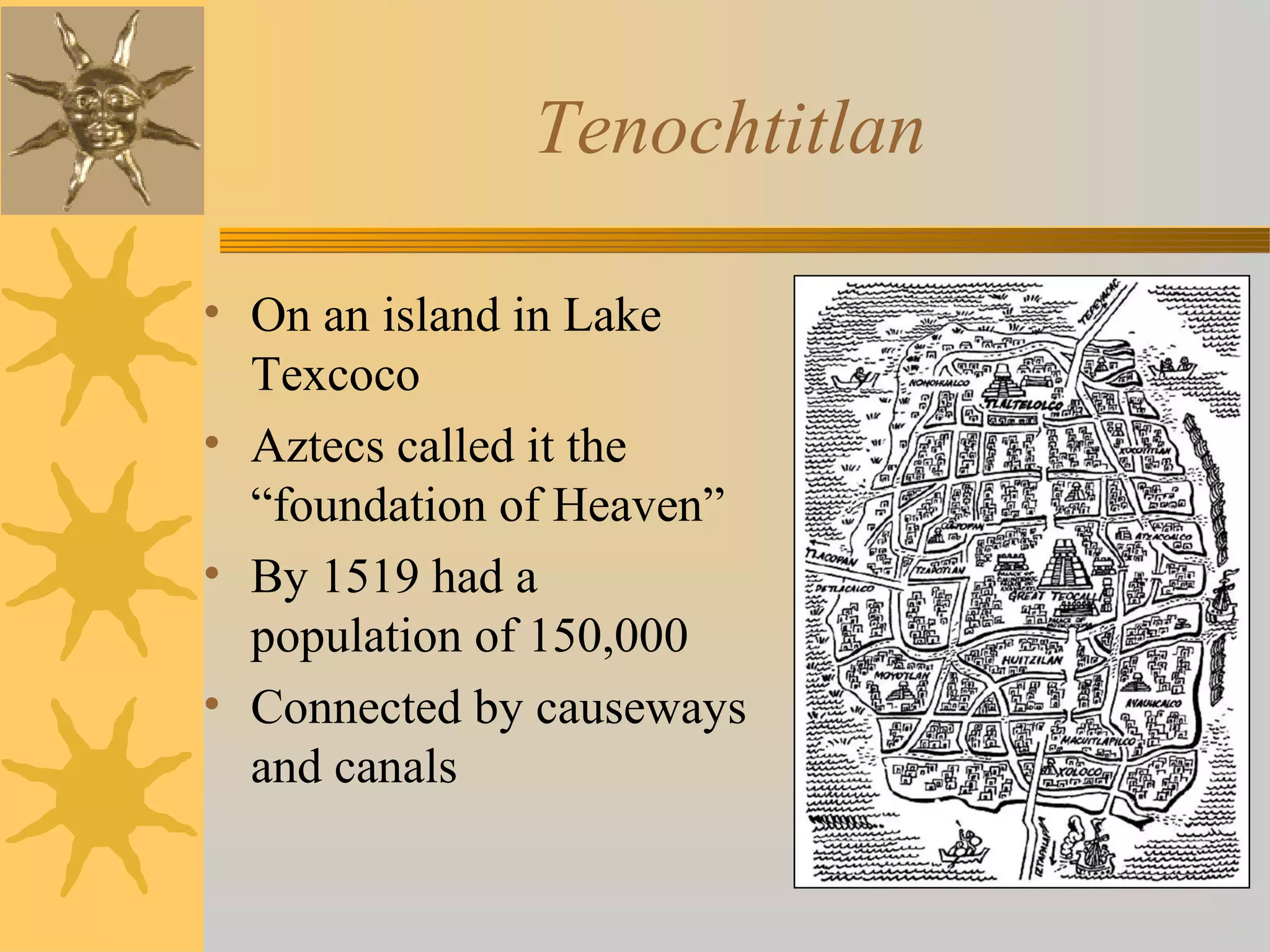
Tenochtitlan
• On an island in Lake
Texcoco
• Aztecs called it the
“foundation of Heaven”
• By 1519 had a
population of 150,000
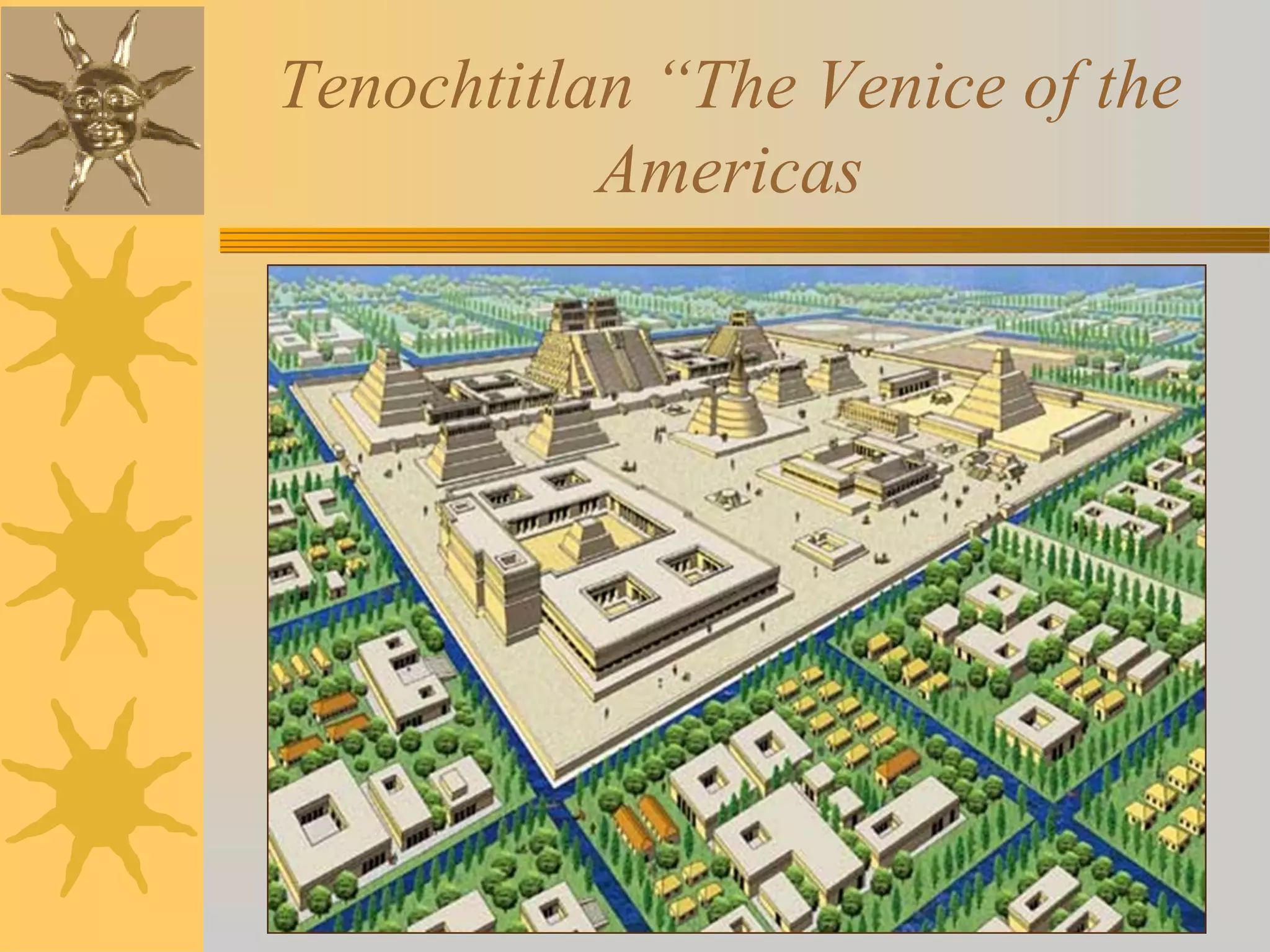
• Connected by causeways
and canals
Tenochtitlan “The Venice of the
Americas
Aztec Economy
• Agriculture
• Food often provided as tribute
• Built chinampas
• Pochteca was a special merchant class
which specialized in long-distance luxury
trade
• Cacao beans and gold dust were used as
currency; bartering was most common
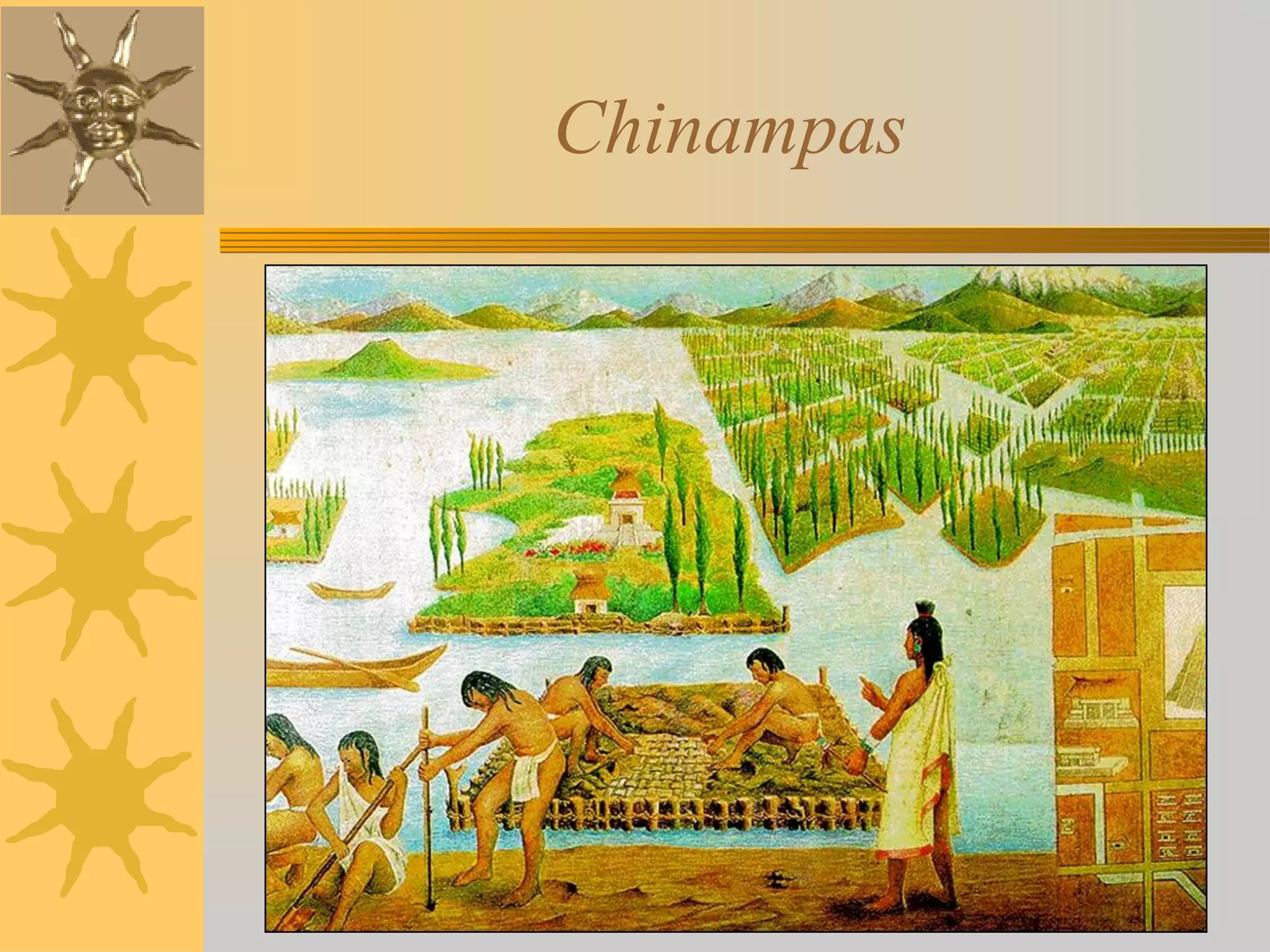
Chinampas
Chinampas were man-made floating islands 17’ long x 100’ to 300’
feet wide. Aztecs built over 20,000 acres of chinampas.
Chinampas
Aztec Society
• Originally divided into seven clans called
calpulli
• Calpulli redistributed land, organized labor
gangs & military units, maintained temples &
schools
• Eventually a class of nobility emerged
• Nobility controlled the priesthood & military
Aztec Society
• Women’s primary role was the household
• Women spent six hours a day grinding corn;
restricted women’s rights
• Marriages were arranged
• Polygamy existed amongst the nobility
• Women could inherit property
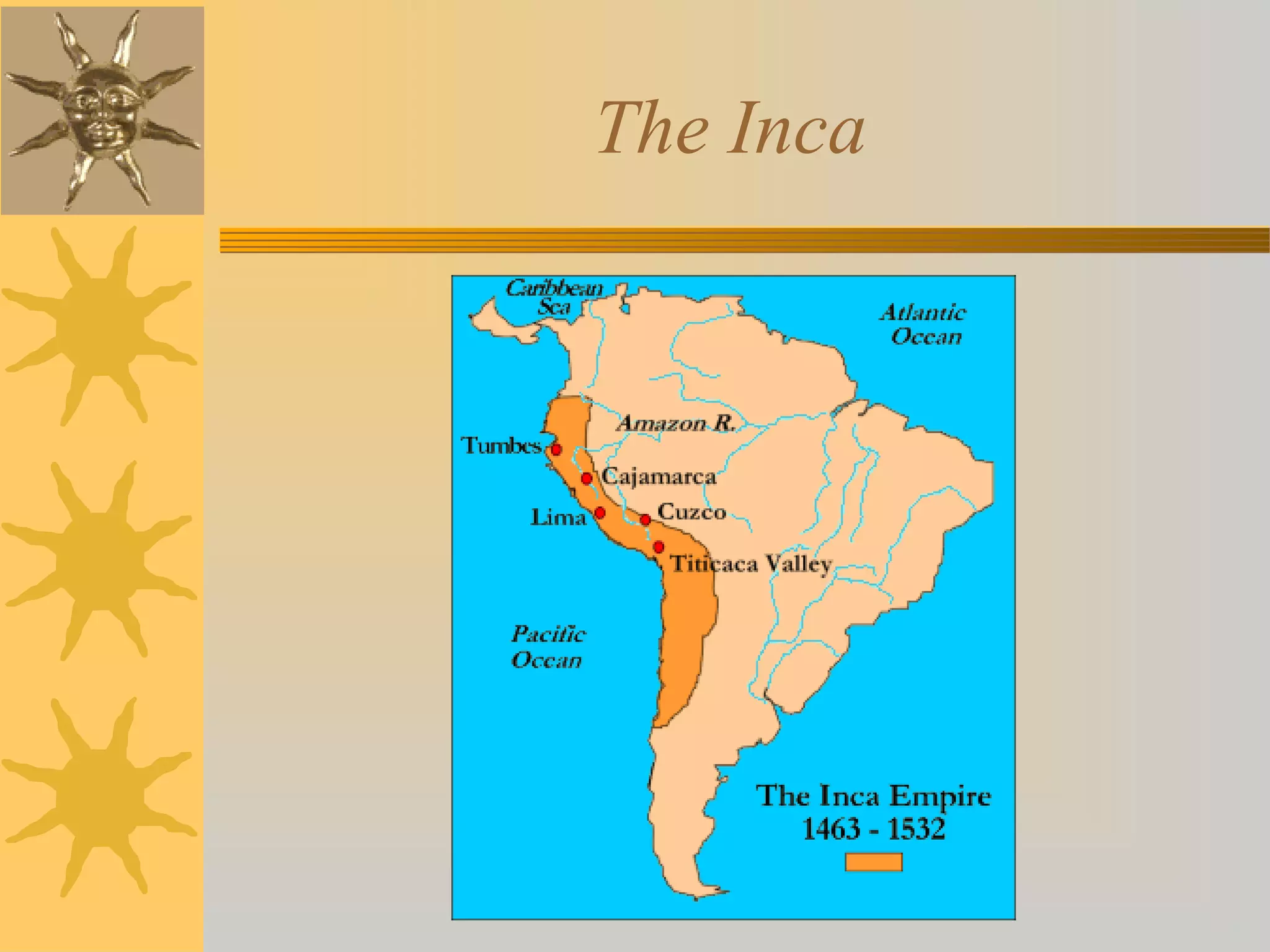
The Inca
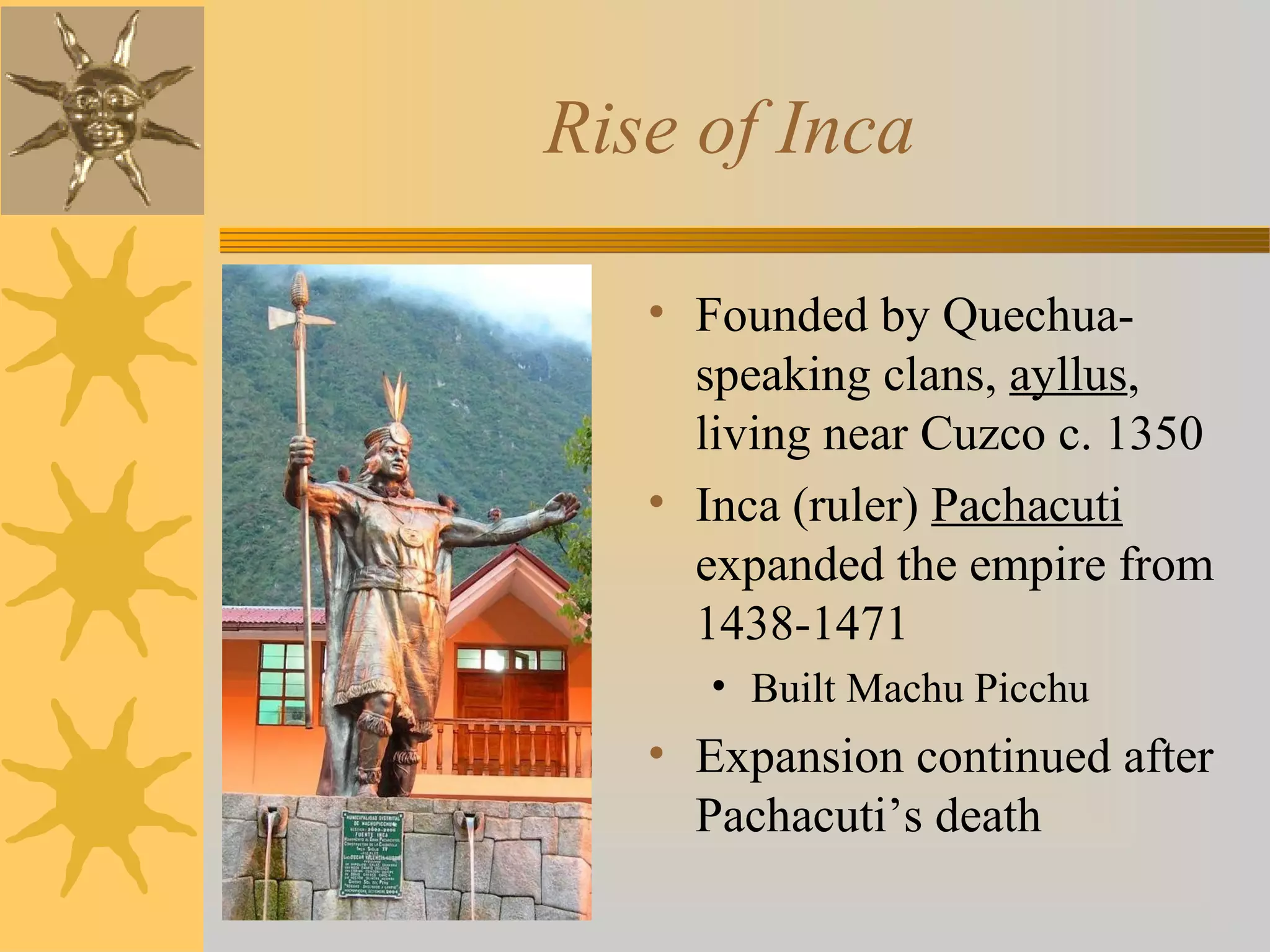
Rise of Inca
• Founded by Quechua-
speaking clans, ayllus,
living near Cuzco c. 1350
• Inca (ruler) Pachacuti
expanded the empire from
1438-1471
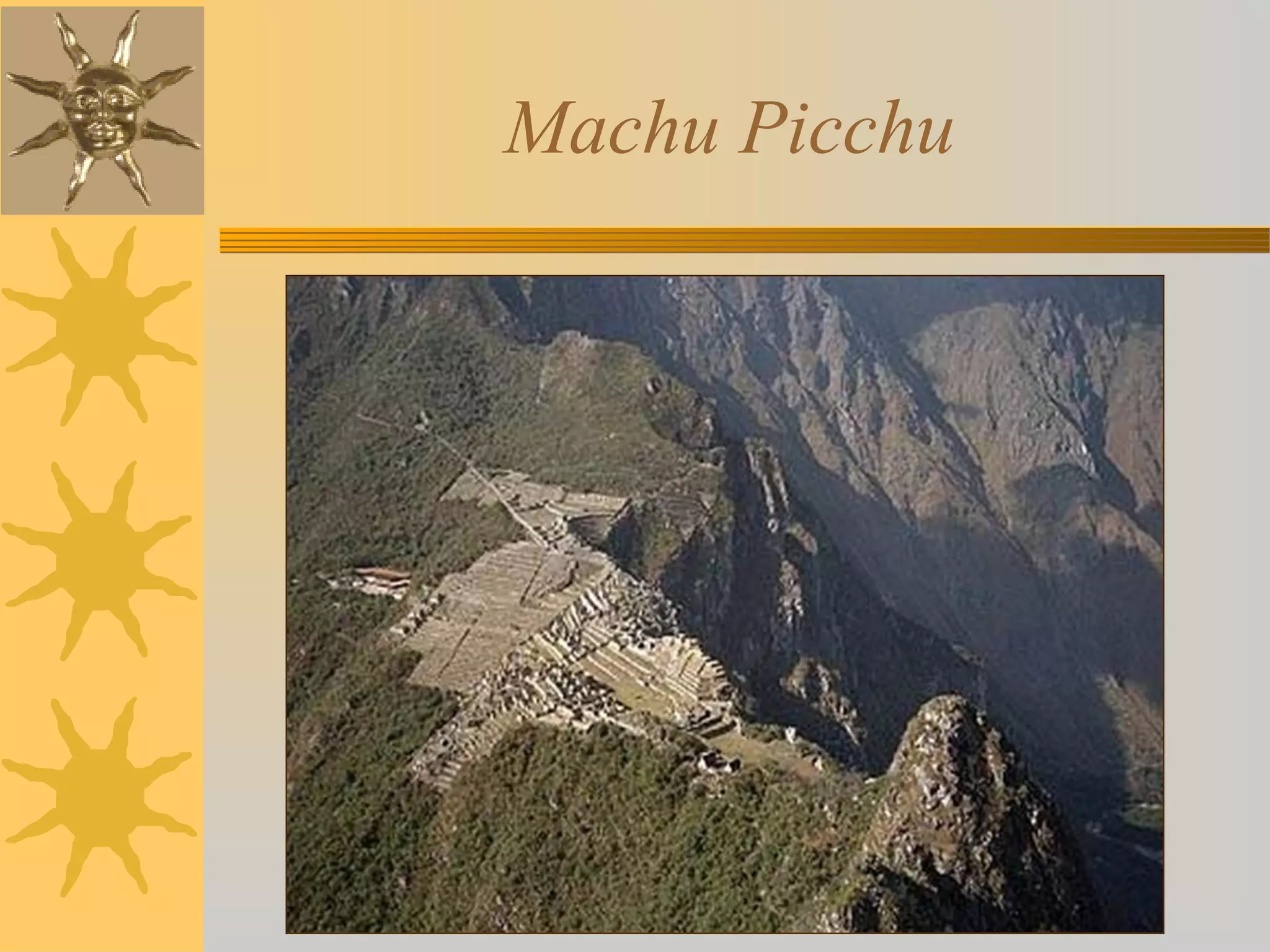
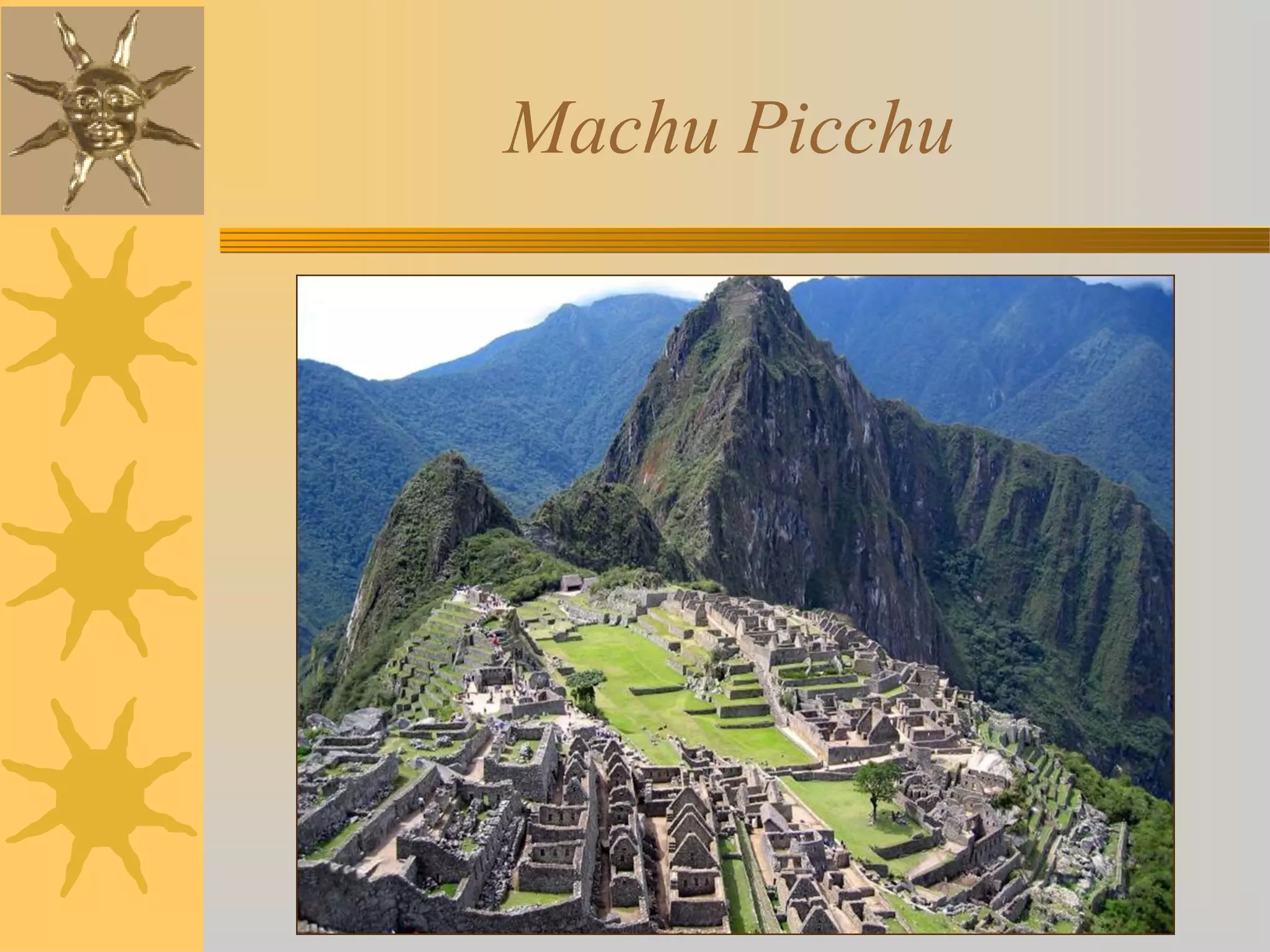
• Built Machu Picchu
• Expansion continued after
Pachacuti’s death
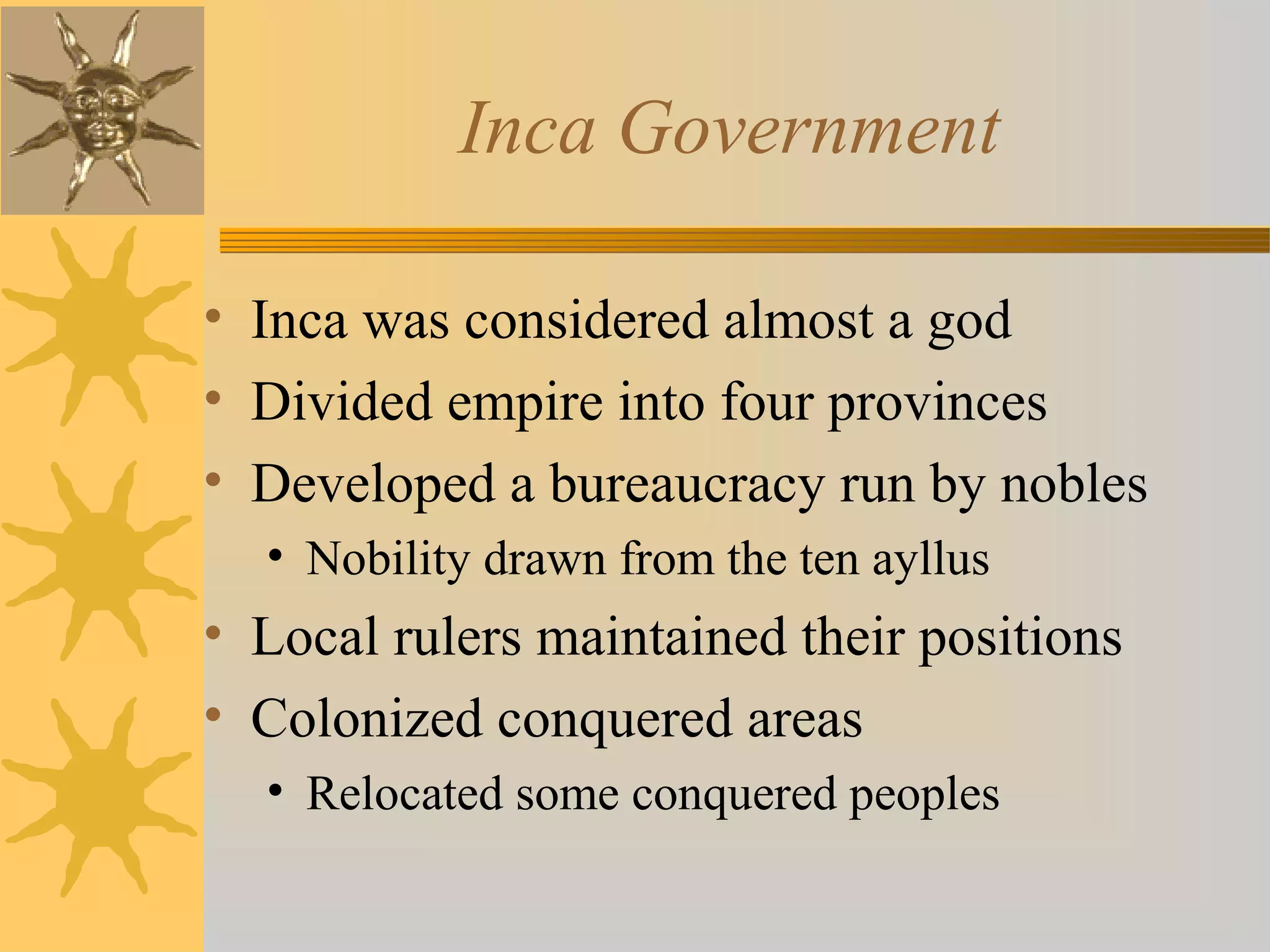
Machu Picchu
Machu Picchu
Conquest & Religion
• Expansion motivated
by split inheritance
• Polytheistic
• Sun God was the
primary god
• Influenced by
animism
• Mountains, rivers, etc.
were considered holy
shrines
Temple of the Sun in Machu Picchu
Inca Government
• Inca was considered almost a god
• Divided empire into four provinces
• Developed a bureaucracy run by nobles
• Nobility drawn from the ten ayllus
• Local rulers maintained their positions
• Colonized conquered areas
• Relocated some conquered peoples
Inca Metalworking
Inca Economy
• Unlike Aztecs, not a lot of trade
• Tried to be self-sufficient
• Primarily agricultural
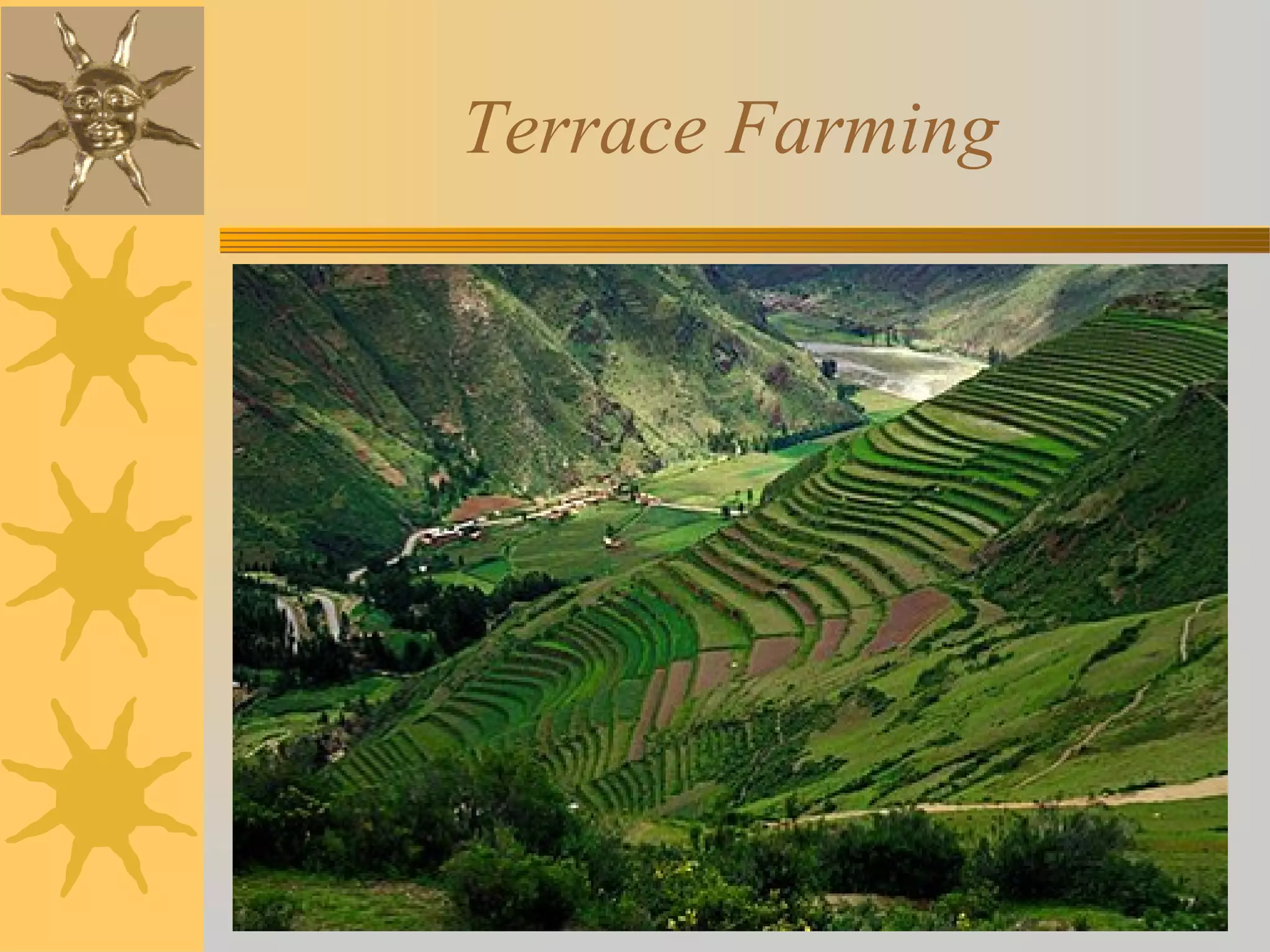
• Terrace farming & complex irrigation
• Over 200 types of potatoes
• Inca Socialism
• Used forced labor for massive projects
• Mita
Terrace Farming
Inca Society
• Inca emphasis on military reinforced gender
inequality
• Women worked in the fields, wove cloth,
and cared for the household
• Women worshipped fertility deities
• Recognize parallel descent
• Women passed rights and property to their
daughters
Inca Technology
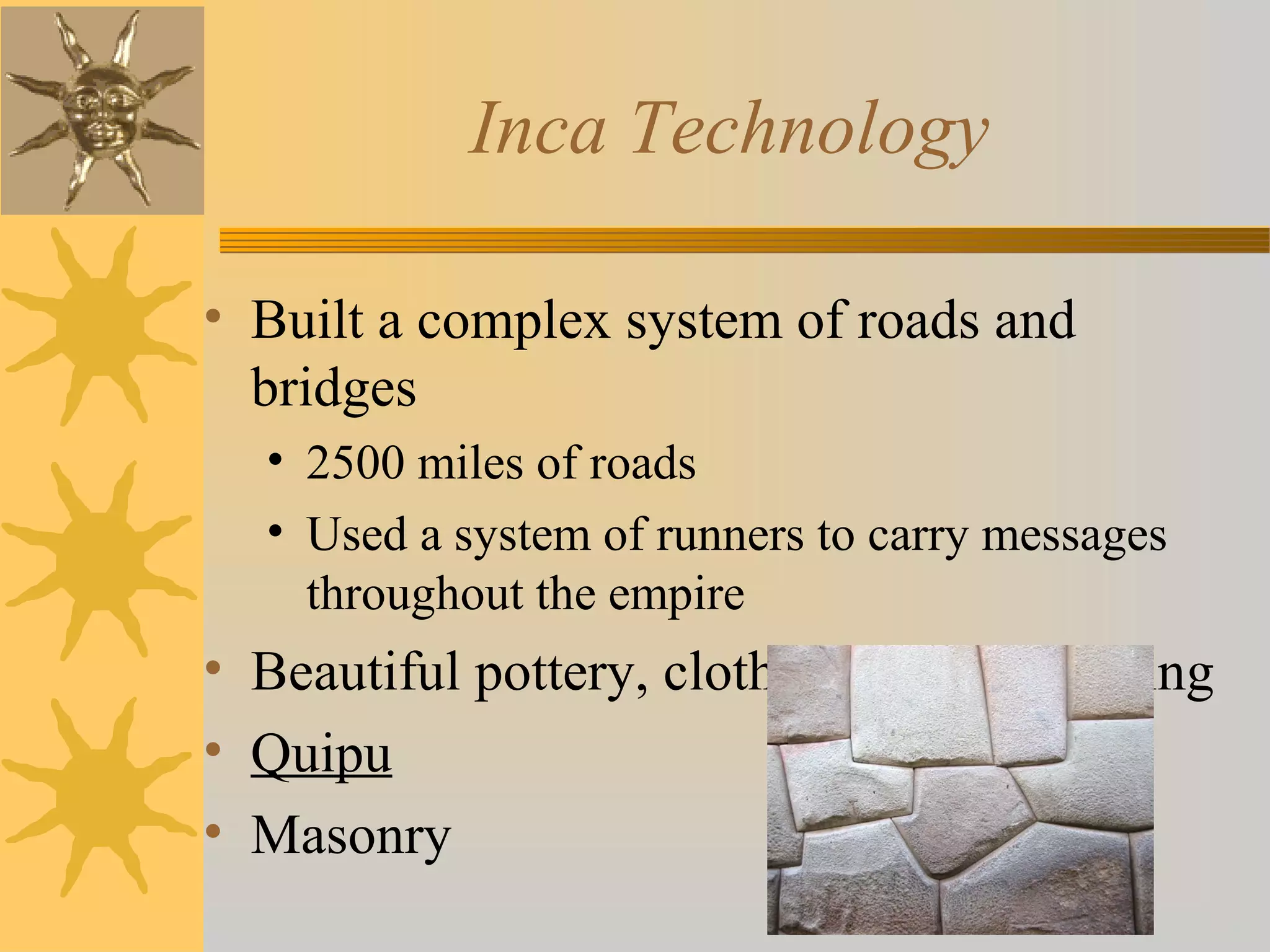
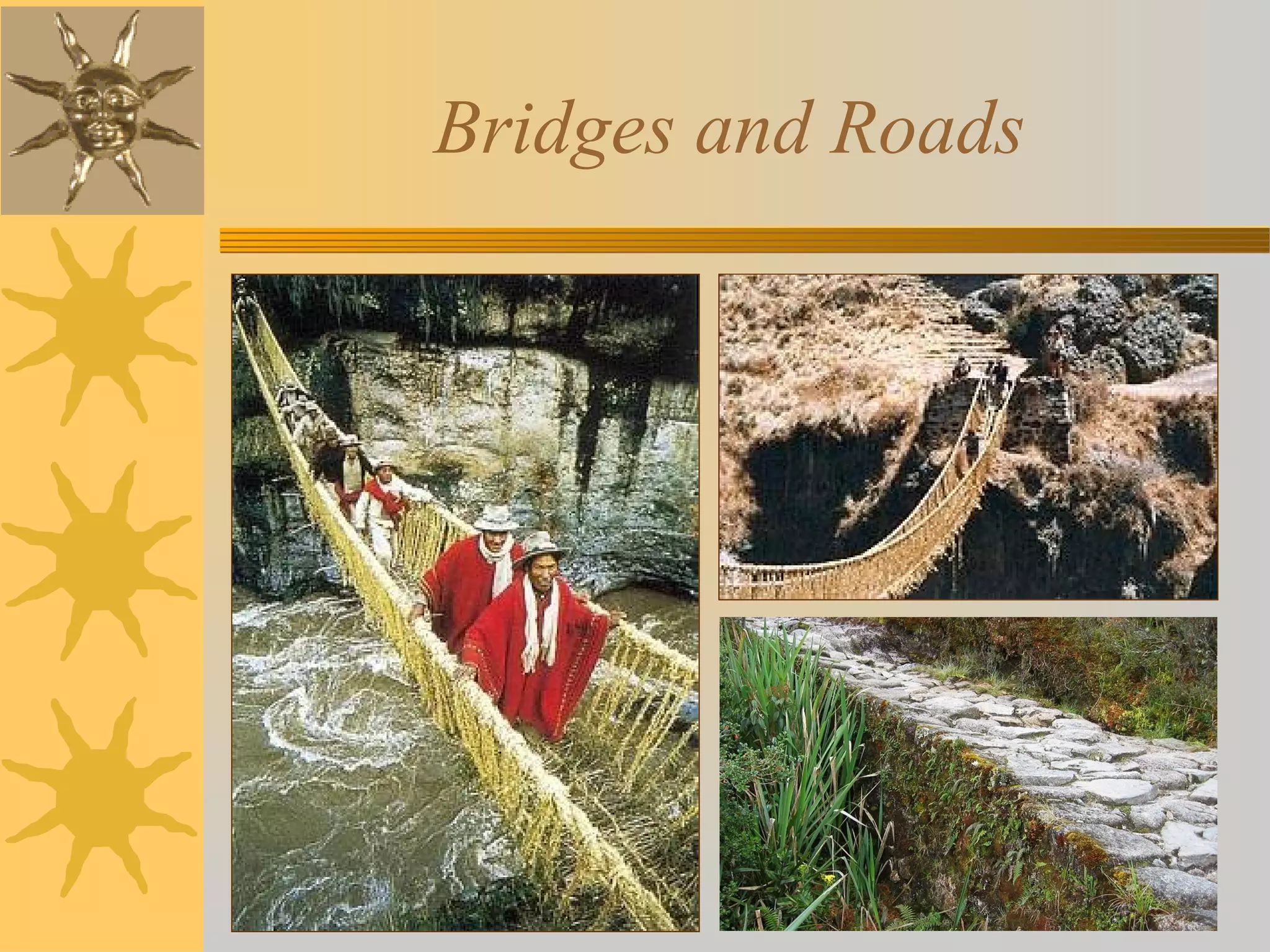
• Built a complex system of roads and
bridges
• 2500 miles of roads
• Used a system of runners to carry messages
throughout the empire
• Beautiful pottery, cloth, and metalworking
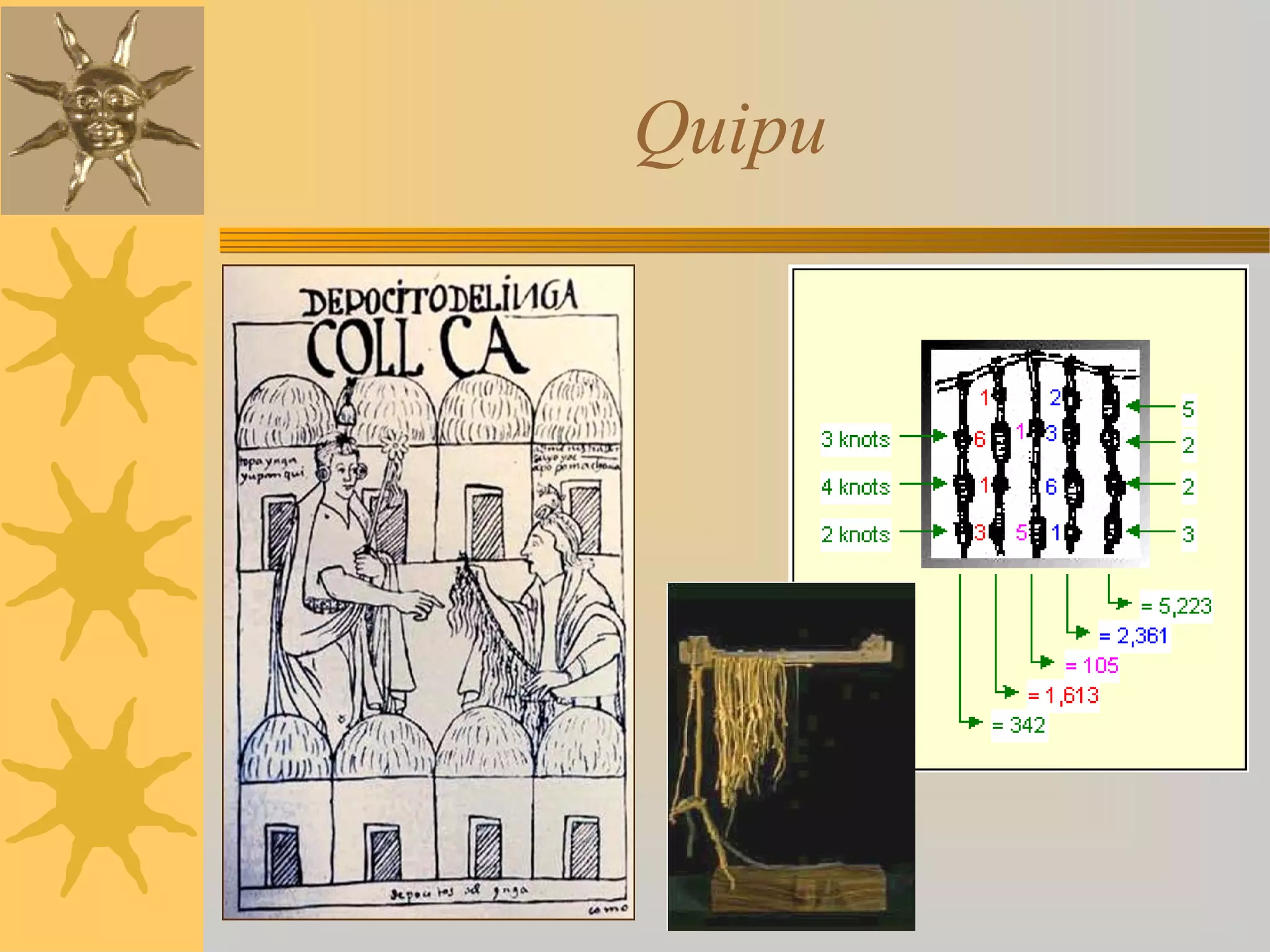
• Quipu
• Masonry
Bridges and Roads
Quipu

Aztec and inca

  • 1.
  • 2.
    Rise of theAztecs • Aztecs (Mexica) migrate to Lake Texcoco in central Mexico c. 1325 • Founded city of Tenochtitlan in 1325 • Empire started in 1434 • Aztec kings represented civil power and served as a representative of the gods on Earth
  • 3.
    Aztec Government • City-statesruled by a speaker chosen from the nobility • The Great Speaker, ruler of Tenochtitlan, was in effect an emperor • Increasingly considered a living god • Conquered peoples maintained some autonomy if they paid tribute
  • 4.
    Aztec Religion • Aztecmaintained traditional deities of Mesoamerica • 128 major deities • Huitzilopochtli (right) was the Aztec tribal patron and patron deity of the cult of warfare and sacrifice
  • 5.
    Human Sacrifice • Humansacrifice was a typical part of Mesoamerican religion • Aztec expand practice into a cult where military supplied war captives for sacrifice • Why? • Political purposes • Population control • Cannibal kingdom
  • 6.
  • 7.
    Tenochtitlan • On anisland in Lake Texcoco • Aztecs called it the “foundation of Heaven” • By 1519 had a population of 150,000 • Connected by causeways and canals
  • 8.
  • 9.
    Aztec Economy • Agriculture •Food often provided as tribute • Built chinampas • Pochteca was a special merchant class which specialized in long-distance luxury trade • Cacao beans and gold dust were used as currency; bartering was most common
  • 10.
    Chinampas Chinampas were man-madefloating islands 17’ long x 100’ to 300’ feet wide. Aztecs built over 20,000 acres of chinampas.
  • 11.
  • 12.
    Aztec Society • Originallydivided into seven clans called calpulli • Calpulli redistributed land, organized labor gangs & military units, maintained temples & schools • Eventually a class of nobility emerged • Nobility controlled the priesthood & military
  • 13.
    Aztec Society • Women’sprimary role was the household • Women spent six hours a day grinding corn; restricted women’s rights • Marriages were arranged • Polygamy existed amongst the nobility • Women could inherit property
  • 14.
  • 15.
    Rise of Inca •Founded by Quechua- speaking clans, ayllus, living near Cuzco c. 1350 • Inca (ruler) Pachacuti expanded the empire from 1438-1471 • Built Machu Picchu • Expansion continued after Pachacuti’s death
  • 16.
  • 17.
  • 18.
    Conquest & Religion •Expansion motivated by split inheritance • Polytheistic • Sun God was the primary god • Influenced by animism • Mountains, rivers, etc. were considered holy shrines Temple of the Sun in Machu Picchu
  • 19.
    Inca Government • Incawas considered almost a god • Divided empire into four provinces • Developed a bureaucracy run by nobles • Nobility drawn from the ten ayllus • Local rulers maintained their positions • Colonized conquered areas • Relocated some conquered peoples
  • 20.
  • 21.
    Inca Economy • UnlikeAztecs, not a lot of trade • Tried to be self-sufficient • Primarily agricultural • Terrace farming & complex irrigation • Over 200 types of potatoes • Inca Socialism • Used forced labor for massive projects • Mita
  • 22.
  • 23.
    Inca Society • Incaemphasis on military reinforced gender inequality • Women worked in the fields, wove cloth, and cared for the household • Women worshipped fertility deities • Recognize parallel descent • Women passed rights and property to their daughters
  • 24.
    Inca Technology • Builta complex system of roads and bridges • 2500 miles of roads • Used a system of runners to carry messages throughout the empire • Beautiful pottery, cloth, and metalworking • Quipu • Masonry
  • 25.
  • 26.

Editor's Notes

  • #10 17’ long x 100’ to 330’ wide 20,000 acres of chinampas
  • #11 17’ long x 100’ to 330’ wide 20,000 acres of chinampas