Aztec and Mayan Technological Innovations Megan Beaver  History 27
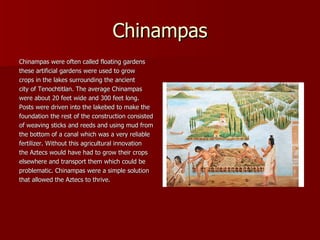
Chinampas Chinampas were often called floating gardens  these artificial gardens were used to grow  crops in the lakes surrounding the ancient  city of Tenochtitlan. The average Chinampas  were about 20 feet wide and 300 feet long.  Posts were driven into the lakebed to make the  foundation the rest of the construction consisted  of weaving sticks and reeds and using mud from  the bottom of a canal which was a very reliable fertilizer. Without this agricultural innovation  the Aztecs would have had to grow their crops  elsewhere and transport them which could be  problematic. Chinampas were a simple solution  that allowed the Aztecs to thrive.
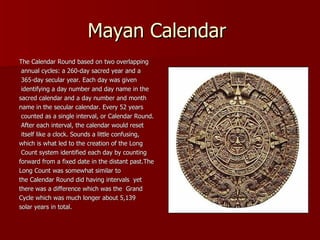
Mayan Calendar  The Calendar Round based on two overlapping annual cycles: a 260-day sacred year and a 365-day secular year. Each day was given identifying a day number and day name in the  sacred calendar and a day number and month  name in the secular calendar. Every 52 years counted as a single interval, or Calendar Round. After each interval, the calendar would reset itself like a clock. Sounds a little confusing,  which is what led to the creation of the Long Count system identified each day by counting  forward from a fixed date in the distant past.The  Long Count was somewhat similar to  the Calendar Round did having intervals  yet  there was a difference which was the  Grand  Cycle which was much longer about 5,139  solar years in total.
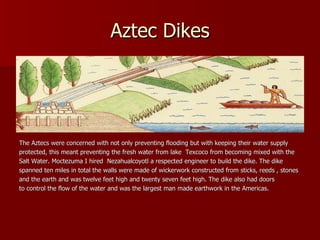
Aztec Dikes The Aztecs were concerned with not only preventing flooding but with keeping their water supply  protected, this meant preventing the fresh water from lake  Texcoco from becoming mixed with the  Salt Water. Moctezuma I hired  Nezahualcoyotl a respected engineer to build the dike. The dike  spanned ten miles in total the walls were made of wickerwork constructed from sticks, reeds , stones  and the earth and was twelve feet high and twenty seven feet high. The dike also had doors to control the flow of the water and was the largest man made earthwork in the Americas.
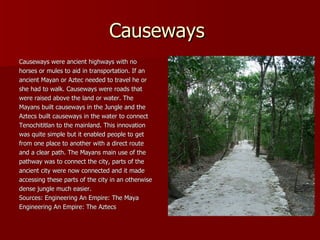
Causeways  Causeways were ancient highways with no  horses or mules to aid in transportation. If an  ancient Mayan or Aztec needed to travel he or she had to walk. Causeways were roads that  were raised above the land or water. The  Mayans built causeways in the Jungle and the Aztecs built causeways in the water to connect  Tenochititlan to the mainland. This innovation  was quite simple but it enabled people to get  from one place to another with a direct route  and a clear path. The Mayans main use of the  pathway was to connect the city, parts of the  ancient city were now connected and it made  accessing these parts of the city in an otherwise  dense jungle much easier.  Sources: Engineering An Empire: The Maya  Engineering An Empire: The Aztecs

Aztec and Mayan Technological Innovations

  • 1.
    Aztec and MayanTechnological Innovations Megan Beaver History 27
  • 2.
    Chinampas Chinampas wereoften called floating gardens these artificial gardens were used to grow crops in the lakes surrounding the ancient city of Tenochtitlan. The average Chinampas were about 20 feet wide and 300 feet long. Posts were driven into the lakebed to make the foundation the rest of the construction consisted of weaving sticks and reeds and using mud from the bottom of a canal which was a very reliable fertilizer. Without this agricultural innovation the Aztecs would have had to grow their crops elsewhere and transport them which could be problematic. Chinampas were a simple solution that allowed the Aztecs to thrive.
  • 3.
    Mayan Calendar The Calendar Round based on two overlapping annual cycles: a 260-day sacred year and a 365-day secular year. Each day was given identifying a day number and day name in the sacred calendar and a day number and month name in the secular calendar. Every 52 years counted as a single interval, or Calendar Round. After each interval, the calendar would reset itself like a clock. Sounds a little confusing, which is what led to the creation of the Long Count system identified each day by counting forward from a fixed date in the distant past.The Long Count was somewhat similar to the Calendar Round did having intervals yet there was a difference which was the Grand Cycle which was much longer about 5,139 solar years in total.
  • 4.
    Aztec Dikes TheAztecs were concerned with not only preventing flooding but with keeping their water supply protected, this meant preventing the fresh water from lake Texcoco from becoming mixed with the Salt Water. Moctezuma I hired Nezahualcoyotl a respected engineer to build the dike. The dike spanned ten miles in total the walls were made of wickerwork constructed from sticks, reeds , stones and the earth and was twelve feet high and twenty seven feet high. The dike also had doors to control the flow of the water and was the largest man made earthwork in the Americas.
  • 5.
    Causeways Causewayswere ancient highways with no horses or mules to aid in transportation. If an ancient Mayan or Aztec needed to travel he or she had to walk. Causeways were roads that were raised above the land or water. The Mayans built causeways in the Jungle and the Aztecs built causeways in the water to connect Tenochititlan to the mainland. This innovation was quite simple but it enabled people to get from one place to another with a direct route and a clear path. The Mayans main use of the pathway was to connect the city, parts of the ancient city were now connected and it made accessing these parts of the city in an otherwise dense jungle much easier. Sources: Engineering An Empire: The Maya Engineering An Empire: The Aztecs