AZTEC SOCIETY Mr. Ralston | Social Studies 8-Beginning of Chapter 8-pg 262-268
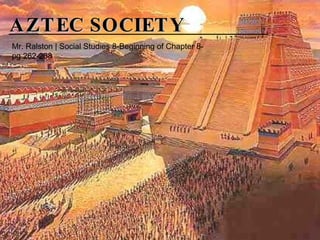
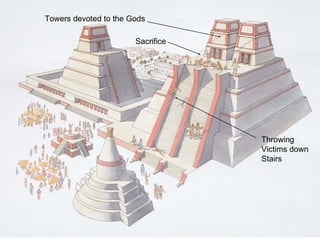
Aztec Society Highly Structured Based on agriculture, trade and guided by religion. Aztec societies dominated by Pyramids topped with temples where human sacrifices provided the gods with the human blood.
Sacrifice Throwing Victims down Stairs Towers devoted to the Gods
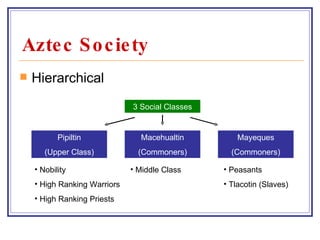
Aztec Society Hierarchical 3 Social Classes Pipiltin (Upper Class) Macehualtin (Commoners) Mayeques (Commoners) Nobility High Ranking Warriors High Ranking Priests Middle Class Peasants Tlacotin (Slaves)
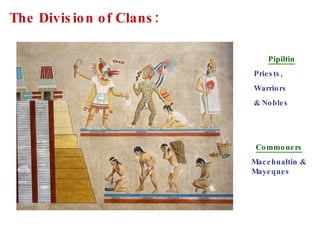
The Division of Clans: Pipiltin Priests,  Warriors  & Nobles Commoners Macehualtin & Mayeques
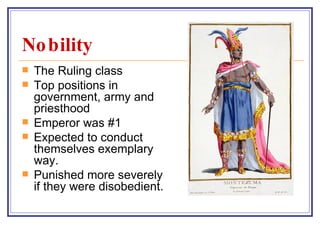
Nobility  The Ruling class Top positions in government, army and priesthood Emperor was #1 Expected to conduct themselves exemplary way. Punished more severely if they were disobedient.
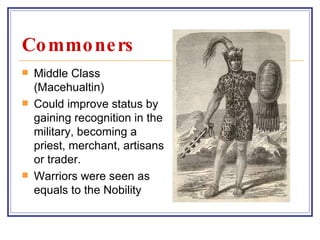
Commoners Middle Class (Macehualtin) Could improve status by gaining recognition in the military, becoming a priest, merchant, artisans or trader. Warriors were seen as equals to the Nobility
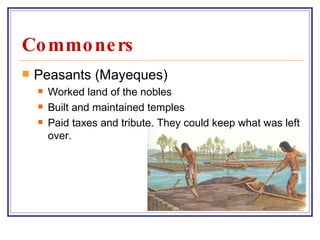
Commoners Peasants (Mayeques) Worked land of the nobles Built and maintained temples Paid taxes and tribute. They could keep what was left over.
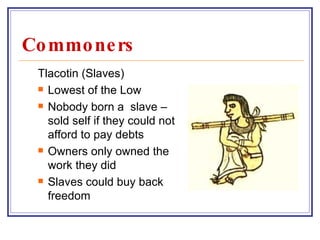
Commoners Tlacotin (Slaves) Lowest of the Low Nobody born a  slave – sold self if they could not afford to pay debts Owners only owned the work they did Slaves could buy back freedom
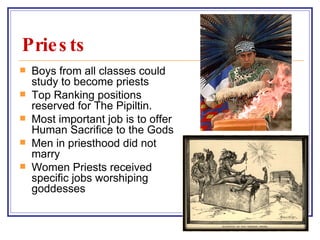
Priests Boys from all classes could study to become priests Top Ranking positions reserved for The Pipiltin. Most important job is to offer Human Sacrifice to the Gods Men in priesthood did not marry Women Priests received specific jobs worshiping goddesses
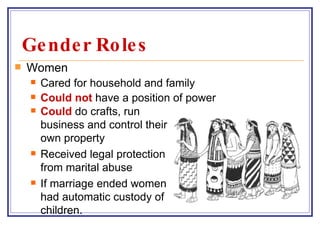
Gender Roles Could  do crafts, run business and control their own property Received legal protection from marital abuse If marriage ended women had automatic custody of children. Women  Cared for household and family Could not  have a position of power
Gender Roles Men Did physical work and were forced to join the army when soldiers were needed. Children Start work at roughly age 5 Girls married in mid-teens Boys married in late teens/early twenties
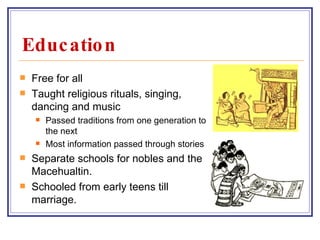
Education Free for all Taught religious rituals, singing, dancing and music Passed traditions from one generation to the next Most information passed through stories Separate schools for nobles and the Macehualtin. Schooled from early teens till marriage.
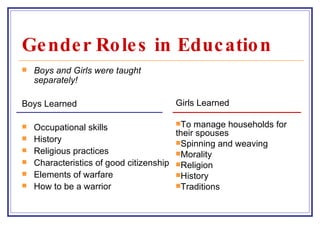
Gender Roles in Education  Boys and Girls were taught separately! Boys Learned Occupational skills History Religious practices Characteristics of good citizenship Elements of warfare  How to be a warrior  Girls Learned To manage households for their spouses  Spinning and weaving  Morality Religion History Traditions

Aztec Social Structure

  • 1.
    AZTEC SOCIETY Mr.Ralston | Social Studies 8-Beginning of Chapter 8-pg 262-268
  • 2.
    Aztec Society HighlyStructured Based on agriculture, trade and guided by religion. Aztec societies dominated by Pyramids topped with temples where human sacrifices provided the gods with the human blood.
  • 3.
    Sacrifice Throwing Victimsdown Stairs Towers devoted to the Gods
  • 4.
    Aztec Society Hierarchical3 Social Classes Pipiltin (Upper Class) Macehualtin (Commoners) Mayeques (Commoners) Nobility High Ranking Warriors High Ranking Priests Middle Class Peasants Tlacotin (Slaves)
  • 5.
    The Division ofClans: Pipiltin Priests, Warriors & Nobles Commoners Macehualtin & Mayeques
  • 6.
    Nobility TheRuling class Top positions in government, army and priesthood Emperor was #1 Expected to conduct themselves exemplary way. Punished more severely if they were disobedient.
  • 7.
    Commoners Middle Class(Macehualtin) Could improve status by gaining recognition in the military, becoming a priest, merchant, artisans or trader. Warriors were seen as equals to the Nobility
  • 8.
    Commoners Peasants (Mayeques)Worked land of the nobles Built and maintained temples Paid taxes and tribute. They could keep what was left over.
  • 9.
    Commoners Tlacotin (Slaves)Lowest of the Low Nobody born a slave – sold self if they could not afford to pay debts Owners only owned the work they did Slaves could buy back freedom
  • 10.
    Priests Boys fromall classes could study to become priests Top Ranking positions reserved for The Pipiltin. Most important job is to offer Human Sacrifice to the Gods Men in priesthood did not marry Women Priests received specific jobs worshiping goddesses
  • 11.
    Gender Roles Could do crafts, run business and control their own property Received legal protection from marital abuse If marriage ended women had automatic custody of children. Women Cared for household and family Could not have a position of power
  • 12.
    Gender Roles MenDid physical work and were forced to join the army when soldiers were needed. Children Start work at roughly age 5 Girls married in mid-teens Boys married in late teens/early twenties
  • 13.
    Education Free forall Taught religious rituals, singing, dancing and music Passed traditions from one generation to the next Most information passed through stories Separate schools for nobles and the Macehualtin. Schooled from early teens till marriage.
  • 14.
    Gender Roles inEducation Boys and Girls were taught separately! Boys Learned Occupational skills History Religious practices Characteristics of good citizenship Elements of warfare How to be a warrior Girls Learned To manage households for their spouses Spinning and weaving Morality Religion History Traditions