



Comenius
Learn to learn! Develop your autonomy in
learning!
2013-2015
Turkey, Italy, Latvia, Poland, Greece, France,
Romania
Questionnaire
Autonomy in learning
Vecpiebalga Secondary School
2013
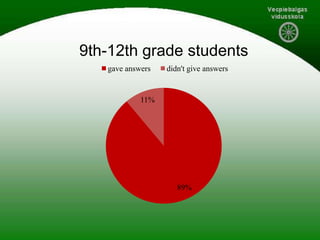
89%
11%
9th-12th grade students
gave answers didn't give answers
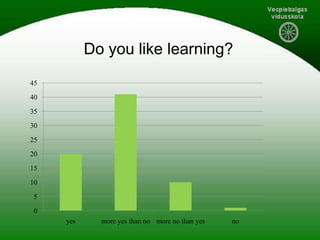
Do you like learning?
0
5
10
15
20
25
30
35
40
45
yes more yes than no more no than yes no
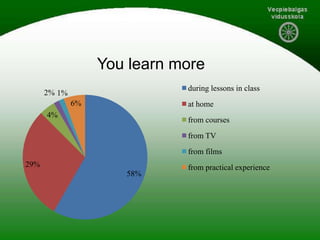
You learn more
58%
29%
4%
2% 1%
6%
during lessons in class
at home
from courses
from TV
from films
from practical experience
0
5
10
15
20
25
30
35
When you
graduate school
When you get a
very good
job/career
When you start
your own family
It never ends
When does the learning
process end?
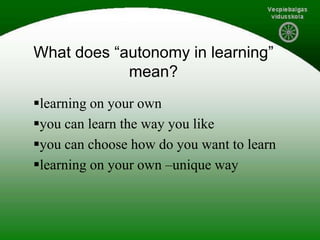
What does “autonomy in learning”
mean?
learning on your own
you can learn the way you like
you can choose how do you want to learn
learning on your own –unique way
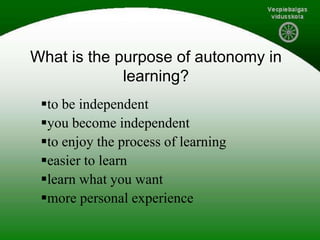
What is the purpose of autonomy in
learning?
to be independent
you become independent
to enjoy the process of learning
easier to learn
learn what you want
more personal experience
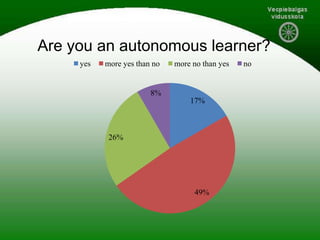
Are you an autonomous learner?
17%
49%
26%
8%
yes more yes than no more no than yes no
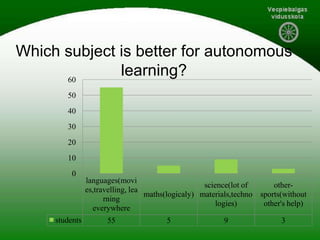
Which subject is better for autonomous
learning?
languages(movi
es,travelling, lea
rning
everywhere
maths(logicaly)
science(lot of
materials,techno
logies)
other-
sports(without
other's help)
students 55 5 9 3
0
10
20
30
40
50
60
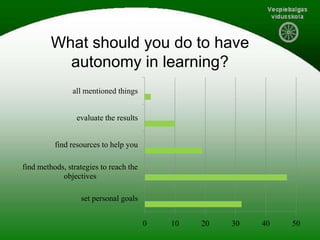
What should you do to have
autonomy in learning?
0 10 20 30 40 50
set personal goals
find methods, strategies to reach the
objectives
find resources to help you
evaluate the results
all mentioned things
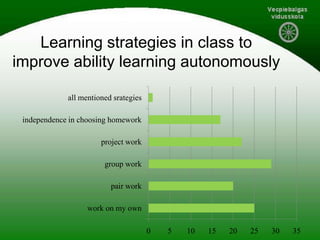
Learning strategies in class to
improve ability learning autonomously
0 5 10 15 20 25 30 35
work on my own
pair work
group work
project work
independence in choosing homework
all mentioned srategies
Who/ what can provide the information
and knowledge you need?
teachers
internet
books
friends
TV
all mentioned
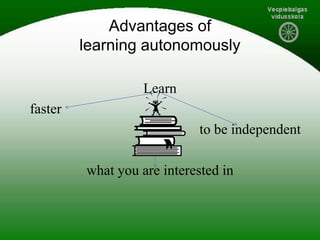
Advantages of
learning autonomously
Learn
faster
to be independent
what you are interested in
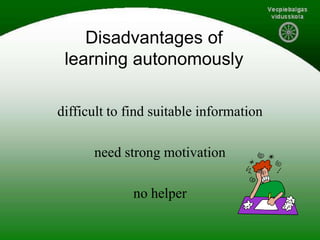
Disadvantages of
learning autonomously
difficult to find suitable information
need strong motivation
no helper
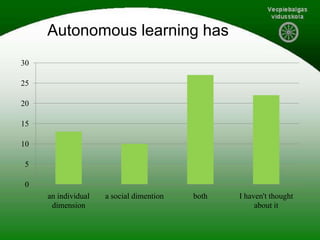
Autonomous learning has
0
5
10
15
20
25
30
an individual
dimension
a social dimention both I haven't thought
about it
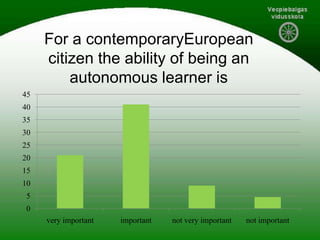
For a contemporaryEuropean
citizen the ability of being an
autonomous learner is
0
5
10
15
20
25
30
35
40
45
very important important not very important not important
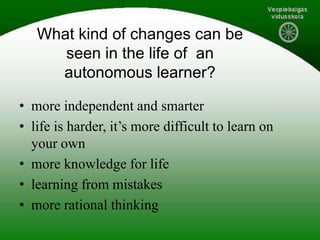
What kind of changes can be
seen in the life of an
autonomous learner?
• more independent and smarter
• life is harder, it’s more difficult to learn on
your own
• more knowledge for life
• learning from mistakes
• more rational thinking
How will you continue learning
process after graduating from
college/ university?
• learn from life, books, friends, job
• gain life experience, learn from mistakes
• learn things that are important
• learn languages
Autonomy in learning

Autonomy in learning

  • 1.
    Comenius Learn to learn!Develop your autonomy in learning! 2013-2015 Turkey, Italy, Latvia, Poland, Greece, France, Romania
  • 2.
  • 3.
    89% 11% 9th-12th grade students gaveanswers didn't give answers
  • 4.
    Do you likelearning? 0 5 10 15 20 25 30 35 40 45 yes more yes than no more no than yes no
  • 5.
    You learn more 58% 29% 4% 2%1% 6% during lessons in class at home from courses from TV from films from practical experience
  • 6.
    0 5 10 15 20 25 30 35 When you graduate school Whenyou get a very good job/career When you start your own family It never ends When does the learning process end?
  • 7.
    What does “autonomyin learning” mean? learning on your own you can learn the way you like you can choose how do you want to learn learning on your own –unique way
  • 8.
    What is thepurpose of autonomy in learning? to be independent you become independent to enjoy the process of learning easier to learn learn what you want more personal experience
  • 9.
    Are you anautonomous learner? 17% 49% 26% 8% yes more yes than no more no than yes no
  • 10.
    Which subject isbetter for autonomous learning? languages(movi es,travelling, lea rning everywhere maths(logicaly) science(lot of materials,techno logies) other- sports(without other's help) students 55 5 9 3 0 10 20 30 40 50 60
  • 11.
    What should youdo to have autonomy in learning? 0 10 20 30 40 50 set personal goals find methods, strategies to reach the objectives find resources to help you evaluate the results all mentioned things
  • 12.
    Learning strategies inclass to improve ability learning autonomously 0 5 10 15 20 25 30 35 work on my own pair work group work project work independence in choosing homework all mentioned srategies
  • 13.
    Who/ what canprovide the information and knowledge you need? teachers internet books friends TV all mentioned
  • 14.
    Advantages of learning autonomously Learn faster tobe independent what you are interested in
  • 15.
    Disadvantages of learning autonomously difficultto find suitable information need strong motivation no helper
  • 16.
    Autonomous learning has 0 5 10 15 20 25 30 anindividual dimension a social dimention both I haven't thought about it
  • 17.
    For a contemporaryEuropean citizenthe ability of being an autonomous learner is 0 5 10 15 20 25 30 35 40 45 very important important not very important not important
  • 18.
    What kind ofchanges can be seen in the life of an autonomous learner? • more independent and smarter • life is harder, it’s more difficult to learn on your own • more knowledge for life • learning from mistakes • more rational thinking
  • 19.
    How will youcontinue learning process after graduating from college/ university? • learn from life, books, friends, job • gain life experience, learn from mistakes • learn things that are important • learn languages