INTRODUCTION
• Automotive emissions in aggravating the air
pollution and various causes of pollutants have
been identified and methods to control them
have been outlined.
• The three main types of automotive vehicles
being used in our country are:
– Passenger cars powered by four stroke gasoline
engines
– Motor cycles scooters and autorickshaws powered
mostly by small two stroke engines,
– Large buses and trucks powered mostly by four stroke
diesel engines,
Vehicle emissions control is the study of reducing
the motor vehicle emissions—
emissions produced by motor vehicles, especially
internal combustion engines. Emissions of many air
pollutants have been shown to have variety of
negative effects on public health and the natural
environment.
Contd…
• Emissions from gasoline powered vehicles are
generally classified as:
– Exhaust emissions
– Crank case emissions
– Evaporative emissions
• The amount of pollutants that an automobile emits
depends on a number of factors including the
design and operation.
• Diesel powered engines create relatively minor
pollution problems compared to gasoline powered
ones.
• The major problems of diesel engines are smoke
and odor.
EXHAUST EMISSIONS
• In general, an exhaust gas is a gas emitted
through a combustion process. The exhaust
gas is actually a combination of many different
gases: N2, CO2, H2O and O2. Though some are
harmless, there are few that are harmful and
are considered major pollutants. One of the
most dangerous of these is CO, carbon
monoxide.
CONTROL OF EXHAUST EMISSIONS
• Two main approaches to minimize exhaust emissions
are:
– Modifications in the engine design and operating variables.
– Treatment of exhaust gases after emission from the
engine.
• The following modifications may help in cleaner
exhaust
– Use of leaner idle mixture
– Use of leaner possible mixture and maximum spark retard
compatible with good power output and drivability.
– Use of minimum valve-over-lap necessary
– Pre-treatment of the mixture to improve vaporization and
mixing of fuel with air.
• Piston and ring variables
NITROGEN OXIDES IN EXHAUST GAS
• The concentration of NO in exhaust gas is
found to depend mainly on the peak
temperature and pressure and the supplied air
fuel mixture composition.
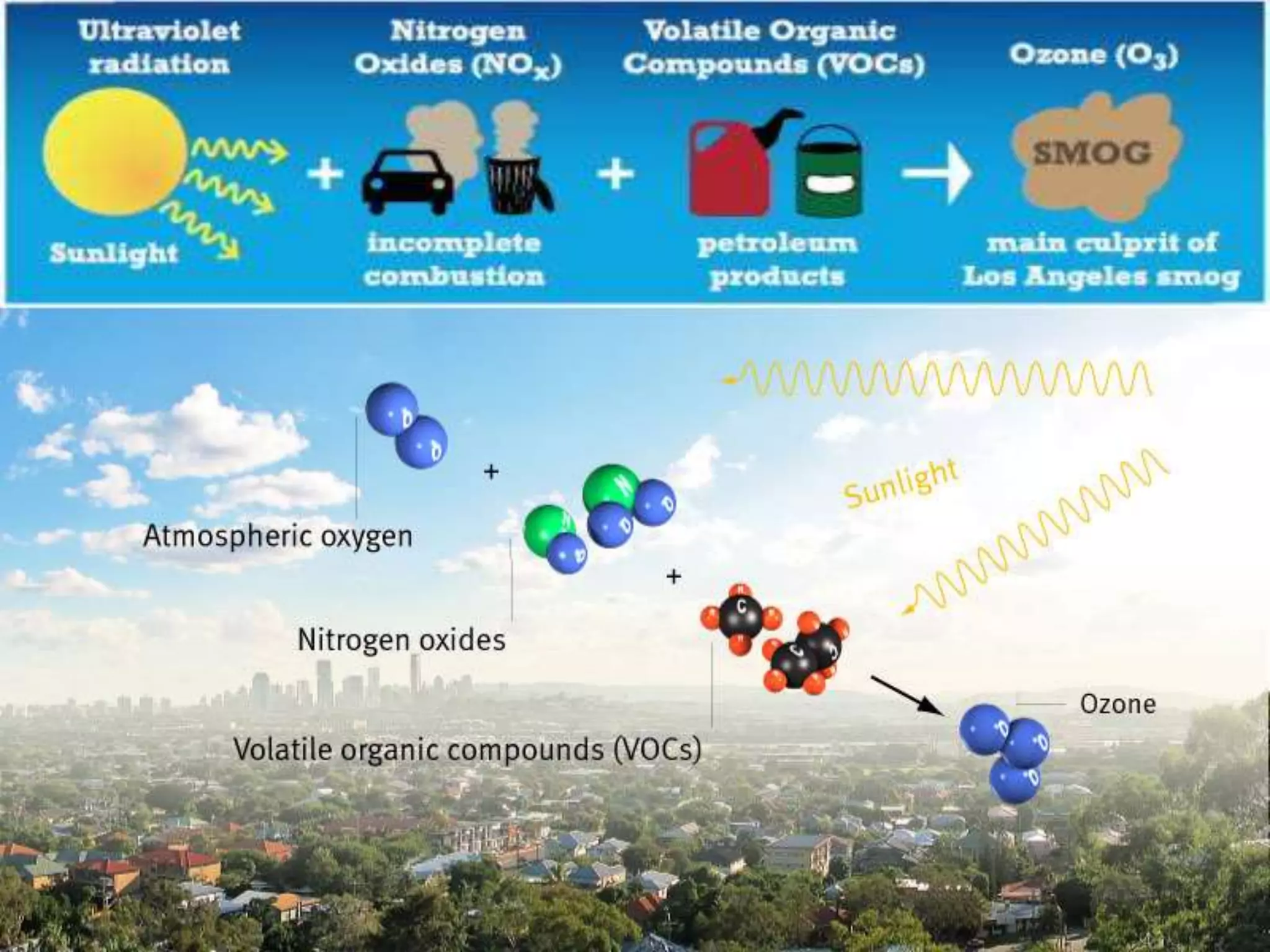
• Smog is a kind of air pollution, originally named
for the mixture of smoke and fog in the air.
Classic smog results from large amounts of coal
burning in an area and is caused by a mixture of
smoke and sulfur dioxide. In the 1950s a new
type of smog, known as Photochemical Smog,
was first described.
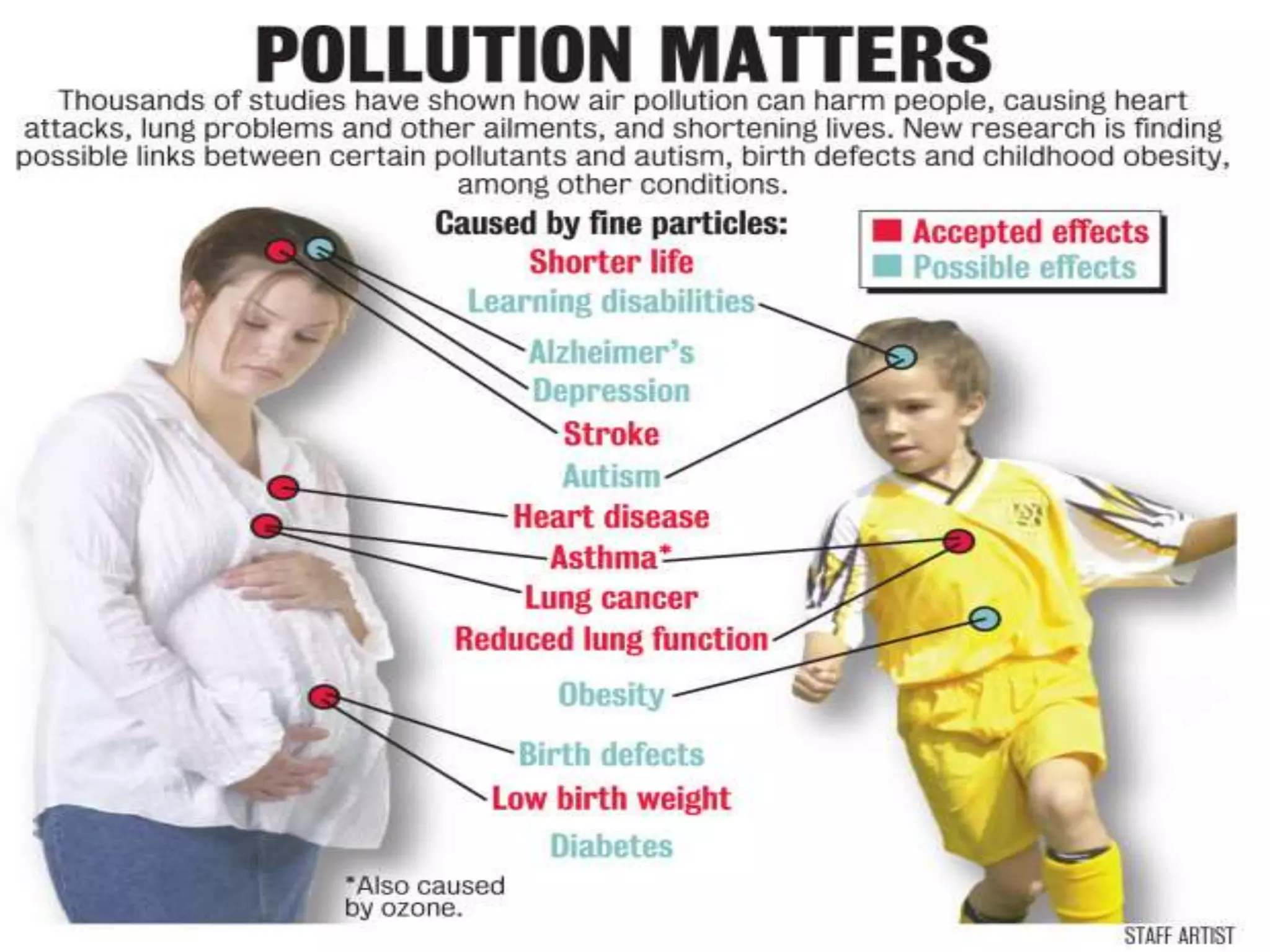
Effects on human health
Headaches
Eyes, nose and throat irritations
Impaired lung function
Coughing and wheezing
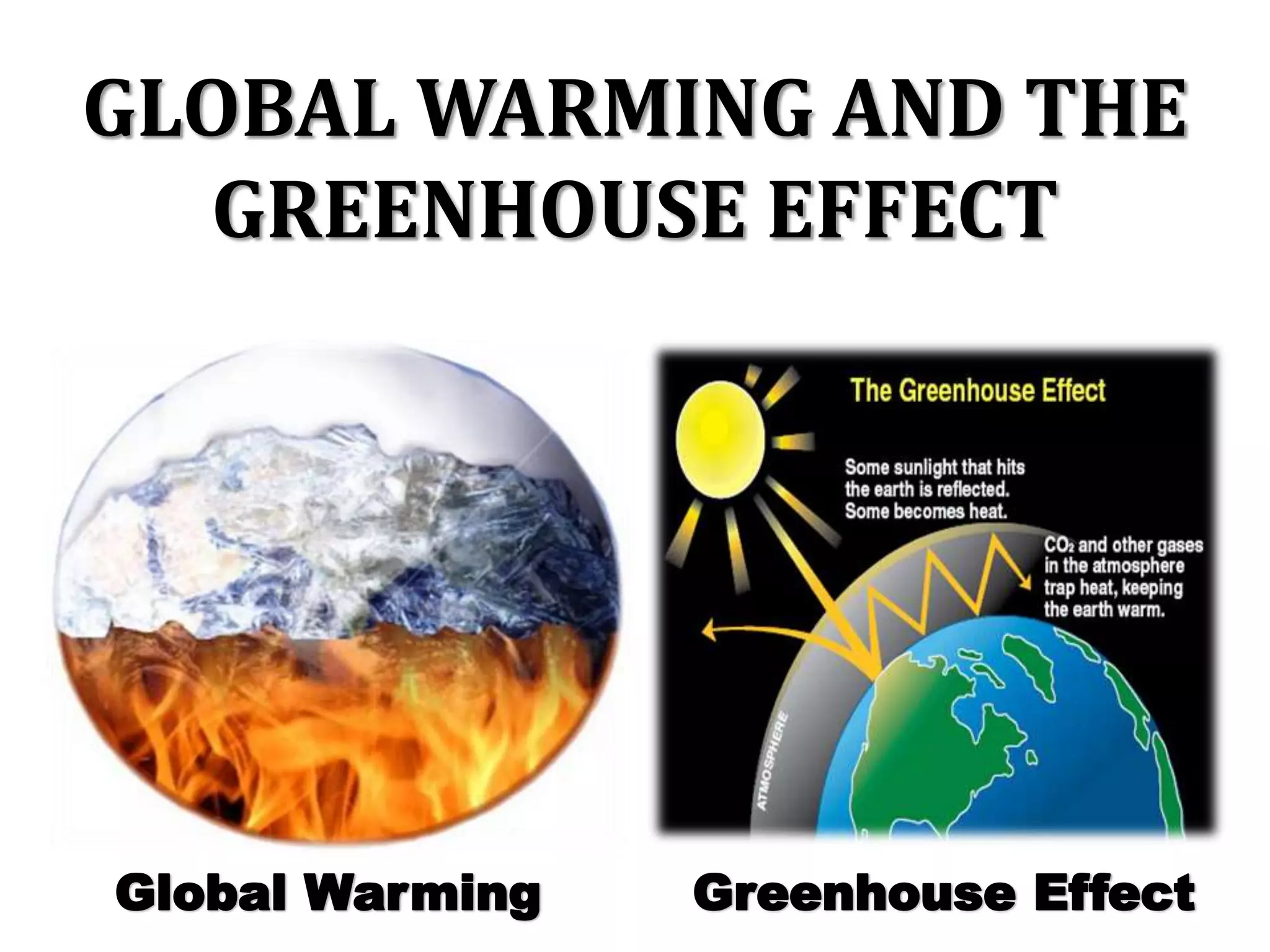
GLOBAL WARMING AND THE
GREENHOUSE EFFECT
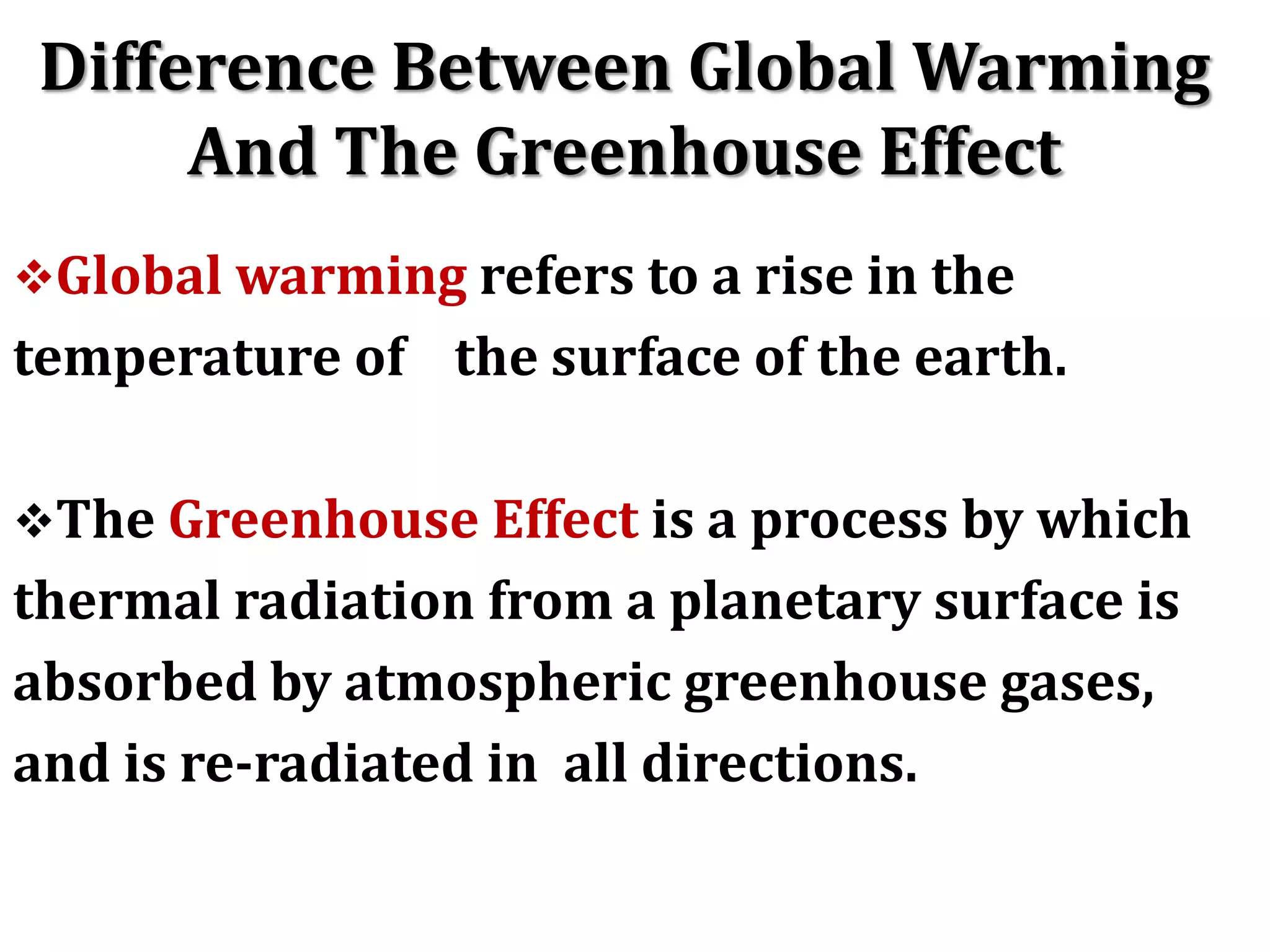
Difference Between Global Warming
And The Greenhouse Effect
Global warming refers to a rise in the
temperature of the surface of the earth.
The Greenhouse Effect is a process by which
thermal radiation from a planetary surface is
absorbed by atmospheric greenhouse gases,
and is re-radiated in all directions.
A greenhouse gas is any gaseous compound in the
atmosphere that is capable of absorbing infrared
radiation, thereby trapping and holding heat in the
atmosphere. By increasing the heat in the
atmosphere, greenhouse gases are responsible for
the greenhouse effect, which ultimately leads to
global warming.
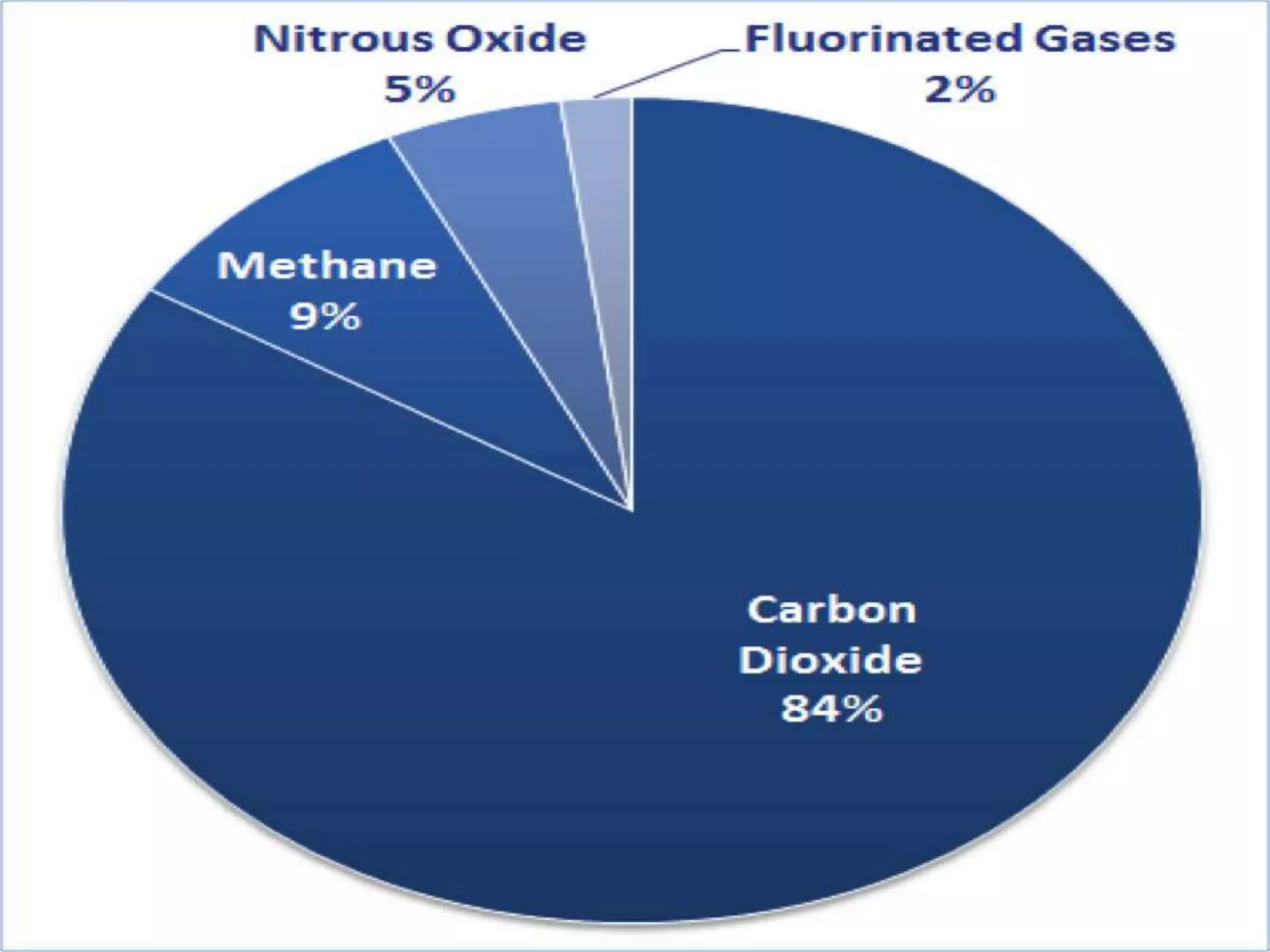
The presence of four major greenhouse gases,
namely
• water vapor (H2O),
• carbon dioxide (CO2),
• methane (CH4) and
• nitrous oxide (N2O) in the Earth's atmosphere
keeps the average temperature of 15º C
whereas without the greenhouse effect the
average temperature would be a frosty -18º C (0º
F).
• Since pre-industrial times atmospheric
concentrations of CO2, CH4 and N2O have
climbed by over 31%, 151% and 17%,
respectively.
• Scientists have confirmed this is primarily due
to human activity. Burning coal, oil and gas,
and cutting down forests are largely
responsible.
Acid Rain
rainfall made so acidic by atmospheric pollution that it
causes environmental harm, chiefly to forests and lakes.
The main cause is the industrial burning of coal and
other fossil fuels, the waste gases from which contain
sulphur and nitrogen oxides which combine with
atmospheric water to form acids.
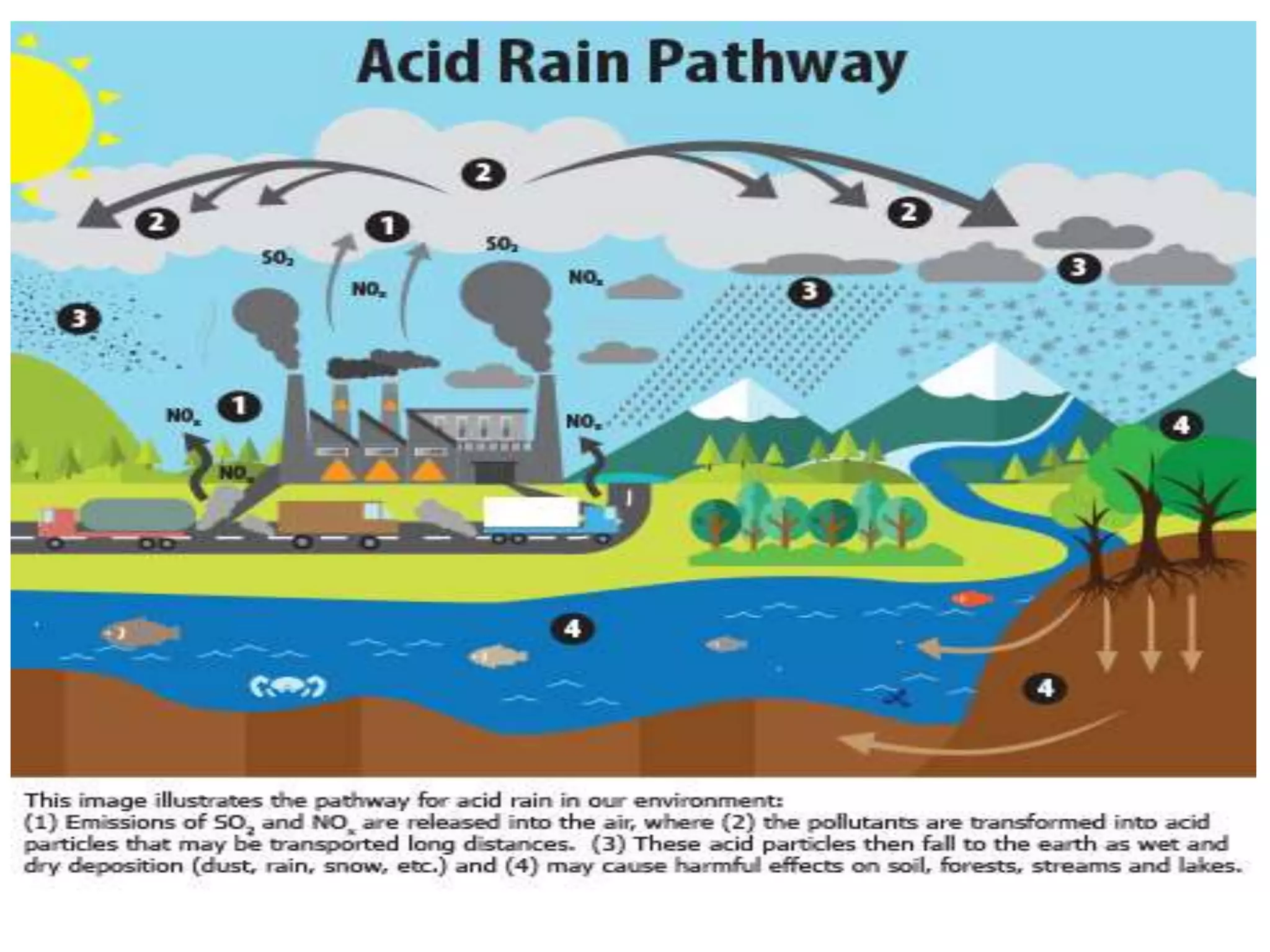
• Acid rain results when sulphur dioxide (SO2) and
nitrogen oxides (NOx) are emitted into the
atmosphere and transported by wind and air
currents. The SO2 and NOx react with water,
oxygen and other chemicals to form sulfuric and
nitric acids. These then mix with water and other
materials before falling to the ground.
The major sources of SO2 and NOX in the
atmosphere are:
• Burning of fossil fuels to generate
electricity. Two thirds of SO2 and one fourth
of NOX in the atmosphere come from electric
power generators.
• Vehicles and heavy equipment.
• Manufacturing, oil refineries and other
industries.
Forms of Acid Deposition
Wet Deposition
• Wet deposition is what we most commonly think of as acid
rain. The sulfuric and nitric acids formed in the atmosphere
fall to the ground mixed with rain, snow, fog, or hail.
Dry Deposition
• Acidic particles and gases can also deposit from the
atmosphere in the absence of moisture as dry deposition. The
acidic particles and gases may deposit to surfaces (water
bodies, vegetation, buildings) quickly or may react during
atmospheric transport to form larger particles that can be
harmful to human health.
• The amount of acidity in the atmosphere that deposits to
earth through dry deposition depends on the amount of
rainfall an area receives. For example, in desert areas the ratio
of dry to wet deposition is higher than an area that receives
several inches of rain each year.
• Normal rain has a pH of about 5.6;
• It is slightly acidic because carbon dioxide
(CO2) dissolves into it forming weak carbonic
acid. Acid rain usually has a pH between 4.2
and 4.4.
Ozone Layer Depletion
Ozone is formed in the stratosphere
The overall amount of ozone in the stratosphere
is determined by a balance between
photochemical production and recombination.
Ozone is bluish, a very reactive gas, whose
molecule is made by three oxygen atoms
Ozone will protect us from UV radiation from
the sun.
UV radiations can cause skin cancer, genetic
mutations and cataracts.
• The ozonosphere is found 15-35 km (9 to 22 miles)
above the surface of the earth.
• The average concentration of ozone in the
atmosphere is around 0.6 parts per million.
• The thickness of the ozone layer differs as per season
and geography. The highest concentrations of ozone
occur at altitudes from 26 to 28 km (16 to 17 miles)
in the tropics and from 12 to 20 km (7 to 12 miles)
towards the poles.

Automobile pollution

  • 2.
    INTRODUCTION • Automotive emissionsin aggravating the air pollution and various causes of pollutants have been identified and methods to control them have been outlined. • The three main types of automotive vehicles being used in our country are: – Passenger cars powered by four stroke gasoline engines – Motor cycles scooters and autorickshaws powered mostly by small two stroke engines, – Large buses and trucks powered mostly by four stroke diesel engines,
  • 3.
    Vehicle emissions controlis the study of reducing the motor vehicle emissions— emissions produced by motor vehicles, especially internal combustion engines. Emissions of many air pollutants have been shown to have variety of negative effects on public health and the natural environment.
  • 4.
    Contd… • Emissions fromgasoline powered vehicles are generally classified as: – Exhaust emissions – Crank case emissions – Evaporative emissions • The amount of pollutants that an automobile emits depends on a number of factors including the design and operation. • Diesel powered engines create relatively minor pollution problems compared to gasoline powered ones. • The major problems of diesel engines are smoke and odor.
  • 5.
    EXHAUST EMISSIONS • Ingeneral, an exhaust gas is a gas emitted through a combustion process. The exhaust gas is actually a combination of many different gases: N2, CO2, H2O and O2. Though some are harmless, there are few that are harmful and are considered major pollutants. One of the most dangerous of these is CO, carbon monoxide.
  • 6.
    CONTROL OF EXHAUSTEMISSIONS • Two main approaches to minimize exhaust emissions are: – Modifications in the engine design and operating variables. – Treatment of exhaust gases after emission from the engine. • The following modifications may help in cleaner exhaust – Use of leaner idle mixture – Use of leaner possible mixture and maximum spark retard compatible with good power output and drivability. – Use of minimum valve-over-lap necessary – Pre-treatment of the mixture to improve vaporization and mixing of fuel with air. • Piston and ring variables
  • 7.
    NITROGEN OXIDES INEXHAUST GAS • The concentration of NO in exhaust gas is found to depend mainly on the peak temperature and pressure and the supplied air fuel mixture composition.
  • 8.
    • Smog isa kind of air pollution, originally named for the mixture of smoke and fog in the air. Classic smog results from large amounts of coal burning in an area and is caused by a mixture of smoke and sulfur dioxide. In the 1950s a new type of smog, known as Photochemical Smog, was first described.
  • 11.
    Effects on humanhealth Headaches Eyes, nose and throat irritations Impaired lung function Coughing and wheezing
  • 17.
    GLOBAL WARMING ANDTHE GREENHOUSE EFFECT
  • 18.
    Difference Between GlobalWarming And The Greenhouse Effect Global warming refers to a rise in the temperature of the surface of the earth. The Greenhouse Effect is a process by which thermal radiation from a planetary surface is absorbed by atmospheric greenhouse gases, and is re-radiated in all directions.
  • 19.
    A greenhouse gasis any gaseous compound in the atmosphere that is capable of absorbing infrared radiation, thereby trapping and holding heat in the atmosphere. By increasing the heat in the atmosphere, greenhouse gases are responsible for the greenhouse effect, which ultimately leads to global warming.
  • 21.
    The presence offour major greenhouse gases, namely • water vapor (H2O), • carbon dioxide (CO2), • methane (CH4) and • nitrous oxide (N2O) in the Earth's atmosphere keeps the average temperature of 15º C whereas without the greenhouse effect the average temperature would be a frosty -18º C (0º F).
  • 23.
    • Since pre-industrialtimes atmospheric concentrations of CO2, CH4 and N2O have climbed by over 31%, 151% and 17%, respectively. • Scientists have confirmed this is primarily due to human activity. Burning coal, oil and gas, and cutting down forests are largely responsible.
  • 24.
    Acid Rain rainfall madeso acidic by atmospheric pollution that it causes environmental harm, chiefly to forests and lakes. The main cause is the industrial burning of coal and other fossil fuels, the waste gases from which contain sulphur and nitrogen oxides which combine with atmospheric water to form acids.
  • 26.
    • Acid rainresults when sulphur dioxide (SO2) and nitrogen oxides (NOx) are emitted into the atmosphere and transported by wind and air currents. The SO2 and NOx react with water, oxygen and other chemicals to form sulfuric and nitric acids. These then mix with water and other materials before falling to the ground.
  • 27.
    The major sourcesof SO2 and NOX in the atmosphere are: • Burning of fossil fuels to generate electricity. Two thirds of SO2 and one fourth of NOX in the atmosphere come from electric power generators. • Vehicles and heavy equipment. • Manufacturing, oil refineries and other industries.
  • 28.
    Forms of AcidDeposition Wet Deposition • Wet deposition is what we most commonly think of as acid rain. The sulfuric and nitric acids formed in the atmosphere fall to the ground mixed with rain, snow, fog, or hail. Dry Deposition • Acidic particles and gases can also deposit from the atmosphere in the absence of moisture as dry deposition. The acidic particles and gases may deposit to surfaces (water bodies, vegetation, buildings) quickly or may react during atmospheric transport to form larger particles that can be harmful to human health. • The amount of acidity in the atmosphere that deposits to earth through dry deposition depends on the amount of rainfall an area receives. For example, in desert areas the ratio of dry to wet deposition is higher than an area that receives several inches of rain each year.
  • 29.
    • Normal rainhas a pH of about 5.6; • It is slightly acidic because carbon dioxide (CO2) dissolves into it forming weak carbonic acid. Acid rain usually has a pH between 4.2 and 4.4.
  • 30.
    Ozone Layer Depletion Ozoneis formed in the stratosphere The overall amount of ozone in the stratosphere is determined by a balance between photochemical production and recombination. Ozone is bluish, a very reactive gas, whose molecule is made by three oxygen atoms
  • 31.
    Ozone will protectus from UV radiation from the sun. UV radiations can cause skin cancer, genetic mutations and cataracts.
  • 32.
    • The ozonosphereis found 15-35 km (9 to 22 miles) above the surface of the earth. • The average concentration of ozone in the atmosphere is around 0.6 parts per million. • The thickness of the ozone layer differs as per season and geography. The highest concentrations of ozone occur at altitudes from 26 to 28 km (16 to 17 miles) in the tropics and from 12 to 20 km (7 to 12 miles) towards the poles.

Editor's Notes

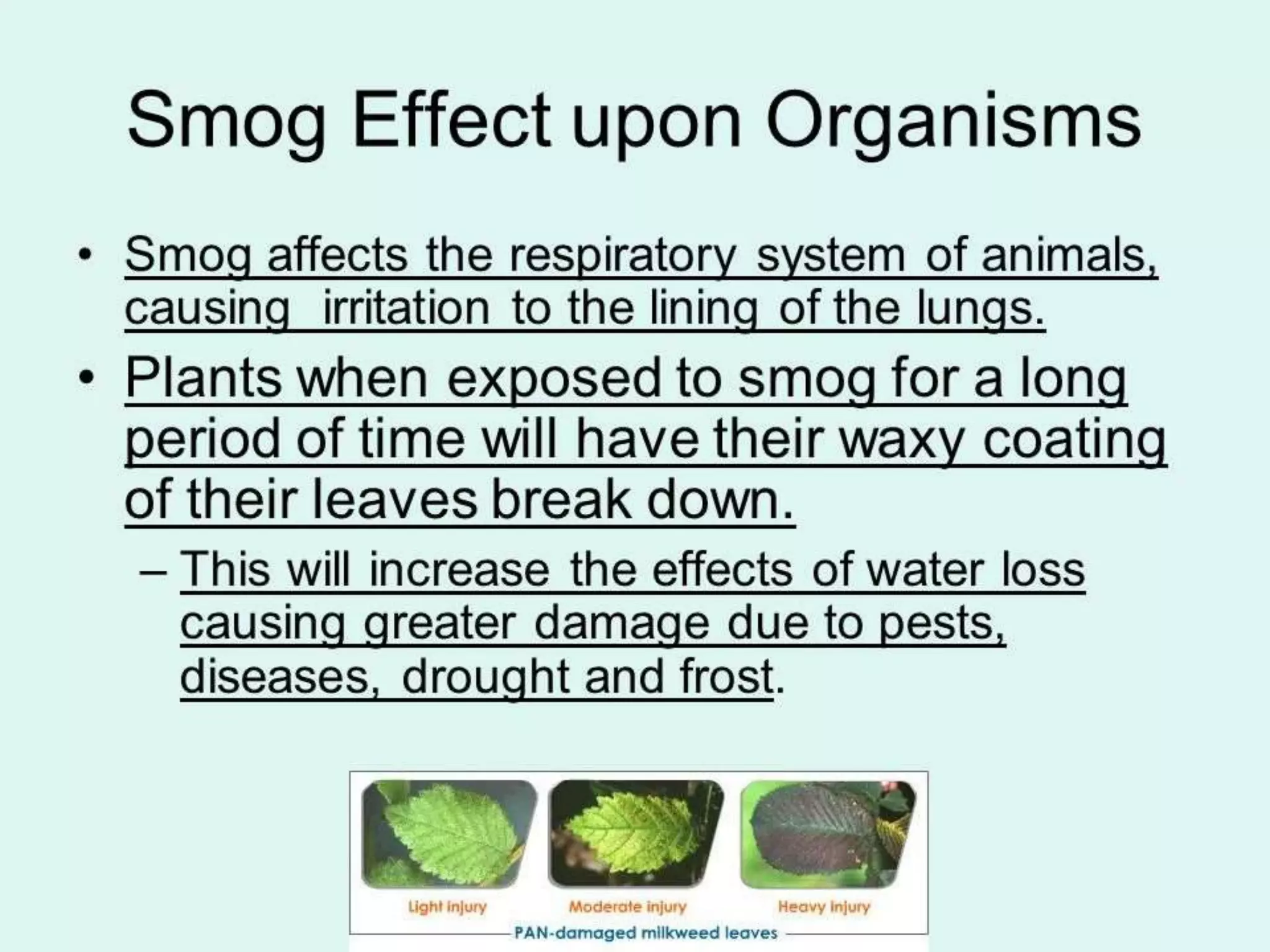
  • #9 Peroxyacetyl Nitrate (PAN)
  • #11 Volatile organic compound” or VOC is the name given to a substance that contains carbon and that evaporates (becomes a vapor) or “off-gases” at room temperature. Some examples of VOCs include benzene, methylene chloride, hexane, toluene, trichloroethane, styrene, heptane, and perchloroethylene.