

Audit
AuditDefinition = evaluation of a person, organization, system, process, enterprise, project or product. The term commonly refers to audits in accounting - similar concepts exist in project management, quality management, and energy conservation.
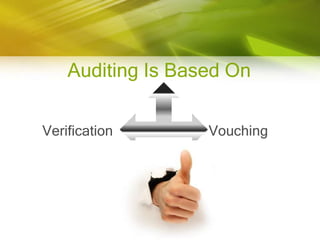
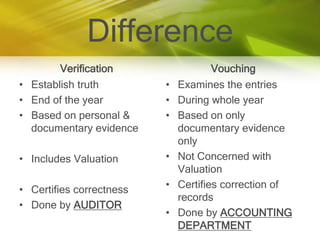
Auditing Is Based OnVerification Vouching
VerificationInspection, Observation, Enquiry, Computation, AnalysisFinal audit stage - verification of the assets and liabilities appearing in the balance sheet. Well established techniques for verifying specific assets and liabilities. 
 VerificationQuality control processEvaluate product, service, or system complies with regulations, imposed at the start of a development phase.Development, scale-up, or productionInternal process.
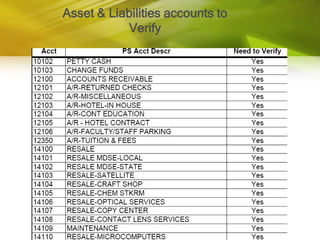
Verification of AssetsAuditor dutyverify assets appearing in balance sheet          verify no other assets which ought to appear on the balance sheet. Following aspects of assets must be verified:Cost 
Authorization 
Value 
Existence 
Beneficial Ownership 
Presentation in the accountsGeneral principles regarding verificationConfirm that the assets were in existence on the date of the balance sheet.
 Ascertain that the assets had been acquired for the purpose of the business and under proper authority
Confirm owner ship of the asset
Ascertain that no charge has been created on the asset
Ensure that the current book value of the asset is determined after providing correct amount of depreciation for various years
Ensure that values reflect current physical condition of the asset
Ensure that disclosures regarding assets are adequate.Procedures - Verification of AssetsVerify the records (accounting books)Physical verification of fixed assetsCapital assets built inside (self-constructed fixed assets) and capital work-in-progress should be verifiedFor fixed assets fully depreciated during the year of acquisition,  the auditor has to examine whether they were recorded in the fixed assets register.In the case fixed assets registered, the auditor should examine         (i) the authorization procedure         (ii) sales process (calling for quotations etc.)         (iii) adjustments to the account of the asset         (iv) accounting for the proceeds of the sale         (v) adjustment for the gain or loss on the sale
Procedures - Verification of AssetsOwnership of assets such as land and buildings should be verified by examining the title deeds. Physical verification is the responsibility of the management Ensure that it is carried out at appropriate intervals in order to ensure assets are in existence. Examine the instructions given by the management for physical verification and working papers of physical verification. The opening balance is to be verified from schedule of fixed assets Assets acquired during the year or improvements done during the year 
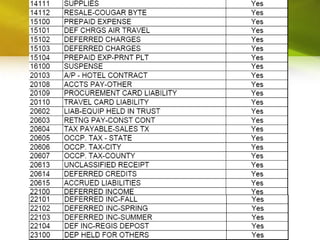
Verification of LiabilitiesA balance sheet contain liabilities grouped under various headingsThe headings may include: Non Current Liabilities 􀂃 Debenture 􀂃 Bank loans Current Liabilities 􀂃 Trade creditors 􀂃 Accrued expenses 􀂃 Unearned incomes 􀂃 Taxation payable 􀂃 Provision for losses 
Procedures - Verification of LiabilitiesVerify existence of liabilities shown in the balance sheet Verify the correctness of the money amount of such liabilities Verify the appropriateness of the description given in the accounts and the adequacy of disclosureVerify that all existing liabilities are actually included in the accounts 
Objects of VerificationCertify the Ownership 
Position of Assets 
Existence of Assets 

Audit

  • 1.
  • 2.
    AuditDefinition = evaluationof a person, organization, system, process, enterprise, project or product. The term commonly refers to audits in accounting - similar concepts exist in project management, quality management, and energy conservation.
  • 3.
    Auditing Is BasedOnVerification Vouching
  • 4.
    VerificationInspection, Observation, Enquiry,Computation, AnalysisFinal audit stage - verification of the assets and liabilities appearing in the balance sheet. Well established techniques for verifying specific assets and liabilities. 
  • 5.
     VerificationQuality control processEvaluate product,service, or system complies with regulations, imposed at the start of a development phase.Development, scale-up, or productionInternal process.
  • 6.
    Verification of AssetsAuditordutyverify assets appearing in balance sheet verify no other assets which ought to appear on the balance sheet. Following aspects of assets must be verified:Cost 
  • 7.
  • 8.
  • 9.
  • 10.
  • 11.
    Presentation in theaccountsGeneral principles regarding verificationConfirm that the assets were in existence on the date of the balance sheet.
  • 12.
    Ascertain thatthe assets had been acquired for the purpose of the business and under proper authority
  • 13.
    Confirm owner shipof the asset
  • 14.
    Ascertain that nocharge has been created on the asset
  • 15.
    Ensure that thecurrent book value of the asset is determined after providing correct amount of depreciation for various years
  • 16.
    Ensure that valuesreflect current physical condition of the asset
  • 17.
    Ensure that disclosuresregarding assets are adequate.Procedures - Verification of AssetsVerify the records (accounting books)Physical verification of fixed assetsCapital assets built inside (self-constructed fixed assets) and capital work-in-progress should be verifiedFor fixed assets fully depreciated during the year of acquisition,  the auditor has to examine whether they were recorded in the fixed assets register.In the case fixed assets registered, the auditor should examine (i) the authorization procedure (ii) sales process (calling for quotations etc.) (iii) adjustments to the account of the asset (iv) accounting for the proceeds of the sale (v) adjustment for the gain or loss on the sale
  • 18.
    Procedures - Verificationof AssetsOwnership of assets such as land and buildings should be verified by examining the title deeds. Physical verification is the responsibility of the management Ensure that it is carried out at appropriate intervals in order to ensure assets are in existence. Examine the instructions given by the management for physical verification and working papers of physical verification. The opening balance is to be verified from schedule of fixed assets Assets acquired during the year or improvements done during the year 
  • 19.
    Verification of LiabilitiesAbalance sheet contain liabilities grouped under various headingsThe headings may include: Non Current Liabilities 􀂃 Debenture 􀂃 Bank loans Current Liabilities 􀂃 Trade creditors 􀂃 Accrued expenses 􀂃 Unearned incomes 􀂃 Taxation payable 􀂃 Provision for losses 
  • 20.
    Procedures - Verificationof LiabilitiesVerify existence of liabilities shown in the balance sheet Verify the correctness of the money amount of such liabilities Verify the appropriateness of the description given in the accounts and the adequacy of disclosureVerify that all existing liabilities are actually included in the accounts 
  • 21.
  • 22.
  • 23.