Attentiveness, Effort, and
Persistence
North Carolina Foundations Task Force. (2013). North Carolina
foundations for early learning and development. Raleigh: Author.
Attentiveness, Effort, and Persistence 2
• Pp. 41 – 46 describe Developmental Indicators and Strategies for
working with infants, toddlers and preschoolers for the following
goals:
• Goal APL-7: Children demonstrate initiative
• Goal APL-8: Children maintain attentiveness and focus
• Goal APL-9: Children persist at challenging activities
Variations in Initiative and Attention Span
• Children vary in their initiative by such factors as
• Temperament
• Personality
• Family differences
• Cultural differences
• Children are known for having short attention spans
• Attention span generally increases with age
• Children can switch their attention back and forth
• Children may not appear to be paying attention when they are in actuality
• While it is appropriate to practice and encourage longer focus and attention,
20-30 minute group times are not appropriate!
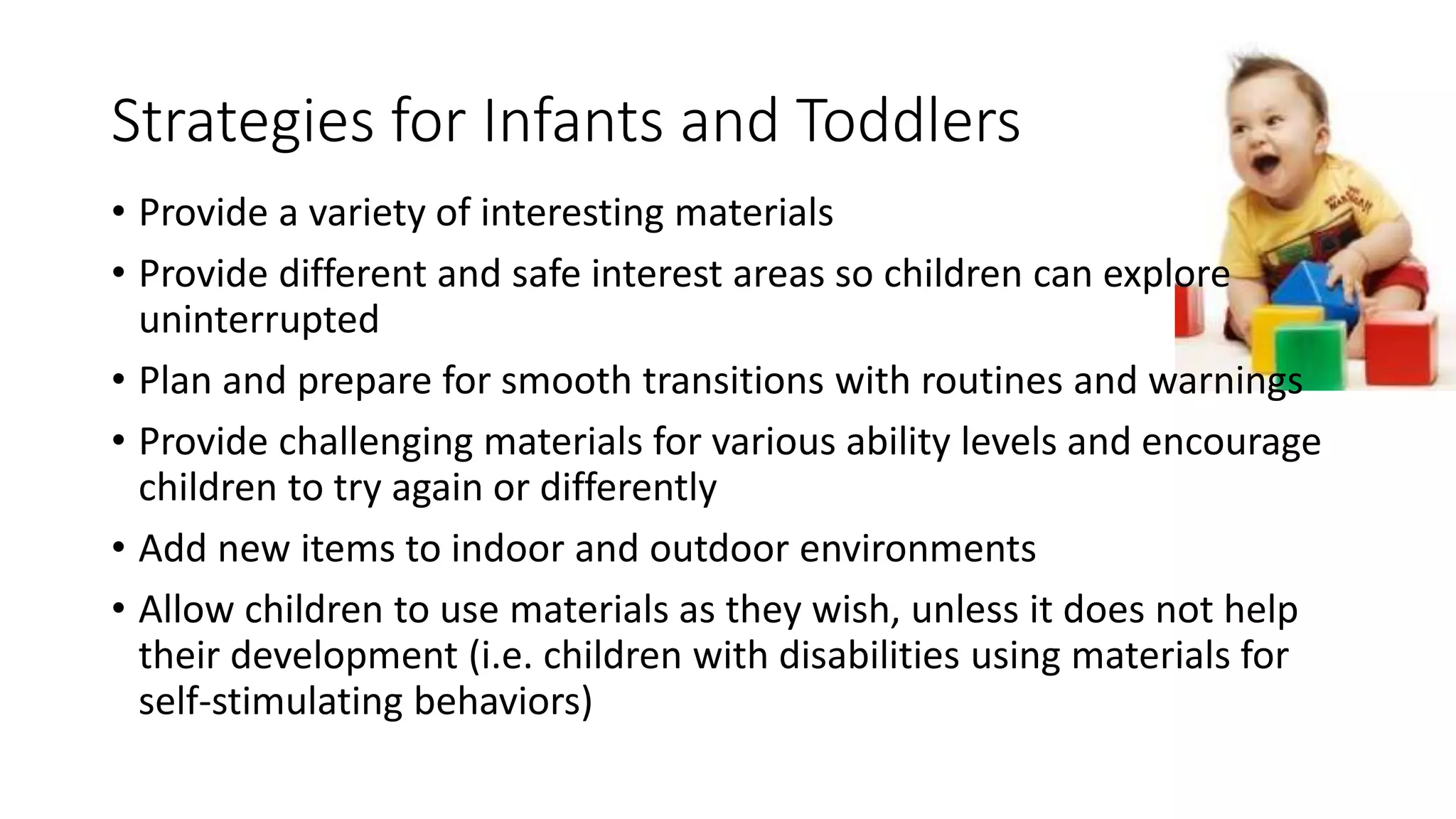
Strategies for Infants and Toddlers
• Provide a variety of interesting materials
• Provide different and safe interest areas so children can explore
uninterrupted
• Plan and prepare for smooth transitions with routines and warnings
• Provide challenging materials for various ability levels and encourage
children to try again or differently
• Add new items to indoor and outdoor environments
• Allow children to use materials as they wish, unless it does not help
their development (i.e. children with disabilities using materials for
self-stimulating behaviors)
Strategies for Preschoolers
• Provide plenty of time for children to play without interruption
• Allow for projects to extend over several days
• Provide communication support for children top express ideas or
extend an activity
• Adjust help as needed
• Use extended discourse and open-ended questions to help children
stay focused
• Encourage effort (process) rather than results (product)
• Encourage social interactions of team effort and problem-solving

Attentiveness, effort, and persistence

  • 1.
    Attentiveness, Effort, and Persistence NorthCarolina Foundations Task Force. (2013). North Carolina foundations for early learning and development. Raleigh: Author.
  • 2.
    Attentiveness, Effort, andPersistence 2 • Pp. 41 – 46 describe Developmental Indicators and Strategies for working with infants, toddlers and preschoolers for the following goals: • Goal APL-7: Children demonstrate initiative • Goal APL-8: Children maintain attentiveness and focus • Goal APL-9: Children persist at challenging activities
  • 3.
    Variations in Initiativeand Attention Span • Children vary in their initiative by such factors as • Temperament • Personality • Family differences • Cultural differences • Children are known for having short attention spans • Attention span generally increases with age • Children can switch their attention back and forth • Children may not appear to be paying attention when they are in actuality • While it is appropriate to practice and encourage longer focus and attention, 20-30 minute group times are not appropriate!
  • 4.
    Strategies for Infantsand Toddlers • Provide a variety of interesting materials • Provide different and safe interest areas so children can explore uninterrupted • Plan and prepare for smooth transitions with routines and warnings • Provide challenging materials for various ability levels and encourage children to try again or differently • Add new items to indoor and outdoor environments • Allow children to use materials as they wish, unless it does not help their development (i.e. children with disabilities using materials for self-stimulating behaviors)
  • 5.
    Strategies for Preschoolers •Provide plenty of time for children to play without interruption • Allow for projects to extend over several days • Provide communication support for children top express ideas or extend an activity • Adjust help as needed • Use extended discourse and open-ended questions to help children stay focused • Encourage effort (process) rather than results (product) • Encourage social interactions of team effort and problem-solving