Chapter 3 – Student Diversity
Ebert, E., & Culyer III, R. (2014). Student
Diversity. In School: An introduction to
education. Belmont: Wadsworth.
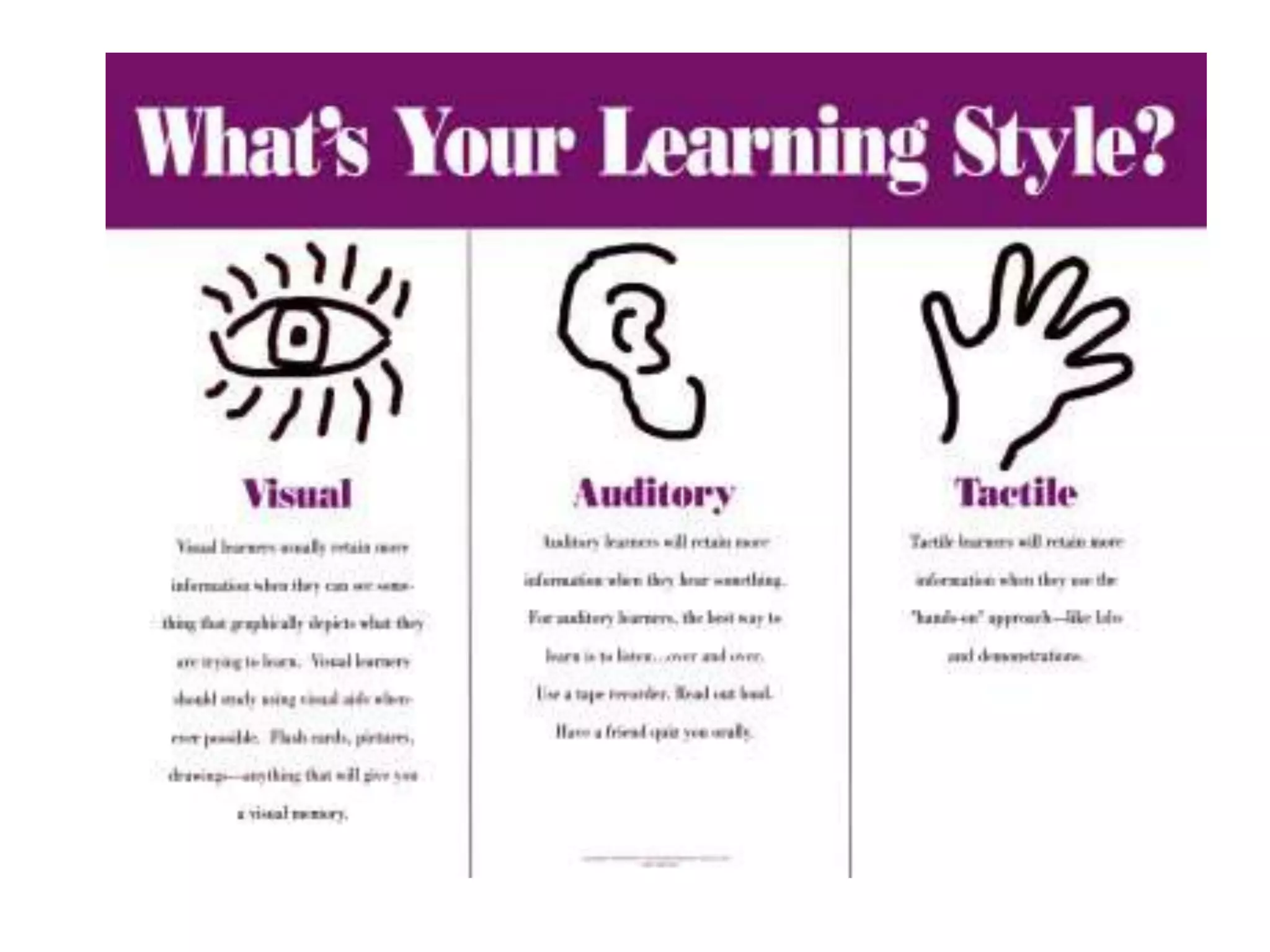
What’s Your Style?
• Complete the ice breaker on pp. 55 - 56 in
your text.
Culture, Ethnicity, and Race
• What is the difference between culture,
ethnicity, and race?
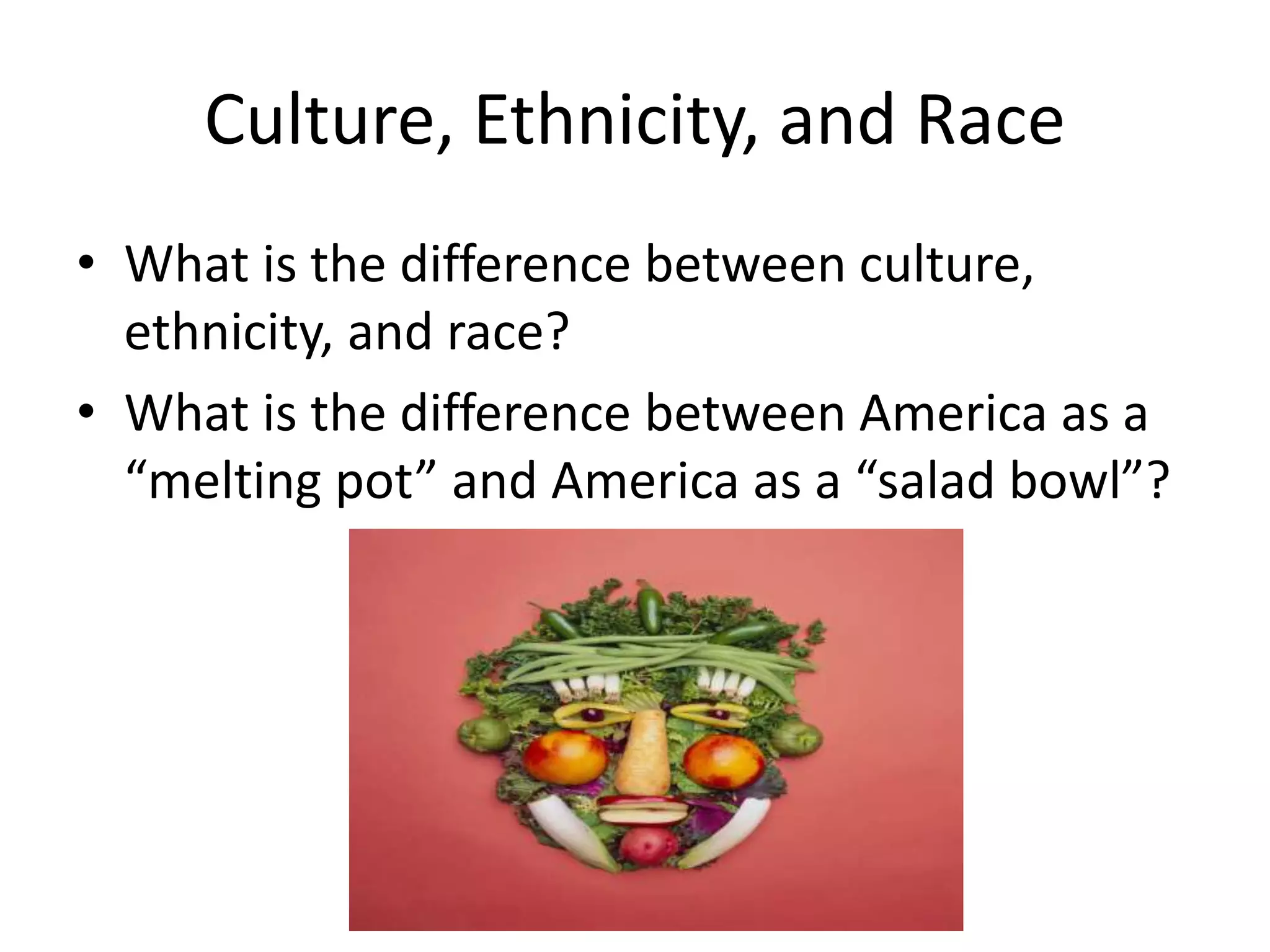
• What is the difference between America as a
“melting pot” and America as a “salad bowl”?
Stereotyping vs. Characteristics
• What are some of the characteristics of
various racial and ethnic groups who comprise
American students?
• How do we distinguish between stereotyping
and understanding cultural characteristics?
• What are the implications for teachers when
working with students from various racial and
ethnic backgrounds?
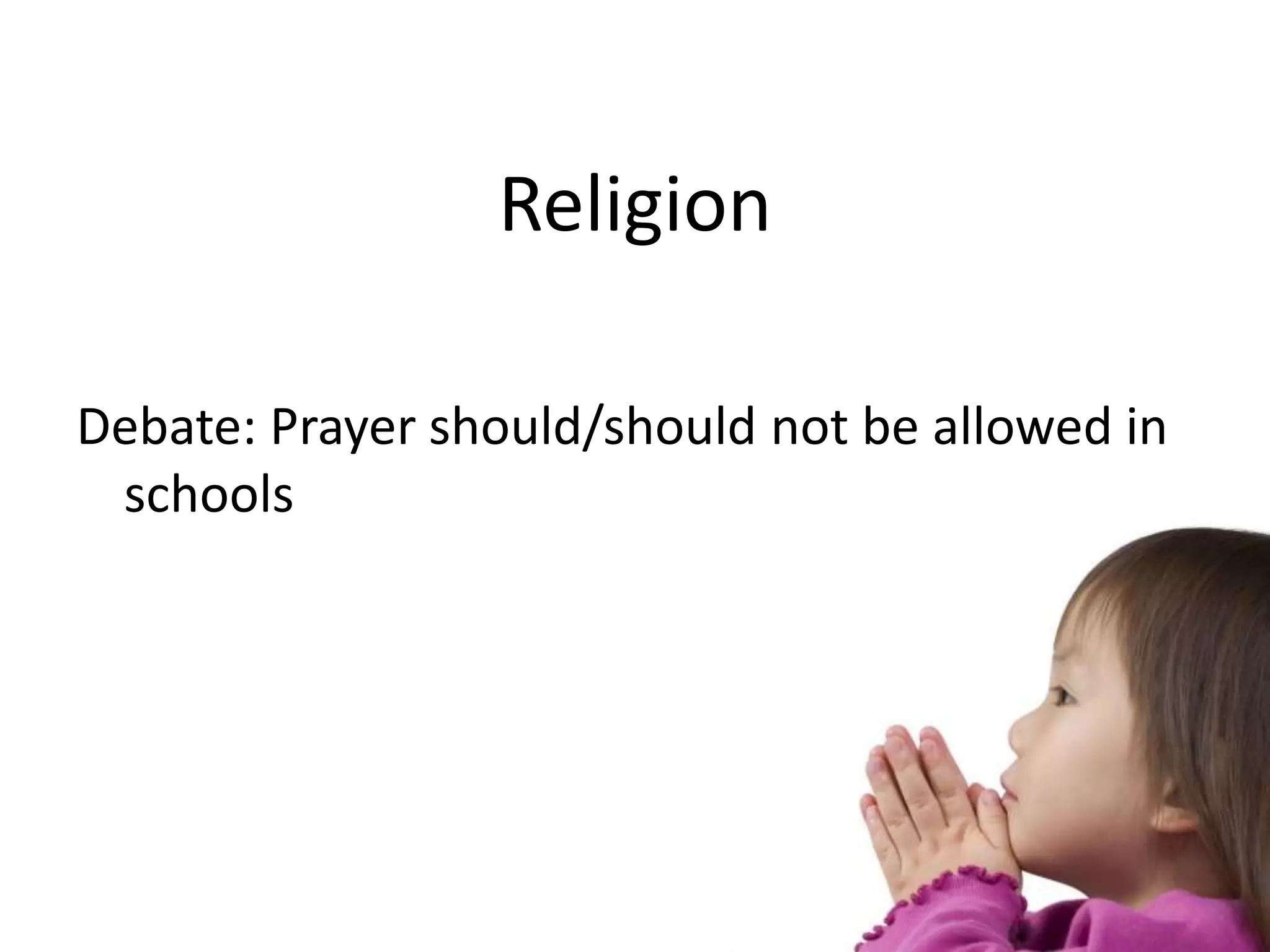
Religion
Debate: Prayer should/should not be allowed in
schools
Gender, Sex, and Stereotyping
• Gender – “social aspect of sexuality; behaviors
that are considered masculine or feminine”
• Sex – “the biological distinctions of male or
female”
Logic
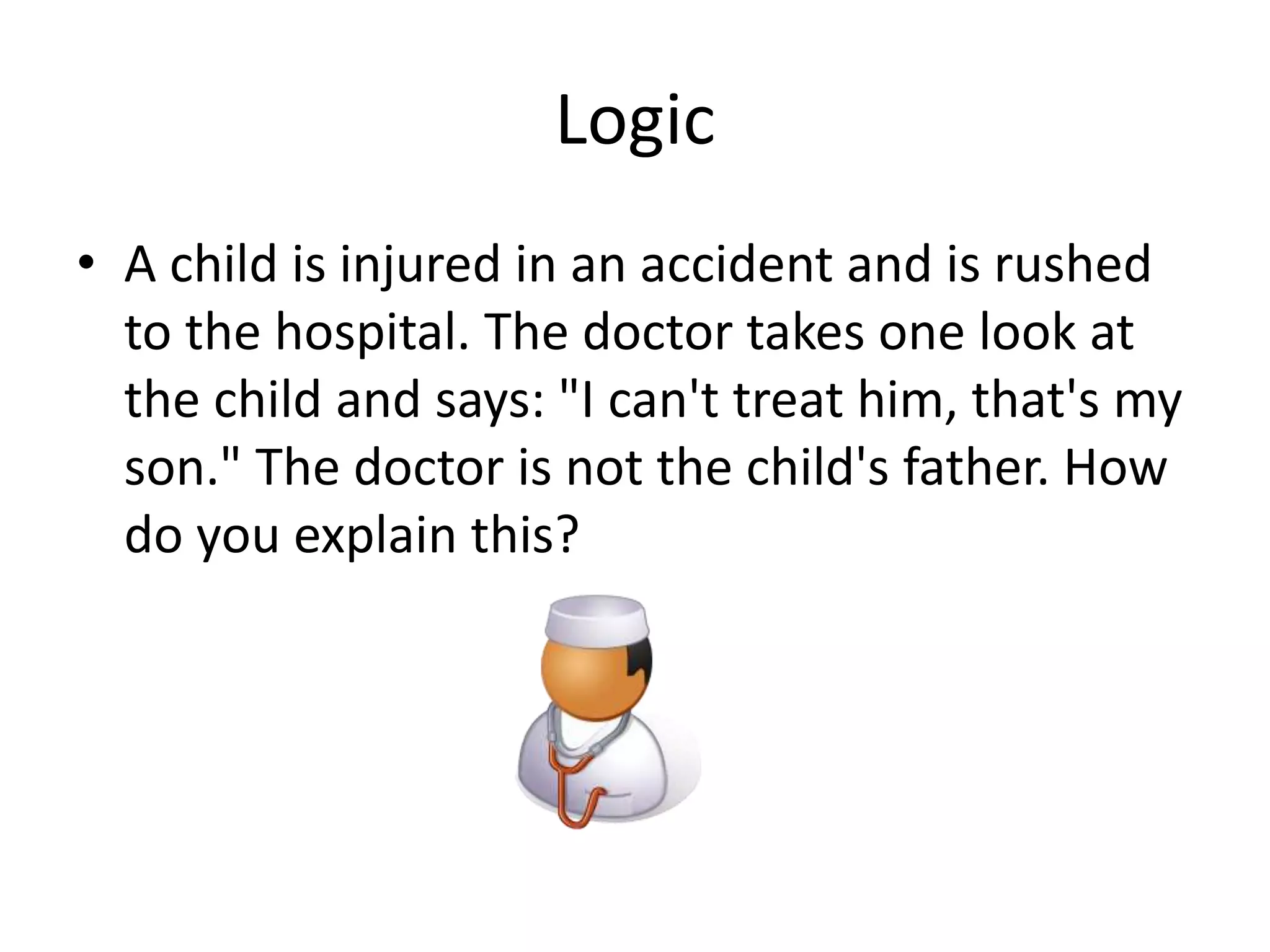
• A child is injured in an accident and is rushed
to the hospital. The doctor takes one look at
the child and says: "I can't treat him, that's my
son." The doctor is not the child's father. How
do you explain this?
• Carol Gilligan found that “men value following
rules and law, females value relationships and
caring”
• Debate– Do these findings represent social
effects on learning or biological distinctions?
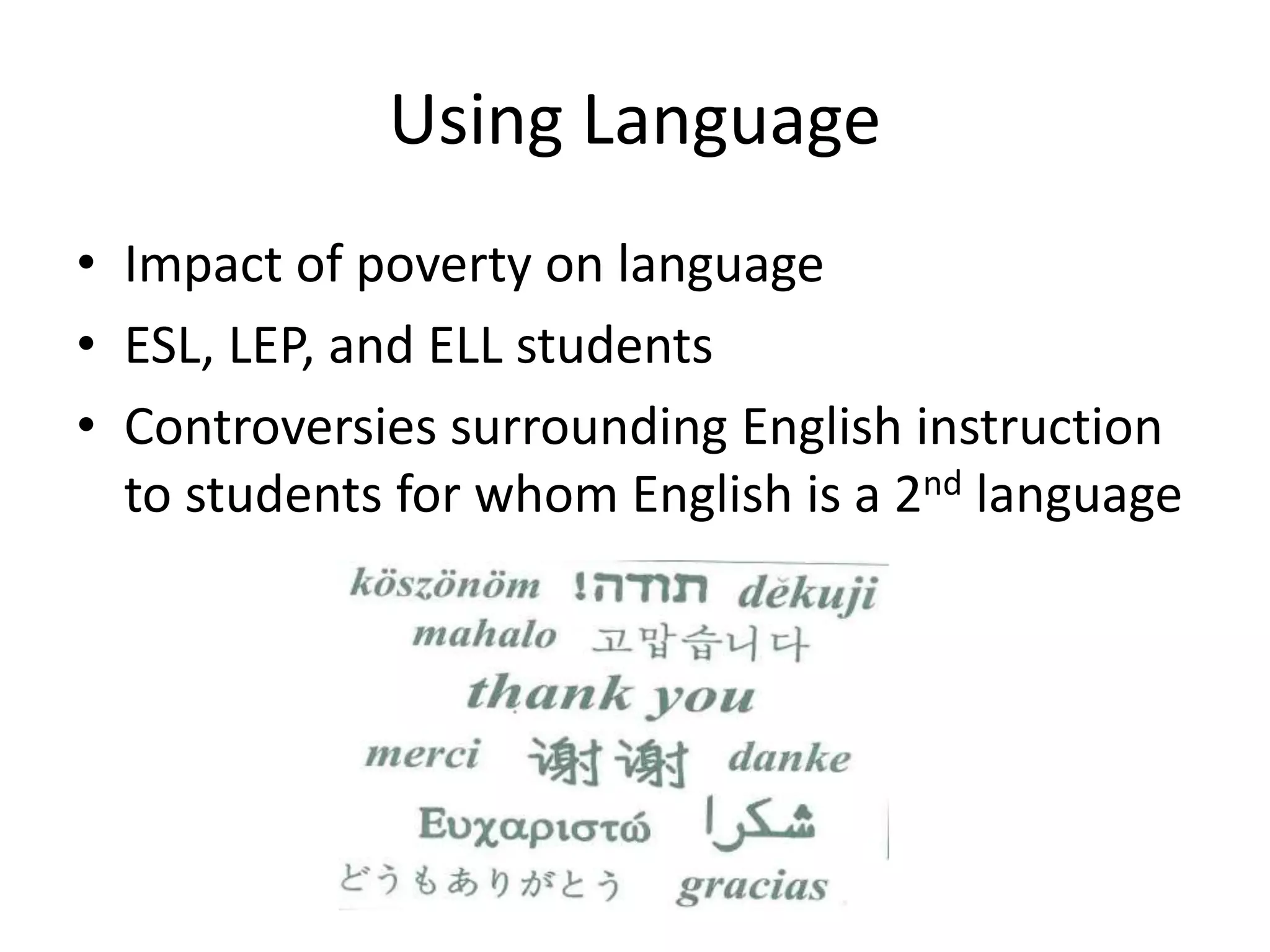
Using Language
• Impact of poverty on language
• ESL, LEP, and ELL students
• Controversies surrounding English instruction
to students for whom English is a 2nd language
Controversies
• Controversies surrounding English instruction
to students for whom English is a 2nd language
– Teachers are responsible for providing a quality
education to all their students
– All teachers are likely to have a student with
limited English proficiency at some time
– NCLB requires all students perform at grade level
by 2014
Issues
• Research suggests 5-8 years of a 2nd language
are required before a student can use it
effectively for academic purposes (3-5 years
for oral proficiency, 4-7 academic proficiency –
then they have to “catch up”)
• Pull out programs vs. bilingual programs
Motivation
• Think of a recent classroom experience in
which all the students seem to be engaged.
Brainstorm motivators you think the teacher
used successfully.
• Think of a recent classroom experience in
which some students appeared
disenfranchised. What kept them from being
engaged?
Motivation (cont.)
• Go to the Vanderbilt link for motivating
students. Compare your list to the ideas
presented here.
• What is a teacher’s responsibility for
motivating his or her students?
• Look at CAMM Worldwide video
Expectations
• How do student expectations affect their
performance?
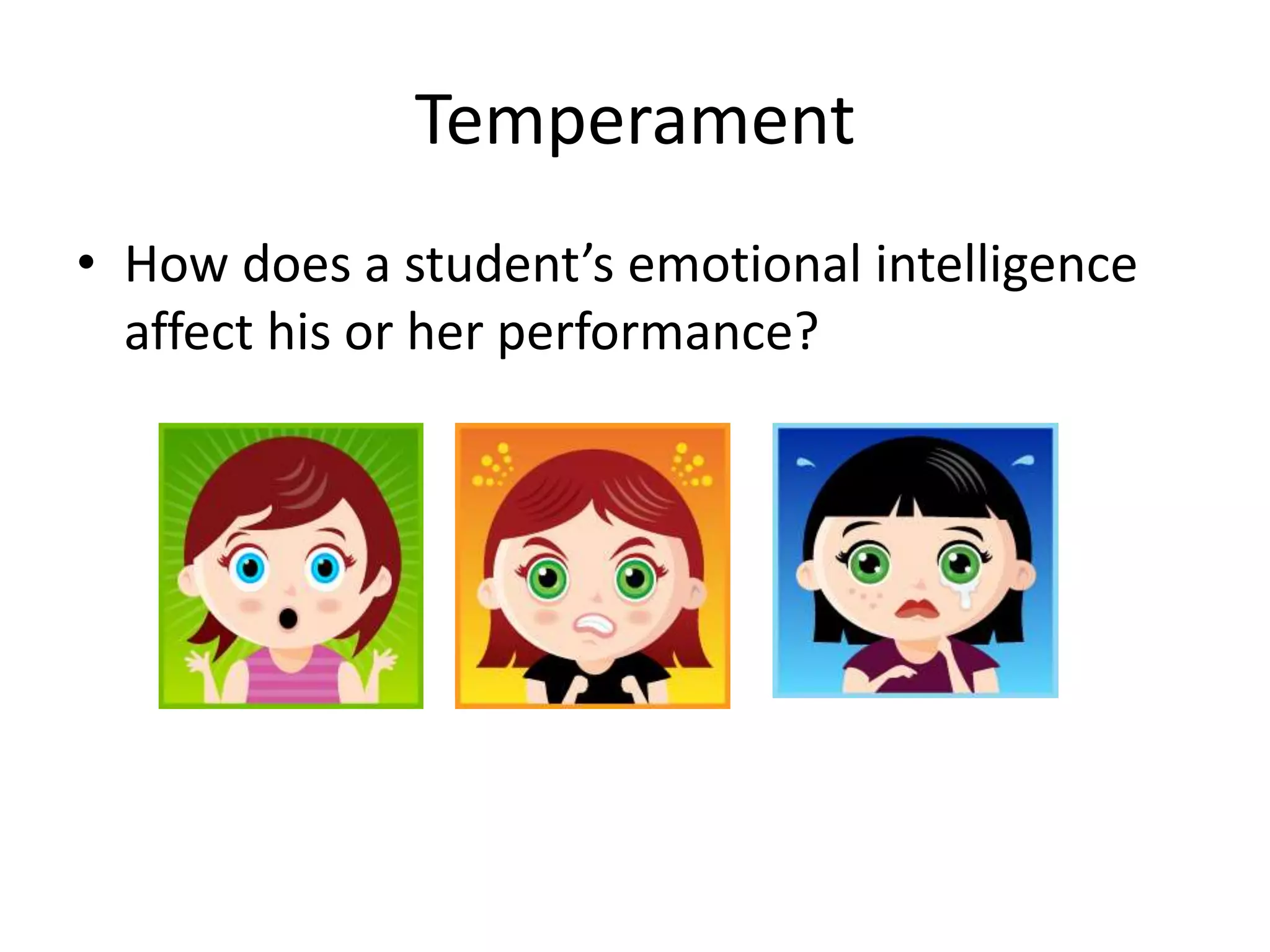
Temperament
• How does a student’s emotional intelligence
affect his or her performance?
Reading and Literacy
• 1900 -Sign a name 1930s -3 years of
school 1947 – fifth grade
1970 – ninth grade today – completion
of high school
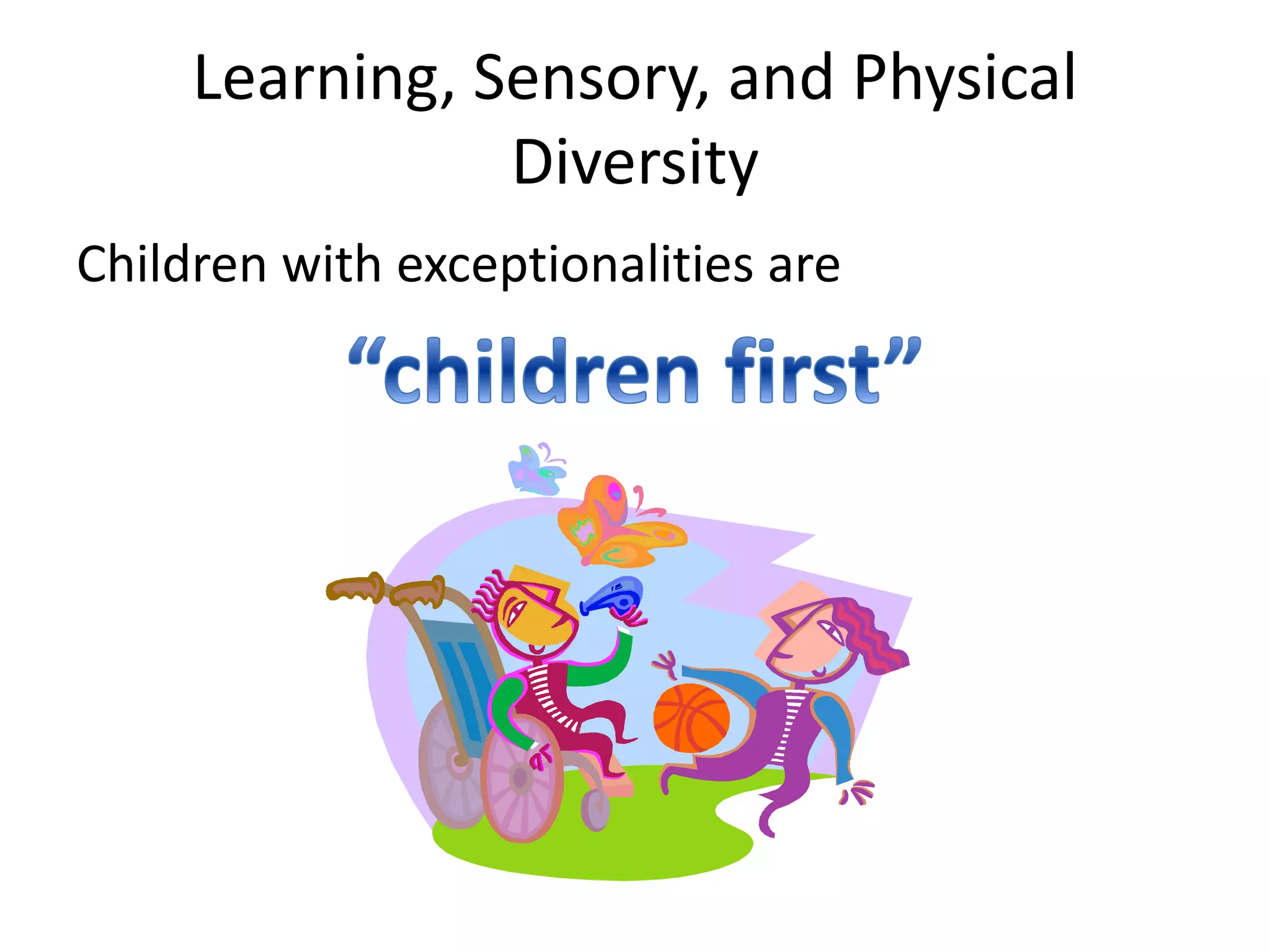
Learning, Sensory, and Physical
Diversity
Children with exceptionalities are
Exceptionalities
• Intelligence – may include children with
cognitive problems or those with heightened
ability
• Learning disabilities – may include children
with learning disorders or those that have
problems focusing on learning.
• Sensory and physical disabilities
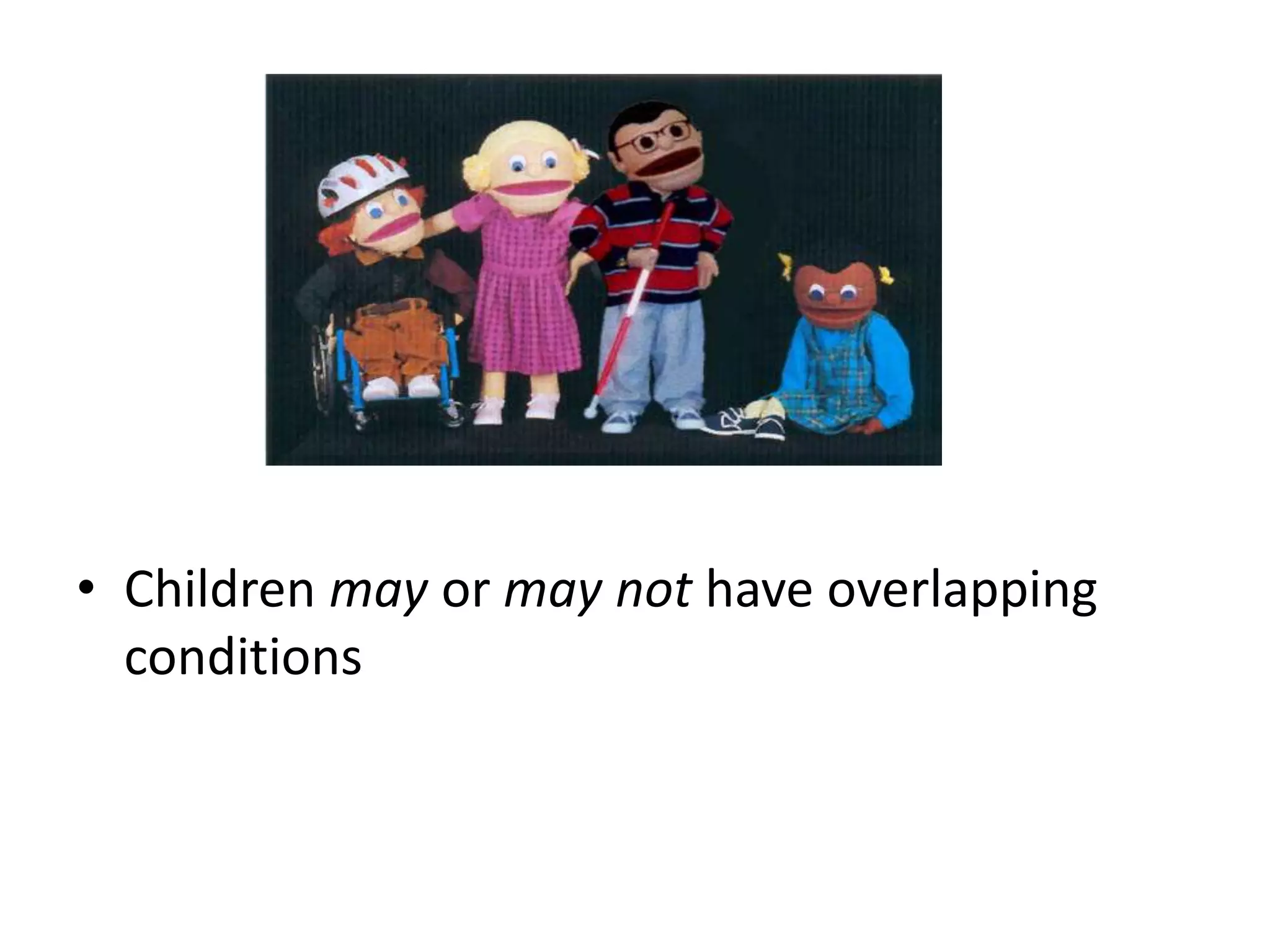
• Children may or may not have overlapping
conditions
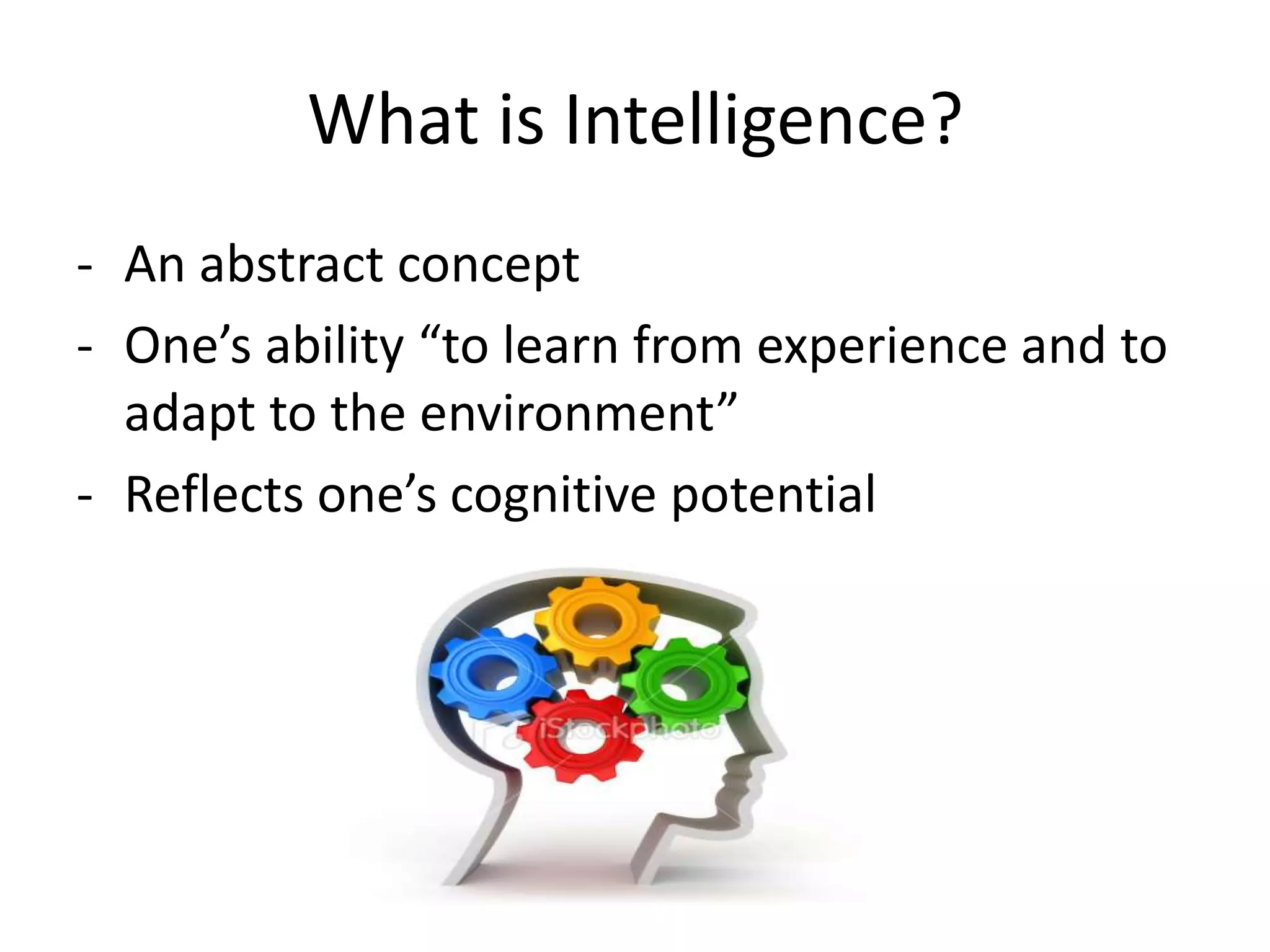
What is Intelligence?
- An abstract concept
- One’s ability “to learn from experience and to
adapt to the environment”
- Reflects one’s cognitive potential
Intelligence
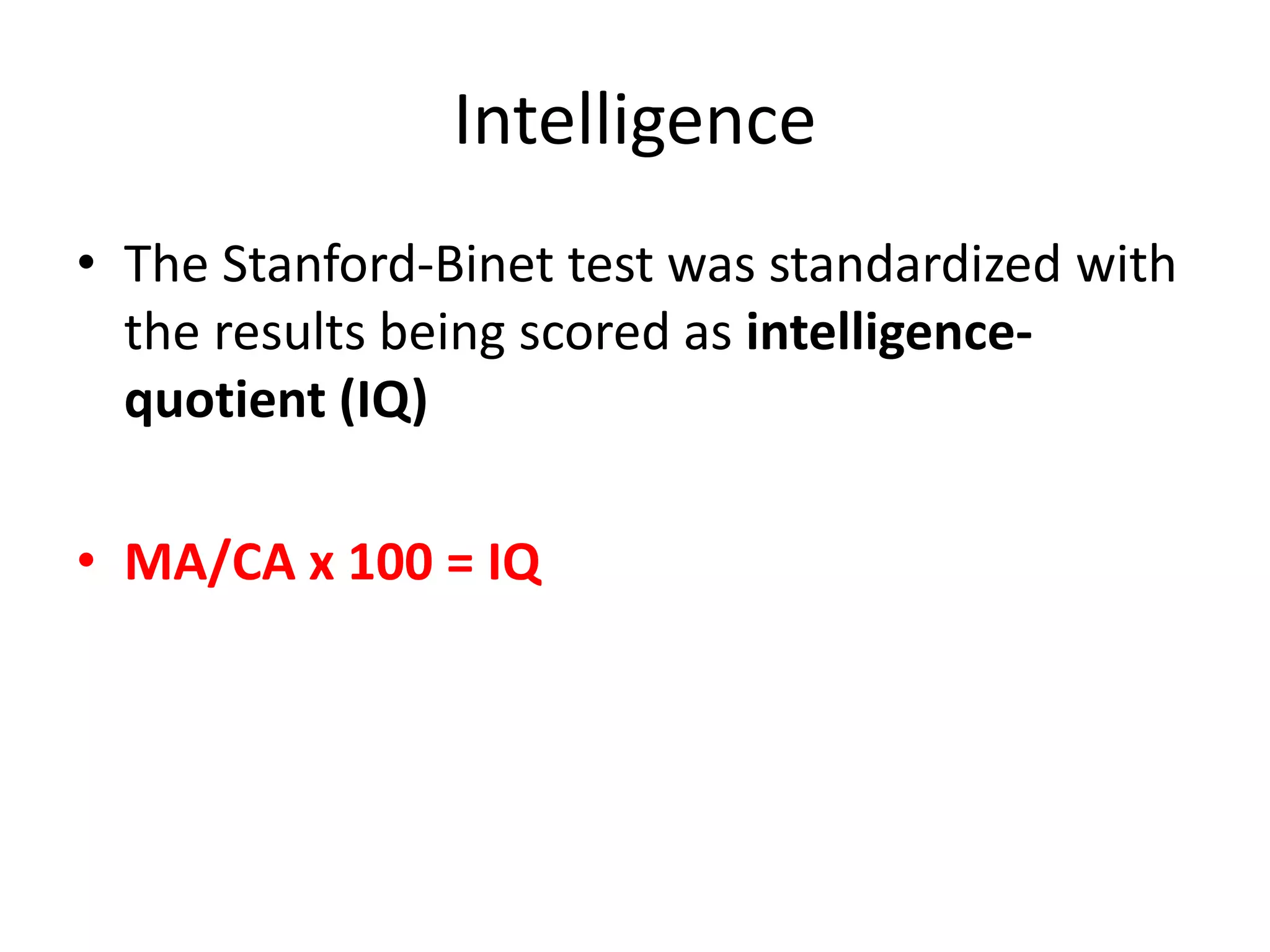
• The Stanford-Binet test was standardized with
the results being scored as intelligence-
quotient (IQ)
• MA/CA x 100 = IQ
Intelligence
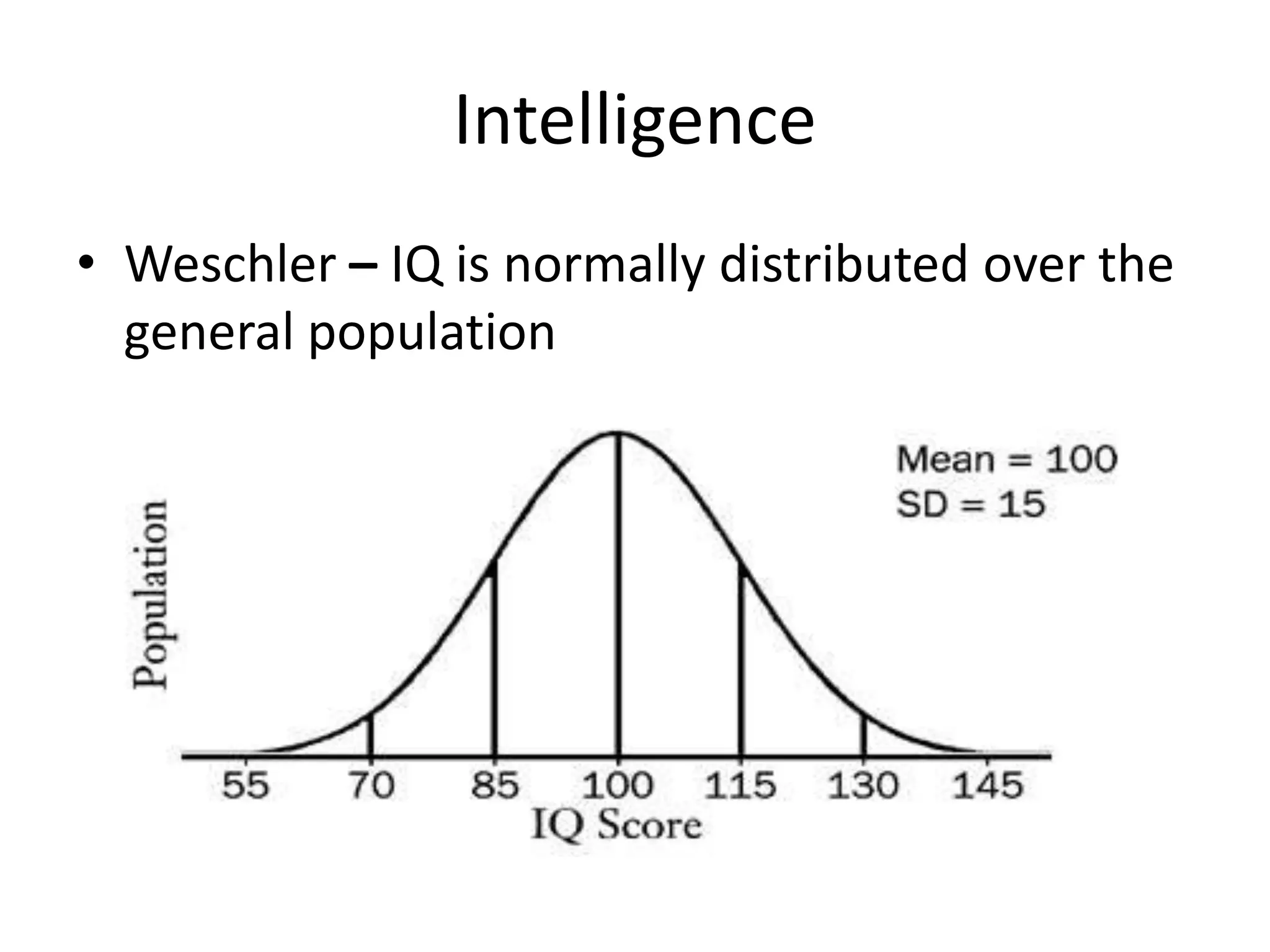
• Weschler – IQ is normally distributed over the
general population
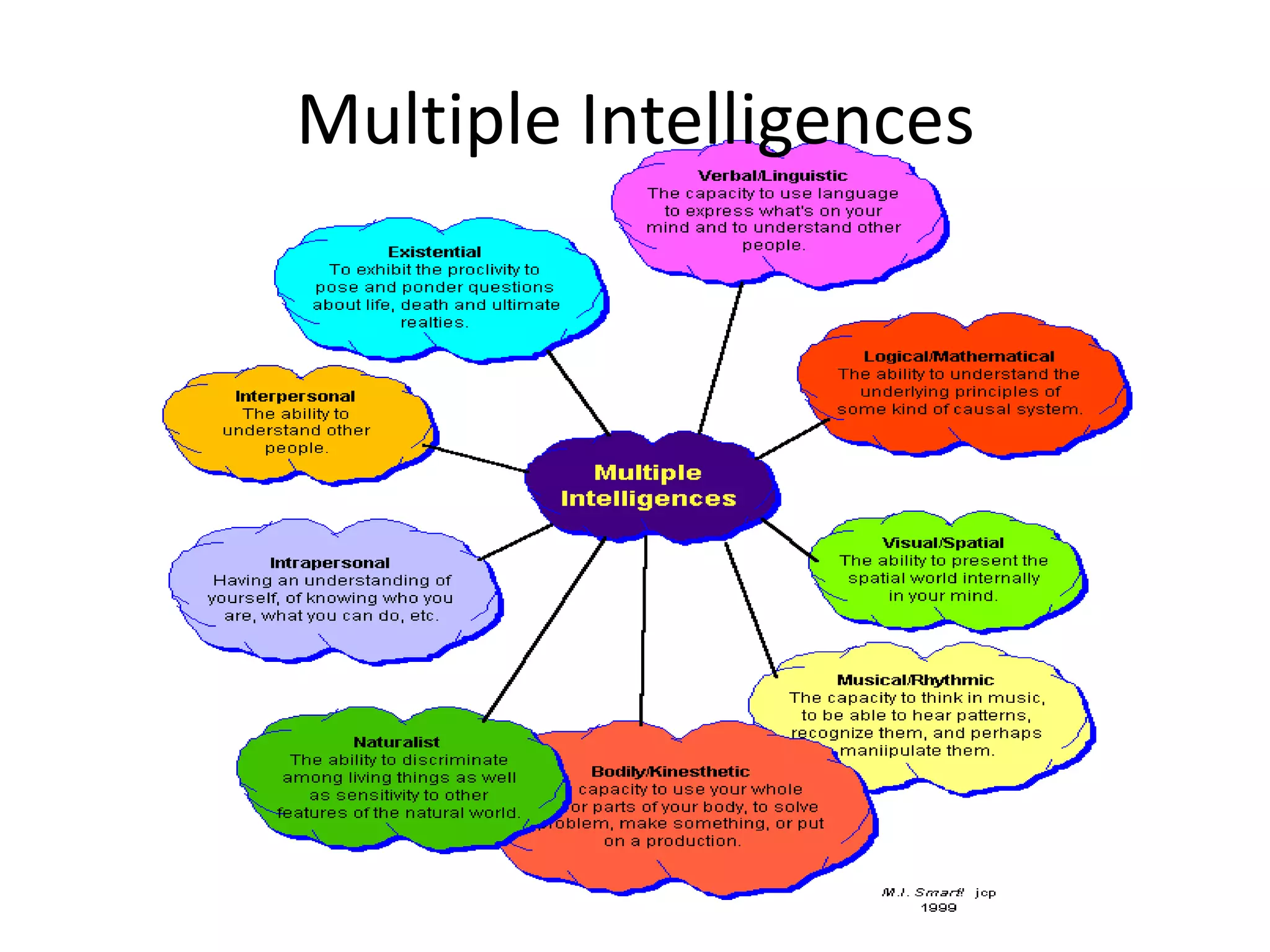
Multiple Intelligences
Quick Review
• It’s as simple as it is complicated. . .There are
numerous ways in which students are diverse.
We must consider each of those when we try
to reach all of our students.

Chapter 3 student diversity

  • 1.
    Chapter 3 –Student Diversity Ebert, E., & Culyer III, R. (2014). Student Diversity. In School: An introduction to education. Belmont: Wadsworth.
  • 2.
    What’s Your Style? •Complete the ice breaker on pp. 55 - 56 in your text.
  • 3.
    Culture, Ethnicity, andRace • What is the difference between culture, ethnicity, and race? • What is the difference between America as a “melting pot” and America as a “salad bowl”?
  • 4.
    Stereotyping vs. Characteristics •What are some of the characteristics of various racial and ethnic groups who comprise American students? • How do we distinguish between stereotyping and understanding cultural characteristics? • What are the implications for teachers when working with students from various racial and ethnic backgrounds?
  • 5.
    Religion Debate: Prayer should/shouldnot be allowed in schools
  • 6.
    Gender, Sex, andStereotyping • Gender – “social aspect of sexuality; behaviors that are considered masculine or feminine” • Sex – “the biological distinctions of male or female”
  • 7.
    Logic • A childis injured in an accident and is rushed to the hospital. The doctor takes one look at the child and says: "I can't treat him, that's my son." The doctor is not the child's father. How do you explain this?
  • 8.
    • Carol Gilliganfound that “men value following rules and law, females value relationships and caring” • Debate– Do these findings represent social effects on learning or biological distinctions?
  • 9.
    Using Language • Impactof poverty on language • ESL, LEP, and ELL students • Controversies surrounding English instruction to students for whom English is a 2nd language
  • 10.
    Controversies • Controversies surroundingEnglish instruction to students for whom English is a 2nd language – Teachers are responsible for providing a quality education to all their students – All teachers are likely to have a student with limited English proficiency at some time – NCLB requires all students perform at grade level by 2014
  • 11.
    Issues • Research suggests5-8 years of a 2nd language are required before a student can use it effectively for academic purposes (3-5 years for oral proficiency, 4-7 academic proficiency – then they have to “catch up”) • Pull out programs vs. bilingual programs
  • 12.
    Motivation • Think ofa recent classroom experience in which all the students seem to be engaged. Brainstorm motivators you think the teacher used successfully. • Think of a recent classroom experience in which some students appeared disenfranchised. What kept them from being engaged?
  • 13.
    Motivation (cont.) • Goto the Vanderbilt link for motivating students. Compare your list to the ideas presented here. • What is a teacher’s responsibility for motivating his or her students? • Look at CAMM Worldwide video
  • 14.
    Expectations • How dostudent expectations affect their performance?
  • 15.
    Temperament • How doesa student’s emotional intelligence affect his or her performance?
  • 17.
    Reading and Literacy •1900 -Sign a name 1930s -3 years of school 1947 – fifth grade 1970 – ninth grade today – completion of high school
  • 18.
    Learning, Sensory, andPhysical Diversity Children with exceptionalities are
  • 19.
    Exceptionalities • Intelligence –may include children with cognitive problems or those with heightened ability • Learning disabilities – may include children with learning disorders or those that have problems focusing on learning. • Sensory and physical disabilities
  • 20.
    • Children mayor may not have overlapping conditions
  • 21.
    What is Intelligence? -An abstract concept - One’s ability “to learn from experience and to adapt to the environment” - Reflects one’s cognitive potential
  • 22.
    Intelligence • The Stanford-Binettest was standardized with the results being scored as intelligence- quotient (IQ) • MA/CA x 100 = IQ
  • 23.
    Intelligence • Weschler –IQ is normally distributed over the general population
  • 24.
  • 25.
    Quick Review • It’sas simple as it is complicated. . .There are numerous ways in which students are diverse. We must consider each of those when we try to reach all of our students.