ATRIAL FIBRILLATION
What is Atrial Fibrillation? 
 Also known as “quivering heart” 
 Chaotic ectopic or reentrant activity in atria 
 Irregular heartbeat & rhythm 
Faster resting heart rate than normal 
Atria - contracts randomly or so fast that the 
heart cannot rest properly. 
Rate- atrial rate( 400-600), 
 -venticular, depends on AV node block 
 150-200 ,
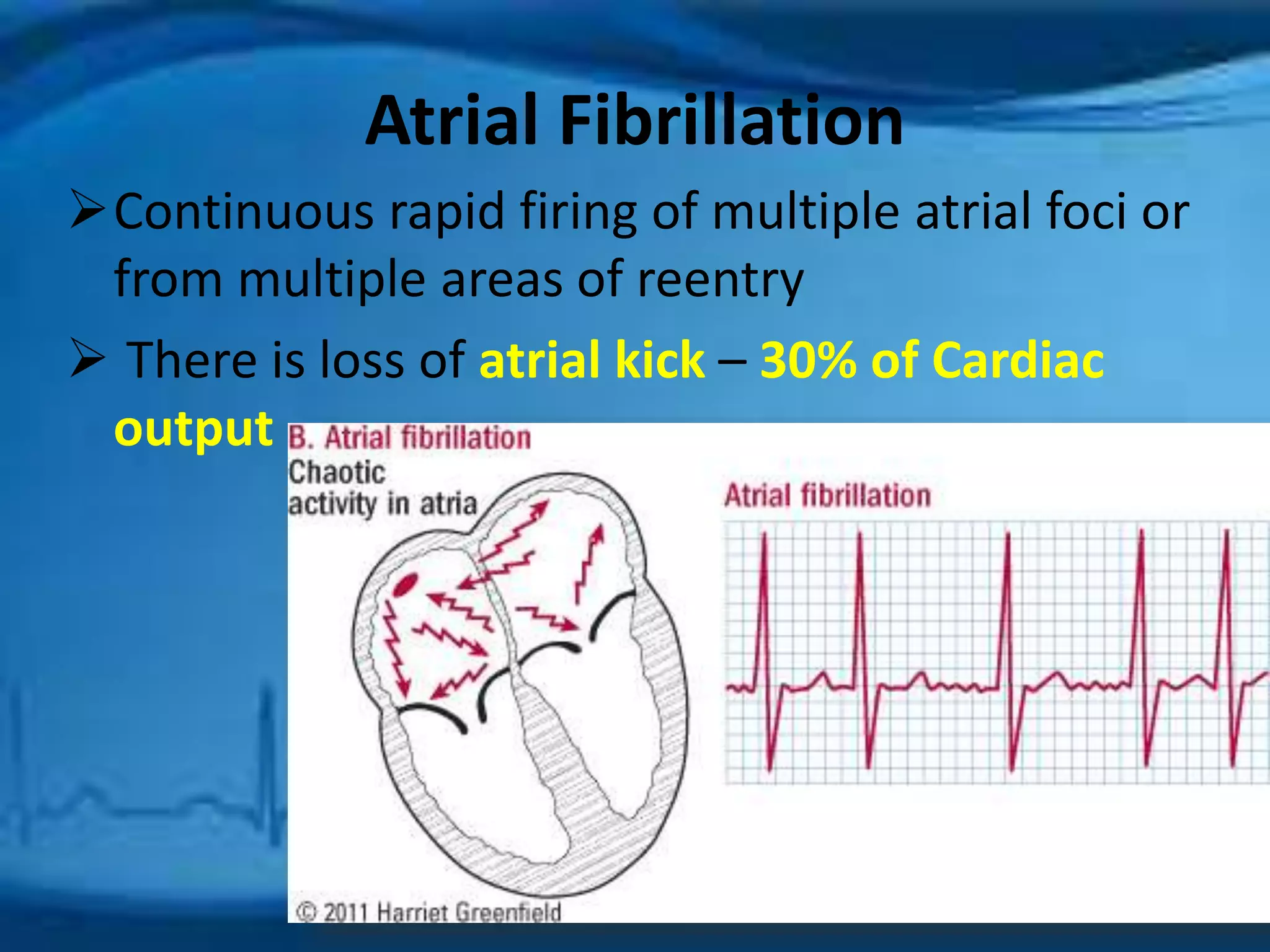
Atrial Fibrillation 
Continuous rapid firing of multiple atrial foci or 
from multiple areas of reentry 
 There is loss of atrial kick – 30% of Cardiac 
output
Types of Atrial Fibrillation 
Paroxysmal Atrial Fibrillation 
> an AF which comes and goes, and each episodes 
last no more than 2 days 
Persistent Atrial Fibrillation 
> an AF which is experienced for a period of longer than 
seven days and is most likely going to need treatment to 
revert the heartbeat back to normal. This type of AF 
tends to recur 
Permanent Atrial Fibrillation 
> An existing long-term AF which cannot be reverted back 
to normal
Causes of Atrial Fibrillation 
> Hypertension 
> Obesity 
> Complication of certain heart disease (e.g IHD, 
heart valve problems and pericardial disease) 
> high alcohol and caffeine consumption 
> Smoking 
> Family history 
> Any chronic condition (e.g thyroid problems, 
diabetes, asthma, etc.)
Signs and Symptoms 
•General fatigue 
•palpitations 
•Rapid and irregular heartbeat 
•Fluttering or “thumping” in the chest 
•Dizziness 
•Shortness of breath and anxiety 
•Weakness 
•Faintness or confusion 
•Fatigue when exercising 
•Sweating 
•Chest pain or pressure
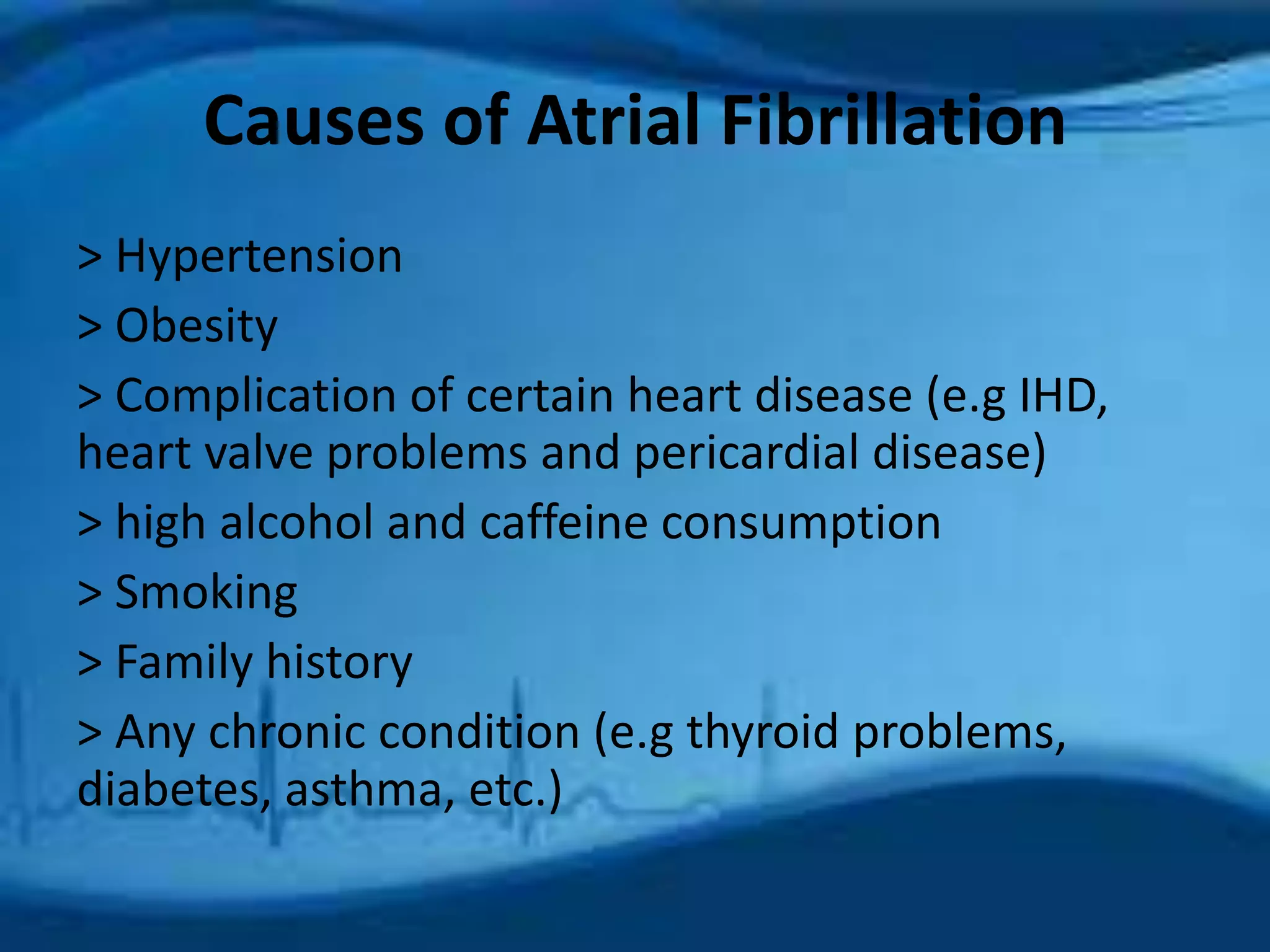
Diagnostic Procedures 
> ECG 
> Echocardiogram 
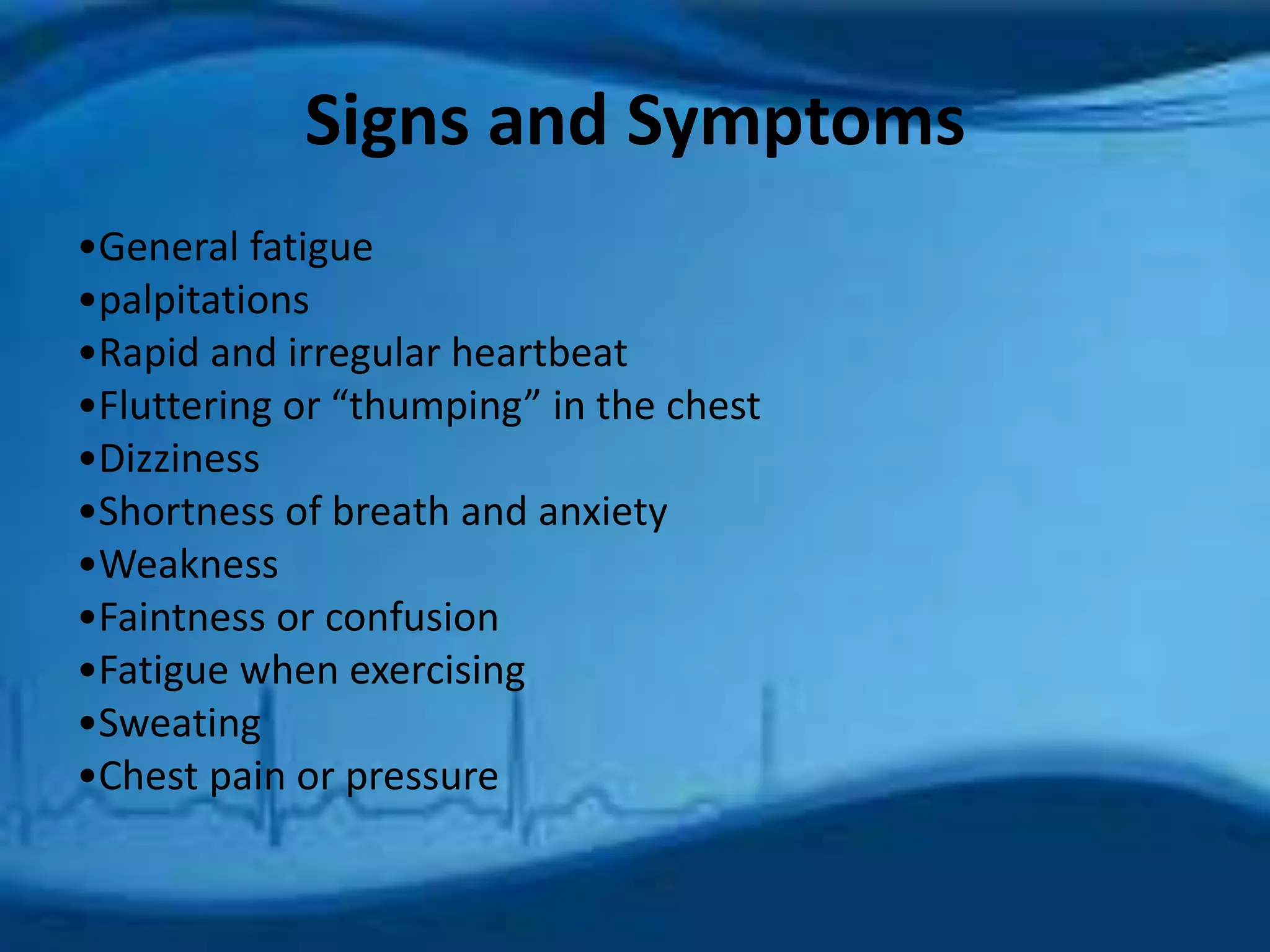
> Holter and event monitors 
- this records the heart’s electrical activity 
for a full 24 to 48 hours period
Cont… 
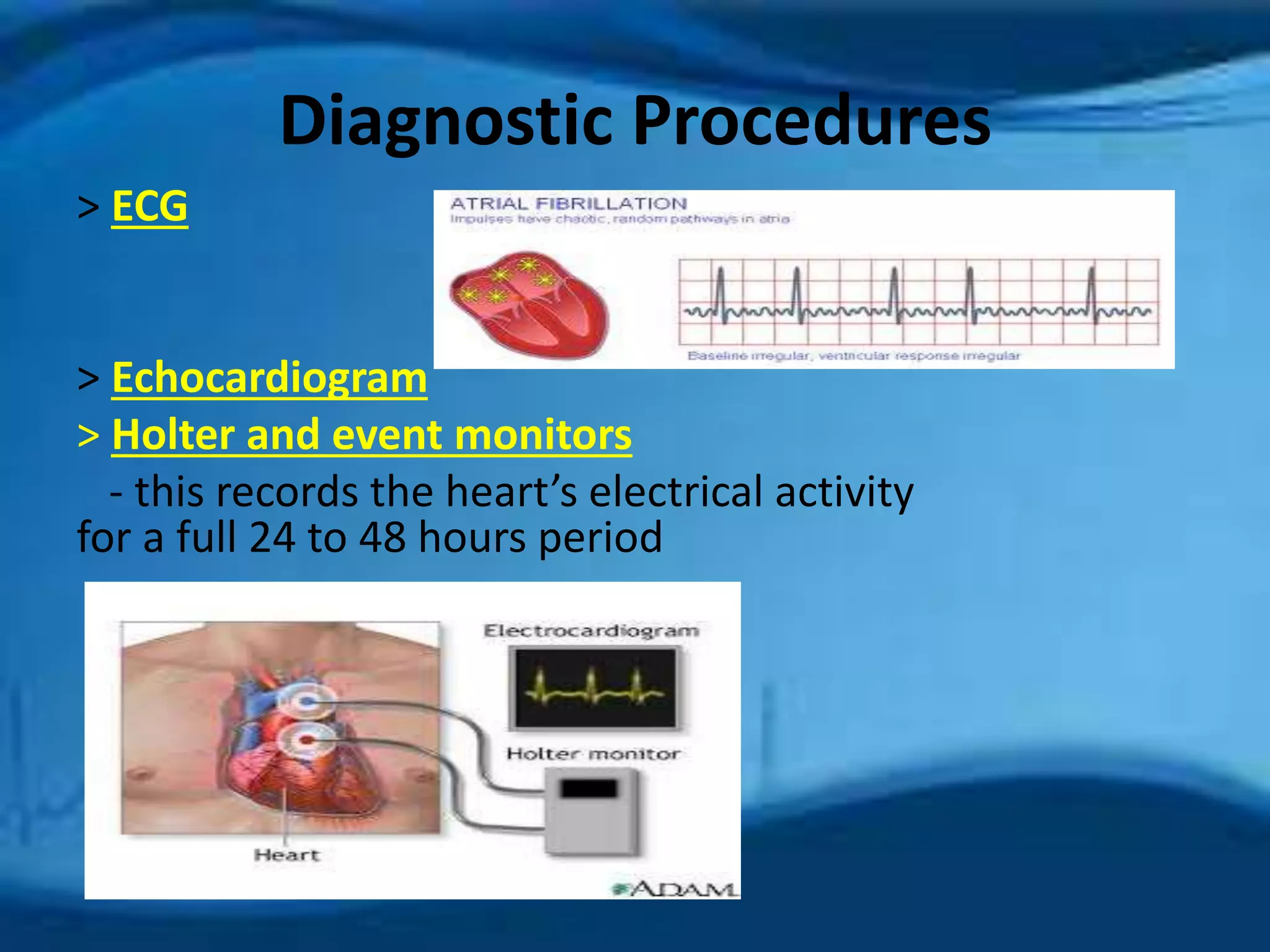
> Stress test 
- the patient will do some 
exercise to make the heart work hard and beat 
fast while the tests are done.
Cont… 
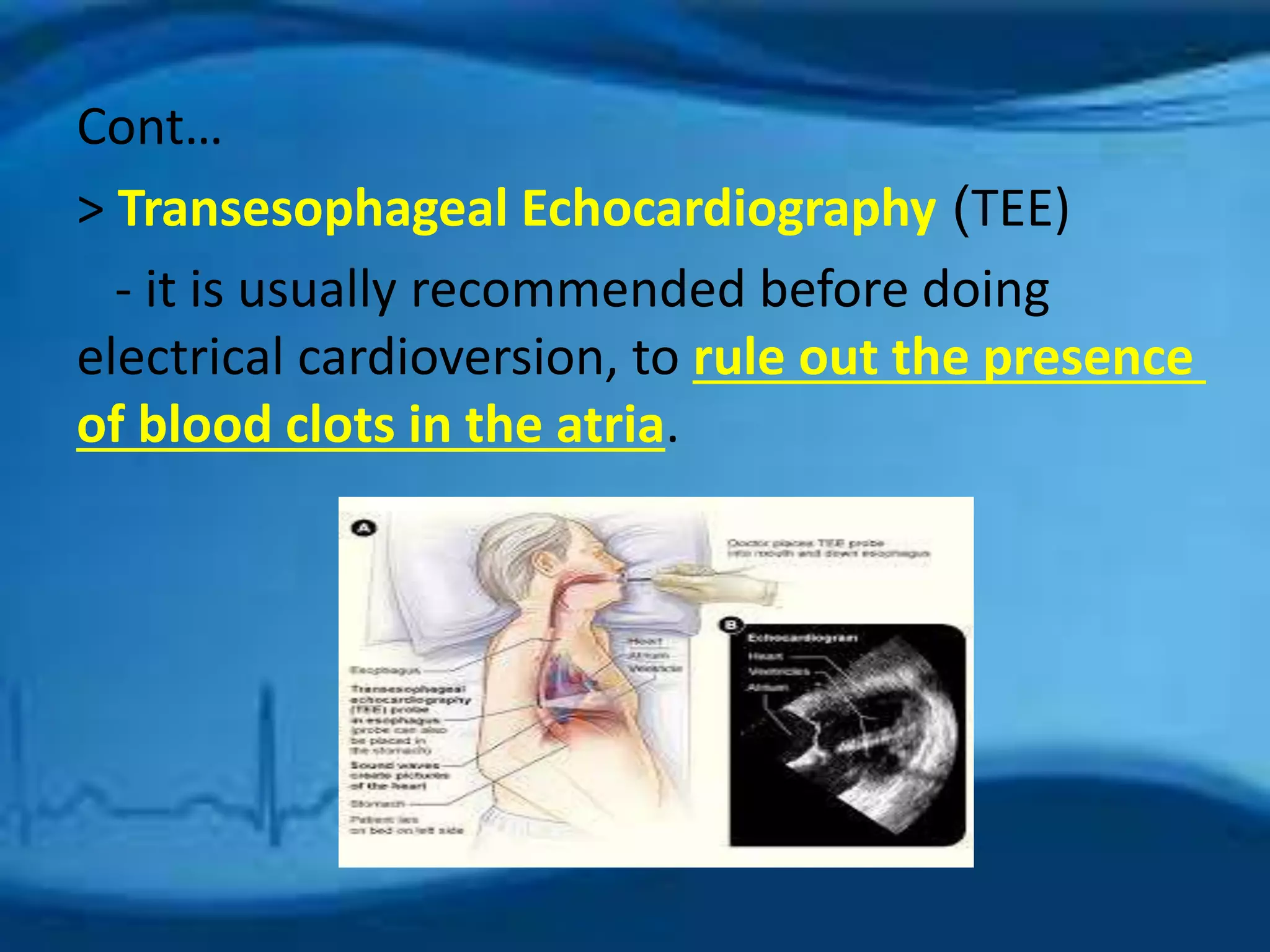
> Transesophageal Echocardiography )TEE) 
- it is usually recommended before doing 
electrical cardioversion, to rule out the presence 
of blood clots in the atria.
Cont… 
> Chest x-ray 
> Blood tests (e.g thyroid function test, 
electrolytes etc.)
Treatment 
> Rate control 
• beta-blockers 
– Esmolol 
– Propranolol 
– metoprolol 
– atenolol) 
• calcium channel blockers - diltiazem, verapamil 
• digitalis - lanoxin
Treatment 
Rhythm control Antiarrhythmias 
• Amiodarone – mg/min 
• It prolongs the duration of action potentials in cardiac 
fibers, depresses conduction velocity, slows conduction 
and prolongs refractoriness at the AV node, and 
exhibits some alpha and beta blockade activity 
• Side Effects: Hypotension, pain on IV site 
• Over dose: AV block, bradycardia, cardiogenic shock, 
hepatotoxicity, hypotension 
• Concentration: 1.5mg/ml in D5W
Treatment 
Elective Cardioversion 
• Convert hemodynamically stable AF to NSR 
• 3 weeks anticoagulation before cardioversion 
– ↓ risk of thromboembolism 
• TEE before cardioversion to check atrial 
thrombus 
• Anticoagulation continued for 4 weeks after 
cardioversion - ↓ risk of delayed embolism 
• Analgesia & sedation
Treatment 
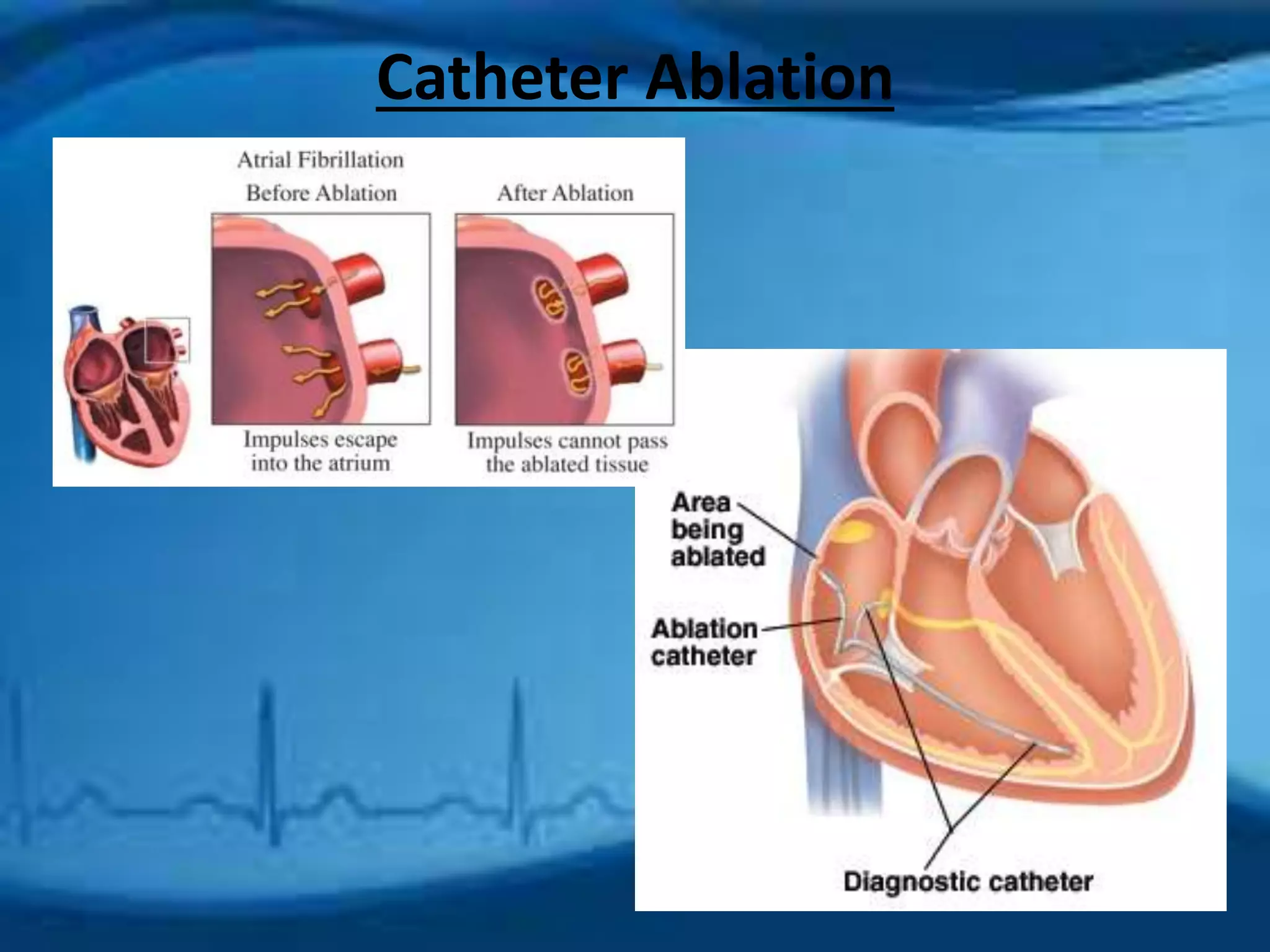
Catheter Ablation 
• Used if medicines & cardioversion are not 
effective 
• Wire is inserted through a vein in the leg or 
arm and threaded to the heart, radio wave 
energy is sent through the wire to destroy 
abnormal tissue that may be disrupting the 
normal flow of electrical signals
Catheter Ablation
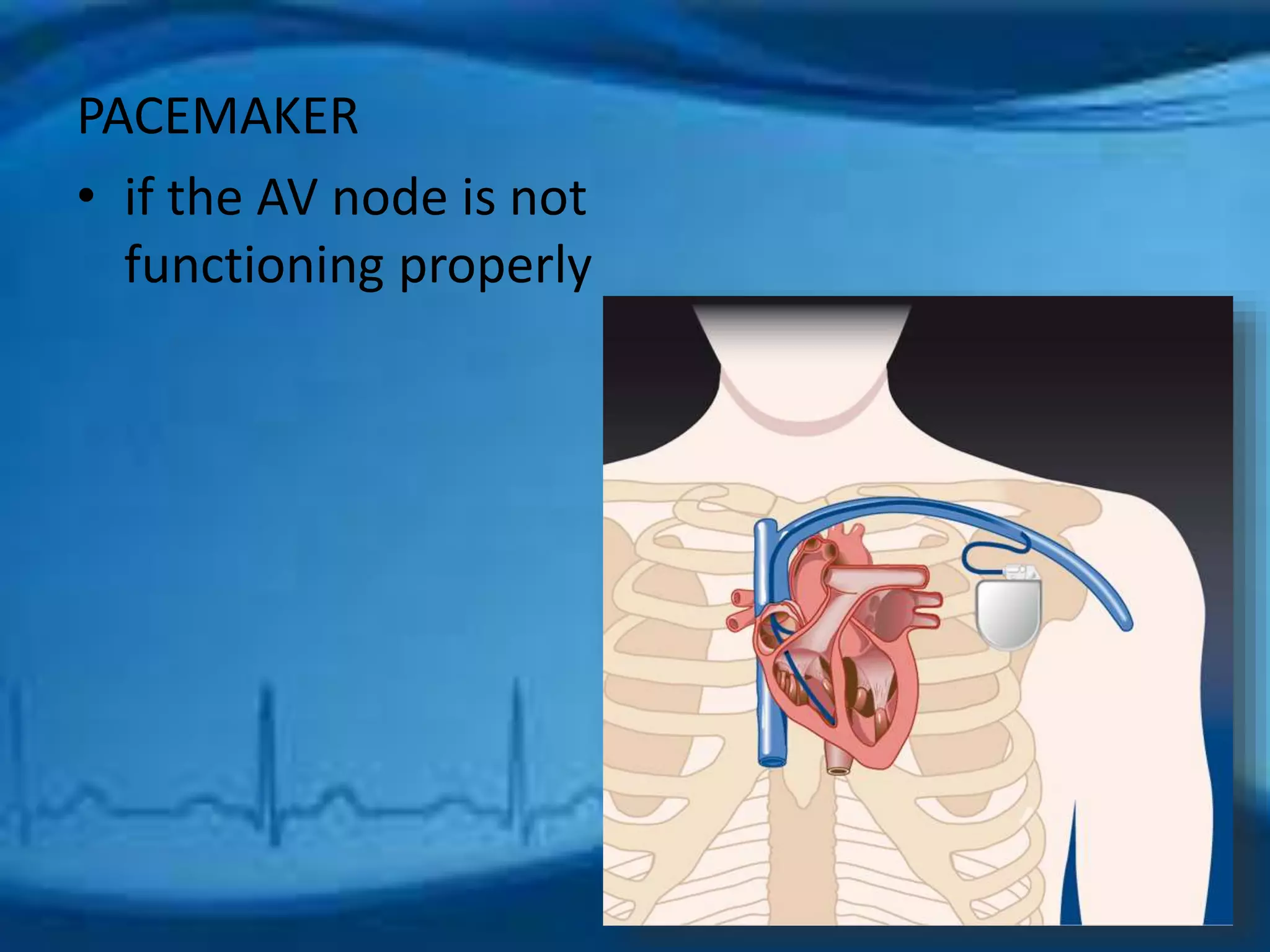
PACEMAKER 
• if the AV node is not 
functioning properly
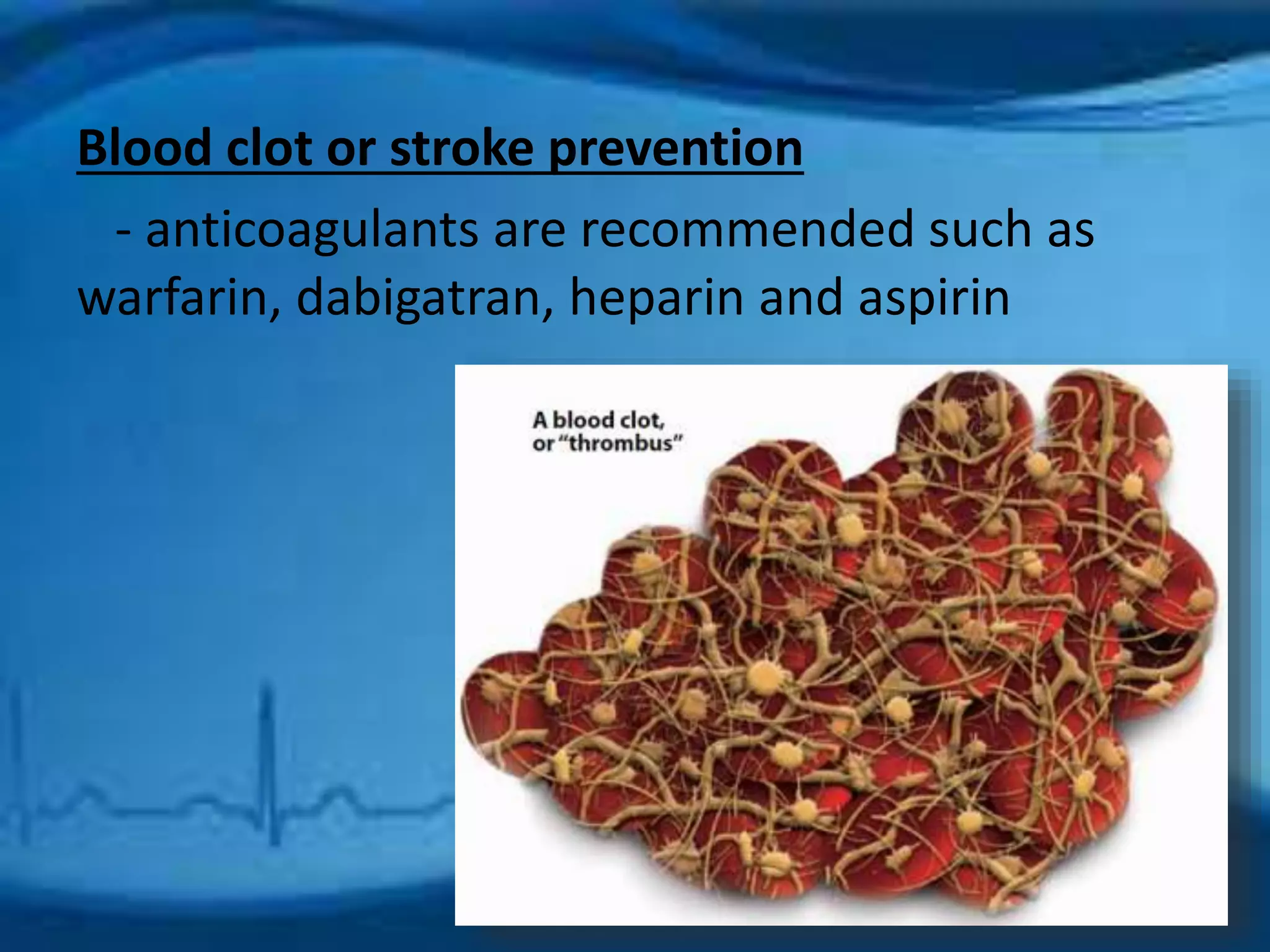
Blood clot or stroke prevention 
- anticoagulants are recommended such as 
warfarin, dabigatran, heparin and aspirin
Nursing Interventions 
All nursing interventions are based upon the problems and 
symptoms that the patient has: 
> Plan for frequent rest periods 
> Encourage patient to talk about their feelings and concerns 
regarding their condition 
> Monitor for any signs and symptoms of embolism and 
bleeding 
> Monitor vital signs while the patient is @ rest and after 
physical activity 
> Monitor intake and output and patient’s weight 
> Health teaching about their diagnosis, treatment, and 
lifestyle changes such as healthy diet, reducing stress, quitting 
smoking, etc.
Atrial fibrillation

Atrial fibrillation

  • 1.
  • 2.
    What is AtrialFibrillation?  Also known as “quivering heart”  Chaotic ectopic or reentrant activity in atria  Irregular heartbeat & rhythm Faster resting heart rate than normal Atria - contracts randomly or so fast that the heart cannot rest properly. Rate- atrial rate( 400-600),  -venticular, depends on AV node block  150-200 ,
  • 3.
    Atrial Fibrillation Continuousrapid firing of multiple atrial foci or from multiple areas of reentry  There is loss of atrial kick – 30% of Cardiac output
  • 4.
    Types of AtrialFibrillation Paroxysmal Atrial Fibrillation > an AF which comes and goes, and each episodes last no more than 2 days Persistent Atrial Fibrillation > an AF which is experienced for a period of longer than seven days and is most likely going to need treatment to revert the heartbeat back to normal. This type of AF tends to recur Permanent Atrial Fibrillation > An existing long-term AF which cannot be reverted back to normal
  • 5.
    Causes of AtrialFibrillation > Hypertension > Obesity > Complication of certain heart disease (e.g IHD, heart valve problems and pericardial disease) > high alcohol and caffeine consumption > Smoking > Family history > Any chronic condition (e.g thyroid problems, diabetes, asthma, etc.)
  • 6.
    Signs and Symptoms •General fatigue •palpitations •Rapid and irregular heartbeat •Fluttering or “thumping” in the chest •Dizziness •Shortness of breath and anxiety •Weakness •Faintness or confusion •Fatigue when exercising •Sweating •Chest pain or pressure
  • 7.
    Diagnostic Procedures >ECG > Echocardiogram > Holter and event monitors - this records the heart’s electrical activity for a full 24 to 48 hours period
  • 8.
    Cont… > Stresstest - the patient will do some exercise to make the heart work hard and beat fast while the tests are done.
  • 9.
    Cont… > TransesophagealEchocardiography )TEE) - it is usually recommended before doing electrical cardioversion, to rule out the presence of blood clots in the atria.
  • 10.
    Cont… > Chestx-ray > Blood tests (e.g thyroid function test, electrolytes etc.)
  • 11.
    Treatment > Ratecontrol • beta-blockers – Esmolol – Propranolol – metoprolol – atenolol) • calcium channel blockers - diltiazem, verapamil • digitalis - lanoxin
  • 12.
    Treatment Rhythm controlAntiarrhythmias • Amiodarone – mg/min • It prolongs the duration of action potentials in cardiac fibers, depresses conduction velocity, slows conduction and prolongs refractoriness at the AV node, and exhibits some alpha and beta blockade activity • Side Effects: Hypotension, pain on IV site • Over dose: AV block, bradycardia, cardiogenic shock, hepatotoxicity, hypotension • Concentration: 1.5mg/ml in D5W
  • 13.
    Treatment Elective Cardioversion • Convert hemodynamically stable AF to NSR • 3 weeks anticoagulation before cardioversion – ↓ risk of thromboembolism • TEE before cardioversion to check atrial thrombus • Anticoagulation continued for 4 weeks after cardioversion - ↓ risk of delayed embolism • Analgesia & sedation
  • 14.
    Treatment Catheter Ablation • Used if medicines & cardioversion are not effective • Wire is inserted through a vein in the leg or arm and threaded to the heart, radio wave energy is sent through the wire to destroy abnormal tissue that may be disrupting the normal flow of electrical signals
  • 15.
  • 16.
    PACEMAKER • ifthe AV node is not functioning properly
  • 17.
    Blood clot orstroke prevention - anticoagulants are recommended such as warfarin, dabigatran, heparin and aspirin
  • 18.
    Nursing Interventions Allnursing interventions are based upon the problems and symptoms that the patient has: > Plan for frequent rest periods > Encourage patient to talk about their feelings and concerns regarding their condition > Monitor for any signs and symptoms of embolism and bleeding > Monitor vital signs while the patient is @ rest and after physical activity > Monitor intake and output and patient’s weight > Health teaching about their diagnosis, treatment, and lifestyle changes such as healthy diet, reducing stress, quitting smoking, etc.