ATRIAL FIBRILLATION
(ARRHYTHMIA)
BY
AMRUT SHIPEKAR
SH16030
Introduction
 What is atrial fibrillation?
- Heart disease.
- Heart condition that causes heart to function in irregular
rhythm.
- Increases risk of heart failure, stroke and even death.
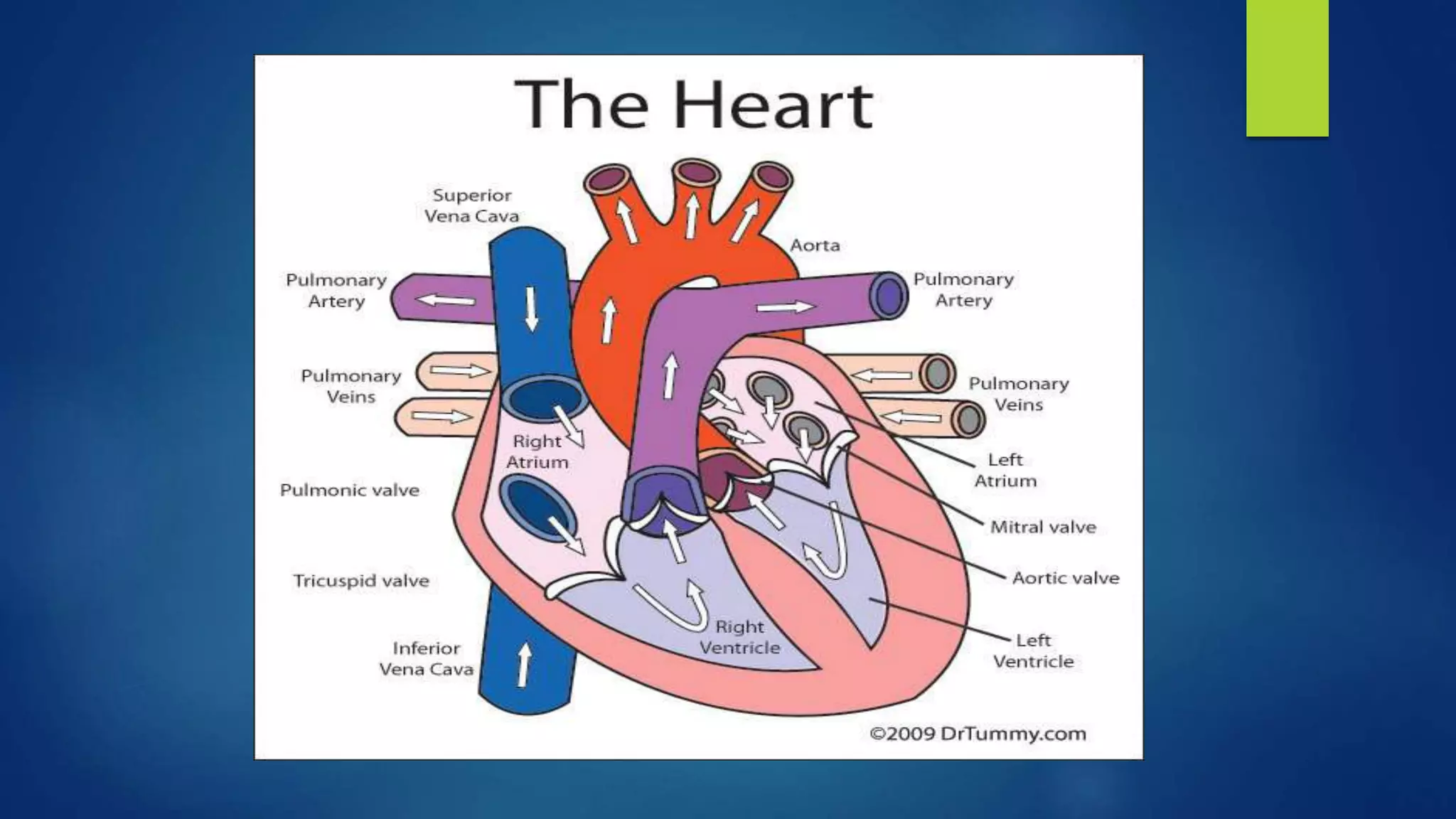
Human Heart
- Consists of four chambers
1. Two upper chambers……ATRIA
2. Two lower chambers…….VENTRICLES
- Under normal conditions these four chambers work together to pump
blood throughout the body.
- How does it function
Possible Risk Factors
 Age
 Family History
 Smoking
 High Blood Pressure (Hypertension)
 Obesity
 Diabetes
 Coronary Artery Disease
Types of Atrial Fibrillation
1.Paroxysmal Afib
In this case periods of Afib may come and these episodes are momentary
or last for days but generally go away on their own.
2.Persistent Afib
Afib not go away on its own and doctors may needs to provide medicine
to bring the heart back to normal rhythm.
3.Permanent Afib
Heart not able to return its normal rhythm at all
TYPES OF ATRIAL FIBRILLATION
Symptoms and Consequences
1. Light-Headedness
2. Dizziness
3. Shortness of Breath
4. Tiredness
5. Chest Pain
Effects of Afib on Heart
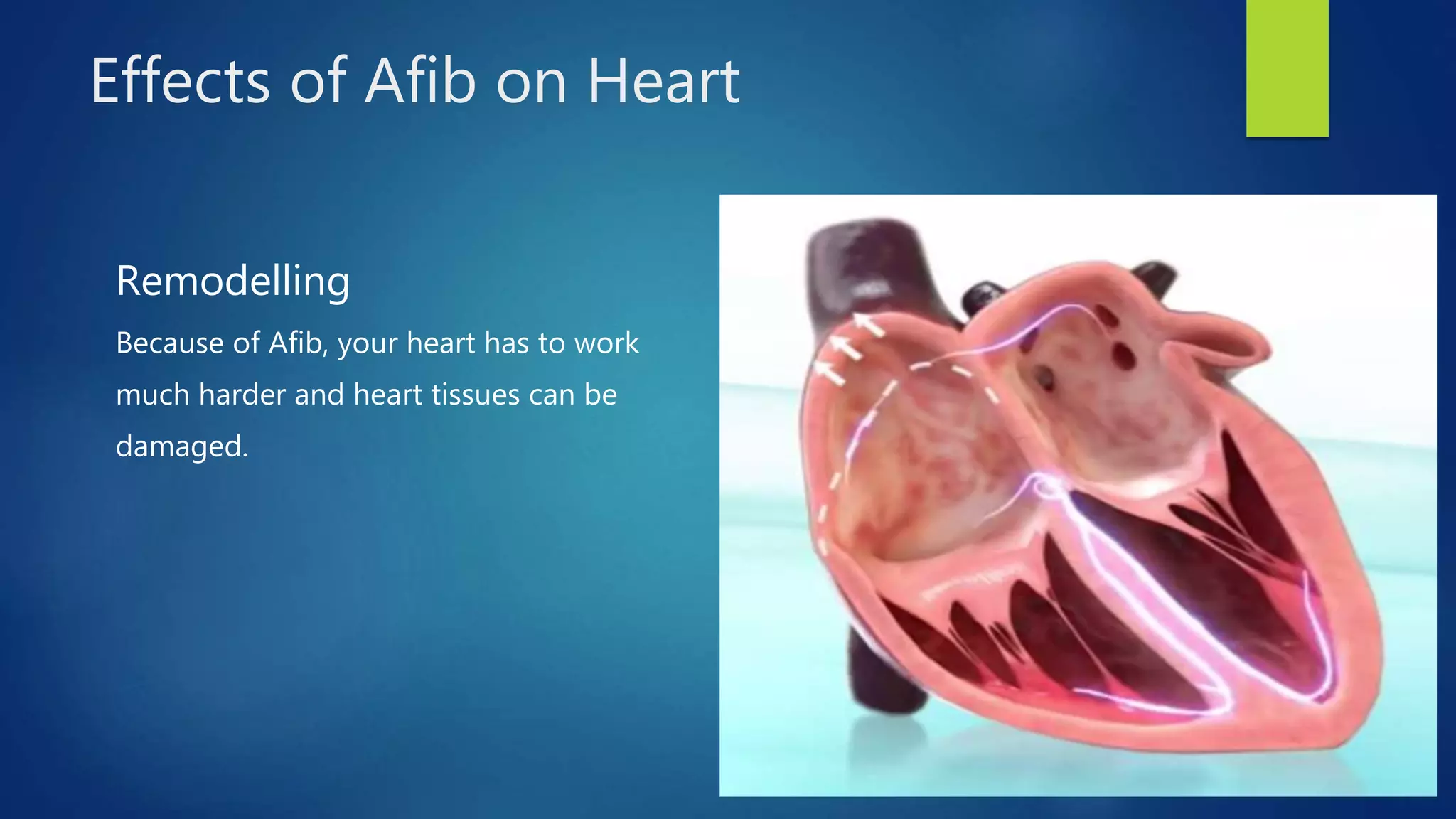
Remodelling
Because of Afib, your heart has to work
much harder and heart tissues can be
damaged.
Stroke Risk
During Afib, blood can collect in your heart
and cause a clot to form
Afib patients are more likely to get stroke than
normal person
Control of Afib
1. Rate Control
2. Rhythm Control
3. Combination of both
4. Cardioversion
5. Radio frequency ablation
6. Surgical ablation
7. Atrial pacemaker
1. Rate Control
medicines given to control heart rate
but heart continues to beat irregularly and out of rhythm
2. Rhythm control
medicines are used to control the rhythm of heart
but heart beats at faster rate
So it is always preferable to go for the combination of
these two control methods
4. Cardioversion
electrical current used to restore normal heart rhythm
5. Radio frequency ablation
procedure that stops the heart from setting of faulty electrical
signals that cause chaotic heart beat of Afib
5. Surgical ablation
surgical procedure to destroy the cells causing abnormal
heart rhythm and may be used when other treatments not work
6. Atrial Pacemaker
a small battery powered device implanted under the skin to
generate electrical signals to regulate heart beat
THANK YOU
AND STAY HEALTHY……!!!!!

Atrial fibrillation (arrhythmia)

  • 1.
  • 2.
    Introduction  What isatrial fibrillation? - Heart disease. - Heart condition that causes heart to function in irregular rhythm. - Increases risk of heart failure, stroke and even death.
  • 3.
    Human Heart - Consistsof four chambers 1. Two upper chambers……ATRIA 2. Two lower chambers…….VENTRICLES - Under normal conditions these four chambers work together to pump blood throughout the body. - How does it function
  • 5.
    Possible Risk Factors Age  Family History  Smoking  High Blood Pressure (Hypertension)  Obesity  Diabetes  Coronary Artery Disease
  • 6.
    Types of AtrialFibrillation 1.Paroxysmal Afib In this case periods of Afib may come and these episodes are momentary or last for days but generally go away on their own. 2.Persistent Afib Afib not go away on its own and doctors may needs to provide medicine to bring the heart back to normal rhythm. 3.Permanent Afib Heart not able to return its normal rhythm at all
  • 7.
    TYPES OF ATRIALFIBRILLATION
  • 8.
    Symptoms and Consequences 1.Light-Headedness 2. Dizziness 3. Shortness of Breath 4. Tiredness 5. Chest Pain
  • 9.
    Effects of Afibon Heart Remodelling Because of Afib, your heart has to work much harder and heart tissues can be damaged.
  • 10.
    Stroke Risk During Afib,blood can collect in your heart and cause a clot to form Afib patients are more likely to get stroke than normal person
  • 11.
    Control of Afib 1.Rate Control 2. Rhythm Control 3. Combination of both 4. Cardioversion 5. Radio frequency ablation 6. Surgical ablation 7. Atrial pacemaker
  • 12.
    1. Rate Control medicinesgiven to control heart rate but heart continues to beat irregularly and out of rhythm 2. Rhythm control medicines are used to control the rhythm of heart but heart beats at faster rate So it is always preferable to go for the combination of these two control methods
  • 13.
    4. Cardioversion electrical currentused to restore normal heart rhythm 5. Radio frequency ablation procedure that stops the heart from setting of faulty electrical signals that cause chaotic heart beat of Afib
  • 14.
    5. Surgical ablation surgicalprocedure to destroy the cells causing abnormal heart rhythm and may be used when other treatments not work 6. Atrial Pacemaker a small battery powered device implanted under the skin to generate electrical signals to regulate heart beat
  • 15.
    THANK YOU AND STAYHEALTHY……!!!!!