Research Assignment
Diseases Caused By Micro-
organisms
TYPE OF MICRO-ORGANISM: FUNGUS
TOPIC: ATHLETES FOOT
DONE BY: GHAZAL MAZEN 7W
The Cause is….
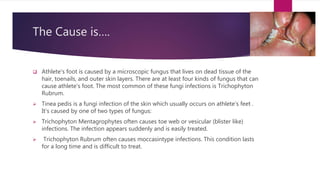
 Athlete's foot is caused by a microscopic fungus that lives on dead tissue of the
hair, toenails, and outer skin layers. There are at least four kinds of fungus that can
cause athlete's foot. The most common of these fungi infections is Trichophyton
Rubrum.
 Tinea pedis is a fungi infection of the skin which usually occurs on athlete’s feet .
It’s caused by one of two types of fungus:
 Trichophyton Mentagrophytes often causes toe web or vesicular (blister like)
infections. The infection appears suddenly and is easily treated.
 Trichophyton Rubrum often causes moccasintype infections. This condition lasts
for a long time and is difficult to treat.
Description
 Athlete's foot (tinea pedis) is a fungal infection that usually begins between the
toes. It commonly occurs in people whose feet have become very sweaty.
 Signs and symptoms of athlete's foot include a scaly rash that usually causes
itching, stinging and burning. Athlete's foot is contagious and can be spread via
contaminated floors, towels or clothing.
 Athlete's foot is closely related to other fungal infections such as ringworm and
jock itch. It can be treated with over-the-counter antifungal medications, but the
infection often re-occurs. Prescription medications also are available.
Symptoms
 There are many symptoms of athletes foot:
 Itching, stinging, and burning between the toes.
 Itching, stinging, and burning on the soles of the feet.
 Blisters on the feet that itch.
 Cracking and peeling skin on the feet, most commonly between the toes and on the soles.
 Dry skin on the soles or sides of the feet.
 Raw skin on the feet.
 Discolored, thick, and crumbly toenails.
 Toenails that pull away from the nail bed.
How To Prevent It:
 There are some things you can do to prevent having the disesase:
 Wash your feet with soap and water every day and dry them thoroughly, especially
between the toes.
 Put antifungal powder on your feet everyday.
 Don’t share socks, shoes, or towels with others.
 Wear sandals in public showers, around public swimming pools, and in other public places.
 Wear socks made out of breathable fibers, such as cotton or wool, or made out of synthetic
fibers that wick moisture away from your skin.
 Change your socks when your feet get sweaty.
 Air out your feet when you are at home by going barefoot.
 Wear shoes made of breathable material.
 Alternate between two pairs of shoes, wearing each pair every other day, to give your shoes
time to dry out between use.
Clinical Treatment
 How you treat athlete's foot (tinea pedis) depends on its type and severity. Most
cases of athlete's foot can be treated at home using an antifungal medicine to kill
the fungus or slow its growth.
 Prescription antifungals may be tried if nonprescription medicines are not
successful or if you have a severe infection. Some of these medicines are topical
antifungals, which are put directly on the skin.
 Even if your symptoms improve or stop shortly after you begin using antifungal
medicine, it is important that you complete the full course of medicine. This
increases the chance that athlete's foot will not return. Reinfection is common, and
athlete's foot needs to be fully treated each time symptoms develop.
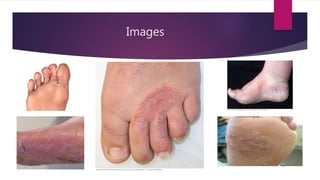
Images
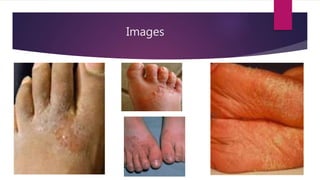
Images
Bibliography
 Cause
 http://www.webmd.com/skin-problems-and-treatments/guide/fungal-infections-skin#1
 Description
 http://www.mayoclinic.org/diseases-conditions/athletes-foot/home/ovc-20235864
 Symptoms & Preventions
 http://www.healthline.com/health/athletes-foot
 Clinical Treatment
 http://www.webmd.com/skin-problems-and-treatments/tc/athletes-foot-treatment-overview#1
 Images
 http://www.newhealthadvisor.com/Athletes-Foot-Medicine.html
 http://www.mayoclinic.org/diseases-conditions/athletes-foot/home/ovc-20235864
 http://diseasesdoctor.com/athletes-foot-pictures/

Science

  • 1.
    Research Assignment Diseases CausedBy Micro- organisms TYPE OF MICRO-ORGANISM: FUNGUS TOPIC: ATHLETES FOOT DONE BY: GHAZAL MAZEN 7W
  • 2.
    The Cause is…. Athlete's foot is caused by a microscopic fungus that lives on dead tissue of the hair, toenails, and outer skin layers. There are at least four kinds of fungus that can cause athlete's foot. The most common of these fungi infections is Trichophyton Rubrum.  Tinea pedis is a fungi infection of the skin which usually occurs on athlete’s feet . It’s caused by one of two types of fungus:  Trichophyton Mentagrophytes often causes toe web or vesicular (blister like) infections. The infection appears suddenly and is easily treated.  Trichophyton Rubrum often causes moccasintype infections. This condition lasts for a long time and is difficult to treat.
  • 3.
    Description  Athlete's foot(tinea pedis) is a fungal infection that usually begins between the toes. It commonly occurs in people whose feet have become very sweaty.  Signs and symptoms of athlete's foot include a scaly rash that usually causes itching, stinging and burning. Athlete's foot is contagious and can be spread via contaminated floors, towels or clothing.  Athlete's foot is closely related to other fungal infections such as ringworm and jock itch. It can be treated with over-the-counter antifungal medications, but the infection often re-occurs. Prescription medications also are available.
  • 4.
    Symptoms  There aremany symptoms of athletes foot:  Itching, stinging, and burning between the toes.  Itching, stinging, and burning on the soles of the feet.  Blisters on the feet that itch.  Cracking and peeling skin on the feet, most commonly between the toes and on the soles.  Dry skin on the soles or sides of the feet.  Raw skin on the feet.  Discolored, thick, and crumbly toenails.  Toenails that pull away from the nail bed.
  • 5.
    How To PreventIt:  There are some things you can do to prevent having the disesase:  Wash your feet with soap and water every day and dry them thoroughly, especially between the toes.  Put antifungal powder on your feet everyday.  Don’t share socks, shoes, or towels with others.  Wear sandals in public showers, around public swimming pools, and in other public places.  Wear socks made out of breathable fibers, such as cotton or wool, or made out of synthetic fibers that wick moisture away from your skin.  Change your socks when your feet get sweaty.  Air out your feet when you are at home by going barefoot.  Wear shoes made of breathable material.  Alternate between two pairs of shoes, wearing each pair every other day, to give your shoes time to dry out between use.
  • 6.
    Clinical Treatment  Howyou treat athlete's foot (tinea pedis) depends on its type and severity. Most cases of athlete's foot can be treated at home using an antifungal medicine to kill the fungus or slow its growth.  Prescription antifungals may be tried if nonprescription medicines are not successful or if you have a severe infection. Some of these medicines are topical antifungals, which are put directly on the skin.  Even if your symptoms improve or stop shortly after you begin using antifungal medicine, it is important that you complete the full course of medicine. This increases the chance that athlete's foot will not return. Reinfection is common, and athlete's foot needs to be fully treated each time symptoms develop.
  • 7.
  • 8.
  • 9.
    Bibliography  Cause  http://www.webmd.com/skin-problems-and-treatments/guide/fungal-infections-skin#1 Description  http://www.mayoclinic.org/diseases-conditions/athletes-foot/home/ovc-20235864  Symptoms & Preventions  http://www.healthline.com/health/athletes-foot  Clinical Treatment  http://www.webmd.com/skin-problems-and-treatments/tc/athletes-foot-treatment-overview#1  Images  http://www.newhealthadvisor.com/Athletes-Foot-Medicine.html  http://www.mayoclinic.org/diseases-conditions/athletes-foot/home/ovc-20235864  http://diseasesdoctor.com/athletes-foot-pictures/