
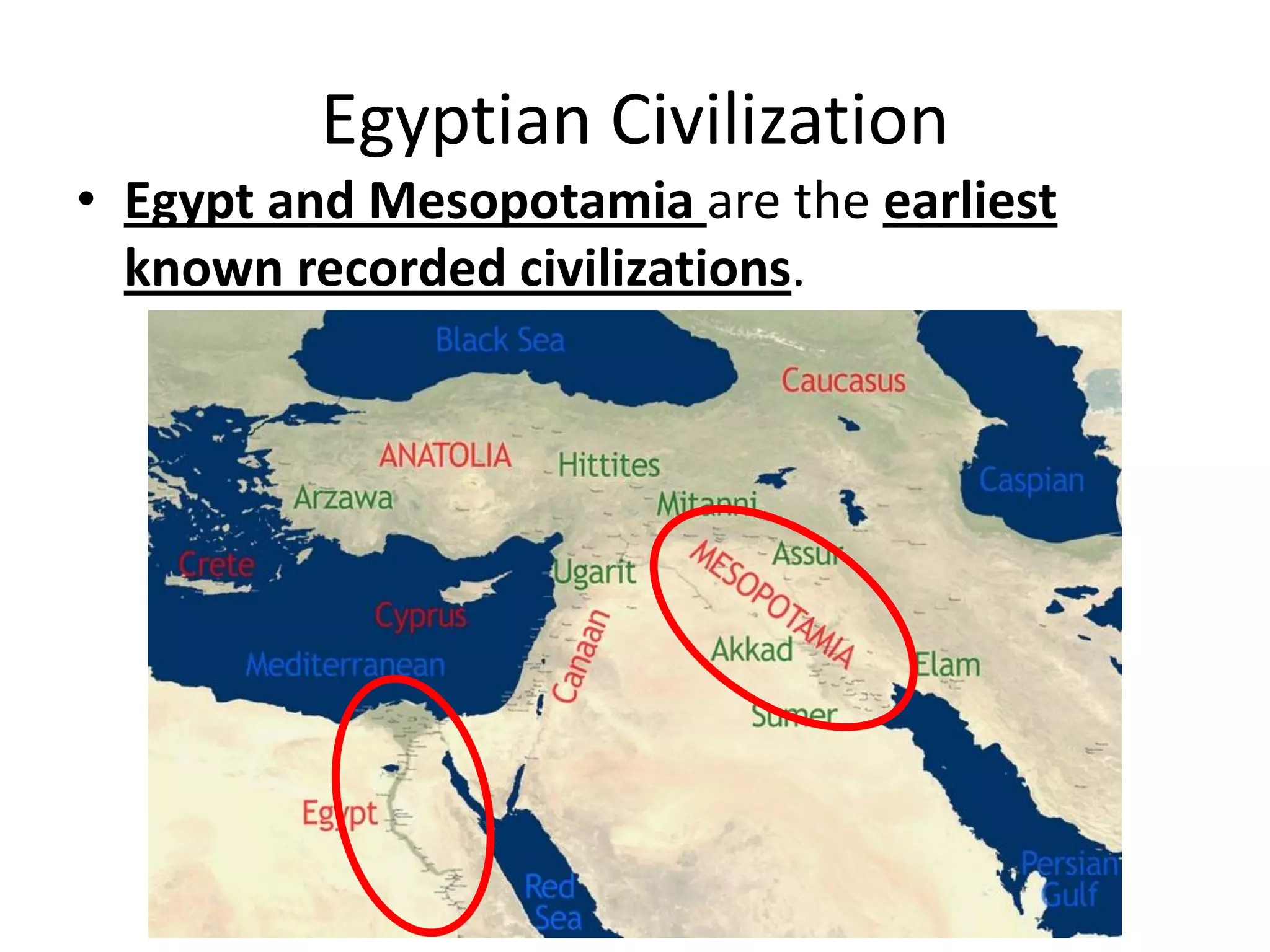

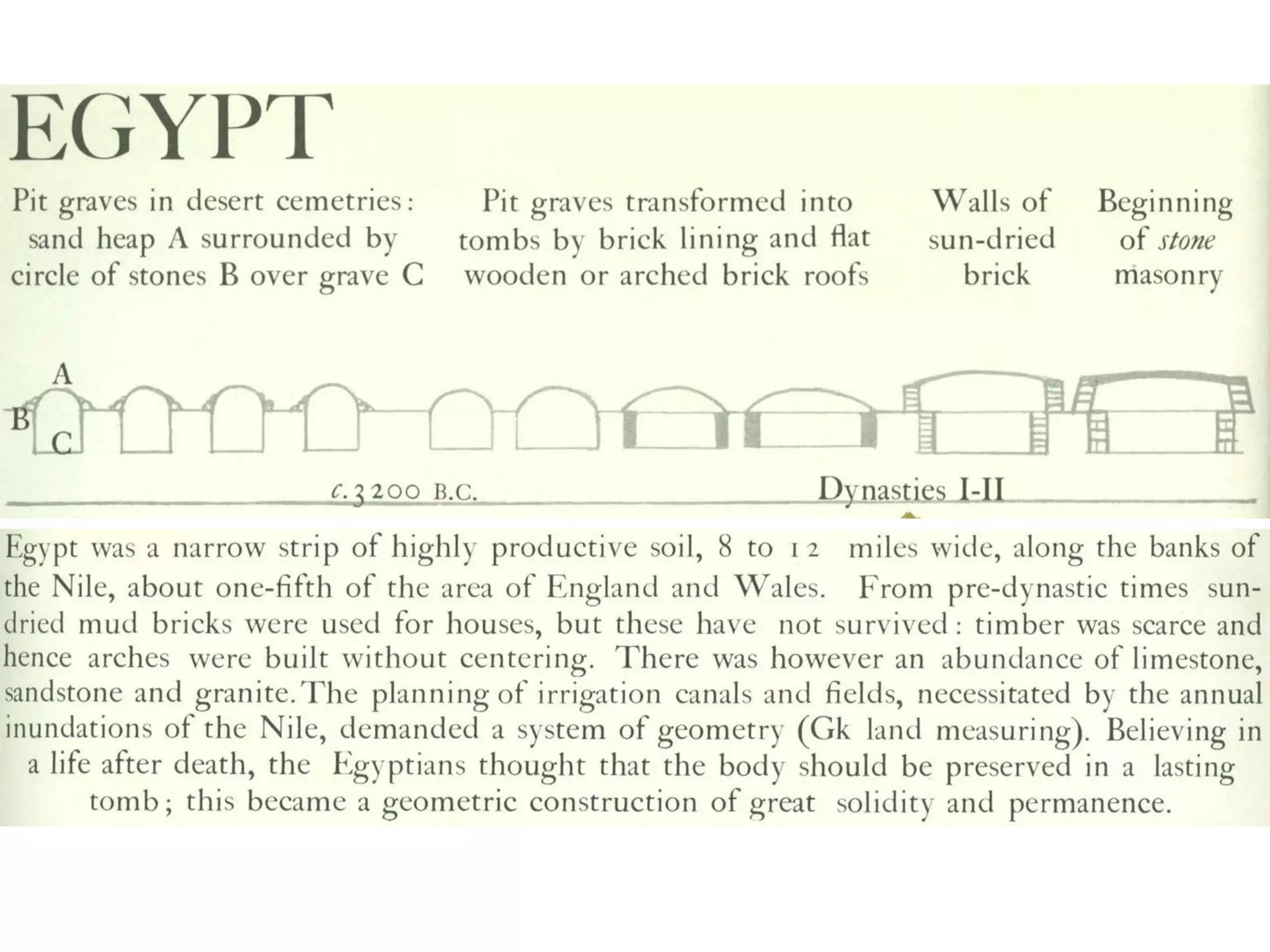

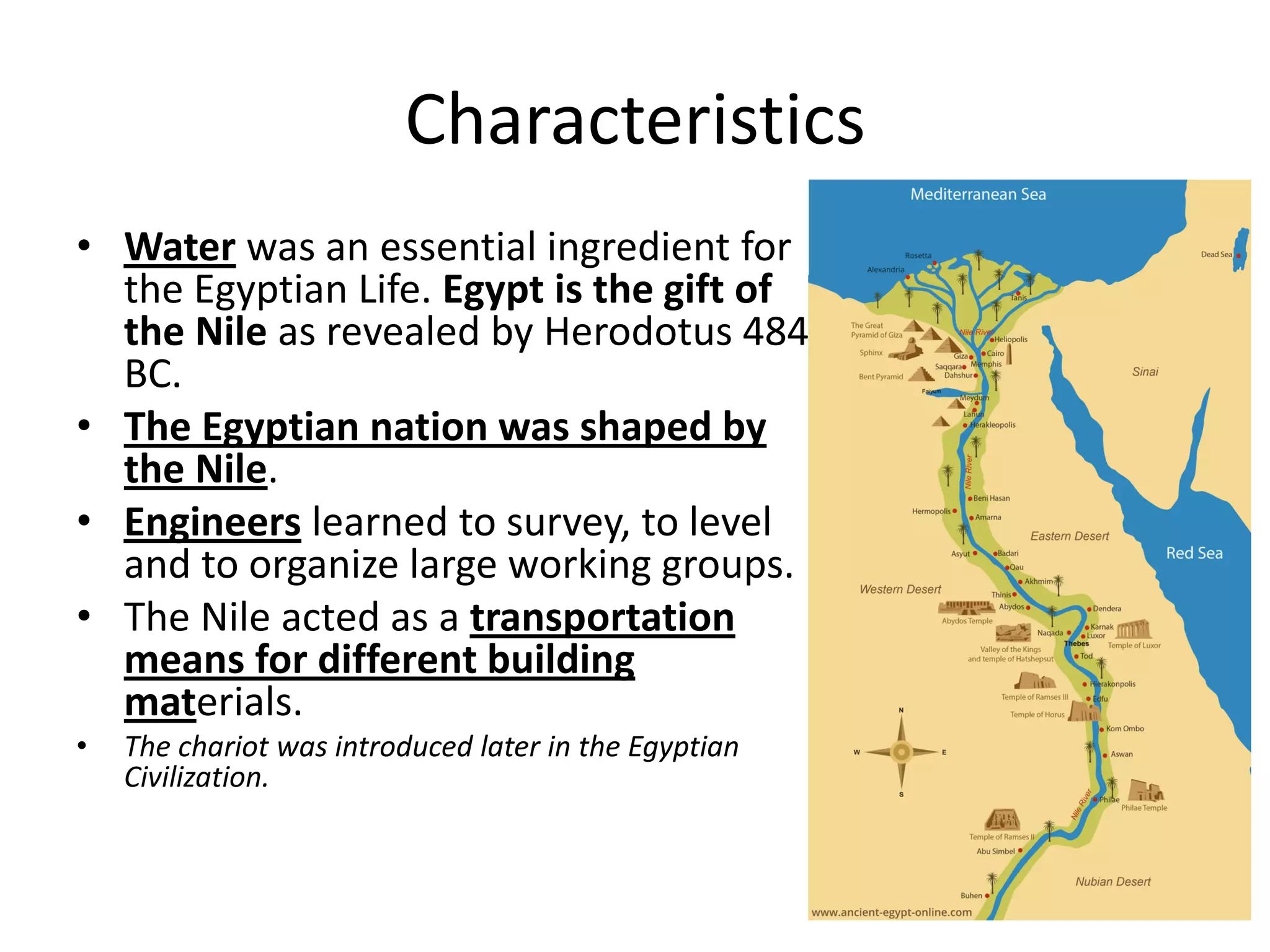
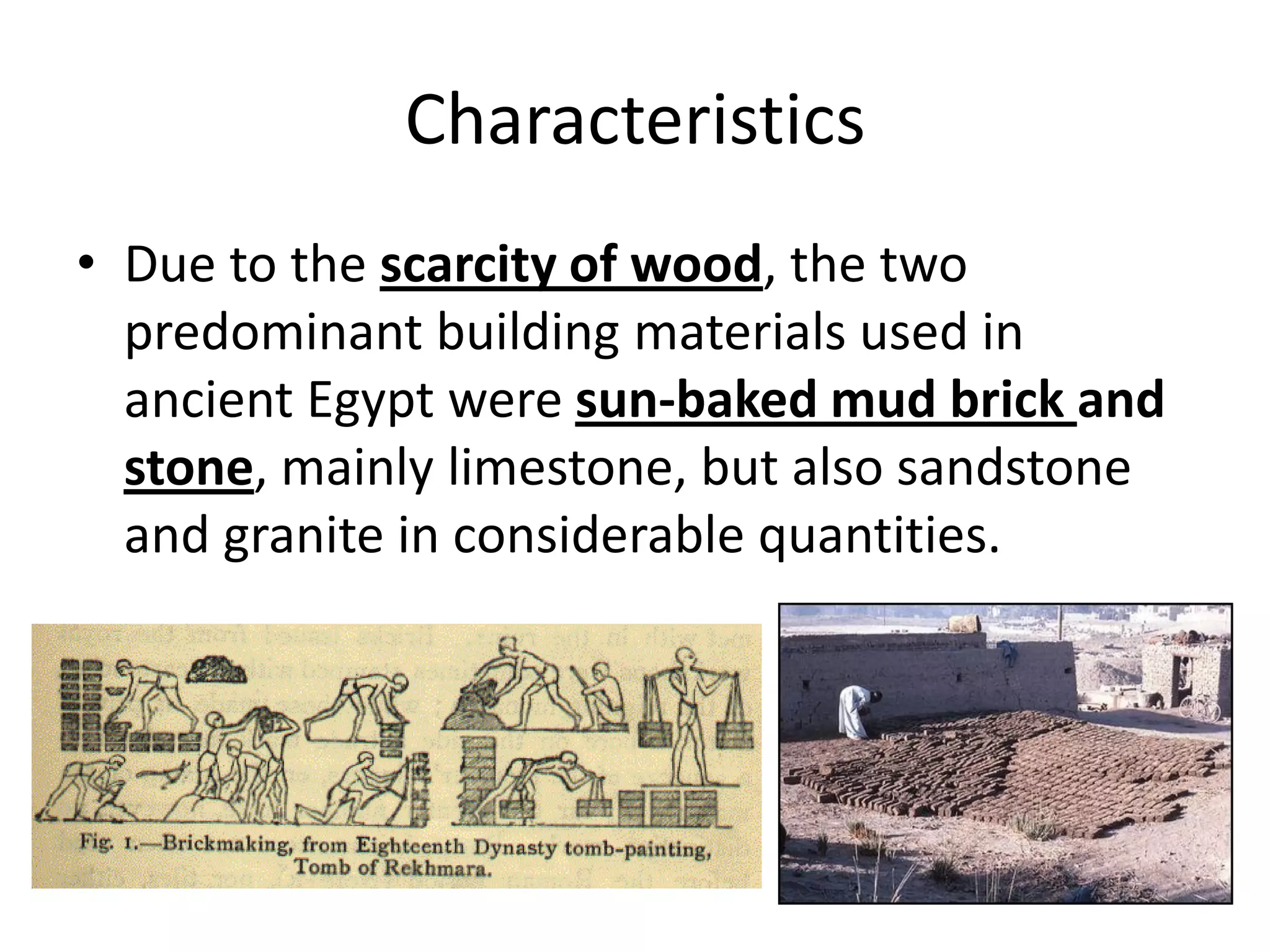
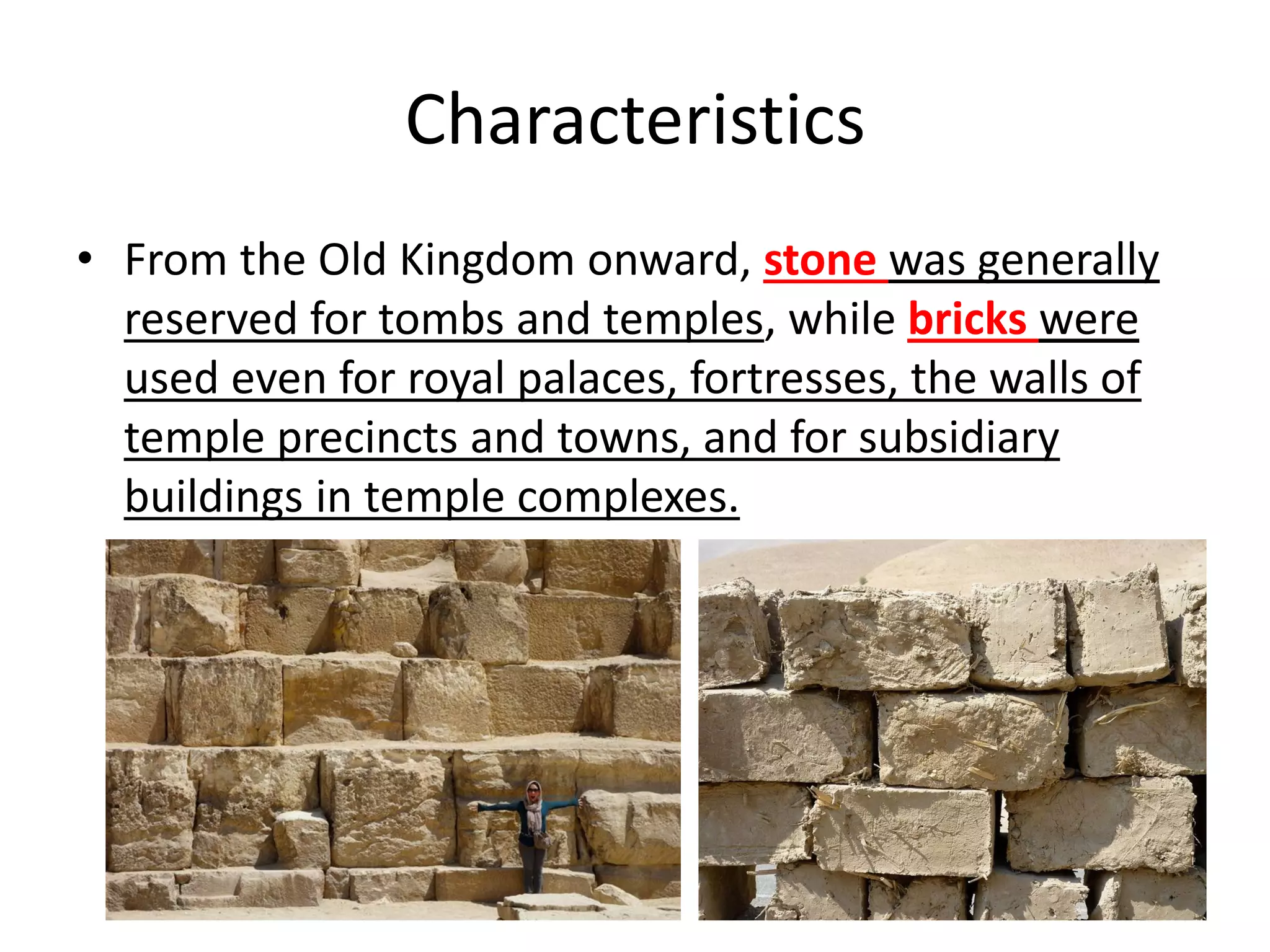
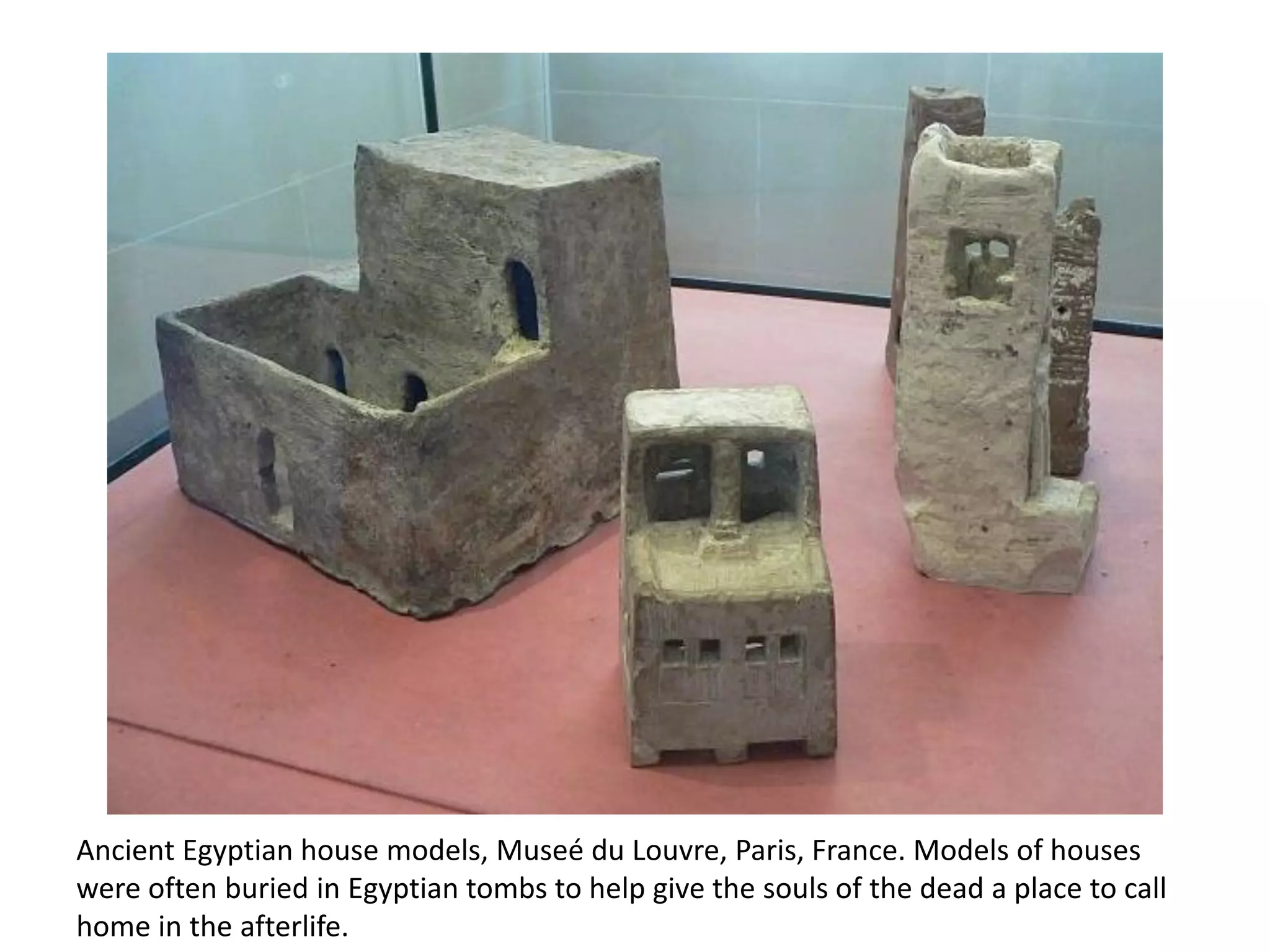
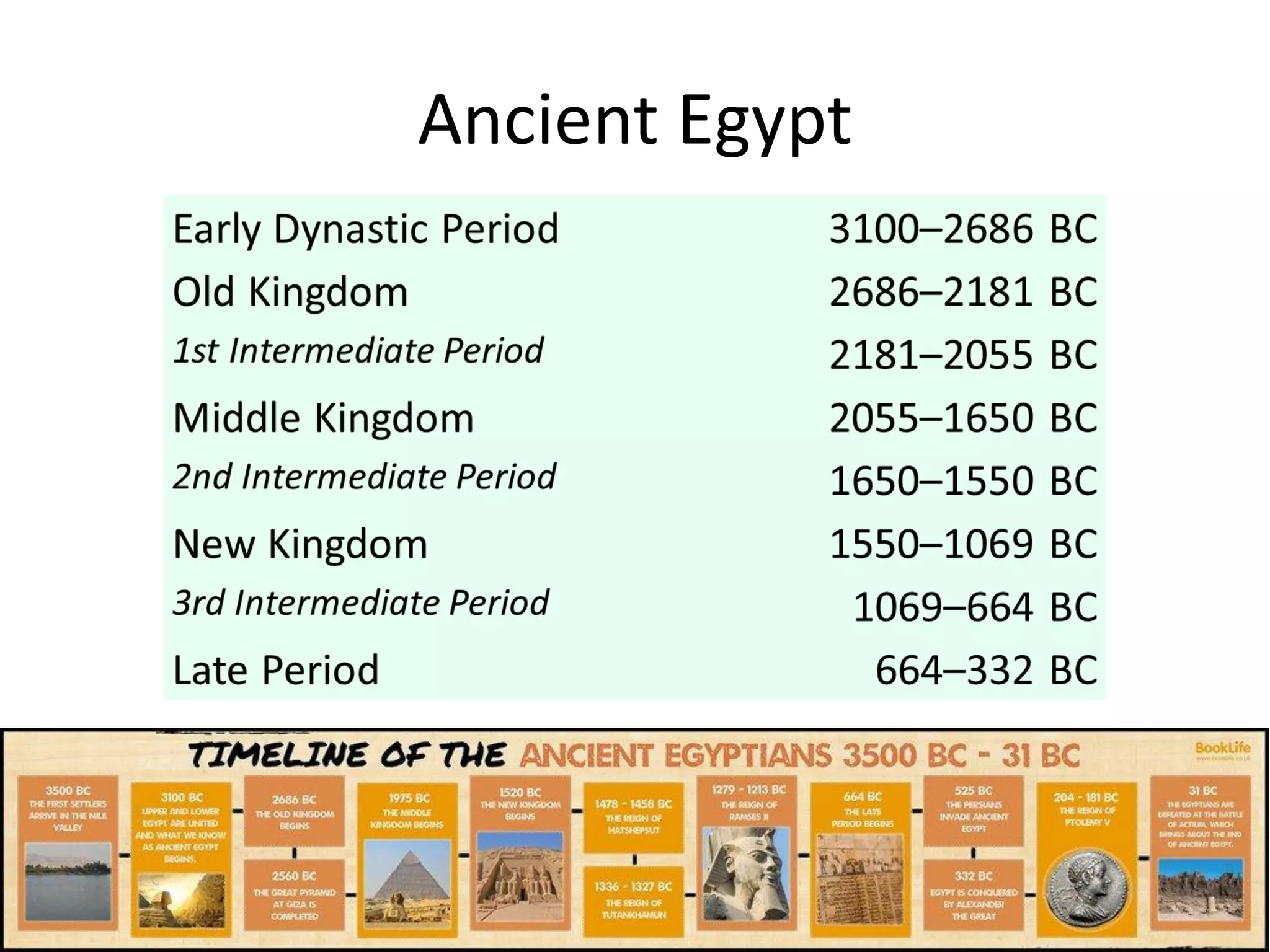

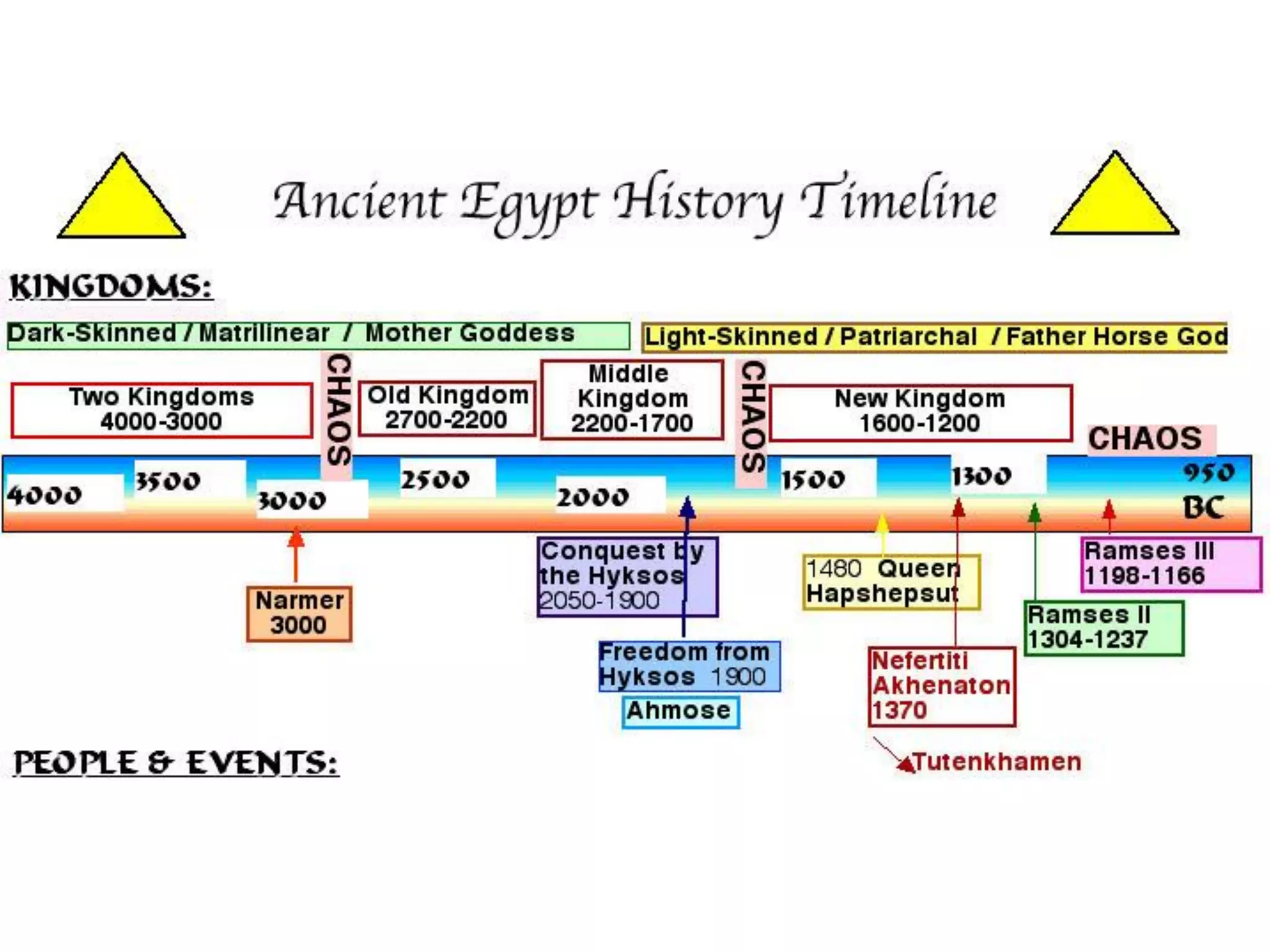
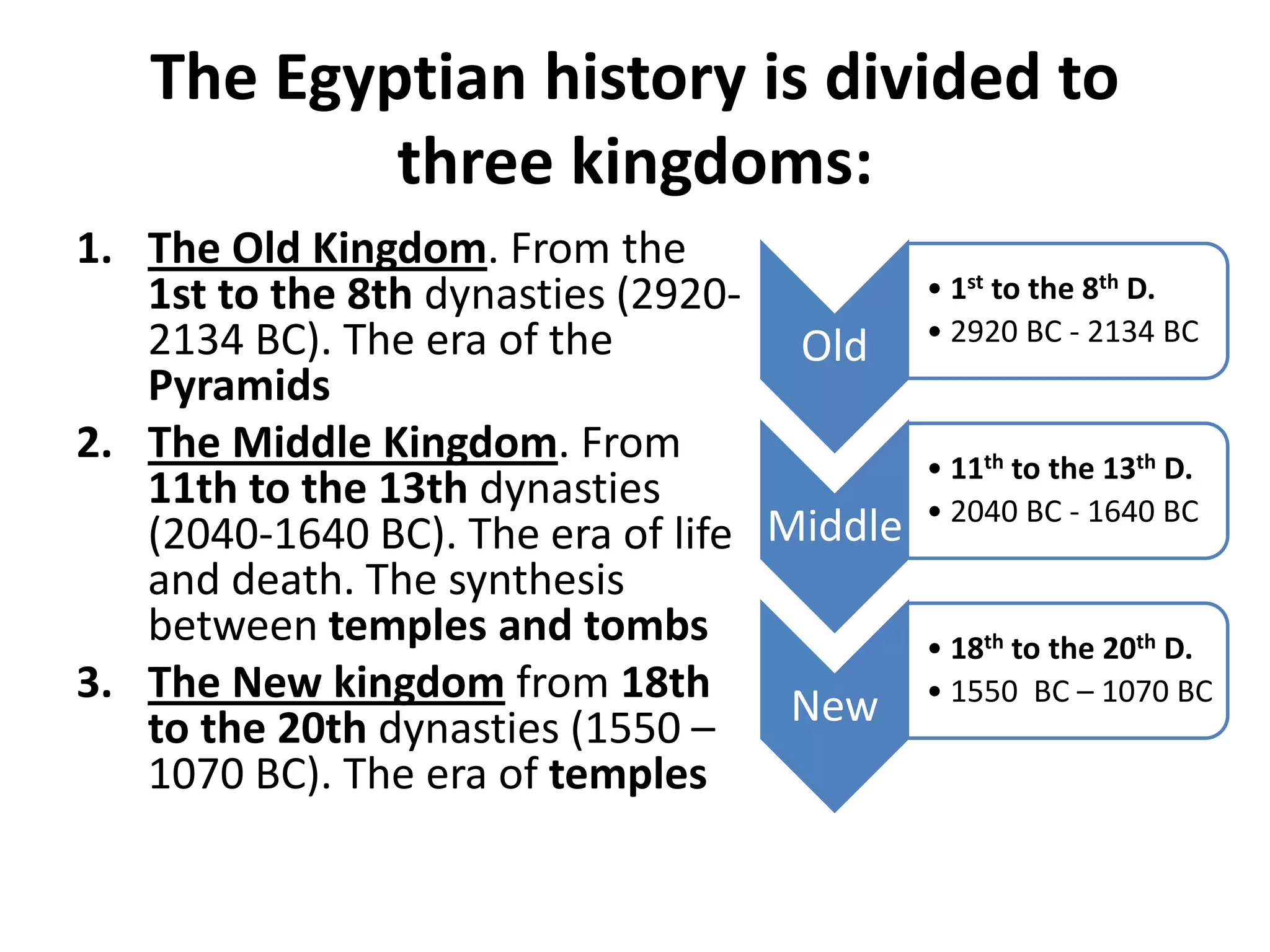


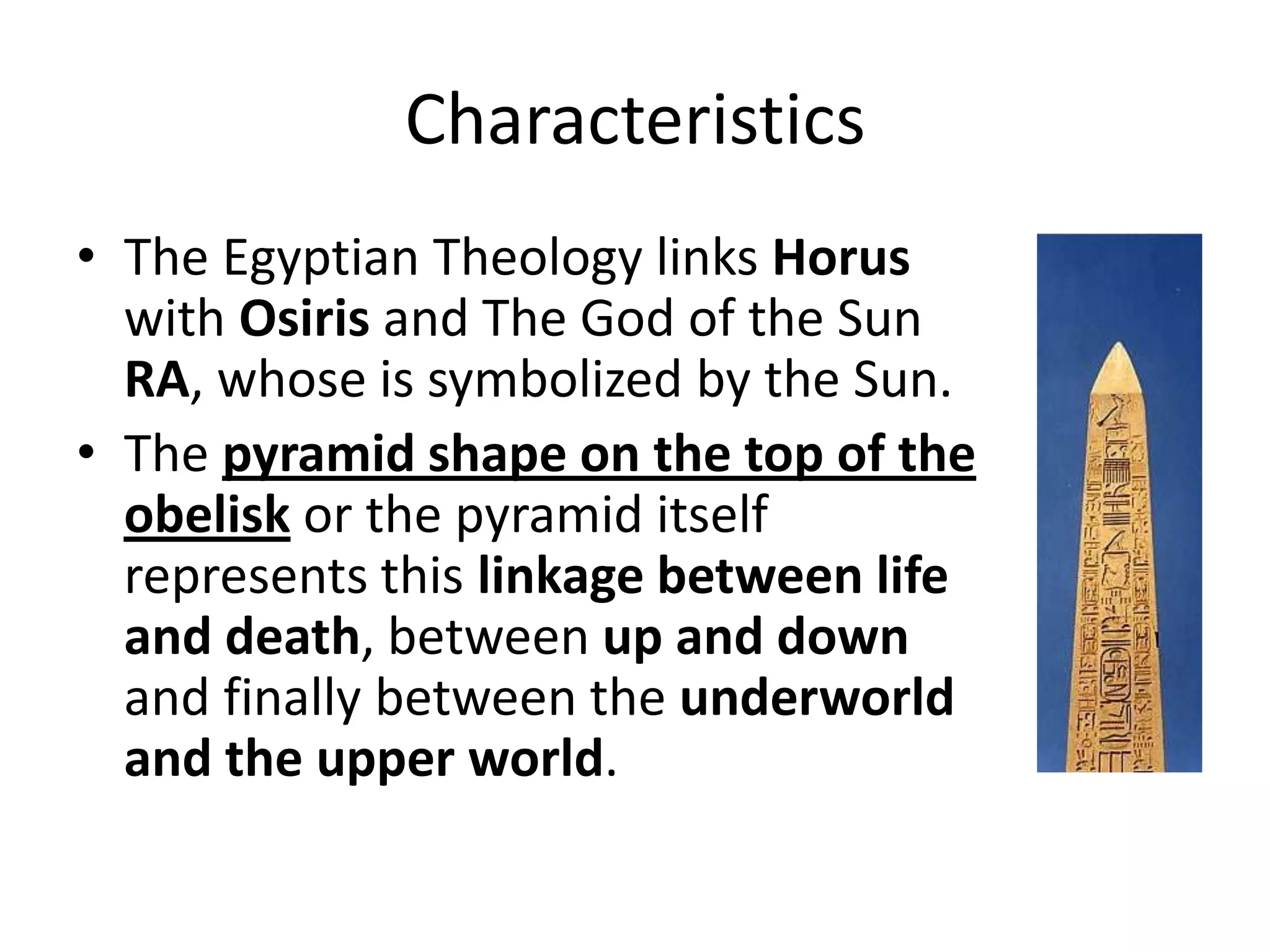
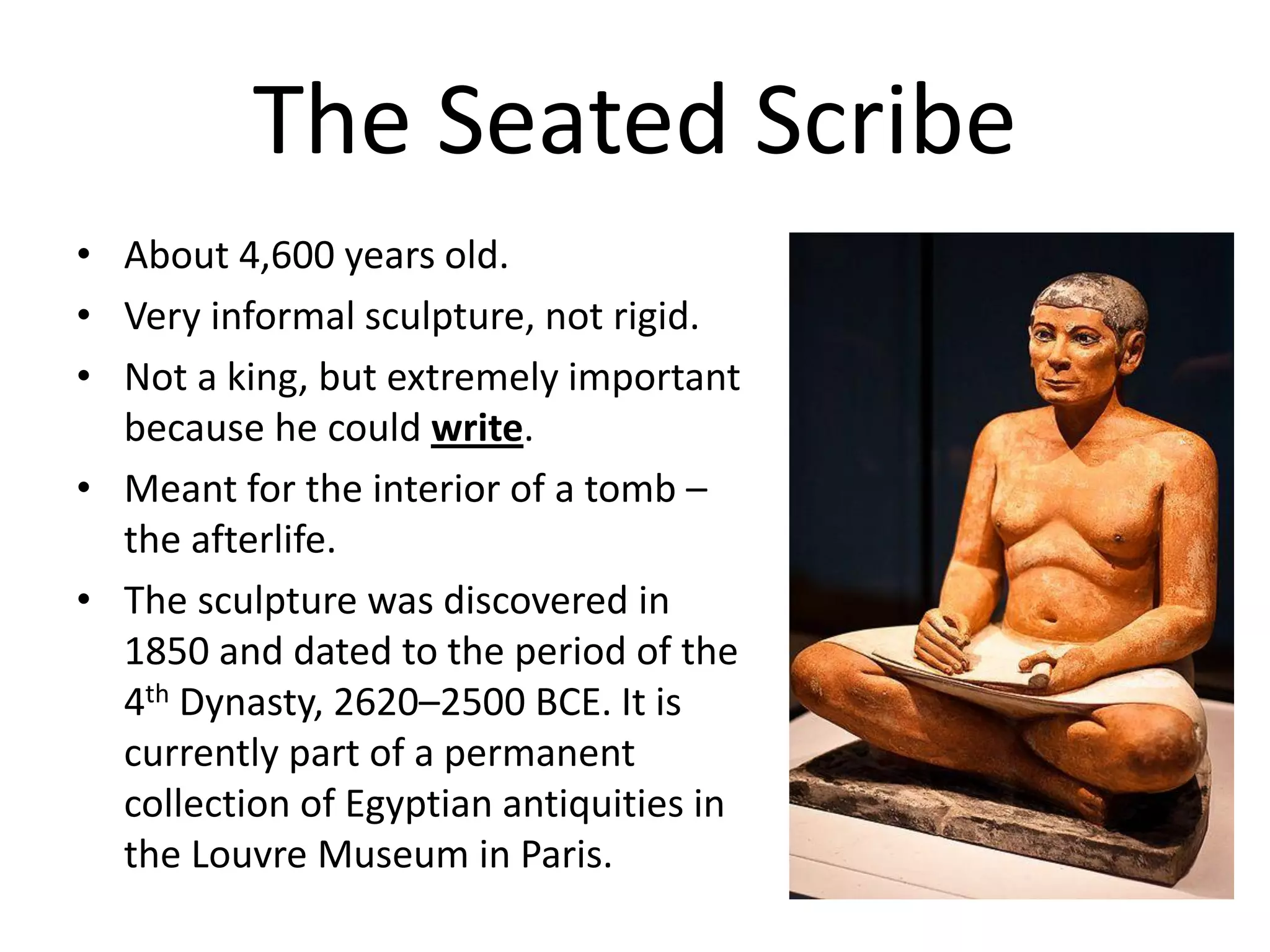
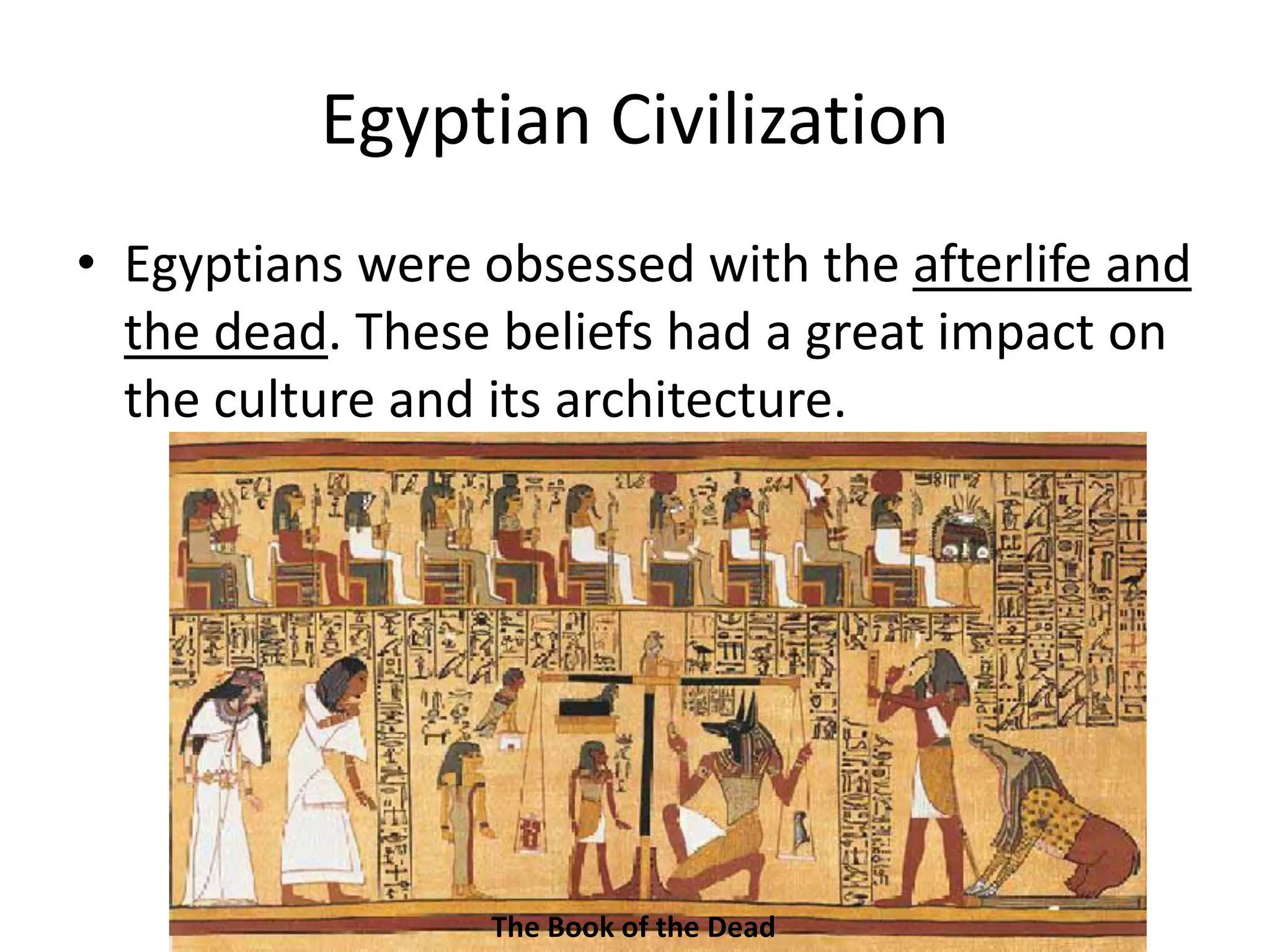


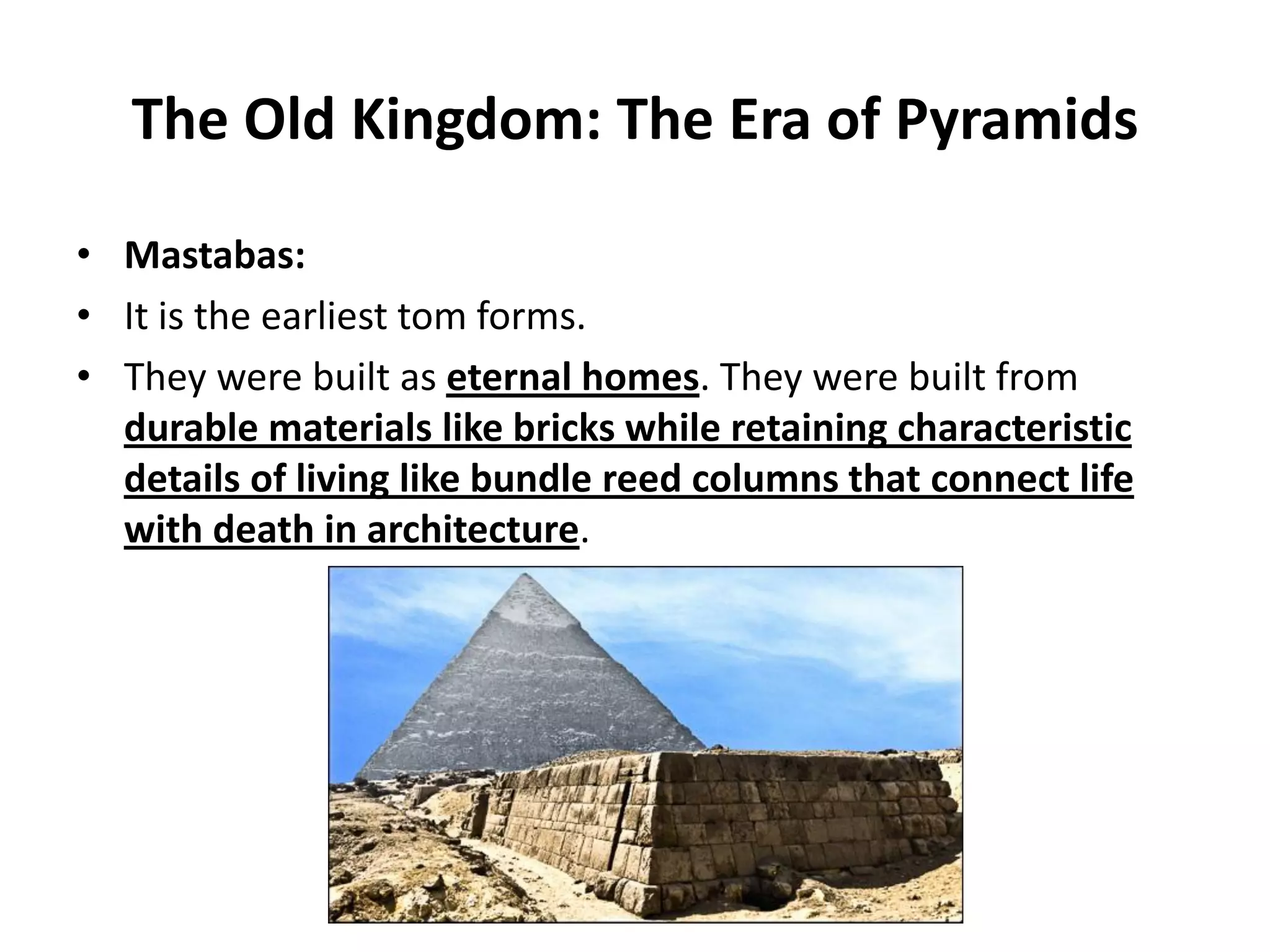
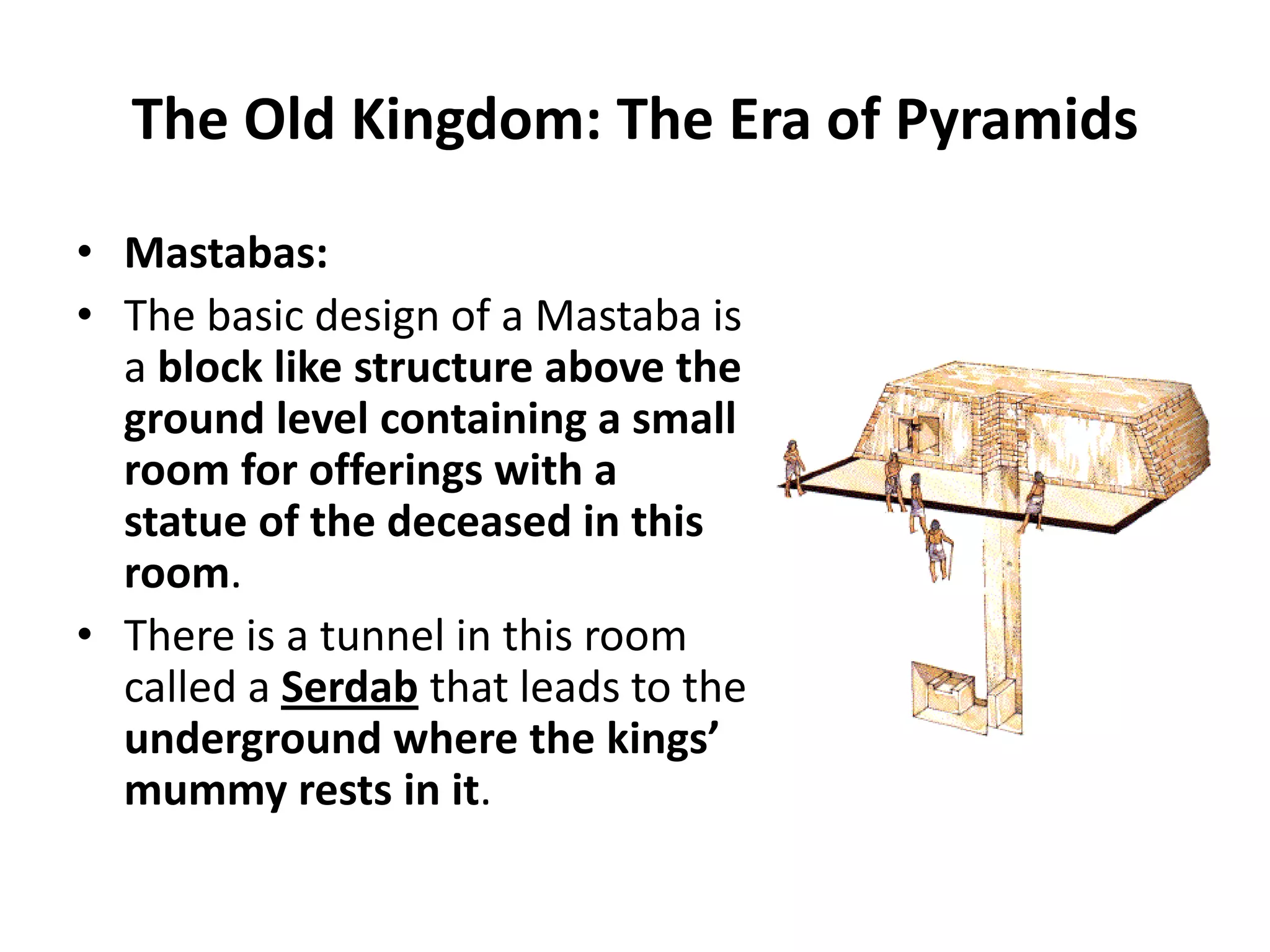
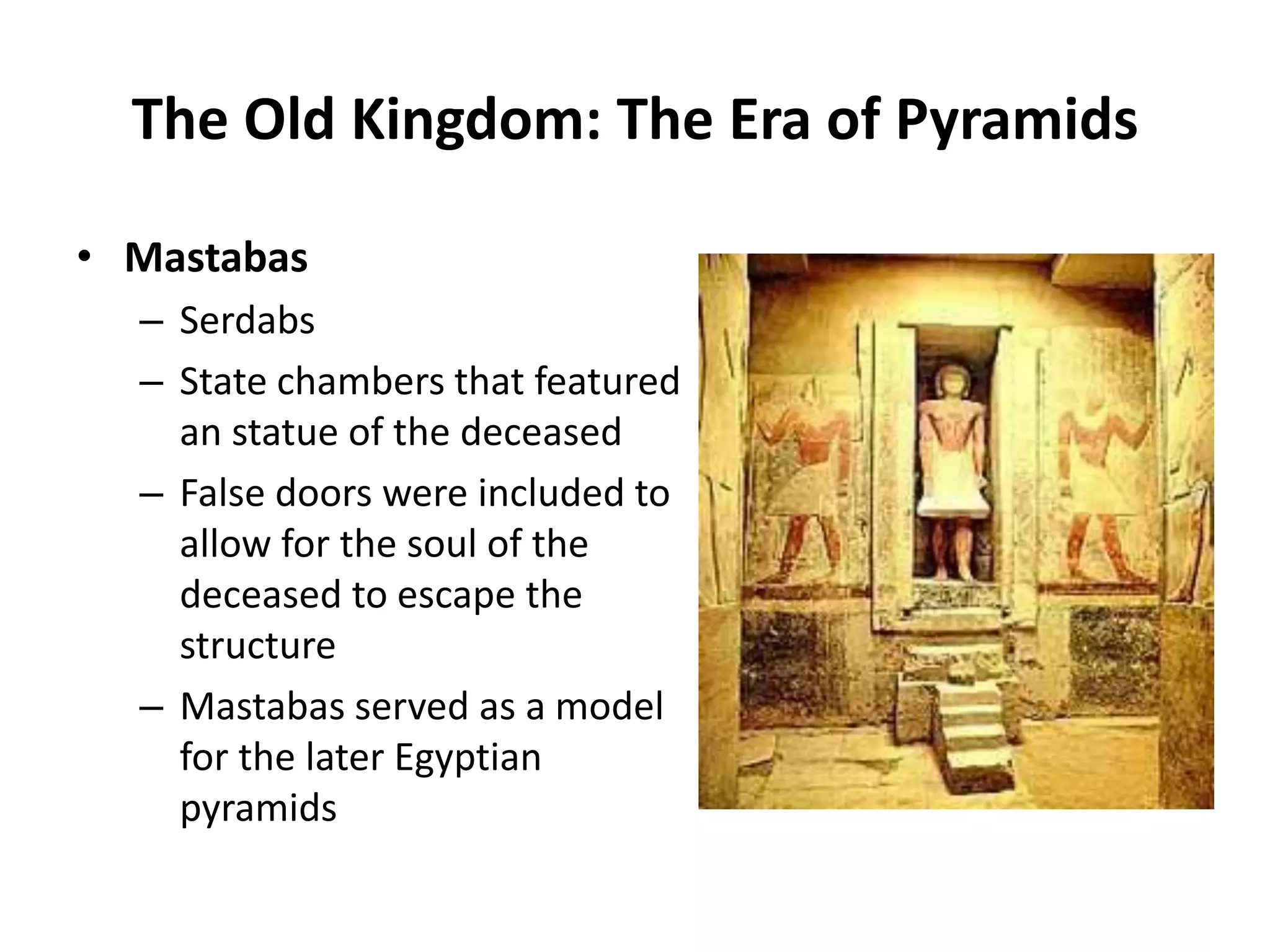
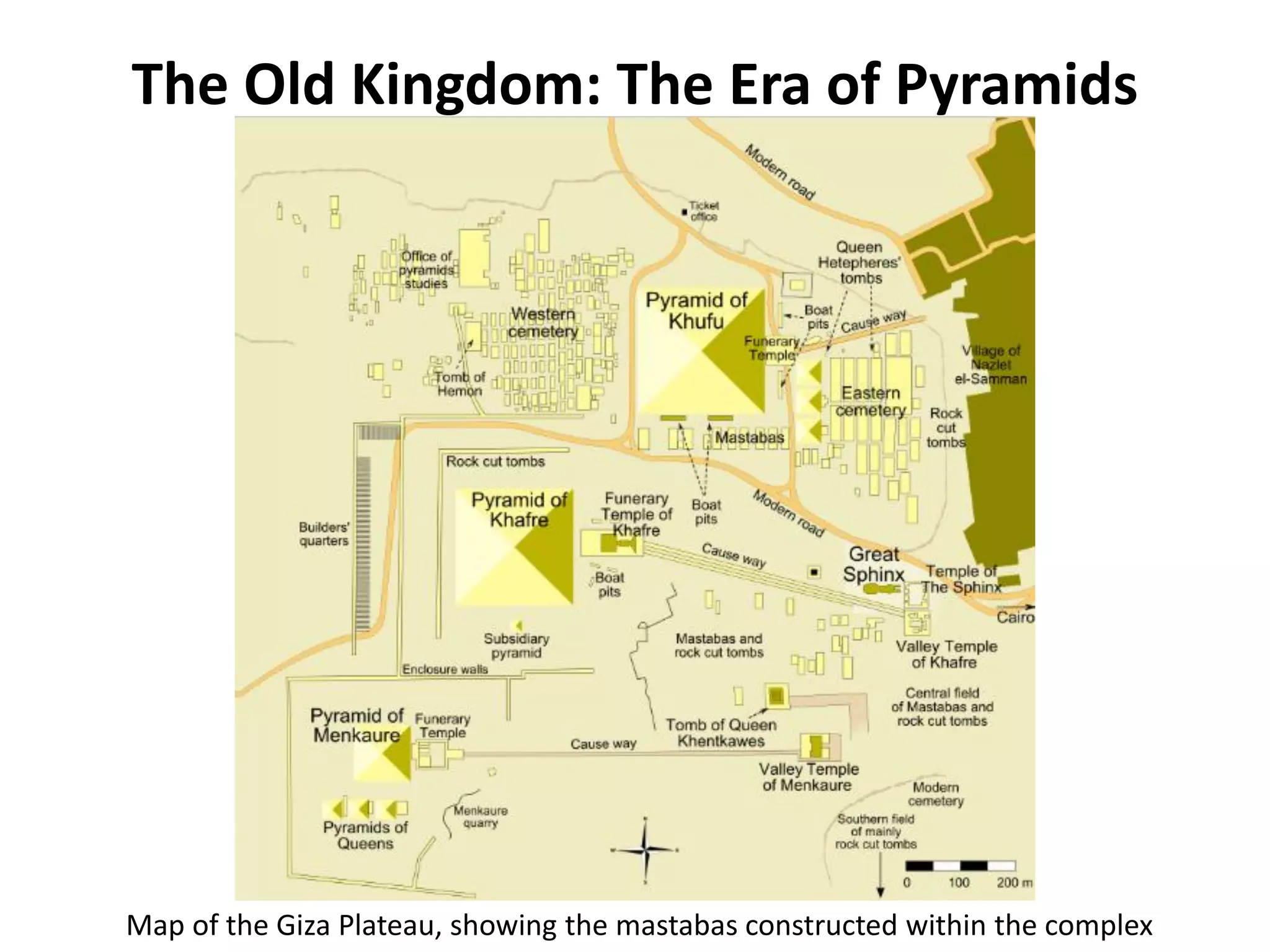
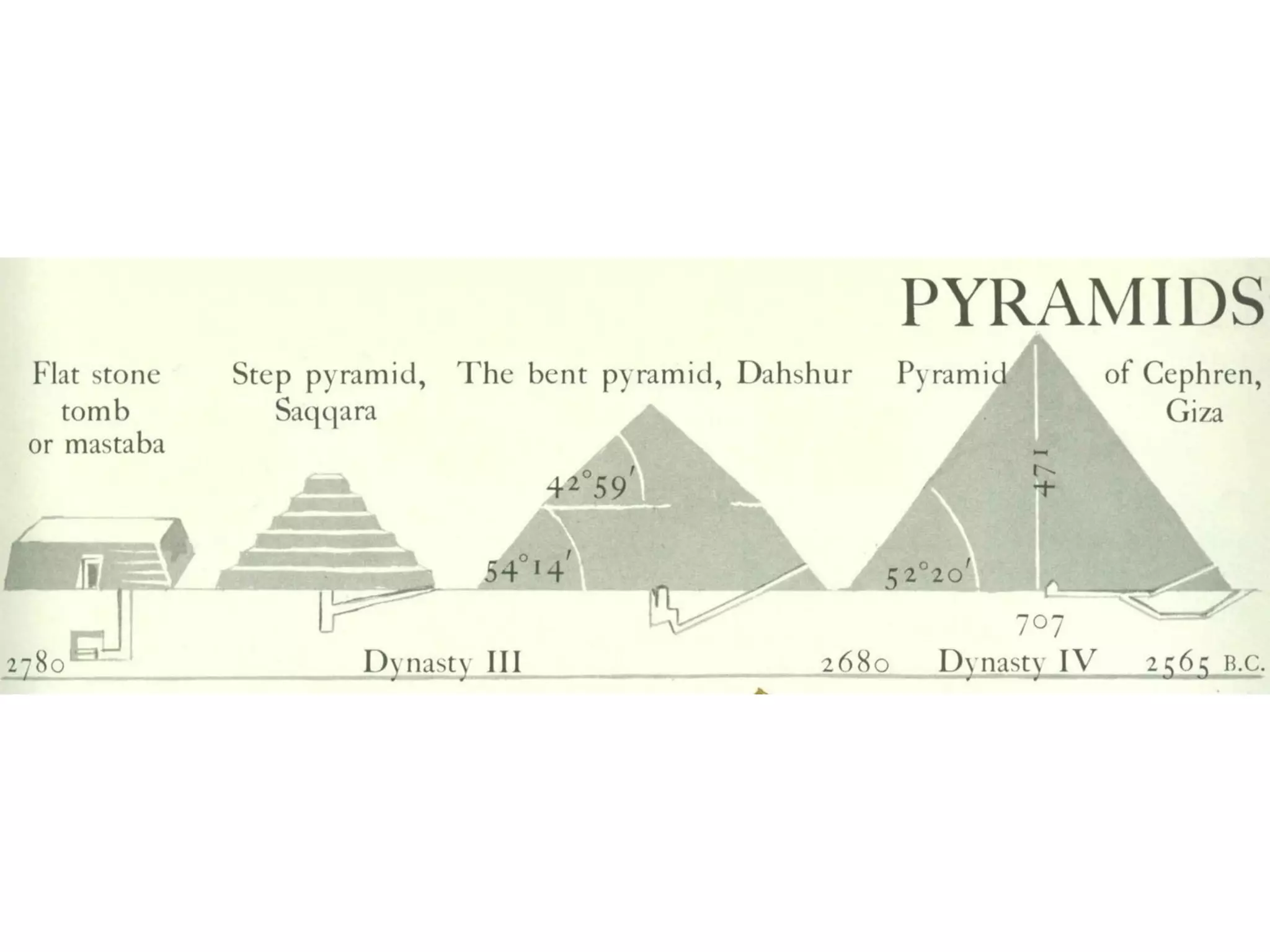
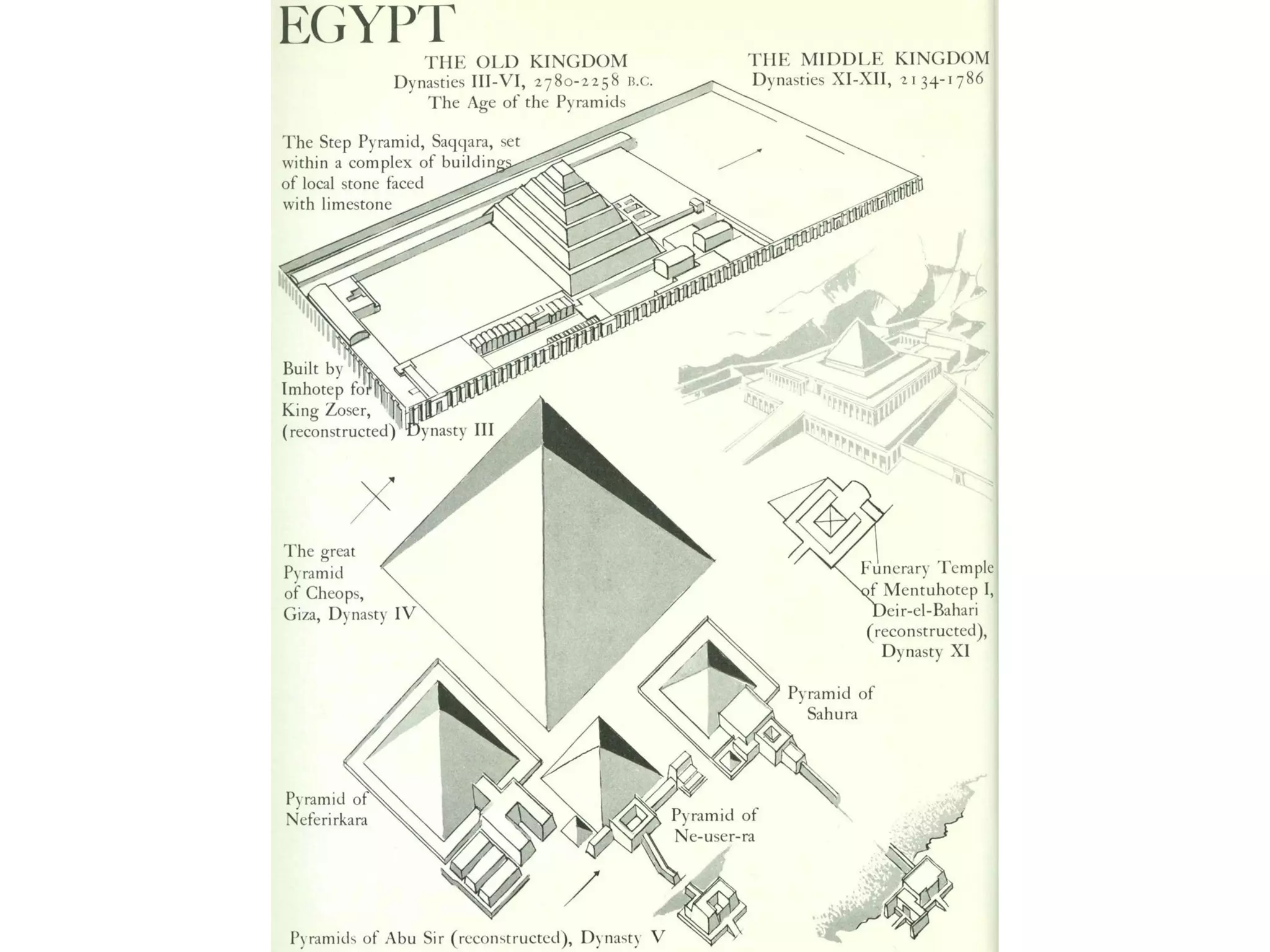
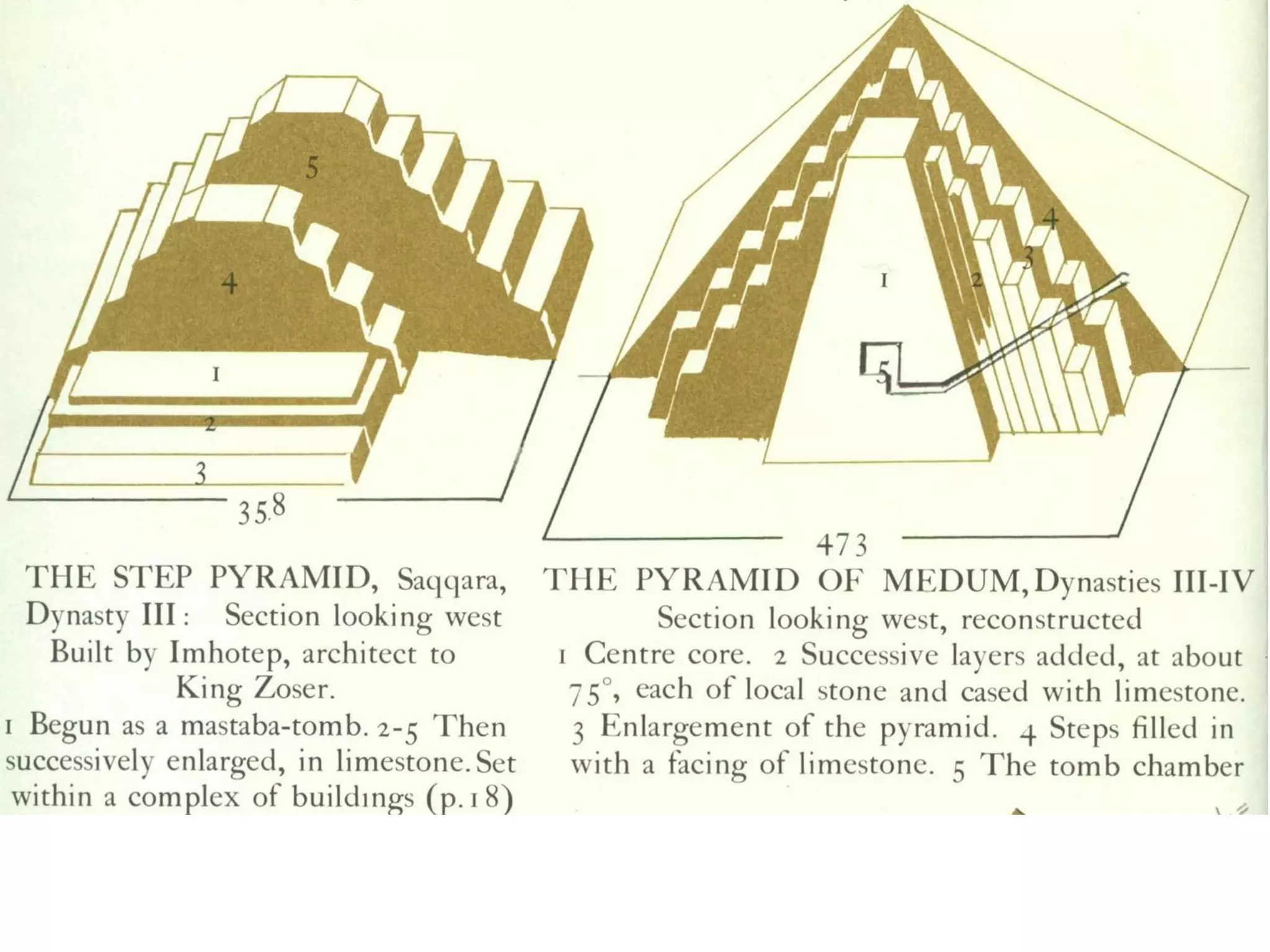
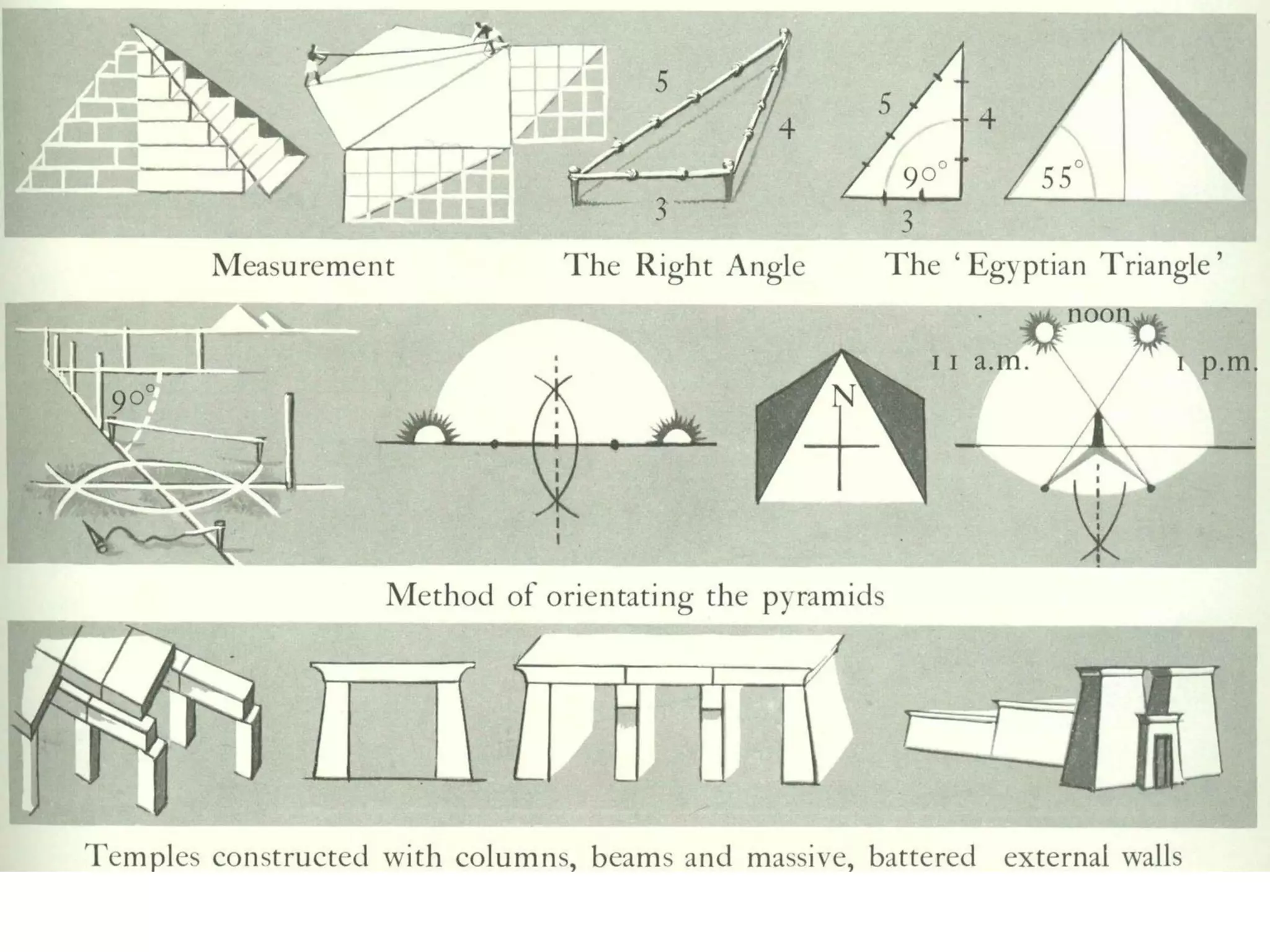
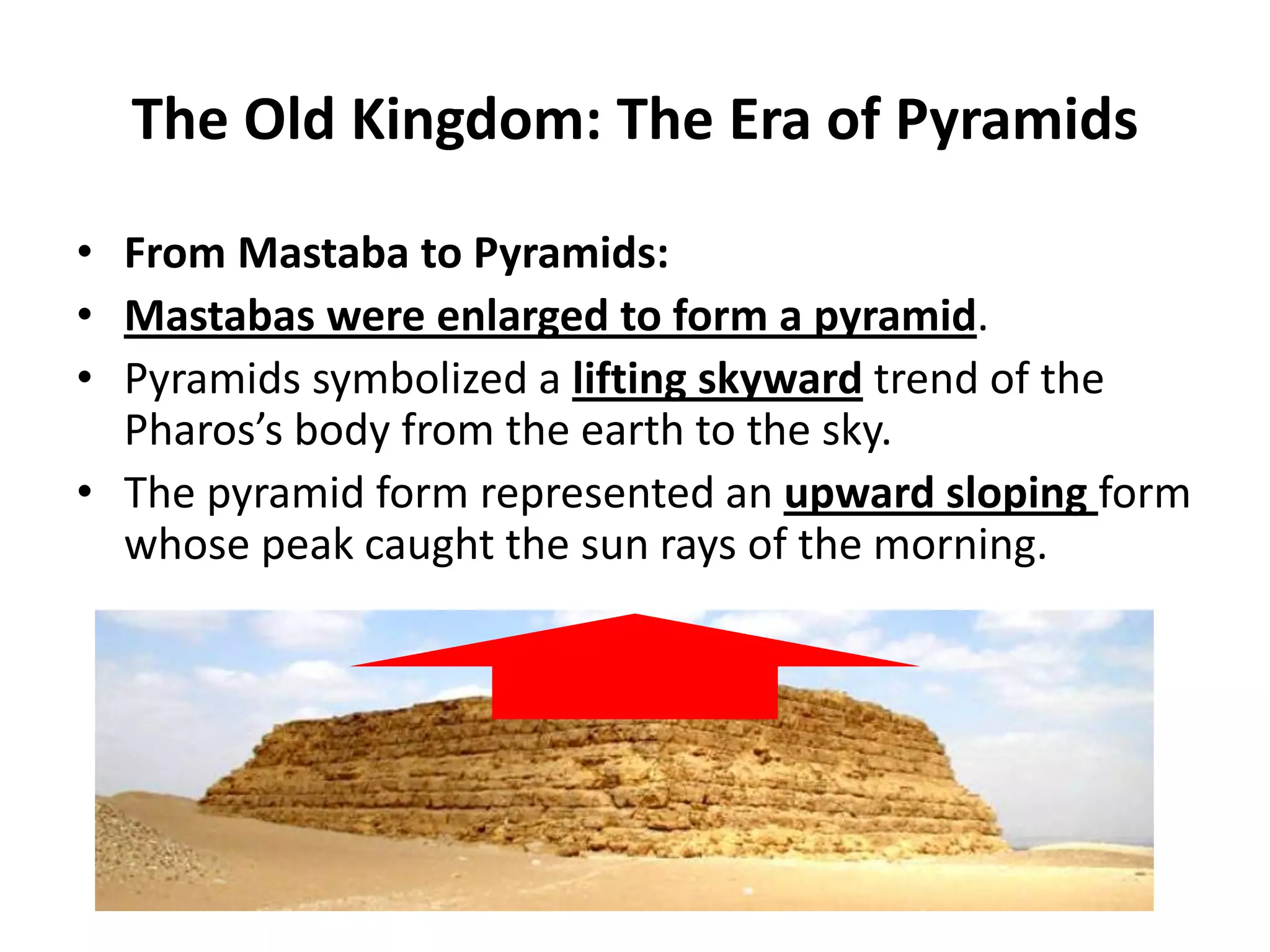
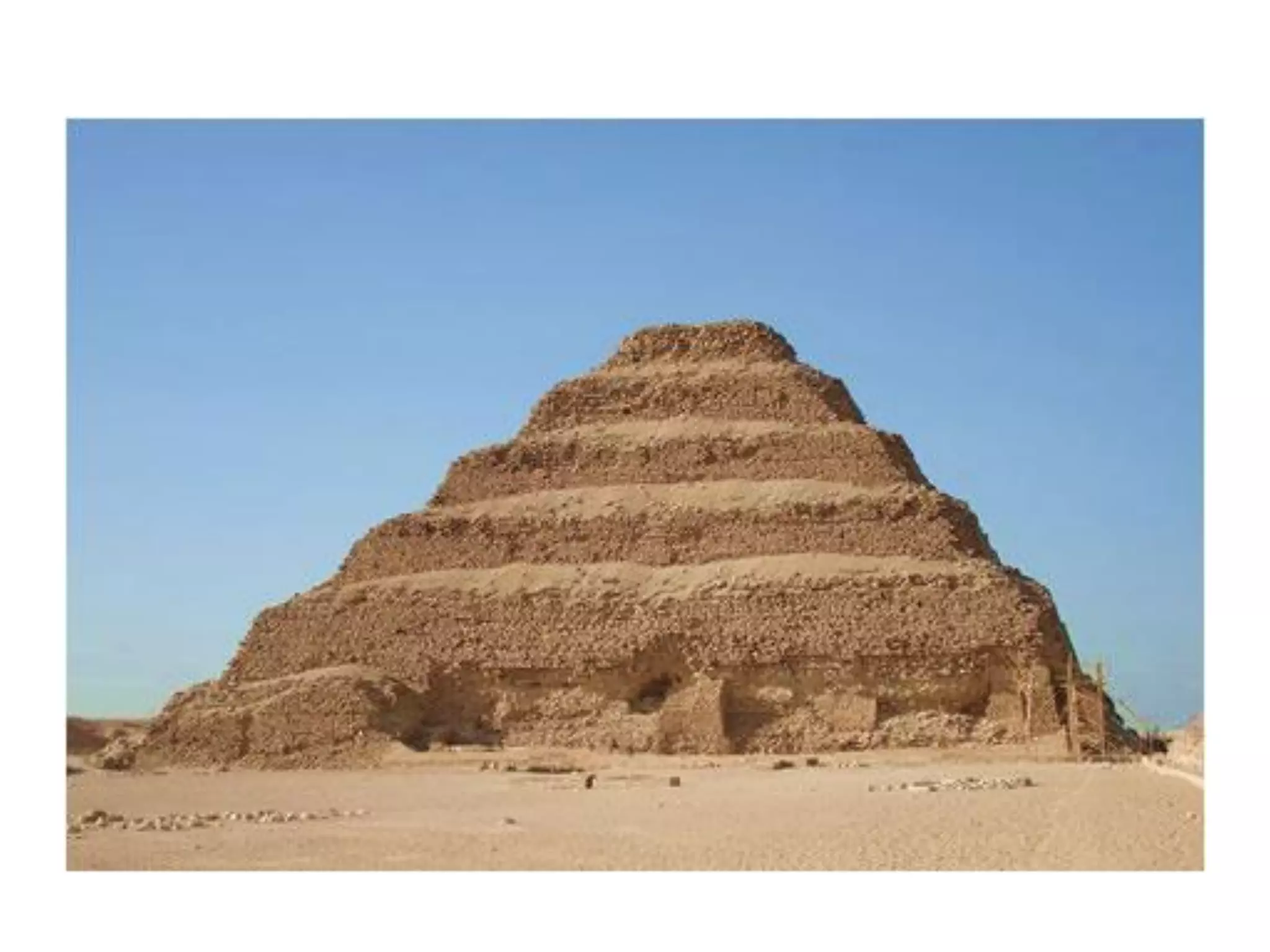


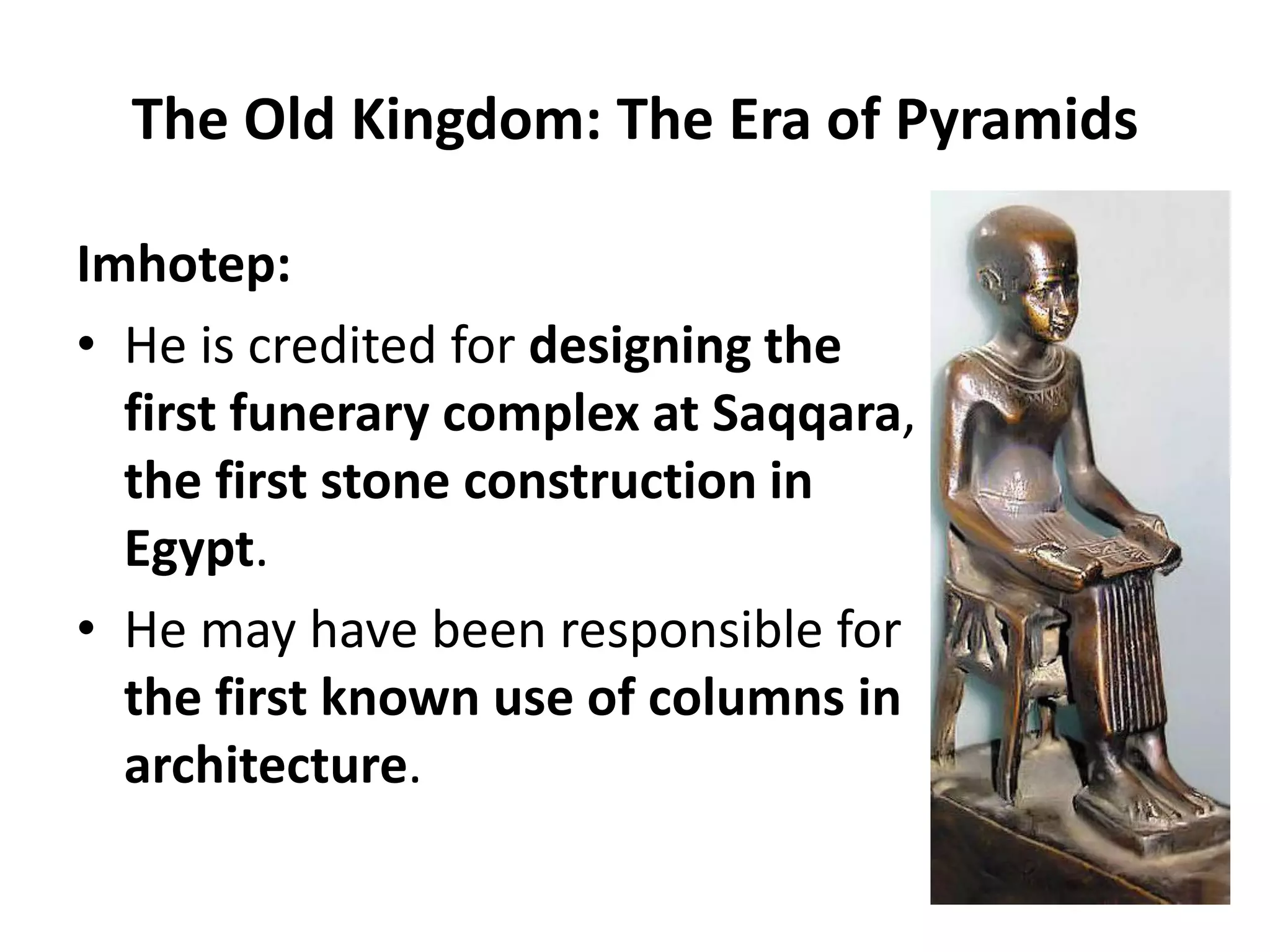
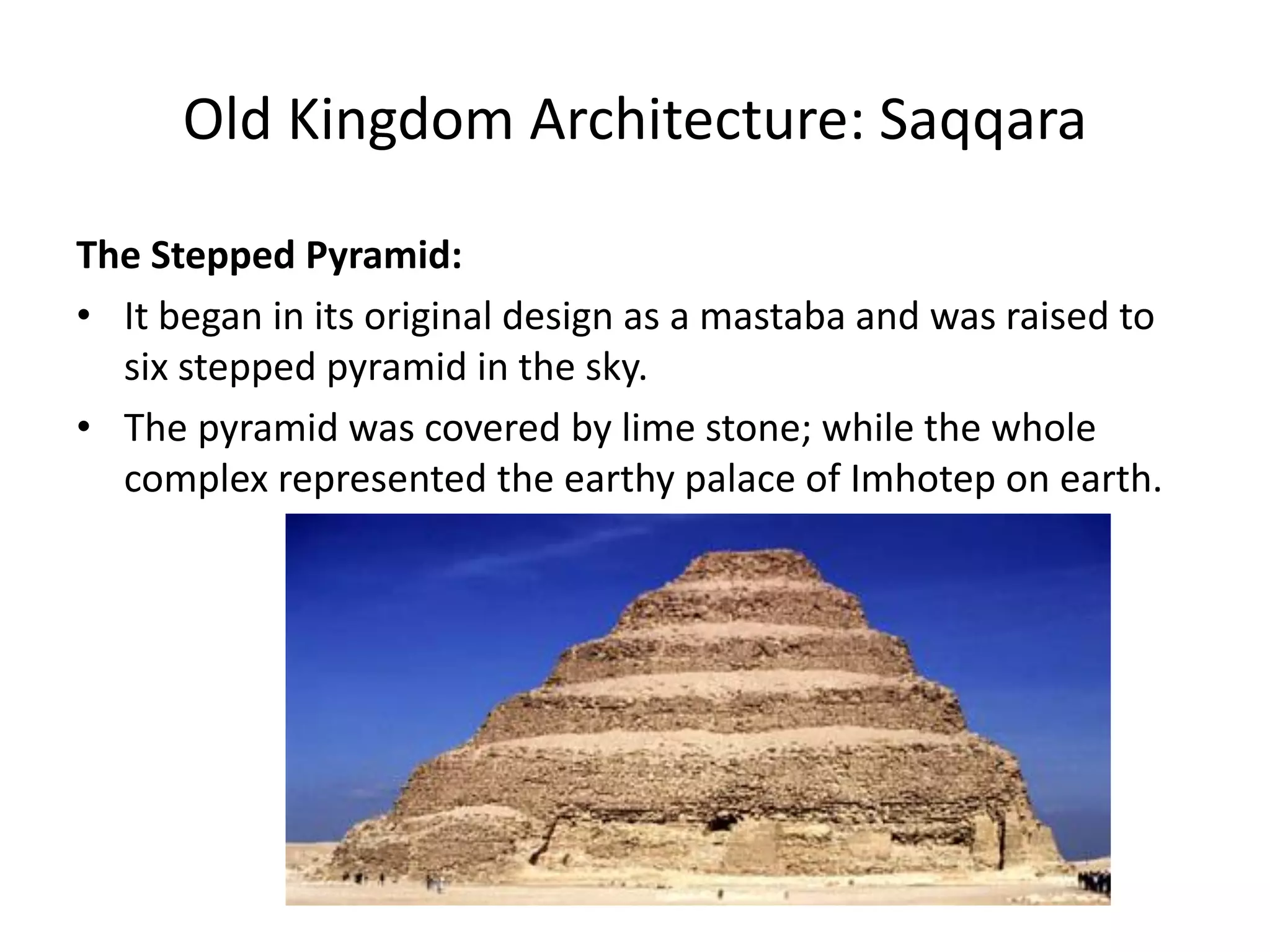
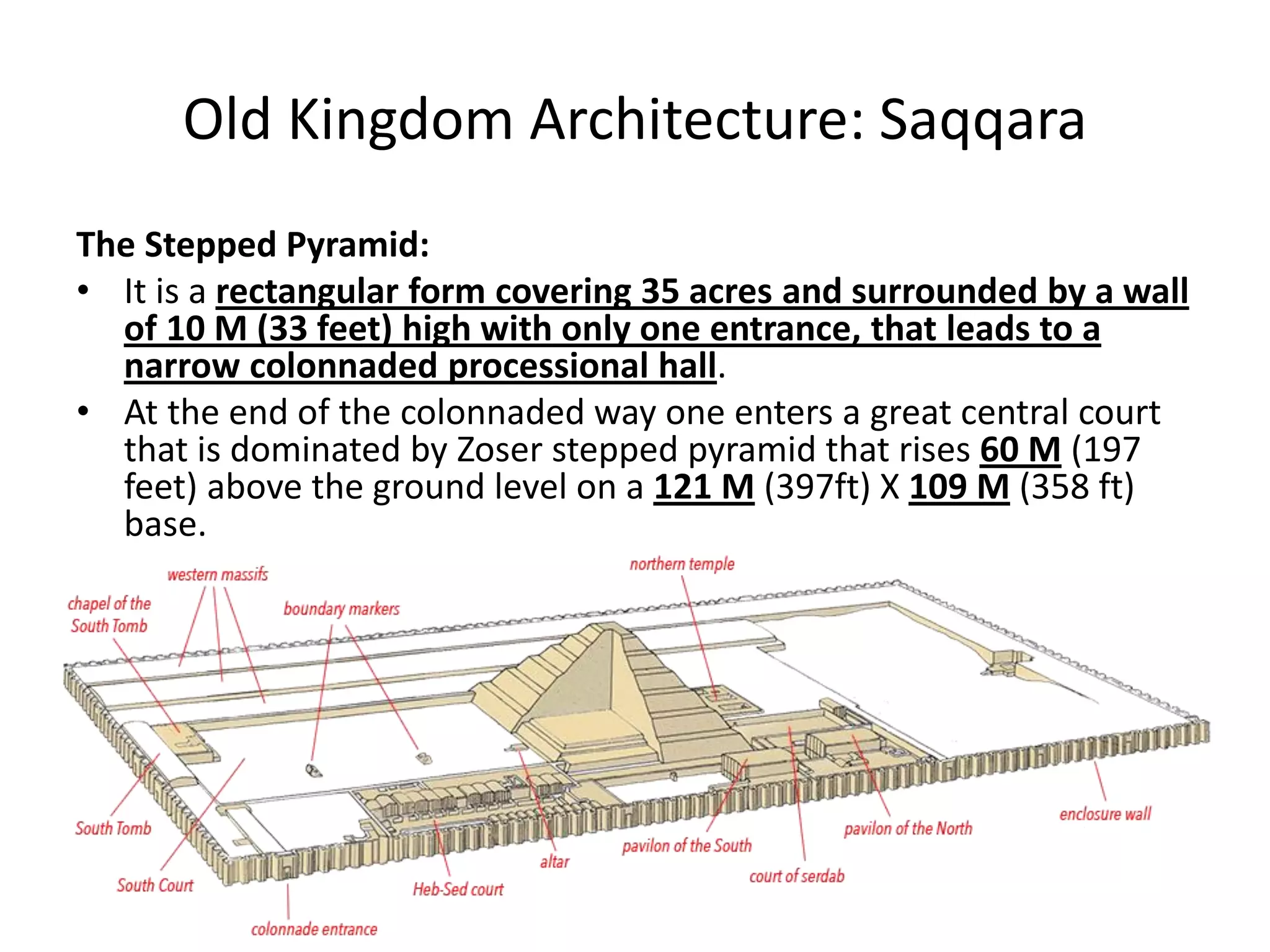
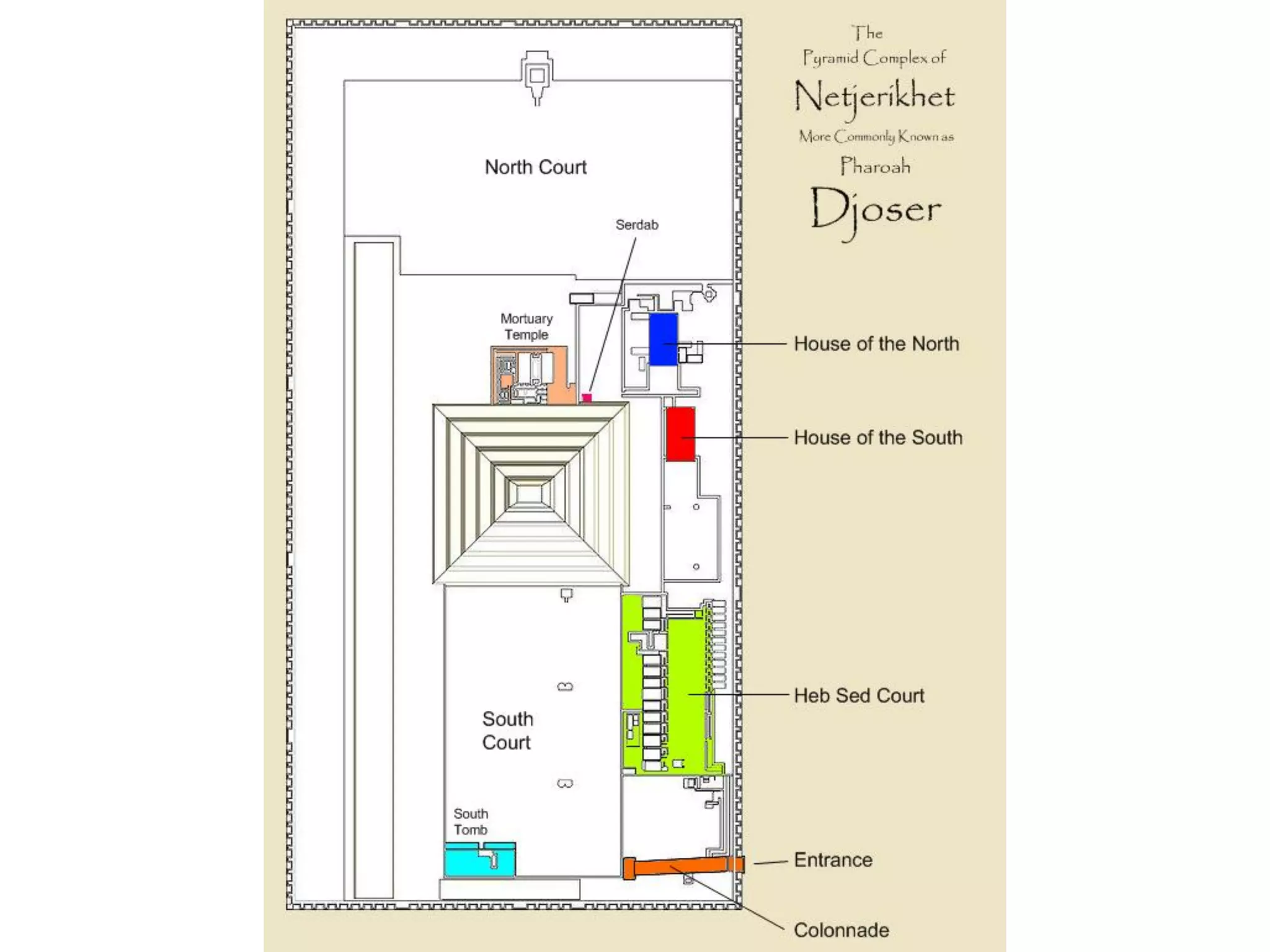
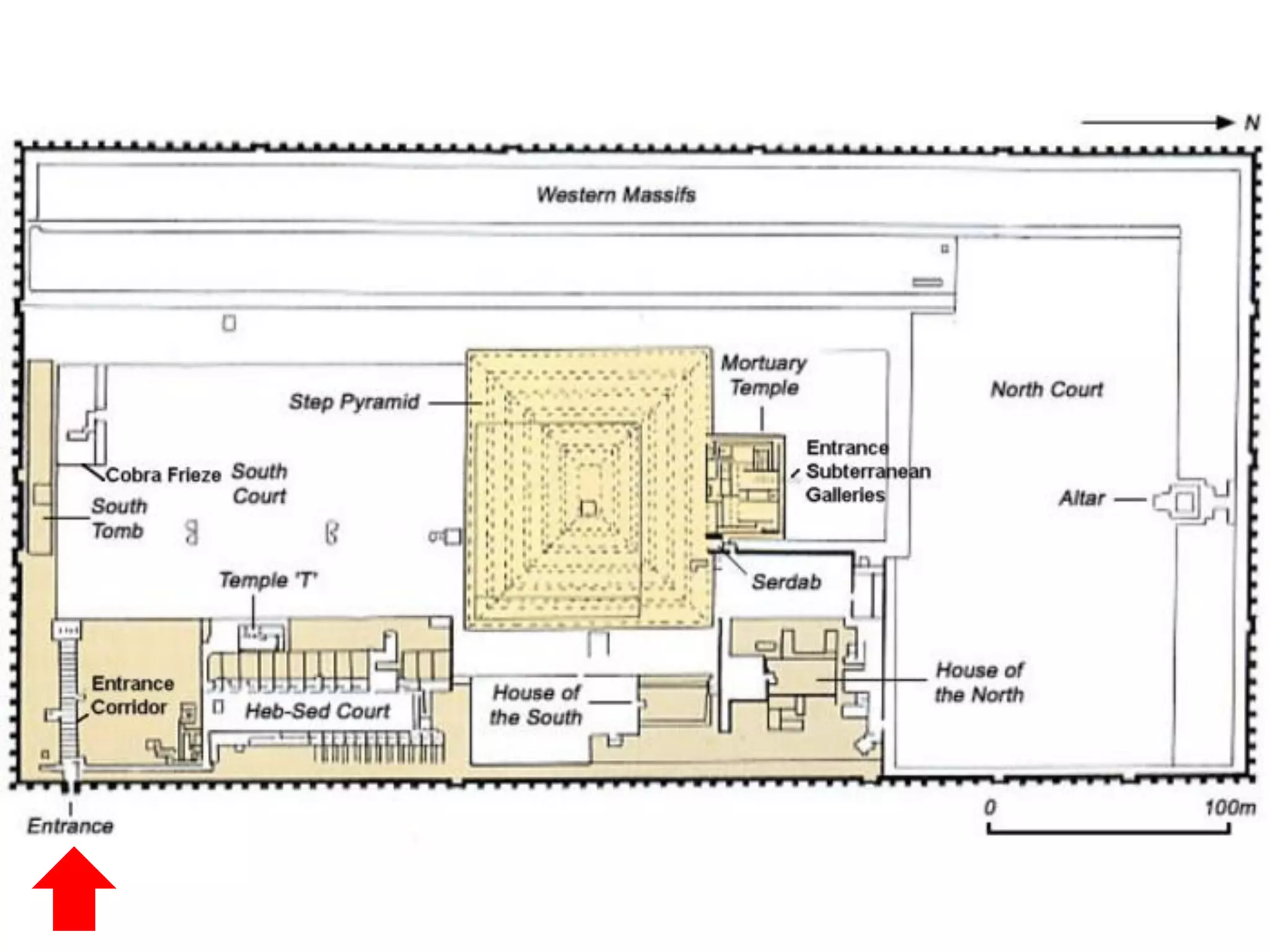
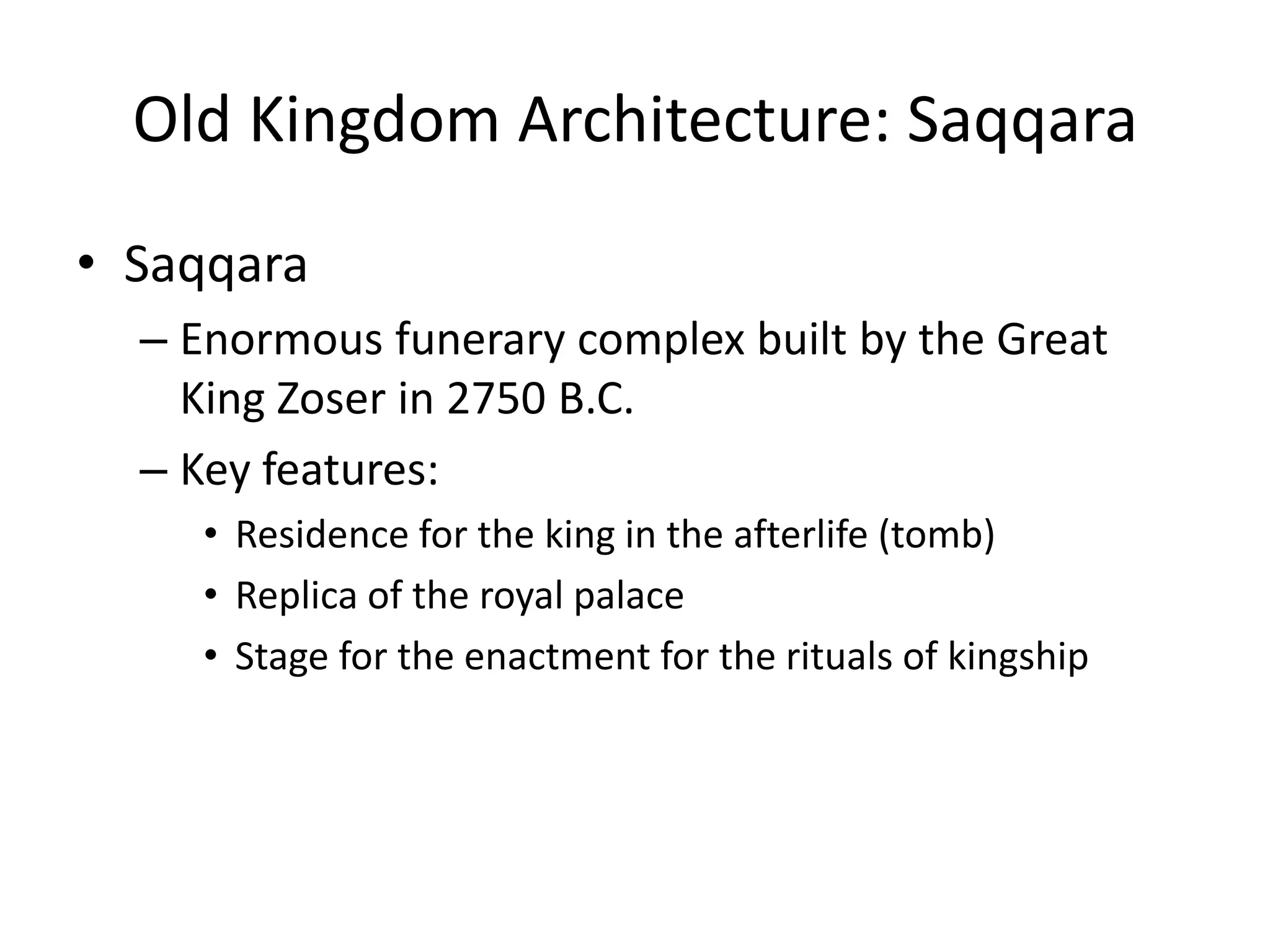
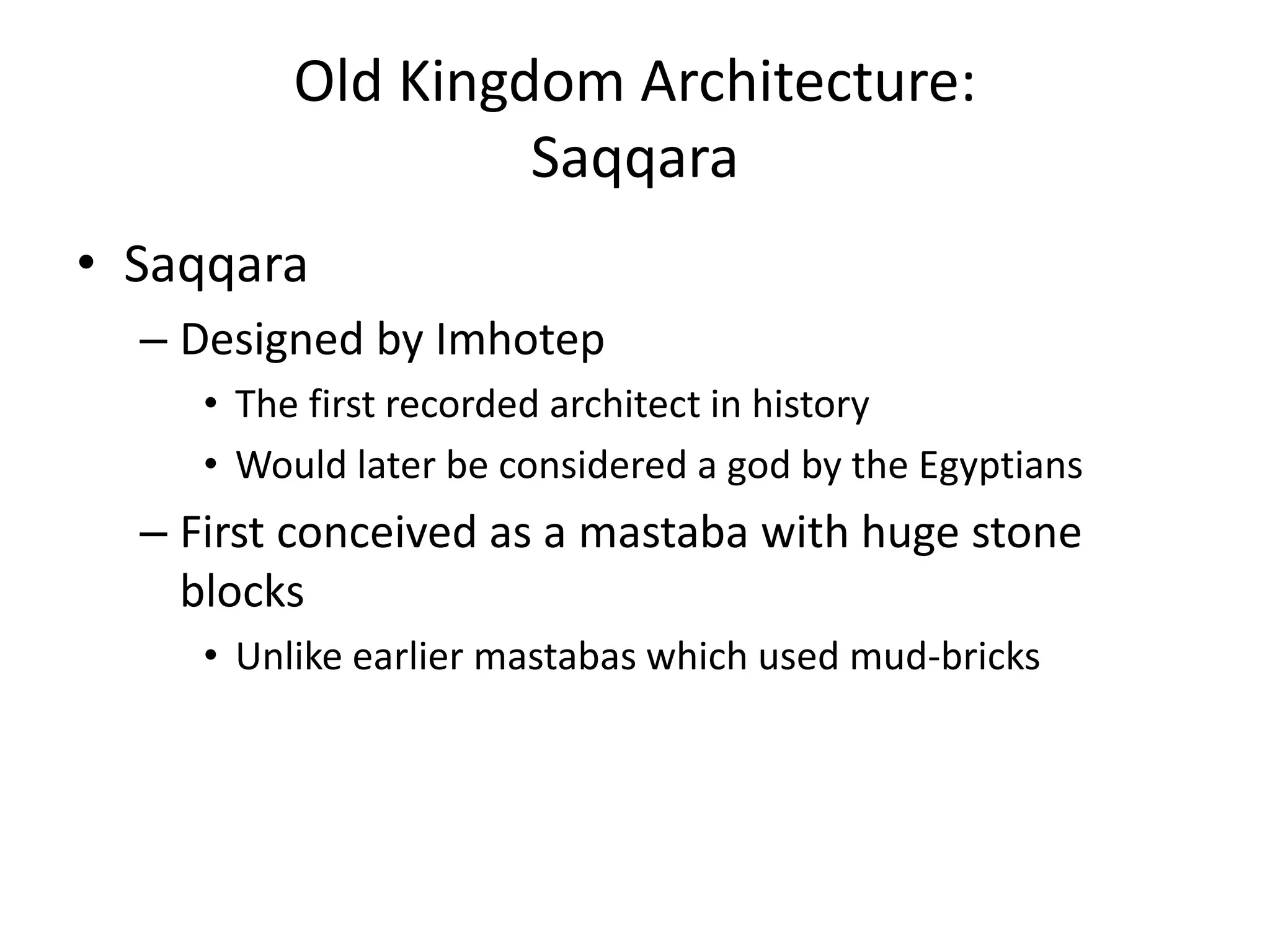
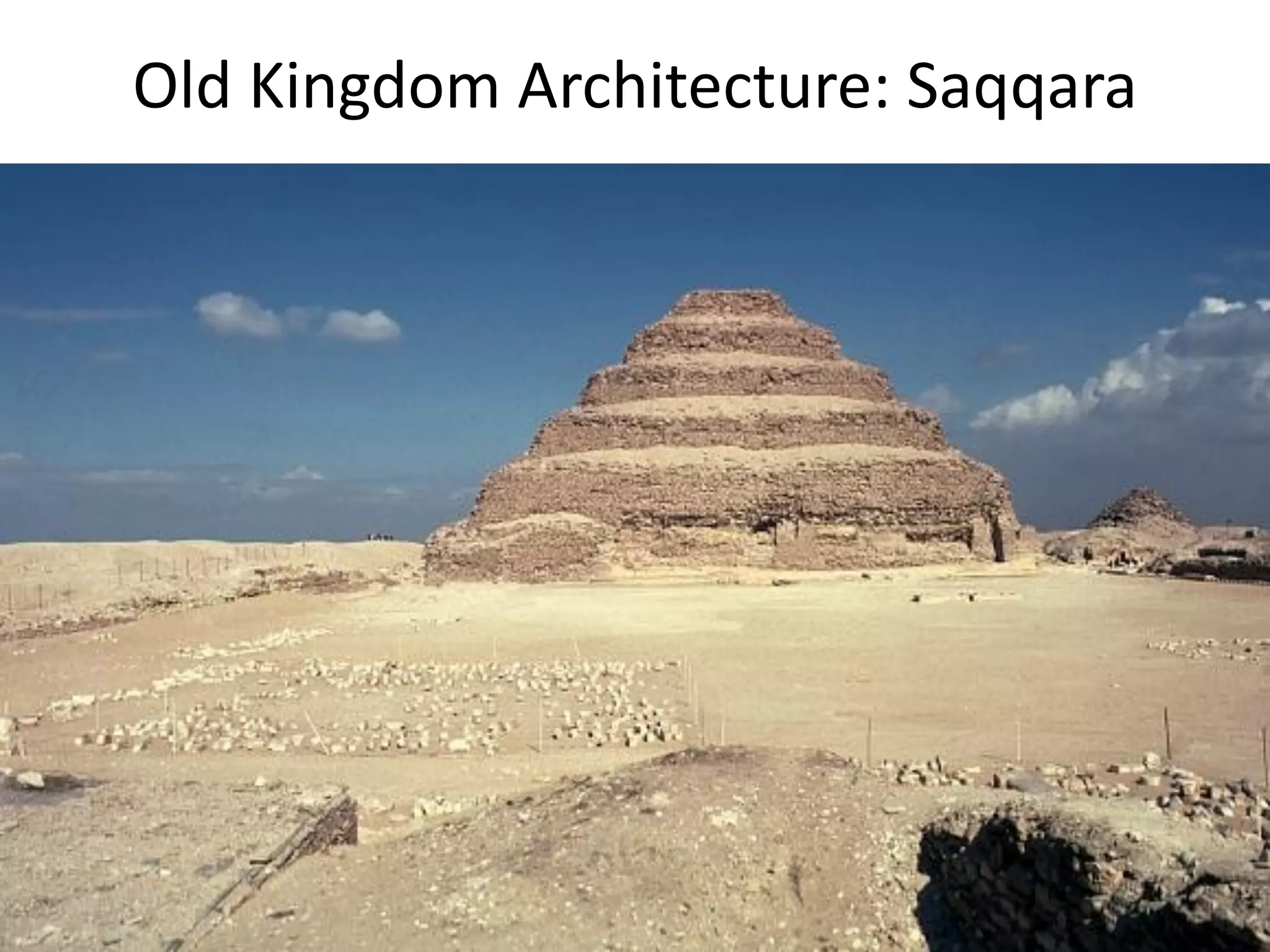
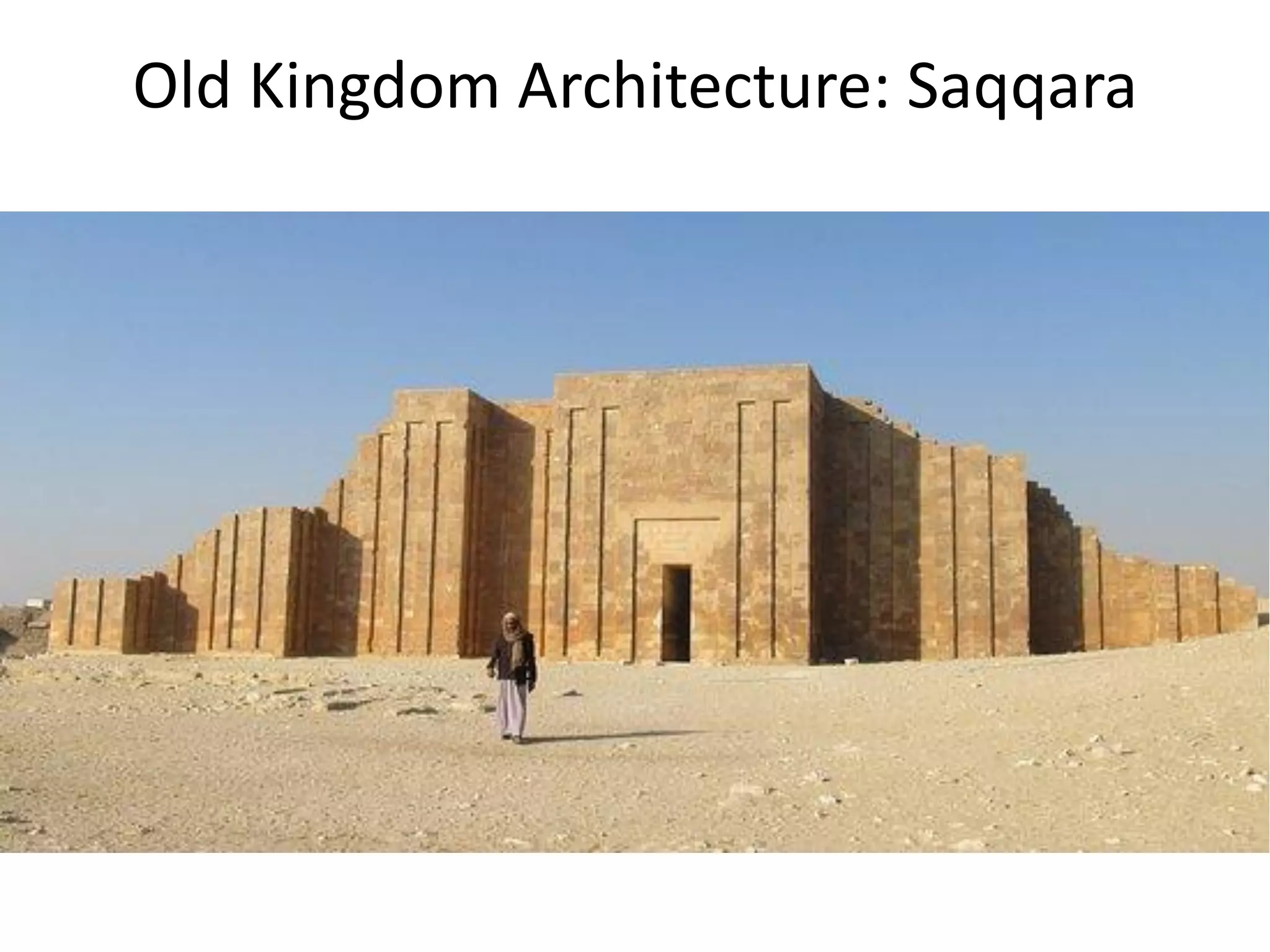
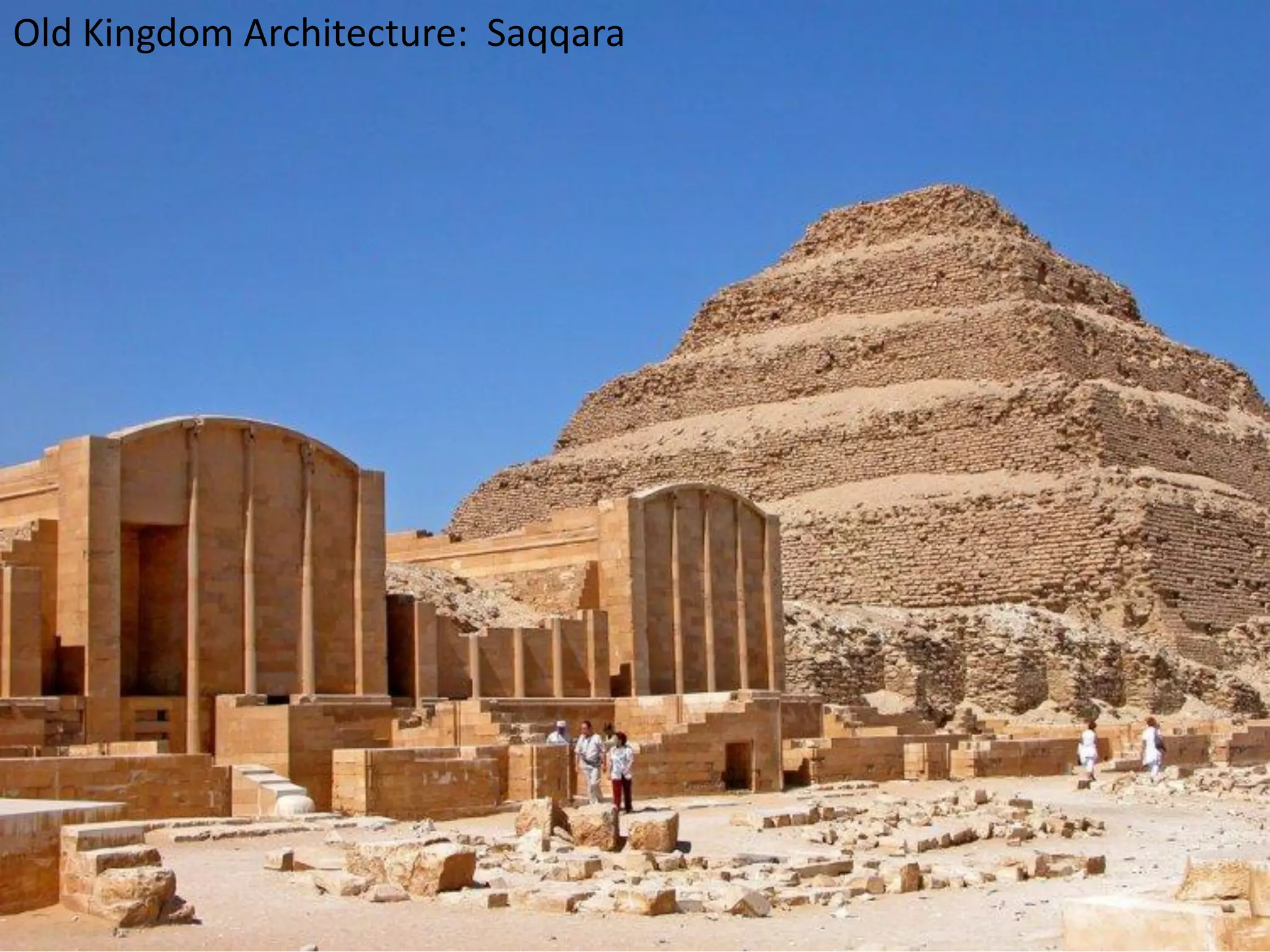
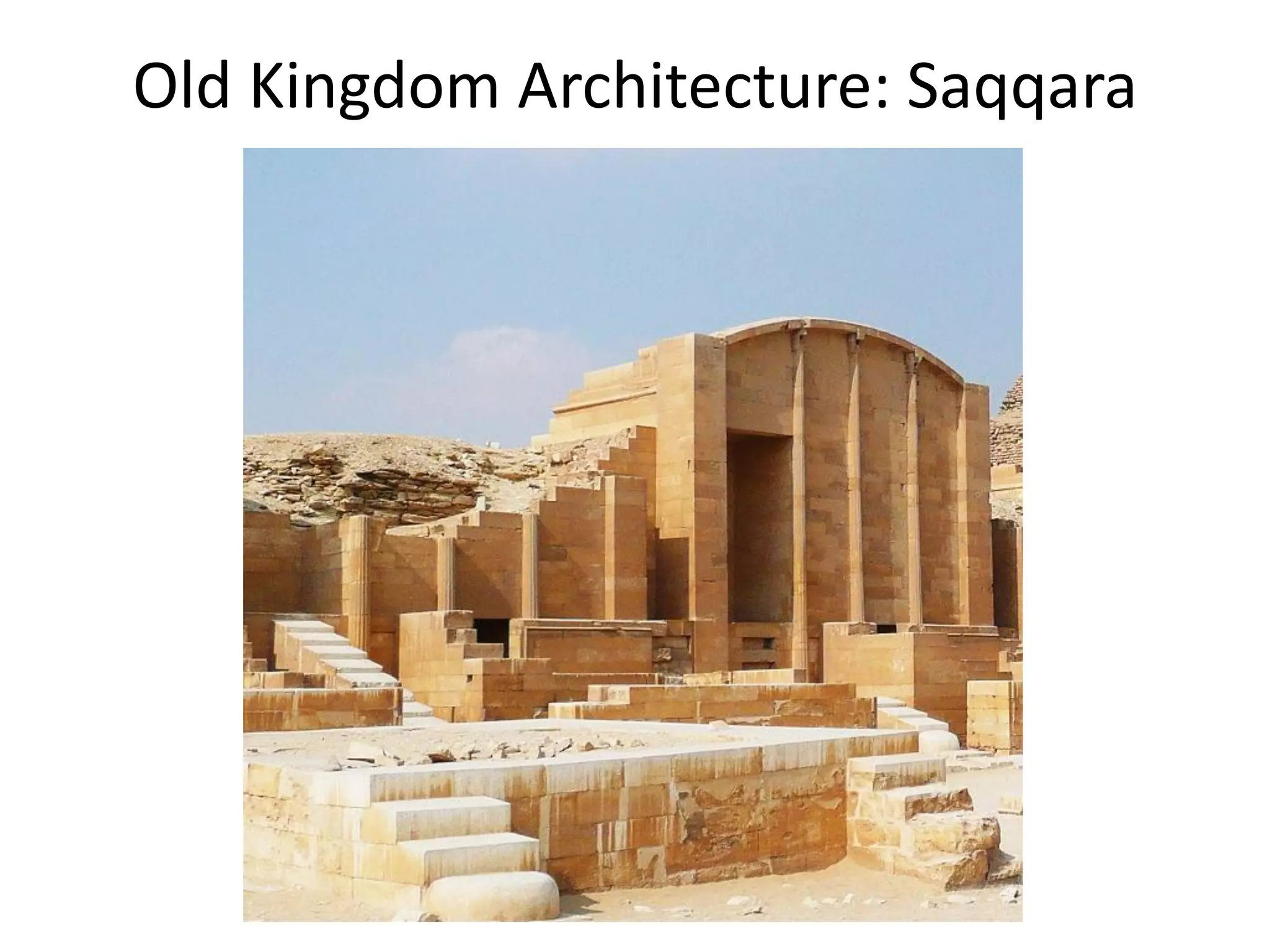
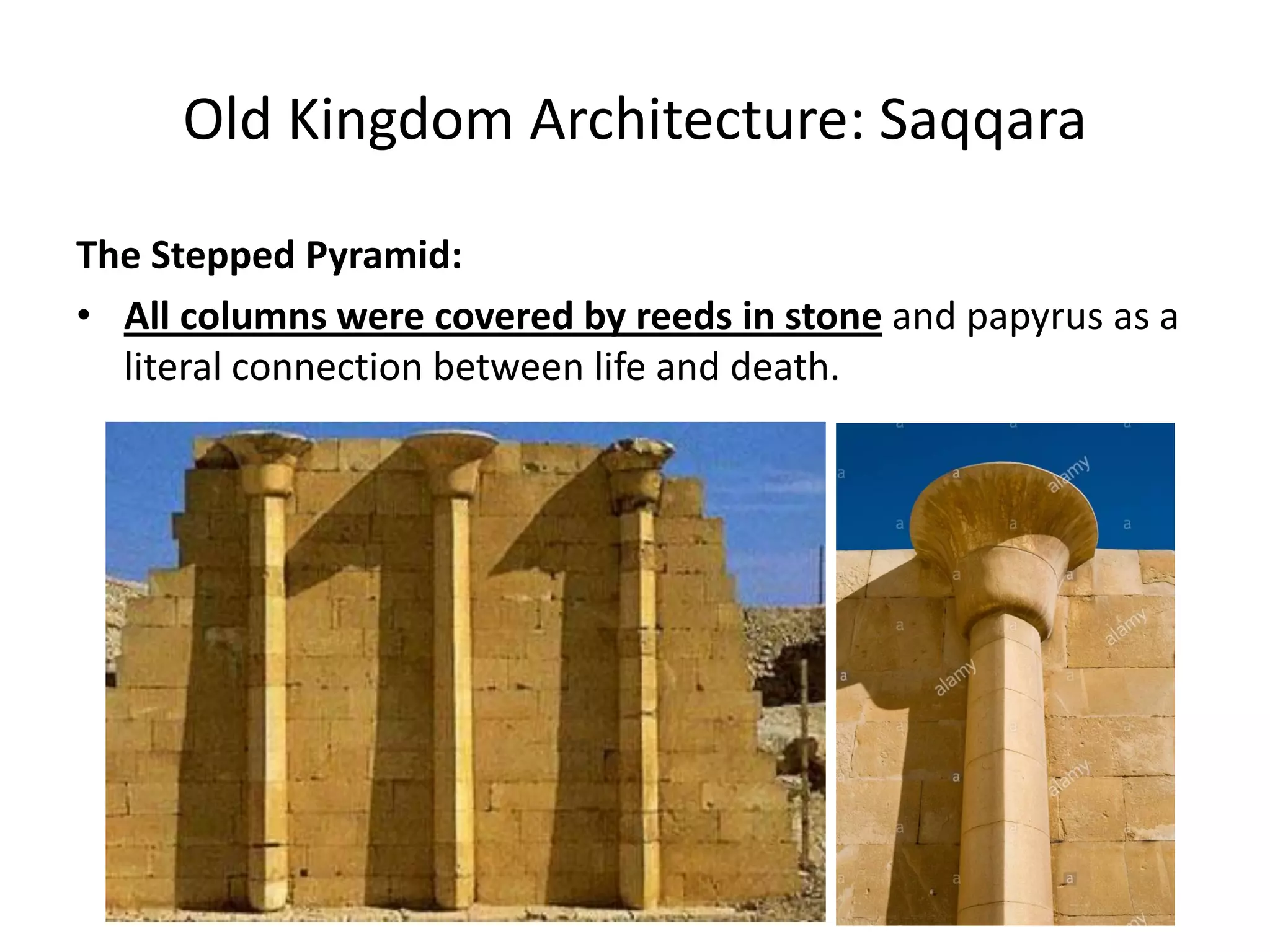
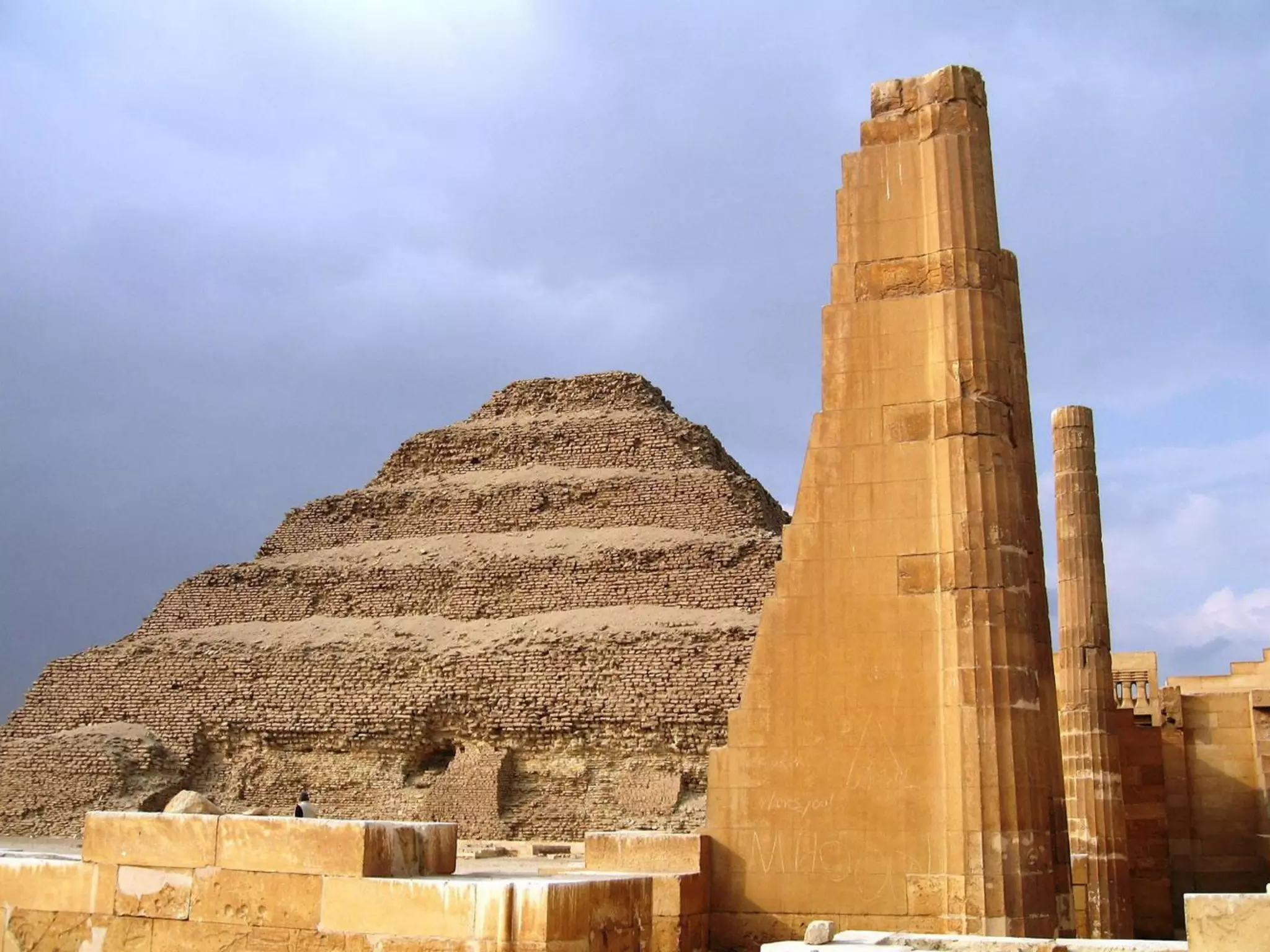
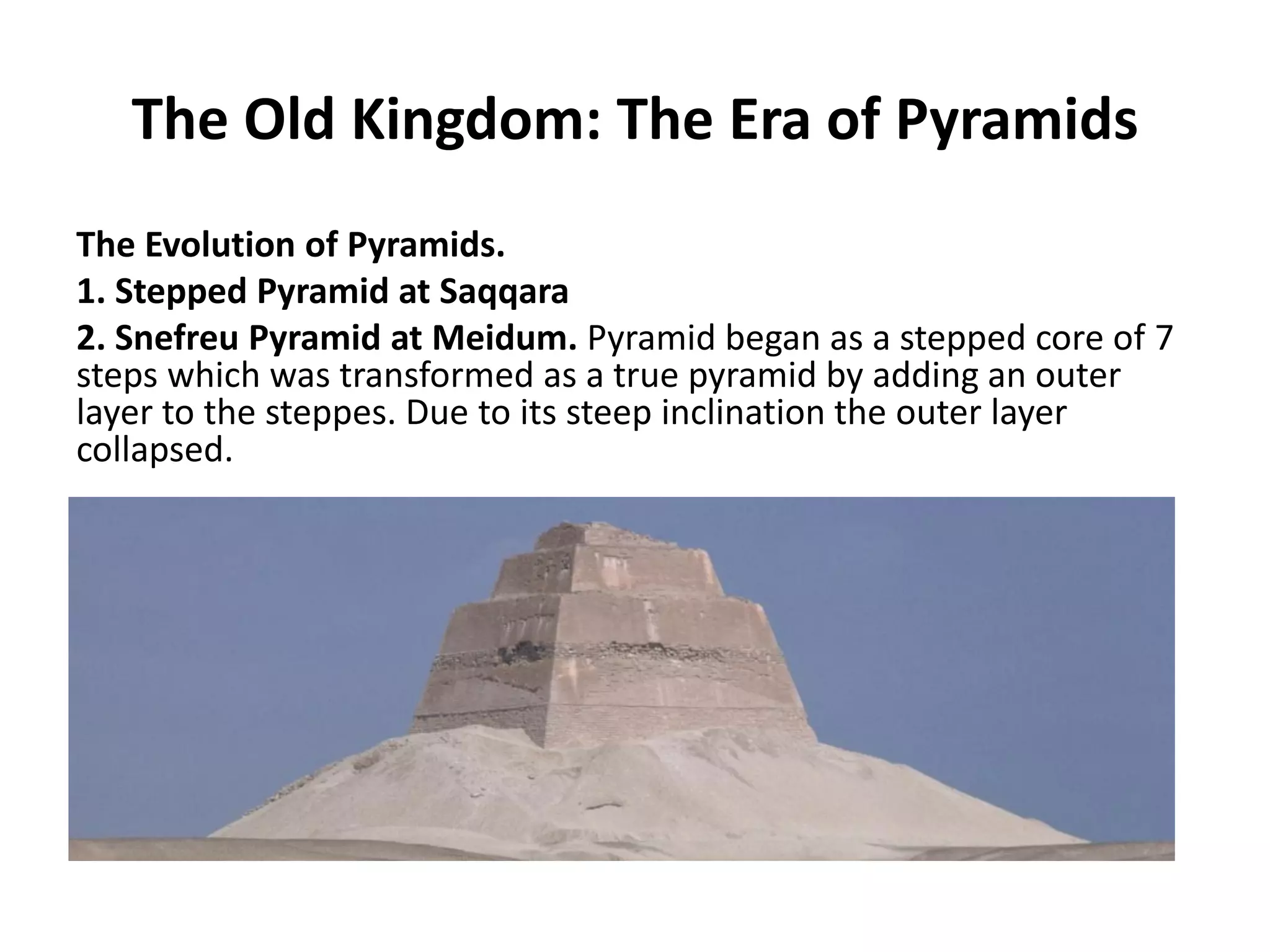
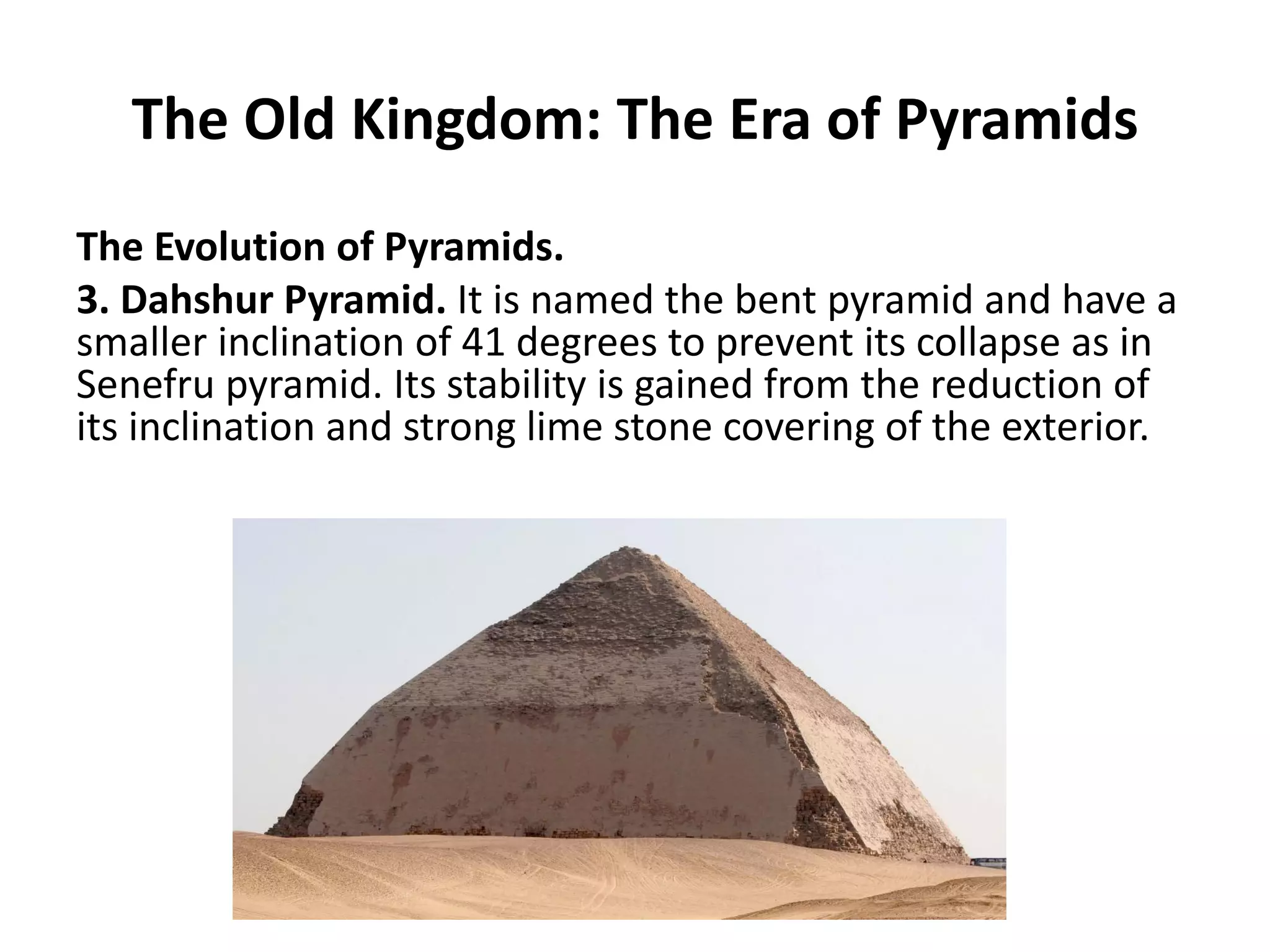
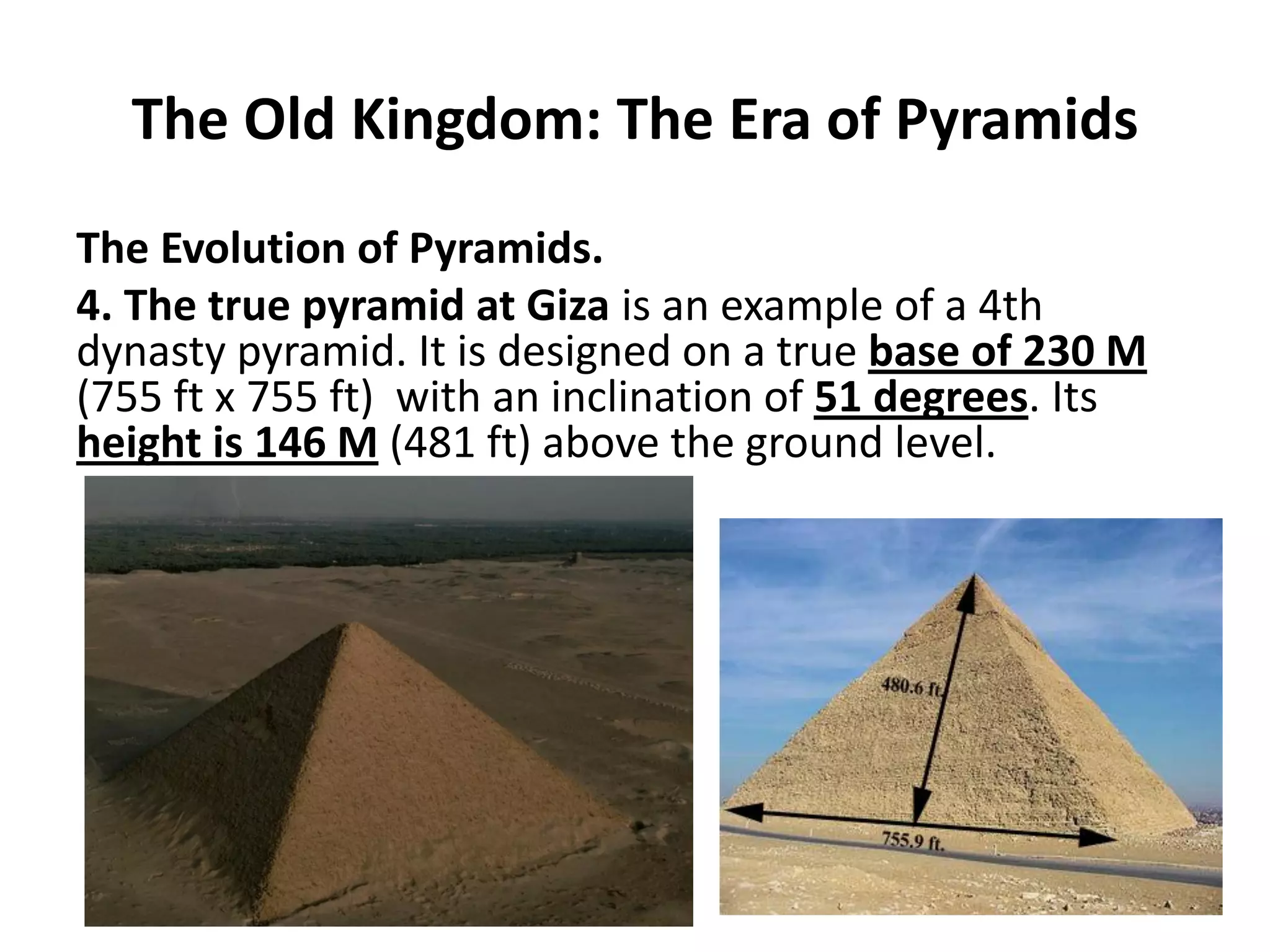
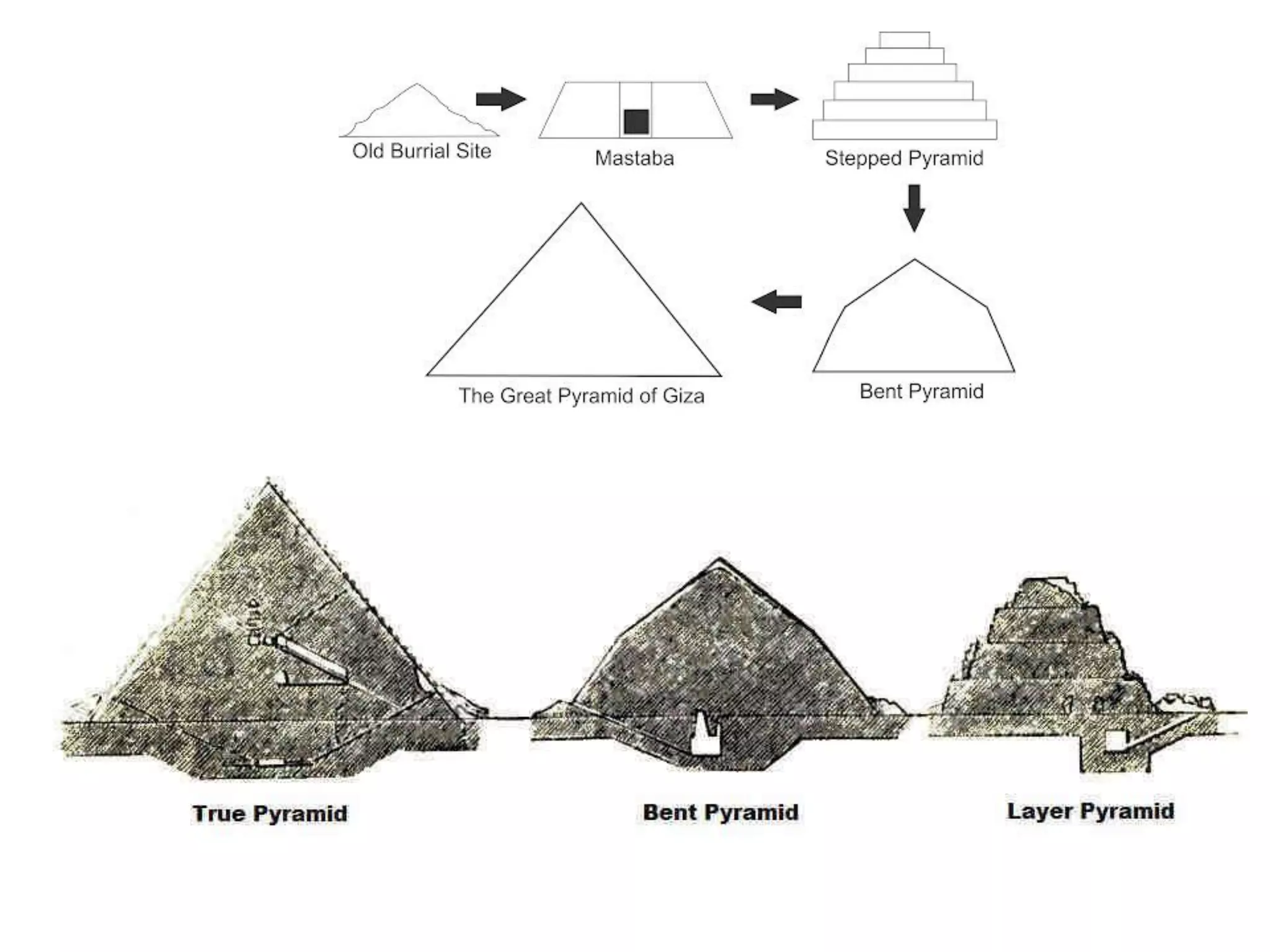
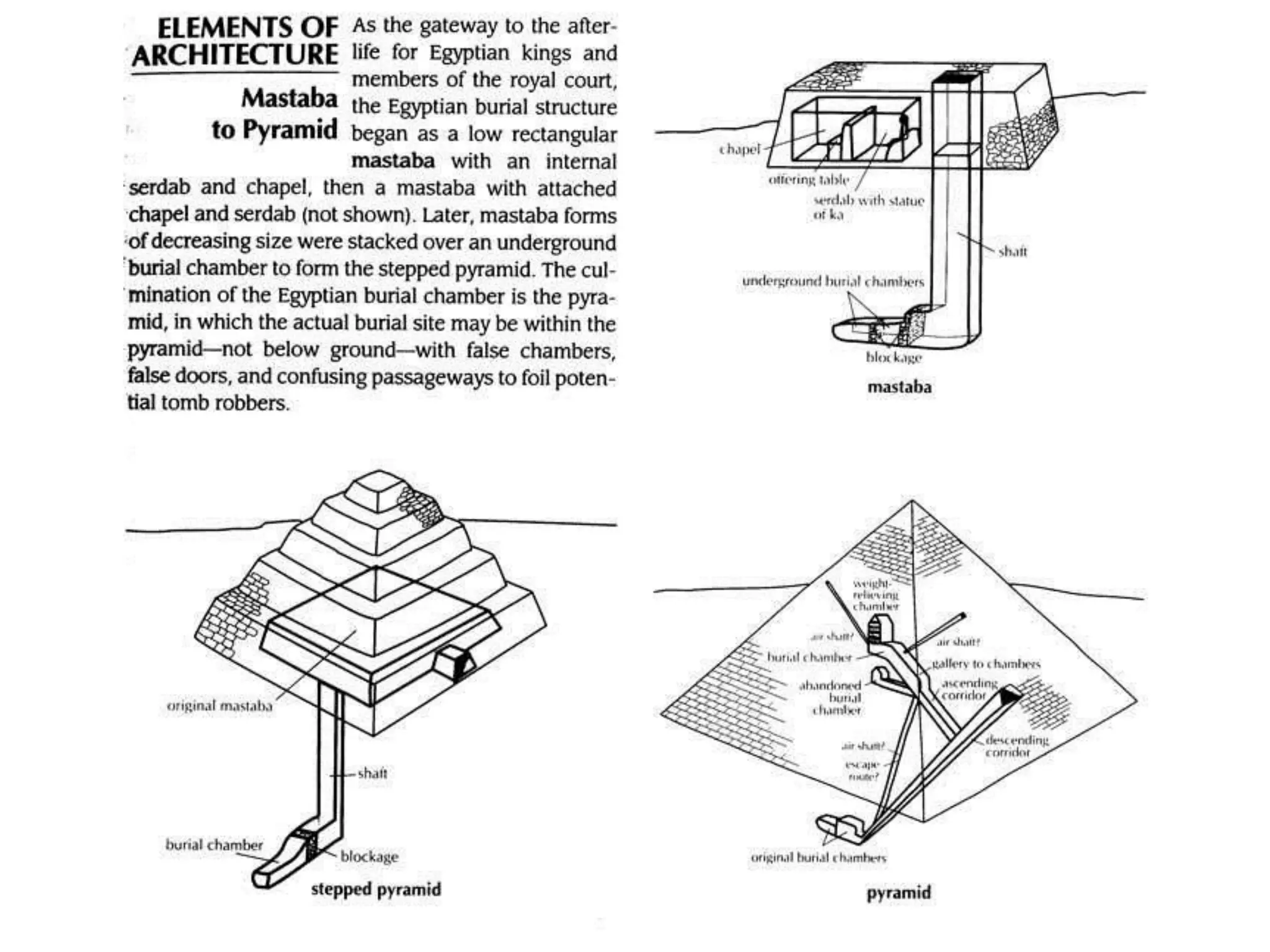
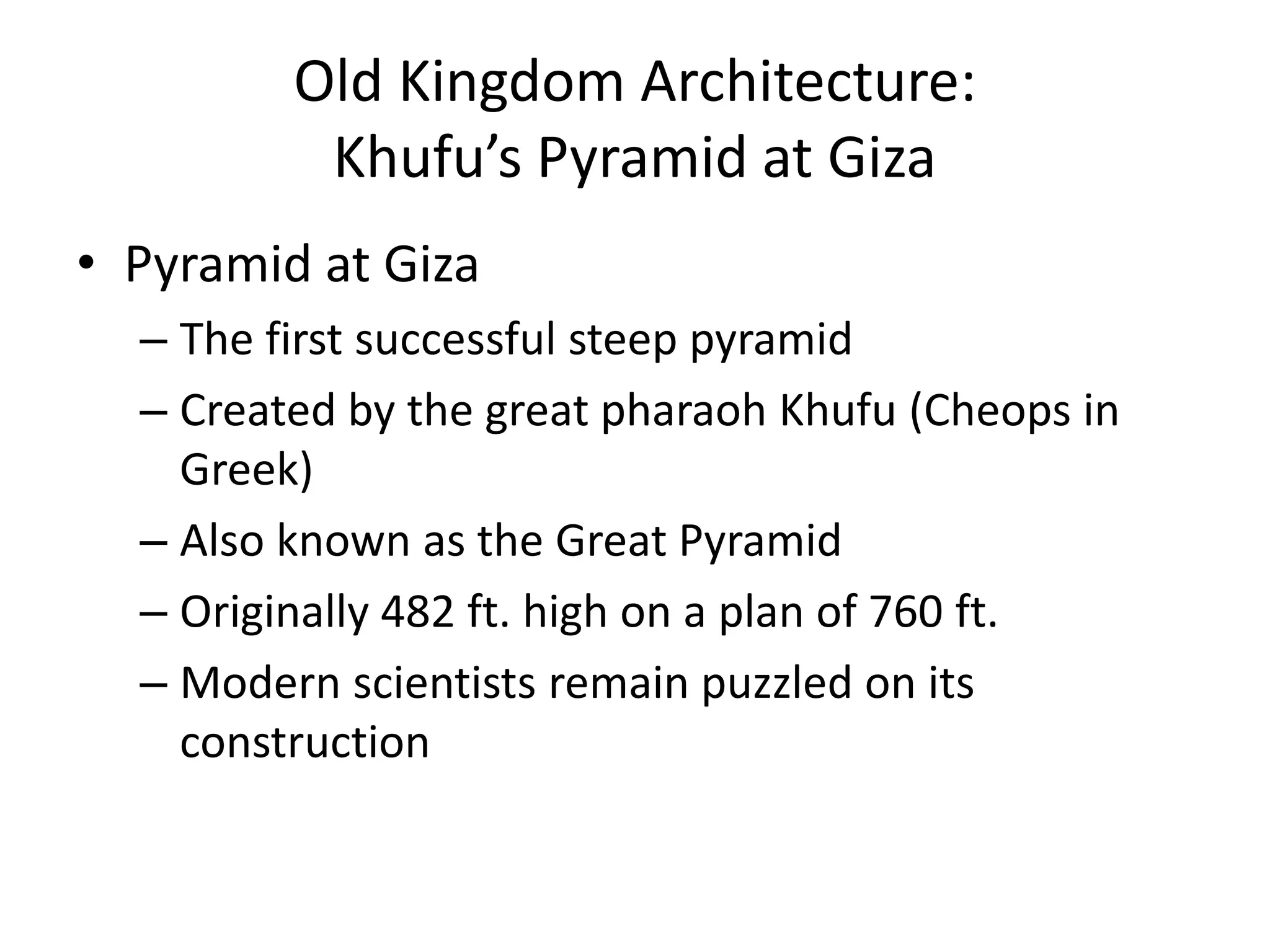
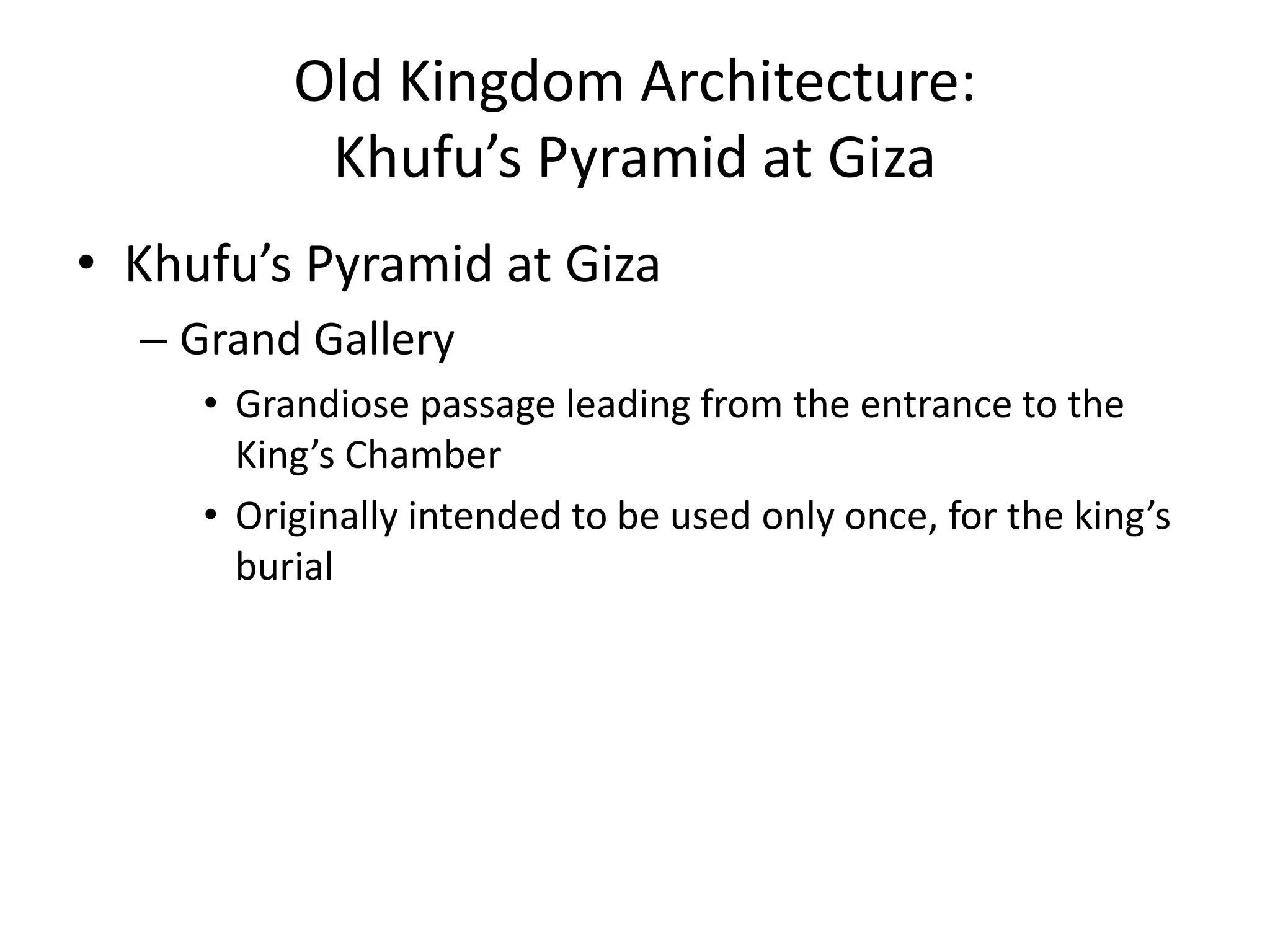
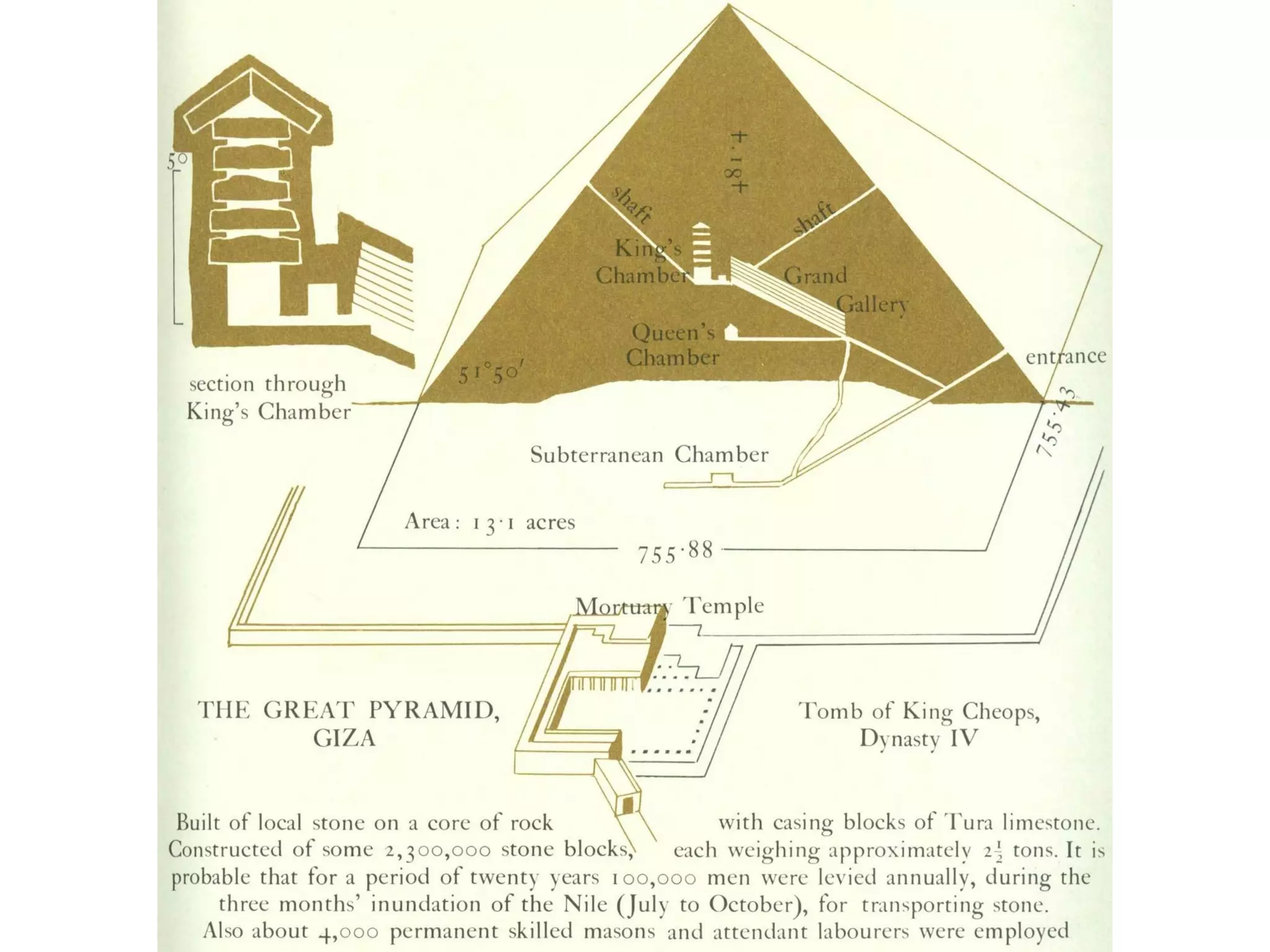
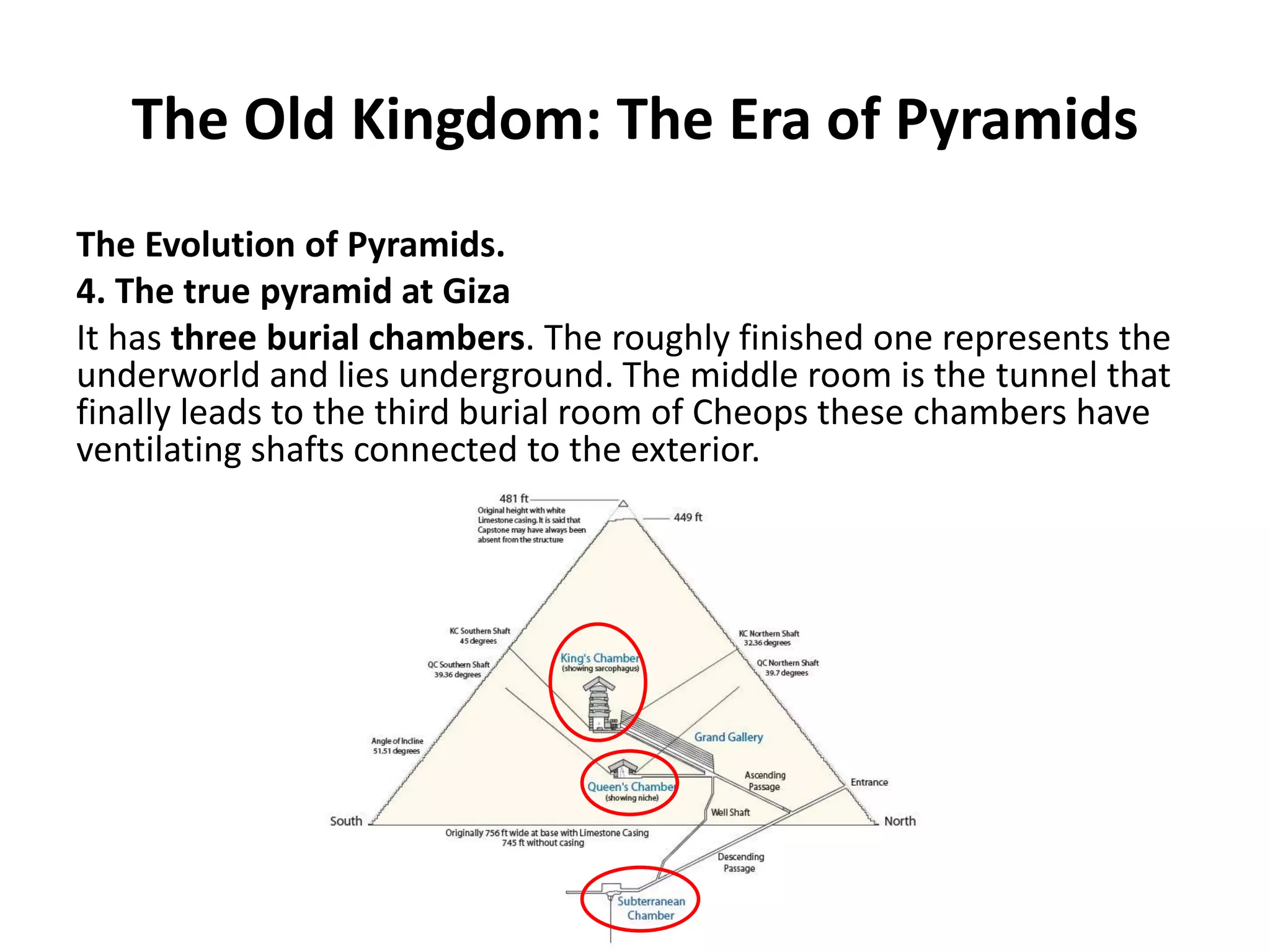

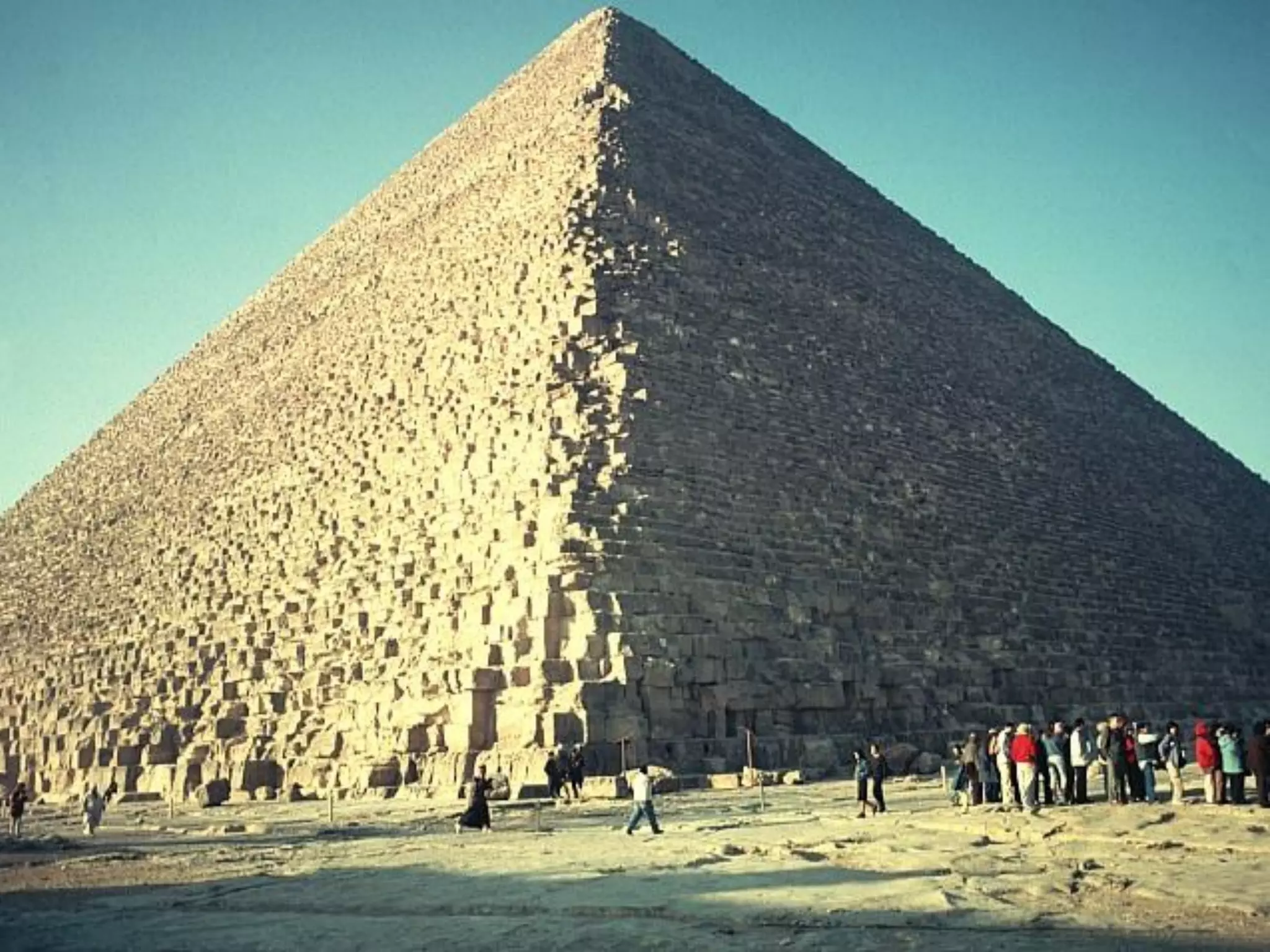
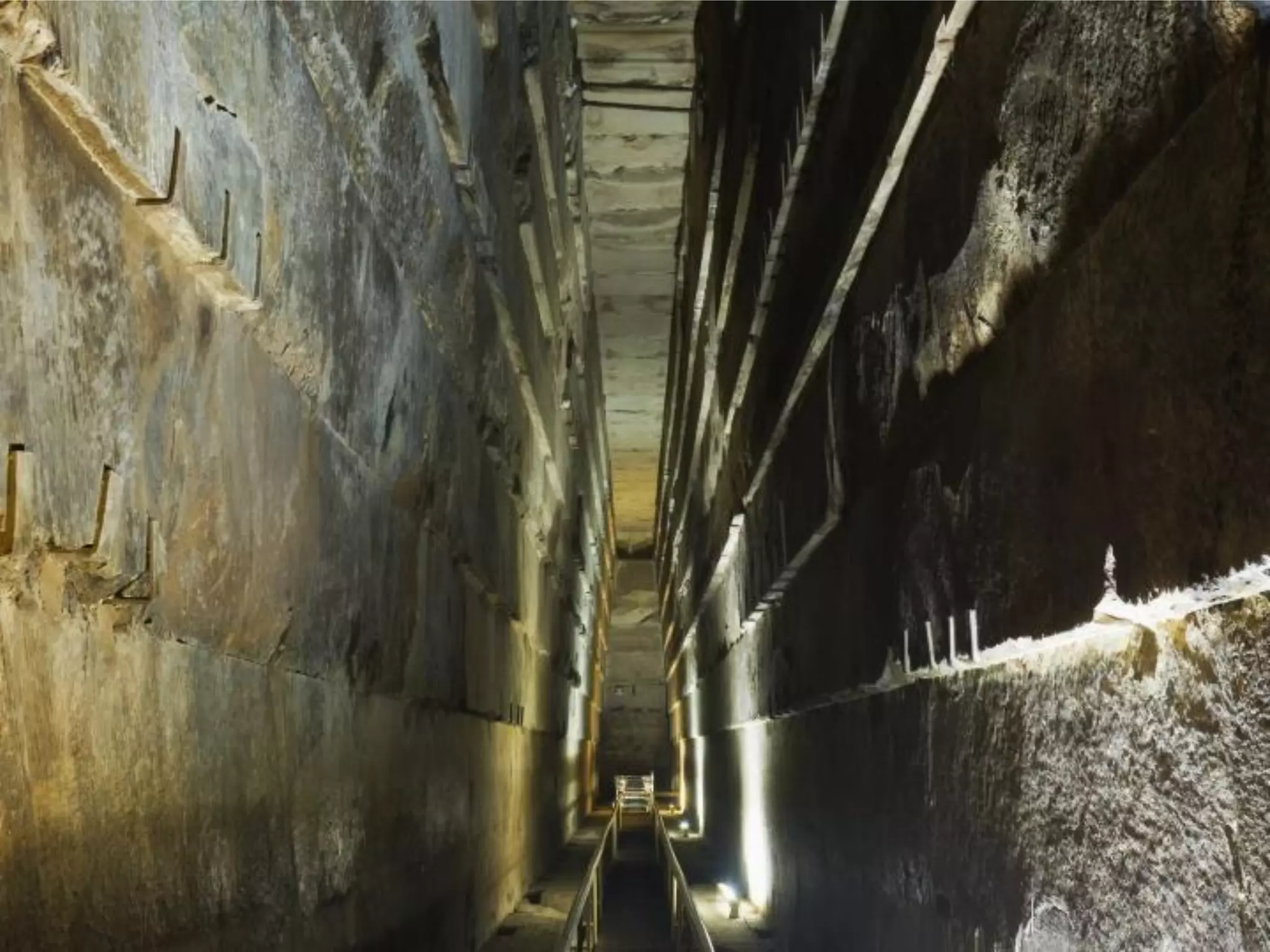
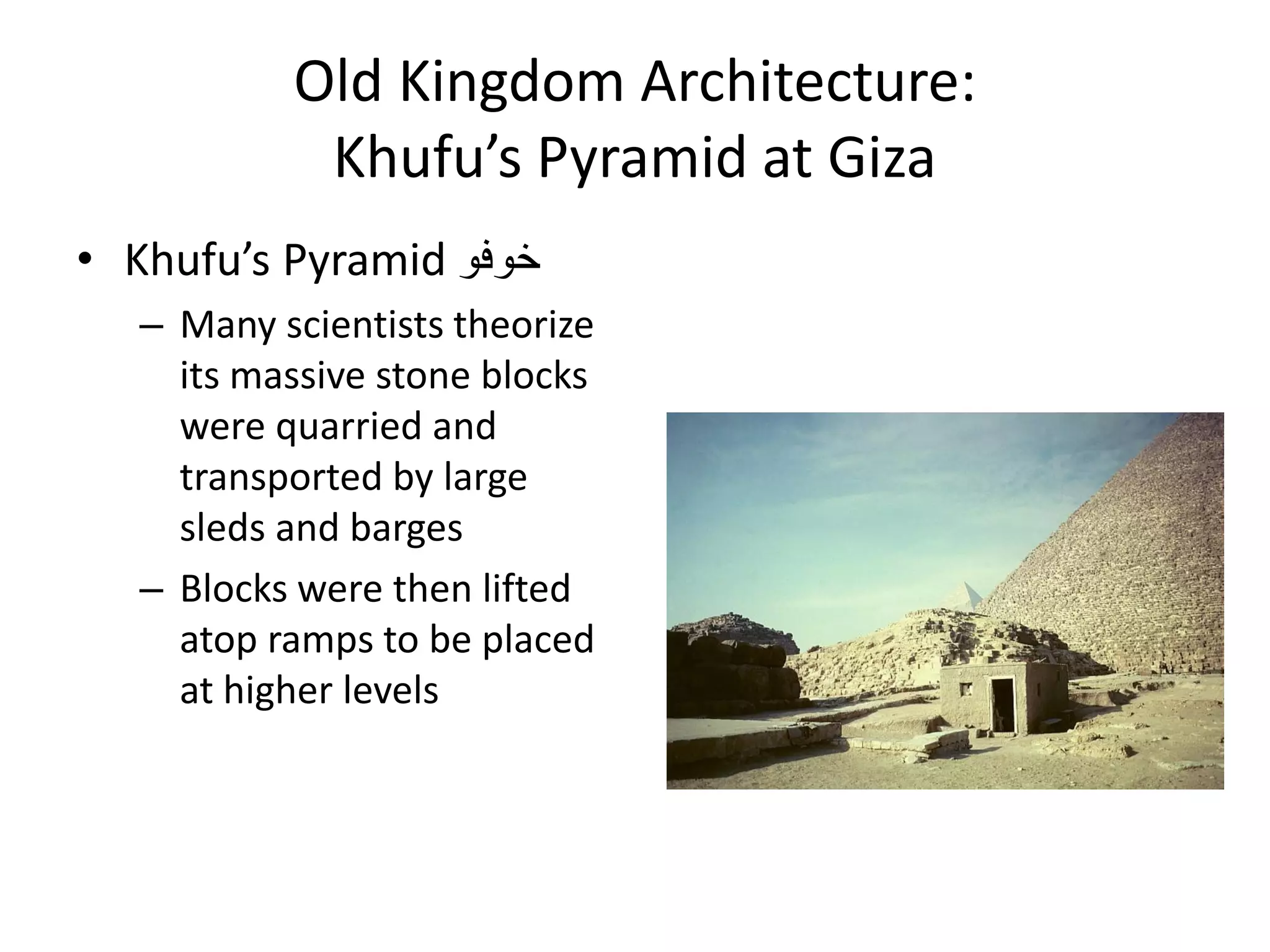
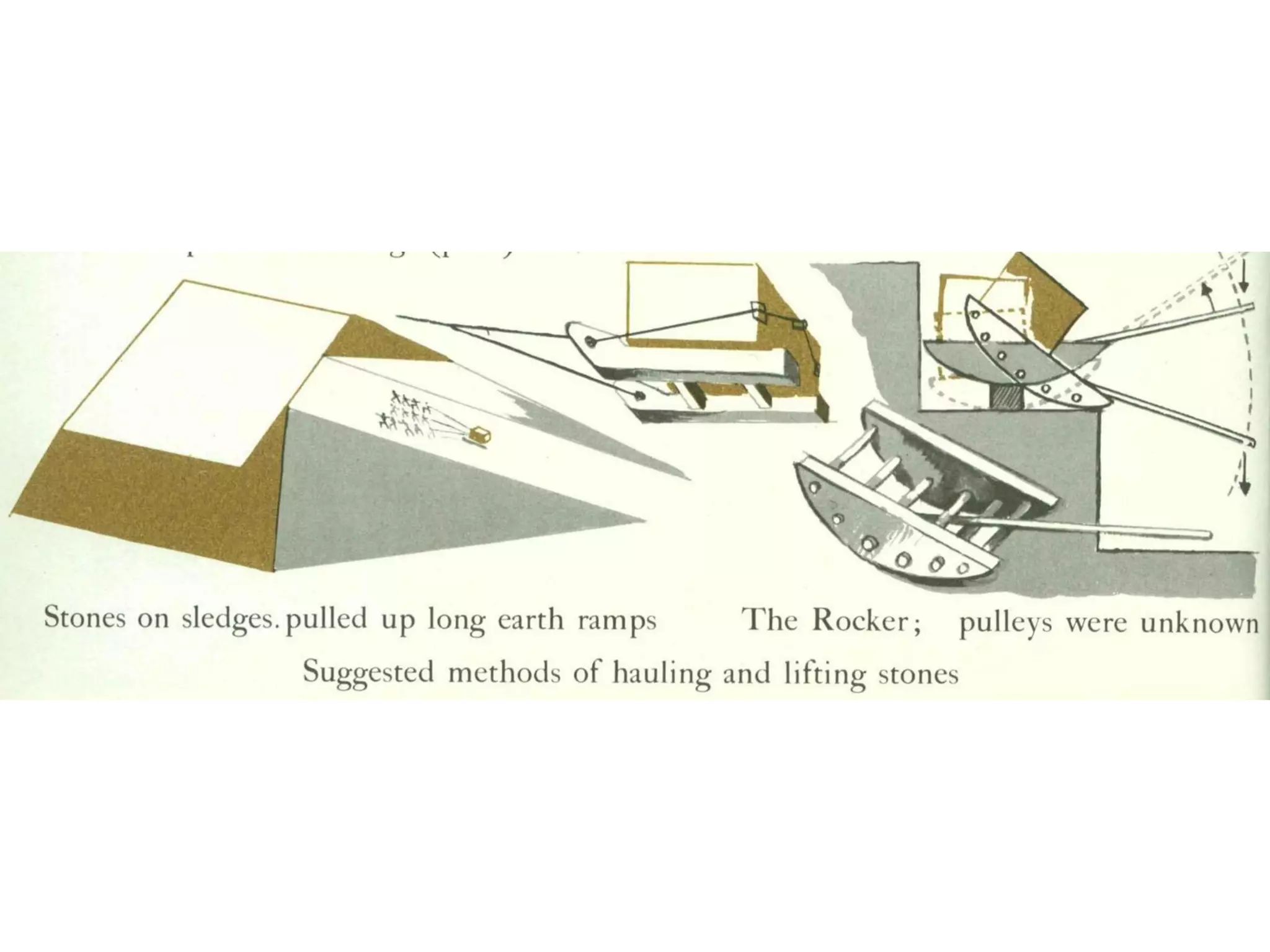
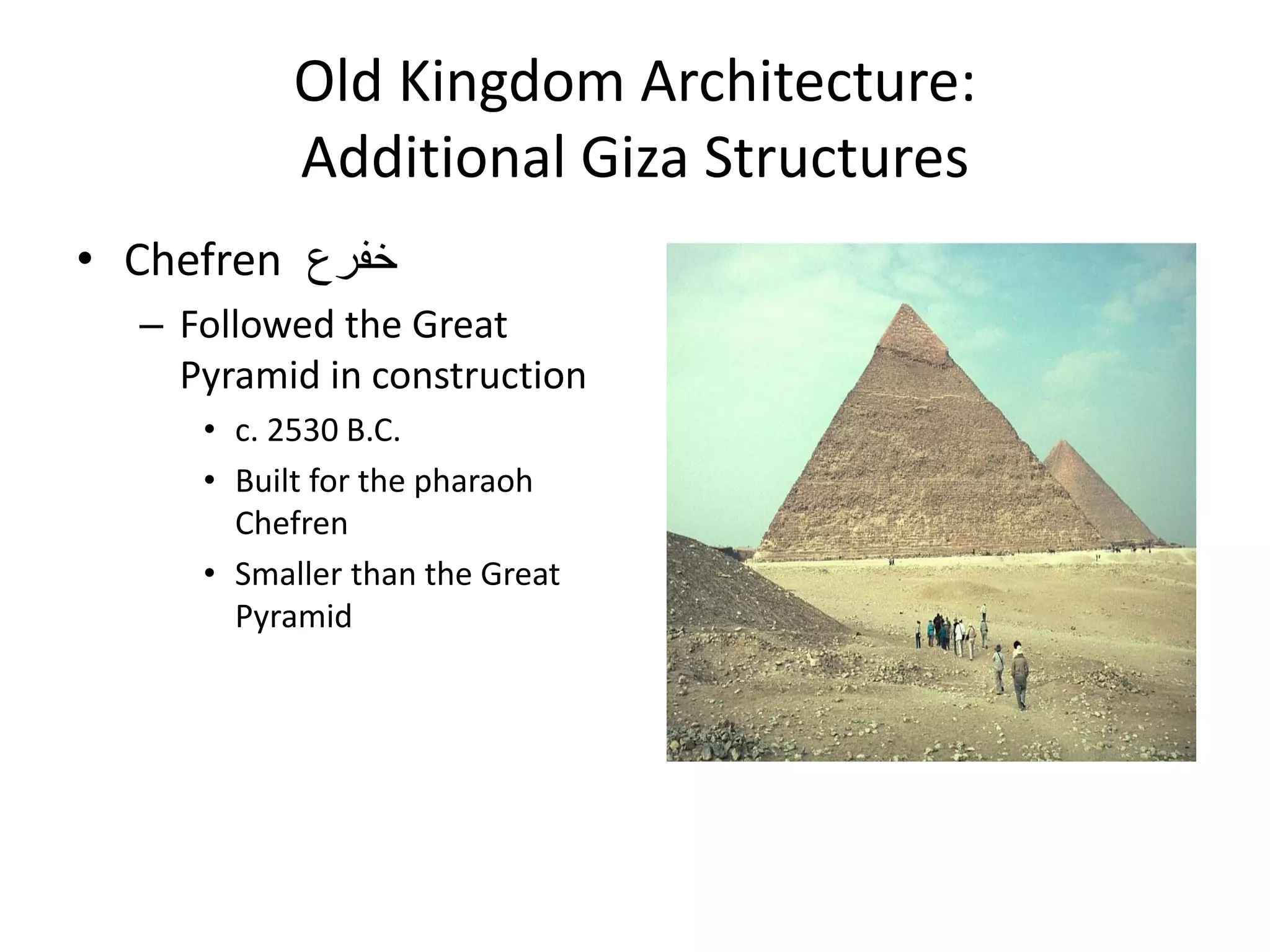
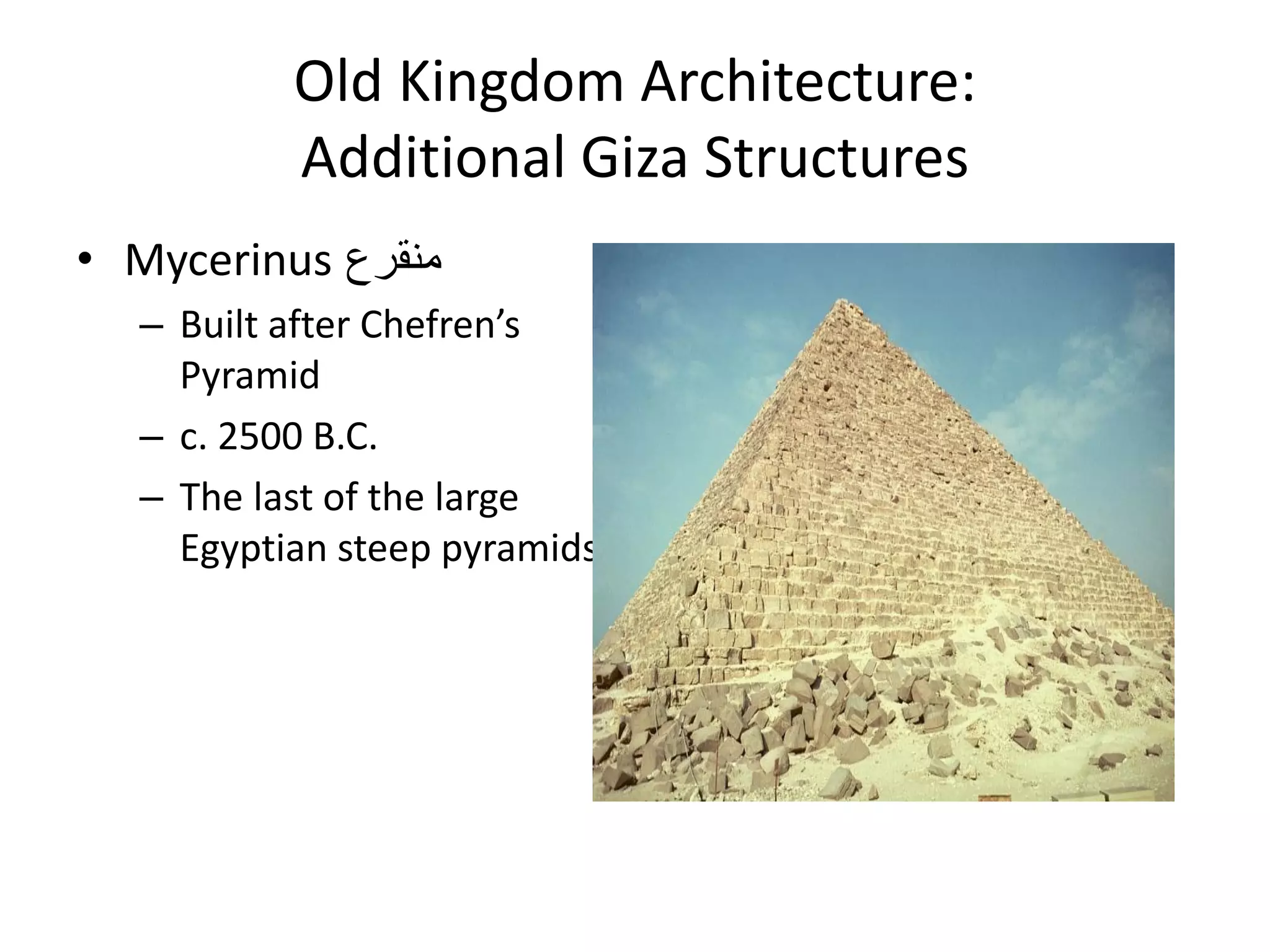



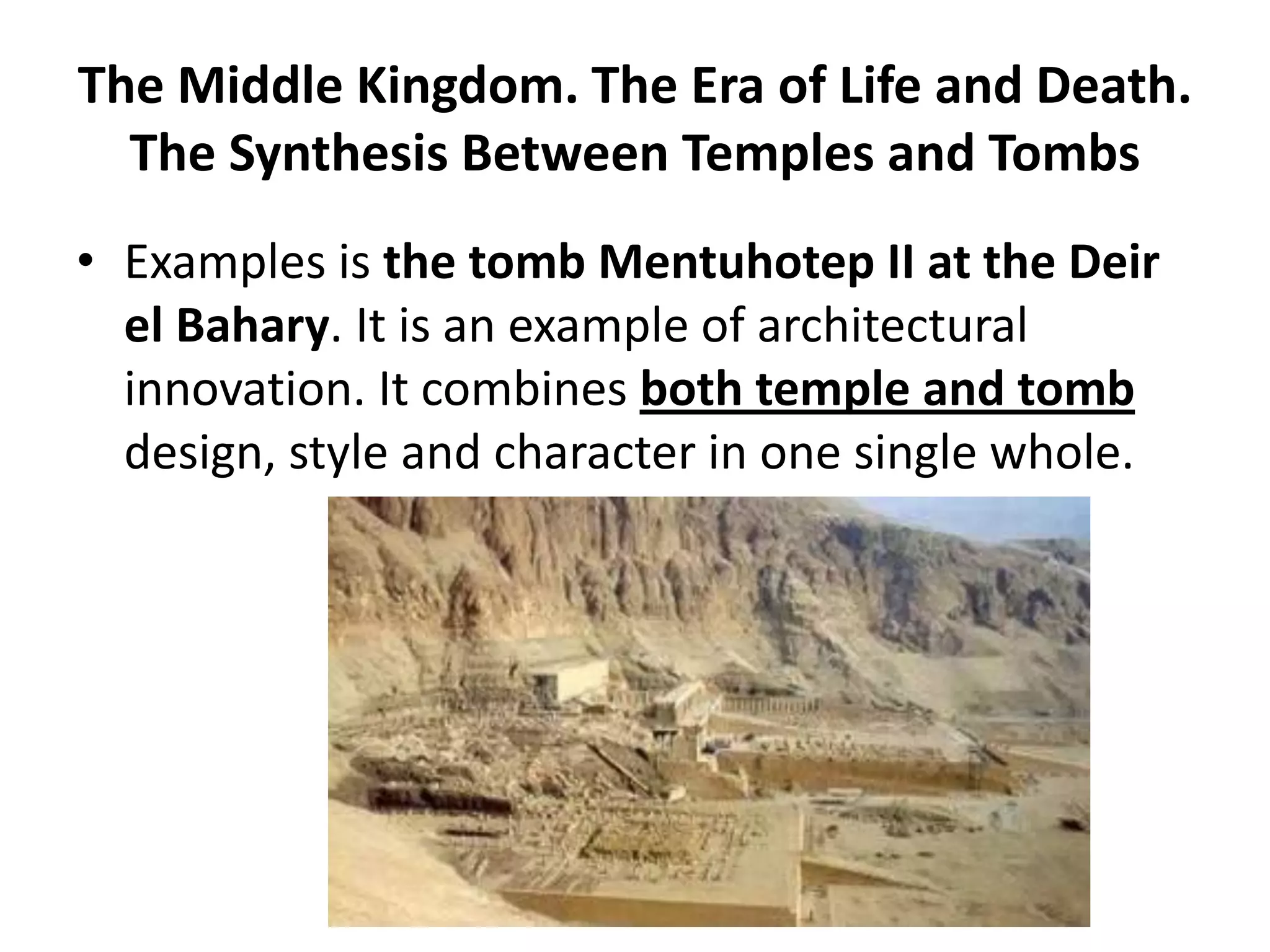
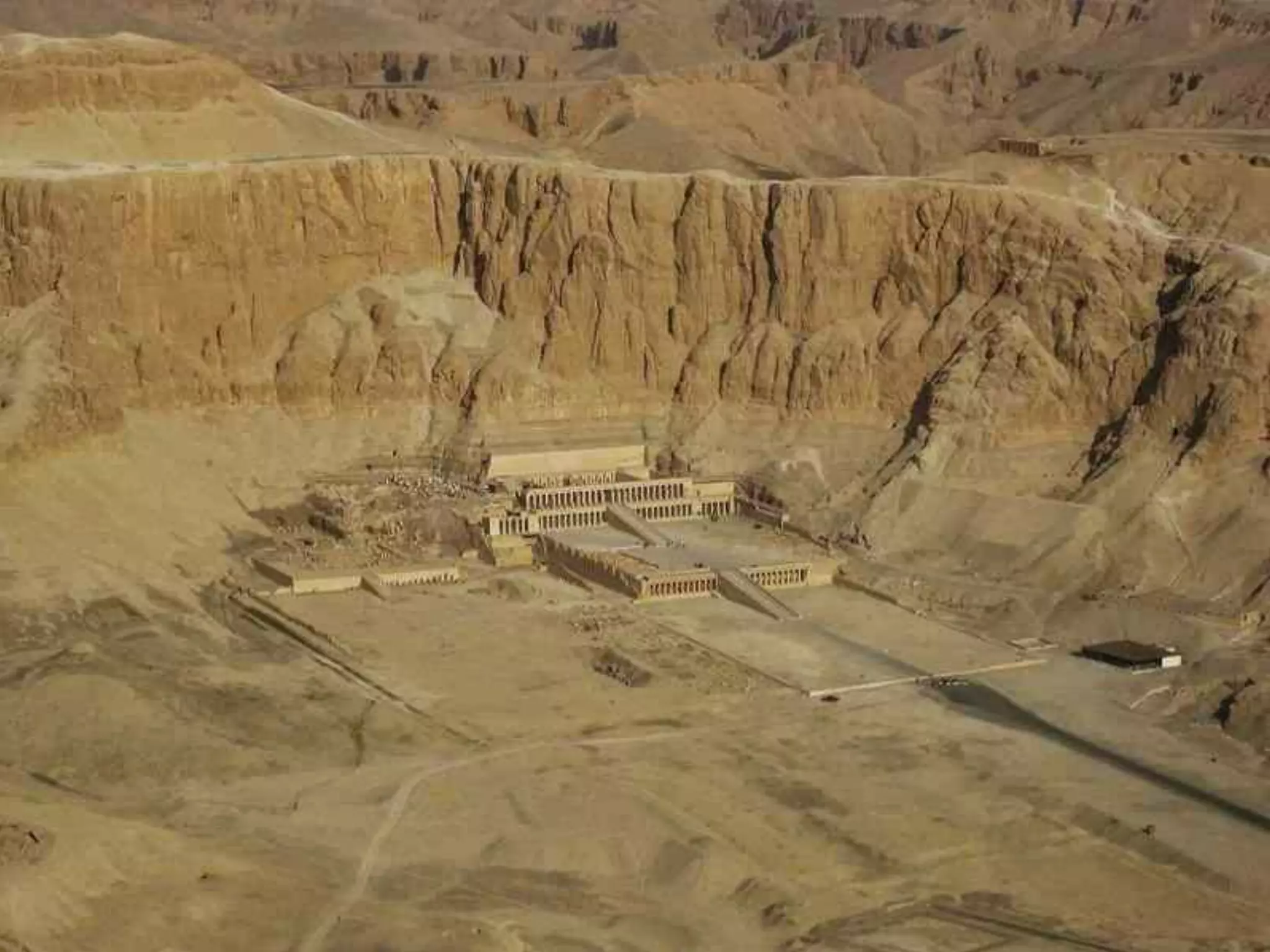
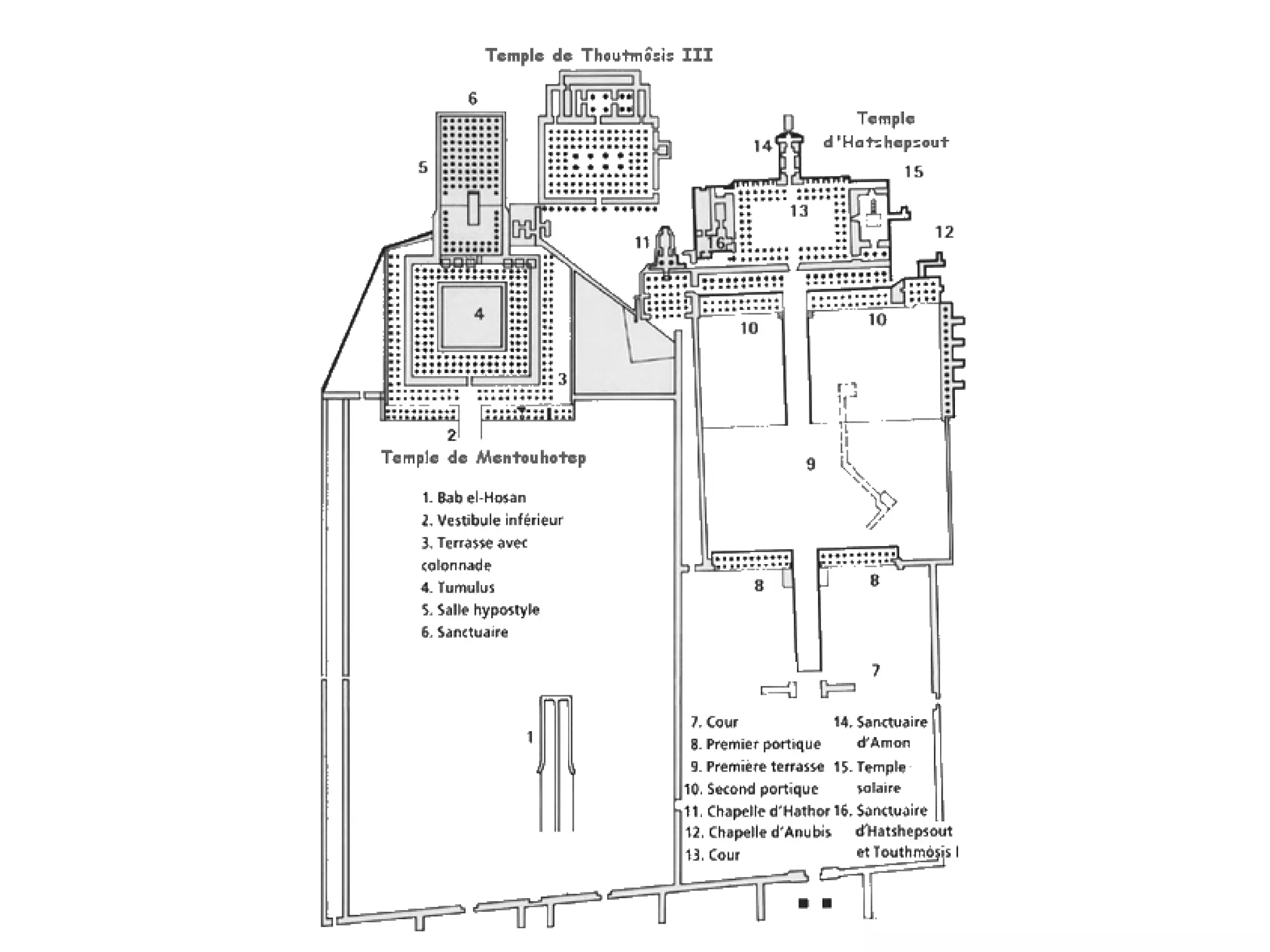
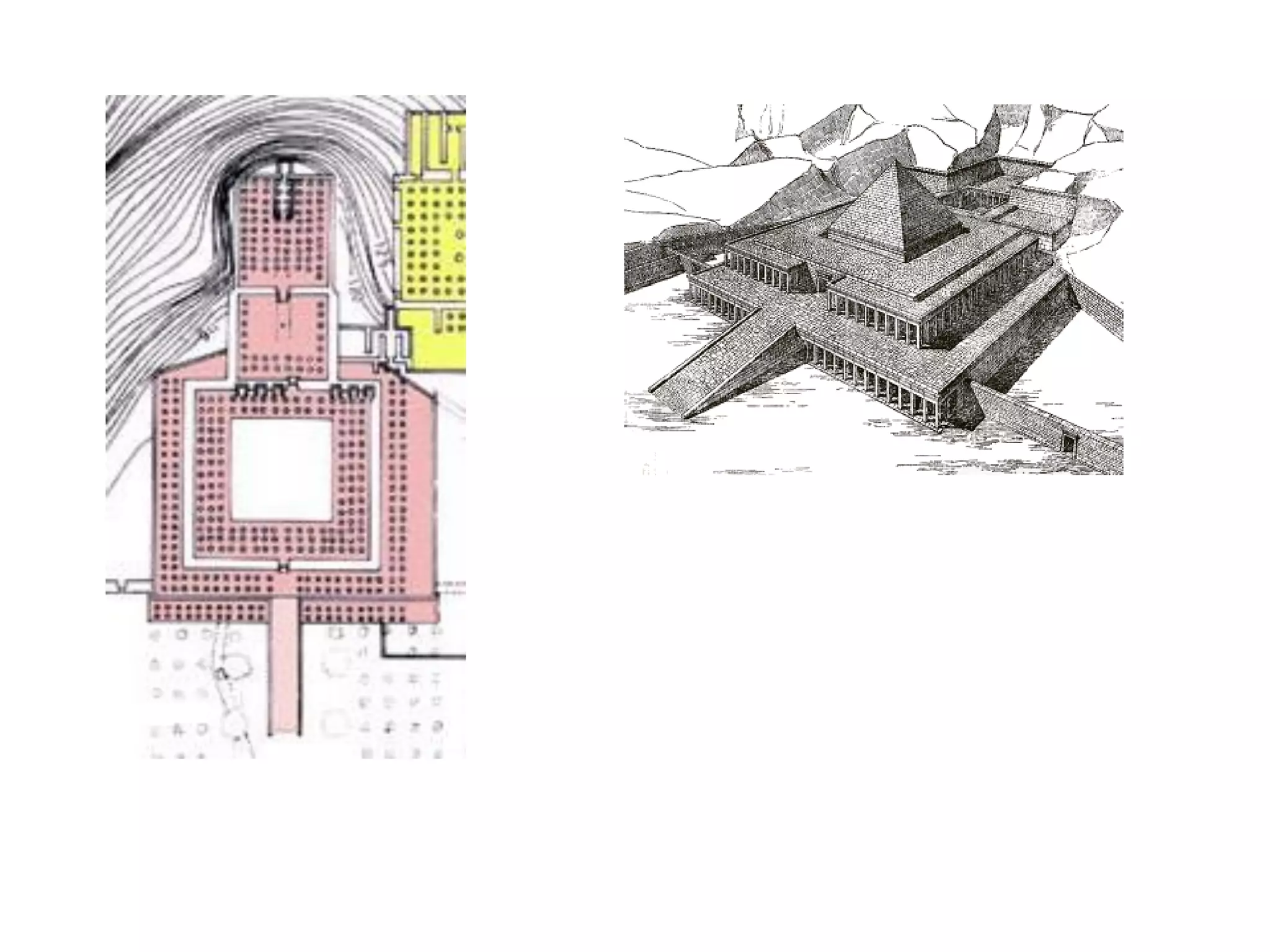
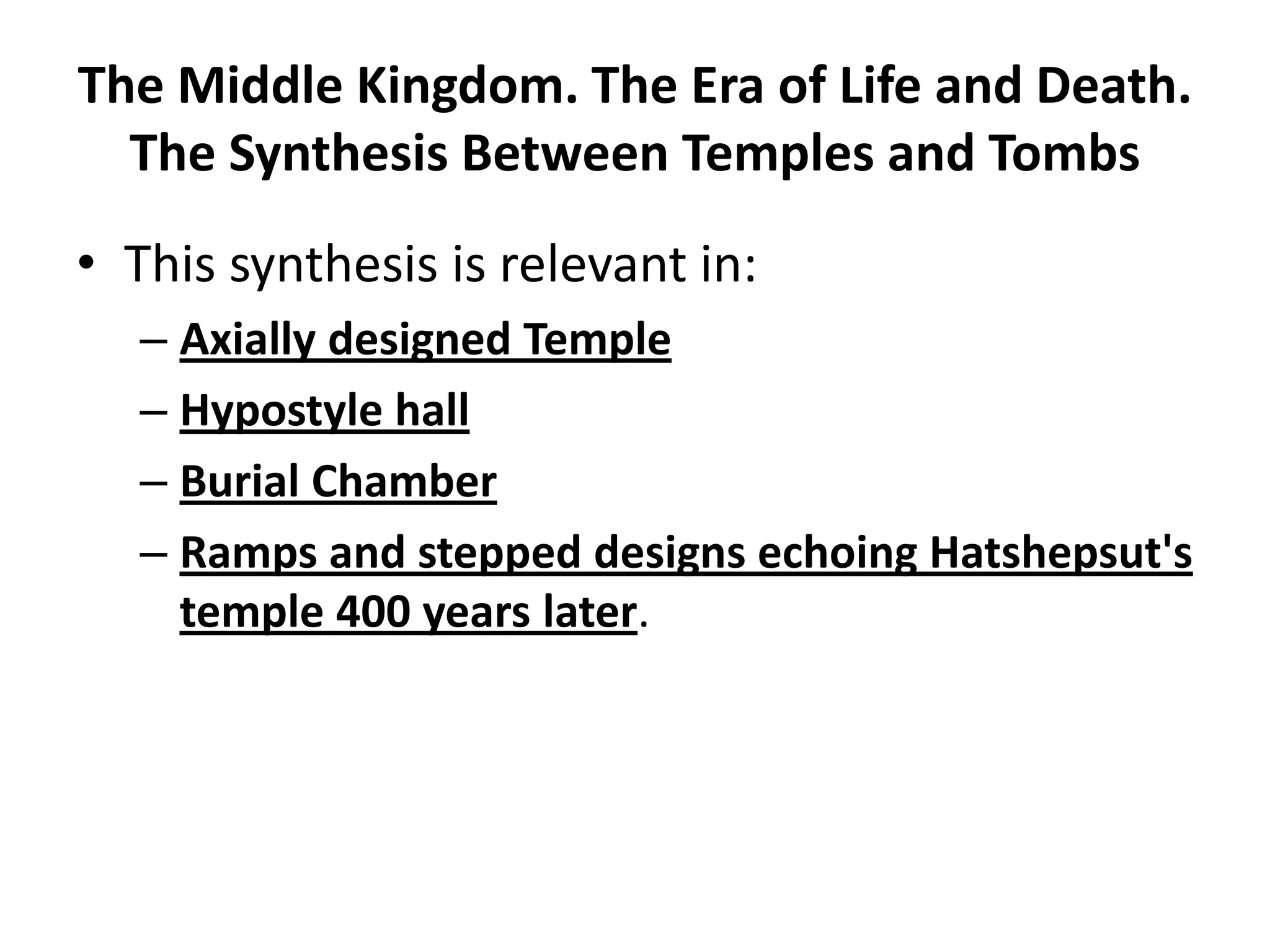
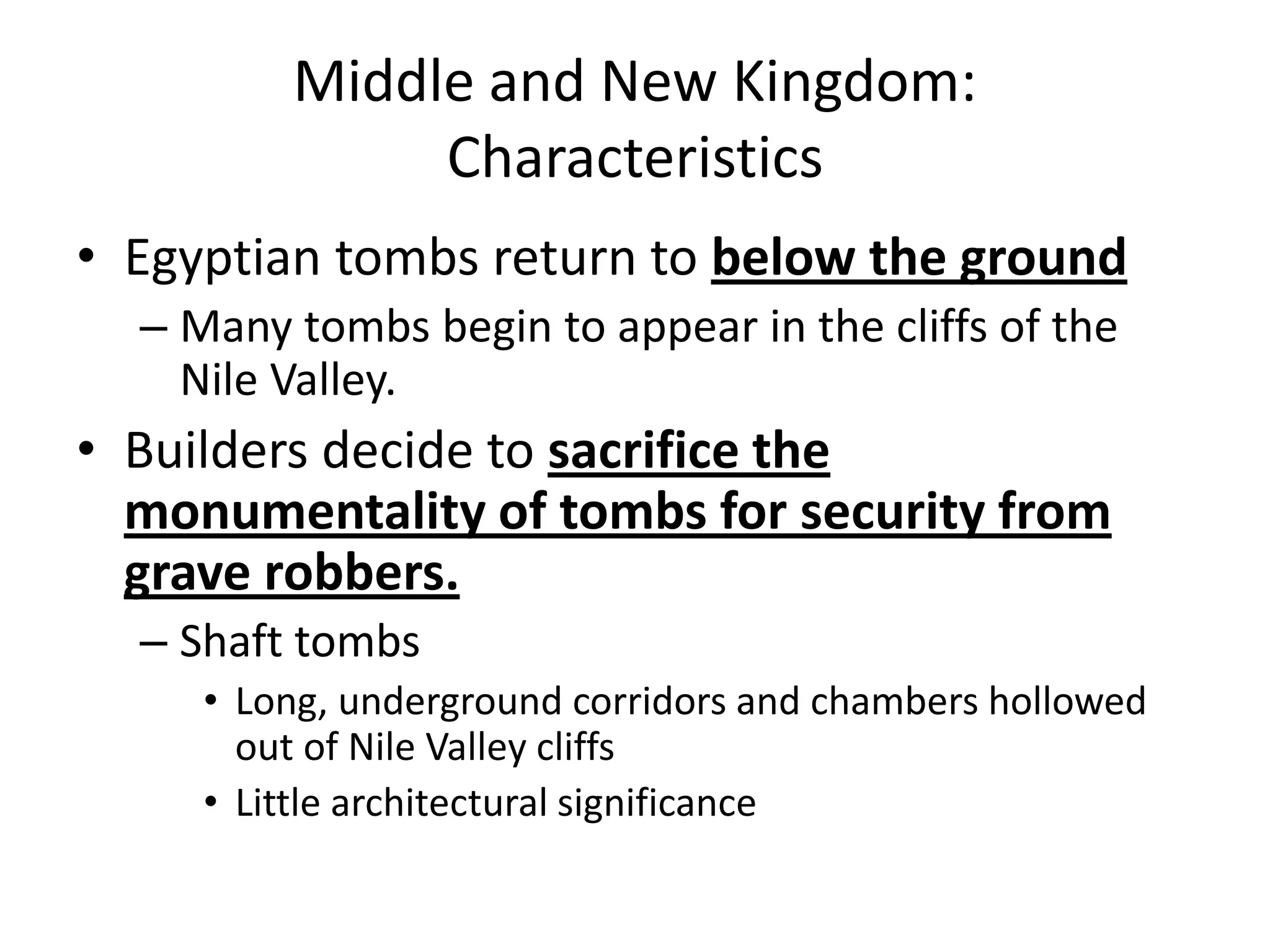

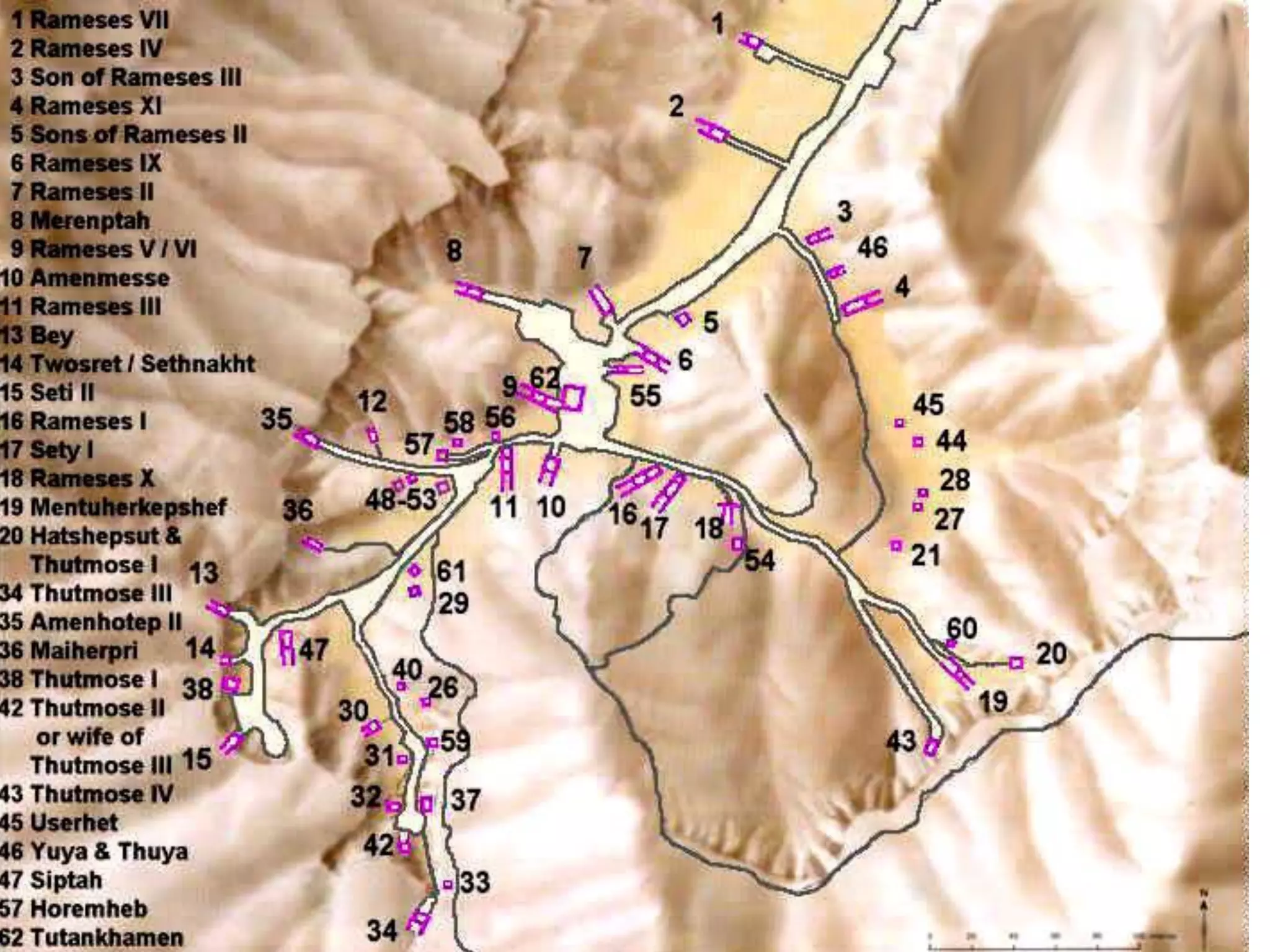

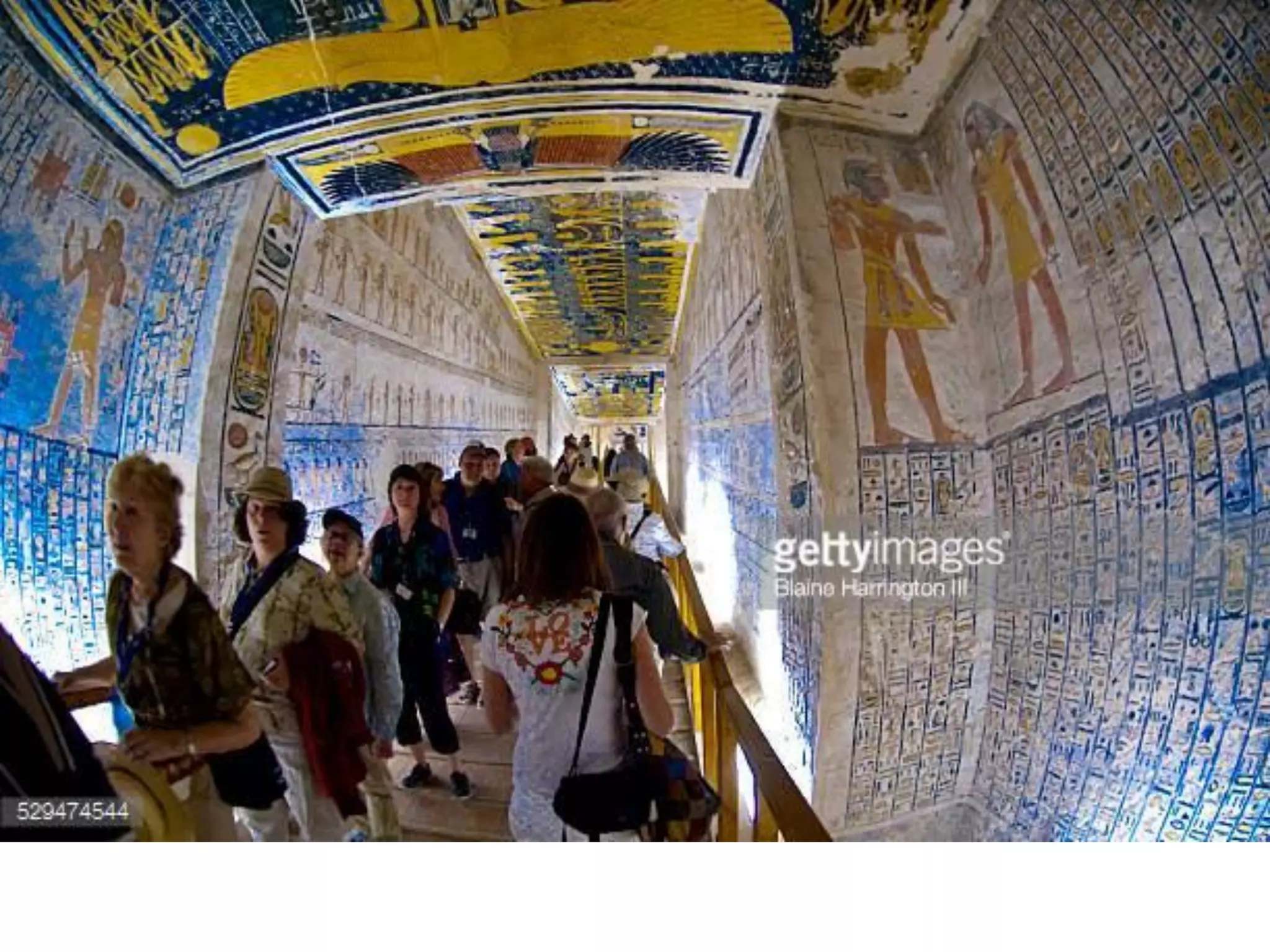
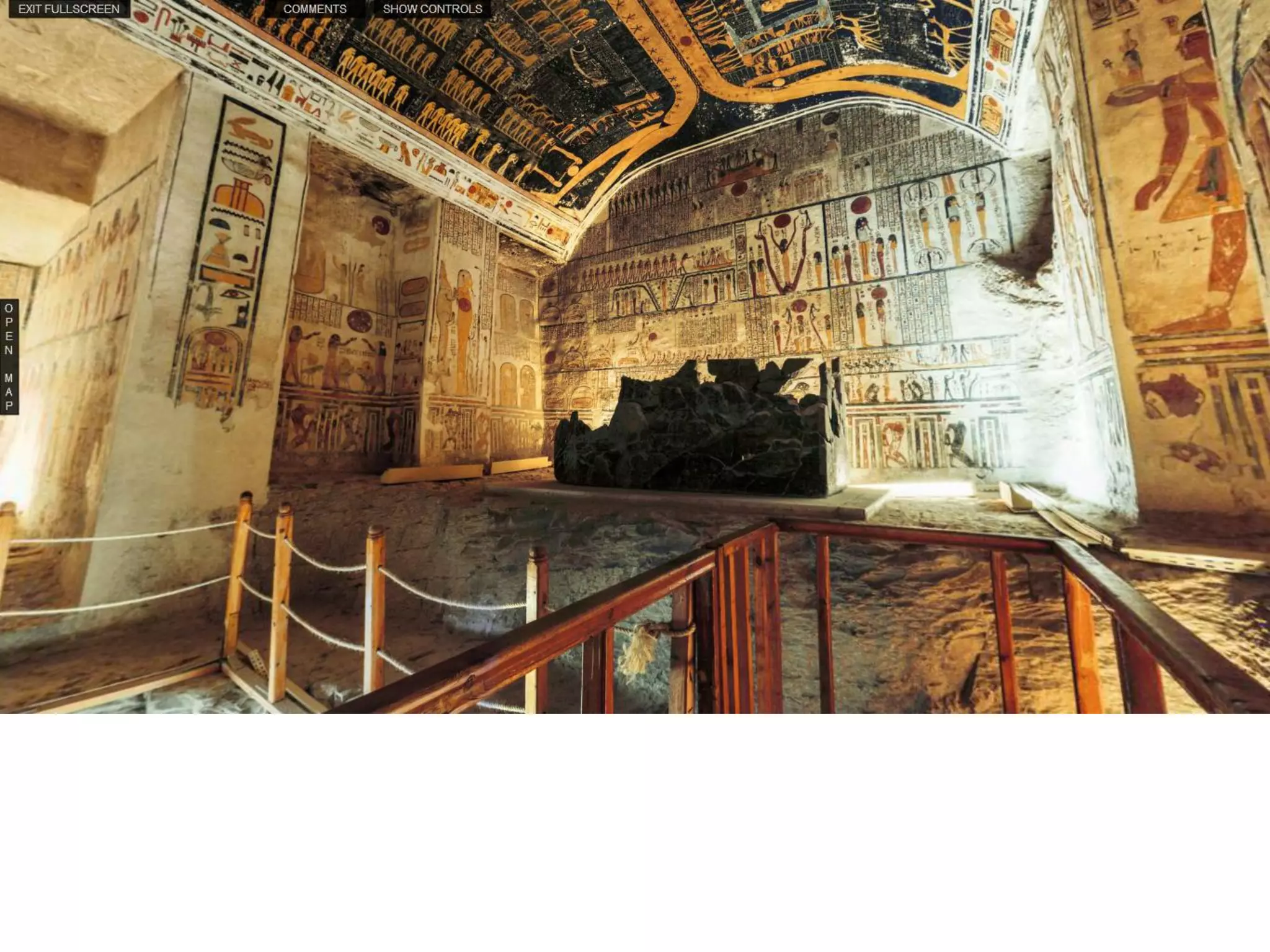
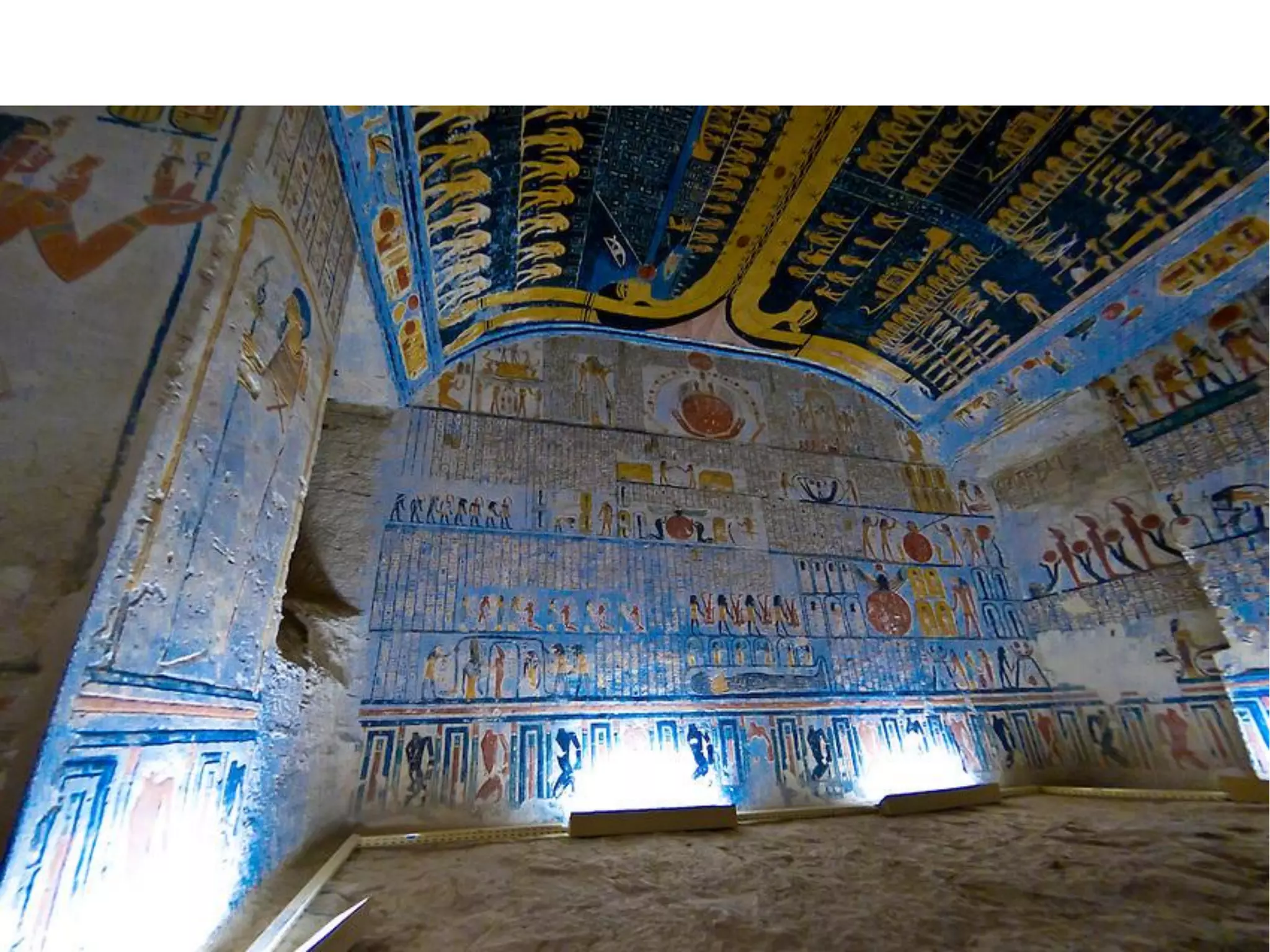

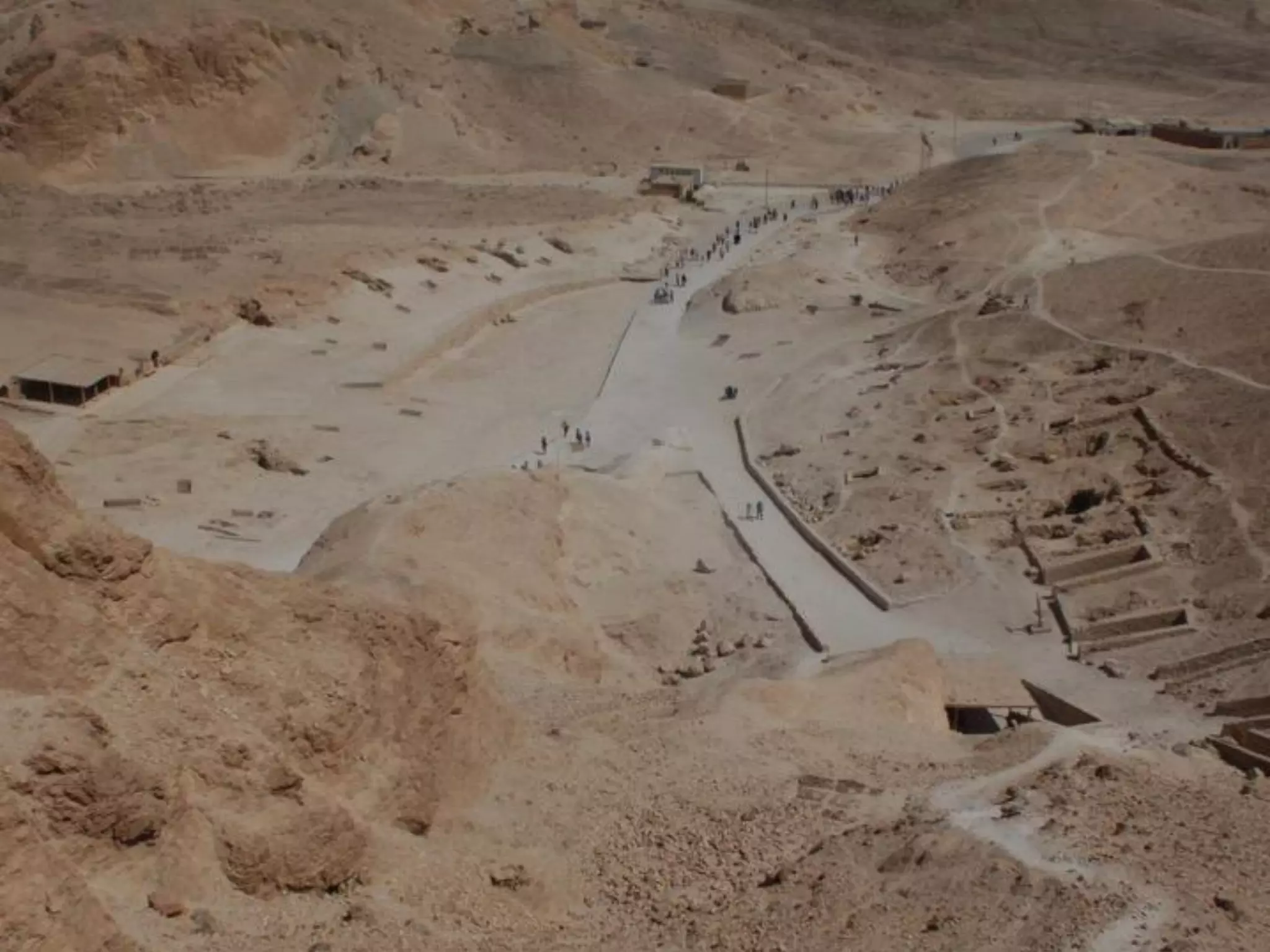
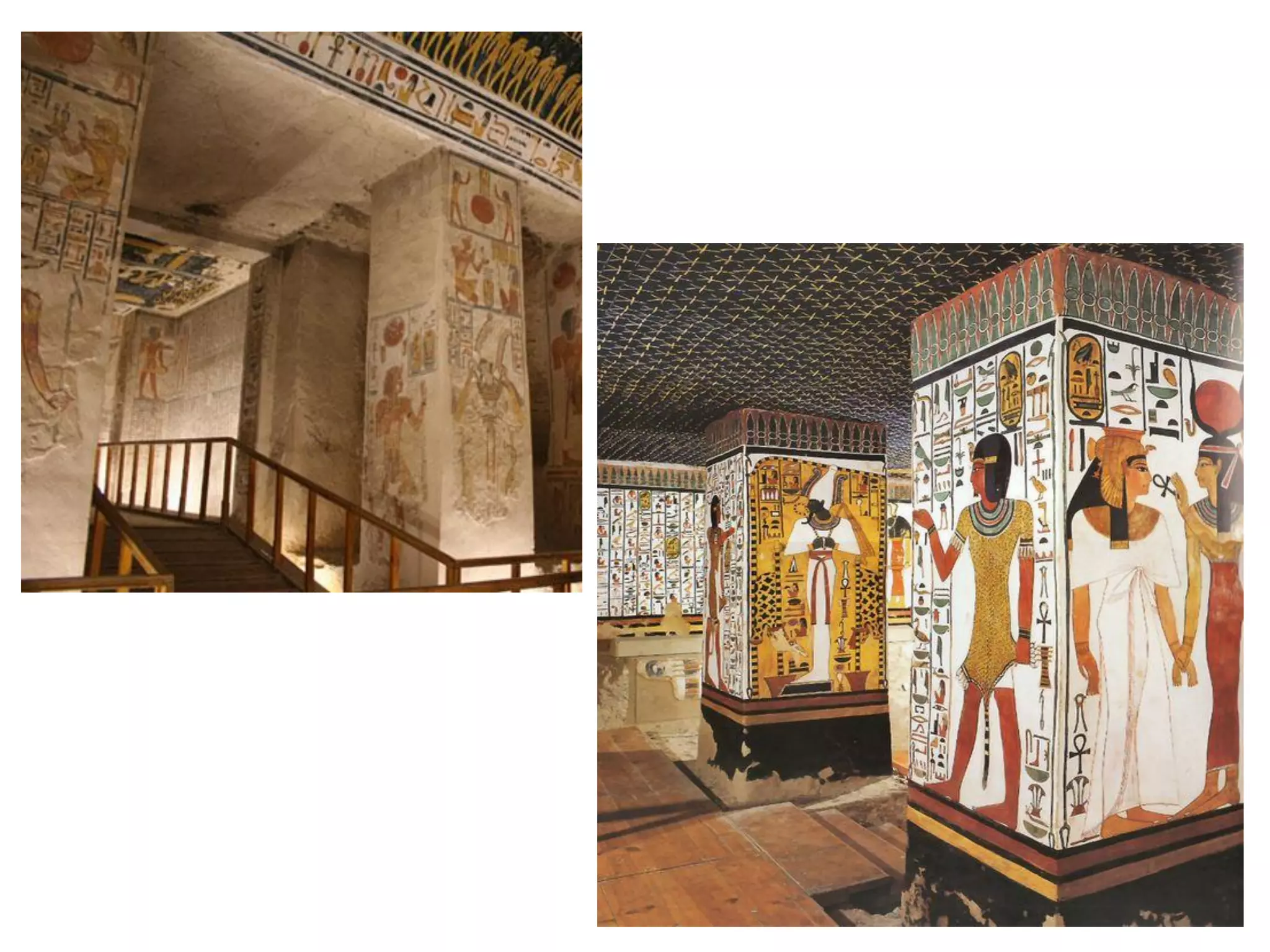
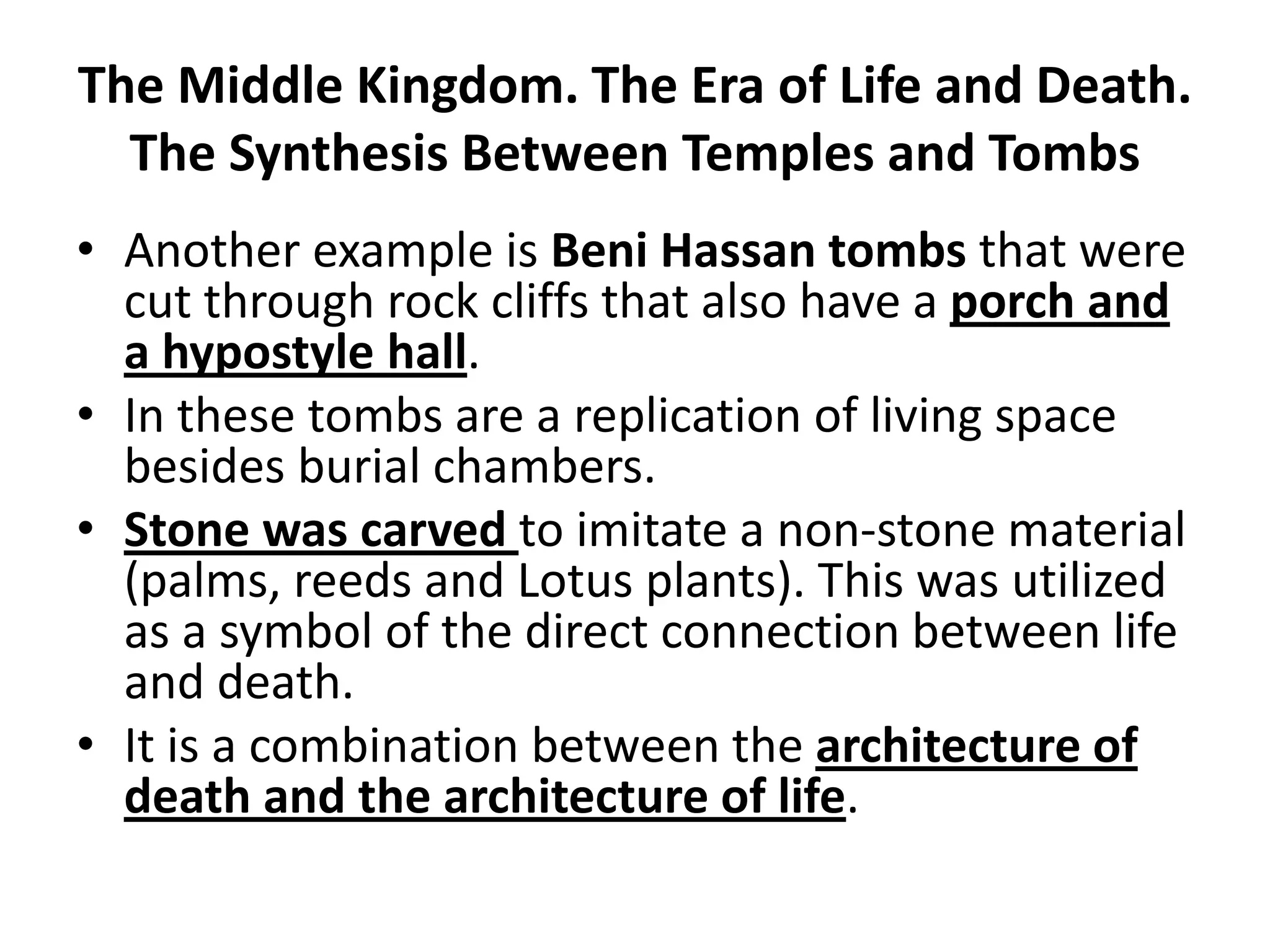


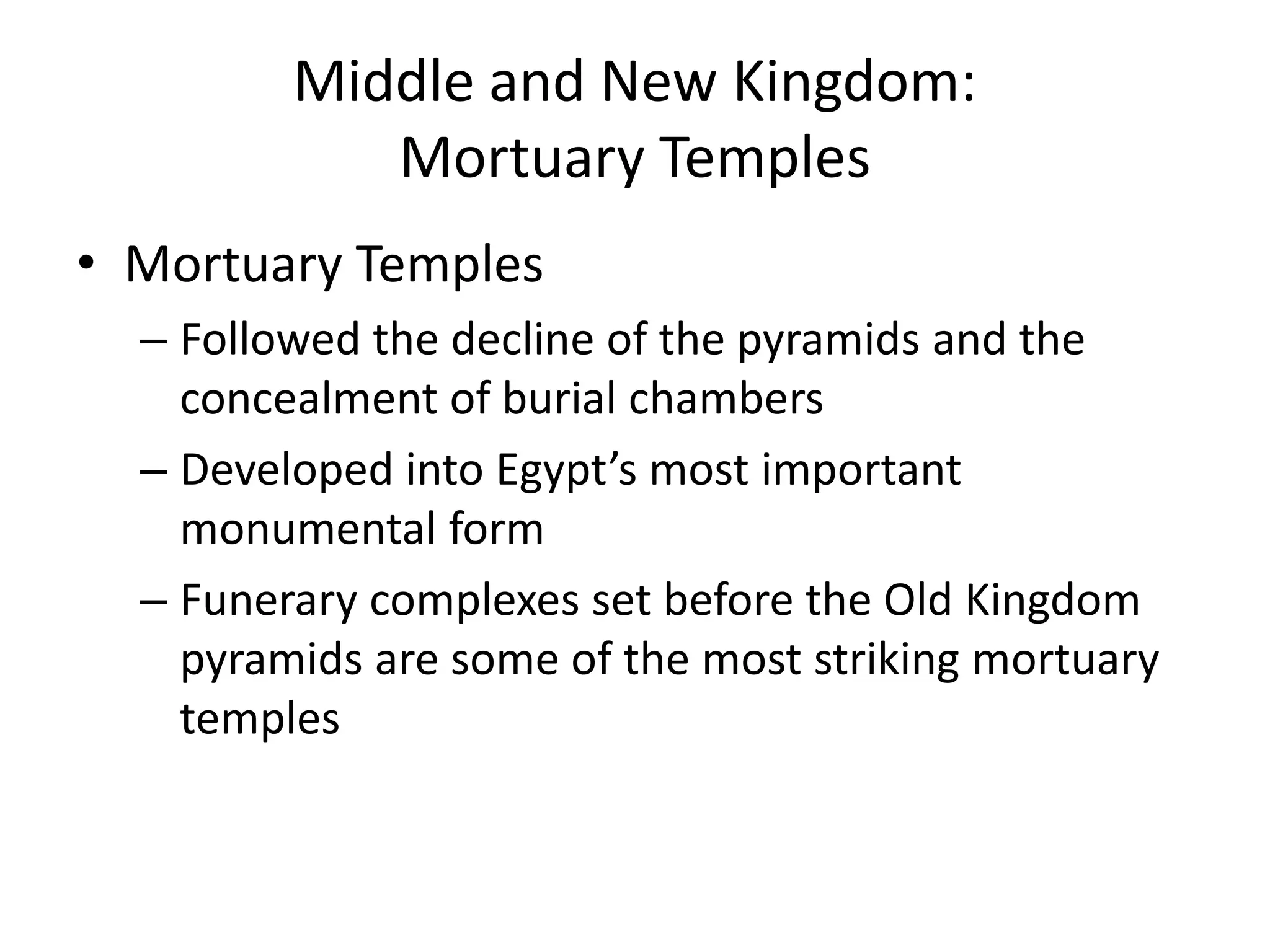
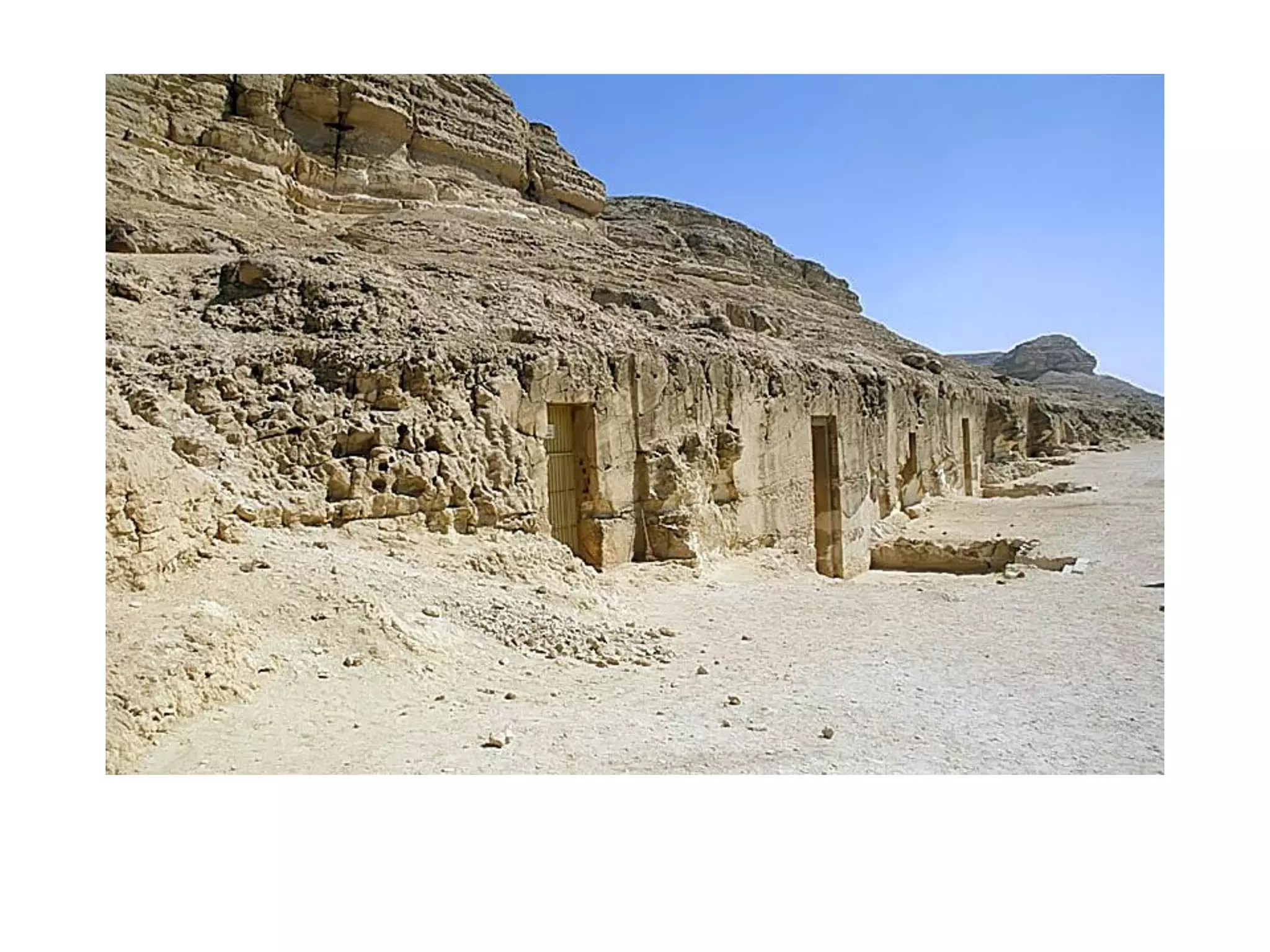
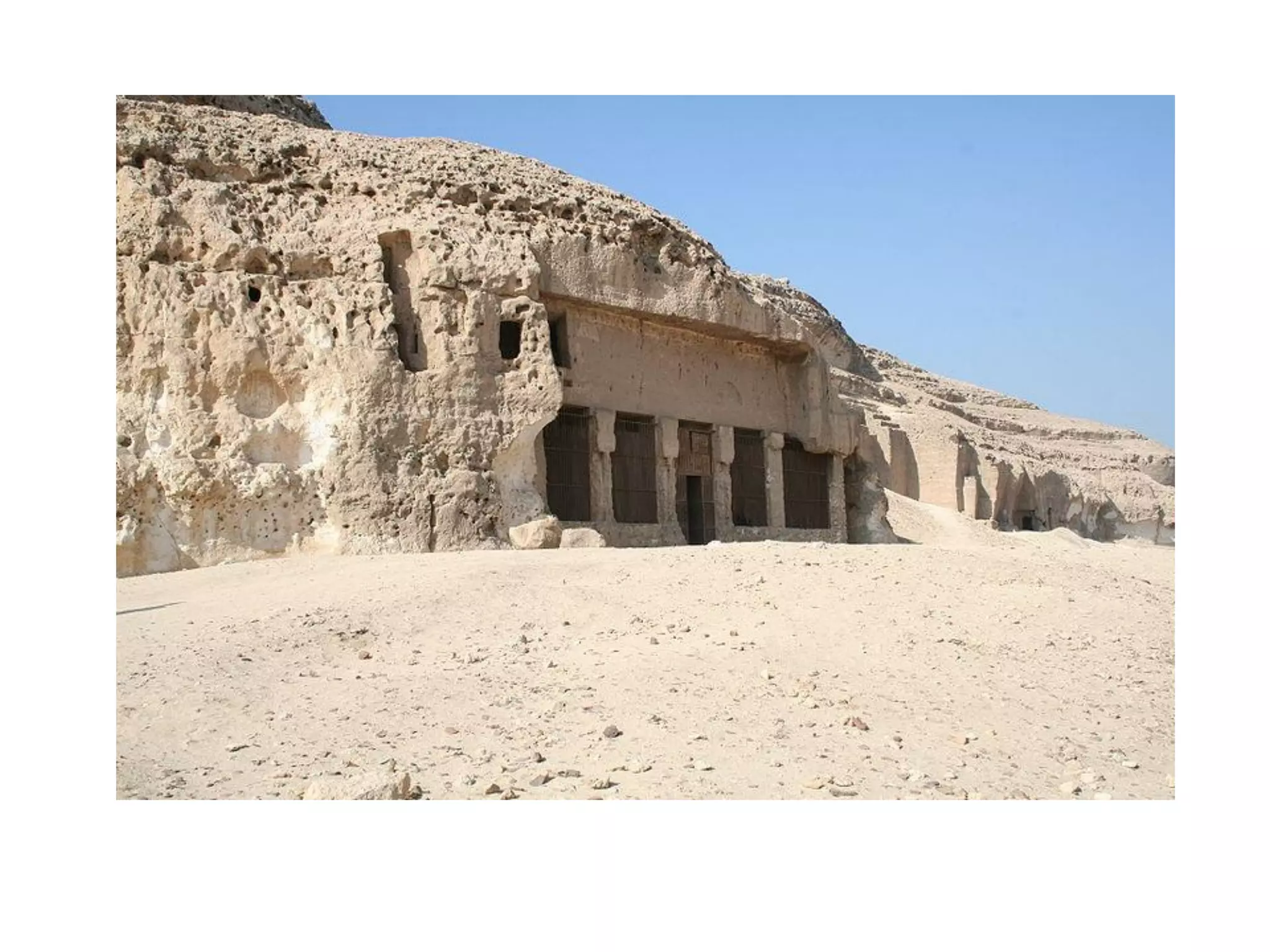
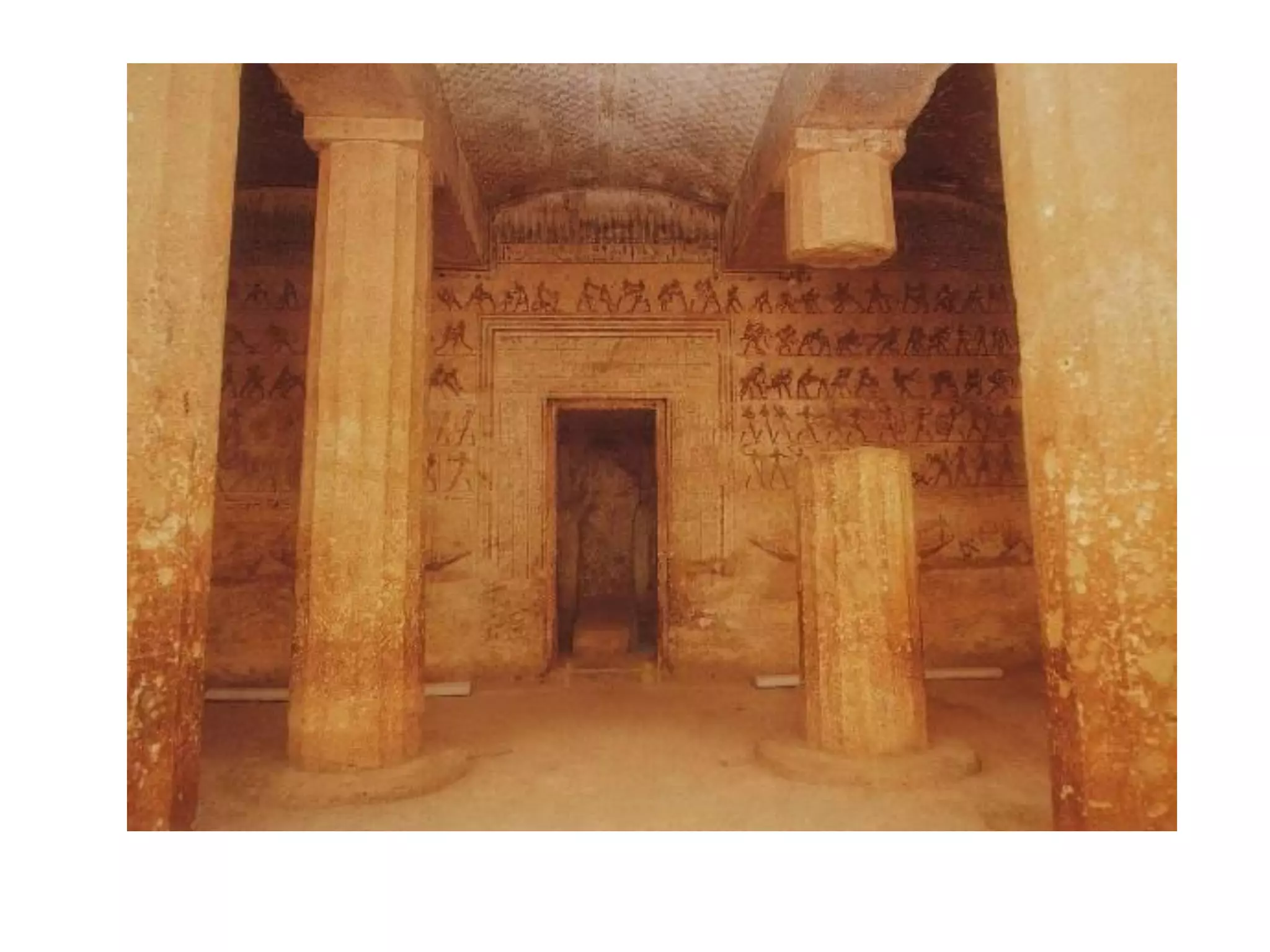
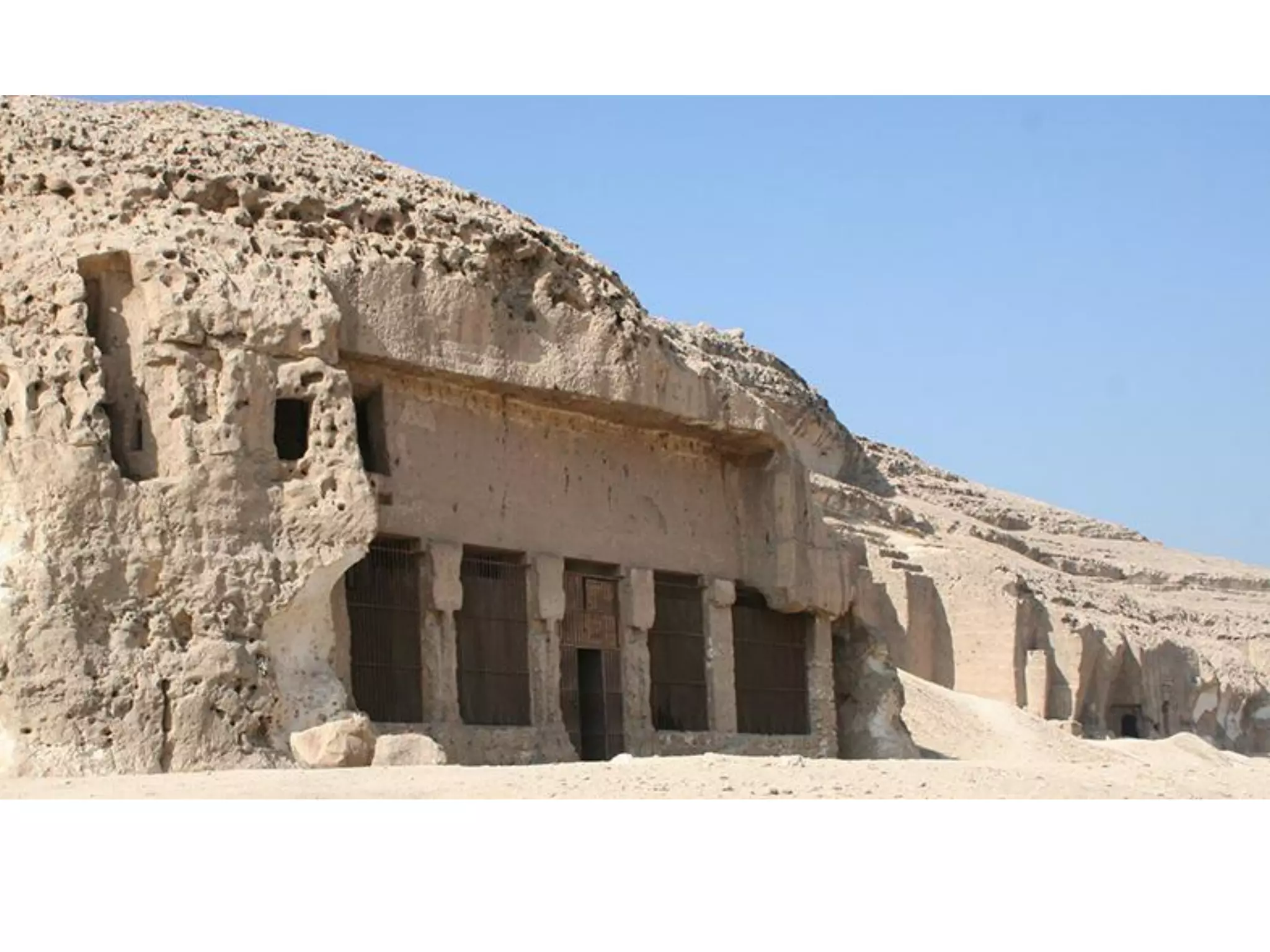
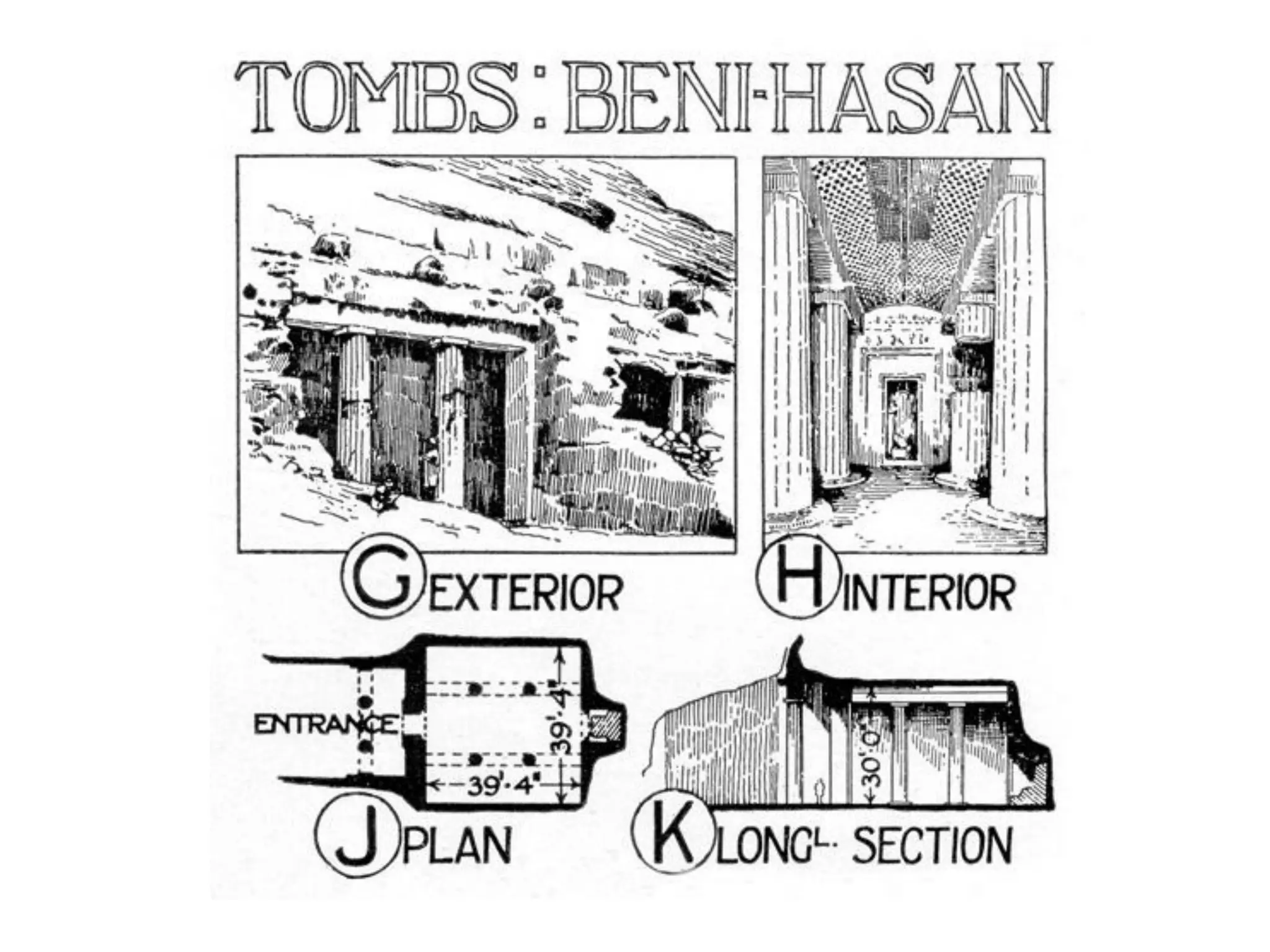
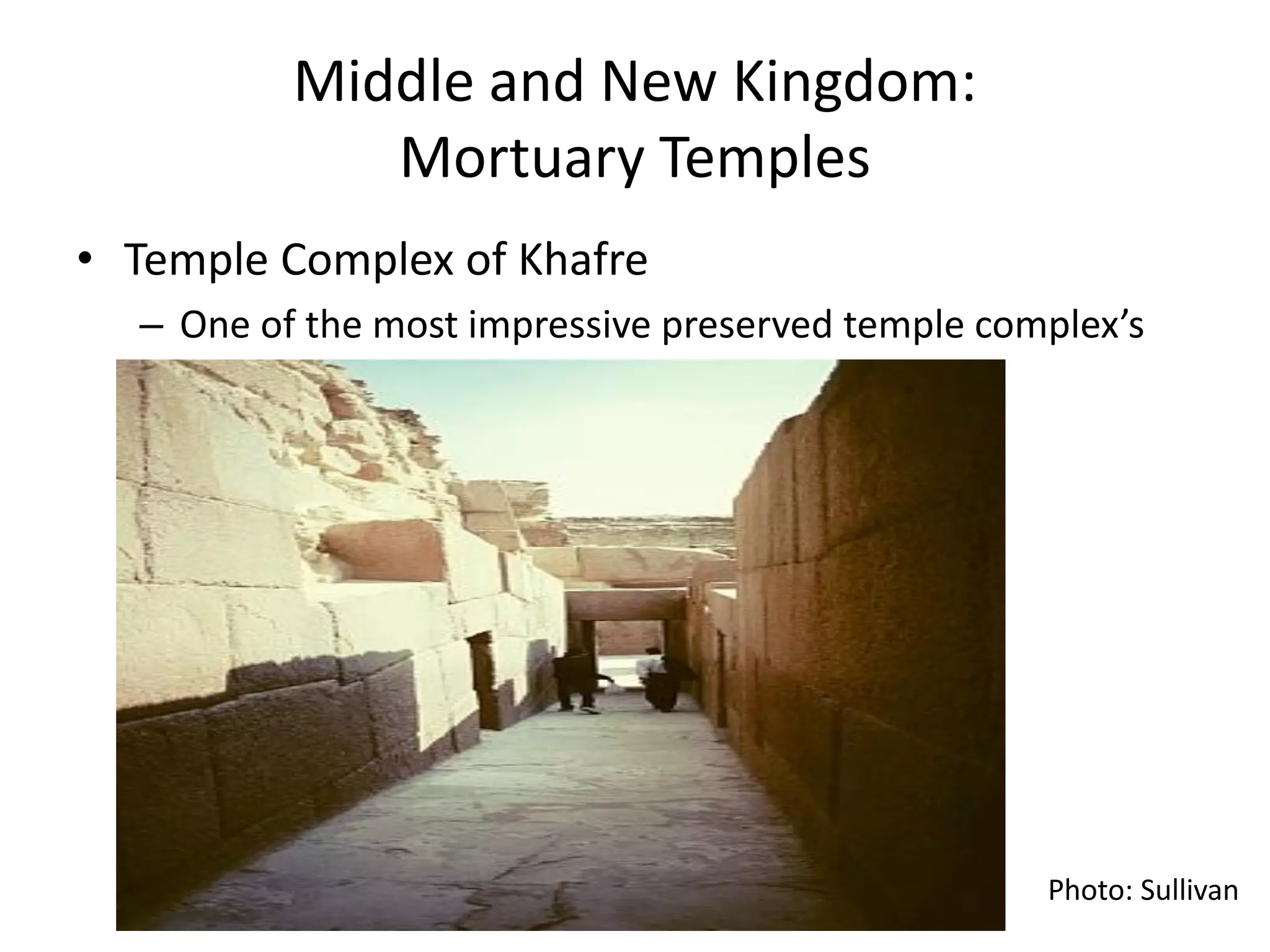
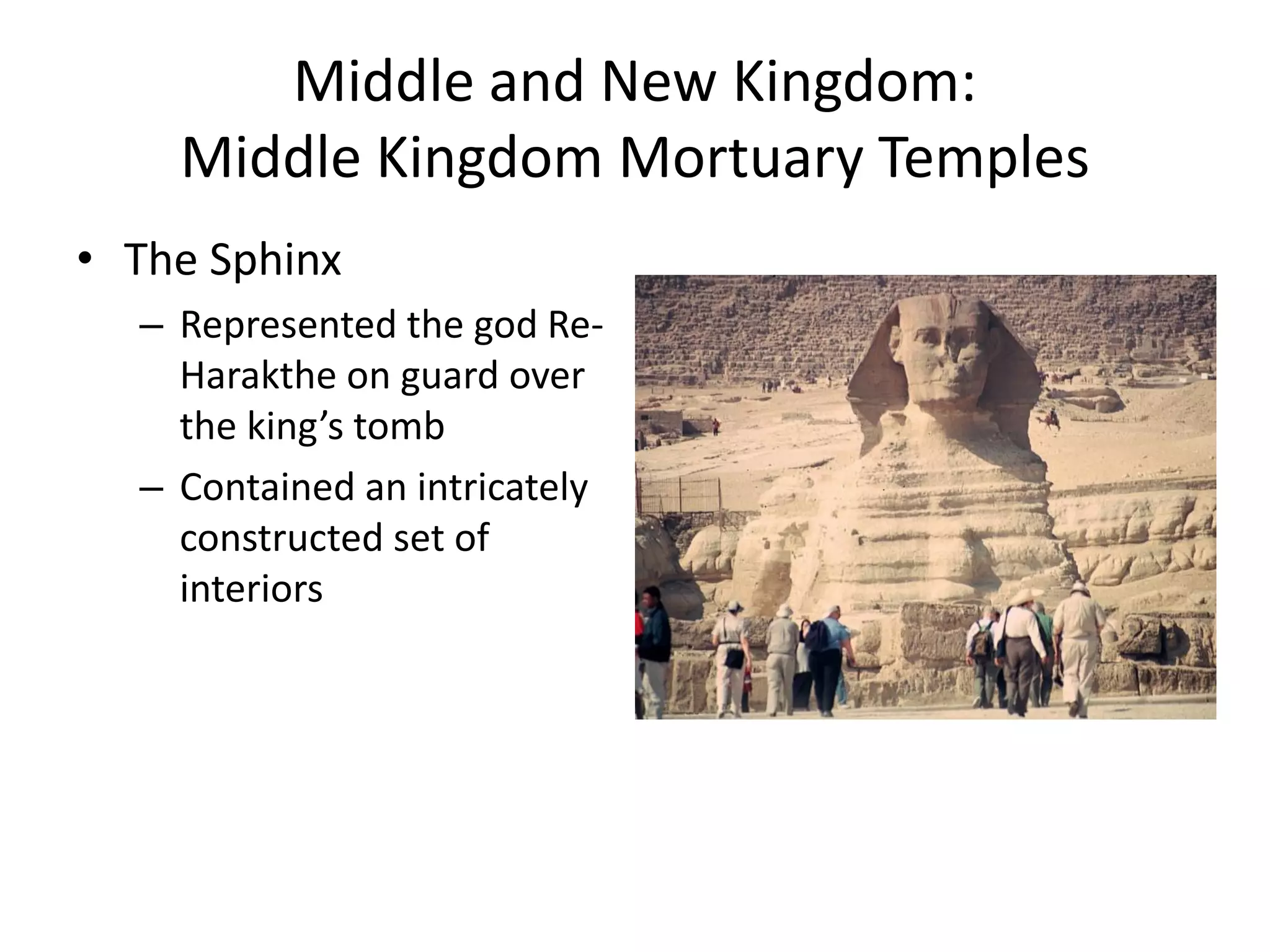
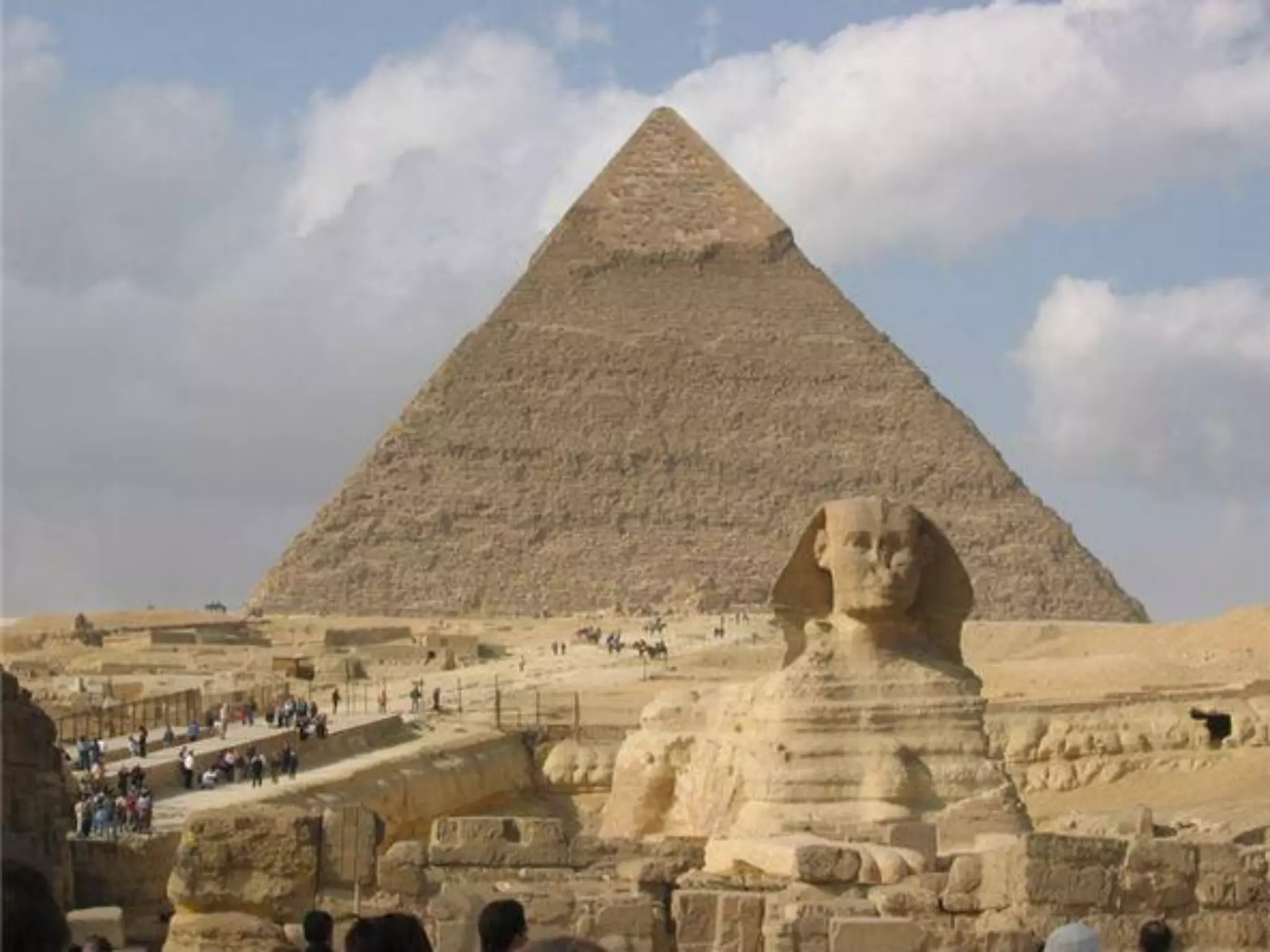

Ancient Egyptians were obsessed with the afterlife and built elaborate tombs and pyramids to assist with the soul's journey after death. The document discusses the evolution of tomb architecture from early mastabas to stepped pyramids to true smooth-sided pyramids. Key developments included Imhotep's design of the Step Pyramid at Saqqara, the first stone structure and use of columns, and later the massive Great Pyramid at Giza, considered one of the finest examples of megalithic architecture. Egyptian tombs also began to incorporate elements of temple architecture to further synthesize concepts of life and death.


![[BROCHURE] Italy Tour Project | @SlideON](https://cdn.slidesharecdn.com/ss_thumbnails/brochure8-251215152319-2805af68-thumbnail.jpg?width=640&height=640&fit=bounds)


