


Faculty of Engineering and Technology
Department of Architectural Engineering
ARC 323 : Human Studies in
Architecture
Fall 2018
Dr. Yasser Mahgoub
Topics 1
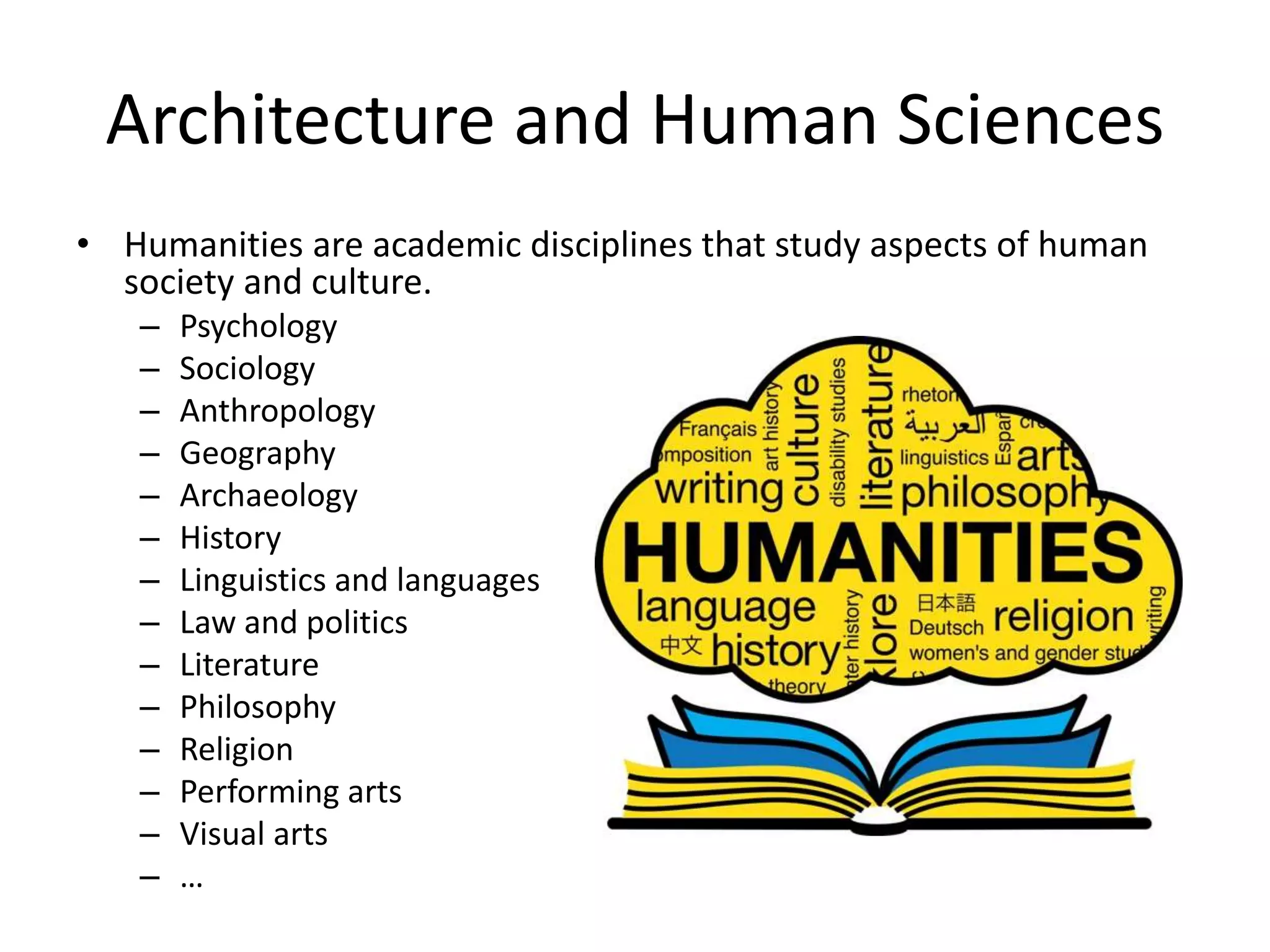
Architecture and Human Sciences
• Humanities are academic disciplines that study aspects of human
society and culture.
– Psychology
– Sociology
– Anthropology
– Geography
– Archaeology
– History
– Linguistics and languages
– Law and politics
– Literature
– Philosophy
– Religion
– Performing arts
– Visual arts
– …
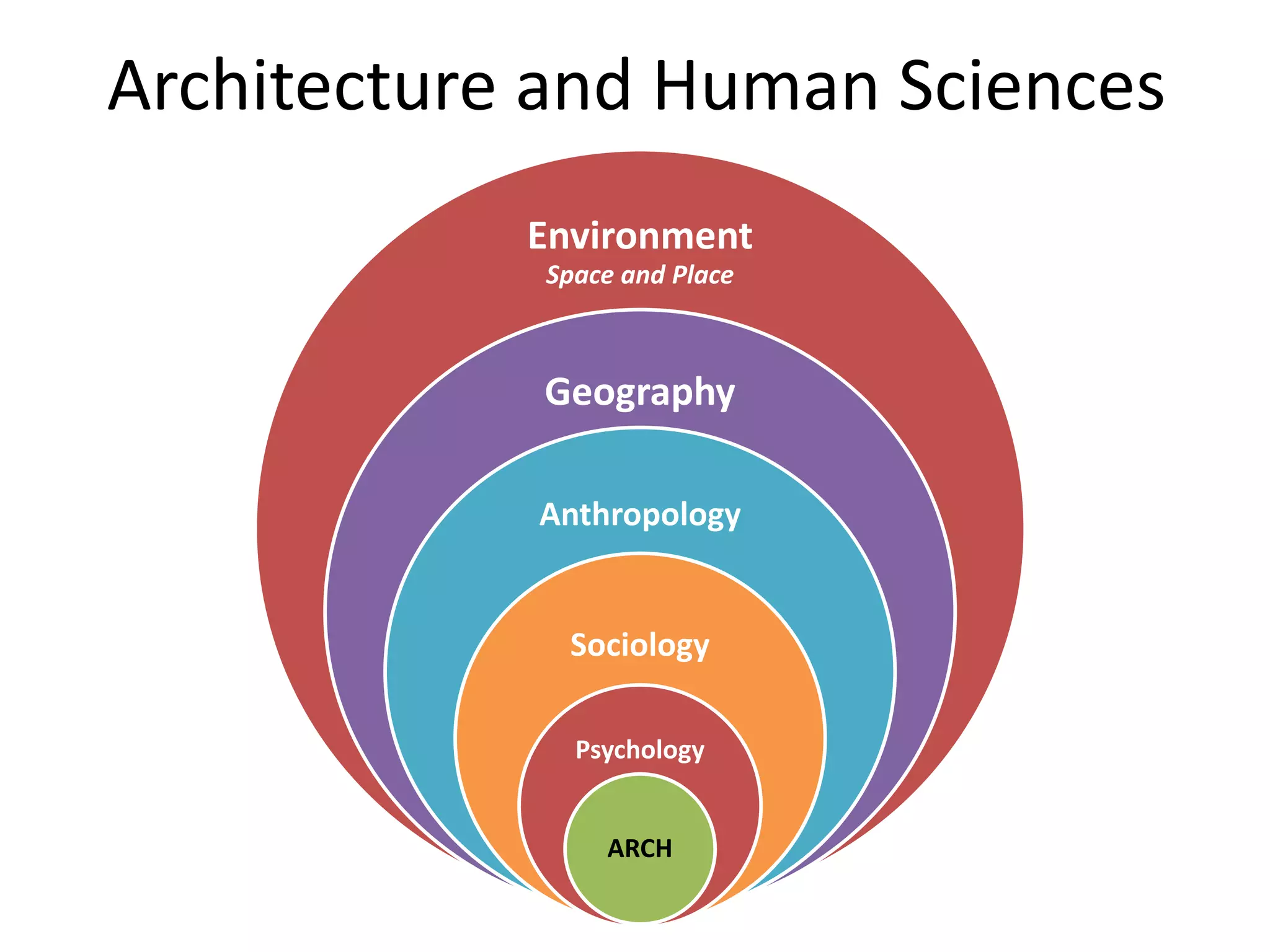
Environment
Space and Place
Geography
Anthropology
Sociology
Psychology
ARCH
Architecture and Human Sciences
Human Sciences VS Natural Sciences
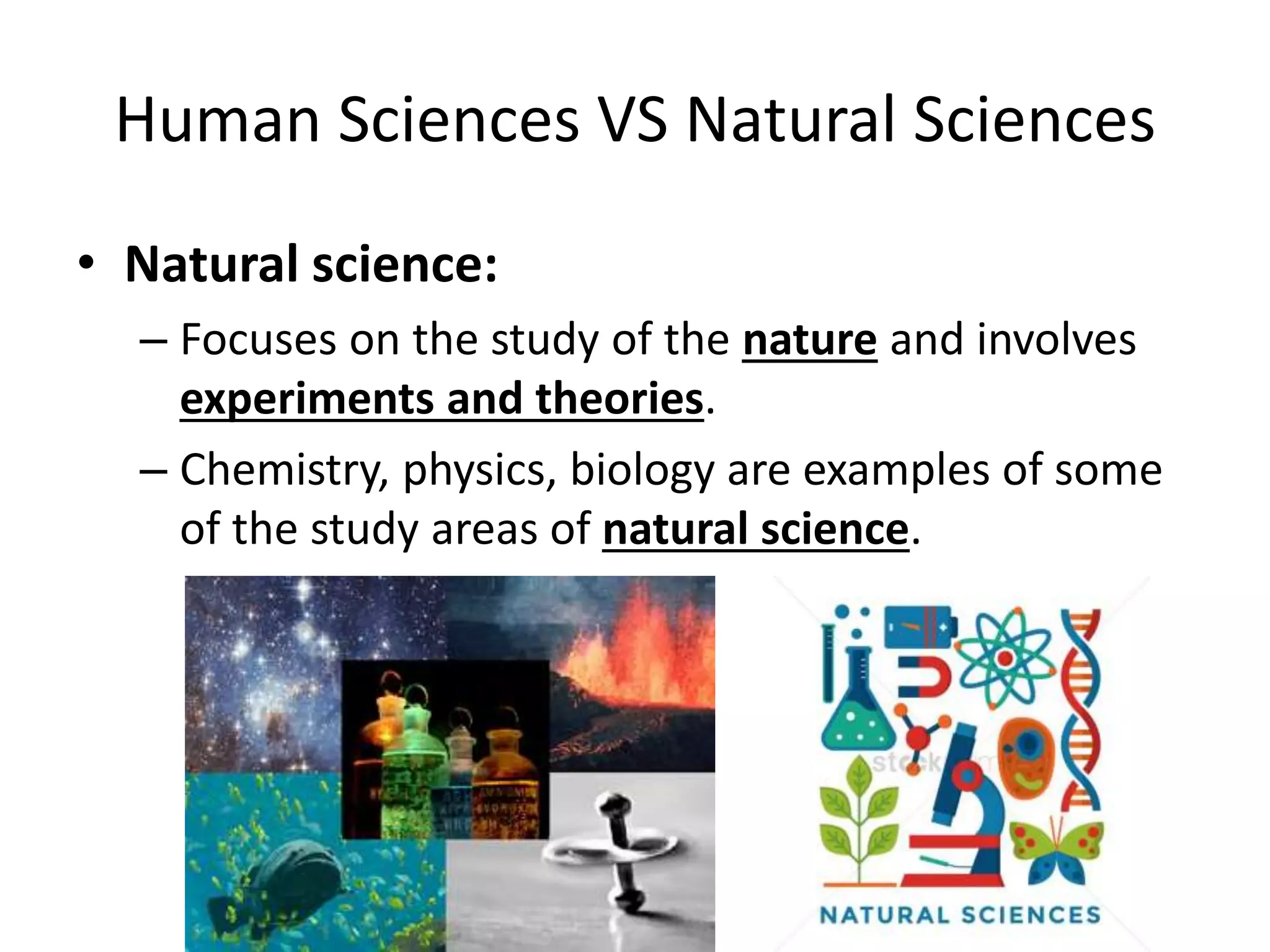
• Natural science:
– Focuses on the study of the nature and involves
experiments and theories.
– Chemistry, physics, biology are examples of some
of the study areas of natural science.
Human Sciences VS Natural Sciences
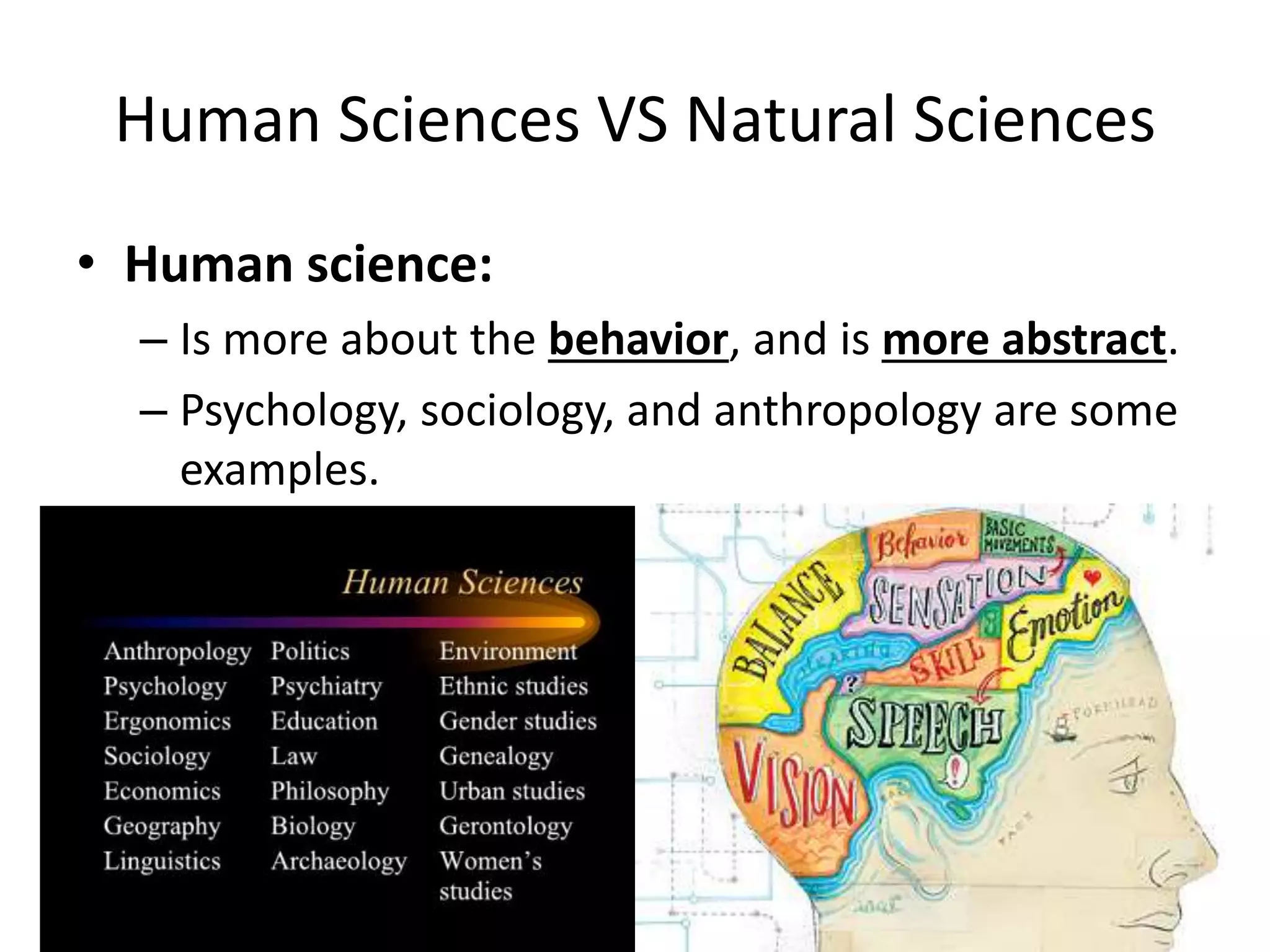
• Human science:
– Is more about the behavior, and is more abstract.
– Psychology, sociology, and anthropology are some
examples.
Human Perception
Perception
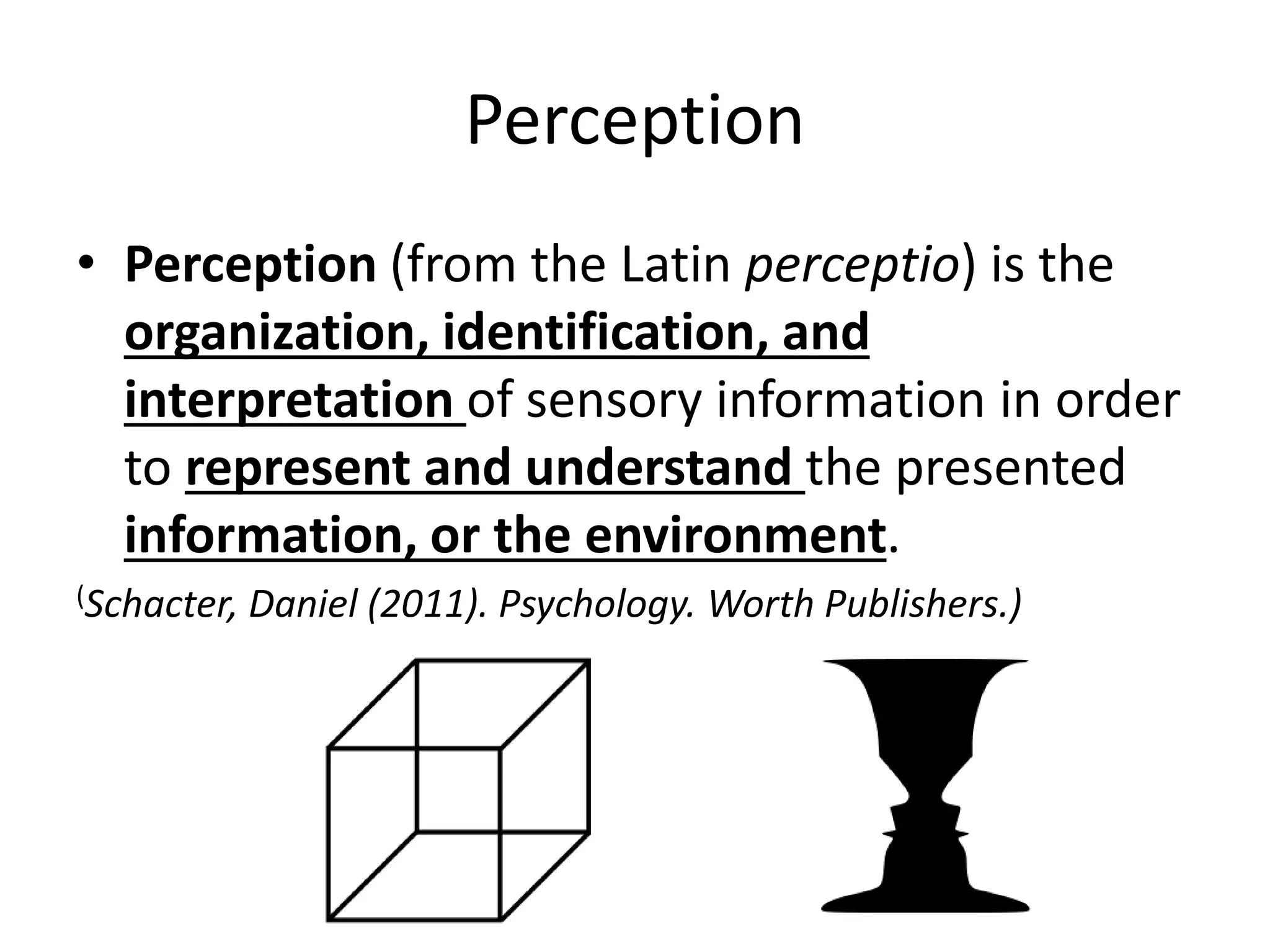
• Perception (from the Latin perceptio) is the
organization, identification, and
interpretation of sensory information in order
to represent and understand the presented
information, or the environment.
(Schacter, Daniel (2011). Psychology. Worth Publishers.)
Perception
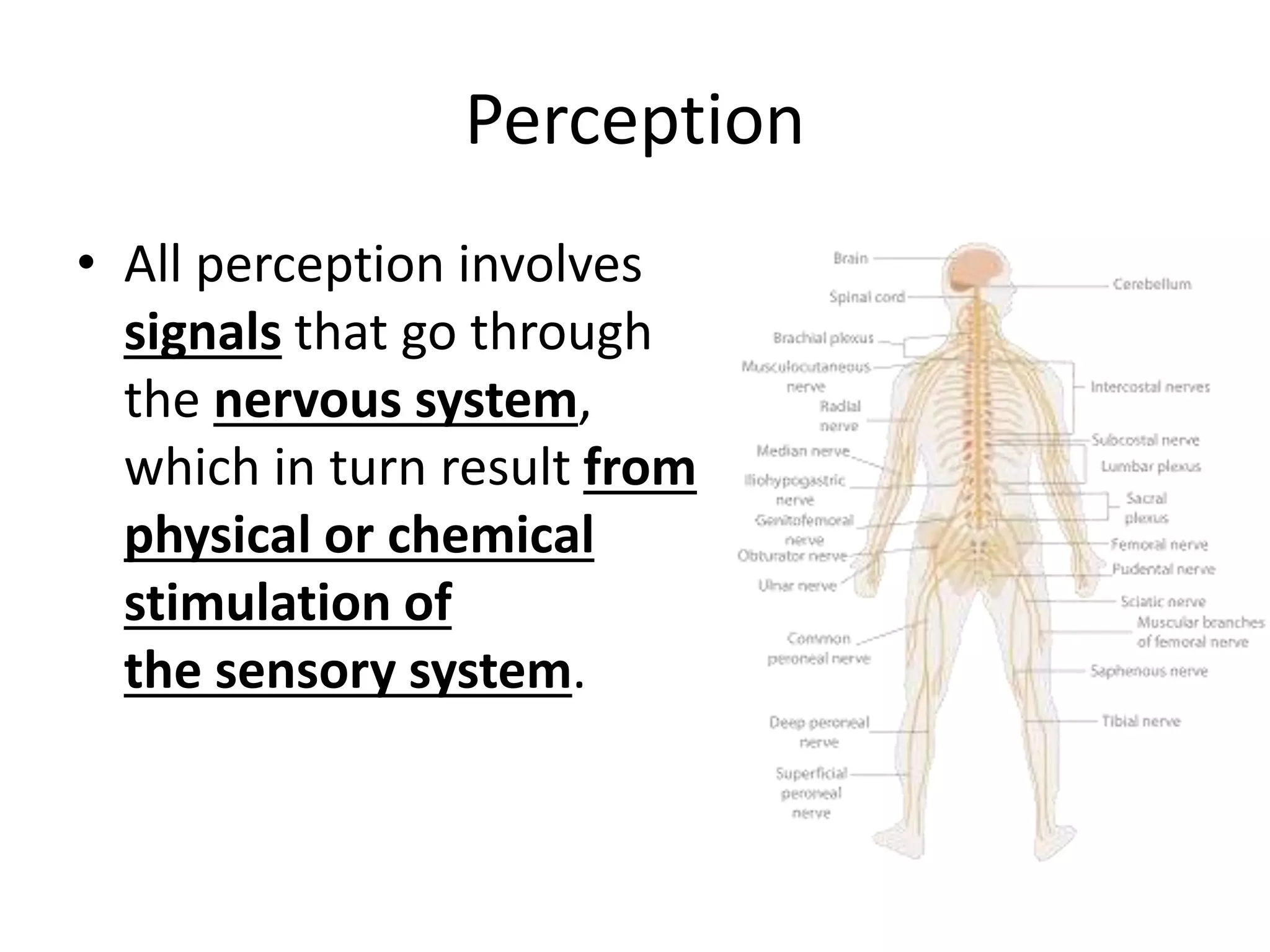
• All perception involves
signals that go through
the nervous system,
which in turn result from
physical or chemical
stimulation of
the sensory system.
Senses
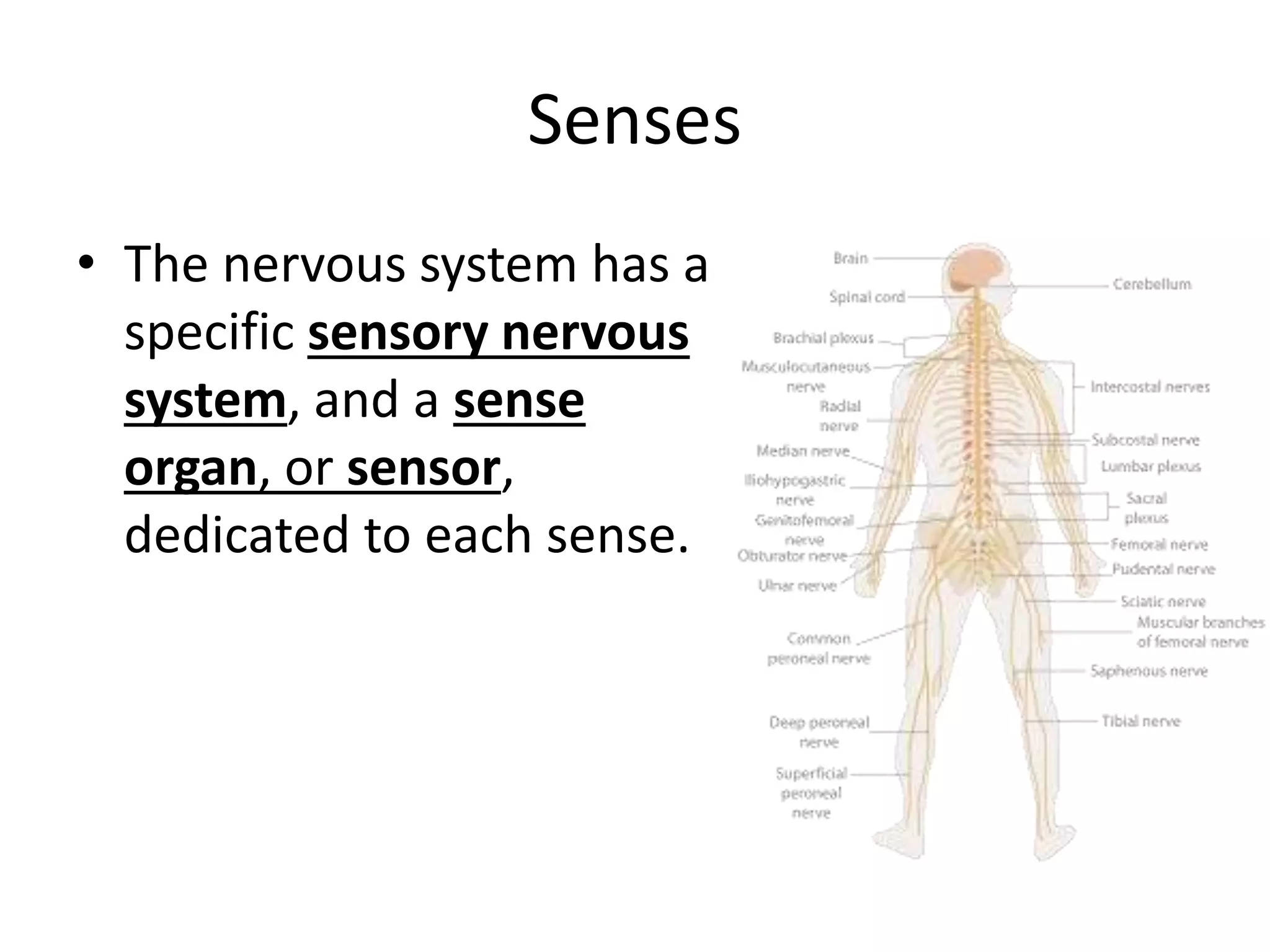
• The nervous system has a
specific sensory nervous
system, and a sense
organ, or sensor,
dedicated to each sense.
Senses
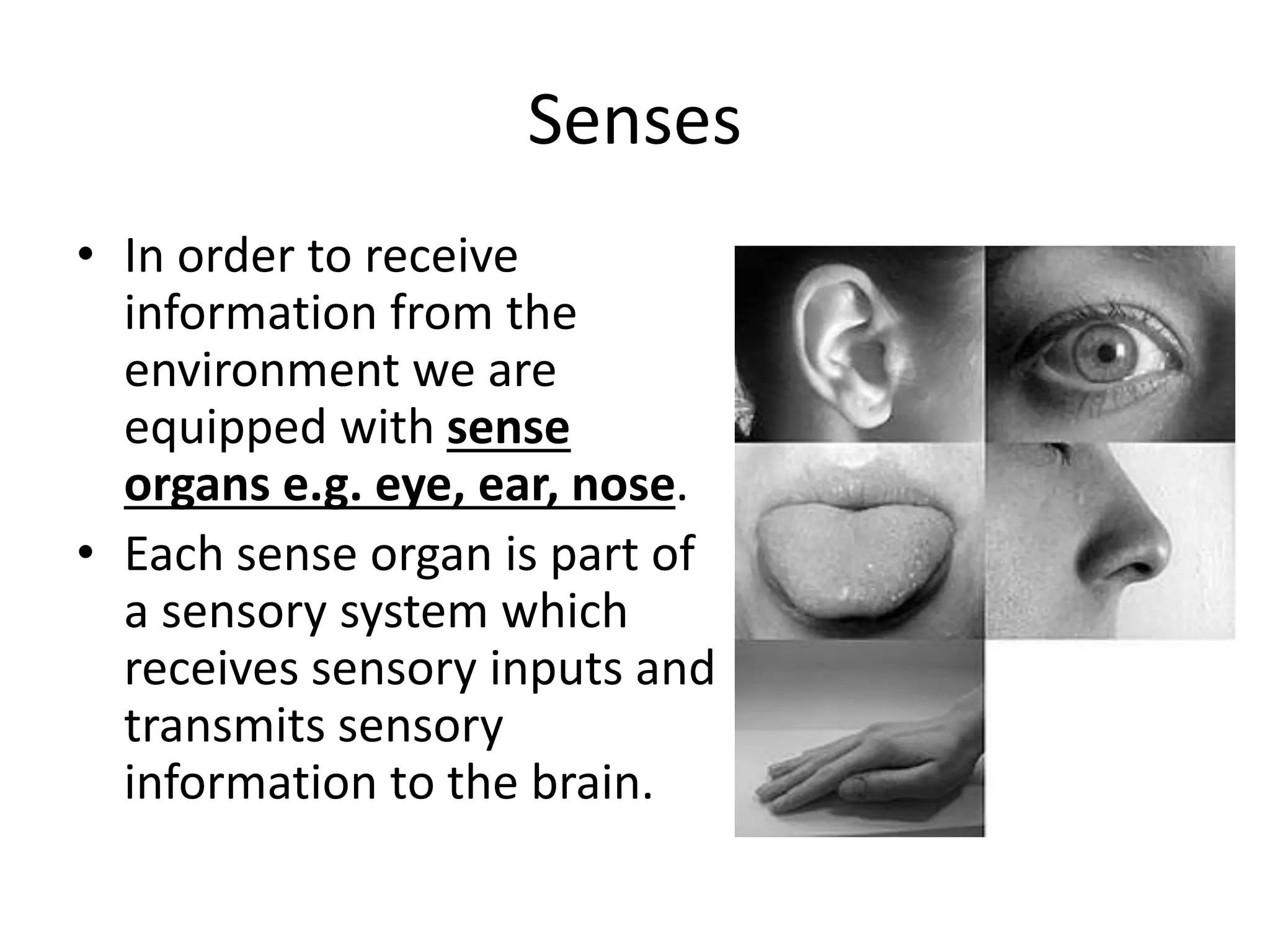
• In order to receive
information from the
environment we are
equipped with sense
organs e.g. eye, ear, nose.
• Each sense organ is part of
a sensory system which
receives sensory inputs and
transmits sensory
information to the brain.
Senses
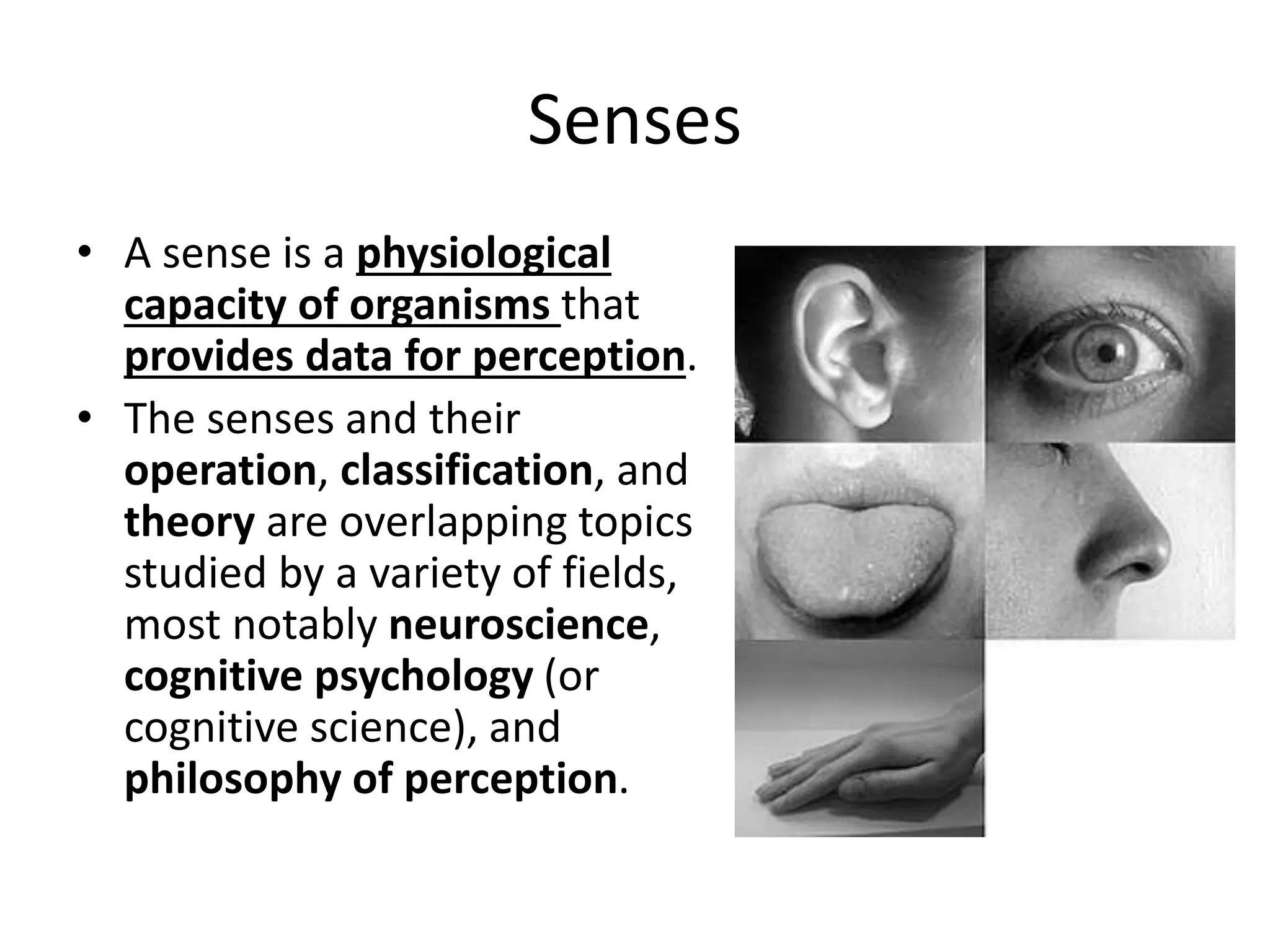
• A sense is a physiological
capacity of organisms that
provides data for perception.
• The senses and their
operation, classification, and
theory are overlapping topics
studied by a variety of fields,
most notably neuroscience,
cognitive psychology (or
cognitive science), and
philosophy of perception.
Senses
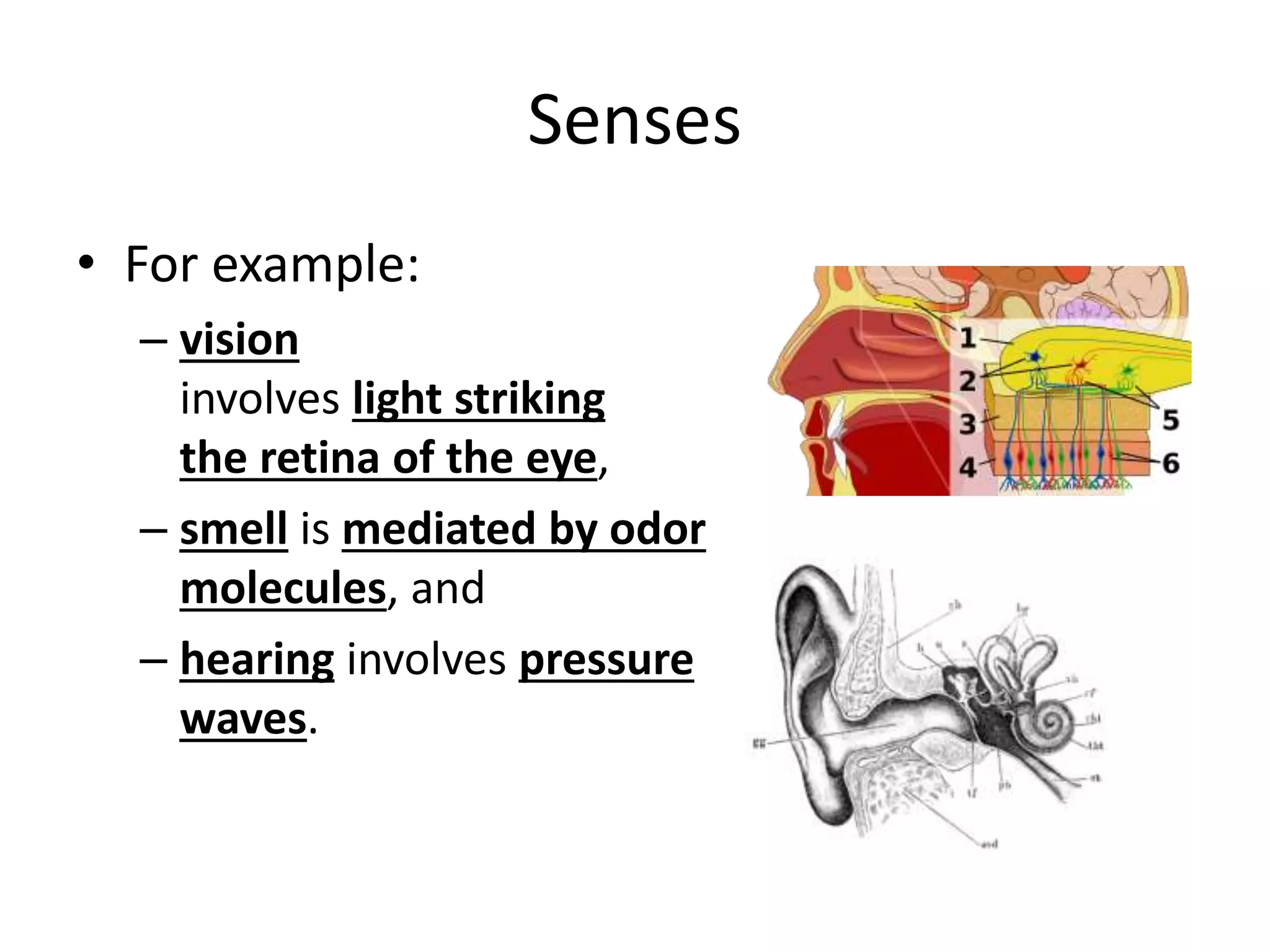
• For example:
– vision
involves light striking
the retina of the eye,
– smell is mediated by odor
molecules, and
– hearing involves pressure
waves.
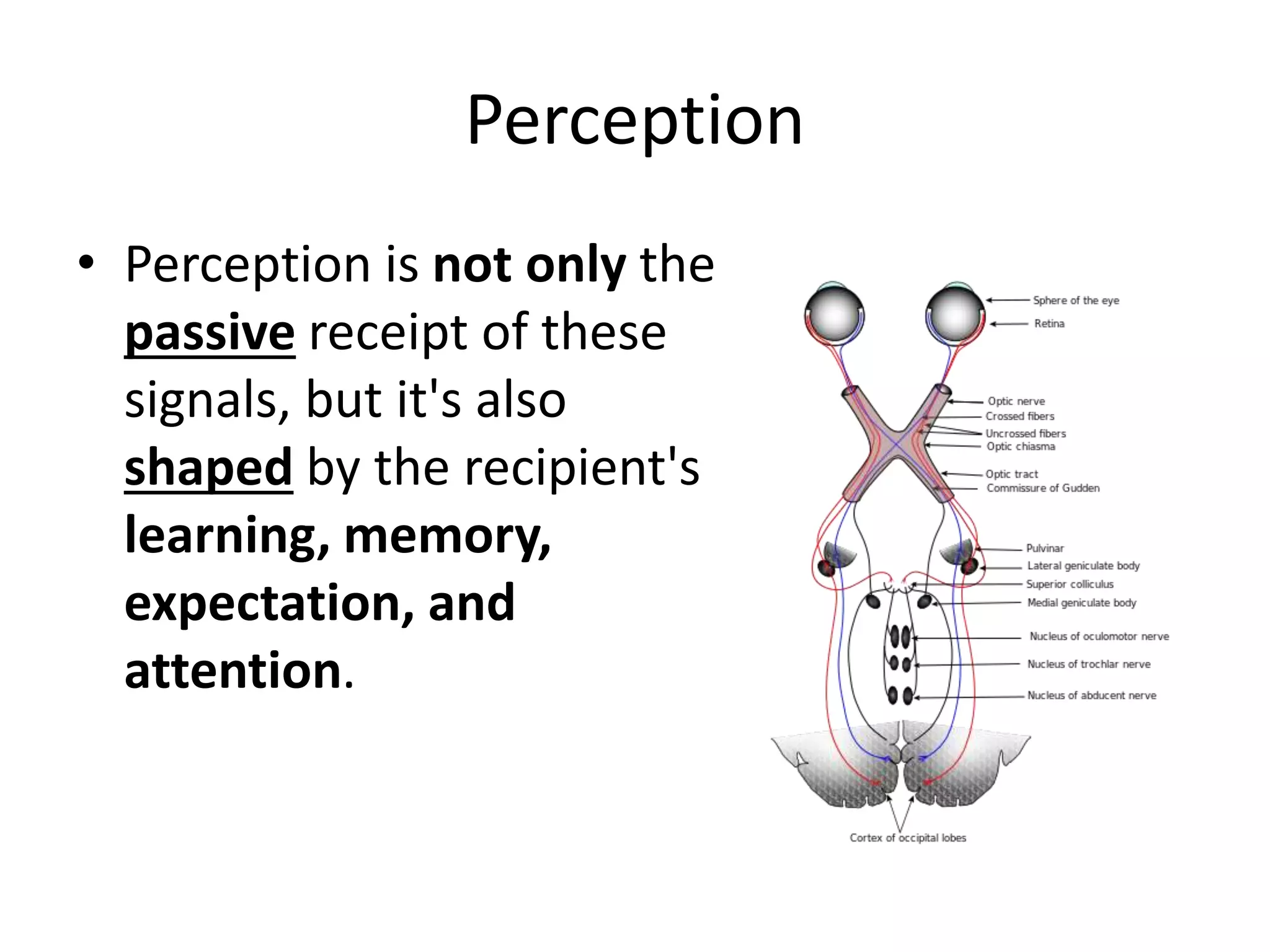
Perception
• Perception is not only the
passive receipt of these
signals, but it's also
shaped by the recipient's
learning, memory,
expectation, and
attention.
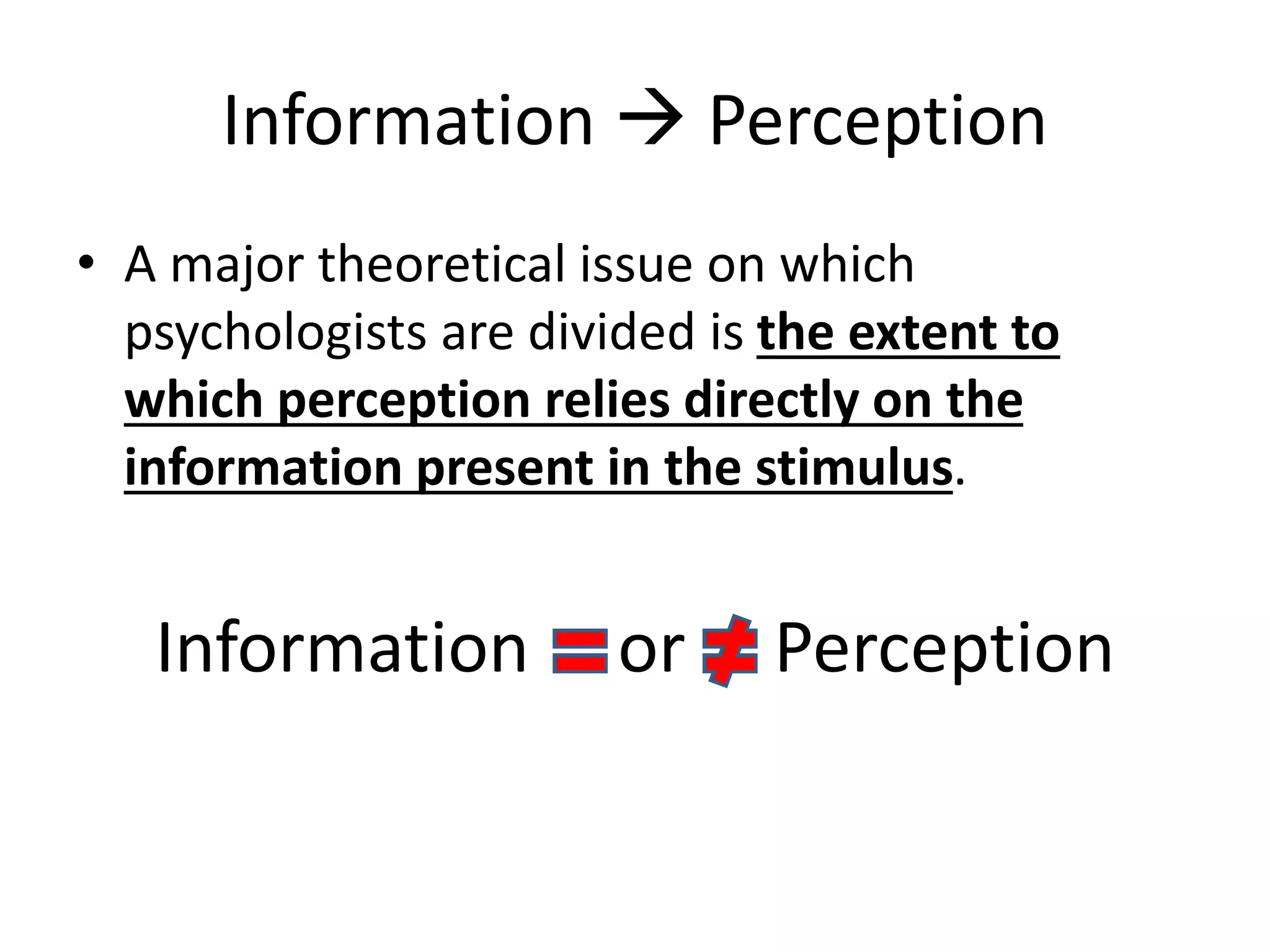
Information  Perception
• A major theoretical issue on which
psychologists are divided is the extent to
which perception relies directly on the
information present in the stimulus.
Information or Perception
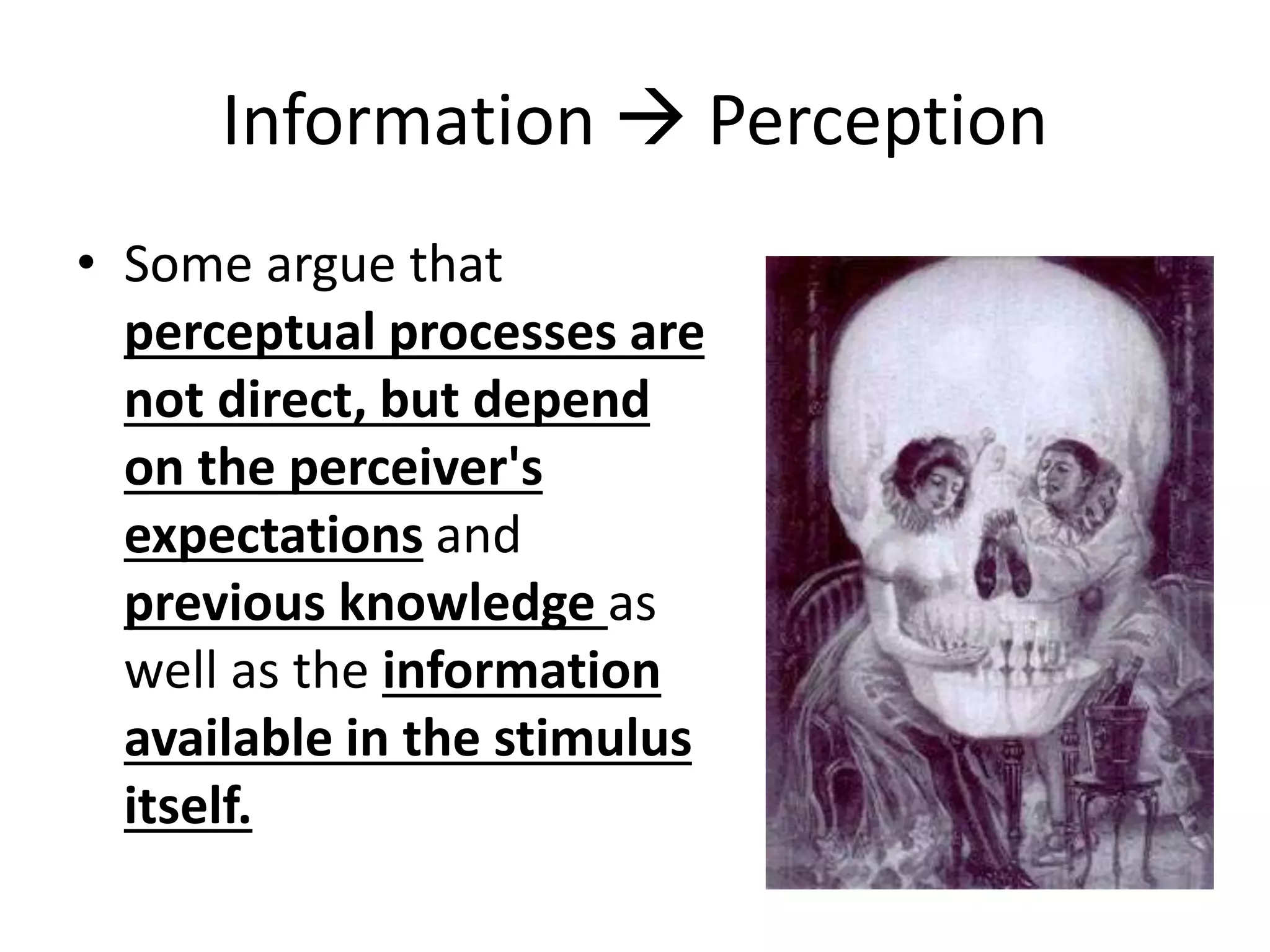
Information  Perception
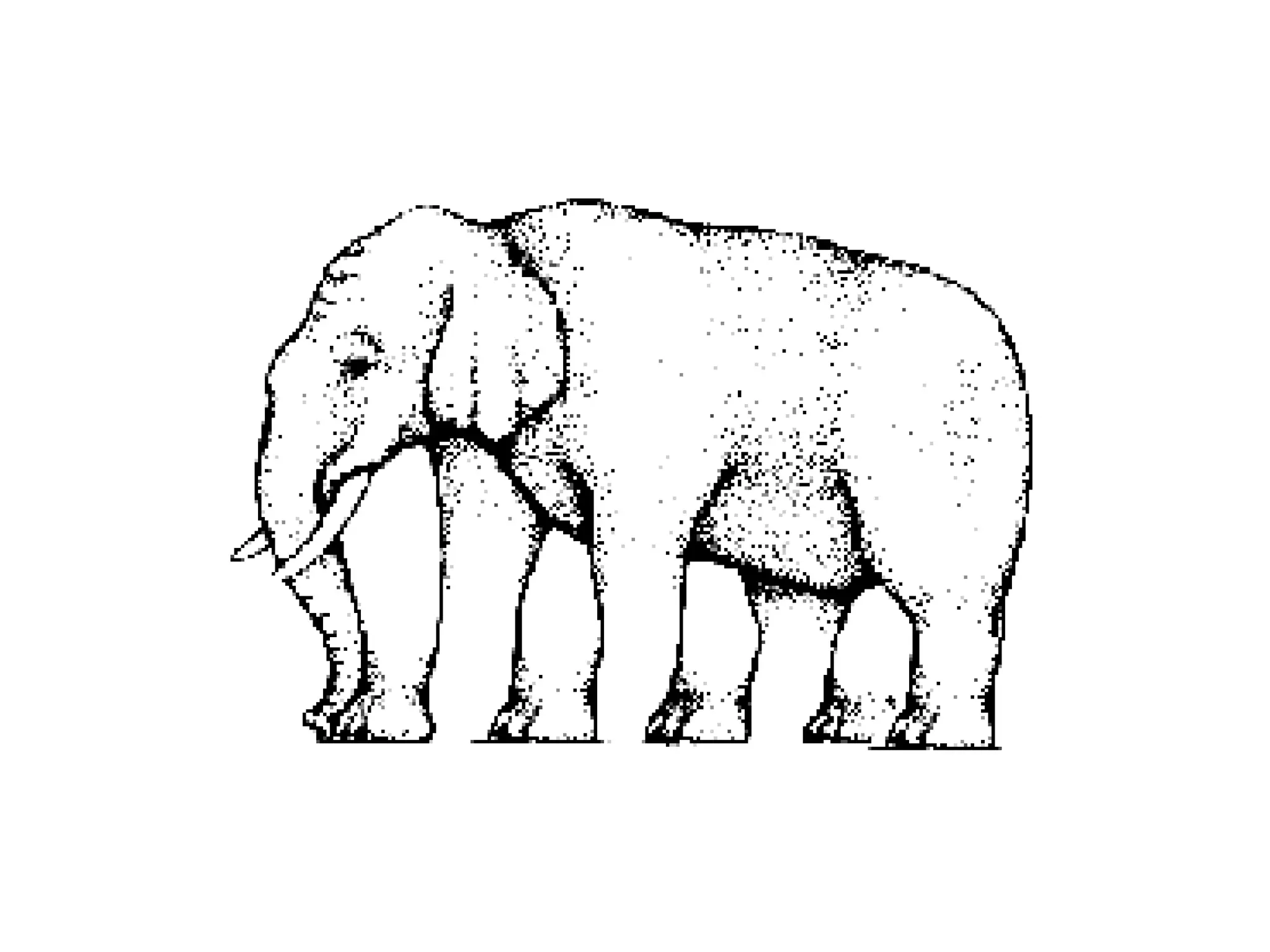
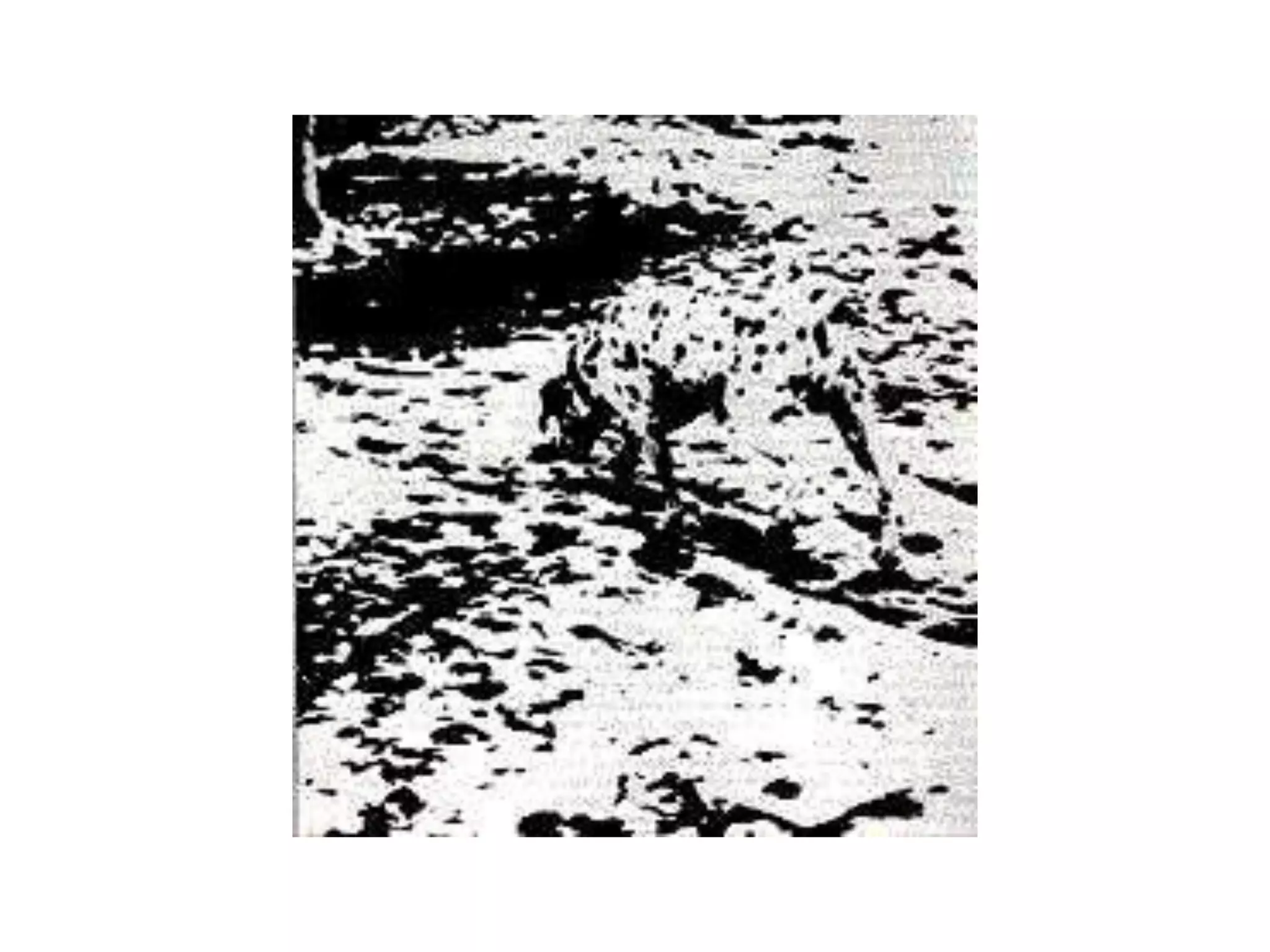
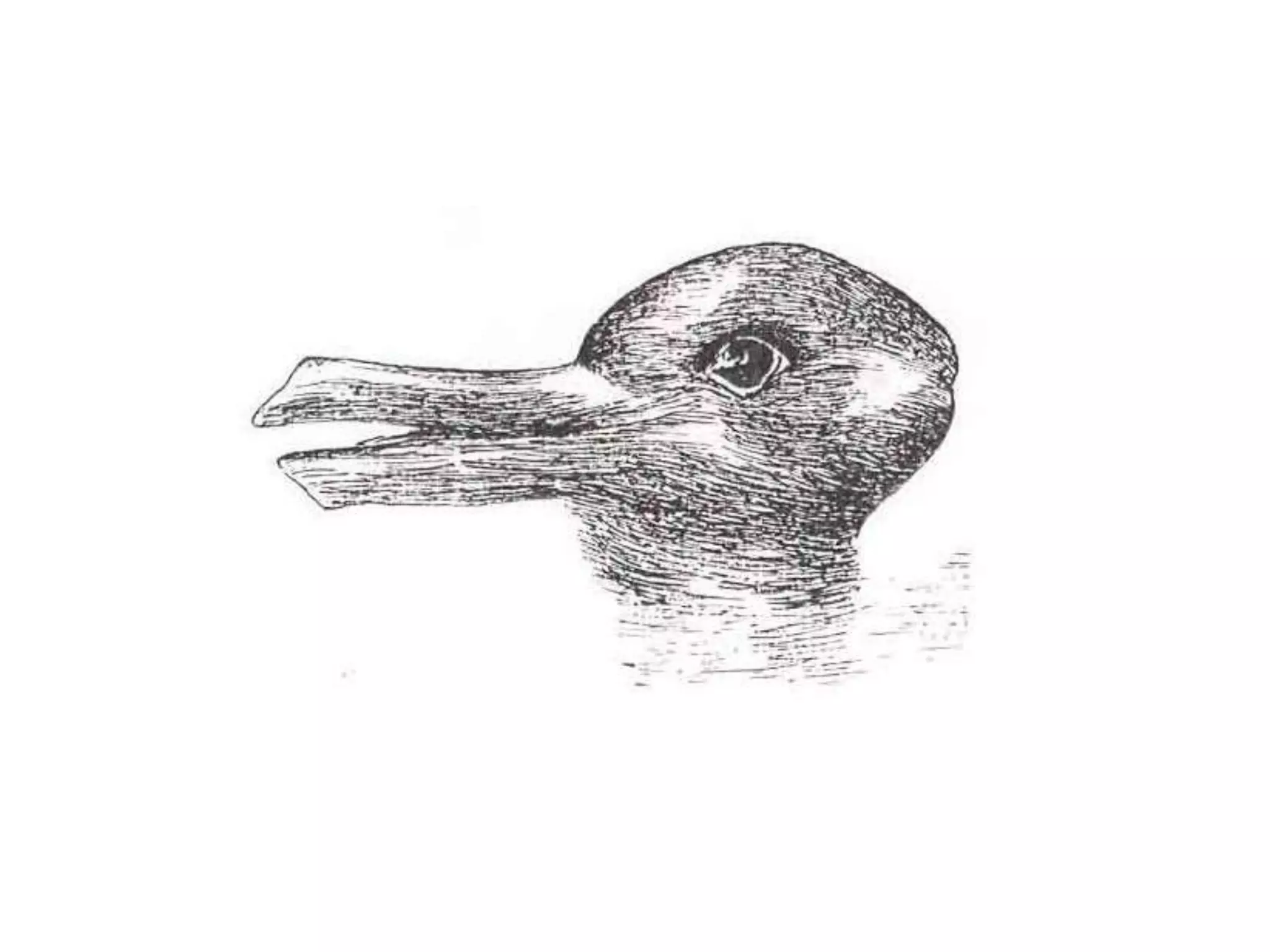
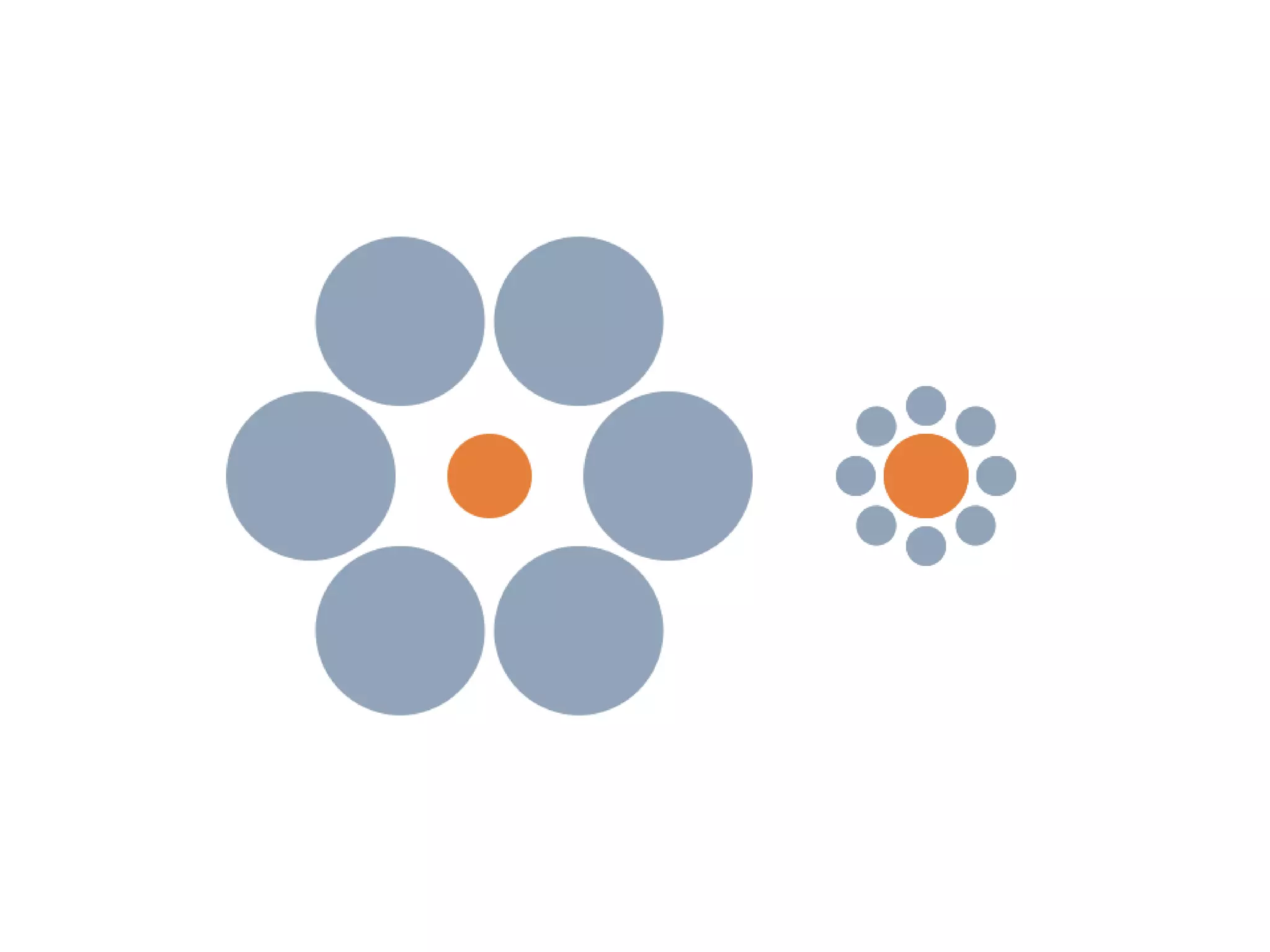
• Some argue that
perceptual processes are
not direct, but depend
on the perceiver's
expectations and
previous knowledge as
well as the information
available in the stimulus
itself.
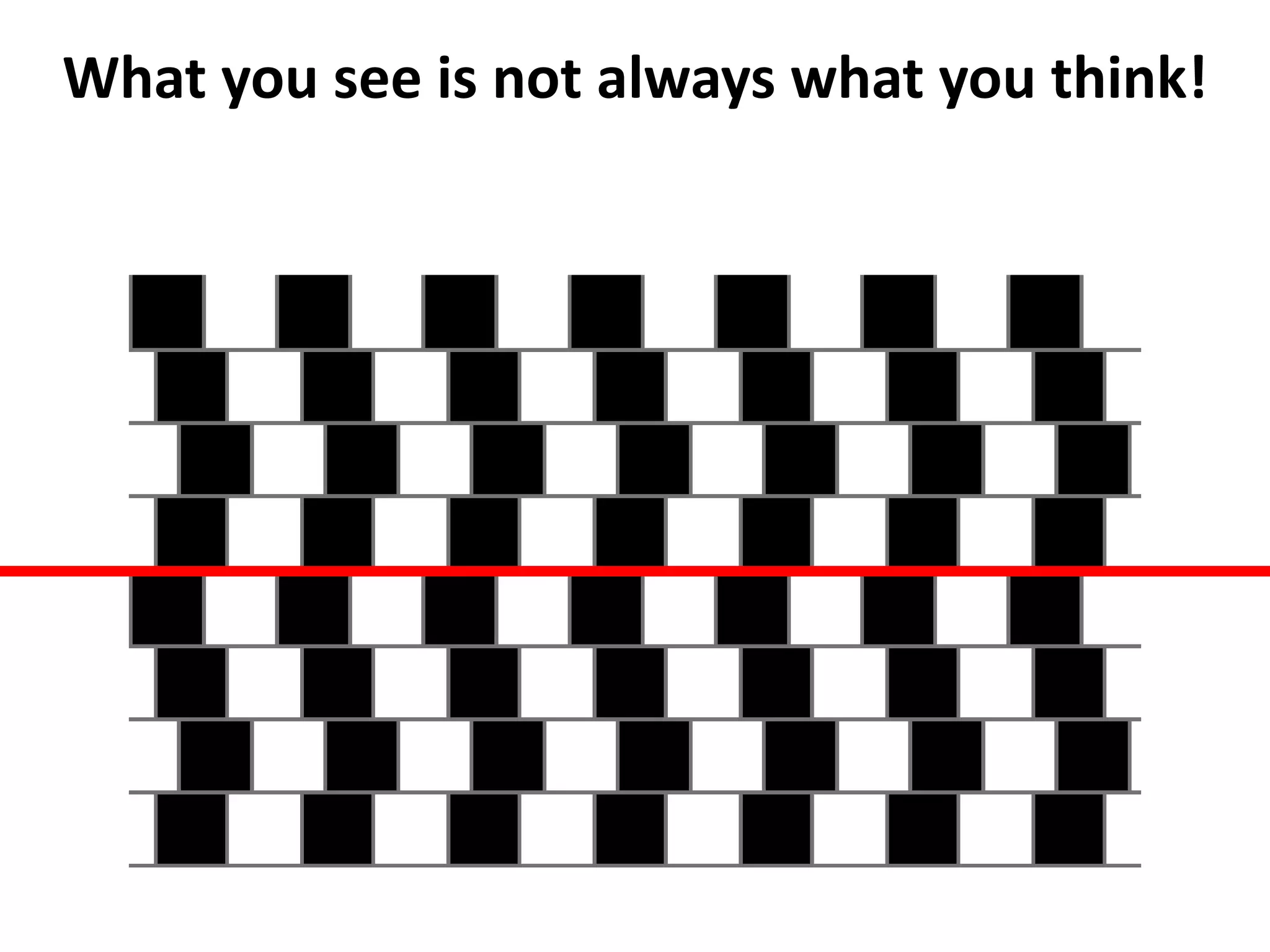
What you see is not always what you think!
Activity
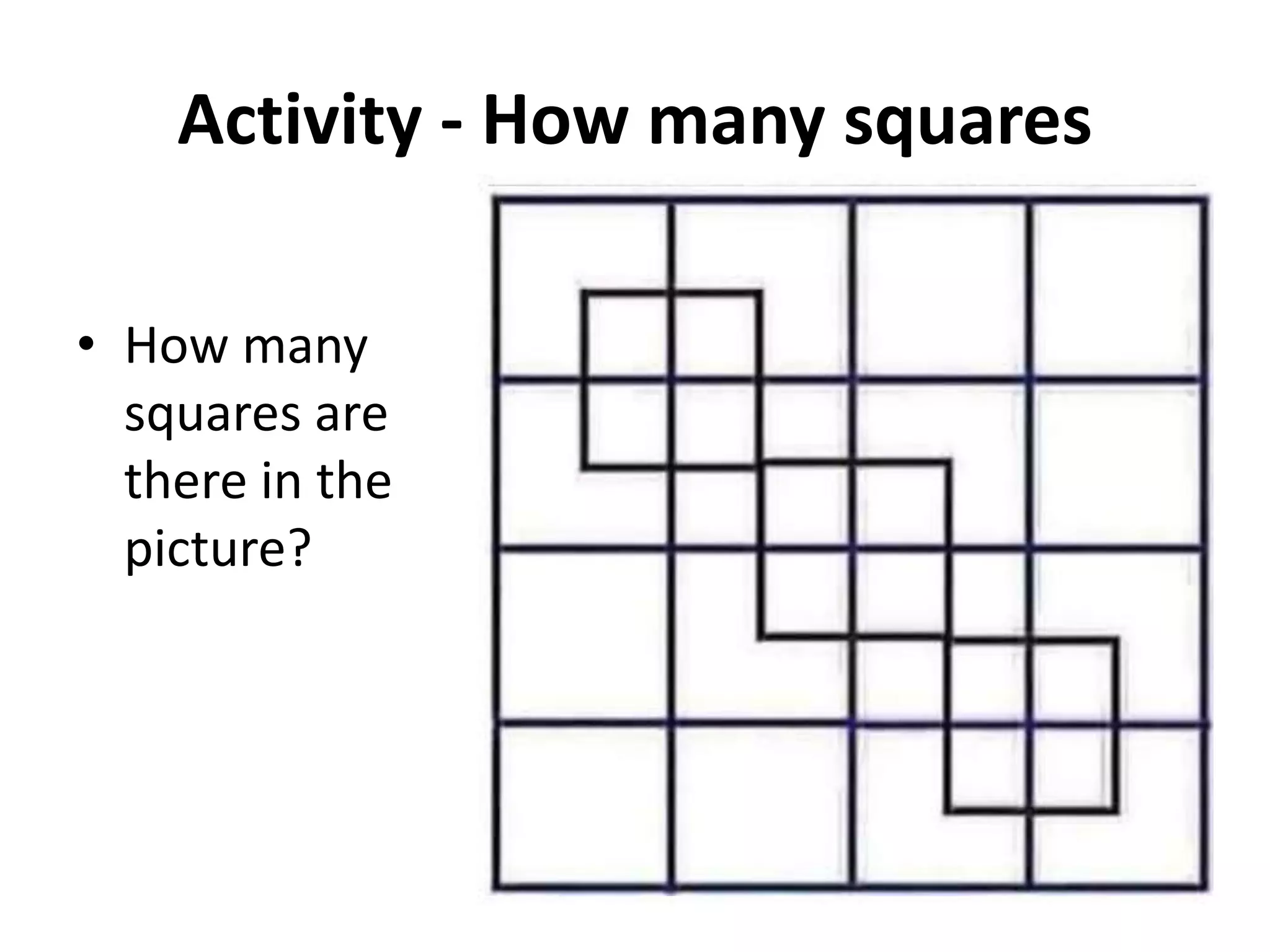
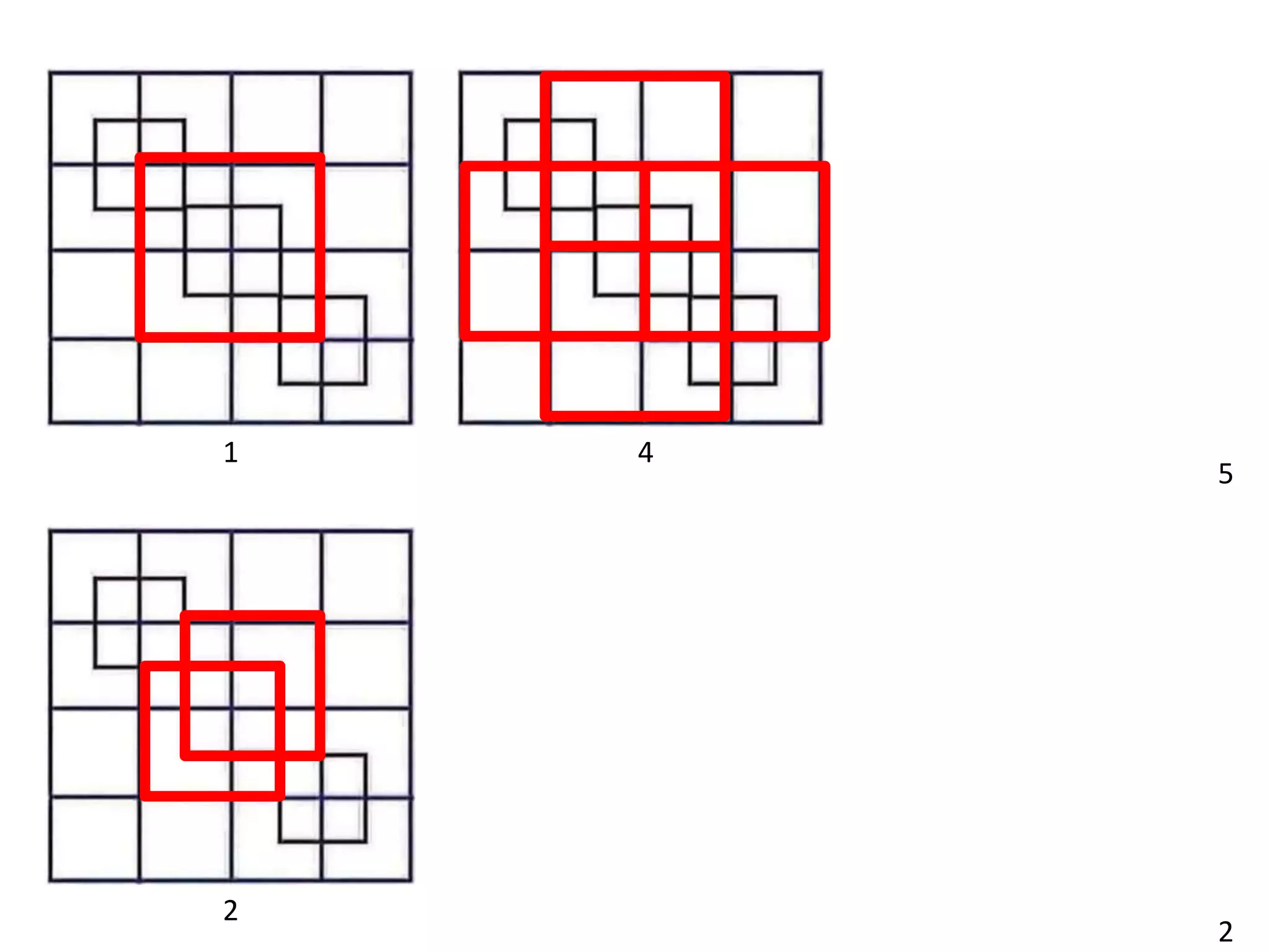
Activity - How many squares
• How many
squares are
there in the
picture?
25Creativity and Innovation - Dr. Yasser Mahgoub
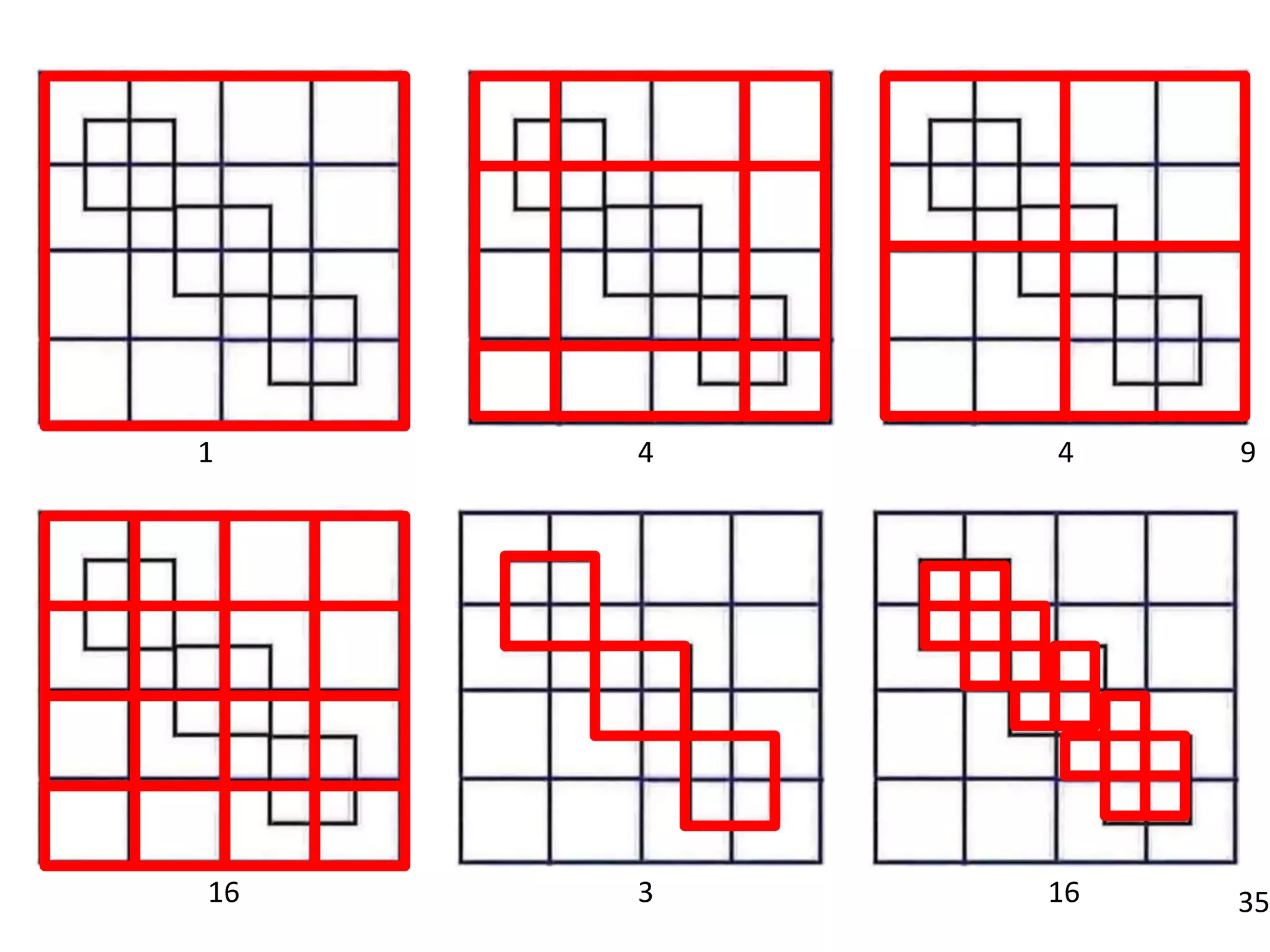
1 4 94
3 16 3516
5
41
2
2
End

Arc 323 human studies in architecture fall 2018 lecture 8-topics 1

  • 1.
    Faculty of Engineeringand Technology Department of Architectural Engineering ARC 323 : Human Studies in Architecture Fall 2018 Dr. Yasser Mahgoub Topics 1
  • 2.
    Architecture and HumanSciences • Humanities are academic disciplines that study aspects of human society and culture. – Psychology – Sociology – Anthropology – Geography – Archaeology – History – Linguistics and languages – Law and politics – Literature – Philosophy – Religion – Performing arts – Visual arts – …
  • 3.
  • 4.
    Human Sciences VSNatural Sciences
  • 5.
    Human Sciences VSNatural Sciences • Natural science: – Focuses on the study of the nature and involves experiments and theories. – Chemistry, physics, biology are examples of some of the study areas of natural science.
  • 6.
    Human Sciences VSNatural Sciences • Human science: – Is more about the behavior, and is more abstract. – Psychology, sociology, and anthropology are some examples.
  • 7.
  • 8.
    Perception • Perception (fromthe Latin perceptio) is the organization, identification, and interpretation of sensory information in order to represent and understand the presented information, or the environment. (Schacter, Daniel (2011). Psychology. Worth Publishers.)
  • 9.
    Perception • All perceptioninvolves signals that go through the nervous system, which in turn result from physical or chemical stimulation of the sensory system.
  • 10.
    Senses • The nervoussystem has a specific sensory nervous system, and a sense organ, or sensor, dedicated to each sense.
  • 11.
    Senses • In orderto receive information from the environment we are equipped with sense organs e.g. eye, ear, nose. • Each sense organ is part of a sensory system which receives sensory inputs and transmits sensory information to the brain.
  • 12.
    Senses • A senseis a physiological capacity of organisms that provides data for perception. • The senses and their operation, classification, and theory are overlapping topics studied by a variety of fields, most notably neuroscience, cognitive psychology (or cognitive science), and philosophy of perception.
  • 13.
    Senses • For example: –vision involves light striking the retina of the eye, – smell is mediated by odor molecules, and – hearing involves pressure waves.
  • 14.
    Perception • Perception isnot only the passive receipt of these signals, but it's also shaped by the recipient's learning, memory, expectation, and attention.
  • 15.
    Information  Perception •A major theoretical issue on which psychologists are divided is the extent to which perception relies directly on the information present in the stimulus. Information or Perception
  • 16.
    Information  Perception •Some argue that perceptual processes are not direct, but depend on the perceiver's expectations and previous knowledge as well as the information available in the stimulus itself.
  • 23.
    What you seeis not always what you think!
  • 24.
  • 25.
    Activity - Howmany squares • How many squares are there in the picture? 25Creativity and Innovation - Dr. Yasser Mahgoub
  • 26.
    1 4 94 316 3516
  • 27.
  • 28.