
Asthma
Dr.Asif Nawas(5TH
-
TMC)
Respiratory medicine
TMC & RCH
Asthma is...
• Derived from the Greek word for panting
or breathlessness
• Recurrent airflow obstruction caused by
chronic airway inflammation with a
superimposed bronchospasm
• Leads to… wheezing, breathlessness
and a cough
Guidelines for the Diagnosis and Management of Asthma—Update on Selected Topics 2002. NIH, NHLBI. June 2002.
NIH publication no. 02-5075.
Pathophysiology of Asthma
• Genetic predisposition
– Chromosome: 5Q31-Q33
• Results from repeated exposure to
allergens in the individual already
equipped with the genetic predisposition
• Upon exposure to an allergen, there is a
release of IgE antibodies
• IgE antibody binds with the antigen
Pathophysiology of Asthma
• IgE/allergen complex - then attaches itself
to the mast cells on the nasal and
bronchial mucosa
• Release of numerous chemical mediators
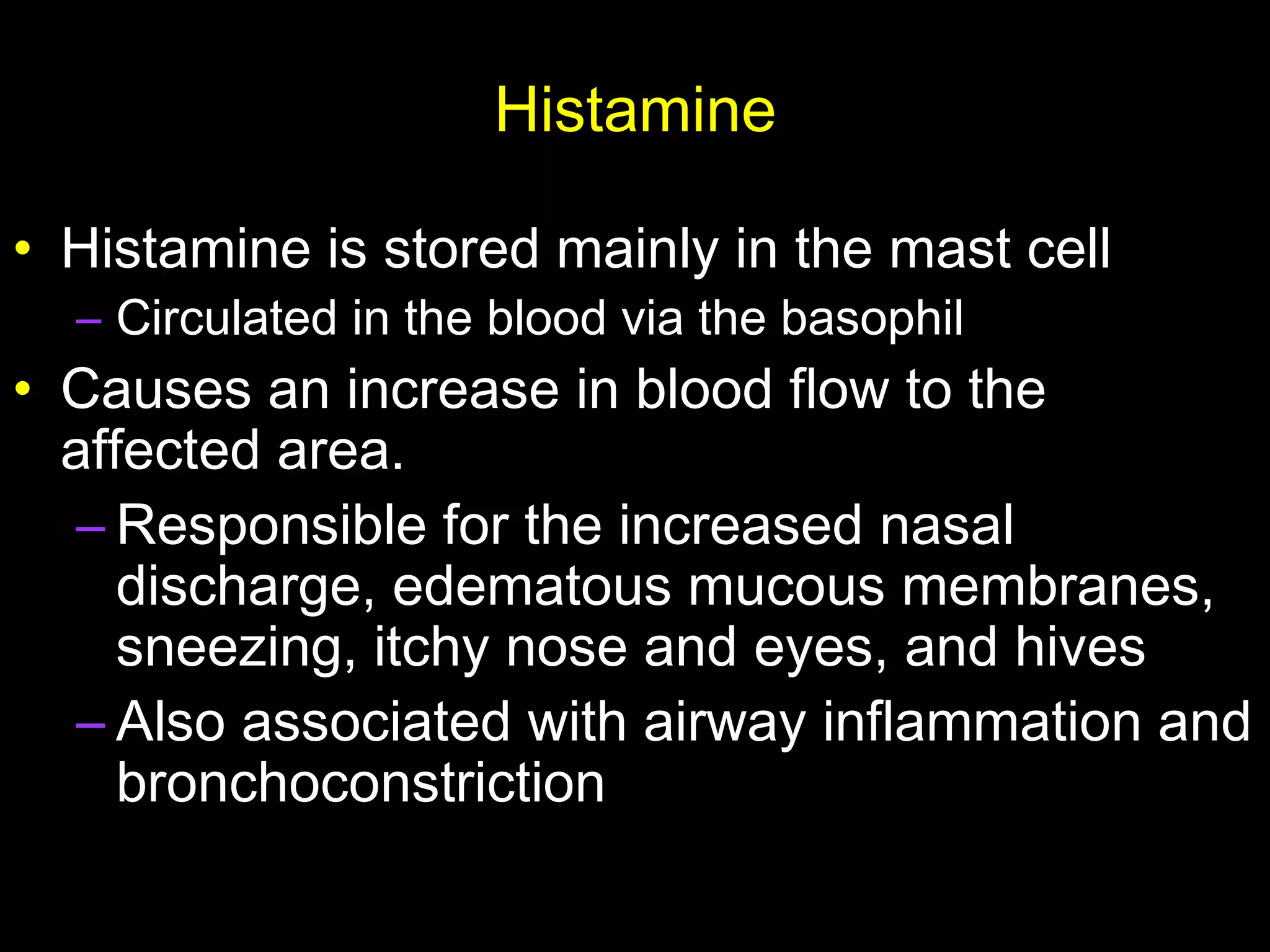
Histamine
• Histamine is stored mainly in the mast cell
– Circulated in the blood via the basophil
• Causes an increase in blood flow to the
affected area.
– Responsible for the increased nasal
discharge, edematous mucous membranes,
sneezing, itchy nose and eyes, and hives
– Also associated with airway inflammation and
bronchoconstriction
Asthma Triggers
Smooth
Muscle
Dysfunction
Allergens Exercise Irritants Viruses Weather
Inflammation
Bronchial Constriction
Hypertrophy
Hyperplasia
Inflammatory
Mediator
Release
Bronchial Hyperreactivity
Symptoms
Exacerbations
Inflammatory Cell Infiltration
Architectural
Changes
Mucus
Secretion
Epithelial
Damage
Edema
Impaired
Ciliary
Function
Adapted from Creticos. Adv Stud Med. 2002;2(14):499-503.
Components of Asthma
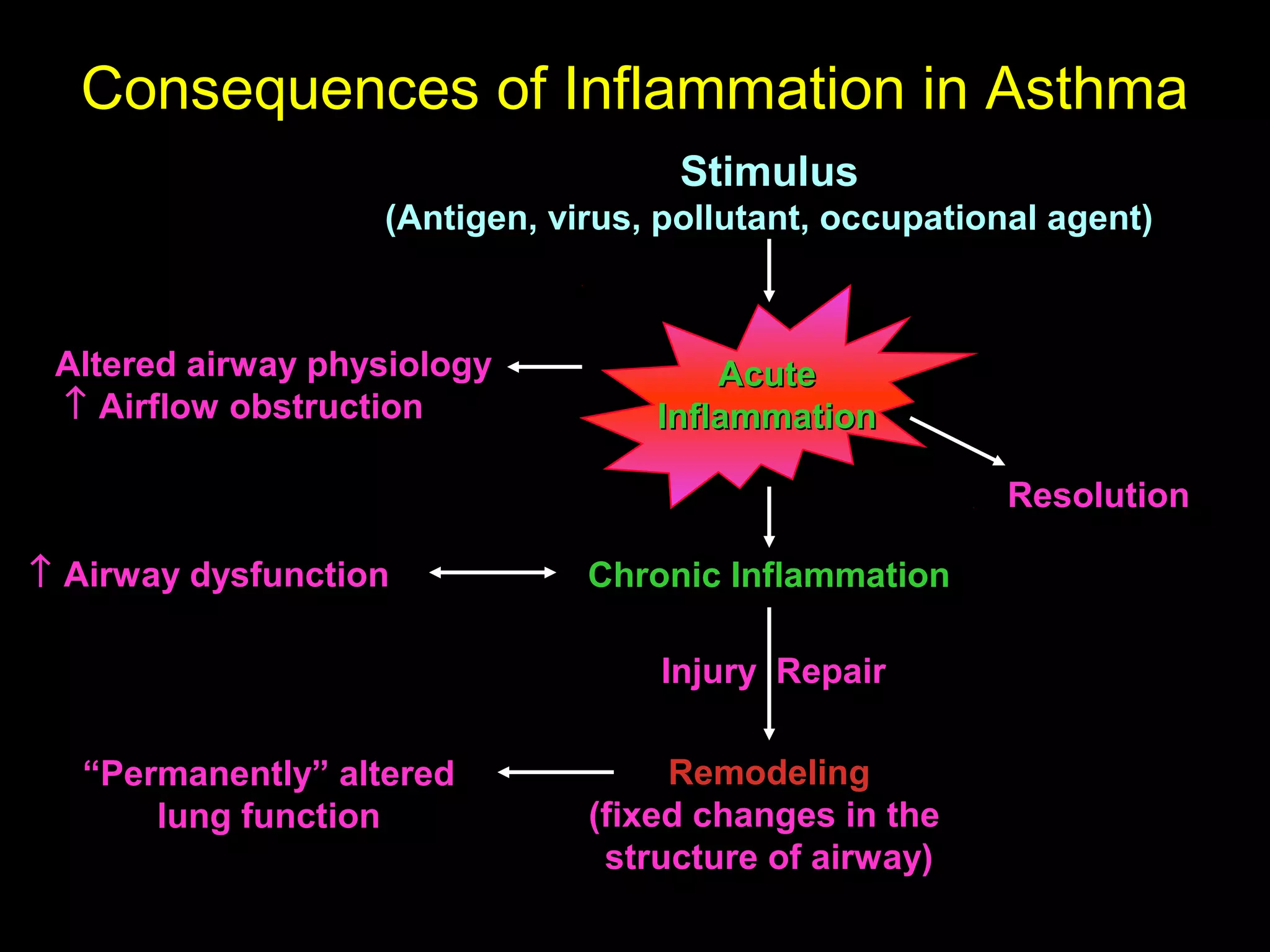
Consequences of Inflammation in Asthma
StimulusStimulus
(Antigen, virus, pollutant, occupational agent)(Antigen, virus, pollutant, occupational agent)
AcuteAcute
InflammationInflammation
ResolutionResolution
Chronic InflammationChronic Inflammation
RemodelingRemodeling
(fixed changes in the(fixed changes in the
structure of airway)structure of airway)
Injury RepairInjury Repair
↑↑ Airway dysfunctionAirway dysfunction
““Permanently” alteredPermanently” altered
lung functionlung function
Altered airway physiologyAltered airway physiology
↑↑ Airflow obstructionAirflow obstruction
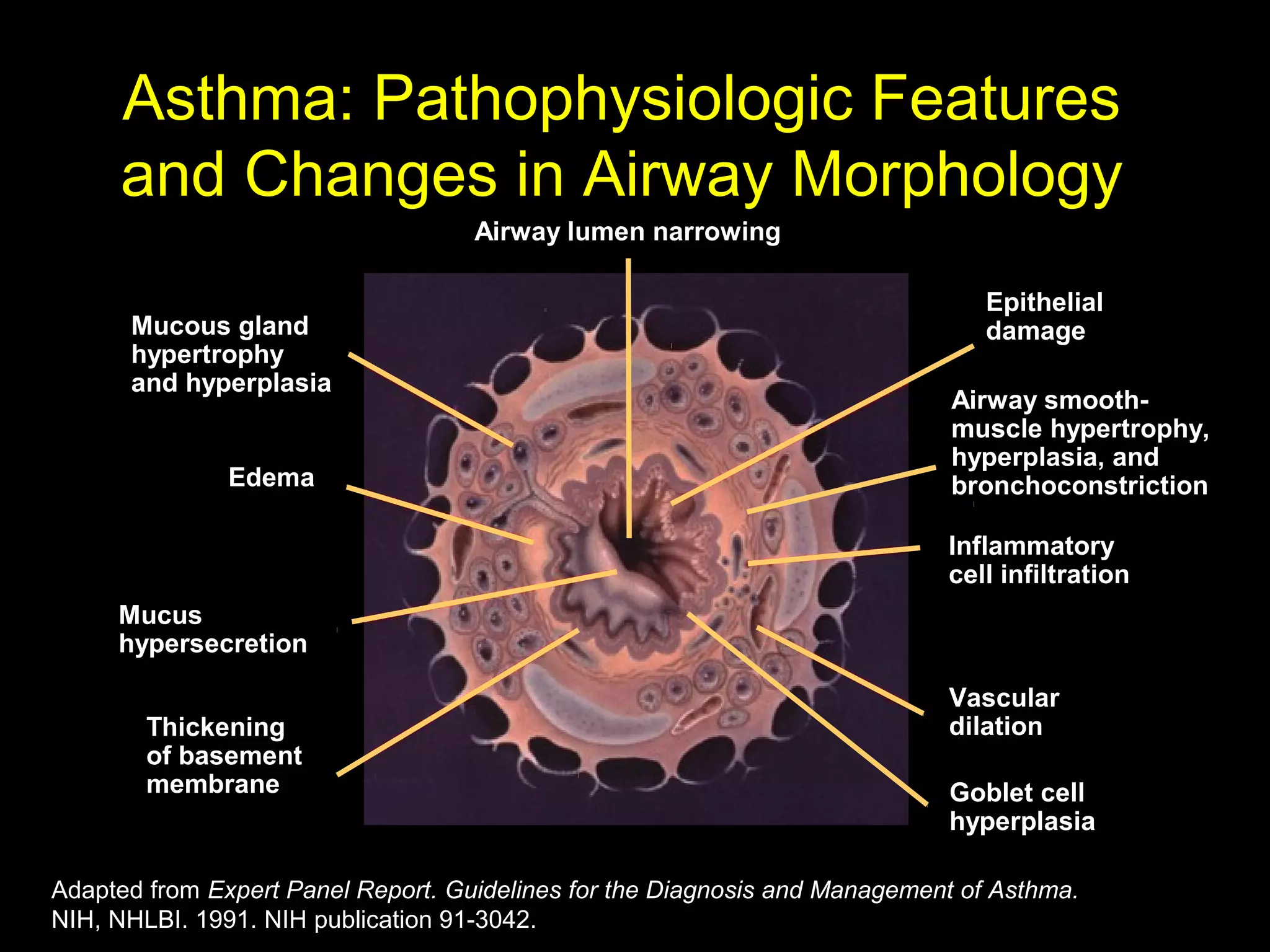
Asthma: Pathophysiologic Features
and Changes in Airway Morphology
Epithelial
damage
Inflammatory
cell infiltration
Vascular
dilation
Mucous gland
hypertrophy
and hyperplasia
Edema
Mucus
hypersecretion
Thickening
of basement
membrane
Adapted from Expert Panel Report. Guidelines for the Diagnosis and Management of Asthma.
NIH, NHLBI. 1991. NIH publication 91-3042.
Airway smooth-
muscle hypertrophy,
hyperplasia, and
bronchoconstriction
Airway lumen narrowing
Goblet cell
hyperplasia
Cross Section of Bronchiole Showing
Bronchospasm
Color Atlas of Respiratory Disease. Volume 2, 1995.
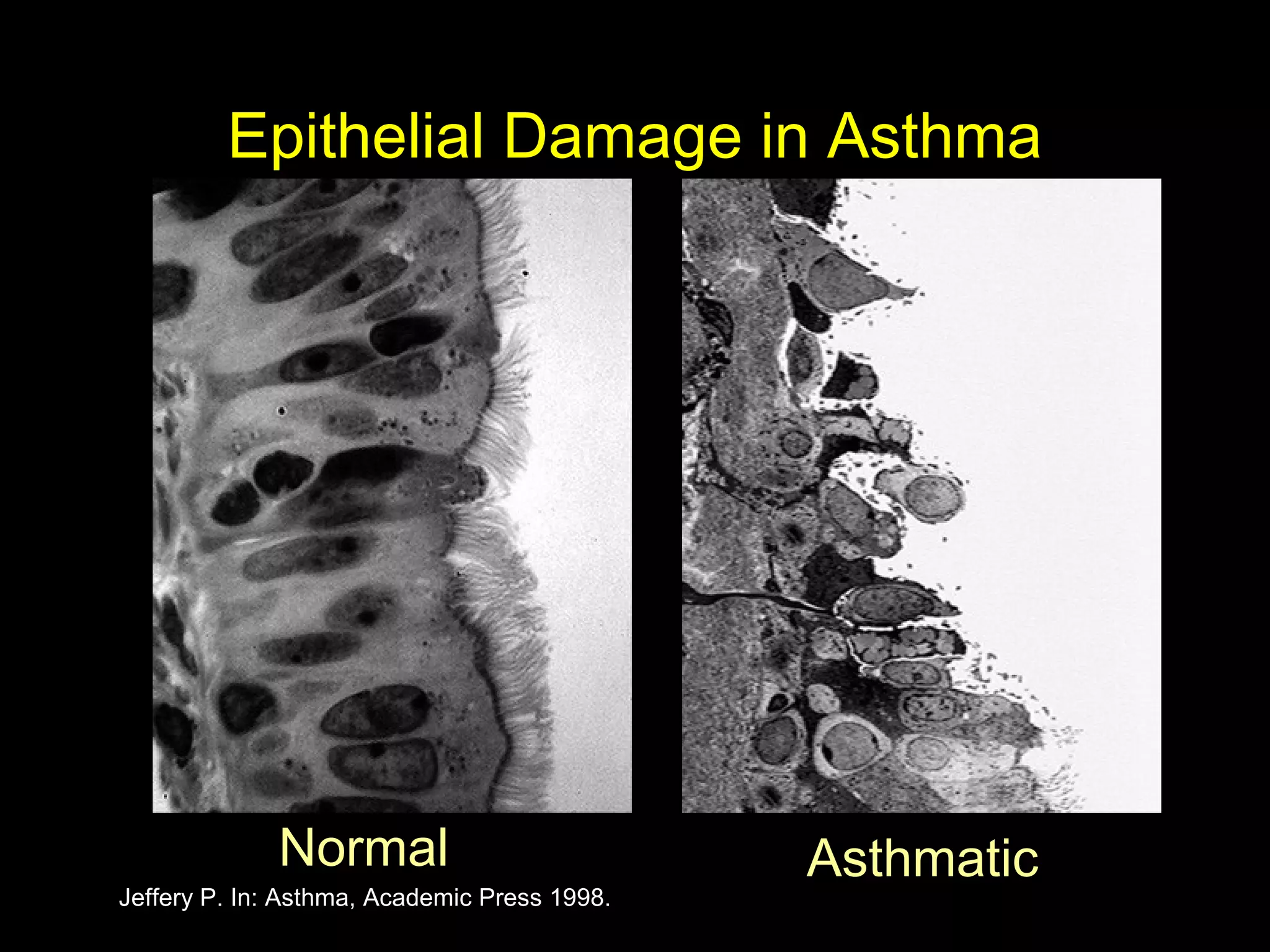
AsthmaticNormal
Jeffery P. In: Asthma, Academic Press 1998.
Epithelial Damage in Asthma
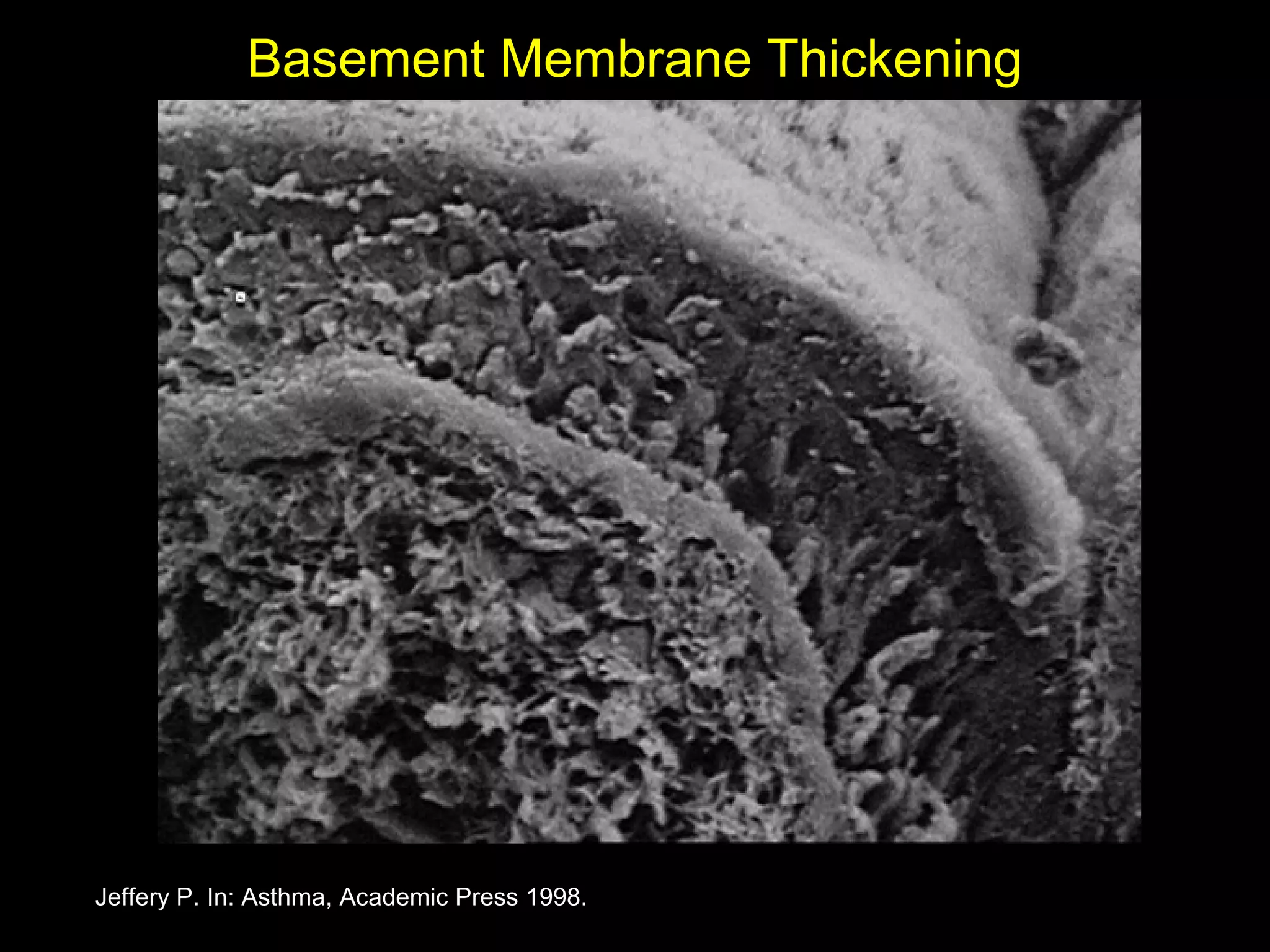
Basement Membrane Thickening
Jeffery P. In: Asthma, Academic Press 1998.
Triggers
• Inhalant allergens are the most common
triggers for both asthma
– House dust
– Pollens
– Mold spores
– Animal and insect emanations
• Cockroach feces
Triggers
• Chemicals
• Perfumes
• Foods
– Sulfites (wine), shrimp, dried fruit,
processed potatoes, beer
• Viruses or infections
• Cold air
Triggers
• Tobacco smoke
• Pollution
–Work exposures
• Exercise
Asthma is...
• A disease of:
–Inflammation
• Primary Process
–Hyperresponsiveness
–Airway bronchoconstriction
–Excessive mucous production
Diagnosis of Asthma
Diagnosis of Asthma
• History and Physical Examination
• Spirometry is needed to make
diagnosis
• Monitoring:
–Peak Flow Meters
Symptoms and Signs of
Asthma in Children and Adults
• Coughing, particularly at night or
after exercise
• Wheezing
• Chest tightness
• SOB
• Cold that lingers x months
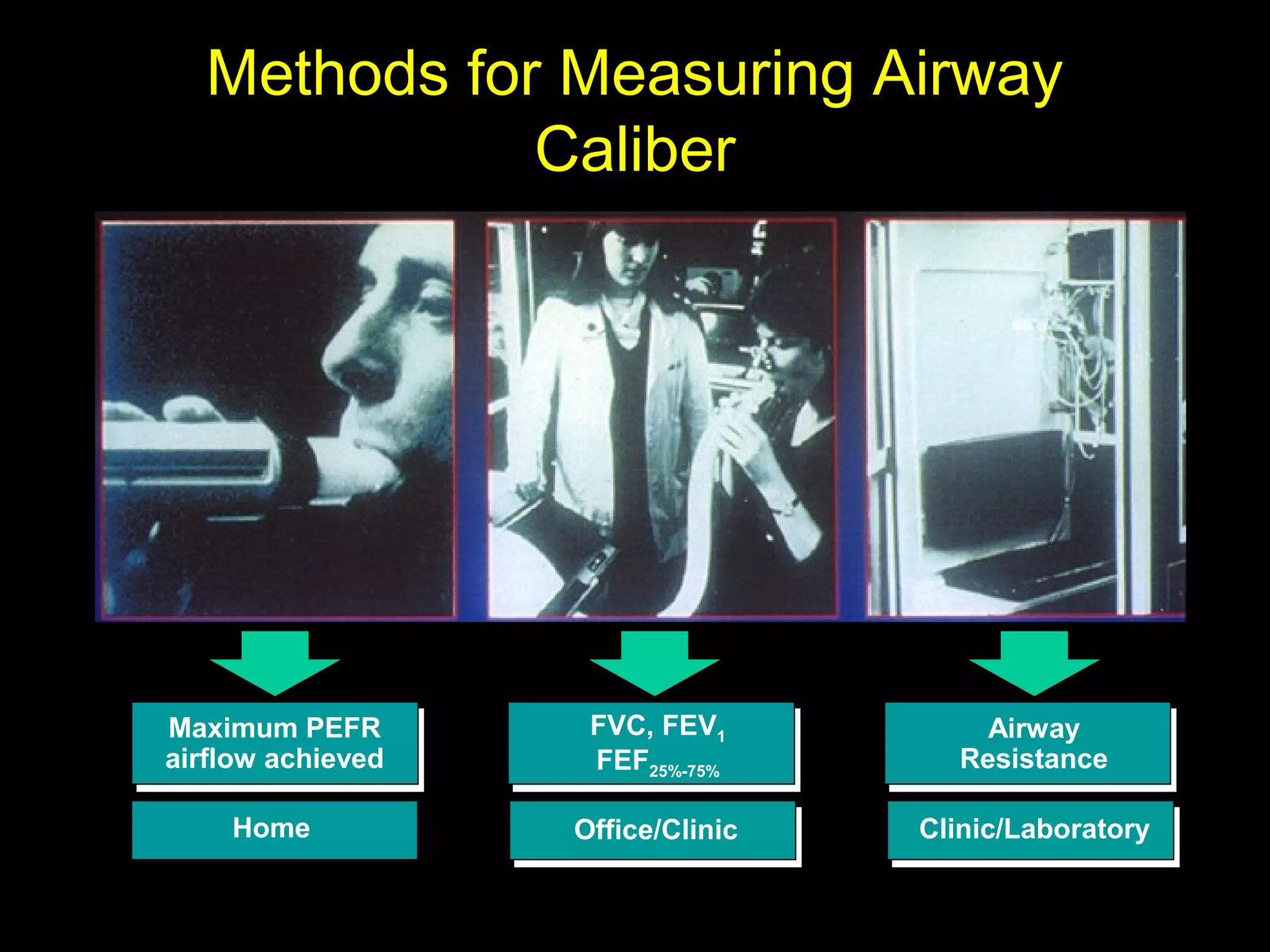
Methods for Measuring Airway
Caliber
Maximum PEFR
airflow achieved
Home
FVC, FEV1
FEF25%-75%
Office/Clinic
Airway
Resistance
Clinic/Laboratory
© 2008 Fitzgerald Health Education Associates, Inc. 20
Asthma Findings
• Typically, reversibility of 20% or
greater after administration of a
bronchodilator aerosol is
consistent with asthma.
Conboy-Ellis, Kathleen. Asthma: Pathogenesis and Management. The Nurse
Practitioner: November 2006; Vol.31, No. 11. 24 – 39.
Asthma
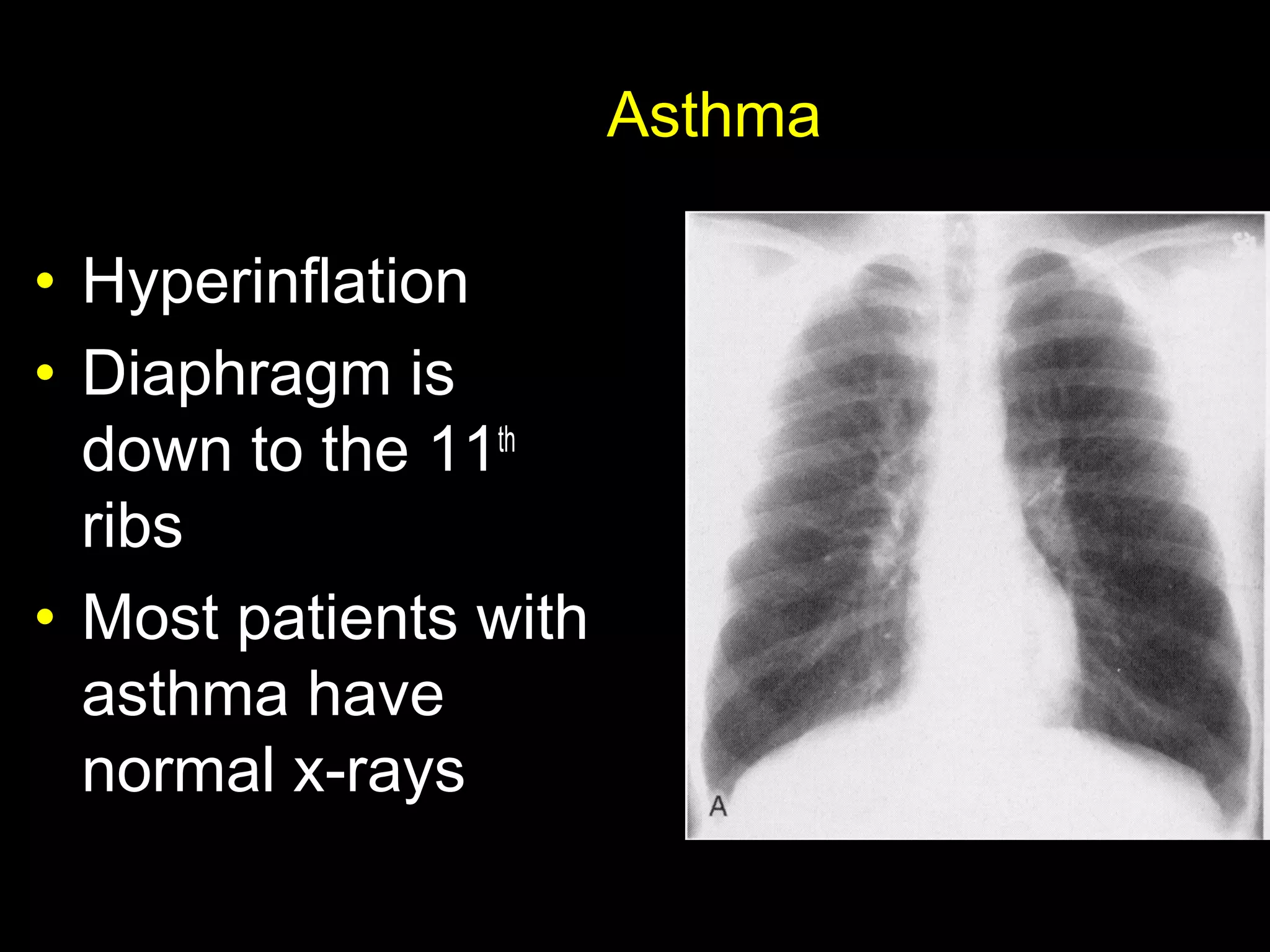
• Hyperinflation
• Diaphragm is
down to the 11th
ribs
• Most patients with
asthma have
normal x-rays
Chronic Asthma Changes
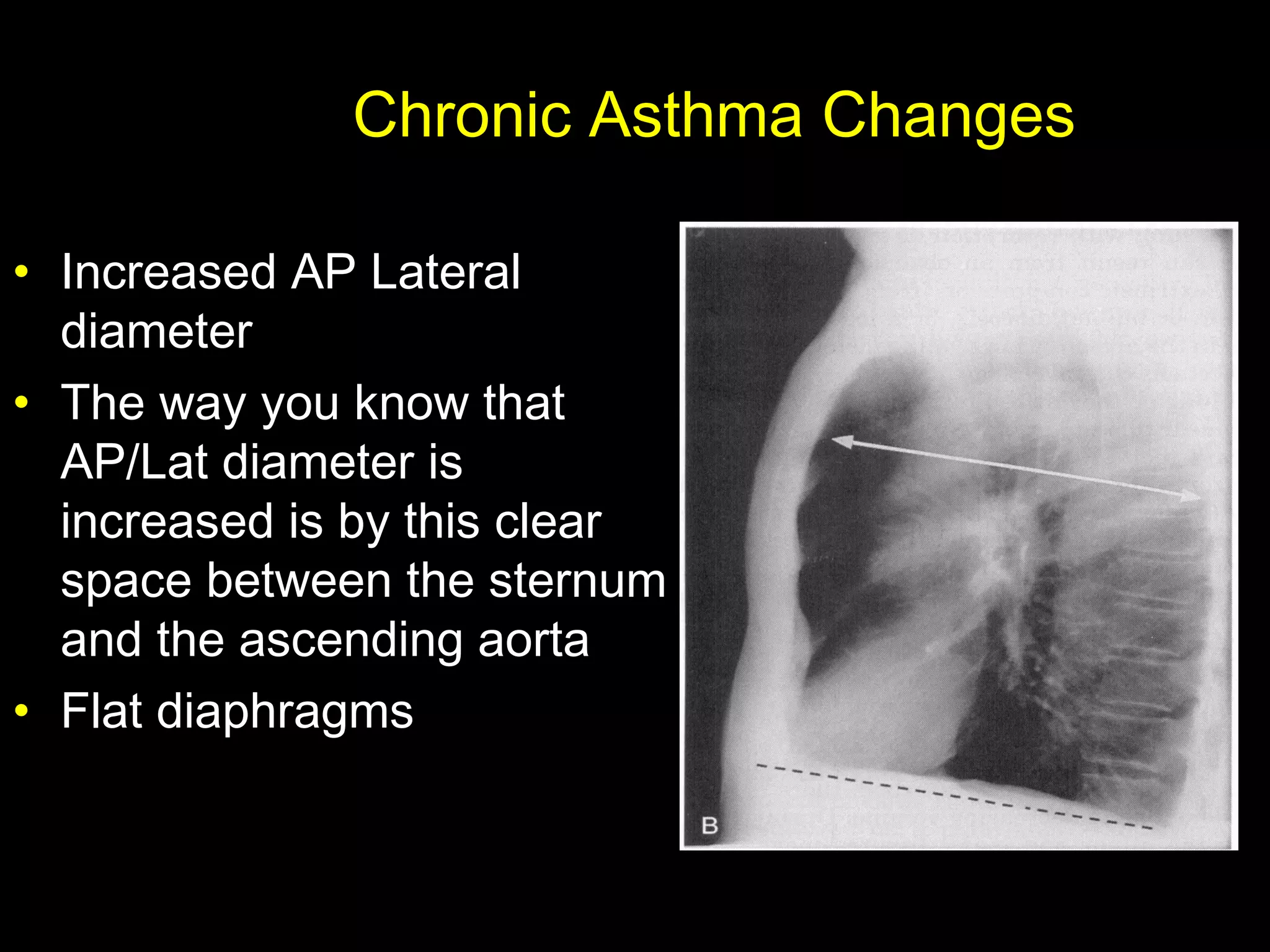
• Increased AP Lateral
diameter
• The way you know that
AP/Lat diameter is
increased is by this clear
space between the sternum
and the ascending aorta
• Flat diaphragms
Treatment of Asthma
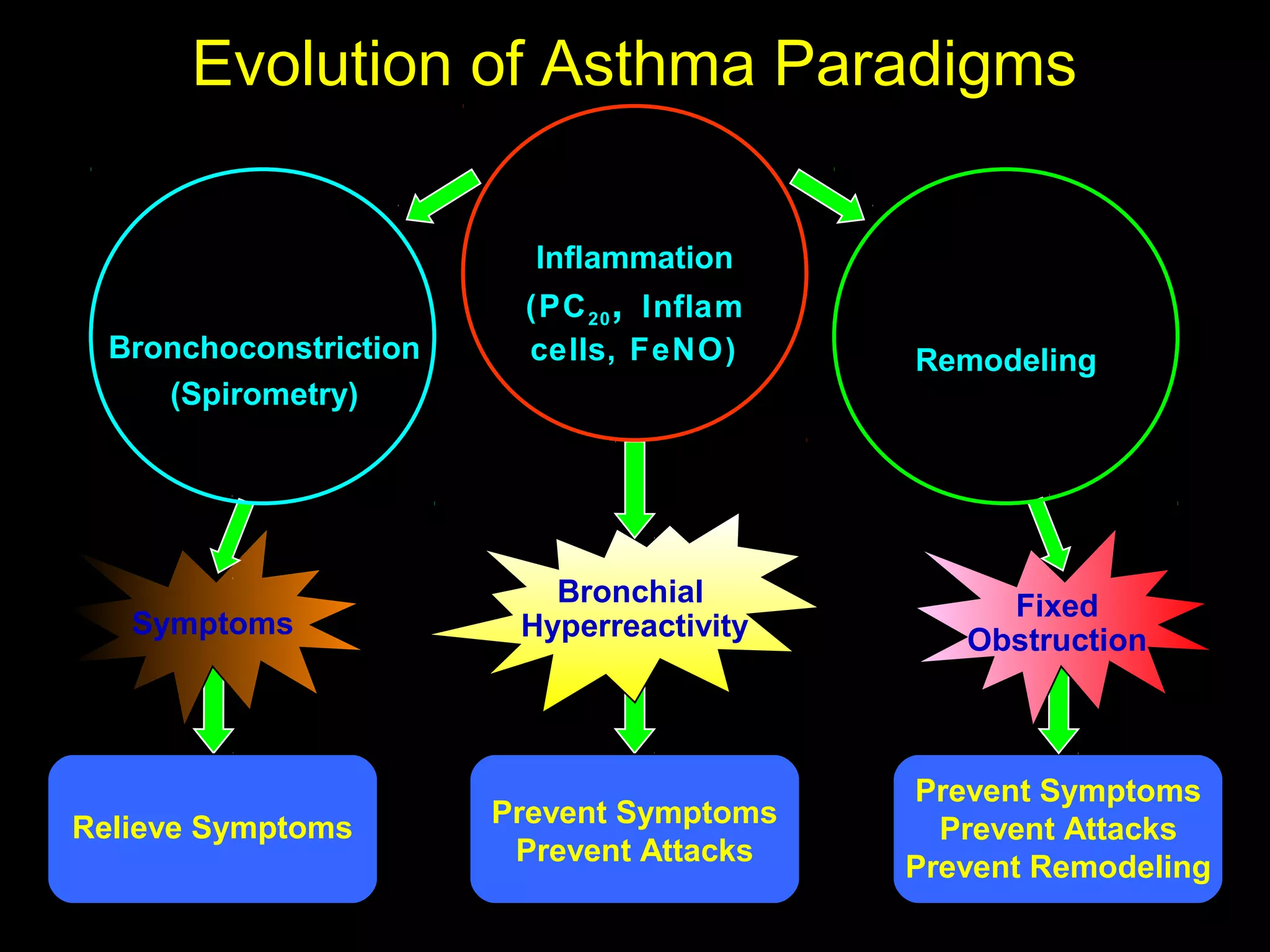
1970s–1980s
Bronchoconstriction
(Spirometry)
1980s–1990s
Inflammation
(PC20, Inflam
cells, FeNO)
1990s–2000s
Remodeling
Relieve Symptoms
Prevent Symptoms
Prevent Attacks
Prevent Remodeling
Prevent Symptoms
Prevent Attacks
Evolution of Asthma Paradigms
Bronchial
Hyperreactivity
Fixed
Obstruction
Symptoms
Environmental Control:
A Useful but Often Ignored Step
• Dust Mite Avoidance
– Bed linens must be laundered 1-2 times/week
– Maintain humidity at <50%
– Encase pillows and mattresses
– Frequent vacuuming
• Remember: 30 minutes after vacuuming:
increased dust mite emanations in the air
• Individuals with significant asthma should avoid
vacuuming or avoid the room for 30 minutes after
vacuuming
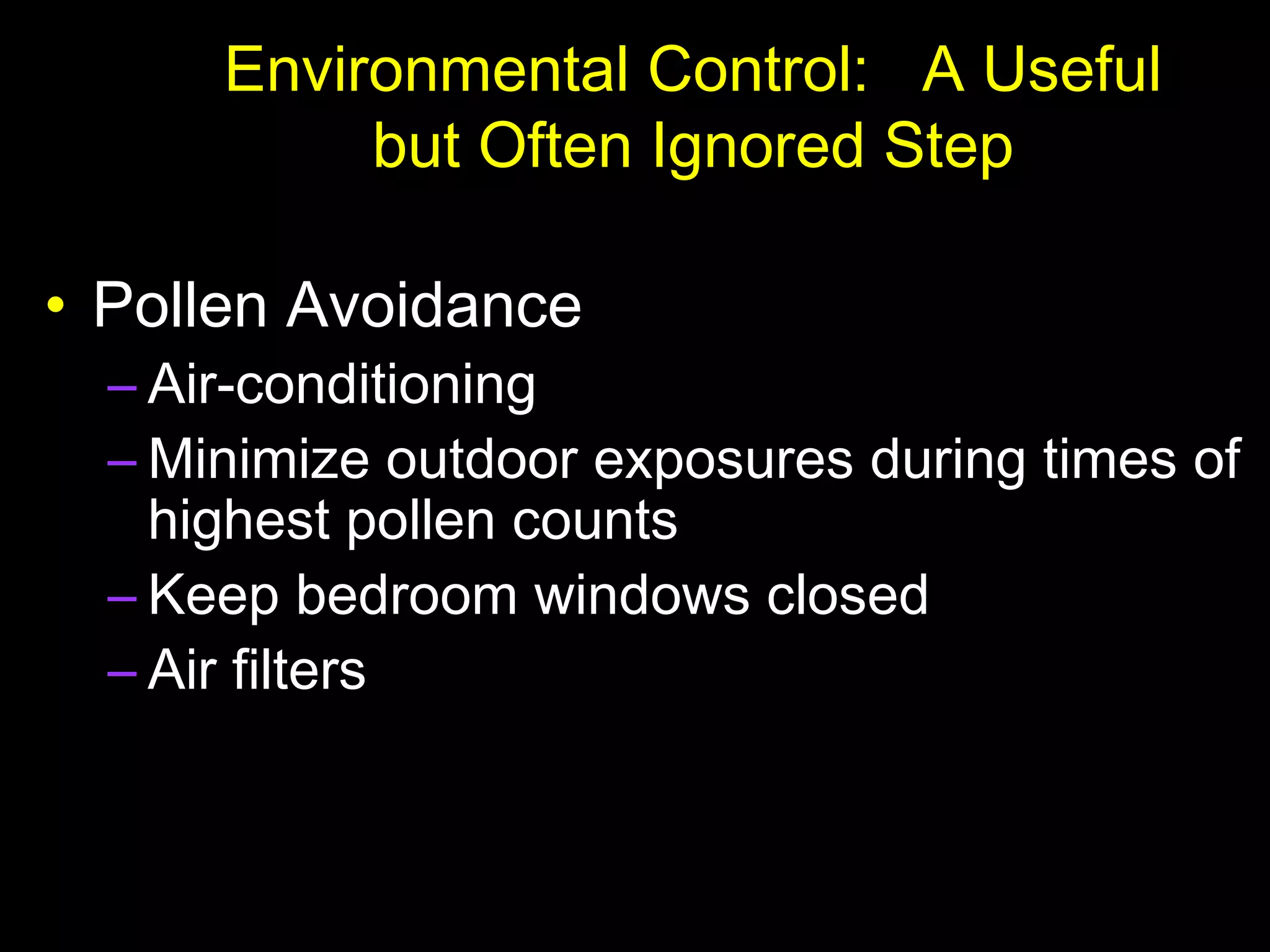
Environmental Control: A Useful
but Often Ignored Step
• Pollen Avoidance
– Air-conditioning
– Minimize outdoor exposures during times of
highest pollen counts
– Keep bedroom windows closed
– Air filters
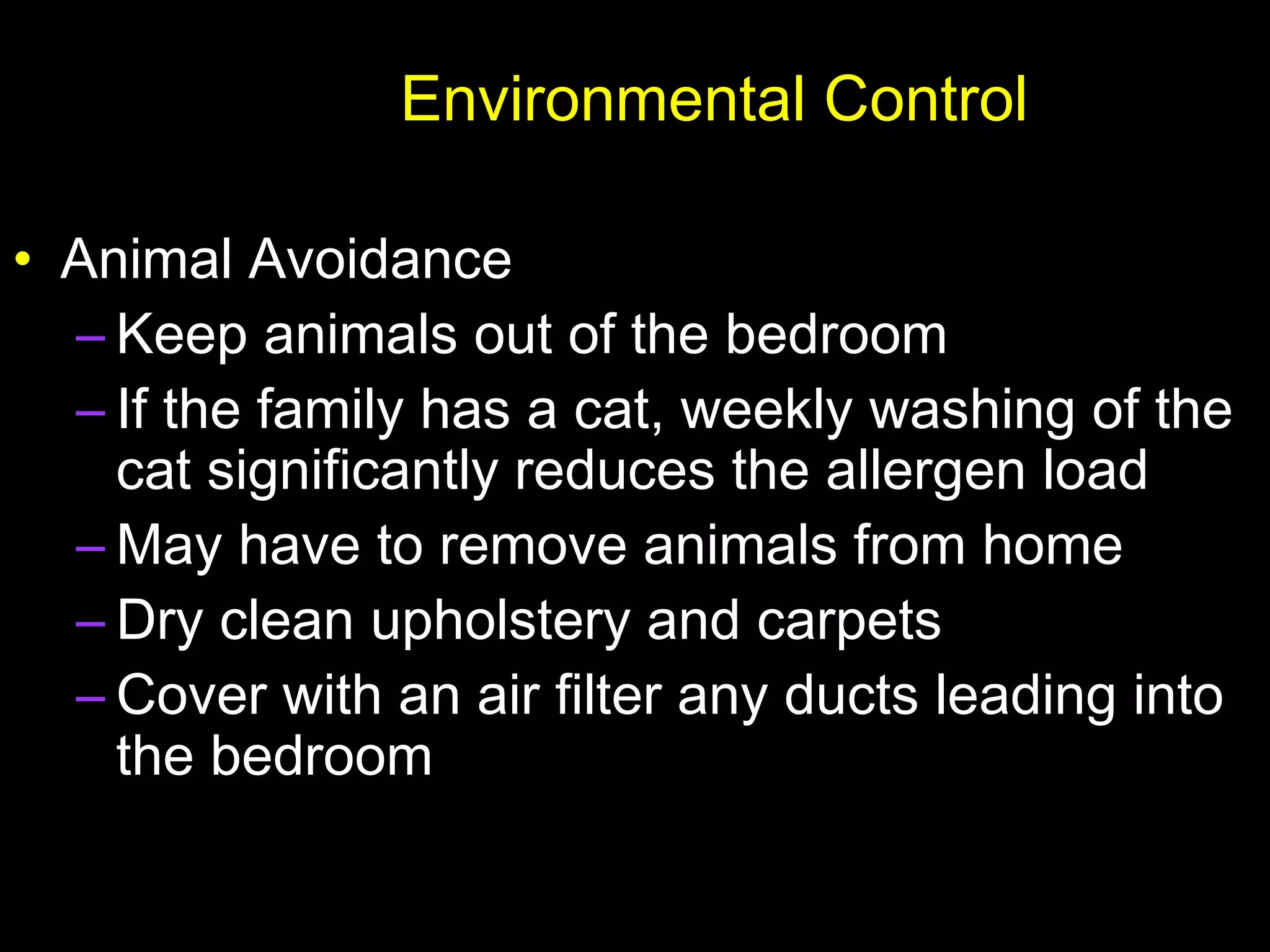
Environmental Control
• Animal Avoidance
– Keep animals out of the bedroom
– If the family has a cat, weekly washing of the
cat significantly reduces the allergen load
– May have to remove animals from home
– Dry clean upholstery and carpets
– Cover with an air filter any ducts leading into
the bedroom
Environmental Control
• Mold Avoidance
– Children/adolescents with allergic rhinitis
and/or asthma should not be sleeping in a
damp basement
– Clean moldy surfaces
– Avoid houseplants
– Avoid chores that involve damp grass, leaves
Environmental Control
• Avoidance of Non-allergic Triggers
–Strong emotions
–Smoke: No smoking in house or car
–Pollution
–Cold air
–Odors
–Exercise
31
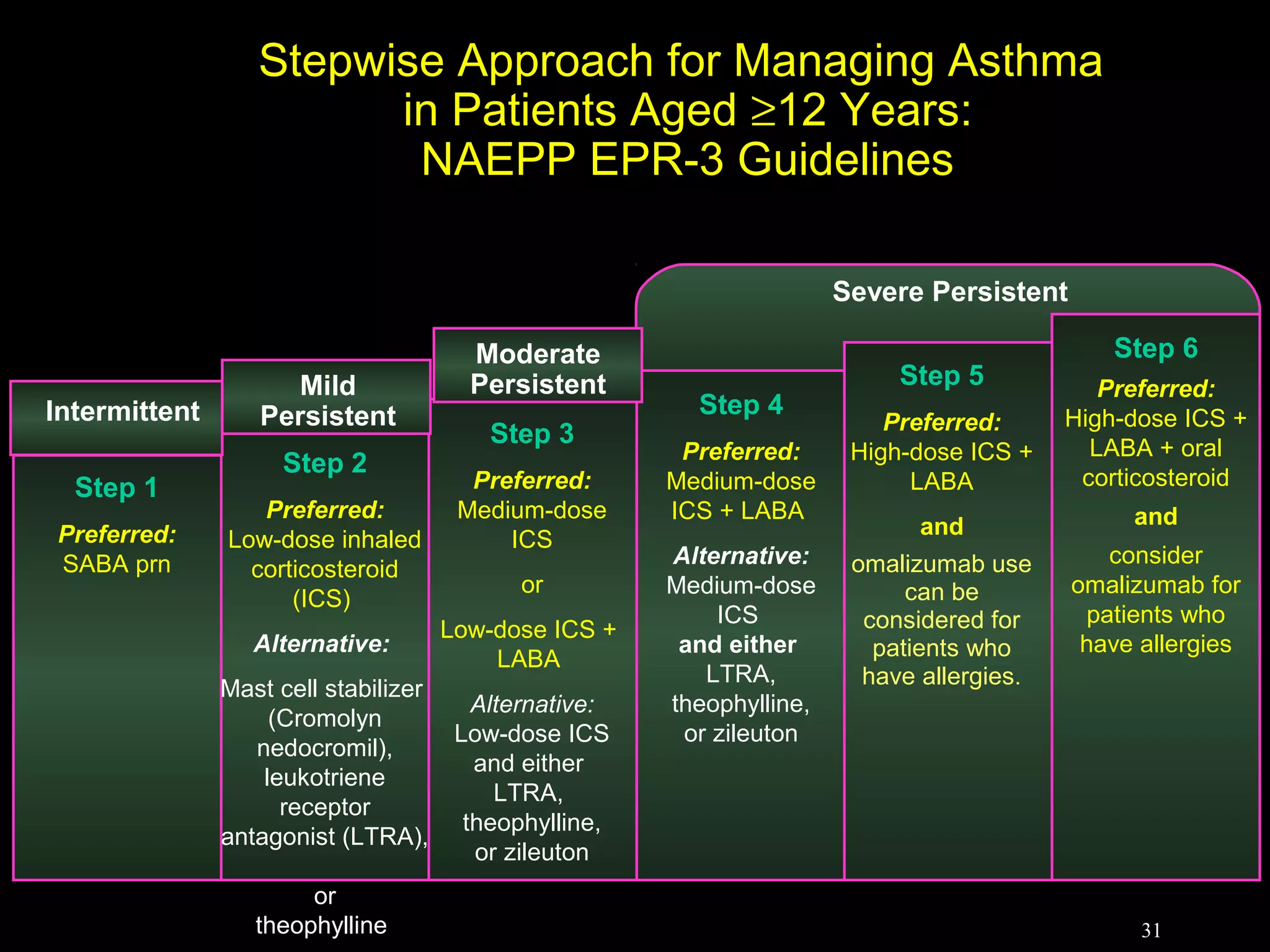
Stepwise Approach for Managing Asthma
in Patients Aged ≥12 Years:
NAEPP EPR-3 Guidelines
Step 1
Preferred:
SABA prn
Step 2
Preferred:
Low-dose inhaled
corticosteroid
(ICS)
Alternative:
Mast cell stabilizer
(Cromolyn
nedocromil),
leukotriene
receptor
antagonist (LTRA),
or
theophylline
Step 3
Preferred:
Medium-dose
ICS
or
Low-dose ICS +
LABA
Alternative:
Low-dose ICS
and either
LTRA,
theophylline,
or zileuton
Step 5
Preferred:
High-dose ICS +
LABA
and
omalizumab use
can be
considered for
patients who
have allergies.
Step 4
Preferred:
Medium-dose
ICS + LABA
Alternative:
Medium-dose
ICS
and either
LTRA,
theophylline,
or zileuton
Step 6
Preferred:
High-dose ICS +
LABA + oral
corticosteroid
and
consider
omalizumab for
patients who
have allergies
Severe Persistent
Moderate
PersistentMild
PersistentIntermittent
Step Approach to Therapy
• If control is not achieved with
therapy, step up the therapy
• Once control is sustained for a
minimum of 3 months, can consider
stepping down the therapy
• Regardless, therapy should be
reviewed q 6 months
Acute Asthma Exacerbation
Management
Acute Asthma Exacerbation
• Measure FEV1
• Inhaled short acting beta 2 agonist: Up to
three treatments of 2-4 puffs by MDI at 20
minute intervals OR a single nebulizer
• Can repeat x 1 – 2 provided patient tolerates
• Prednisone
– What dose and schedule??
Management of Moderate Exacerbations:
Response from ED Treatment
• Good Response
–Symptom relief sustained x 1hr; FEV1 or
PEF ≥ 70%
–D/C home
–Continue SABA & oral corticosteroid
–Consider inhaled corticosteroid (ICS)
–Patient education / asthma action plan
35
Management of Moderate Exacerbations:
Response from ED Treatment
• Incomplete Response
– Mild-moderate symptoms, FEV1 or PEF
40-69%
– SABA, oxygen, oral or IV corticosteroids
– Can D/C home
• Poor Response
– Marked symptoms, PEF <40%
– Repeat SABA immediately
– ED / 911; oral corticosteroid
36
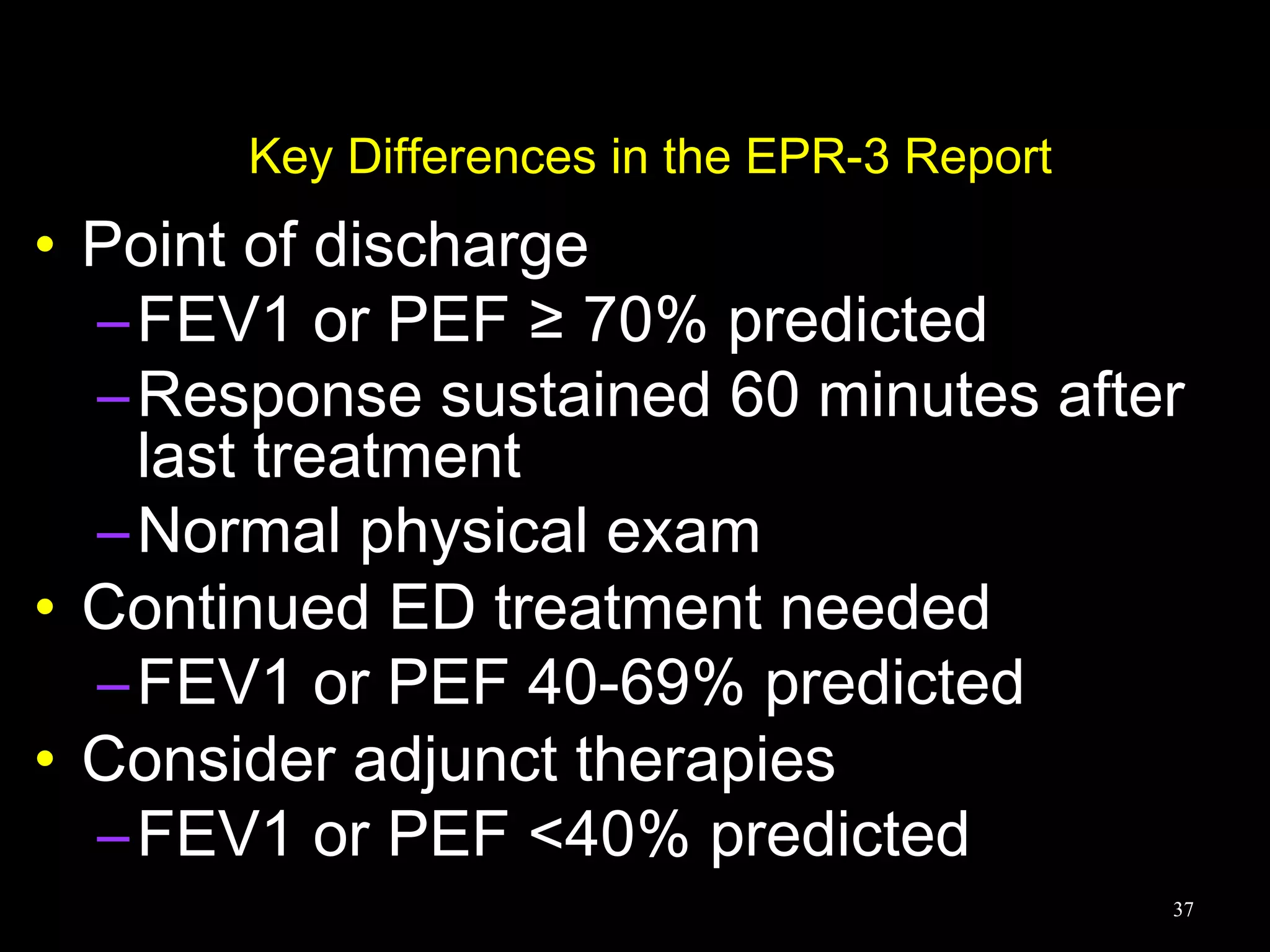
Key Differences in the EPR-3 Report
• Point of discharge
–FEV1 or PEF ≥ 70% predicted
–Response sustained 60 minutes after
last treatment
–Normal physical exam
• Continued ED treatment needed
–FEV1 or PEF 40-69% predicted
• Consider adjunct therapies
–FEV1 or PEF <40% predicted
37
Thank you for your time and attention.

Asthma presentation

  • 1.
  • 2.
    Asthma is... • Derivedfrom the Greek word for panting or breathlessness • Recurrent airflow obstruction caused by chronic airway inflammation with a superimposed bronchospasm • Leads to… wheezing, breathlessness and a cough Guidelines for the Diagnosis and Management of Asthma—Update on Selected Topics 2002. NIH, NHLBI. June 2002. NIH publication no. 02-5075.
  • 3.
    Pathophysiology of Asthma •Genetic predisposition – Chromosome: 5Q31-Q33 • Results from repeated exposure to allergens in the individual already equipped with the genetic predisposition • Upon exposure to an allergen, there is a release of IgE antibodies • IgE antibody binds with the antigen
  • 4.
    Pathophysiology of Asthma •IgE/allergen complex - then attaches itself to the mast cells on the nasal and bronchial mucosa • Release of numerous chemical mediators
  • 5.
    Histamine • Histamine isstored mainly in the mast cell – Circulated in the blood via the basophil • Causes an increase in blood flow to the affected area. – Responsible for the increased nasal discharge, edematous mucous membranes, sneezing, itchy nose and eyes, and hives – Also associated with airway inflammation and bronchoconstriction
  • 6.
    Asthma Triggers Smooth Muscle Dysfunction Allergens ExerciseIrritants Viruses Weather Inflammation Bronchial Constriction Hypertrophy Hyperplasia Inflammatory Mediator Release Bronchial Hyperreactivity Symptoms Exacerbations Inflammatory Cell Infiltration Architectural Changes Mucus Secretion Epithelial Damage Edema Impaired Ciliary Function Adapted from Creticos. Adv Stud Med. 2002;2(14):499-503. Components of Asthma
  • 7.
    Consequences of Inflammationin Asthma StimulusStimulus (Antigen, virus, pollutant, occupational agent)(Antigen, virus, pollutant, occupational agent) AcuteAcute InflammationInflammation ResolutionResolution Chronic InflammationChronic Inflammation RemodelingRemodeling (fixed changes in the(fixed changes in the structure of airway)structure of airway) Injury RepairInjury Repair ↑↑ Airway dysfunctionAirway dysfunction ““Permanently” alteredPermanently” altered lung functionlung function Altered airway physiologyAltered airway physiology ↑↑ Airflow obstructionAirflow obstruction
  • 8.
    Asthma: Pathophysiologic Features andChanges in Airway Morphology Epithelial damage Inflammatory cell infiltration Vascular dilation Mucous gland hypertrophy and hyperplasia Edema Mucus hypersecretion Thickening of basement membrane Adapted from Expert Panel Report. Guidelines for the Diagnosis and Management of Asthma. NIH, NHLBI. 1991. NIH publication 91-3042. Airway smooth- muscle hypertrophy, hyperplasia, and bronchoconstriction Airway lumen narrowing Goblet cell hyperplasia
  • 9.
    Cross Section ofBronchiole Showing Bronchospasm Color Atlas of Respiratory Disease. Volume 2, 1995.
  • 10.
    AsthmaticNormal Jeffery P. In:Asthma, Academic Press 1998. Epithelial Damage in Asthma
  • 11.
    Basement Membrane Thickening JefferyP. In: Asthma, Academic Press 1998.
  • 12.
    Triggers • Inhalant allergensare the most common triggers for both asthma – House dust – Pollens – Mold spores – Animal and insect emanations • Cockroach feces
  • 13.
    Triggers • Chemicals • Perfumes •Foods – Sulfites (wine), shrimp, dried fruit, processed potatoes, beer • Viruses or infections • Cold air
  • 14.
    Triggers • Tobacco smoke •Pollution –Work exposures • Exercise
  • 15.
    Asthma is... • Adisease of: –Inflammation • Primary Process –Hyperresponsiveness –Airway bronchoconstriction –Excessive mucous production
  • 16.
  • 17.
    Diagnosis of Asthma •History and Physical Examination • Spirometry is needed to make diagnosis • Monitoring: –Peak Flow Meters
  • 18.
    Symptoms and Signsof Asthma in Children and Adults • Coughing, particularly at night or after exercise • Wheezing • Chest tightness • SOB • Cold that lingers x months
  • 19.
    Methods for MeasuringAirway Caliber Maximum PEFR airflow achieved Home FVC, FEV1 FEF25%-75% Office/Clinic Airway Resistance Clinic/Laboratory
  • 20.
    © 2008 FitzgeraldHealth Education Associates, Inc. 20
  • 21.
    Asthma Findings • Typically,reversibility of 20% or greater after administration of a bronchodilator aerosol is consistent with asthma. Conboy-Ellis, Kathleen. Asthma: Pathogenesis and Management. The Nurse Practitioner: November 2006; Vol.31, No. 11. 24 – 39.
  • 22.
    Asthma • Hyperinflation • Diaphragmis down to the 11th ribs • Most patients with asthma have normal x-rays
  • 23.
    Chronic Asthma Changes •Increased AP Lateral diameter • The way you know that AP/Lat diameter is increased is by this clear space between the sternum and the ascending aorta • Flat diaphragms
  • 24.
  • 25.
    1970s–1980s Bronchoconstriction (Spirometry) 1980s–1990s Inflammation (PC20, Inflam cells, FeNO) 1990s–2000s Remodeling RelieveSymptoms Prevent Symptoms Prevent Attacks Prevent Remodeling Prevent Symptoms Prevent Attacks Evolution of Asthma Paradigms Bronchial Hyperreactivity Fixed Obstruction Symptoms
  • 26.
    Environmental Control: A Usefulbut Often Ignored Step • Dust Mite Avoidance – Bed linens must be laundered 1-2 times/week – Maintain humidity at <50% – Encase pillows and mattresses – Frequent vacuuming • Remember: 30 minutes after vacuuming: increased dust mite emanations in the air • Individuals with significant asthma should avoid vacuuming or avoid the room for 30 minutes after vacuuming
  • 27.
    Environmental Control: AUseful but Often Ignored Step • Pollen Avoidance – Air-conditioning – Minimize outdoor exposures during times of highest pollen counts – Keep bedroom windows closed – Air filters
  • 28.
    Environmental Control • AnimalAvoidance – Keep animals out of the bedroom – If the family has a cat, weekly washing of the cat significantly reduces the allergen load – May have to remove animals from home – Dry clean upholstery and carpets – Cover with an air filter any ducts leading into the bedroom
  • 29.
    Environmental Control • MoldAvoidance – Children/adolescents with allergic rhinitis and/or asthma should not be sleeping in a damp basement – Clean moldy surfaces – Avoid houseplants – Avoid chores that involve damp grass, leaves
  • 30.
    Environmental Control • Avoidanceof Non-allergic Triggers –Strong emotions –Smoke: No smoking in house or car –Pollution –Cold air –Odors –Exercise
  • 31.
    31 Stepwise Approach forManaging Asthma in Patients Aged ≥12 Years: NAEPP EPR-3 Guidelines Step 1 Preferred: SABA prn Step 2 Preferred: Low-dose inhaled corticosteroid (ICS) Alternative: Mast cell stabilizer (Cromolyn nedocromil), leukotriene receptor antagonist (LTRA), or theophylline Step 3 Preferred: Medium-dose ICS or Low-dose ICS + LABA Alternative: Low-dose ICS and either LTRA, theophylline, or zileuton Step 5 Preferred: High-dose ICS + LABA and omalizumab use can be considered for patients who have allergies. Step 4 Preferred: Medium-dose ICS + LABA Alternative: Medium-dose ICS and either LTRA, theophylline, or zileuton Step 6 Preferred: High-dose ICS + LABA + oral corticosteroid and consider omalizumab for patients who have allergies Severe Persistent Moderate PersistentMild PersistentIntermittent
  • 32.
    Step Approach toTherapy • If control is not achieved with therapy, step up the therapy • Once control is sustained for a minimum of 3 months, can consider stepping down the therapy • Regardless, therapy should be reviewed q 6 months
  • 33.
  • 34.
    Acute Asthma Exacerbation •Measure FEV1 • Inhaled short acting beta 2 agonist: Up to three treatments of 2-4 puffs by MDI at 20 minute intervals OR a single nebulizer • Can repeat x 1 – 2 provided patient tolerates • Prednisone – What dose and schedule??
  • 35.
    Management of ModerateExacerbations: Response from ED Treatment • Good Response –Symptom relief sustained x 1hr; FEV1 or PEF ≥ 70% –D/C home –Continue SABA & oral corticosteroid –Consider inhaled corticosteroid (ICS) –Patient education / asthma action plan 35
  • 36.
    Management of ModerateExacerbations: Response from ED Treatment • Incomplete Response – Mild-moderate symptoms, FEV1 or PEF 40-69% – SABA, oxygen, oral or IV corticosteroids – Can D/C home • Poor Response – Marked symptoms, PEF <40% – Repeat SABA immediately – ED / 911; oral corticosteroid 36
  • 37.
    Key Differences inthe EPR-3 Report • Point of discharge –FEV1 or PEF ≥ 70% predicted –Response sustained 60 minutes after last treatment –Normal physical exam • Continued ED treatment needed –FEV1 or PEF 40-69% predicted • Consider adjunct therapies –FEV1 or PEF <40% predicted 37
  • 38.
    Thank you foryour time and attention.

Editor's Notes

  • #4 Results from repeated exposure to allergens in the individual already equipped with the genetic predisposition Release of IgE antibodies IgE binds with the antigen and attaches to the mast cells on the nasal mucosa Release of numerous chemical mediators
  • #5 Results from repeated exposure to allergens in the individual already equipped with the genetic predisposition Release of IgE antibodies IgE binds with the antigen and attaches to the mast cells on the nasal mucosa Release of numerous chemical mediators
  • #6 Histamine is stored mainly in the mast cell Circulated in the blood via the basophil Causes an increase in blood flow to the affected area. This increase in blood flow causes the introduction of more fluids to the area. Responsible for the increased nasal discharge, edematous mucous membranes, sneezing, itchy nose and eyes, and hives Also causes inflammation and bronchoconstriction of airways Remember; Asthma is a disease of primarily inflammation. This inflammation causes an increase in hyperresponsiveness and bronchoconstriction.
  • #11 Disruption of the bronchial epithelium, as shown on this slide, has both structural and functional effects that contribute to inflammation and airway wall remodelling. (Holgate, 1999)
  • #12 The deposition of collagen type III, collagen type V, and fibronectin in the lamina reticularis accounts for thickening of the basement membrane. Thickening of the basement membrane is one of several elements of airway wall thickening observed in patients dying from asthma. Inflammatory cell infiltration, increased airway smooth muscle mass, and exudation of plasma with edema of the airway wall also contribute to airway wall thickening. (Fish, 1999)
  • #13 Inhalant allergens are the most common triggers for both asthma House dust, pollens, mold spores, animal and insect emanations Chemicals, perfumes, foods are other triggers Viruses or infections Cold air Occupational exposures Tobacco smoke Pollution Exercise
  • #14 Inhalant allergens are the most common triggers for both asthma House dust, pollens, mold spores, animal and insect emanations Chemicals, perfumes, foods are other triggers Viruses or infections Cold air Occupational exposures Tobacco smoke Pollution Exercise
  • #15 Inhalant allergens are the most common triggers for both asthma House dust, pollens, mold spores, animal and insect emanations Chemicals, perfumes, foods are other triggers Viruses or infections Cold air Occupational exposures Tobacco smoke Pollution Exercise
  • #16 A disease of: Inflammation Hyperresponsiveness/Bronchoconstriction Excessive mucous production
  • #17 Diagnosis of Asthma
  • #18 History and Physical Examination Pulmonary Function Tests Peak Flow Meters
  • #19 Coughing, particularly at night Wheezing Chest tightness SOB Tachypnea Restlessness Retractions Associated Symptoms Anxiety-children with asthma more likely to suffer from anxiety symptoms and disorders than non asthmatic children-study by Vila et. Al and Published in Psychosomatics: Sept 1999
  • #25 Treatment of Asthma
  • #27 Pollen counts are the highest first thing in the morning-this is when plants release their spores Also highest during breezy times of day Air filters-high efficacy units are somewhat efficacious-recommend renting the equipment prior to purchasing. Dust mites-live in bedding, mattresses and carpets. They feed on human dander and require a temp of 65-70 degrees in which to live Vacuuming-leads to 30 minutes where airborne mite feces flies through the air and becomes inhaled
  • #28 Pollen counts are the highest first thing in the morning-this is when plants release their spores Also highest during breezy times of day Air filters-high efficacy units are somewhat efficacious-recommend renting the equipment prior to purchasing. Dust mites-live in bedding, mattresses and carpets. They feed on human dander and require a temp of 65-70 degrees in which to live Vacuuming-leads to 30 minutes where airborne mite feces flies through the air and becomes inhaled
  • #29 Animal Avoidance Keep animals out of the bedroom If the family has a cat, weekly washing of the cat significantly reduces the allergen load May have to remove animals from home Mold Avoidance Children/adolescents with allergic rhinitis and/or asthma should not be sleeping in a damp basement Avoidance of Non-allergic Triggers
  • #30 Animal Avoidance Keep animals out of the bedroom If the family has a cat, weekly washing of the cat significantly reduces the allergen load May have to remove animals from home Mold Avoidance Children/adolescents with allergic rhinitis and/or asthma should not be sleeping in a damp basement Avoidance of Non-allergic Triggers
  • #31 Animal Avoidance Keep animals out of the bedroom If the family has a cat, weekly washing of the cat significantly reduces the allergen load May have to remove animals from home Mold Avoidance Children/adolescents with allergic rhinitis and/or asthma should not be sleeping in a damp basement Avoidance of Non-allergic Triggers
  • #32 Stepwise Approach for Managing Asthma in Patients Aged 12 Years: NAEPP Draft Guidelines Key Point: This slide presents the stepwise approach to therapy for patients aged 12 years. The stepwise approach is meant to assist, not replace, the clinical decision making required to meet individual patient needs If alternative treatment is used and response is inadequate, discontinue it and use the preferred treatment before stepping up The horizontal bars at the top of this graphic correlate the stepwise approach to care with asthma severity, based on the draft guidelines’ tables for classifying asthma severity and initiating treatment. This is for reference purposes only, as stepping up or stepping down is based on control rather than severity The category of evidence used to support each recommendation is shown in parentheses [NAEPP p 504-510] For intermittent asthma (Step 1), a SABA should be used as needed [NAEPP p 501 lines 12-13] For exacerbations from a viral respiratory infection, a SABA may be given every 4 to 6 hours up to 24 hours, and longer with physician consult. If therapy must be repeated more frequently than every 6 weeks, a step-up in long-term care is recommended. A short course of systemic oral corticosteroids may be needed if the exacerbation is moderate to severe or the patient has a history of severe exacerbations [NAEPP p 502 lines 1-9] At Step 2 or higher (persistent asthma), daily long-term controller medication is recommended, with low- to high-dose ICS, alone or in combination, being the preferred treatment At Step 2, preferred therapy is low-dose daily ICS, and alternative (but not preferred) therapies include cromolyn, nedocromil, and LTRA, sustained-release theophylline [NAEPP p 504 lines 1-5] At Step 3, consultation with an asthma specialist may be recommended. Prior to increasing the dose, the physician should conduct a careful review of the patient’s asthma. The physician should review inhaler technique and determine whether environmental factors or comorbid conditions are attributed to the patient’s worsening of asthma [NAEPP p 505 lines 20-24 p 506 lines 1-2] There are 2 equivalent preferred therapies at Step 3: medium-dose ICS or adding a LABA to low-dose ICS. [NAEPP p 506 lines 3-11] Alternative therapies (in alphabetical order) include adding an LTRA, theophylline, or zileuton to low-dose ICS [NAEPP p 508 lines 16-17] Zileuton is a less desirable alternative because of limited studies as adjunctive therapy and the need to monitor liver function [NAEPP p 509 lines 10-14] The preferred option at Step 4 is addition of a LABA to medium-dose ICS. Alternative add-on therapies include an LTRA or theophylline [NAEPP p 509 lines 18-19; p 510 lines 4-5] At Step 5, preferred therapy is a LABA plus high-dose ICS. Omalizumab should be considered for patients with sensitivity to relevant perennial allergies. Such patients should be referred to an asthma specialist [NAEPP p 510 lines 9-14] At Step 6, oral corticosteroids are added to Step 5 therapy. [NAEPP p 510 line 16] Before oral corticosteroids are introduced, a 2-week course of oral corticosteroids (to confirm reversibility) or a combination of high-dose ICS, a LABA, and either LTRA, theophylline, or zileuton may be considered, although this approach has not been studied in clinical trials [NAEPP p 510 lines 16-18; p 511 lines 6-10]