SUBMITTED BY
PANKAJ SINGH RANA
NURSE PRACTITIONER IN
CRITICAL CARE, SRHU
ASSESSMENT OF
RESPIRATORY
SYSTEM
Functions of the Respiratory
System
 Air Distributor
 Gas exchanger
 Filters, warms, and
humidifies air
 Influences speech
 Allows for sense of smell
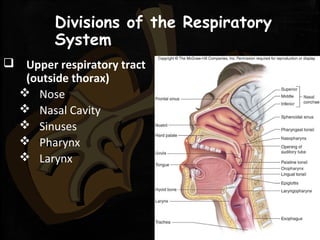
Divisions of the Respiratory
System
 Upper respiratory tract
(outside thorax)
 Nose
 Nasal Cavity
 Sinuses
 Pharynx
 Larynx
Divisions of the Respiratory
System
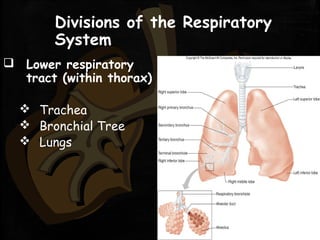
 Lower respiratory
tract (within thorax)
 Trachea
 Bronchial Tree
 Lungs
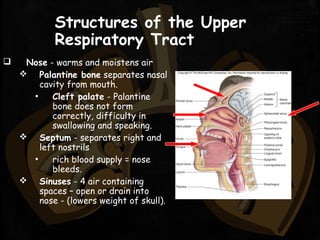
Structures of the Upper
Respiratory Tract
 Nose - warms and moistens air
 Palantine bone separates nasal
cavity from mouth.
▪ Cleft palate - Palantine
bone does not form
correctly, difficulty in
swallowing and speaking.
 Septum - separates right and
left nostrils
▪ rich blood supply = nose
bleeds.
 Sinuses - 4 air containing
spaces – open or drain into
nose - (lowers weight of skull).
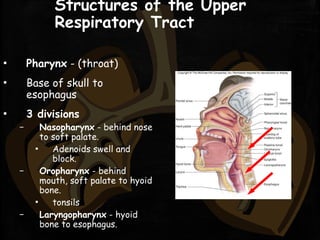
Structures of the Upper
Respiratory Tract
▪ Pharynx - (throat)
▪ Base of skull to
esophagus
▪ 3 divisions
– Nasopharynx - behind nose
to soft palate.
▪ Adenoids swell and
block.
– Oropharynx - behind
mouth, soft palate to hyoid
bone.
▪ tonsils
– Laryngopharynx - hyoid
bone to esophagus.
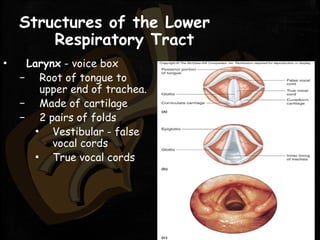
Structures of the Lower
Respiratory Tract
▪ Larynx - voice box
– Root of tongue to
upper end of trachea.
– Made of cartilage
– 2 pairs of folds
▪ Vestibular - false
vocal cords
▪ True vocal cords
Structures of the Lower
Respiratory Tract larynx cont…
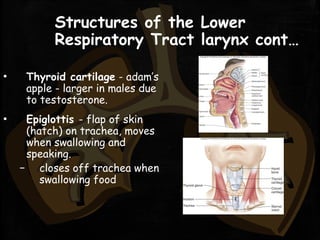
▪ Thyroid cartilage - adam’s
apple - larger in males due
to testosterone.
▪ Epiglottis - flap of skin
(hatch) on trachea, moves
when swallowing and
speaking.
– closes off trachea when
swallowing food
Structures of the Lower
Respiratory Tract
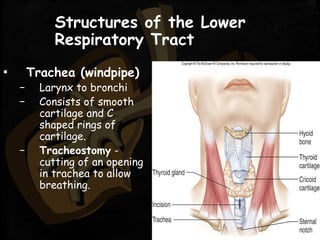
▪ Trachea (windpipe)
– Larynx to bronchi
– Consists of smooth
cartilage and C
shaped rings of
cartilage.
– Tracheostomy -
cutting of an opening
in trachea to allow
breathing.
Structures of the Lower
Respiratory Tract
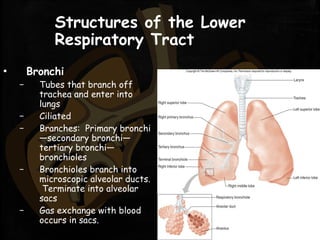
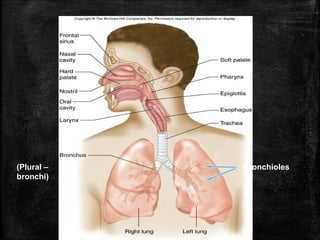
▪ Bronchi
– Tubes that branch off
trachea and enter into
lungs
– Ciliated
– Branches: Primary bronchi
—secondary bronchi—
tertiary bronchi—
bronchioles
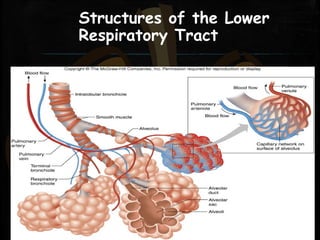
– Bronchioles branch into
microscopic alveolar ducts.
Terminate into alveolar
sacs
– Gas exchange with blood
occurs in sacs.
Structures of the Lower
Respiratory Tract
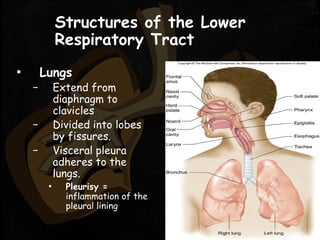
Structures of the Lower
Respiratory Tract
▪ Lungs
– Extend from
diaphragm to
clavicles
– Divided into lobes
by fissures.
– Visceral pleura
adheres to the
lungs.
▪ Pleurisy =
inflammation of the
pleural lining
Bronchioles(Plural –
bronchi)
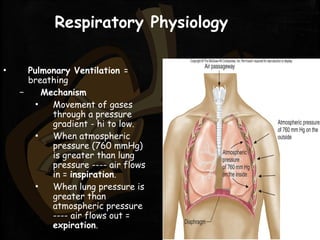
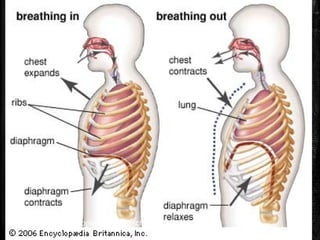
Respiratory Physiology
▪ Pulmonary Ventilation =
breathing
– Mechanism
▪ Movement of gases
through a pressure
gradient - hi to low.
▪ When atmospheric
pressure (760 mmHg)
is greater than lung
pressure ---- air flows
in = inspiration.
▪ When lung pressure is
greater than
atmospheric pressure
---- air flows out =
expiration.
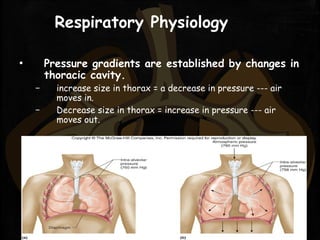
Respiratory Physiology
▪ Pressure gradients are established by changes in
thoracic cavity.
– increase size in thorax = a decrease in pressure --- air
moves in.
– Decrease size in thorax = increase in pressure --- air
moves out.
http://people.eku.edu/ritchisong/301notes6.htm
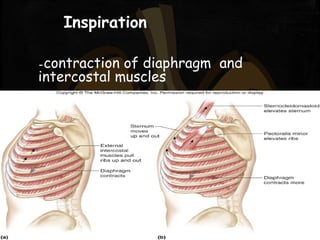
Inspiration
-contraction of diaphragm and
intercostal muscles
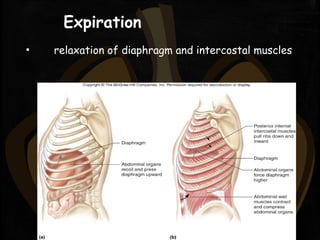
Expiration
▪ relaxation of diaphragm and intercostal muscles
Volumes of Air
Exchange
▪ Tidal volume - amount of air exhaled normally
after a typical inspiration. Normal - about 500 ml
▪ Expiratory Reserve volume - additional amount of
air forcibly expired after tidal expiration (1000 -
1200 ml).
▪ Inspiratory Reserve volume - (deep breath)
amount of air that can be forcibly inhaled over and
above normal.
▪ Residual volume - amount of air that stays
trapped in the alveoli (about 1.2 liters).
Volumes of Air
Exchange
▪ Vital capacity - the largest volume of air an
individual can move in and out of the lungs.
▪ Vital capacity = sum of IRV+TV+ERV
▪ Depends of many factors
▪ size of thoracic cavity
▪ posture
▪ volume of blood in lungs  congestive heart failure,
emphysema, disease, etc…
Volumes of Air Exchange
▪ Eupnea - normal quiet breathing, 12-17 breaths
per minute.
▪ Hyperpnea - increase in breathing to meet an
increased demand by body for oxygen.
▪ Hyperventilation - increase in pulmonary
ventilation in excess of the need for oxygen.
▪ Hypoventilation - decrease in pulmonary
ventilation.
▪ Apnea - temporary cessation of breathing at the
end of normal expiration.
ASSESSMENT OF RESPIRATORY
SYSTEM
INTRODUCTION
 Respiratory medicine comprises a large part of everyday clinical
practice for two reasons:
▪ Respiratory conditions are common – accounting for more than 13
per cent of all emergency admissions and more than 20 per cent of
general practitioner consultations
▪ Respiratory symptoms and signs as elicited by respiratory history and
examination are often present in non-respiratory conditions as well
as respiratory conditions.
CLINICAL HISTORY
The six key symptoms of respiratory disease are:
▪chest pain (that may be extended to chest
sensations)
▪dyspnoea
▪cough
▪wheeze
▪sputum production
▪haemoptysis
CHEST PAIN
 
Ask the onset, character, severity, duration, radiation, and any
previous history of chest pain.
Pleuritic chest pain is pain that is made worse by breathing and is
often sharp and stabbing in nature when taking breath in.
A history of chronic pleuritic chest pain going back several months
or years could indicate an inflammatory disorder resulting in
pleurisy.
Chest pain that is dull and persistent in one area, and especially if it
is keeping the patient awake at night, could indicate a malignant
process within the chest that is affecting the chest wall
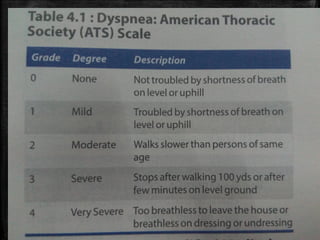
DYSPNOEA
▪ analysis is done by chest pain, severity, duration, onset,
precipitating factors, and previous history
▪ Shortness of breath that has appeared out with no apparent
precipitating factor risk factors for thromboembolic disease and
suggest appropriate tests.
▪ A slow onset of gradually increasing shortness of breath
over many months may indicate as chronic obstructive
pulmonary disease (COPD) or interstitial lung disease.
▪ Conditions that have exacerbations of breathlessness such
as COPD, asthma or bronchiectasis.
WHEEZE
Ask about the onset, duration and periodicity of wheeze.
Wheeze that occurs more at night and first thing in the morning,
and that may be exacerbated by exercise, is suggestive of asthma
and COPD.
A pronounced variation in the severity of wheeze (worse at night
and in the morning compared to daytime) is more suggestive of
asthma, but by no means excludes COPD.
enquire the relationship between other respiratory symptoms and
precipitating factors, specifically asking about exercise and cold or
foggy weather.
WHEEZE
    Example A: History of crushing central chest pain radiating to the
arm and associated with nausea and vomiting and a feeling of
dread.
Conclusion: Myocardial ischaemic pain.
Example B: Progressive dyspnoea and fatigue over several
months. Pallor but no other symptoms or signs; haemoglobin 6.0
g/dL.
Conclusion: Anaemia.
COUGH
Cough is the commonest symptom that is associated with pure
respiratory disease that includes both foreign elements and
substances generated by the host. Thus cough is a prominent
feature of upper respiratory infections, inhalation of irritants
such as dusts and chemicals, as a result of lower respiratory
infections. In addition to this, cough receptors within the lung
can be stimulated as happens in interstitial lung disease or in
endobronchial sarcoidosis.
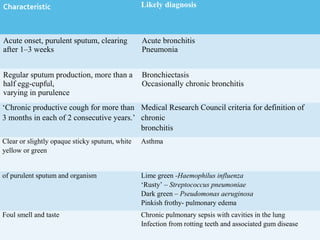
sputum
Characteristic Likely diagnosis
Acute onset, purulent sputum, clearing
after 1–3 weeks
Acute bronchitis
Pneumonia
Regular sputum production, more than a
half egg-cupful,
varying in purulence
Bronchiectasis
Occasionally chronic bronchitis
‘Chronic productive cough for more than
3 months in each of 2 consecutive years.’
Medical Research Council criteria for definition of
chronic
bronchitis
Clear or slightly opaque sticky sputum, white
yellow or green
Asthma
of purulent sputum and organism Lime green -Haemophilus influenza
‘Rusty’ – Streptococcus pneumoniae
Dark green – Pseudomonas aeruginosa
Pinkish frothy- pulmonary edema
Foul smell and taste Chronic pulmonary sepsis with cavities in the lung
Infection from rotting teeth and associated gum disease
FAMILY HISTORY
▪ In the family history, it is again important
to enquire about tuberculosis any of the
family members have had tuberculosis and
any contact with them, whether they had a
Bacille Calmette Guérin (BCG) vaccination or
not.
▪ If there is cystic fibrosis in the family,. A
strong family history of lung cancer in an
elderly patient is important not only
because the risk of lung cancer in the
individual is increased slightly.
SOCIAL HISTORY
▪ Record an accurate smoking history.
▪ Enquire about passive smoking as this is known to at least
double the risk of lung cancer and ischaemic heart disease.
▪ In the social history, enquire about any relevant exposures.
The most important is exposure to asbestos, which overlaps
with the occupational history, and also enquire about anything
that may cause hypersensitivity pneumonia (extrinsic allergic
alveolitis). This includes a variety of moulds (mouldy hay,
certain moulds growing on hard woods, and occasionally even
in the house).
SOCIAL HISTORY
▪ Enquire about exposure to birds and whether any symptoms
are related to cleaning the cage. Hypersensitivity pneumonia
results in a type III immune response with symptoms
appearing about 6 hours after exposure and continuing for 3
days. Symptoms include shortness of breath and flu-like
symptoms.
OCCUPATIONAL HISTORY
▪ In the occupational history, record occupations
that are known to relate to respiratory disease.
Thus electricians, plumbers, power station
workers, etc., will have some risk of being exposed
to asbestos.These occupations have a markedly
raised standardized mortality ratio for
mesothelioma and asbestosis.
▪ There are many agents that have been identified
as sensitizers and which may induce asthma, and
those present in glues and paints are most
prevalent.
PHYSICAL EXAMINATION
GENERAL OBSERVATIONS
TEMPERATURE
Cold fingers indicate peripheral vasoconstriction or heart
failure.
Warm hands with dilated veins are seen in CO 2 retention.
FINGERS
▪ Fingers stained with tar appear yellow/brown where the
cigarette is held (nicotine is colorless and does not stain).This
indicates smoking but is not an accurate indicator of the
number of cigarettes smoked.
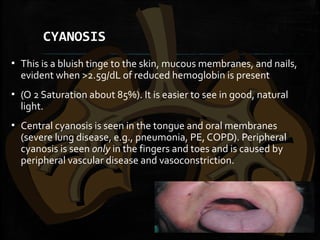
CYANOSIS
▪ This is a bluish tinge to the skin, mucous membranes, and nails,
evident when >2.5g/dL of reduced hemoglobin is present
▪ (O 2 Saturation about 85%). It is easier to see in good, natural
light.
▪ Central cyanosis is seen in the tongue and oral membranes
(severe lung disease, e.g., pneumonia, PE, COPD). Peripheral
cyanosis is seen only in the fingers and toes and is caused by
peripheral vascular disease and vasoconstriction.
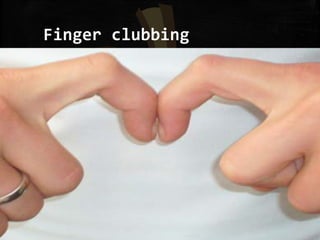
FINGER CLUBBING
▪ There is increased curvature of the nails. Early clubbing is seen
as a softening of the nail bed (nail can be rocked from side to
side), but this is very difficult to detect.
▪ When checking for clubbing, ask the patient to hold the distal
phalanx of one finger ‘back to back’ against the distal phalanx
of the same finger on the opposite hand, such that the two
fingernails are touching. Normally there is a small ‘window’
separating the two nail beds – loss of this ‘window’ indicates
clubbing. This is known as Schamroth’s test.
Finger clubbing
Respiratory causes of finger clubbing
▪ Bronchial carcinoma (non-small cell)
▪ Intrathoracic suppuration
▪ Bronchiectasis
▪ Empyema
▪ Cystic fibrosis
▪ Pulmonary abscess
▪ Fibrosing alveolitis (usual interstitial pneumonia).
▪ Rare causes include tuberculosis, sarcoidosis, pleural
mesothelioma, pleural fibroma, lipoid pneumonia.
PULSE
▪ Check rate, rhythm, and character. A tachycardic bounding
pulse = CO2 retention.
 
TREMOR
• Fine tremor: caused by use of B-agonist drugs (e.g., albuterol)
• Flapping tremor (asterixis): flapping when holding hands
dorsiflexed with fingers abducted.This is identical to the flap
of hepatic failure and is a late sign of CO 2 retention.
BLOOD PRESSURE
▪ Pulsus paradoxus is caused by pericardial effusion
and severe asthma.
JVP
▪ JVP is raised in pulmonary vasoconstriction or
pulmonary hypertension and right heart failure. It is
markedly raised, without a pulsation, in SVC
obstruction, with distended upper chest wall veins
and facial and conjunctival edema (chemosis).
NOSE
▪ Examine inside and out, looking for polyps (asthma), deviated
septum, and lupus pernio (red/purple nasal swelling of sarcoid
granuloma).
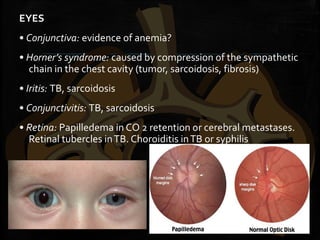
EYES
• Conjunctiva: evidence of anemia?
• Horner’s syndrome: caused by compression of the sympathetic
chain in the chest cavity (tumor, sarcoidosis, fibrosis)
• Iritis: TB, sarcoidosis
• Conjunctivitis: TB, sarcoidosis
• Retina: Papilledema in CO 2 retention or cerebral metastases.
Retinal tubercles inTB. Choroiditis inTB or syphilis
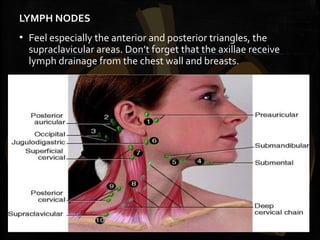
LYMPH NODES
▪ Feel especially the anterior and posterior triangles, the
supraclavicular areas. Don’t forget that the axillae receive
lymph drainage from the chest wall and breasts.
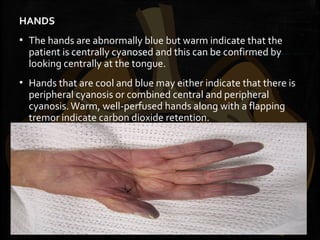
HANDS
▪ The hands are abnormally blue but warm indicate that the
patient is centrally cyanosed and this can be confirmed by
looking centrally at the tongue.
▪ Hands that are cool and blue may either indicate that there is
peripheral cyanosis or combined central and peripheral
cyanosis.Warm, well-perfused hands along with a flapping
tremor indicate carbon dioxide retention.
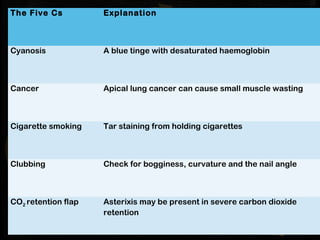
The Five Cs Explanation
Cyanosis A blue tinge with desaturated haemoglobin
Cancer Apical lung cancer can cause small muscle wasting
Cigarette smoking Tar staining from holding cigarettes
Clubbing Check for bogginess, curvature and the nail angle
CO2 retention flap Asterixis may be present in severe carbon dioxide
retention
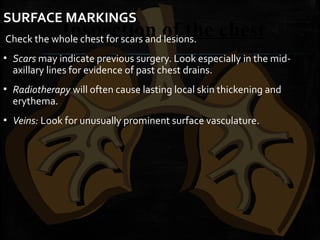
Inspection of the chest
SURFACE MARKINGS
Check the whole chest for scars and lesions.
▪ Scars may indicate previous surgery. Look especially in the mid-
axillary lines for evidence of past chest drains.
▪ Radiotherapy will often cause lasting local skin thickening and
erythema.
▪ Veins: Look for unusually prominent surface vasculature.
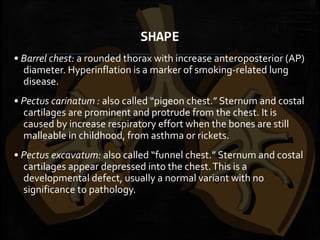
SHAPE
• Barrel chest: a rounded thorax with increase anteroposterior (AP)
diameter. Hyperinflation is a marker of smoking-related lung
disease.
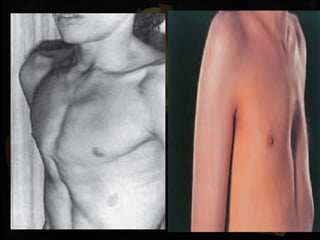
• Pectus carinatum : also called “pigeon chest.” Sternum and costal
cartilages are prominent and protrude from the chest. It is
caused by increase respiratory effort when the bones are still
malleable in childhood, from asthma or rickets.
• Pectus excavatum: also called “funnel chest.” Sternum and costal
cartilages appear depressed into the chest.This is a
developmental defect, usually a normal variant with no
significance to pathology.
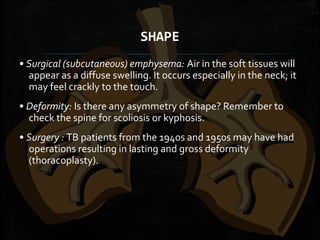
SHAPE
• Surgical (subcutaneous) emphysema: Air in the soft tissues will
appear as a diffuse swelling. It occurs especially in the neck; it
may feel crackly to the touch.
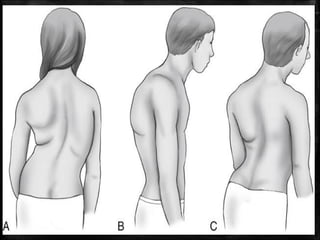
• Deformity: Is there any asymmetry of shape? Remember to
check the spine for scoliosis or kyphosis.
• Surgery : TB patients from the 1940s and 1950s may have had
operations resulting in lasting and gross deformity
(thoracoplasty).
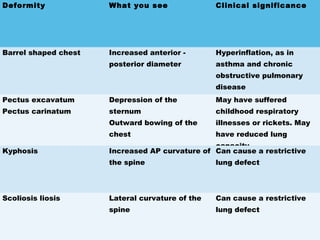
Deformity What you see Clinical significance
Barrel shaped chest Increased anterior -
posterior diameter
Hyperinflation, as in
asthma and chronic
obstructive pulmonary
disease
Pectus excavatum
Pectus carinatum
Depression of the
sternum
Outward bowing of the
chest
May have suffered
childhood respiratory
illnesses or rickets. May
have reduced lung
capacity.
Kyphosis Increased AP curvature of
the spine
Can cause a restrictive
lung defect
Scoliosis liosis Lateral curvature of the
spine
Can cause a restrictive
lung defect
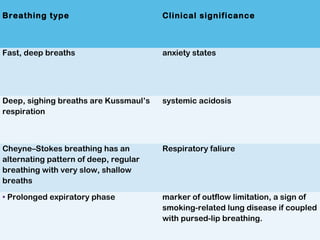
Breathing type Clinical significance
Fast, deep breaths anxiety states
Deep, sighing breaths are Kussmaul’s
respiration
systemic acidosis
Cheyne–Stokes breathing has an
alternating pattern of deep, regular
breathing with very slow, shallow
breaths
Respiratory faliure
• Prolonged expiratory phase marker of outflow limitation, a sign of
smoking-related lung disease if coupled
with pursed-lip breathing.
MOVEMENT
▪ Observe chest wall movement during breathing at rest. Also,
ask the patient to take a couple of deep breaths in and out,
and watch closely.
▪ Look for asymmetry. Decreased Movement indicates lung
disease on that side.
▪ decrease Movement globally is seen in COPD, along with a
“pump handle” movement of the ribs (hinged posteriorly
only), compared with the normal “bucket handle” (hinged at
the front and back).
▪ Harrison’s sulcus is a depression of the lower ribs just above
the costal margins and indicates severe childhood asthma.
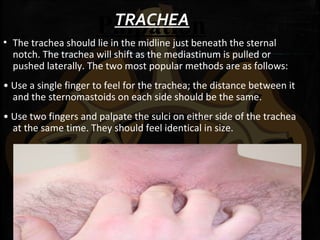
PalpationTRACHEA
▪ The trachea should lie in the midline just beneath the sternal
notch. The trachea will shift as the mediastinum is pulled or
pushed laterally. The two most popular methods are as follows:
• Use a single finger to feel for the trachea; the distance between it
and the sternomastoids on each side should be the same.
• Use two fingers and palpate the sulci on either side of the trachea
at the same time. They should feel identical in size.
PalpationAPEX BEAT OR PMI (POINT OF MAXIMUM IMPULSE).
This is normally at the fifth intercostal space in the mid-
clavicular line. It will shift with the mediastinum. However,
it is very difficult to palpate in the presence of
hyperexpanded lungs and may be shifted to the left if the
heart is enlarged
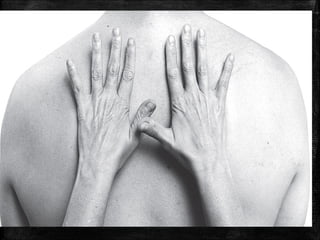
Chest expansion
▪ This is an objective measure of chest movement, using your
hands as a guide.
• Put both hands on the patient’s posterior thorax, at a level just
below the nipples, anchoring your fingers laterally at the sides.
• Extend your thumbs so that they touch at the spinous
processes; don’t press them against the chest.
• Ask the patient to take a deep breath. As they do this, watch
your thumbs; they should move apart equally. Any difference
in movement on one side should be visible.
• It is easy to move your thumbs yourself in the expected
direction. Be aware of this and allow them to follow the
movement of the chest.
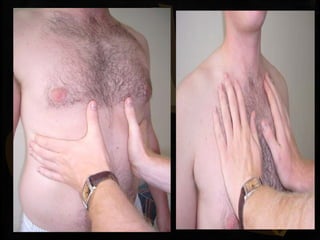
TACTILE VOCAL FREMITUS
▪ This is the vibration felt on the chest as the patient speaks.
Each part of the chest is tested, as for percussion.
▪ Place the medial edge of your hand horizontally against the
chest.
▪ Ask the patient to say “99” or “1, 1, 1.”
▪ You should feel the vibration against your hand.
▪ This test is rather crude and often neglected by clinicians.The
changes are identical to those for vocal resonance.
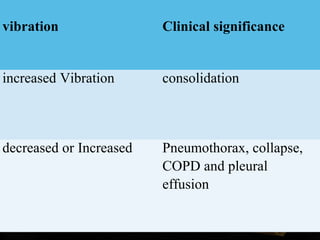
vibration Clinical significance
increased Vibration consolidation
decreased or Increased Pneumothorax, collapse,
COPD and pleural
effusion
Percussion
TECHNIQUE
▪ This takes some practice to master fully, thus it can serve
as an excellent indicator of how much time a student has
spent performing the maneuver.
▪ The aim is to tap the chest by the standard method and
listen to and feel for the resultant sound. For a right-
handed provider:
▪ Place the left hand on the chest wall, fingers separated
and lying between the ribs.
▪ Press the middle finger firmly against the chest.
▪ Using the middle finger of the right hand, strike the
middle phalanx of the middle finger of the left hand.
Percussion
• The striking finger should be moved away again quickly, as keeping it
pressed on the left hand may muffle the noise.
• The right middle finger should be kept in the flexed position, the
striking movement coming from the wrist (much like playing the
piano).
• In clinical practice, one should percuss each area of the lung, each
time comparing right then left.
▪ If an area of dullness is heard (or felt), this should be percussed in
more detail so as to map out the borders of the abnormality.
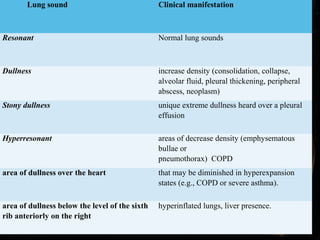
Lung sound Clinical manifestation
Resonant Normal lung sounds
Dullness increase density (consolidation, collapse,
alveolar fluid, pleural thickening, peripheral
abscess, neoplasm)
Stony dullness unique extreme dullness heard over a pleural
effusion
Hyperresonant areas of decrease density (emphysematous
bullae or
pneumothorax) COPD
area of dullness over the heart that may be diminished in hyperexpansion
states (e.g., COPD or severe asthma).
area of dullness below the level of the sixth
rib anteriorly on the right
hyperinflated lungs, liver presence.
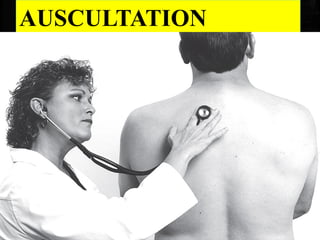
AUSCULTATION
Technique
▪ The diaphragm should be used, except where better
surface contact is needed in very thin or hairy patients.
▪ Ask the patient to take deep breaths in and out through
the mouth.
▪ Listen to both inspiration and expiration.
▪ Listen over the same areas percussed, comparing left to
right.
▪ If an abnormality is found, examine more carefully and
define borders
AUSCULTATION
TECHNIQUE
▪ The diaphragm should be used, except where better surface contact
is needed in very thin or hairy patients.
▪ Ask the patient to take deep breaths in and out through the mouth.
▪ Listen to both inspiration and expiration.
▪ Listen over the same areas percussed, comparing left to right.
▪ If an abnormality is found, examine more carefully and define
borders
Vocal resonance
▪ Auscultatory equivalent of vocal fremitus
▪ Low-pitched sounds transmit well and create a vocal
booming quality.
▪ •Ask the patient to say “99” or 1, 1, 1” and listen over the
same areas as before.
▪ The changes are the same as those for vocal fremitus.
▪ A marked increased resonance, such that a whisper can be
clearly heard, is termed whispered pectoriloquy .
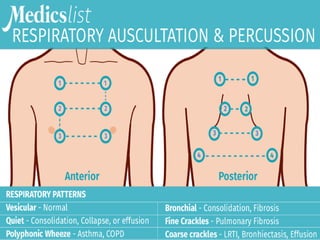
Breath sounds Cilinical significance
Normal Often described as rustling. This is heard
especially well in inspiration and early
expiration.
Reduced sound local = effusion, tumor, pneumothorax,
pneumonia, or lung collapse
global = COPD or asthma (The “silent chest” is
a sign of a life-threatening asthma attack.)
Bronchial breathing Bronchial breathing is heard over
consolidation, lung abscess at the chest wall,
pleural effusion.
It is also heard at the upper border of a pleural
effusion.
Wheeze (rhonchi) musical whistling sounds caused by
narrowed airways. It is heard easier in
expiration.
Different-caliber airways different-pitch note; thus asthma and COPD
can cause a chorus of notes termed
polyphonic wheeze.
Monophonic wheeze a single airway is narrowed, usually by a
foreign body or carcinoma.
• Crackles (crepitations, rales) caused by air entering collapsed airways and
alveoli producing an opening snap. They are
heard in inspiration.
Coarse crackles larger airways opening and sound like the
snap and pop of a certain breakfast cereal.
Causes include fluid or infection.
Fine crackles occur later in inspiration
can also be reproduced by rolling hair at
the temples between the thumb and
forefinger. Causes include fluid, infection,
or fibrosis (particularly at lung bases)
Rub
creaking sound likened to the bending of
new leather or the creak of a footstep in
fresh snow. This is heard at the height of
inspiration and is caused by inflamed
pleural surfaces rubbing against each other.
Important presenting patterns
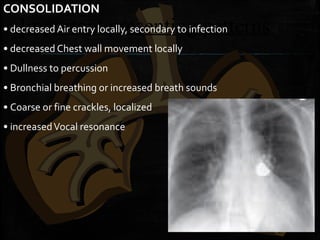
CONSOLIDATION
• decreased Air entry locally, secondary to infection
• decreased Chest wall movement locally
• Dullness to percussion
• Bronchial breathing or increased breath sounds
• Coarse or fine crackles, localized
• increasedVocal resonance
COLLAPSE
• Blockage of a major airway and collapse of the distal lung segment
• Mediastinal shift towards the abnormality
• decreased Chest wall movement locally
• Dullness to percussion restricted to affected lobe
• decreased Breath sounds
• decreasedVocal resonance
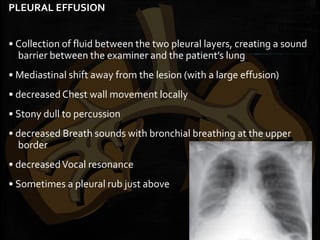
PLEURAL EFFUSION
• Collection of fluid between the two pleural layers, creating a sound
barrier between the examiner and the patient’s lung
• Mediastinal shift away from the lesion (with a large effusion)
• decreased Chest wall movement locally
• Stony dull to percussion
• decreased Breath sounds with bronchial breathing at the upper
border
• decreasedVocal resonance
• Sometimes a pleural rub just above
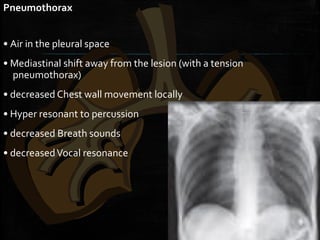
Pneumothorax
• Air in the pleural space
• Mediastinal shift away from the lesion (with a tension
pneumothorax)
• decreased Chest wall movement locally
• Hyper resonant to percussion
• decreased Breath sounds
• decreasedVocal resonance
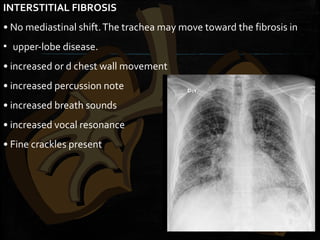
INTERSTITIAL FIBROSIS
• No mediastinal shift.The trachea may move toward the fibrosis in
▪ upper-lobe disease.
• increased or d chest wall movement
• increased percussion note
• increased breath sounds
• increased vocal resonance
• Fine crackles present
BIBLIOGAPHY
▪ Elizabeth A. Burns, Kenneth Korn, JamesWhyte IV,
Handbook of Clinical Examination and Practical
Skills, 2011, Oxford American Handbooks, page
181-200.
▪ Michael Glynn,William Drake, Hutchisons Clinical
Methods, 23 edition, Elsevier, page 148-164.
▪ www. Global. Oup. com
Respiratory System assessment

Respiratory System assessment

  • 1.
    SUBMITTED BY PANKAJ SINGHRANA NURSE PRACTITIONER IN CRITICAL CARE, SRHU ASSESSMENT OF RESPIRATORY SYSTEM
  • 2.
    Functions of theRespiratory System  Air Distributor  Gas exchanger  Filters, warms, and humidifies air  Influences speech  Allows for sense of smell
  • 3.
    Divisions of theRespiratory System  Upper respiratory tract (outside thorax)  Nose  Nasal Cavity  Sinuses  Pharynx  Larynx
  • 4.
    Divisions of theRespiratory System  Lower respiratory tract (within thorax)  Trachea  Bronchial Tree  Lungs
  • 5.
    Structures of theUpper Respiratory Tract  Nose - warms and moistens air  Palantine bone separates nasal cavity from mouth. ▪ Cleft palate - Palantine bone does not form correctly, difficulty in swallowing and speaking.  Septum - separates right and left nostrils ▪ rich blood supply = nose bleeds.  Sinuses - 4 air containing spaces – open or drain into nose - (lowers weight of skull).
  • 6.
    Structures of theUpper Respiratory Tract ▪ Pharynx - (throat) ▪ Base of skull to esophagus ▪ 3 divisions – Nasopharynx - behind nose to soft palate. ▪ Adenoids swell and block. – Oropharynx - behind mouth, soft palate to hyoid bone. ▪ tonsils – Laryngopharynx - hyoid bone to esophagus.
  • 7.
    Structures of theLower Respiratory Tract ▪ Larynx - voice box – Root of tongue to upper end of trachea. – Made of cartilage – 2 pairs of folds ▪ Vestibular - false vocal cords ▪ True vocal cords
  • 8.
    Structures of theLower Respiratory Tract larynx cont… ▪ Thyroid cartilage - adam’s apple - larger in males due to testosterone. ▪ Epiglottis - flap of skin (hatch) on trachea, moves when swallowing and speaking. – closes off trachea when swallowing food
  • 9.
    Structures of theLower Respiratory Tract ▪ Trachea (windpipe) – Larynx to bronchi – Consists of smooth cartilage and C shaped rings of cartilage. – Tracheostomy - cutting of an opening in trachea to allow breathing.
  • 10.
    Structures of theLower Respiratory Tract ▪ Bronchi – Tubes that branch off trachea and enter into lungs – Ciliated – Branches: Primary bronchi —secondary bronchi— tertiary bronchi— bronchioles – Bronchioles branch into microscopic alveolar ducts. Terminate into alveolar sacs – Gas exchange with blood occurs in sacs.
  • 11.
    Structures of theLower Respiratory Tract
  • 12.
    Structures of theLower Respiratory Tract ▪ Lungs – Extend from diaphragm to clavicles – Divided into lobes by fissures. – Visceral pleura adheres to the lungs. ▪ Pleurisy = inflammation of the pleural lining
  • 13.
  • 14.
    Respiratory Physiology ▪ PulmonaryVentilation = breathing – Mechanism ▪ Movement of gases through a pressure gradient - hi to low. ▪ When atmospheric pressure (760 mmHg) is greater than lung pressure ---- air flows in = inspiration. ▪ When lung pressure is greater than atmospheric pressure ---- air flows out = expiration.
  • 15.
    Respiratory Physiology ▪ Pressuregradients are established by changes in thoracic cavity. – increase size in thorax = a decrease in pressure --- air moves in. – Decrease size in thorax = increase in pressure --- air moves out.
  • 16.
  • 17.
  • 18.
    Expiration ▪ relaxation ofdiaphragm and intercostal muscles
  • 19.
    Volumes of Air Exchange ▪Tidal volume - amount of air exhaled normally after a typical inspiration. Normal - about 500 ml ▪ Expiratory Reserve volume - additional amount of air forcibly expired after tidal expiration (1000 - 1200 ml). ▪ Inspiratory Reserve volume - (deep breath) amount of air that can be forcibly inhaled over and above normal. ▪ Residual volume - amount of air that stays trapped in the alveoli (about 1.2 liters).
  • 20.
    Volumes of Air Exchange ▪Vital capacity - the largest volume of air an individual can move in and out of the lungs. ▪ Vital capacity = sum of IRV+TV+ERV ▪ Depends of many factors ▪ size of thoracic cavity ▪ posture ▪ volume of blood in lungs  congestive heart failure, emphysema, disease, etc…
  • 21.
    Volumes of AirExchange ▪ Eupnea - normal quiet breathing, 12-17 breaths per minute. ▪ Hyperpnea - increase in breathing to meet an increased demand by body for oxygen. ▪ Hyperventilation - increase in pulmonary ventilation in excess of the need for oxygen. ▪ Hypoventilation - decrease in pulmonary ventilation. ▪ Apnea - temporary cessation of breathing at the end of normal expiration.
  • 22.
    ASSESSMENT OF RESPIRATORY SYSTEM INTRODUCTION  Respiratorymedicine comprises a large part of everyday clinical practice for two reasons: ▪ Respiratory conditions are common – accounting for more than 13 per cent of all emergency admissions and more than 20 per cent of general practitioner consultations ▪ Respiratory symptoms and signs as elicited by respiratory history and examination are often present in non-respiratory conditions as well as respiratory conditions.
  • 23.
    CLINICAL HISTORY The sixkey symptoms of respiratory disease are: ▪chest pain (that may be extended to chest sensations) ▪dyspnoea ▪cough ▪wheeze ▪sputum production ▪haemoptysis
  • 24.
    CHEST PAIN   Ask theonset, character, severity, duration, radiation, and any previous history of chest pain. Pleuritic chest pain is pain that is made worse by breathing and is often sharp and stabbing in nature when taking breath in. A history of chronic pleuritic chest pain going back several months or years could indicate an inflammatory disorder resulting in pleurisy. Chest pain that is dull and persistent in one area, and especially if it is keeping the patient awake at night, could indicate a malignant process within the chest that is affecting the chest wall
  • 25.
    DYSPNOEA ▪ analysis isdone by chest pain, severity, duration, onset, precipitating factors, and previous history ▪ Shortness of breath that has appeared out with no apparent precipitating factor risk factors for thromboembolic disease and suggest appropriate tests. ▪ A slow onset of gradually increasing shortness of breath over many months may indicate as chronic obstructive pulmonary disease (COPD) or interstitial lung disease. ▪ Conditions that have exacerbations of breathlessness such as COPD, asthma or bronchiectasis.
  • 27.
    WHEEZE Ask about theonset, duration and periodicity of wheeze. Wheeze that occurs more at night and first thing in the morning, and that may be exacerbated by exercise, is suggestive of asthma and COPD. A pronounced variation in the severity of wheeze (worse at night and in the morning compared to daytime) is more suggestive of asthma, but by no means excludes COPD. enquire the relationship between other respiratory symptoms and precipitating factors, specifically asking about exercise and cold or foggy weather.
  • 28.
    WHEEZE     Example A: Historyof crushing central chest pain radiating to the arm and associated with nausea and vomiting and a feeling of dread. Conclusion: Myocardial ischaemic pain. Example B: Progressive dyspnoea and fatigue over several months. Pallor but no other symptoms or signs; haemoglobin 6.0 g/dL. Conclusion: Anaemia.
  • 29.
    COUGH Cough is thecommonest symptom that is associated with pure respiratory disease that includes both foreign elements and substances generated by the host. Thus cough is a prominent feature of upper respiratory infections, inhalation of irritants such as dusts and chemicals, as a result of lower respiratory infections. In addition to this, cough receptors within the lung can be stimulated as happens in interstitial lung disease or in endobronchial sarcoidosis.
  • 30.
    sputum Characteristic Likely diagnosis Acuteonset, purulent sputum, clearing after 1–3 weeks Acute bronchitis Pneumonia Regular sputum production, more than a half egg-cupful, varying in purulence Bronchiectasis Occasionally chronic bronchitis ‘Chronic productive cough for more than 3 months in each of 2 consecutive years.’ Medical Research Council criteria for definition of chronic bronchitis Clear or slightly opaque sticky sputum, white yellow or green Asthma of purulent sputum and organism Lime green -Haemophilus influenza ‘Rusty’ – Streptococcus pneumoniae Dark green – Pseudomonas aeruginosa Pinkish frothy- pulmonary edema Foul smell and taste Chronic pulmonary sepsis with cavities in the lung Infection from rotting teeth and associated gum disease
  • 31.
    FAMILY HISTORY ▪ Inthe family history, it is again important to enquire about tuberculosis any of the family members have had tuberculosis and any contact with them, whether they had a Bacille Calmette Guérin (BCG) vaccination or not. ▪ If there is cystic fibrosis in the family,. A strong family history of lung cancer in an elderly patient is important not only because the risk of lung cancer in the individual is increased slightly.
  • 32.
    SOCIAL HISTORY ▪ Recordan accurate smoking history. ▪ Enquire about passive smoking as this is known to at least double the risk of lung cancer and ischaemic heart disease. ▪ In the social history, enquire about any relevant exposures. The most important is exposure to asbestos, which overlaps with the occupational history, and also enquire about anything that may cause hypersensitivity pneumonia (extrinsic allergic alveolitis). This includes a variety of moulds (mouldy hay, certain moulds growing on hard woods, and occasionally even in the house).
  • 33.
    SOCIAL HISTORY ▪ Enquireabout exposure to birds and whether any symptoms are related to cleaning the cage. Hypersensitivity pneumonia results in a type III immune response with symptoms appearing about 6 hours after exposure and continuing for 3 days. Symptoms include shortness of breath and flu-like symptoms.
  • 34.
    OCCUPATIONAL HISTORY ▪ Inthe occupational history, record occupations that are known to relate to respiratory disease. Thus electricians, plumbers, power station workers, etc., will have some risk of being exposed to asbestos.These occupations have a markedly raised standardized mortality ratio for mesothelioma and asbestosis. ▪ There are many agents that have been identified as sensitizers and which may induce asthma, and those present in glues and paints are most prevalent.
  • 35.
    PHYSICAL EXAMINATION GENERAL OBSERVATIONS TEMPERATURE Cold fingersindicate peripheral vasoconstriction or heart failure. Warm hands with dilated veins are seen in CO 2 retention.
  • 36.
    FINGERS ▪ Fingers stainedwith tar appear yellow/brown where the cigarette is held (nicotine is colorless and does not stain).This indicates smoking but is not an accurate indicator of the number of cigarettes smoked.
  • 37.
    CYANOSIS ▪ This isa bluish tinge to the skin, mucous membranes, and nails, evident when >2.5g/dL of reduced hemoglobin is present ▪ (O 2 Saturation about 85%). It is easier to see in good, natural light. ▪ Central cyanosis is seen in the tongue and oral membranes (severe lung disease, e.g., pneumonia, PE, COPD). Peripheral cyanosis is seen only in the fingers and toes and is caused by peripheral vascular disease and vasoconstriction.
  • 38.
    FINGER CLUBBING ▪ Thereis increased curvature of the nails. Early clubbing is seen as a softening of the nail bed (nail can be rocked from side to side), but this is very difficult to detect. ▪ When checking for clubbing, ask the patient to hold the distal phalanx of one finger ‘back to back’ against the distal phalanx of the same finger on the opposite hand, such that the two fingernails are touching. Normally there is a small ‘window’ separating the two nail beds – loss of this ‘window’ indicates clubbing. This is known as Schamroth’s test.
  • 39.
  • 40.
    Respiratory causes of finger clubbing ▪ Bronchial carcinoma(non-small cell) ▪ Intrathoracic suppuration ▪ Bronchiectasis ▪ Empyema ▪ Cystic fibrosis ▪ Pulmonary abscess ▪ Fibrosing alveolitis (usual interstitial pneumonia). ▪ Rare causes include tuberculosis, sarcoidosis, pleural mesothelioma, pleural fibroma, lipoid pneumonia.
  • 41.
    PULSE ▪ Check rate,rhythm, and character. A tachycardic bounding pulse = CO2 retention.   TREMOR • Fine tremor: caused by use of B-agonist drugs (e.g., albuterol) • Flapping tremor (asterixis): flapping when holding hands dorsiflexed with fingers abducted.This is identical to the flap of hepatic failure and is a late sign of CO 2 retention.
  • 42.
    BLOOD PRESSURE ▪ Pulsusparadoxus is caused by pericardial effusion and severe asthma. JVP ▪ JVP is raised in pulmonary vasoconstriction or pulmonary hypertension and right heart failure. It is markedly raised, without a pulsation, in SVC obstruction, with distended upper chest wall veins and facial and conjunctival edema (chemosis).
  • 43.
    NOSE ▪ Examine insideand out, looking for polyps (asthma), deviated septum, and lupus pernio (red/purple nasal swelling of sarcoid granuloma).
  • 44.
    EYES • Conjunctiva: evidenceof anemia? • Horner’s syndrome: caused by compression of the sympathetic chain in the chest cavity (tumor, sarcoidosis, fibrosis) • Iritis: TB, sarcoidosis • Conjunctivitis: TB, sarcoidosis • Retina: Papilledema in CO 2 retention or cerebral metastases. Retinal tubercles inTB. Choroiditis inTB or syphilis
  • 45.
    LYMPH NODES ▪ Feel especiallythe anterior and posterior triangles, the supraclavicular areas. Don’t forget that the axillae receive lymph drainage from the chest wall and breasts.
  • 46.
    HANDS ▪ The handsare abnormally blue but warm indicate that the patient is centrally cyanosed and this can be confirmed by looking centrally at the tongue. ▪ Hands that are cool and blue may either indicate that there is peripheral cyanosis or combined central and peripheral cyanosis.Warm, well-perfused hands along with a flapping tremor indicate carbon dioxide retention.
  • 47.
    The Five CsExplanation Cyanosis A blue tinge with desaturated haemoglobin Cancer Apical lung cancer can cause small muscle wasting Cigarette smoking Tar staining from holding cigarettes Clubbing Check for bogginess, curvature and the nail angle CO2 retention flap Asterixis may be present in severe carbon dioxide retention
  • 48.
    Inspection of thechest SURFACE MARKINGS Check the whole chest for scars and lesions. ▪ Scars may indicate previous surgery. Look especially in the mid- axillary lines for evidence of past chest drains. ▪ Radiotherapy will often cause lasting local skin thickening and erythema. ▪ Veins: Look for unusually prominent surface vasculature.
  • 49.
    SHAPE • Barrel chest:a rounded thorax with increase anteroposterior (AP) diameter. Hyperinflation is a marker of smoking-related lung disease. • Pectus carinatum : also called “pigeon chest.” Sternum and costal cartilages are prominent and protrude from the chest. It is caused by increase respiratory effort when the bones are still malleable in childhood, from asthma or rickets. • Pectus excavatum: also called “funnel chest.” Sternum and costal cartilages appear depressed into the chest.This is a developmental defect, usually a normal variant with no significance to pathology.
  • 50.
    SHAPE • Surgical (subcutaneous)emphysema: Air in the soft tissues will appear as a diffuse swelling. It occurs especially in the neck; it may feel crackly to the touch. • Deformity: Is there any asymmetry of shape? Remember to check the spine for scoliosis or kyphosis. • Surgery : TB patients from the 1940s and 1950s may have had operations resulting in lasting and gross deformity (thoracoplasty).
  • 53.
    Deformity What yousee Clinical significance Barrel shaped chest Increased anterior - posterior diameter Hyperinflation, as in asthma and chronic obstructive pulmonary disease Pectus excavatum Pectus carinatum Depression of the sternum Outward bowing of the chest May have suffered childhood respiratory illnesses or rickets. May have reduced lung capacity. Kyphosis Increased AP curvature of the spine Can cause a restrictive lung defect Scoliosis liosis Lateral curvature of the spine Can cause a restrictive lung defect
  • 54.
    Breathing type Clinicalsignificance Fast, deep breaths anxiety states Deep, sighing breaths are Kussmaul’s respiration systemic acidosis Cheyne–Stokes breathing has an alternating pattern of deep, regular breathing with very slow, shallow breaths Respiratory faliure • Prolonged expiratory phase marker of outflow limitation, a sign of smoking-related lung disease if coupled with pursed-lip breathing.
  • 55.
    MOVEMENT ▪ Observe chestwall movement during breathing at rest. Also, ask the patient to take a couple of deep breaths in and out, and watch closely. ▪ Look for asymmetry. Decreased Movement indicates lung disease on that side. ▪ decrease Movement globally is seen in COPD, along with a “pump handle” movement of the ribs (hinged posteriorly only), compared with the normal “bucket handle” (hinged at the front and back). ▪ Harrison’s sulcus is a depression of the lower ribs just above the costal margins and indicates severe childhood asthma.
  • 56.
    PalpationTRACHEA ▪ The tracheashould lie in the midline just beneath the sternal notch. The trachea will shift as the mediastinum is pulled or pushed laterally. The two most popular methods are as follows: • Use a single finger to feel for the trachea; the distance between it and the sternomastoids on each side should be the same. • Use two fingers and palpate the sulci on either side of the trachea at the same time. They should feel identical in size.
  • 57.
    PalpationAPEX BEAT ORPMI (POINT OF MAXIMUM IMPULSE). This is normally at the fifth intercostal space in the mid- clavicular line. It will shift with the mediastinum. However, it is very difficult to palpate in the presence of hyperexpanded lungs and may be shifted to the left if the heart is enlarged
  • 58.
    Chest expansion ▪ This isan objective measure of chest movement, using your hands as a guide. • Put both hands on the patient’s posterior thorax, at a level just below the nipples, anchoring your fingers laterally at the sides. • Extend your thumbs so that they touch at the spinous processes; don’t press them against the chest. • Ask the patient to take a deep breath. As they do this, watch your thumbs; they should move apart equally. Any difference in movement on one side should be visible. • It is easy to move your thumbs yourself in the expected direction. Be aware of this and allow them to follow the movement of the chest.
  • 60.
    TACTILE VOCAL FREMITUS ▪ This isthe vibration felt on the chest as the patient speaks. Each part of the chest is tested, as for percussion. ▪ Place the medial edge of your hand horizontally against the chest. ▪ Ask the patient to say “99” or “1, 1, 1.” ▪ You should feel the vibration against your hand. ▪ This test is rather crude and often neglected by clinicians.The changes are identical to those for vocal resonance.
  • 62.
    vibration Clinical significance increasedVibration consolidation decreased or Increased Pneumothorax, collapse, COPD and pleural effusion
  • 63.
    Percussion TECHNIQUE ▪ This takessome practice to master fully, thus it can serve as an excellent indicator of how much time a student has spent performing the maneuver. ▪ The aim is to tap the chest by the standard method and listen to and feel for the resultant sound. For a right- handed provider: ▪ Place the left hand on the chest wall, fingers separated and lying between the ribs. ▪ Press the middle finger firmly against the chest. ▪ Using the middle finger of the right hand, strike the middle phalanx of the middle finger of the left hand.
  • 64.
    Percussion • The strikingfinger should be moved away again quickly, as keeping it pressed on the left hand may muffle the noise. • The right middle finger should be kept in the flexed position, the striking movement coming from the wrist (much like playing the piano). • In clinical practice, one should percuss each area of the lung, each time comparing right then left. ▪ If an area of dullness is heard (or felt), this should be percussed in more detail so as to map out the borders of the abnormality.
  • 66.
    Lung sound Clinicalmanifestation Resonant Normal lung sounds Dullness increase density (consolidation, collapse, alveolar fluid, pleural thickening, peripheral abscess, neoplasm) Stony dullness unique extreme dullness heard over a pleural effusion Hyperresonant areas of decrease density (emphysematous bullae or pneumothorax) COPD area of dullness over the heart that may be diminished in hyperexpansion states (e.g., COPD or severe asthma). area of dullness below the level of the sixth rib anteriorly on the right hyperinflated lungs, liver presence.
  • 67.
    AUSCULTATION Technique ▪ The diaphragmshould be used, except where better surface contact is needed in very thin or hairy patients. ▪ Ask the patient to take deep breaths in and out through the mouth. ▪ Listen to both inspiration and expiration. ▪ Listen over the same areas percussed, comparing left to right. ▪ If an abnormality is found, examine more carefully and define borders
  • 68.
    AUSCULTATION TECHNIQUE ▪ The diaphragmshould be used, except where better surface contact is needed in very thin or hairy patients. ▪ Ask the patient to take deep breaths in and out through the mouth. ▪ Listen to both inspiration and expiration. ▪ Listen over the same areas percussed, comparing left to right. ▪ If an abnormality is found, examine more carefully and define borders
  • 69.
    Vocal resonance ▪ Auscultatoryequivalent of vocal fremitus ▪ Low-pitched sounds transmit well and create a vocal booming quality. ▪ •Ask the patient to say “99” or 1, 1, 1” and listen over the same areas as before. ▪ The changes are the same as those for vocal fremitus. ▪ A marked increased resonance, such that a whisper can be clearly heard, is termed whispered pectoriloquy .
  • 71.
    Breath sounds Cilinicalsignificance Normal Often described as rustling. This is heard especially well in inspiration and early expiration. Reduced sound local = effusion, tumor, pneumothorax, pneumonia, or lung collapse global = COPD or asthma (The “silent chest” is a sign of a life-threatening asthma attack.) Bronchial breathing Bronchial breathing is heard over consolidation, lung abscess at the chest wall, pleural effusion. It is also heard at the upper border of a pleural effusion.
  • 72.
    Wheeze (rhonchi) musicalwhistling sounds caused by narrowed airways. It is heard easier in expiration. Different-caliber airways different-pitch note; thus asthma and COPD can cause a chorus of notes termed polyphonic wheeze. Monophonic wheeze a single airway is narrowed, usually by a foreign body or carcinoma. • Crackles (crepitations, rales) caused by air entering collapsed airways and alveoli producing an opening snap. They are heard in inspiration. Coarse crackles larger airways opening and sound like the snap and pop of a certain breakfast cereal. Causes include fluid or infection.
  • 73.
    Fine crackles occurlater in inspiration can also be reproduced by rolling hair at the temples between the thumb and forefinger. Causes include fluid, infection, or fibrosis (particularly at lung bases) Rub creaking sound likened to the bending of new leather or the creak of a footstep in fresh snow. This is heard at the height of inspiration and is caused by inflamed pleural surfaces rubbing against each other.
  • 74.
    Important presenting patterns CONSOLIDATION •decreased Air entry locally, secondary to infection • decreased Chest wall movement locally • Dullness to percussion • Bronchial breathing or increased breath sounds • Coarse or fine crackles, localized • increasedVocal resonance
  • 75.
    COLLAPSE • Blockage ofa major airway and collapse of the distal lung segment • Mediastinal shift towards the abnormality • decreased Chest wall movement locally • Dullness to percussion restricted to affected lobe • decreased Breath sounds • decreasedVocal resonance
  • 76.
    PLEURAL EFFUSION • Collectionof fluid between the two pleural layers, creating a sound barrier between the examiner and the patient’s lung • Mediastinal shift away from the lesion (with a large effusion) • decreased Chest wall movement locally • Stony dull to percussion • decreased Breath sounds with bronchial breathing at the upper border • decreasedVocal resonance • Sometimes a pleural rub just above
  • 77.
    Pneumothorax • Air inthe pleural space • Mediastinal shift away from the lesion (with a tension pneumothorax) • decreased Chest wall movement locally • Hyper resonant to percussion • decreased Breath sounds • decreasedVocal resonance
  • 78.
    INTERSTITIAL FIBROSIS • Nomediastinal shift.The trachea may move toward the fibrosis in ▪ upper-lobe disease. • increased or d chest wall movement • increased percussion note • increased breath sounds • increased vocal resonance • Fine crackles present
  • 79.
    BIBLIOGAPHY ▪ Elizabeth A.Burns, Kenneth Korn, JamesWhyte IV, Handbook of Clinical Examination and Practical Skills, 2011, Oxford American Handbooks, page 181-200. ▪ Michael Glynn,William Drake, Hutchisons Clinical Methods, 23 edition, Elsevier, page 148-164. ▪ www. Global. Oup. com