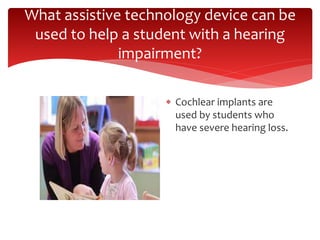
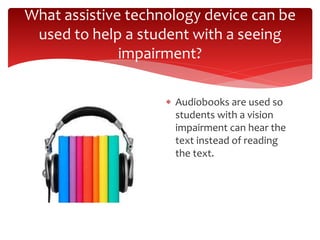
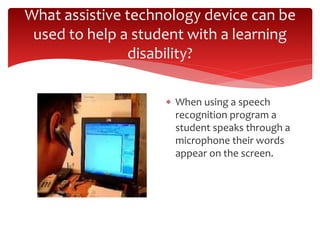
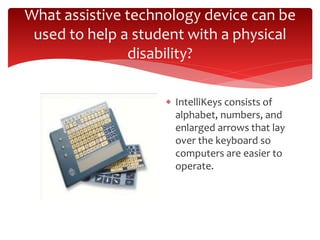
Assistive technology refers to any device or service that helps students with disabilities meet their education goals and participate in general education. Assistive technology can minimize needing help, improve speed and accuracy of work, reinforce instruction, help students fit in, and motivate students to set high goals. The Individuals with Disabilities Education Act requires schools to consider assistive technology needs in a student's Individualized Education Program. Examples of assistive technology include cochlear implants for hearing impairments, audiobooks for vision impairments, speech recognition software for learning disabilities, and alternative keyboards for physical disabilities.



![Assistive technology (1) [autosaved]](https://cdn.slidesharecdn.com/ss_thumbnails/assistivetechnology1autosaved-150125003824-conversion-gate01-thumbnail.jpg?width=640&height=640&fit=bounds)


