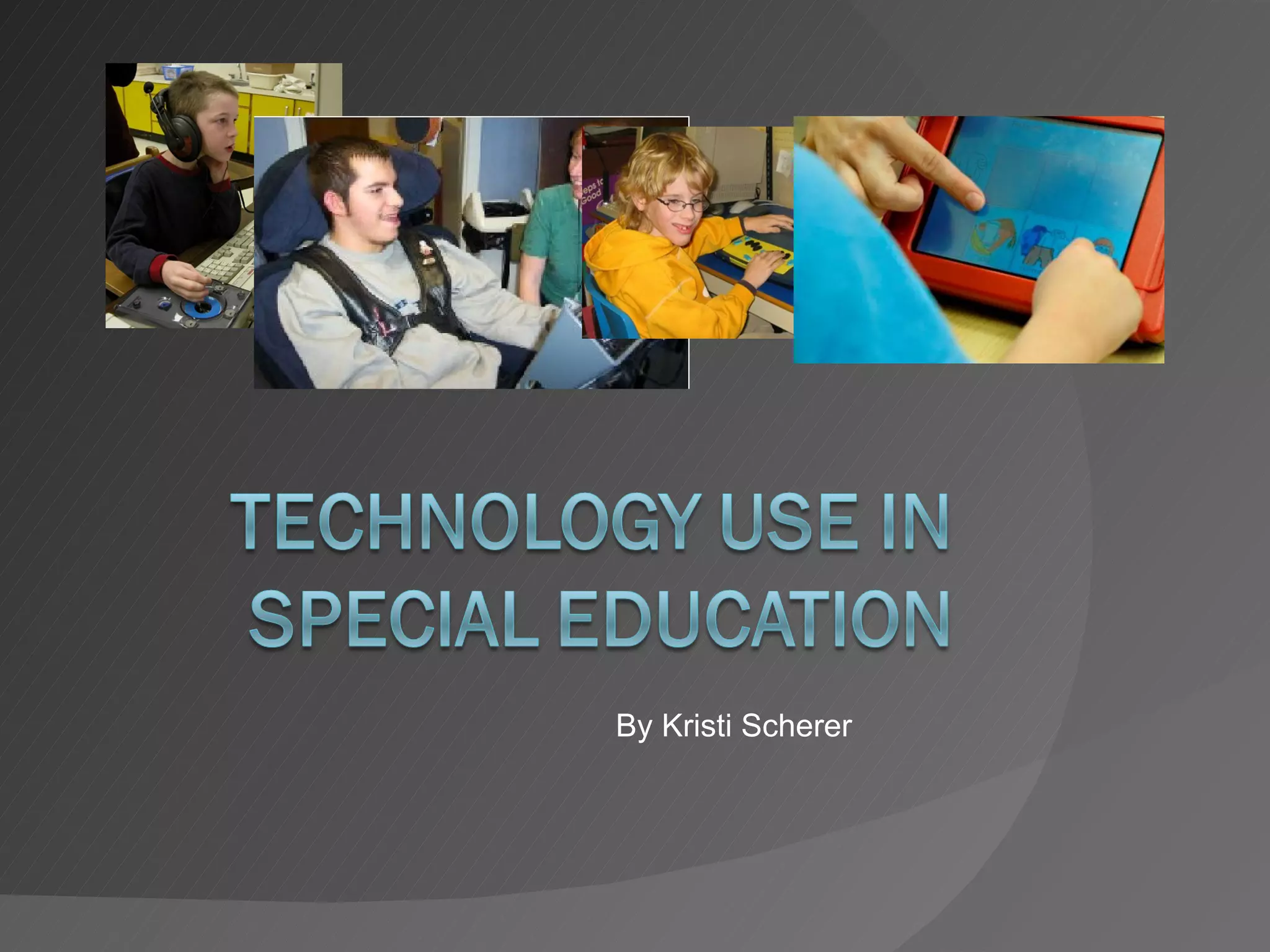
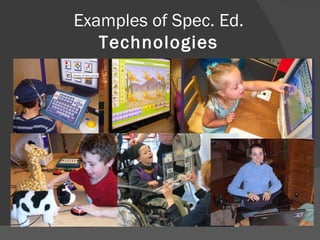
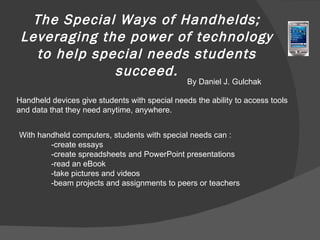
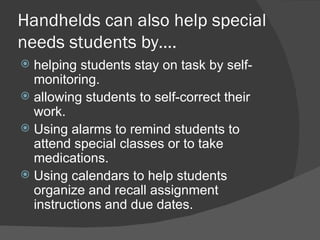
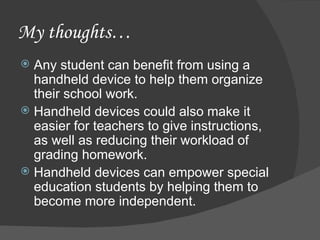
The document discusses various technologies that can assist special education students including adaptive keyboards, assistive writing programs, eye gaze technology, interactive whiteboards, screen readers, touch screens, and voice recognition systems. It emphasizes the importance of communication between teachers, technology specialists, and assistive technology specialists to implement appropriate technologies. Examples are provided of how handheld devices can help special education students with tasks like creating assignments, staying organized, and remaining on task.


![Multiple Disabilities[1] Copy](https://cdn.slidesharecdn.com/ss_thumbnails/multiple-disabilities1-copy-1229371984968951-2-thumbnail.jpg?width=640&height=640&fit=bounds)


