Shauna Bristol


Created and Narrated
         by
   Shauna Bristol
WHAT IS SPECIAL EDUCATION?


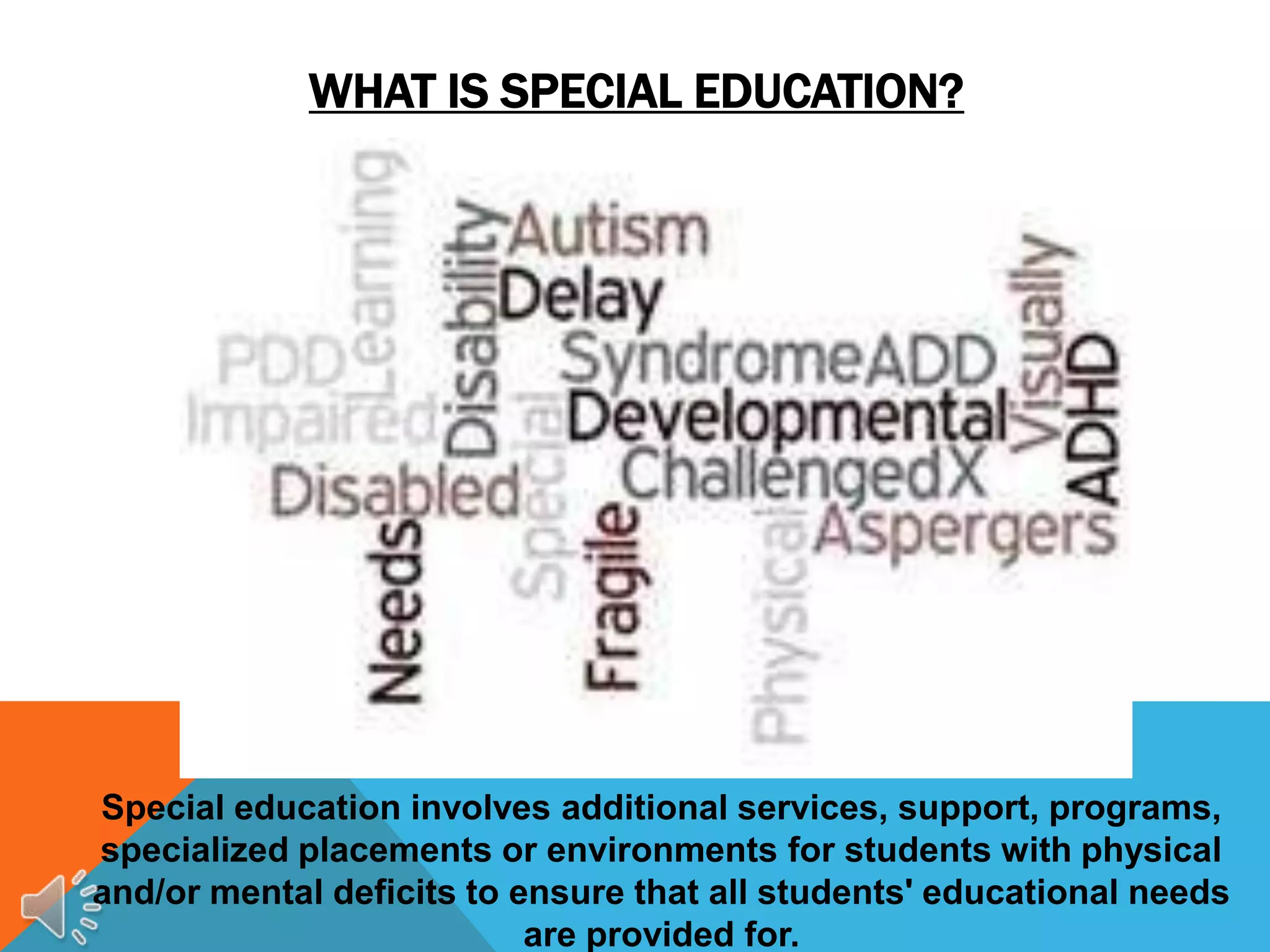
Special education involves additional services, support, programs,
specialized placements or environments for students with physical
and/or mental deficits to ensure that all students' educational needs
                           are provided for.
CHALLENGES FOR EDUCATORS
Legal and policy directives:
• Technology-Related
  Assistance Act for
  Individuals with
  Disabilities provides
  assistive technology and
  services.
• Reauthorization of
  Individuals with
  Disabilities Education Act
  (IDEA) states every
  individual education plan
  (IEP) consider assistive
  technology.
CHALLENGES FOR EDUCATORS
       Autism trends have shown
       students benefiting from
       special    education is
       increasing steadily.
       Increased demand for
       instruction and assessment for
       American Sign Language
       students.
       Inclusion students spend a
       majority    of their day in
       regular     education classes
       and get a variety of support
       services.
CHALLENGES FOR EDUCATORS
Universal design
 improves access to
 general curriculum
 with new teaching
 practices and
 policies (as a result
 of technology,
 media, and
 materials not
 encompassing
 classroom
 diversity).
Usable Website need
 for people with
TECHNOLOGY INTEGRATION STRATEGIES FOR
      SPECIAL EDUCATION STUDENTS
Mild cognitive disabilities:
Reading: reading skill software, text-to-speech
  products, interactive storyboards.
Writing: voice recognition and word
 prediction software
Math: graphing software, drills, games, and
 tutorials


Moderate to severe cognition disabilities:
Software helps teach/reinforce functional
  skills
Videos for acquisition, maintenance, and
TECHNOLOGY INTEGRATION STRATEGIES FOR
     SPECIAL EDUCATION STUDENTS

              Physical disabilities:
              Alternate methods of
                accessing computer.
              Training on adaptive
                technologies for
                independence.
              Monitor function without
               causing undue
               physical demands.
TECHNOLOGY INTEGRATION STRATEGIES FOR
          SPECIAL EDUCATION STUDENTS
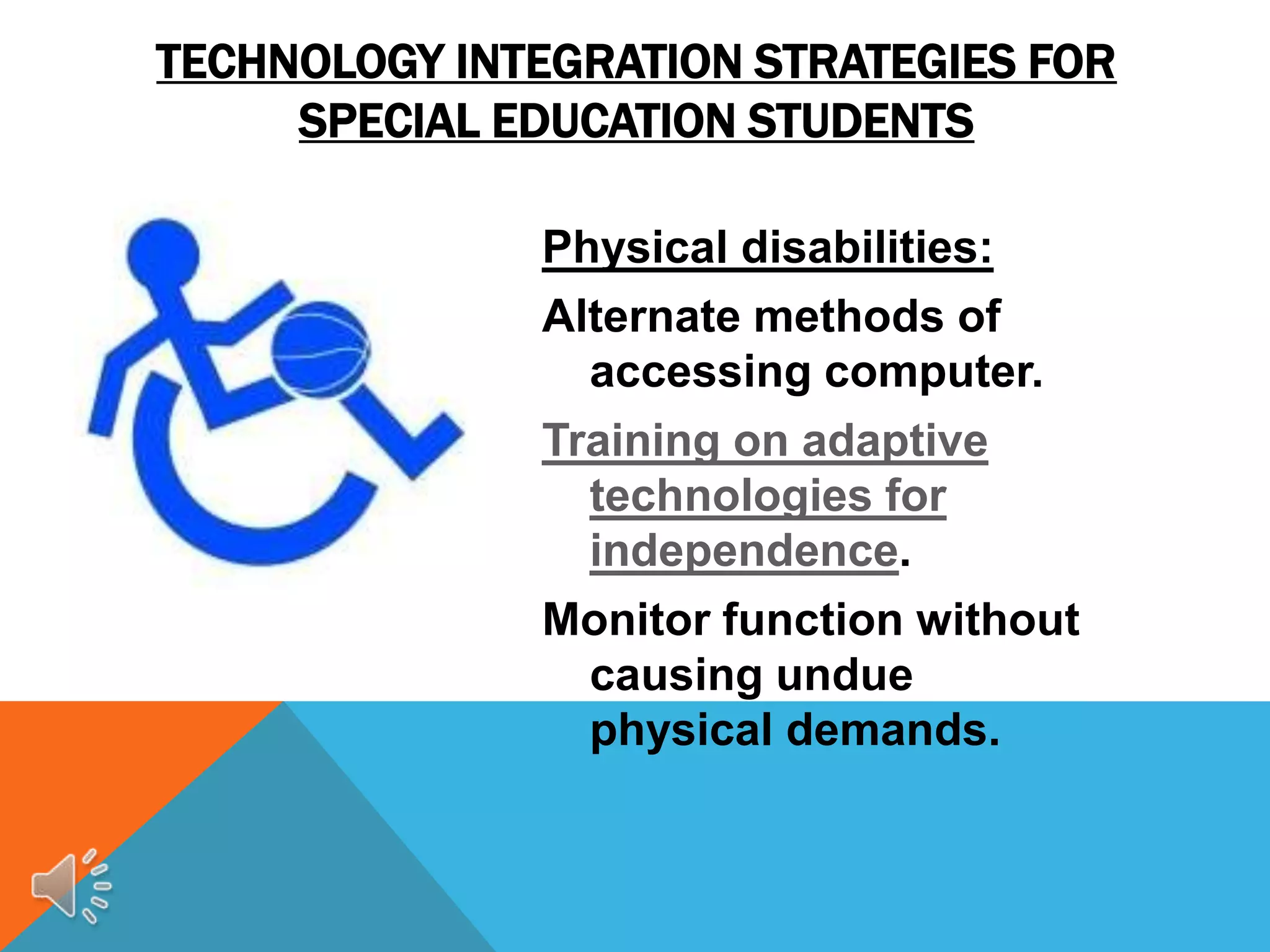
Blind students:
Use of canes, sensory
technologies to assist movement,
text-to-Braille converters, screen
readers.

Visually impaired students:
Closed-circuit television (CCTV)
magnification systems, built-in
computer screen magnification
control panels.

Hearing impaired students:
FM amplification systems
TECHNOLOGY INTEGRATION STRATEGIES FOR
     SPECIAL EDUCATION STUDENTS
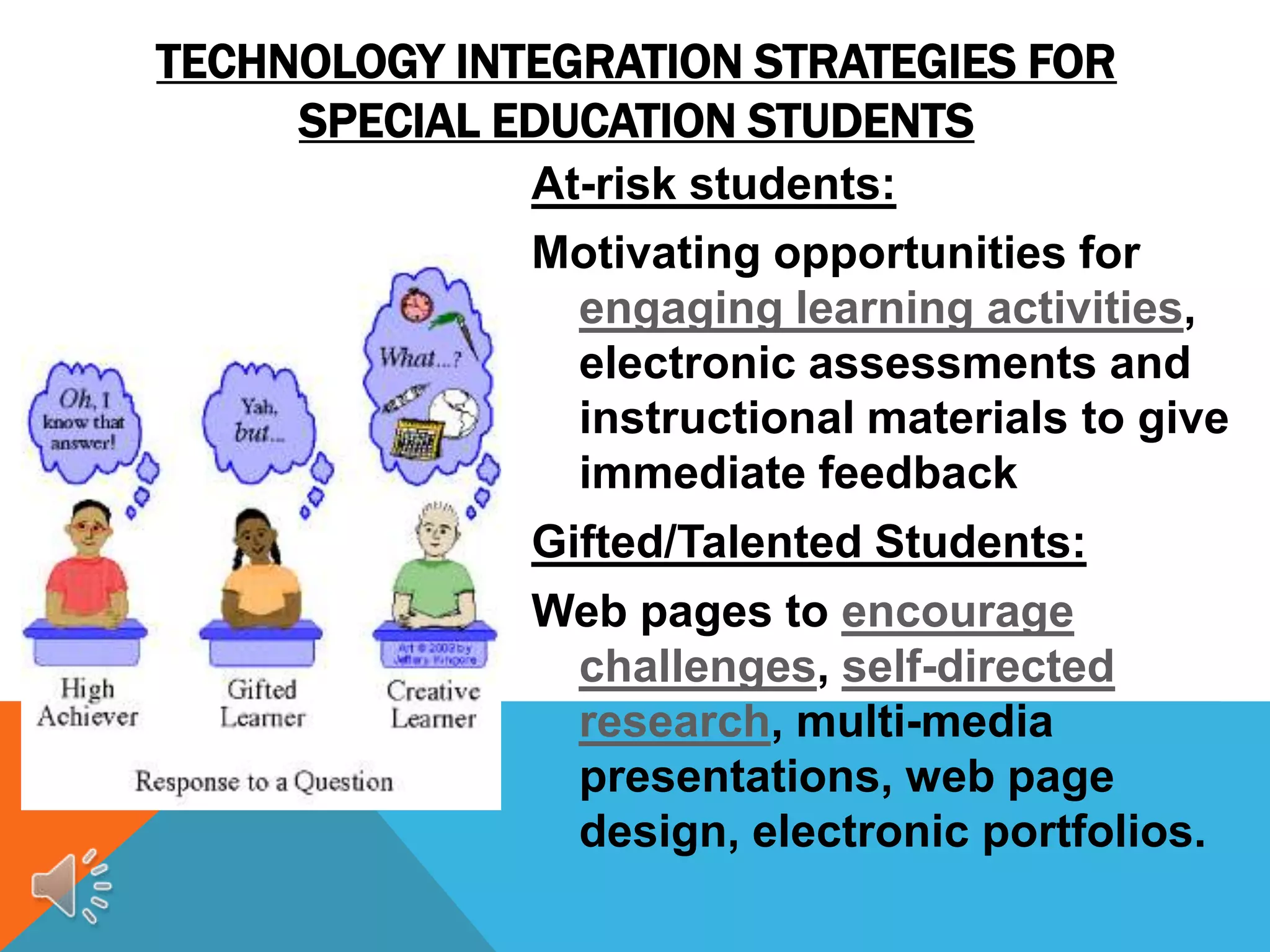
              At-risk students:
              Motivating opportunities for
               engaging learning activities,
               electronic assessments and
               instructional materials to give
               immediate feedback
              Gifted/Talented Students:
              Web pages to encourage
               challenges, self-directed
               research, multi-media
               presentations, web page
               design, electronic portfolios.
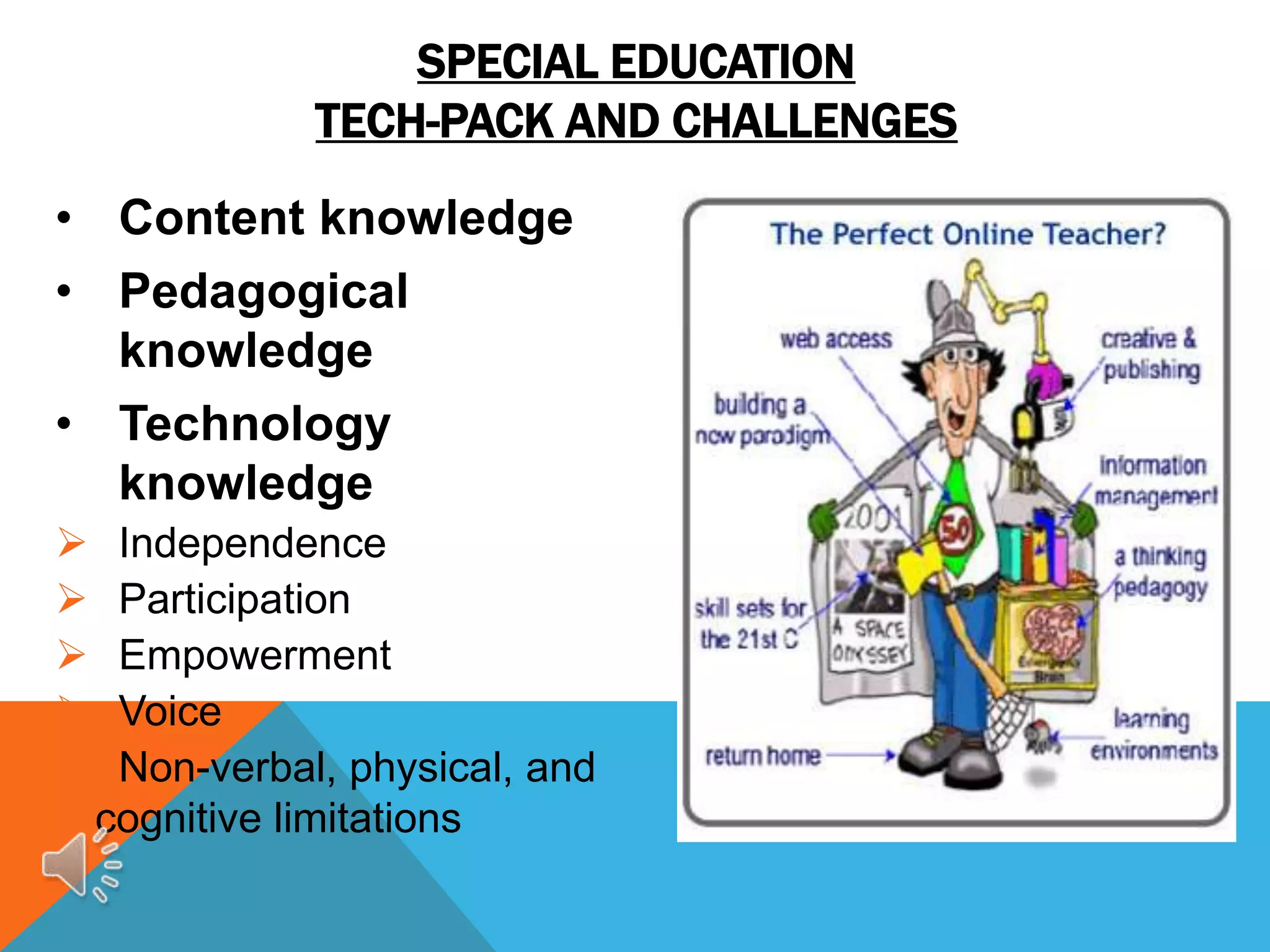
SPECIAL EDUCATION
               TECH-PACK AND CHALLENGES
• Content knowledge
• Pedagogical
  knowledge
• Technology
  knowledge
    Independence
    Participation
    Empowerment
    Voice
    Non-verbal, physical, and
    cognitive limitations

Technology in special education

  • 1.
    Shauna Bristol Created andNarrated by Shauna Bristol
  • 2.
    WHAT IS SPECIALEDUCATION? Special education involves additional services, support, programs, specialized placements or environments for students with physical and/or mental deficits to ensure that all students' educational needs are provided for.
  • 3.
    CHALLENGES FOR EDUCATORS Legaland policy directives: • Technology-Related Assistance Act for Individuals with Disabilities provides assistive technology and services. • Reauthorization of Individuals with Disabilities Education Act (IDEA) states every individual education plan (IEP) consider assistive technology.
  • 4.
    CHALLENGES FOR EDUCATORS Autism trends have shown students benefiting from special education is increasing steadily. Increased demand for instruction and assessment for American Sign Language students. Inclusion students spend a majority of their day in regular education classes and get a variety of support services.
  • 5.
    CHALLENGES FOR EDUCATORS Universaldesign improves access to general curriculum with new teaching practices and policies (as a result of technology, media, and materials not encompassing classroom diversity). Usable Website need for people with
  • 6.
    TECHNOLOGY INTEGRATION STRATEGIESFOR SPECIAL EDUCATION STUDENTS Mild cognitive disabilities: Reading: reading skill software, text-to-speech products, interactive storyboards. Writing: voice recognition and word prediction software Math: graphing software, drills, games, and tutorials Moderate to severe cognition disabilities: Software helps teach/reinforce functional skills Videos for acquisition, maintenance, and
  • 7.
    TECHNOLOGY INTEGRATION STRATEGIESFOR SPECIAL EDUCATION STUDENTS Physical disabilities: Alternate methods of accessing computer. Training on adaptive technologies for independence. Monitor function without causing undue physical demands.
  • 8.
    TECHNOLOGY INTEGRATION STRATEGIESFOR SPECIAL EDUCATION STUDENTS Blind students: Use of canes, sensory technologies to assist movement, text-to-Braille converters, screen readers. Visually impaired students: Closed-circuit television (CCTV) magnification systems, built-in computer screen magnification control panels. Hearing impaired students: FM amplification systems
  • 9.
    TECHNOLOGY INTEGRATION STRATEGIESFOR SPECIAL EDUCATION STUDENTS At-risk students: Motivating opportunities for engaging learning activities, electronic assessments and instructional materials to give immediate feedback Gifted/Talented Students: Web pages to encourage challenges, self-directed research, multi-media presentations, web page design, electronic portfolios.
  • 10.
    SPECIAL EDUCATION TECH-PACK AND CHALLENGES • Content knowledge • Pedagogical knowledge • Technology knowledge  Independence  Participation  Empowerment  Voice  Non-verbal, physical, and cognitive limitations