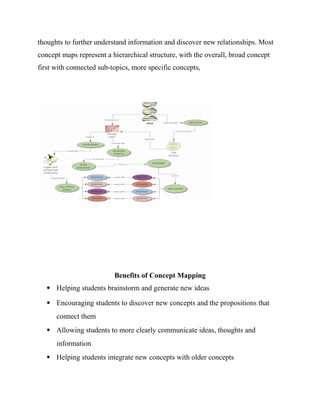
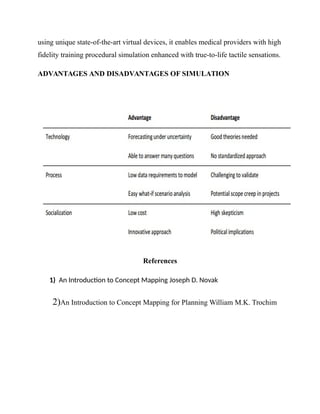
Concept mapping and simulation are important educational tools. Concept mapping visually illustrates relationships between concepts and ideas in a hierarchical structure. It helps students organize knowledge, brainstorm ideas, and identify connections. Simulation imitates real-life situations through tasks, manikins, standardized patients, and virtual reality. Both tools provide valuable hands-on learning experiences and assessment opportunities that enhance student comprehension beyond traditional teaching methods. While requiring initial time investments, concept mapping and simulation help educators understand student needs and tailor teaching effectively.


![Unit 3 reflective_practice[1]](https://cdn.slidesharecdn.com/ss_thumbnails/unit3reflectivepractice1-151214162644-thumbnail.jpg?width=640&height=640&fit=bounds)


