Assessment of Risk Mitigation
Strategies

Presented b y:
Eneni Oduw ole
Group Head, Operational Risk Mgt.
Guaranty Trust Bank Plc
Outline

What is Risk Assessment

Case Study

Process for Assessing Risk

Options for Evaluating Risk

Evaluation of Mitigation Strategies
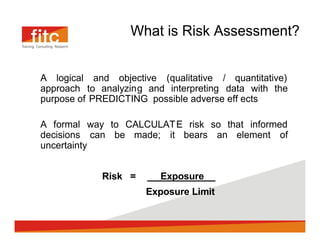
What is Risk Assessment?


A logical and objective (qualitative / quantitative)
approach to analyzing and interpreting data with the
purpose of PREDICTING possible adverse eff ects

A formal way to CALCULAT E risk so that informed
decisions can be made; it bears an element of
uncertainty


            Risk =       Exposure      .
                      Exposure Limit
Case Study

In 2007, the senior management of CSBank Ltd decided to
look for better ways to use its IT infrastructure and
investments to prudently and effectively support growth

The Bank had grown rapidly as a result of both acquisitions
and the entrepreneurial cultures in its lines of business which
resulted in difficulties in managing the organization s IT
landscape

It hopes to achieve first mover advantage with new business
opportunities that emerge, the use of initiative is encouraged
amongst business unit heads

What are the major risks faced by this Bank?
Process for Assessing Risk


Review strategy & business model
Identify gaps between desired and actual results
Conduct risk assessment (identi fies prevalent risks)
                                                        f2
Assess impact & f requency
Develop & implement controls
Reassess risk exposures and controls
Communicate and document f indings
Slide 5

f2        comma inserted
          funmilayo.phillips, 04/07/2011
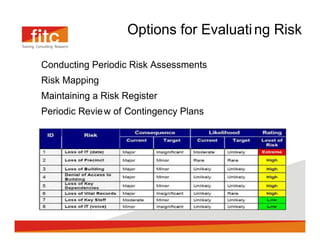
Options for Evaluati ng Risk

Conducting Periodic Risk Assessments
Risk Mapping
Maintaining a Risk Register
Periodic Revie w of Contingency Plans
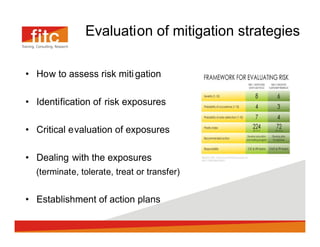
Evaluation of mitigation strategies

How to assess risk miti gation

Identification of risk exposures

Critical evaluation of exposures

Dealing with the exposures
(terminate, tolerate, treat or transfer)


Establishment of action plans
Features of
                                Risk Mitigation Strategies

Effectiveness at business unit level: Reduction of risk
exposure

Cost effectiveness: Risk mitigation strategy must be cheaper
than the likely loss estimate

Alignment with business model: Risk controls must
seamlessly fit into the work culture and business profile of the
organisation

Complexit y: The simpler the strategies, the higher the chances of
adoption by stakeholders

Consistenc y with regulatory / legal                 & ethical
requirements
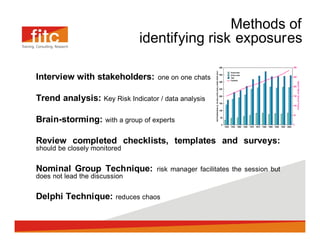
Methods of
                                 identifying risk exposures

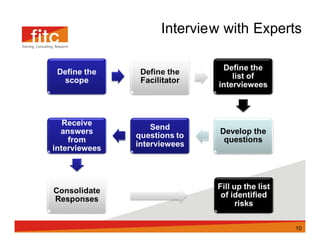
Interview with stakeholders:           one on one chats


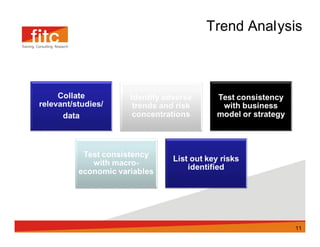
Trend analysis:      Key Risk Indicator / data analysis


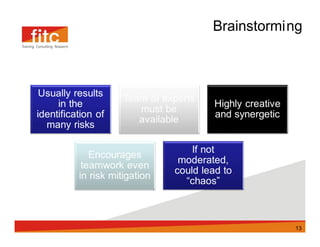
Brain-storming:       with a group of experts


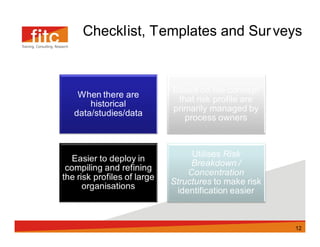
Review completed checklists, templates and surveys:
should be closely monitored


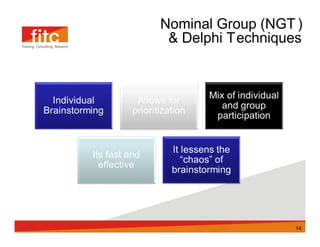
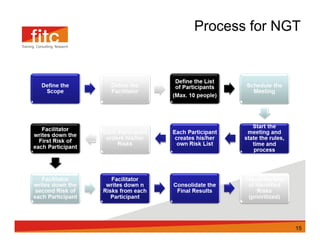
Nominal Group Technique:               risk manager facilitates the session but
does not lead the discussion


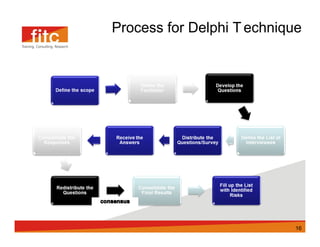
Delphi Technique:        reduces chaos
Interview with Experts


                     10
Trend Analysis


             11
Checklist, Templates and Sur veys


                               12
Brainstorming


           13
Nominal Group (NGT )
 & Delphi Techniques


                   14
Process for NGT


              15
Process for Delphi T echnique


                            16
Critical evaluation of Risk
                                        Exposures

Define Exposure Groups ( EGs)

Define Exposure Profiles

Ascertain likel y frequency of occurrence

Determine estimated impact on business (w hether

financial or non -financial)

Determine overall risk rating

Decide acceptabilit y of the risk profile For each EG
Dealing with the Risk Exposur es


Terminate : when cost is higher than benefit; no competencies for
managing risk

Tolerate: when cost is within risk appetite levels or insignificant to
benefit; no brainer

Treat: when benefit from business venture is seriously threatened;
staff and business model / structure can implement and support
control

Transfer: when benefit is threatened but staff / business model
may not support required control (risk may be shared or transferred
completely)
Considerations for selecting
                                      Action Plans
Policy Changes: Consider regulatory / legal / ethical issues such as
modifications of banking & related policies

In-House Actions: Consider appropriate plans that would fit into
the organization s business strategy / model / structure, and culture

Simplicity:     Action plans should be rid of complexities / complex
methodologies which might sabotage the correction process; new process
/ control should be easy for auditors to review

Implementation: Incorporation of related activities into routine
business processes should be seamless; relevant parties should be
carried along

Review: Tracking of implementation should be easy; effectiveness of
control should be tested periodically
Thank you...

Assessment Of Risk Mitigation

  • 1.
    Assessment of RiskMitigation Strategies Presented b y: Eneni Oduw ole Group Head, Operational Risk Mgt. Guaranty Trust Bank Plc
  • 2.
    Outline What is RiskAssessment Case Study Process for Assessing Risk Options for Evaluating Risk Evaluation of Mitigation Strategies
  • 3.
    What is RiskAssessment? A logical and objective (qualitative / quantitative) approach to analyzing and interpreting data with the purpose of PREDICTING possible adverse eff ects A formal way to CALCULAT E risk so that informed decisions can be made; it bears an element of uncertainty Risk = Exposure . Exposure Limit
  • 4.
    Case Study In 2007,the senior management of CSBank Ltd decided to look for better ways to use its IT infrastructure and investments to prudently and effectively support growth The Bank had grown rapidly as a result of both acquisitions and the entrepreneurial cultures in its lines of business which resulted in difficulties in managing the organization s IT landscape It hopes to achieve first mover advantage with new business opportunities that emerge, the use of initiative is encouraged amongst business unit heads What are the major risks faced by this Bank?
  • 5.
    Process for AssessingRisk Review strategy & business model Identify gaps between desired and actual results Conduct risk assessment (identi fies prevalent risks) f2 Assess impact & f requency Develop & implement controls Reassess risk exposures and controls Communicate and document f indings
  • 6.
    Slide 5 f2 comma inserted funmilayo.phillips, 04/07/2011
  • 7.
    Options for Evaluating Risk Conducting Periodic Risk Assessments Risk Mapping Maintaining a Risk Register Periodic Revie w of Contingency Plans
  • 8.
    Evaluation of mitigationstrategies How to assess risk miti gation Identification of risk exposures Critical evaluation of exposures Dealing with the exposures (terminate, tolerate, treat or transfer) Establishment of action plans
  • 9.
    Features of Risk Mitigation Strategies Effectiveness at business unit level: Reduction of risk exposure Cost effectiveness: Risk mitigation strategy must be cheaper than the likely loss estimate Alignment with business model: Risk controls must seamlessly fit into the work culture and business profile of the organisation Complexit y: The simpler the strategies, the higher the chances of adoption by stakeholders Consistenc y with regulatory / legal & ethical requirements
  • 10.
    Methods of identifying risk exposures Interview with stakeholders: one on one chats Trend analysis: Key Risk Indicator / data analysis Brain-storming: with a group of experts Review completed checklists, templates and surveys: should be closely monitored Nominal Group Technique: risk manager facilitates the session but does not lead the discussion Delphi Technique: reduces chaos
  • 11.
  • 12.
  • 13.
  • 14.
  • 15.
    Nominal Group (NGT) & Delphi Techniques 14
  • 16.
  • 17.
    Process for DelphiT echnique 16
  • 18.
    Critical evaluation ofRisk Exposures Define Exposure Groups ( EGs) Define Exposure Profiles Ascertain likel y frequency of occurrence Determine estimated impact on business (w hether financial or non -financial) Determine overall risk rating Decide acceptabilit y of the risk profile For each EG
  • 19.
    Dealing with theRisk Exposur es Terminate : when cost is higher than benefit; no competencies for managing risk Tolerate: when cost is within risk appetite levels or insignificant to benefit; no brainer Treat: when benefit from business venture is seriously threatened; staff and business model / structure can implement and support control Transfer: when benefit is threatened but staff / business model may not support required control (risk may be shared or transferred completely)
  • 20.
    Considerations for selecting Action Plans Policy Changes: Consider regulatory / legal / ethical issues such as modifications of banking & related policies In-House Actions: Consider appropriate plans that would fit into the organization s business strategy / model / structure, and culture Simplicity: Action plans should be rid of complexities / complex methodologies which might sabotage the correction process; new process / control should be easy for auditors to review Implementation: Incorporation of related activities into routine business processes should be seamless; relevant parties should be carried along Review: Tracking of implementation should be easy; effectiveness of control should be tested periodically
  • 21.