Albay, Kylyn
© 2015
Assessment provides valuable
information that is used to
continuously strive to improve the
academic progress of our students.
MAJOR ROLES:
 Assessment is used to look for holes in
student learning
 Assessment is used to guide the
teacher’s instruction in the classroom
Purposes for Assessment
Assessment for Learning
Occurs when teahers use inferences about student
progress to inform thei teaching.
Assessment of Learning
 Occurs when teachers use evidence of student learning
to make judgements on student achievement against goals
and standards.
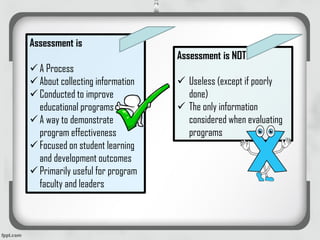
Assessment is
 A Process
 About collecting information
 Conducted to improve
educational programs
 A way to demonstrate
program effectiveness
 Focused on student learning
and development outcomes
 Primarily useful for program
faculty and leaders
Assessment is NOT
 Useless (except if poorly
done)
 The only information
considered when evaluating
programs
Three Types of Assessment
Methods
Formative
Assessment
Summative
Assessment
Authentic
Formative Assessment is a continuous and
ongoing process, part of day to day teaching
where teachers continually confirm or modify
their activities and directions with their
students.
Collect infomation
while it’s happening
The formative assessments aim to
see if the students understand the
instruction before doing a
summative assessment
Strategies and Tools used in Formative Assessment
 Brainstorming
 Concept Maps
 KWL (Know, Want to Know, Learn)
 Graphic Organizers
 Venn Diagram
 Note Taking
 Oral Questioning
 Standardized Test
 Quizzes
 Journal entries, Essays
 Performance
Summative Assessment is used at the end of a unit or
semester to determine what each student has achieved
and learnt. It is evaluative.
Students do not generally
have the opportunity to be
reassessed after a
summative assessment.
Strategies and Tools used in Summative Assessment
 Final Exams
 Projects (Written and Performance)
 Self-Assessment
 Peer-Assessment
“When the cook tastes the soup, that’s
formative assessment. When the
customer tastes the soup, that’s
summative assessment.”
-Paul Black
Authentic, involving the application of
knowldege and skills over time requires
clear criteria of which students are aware
and involve.
Strategies and Tools used in
Summative Assessment:
 Rubrics
“Rubrics serve an
important role in
creating
assesment that is
student-centered
and driven”
Thank You for Listening!
God Bless! 

Assessment

  • 1.
  • 2.
    Assessment provides valuable informationthat is used to continuously strive to improve the academic progress of our students.
  • 3.
    MAJOR ROLES:  Assessmentis used to look for holes in student learning  Assessment is used to guide the teacher’s instruction in the classroom
  • 4.
    Purposes for Assessment Assessmentfor Learning Occurs when teahers use inferences about student progress to inform thei teaching. Assessment of Learning  Occurs when teachers use evidence of student learning to make judgements on student achievement against goals and standards.
  • 5.
    Assessment is  AProcess  About collecting information  Conducted to improve educational programs  A way to demonstrate program effectiveness  Focused on student learning and development outcomes  Primarily useful for program faculty and leaders Assessment is NOT  Useless (except if poorly done)  The only information considered when evaluating programs
  • 6.
    Three Types ofAssessment Methods Formative Assessment Summative Assessment Authentic
  • 8.
    Formative Assessment isa continuous and ongoing process, part of day to day teaching where teachers continually confirm or modify their activities and directions with their students. Collect infomation while it’s happening The formative assessments aim to see if the students understand the instruction before doing a summative assessment
  • 10.
    Strategies and Toolsused in Formative Assessment  Brainstorming  Concept Maps  KWL (Know, Want to Know, Learn)  Graphic Organizers  Venn Diagram  Note Taking  Oral Questioning  Standardized Test  Quizzes  Journal entries, Essays  Performance
  • 12.
    Summative Assessment isused at the end of a unit or semester to determine what each student has achieved and learnt. It is evaluative. Students do not generally have the opportunity to be reassessed after a summative assessment.
  • 13.
    Strategies and Toolsused in Summative Assessment  Final Exams  Projects (Written and Performance)  Self-Assessment  Peer-Assessment
  • 14.
    “When the cooktastes the soup, that’s formative assessment. When the customer tastes the soup, that’s summative assessment.” -Paul Black
  • 15.
    Authentic, involving theapplication of knowldege and skills over time requires clear criteria of which students are aware and involve. Strategies and Tools used in Summative Assessment:  Rubrics “Rubrics serve an important role in creating assesment that is student-centered and driven”
  • 18.
    Thank You forListening! God Bless! 