ASSESSING THE
   INTERNAL
ENVIRONMENT OF
   THE FIRM
The benefits and limitations of SWOT analysis in
 conducting the internal analysis of the firm.
The primary and support activities of the firm’s value
 chain
Advantage of value chain within the firm and between the
 firm and its customers and suppliers.
The different type of tangible and intangible resources, as
 well as organizational capabilities.
The four criteria that a firms resources must posses to
 maintain a sustainable advantage.
The usefulness of financial ratio analysis as well as its
 inherent limitations.
How to make meaningful comparison of performance
 across a firm.
The value of recognizing how the interests of a variety of
 stakeholders can be interrelated.
• To identify strengths to build on and
  weaknesses to overcome as they
  formulate strategies for competitive
  advantages..
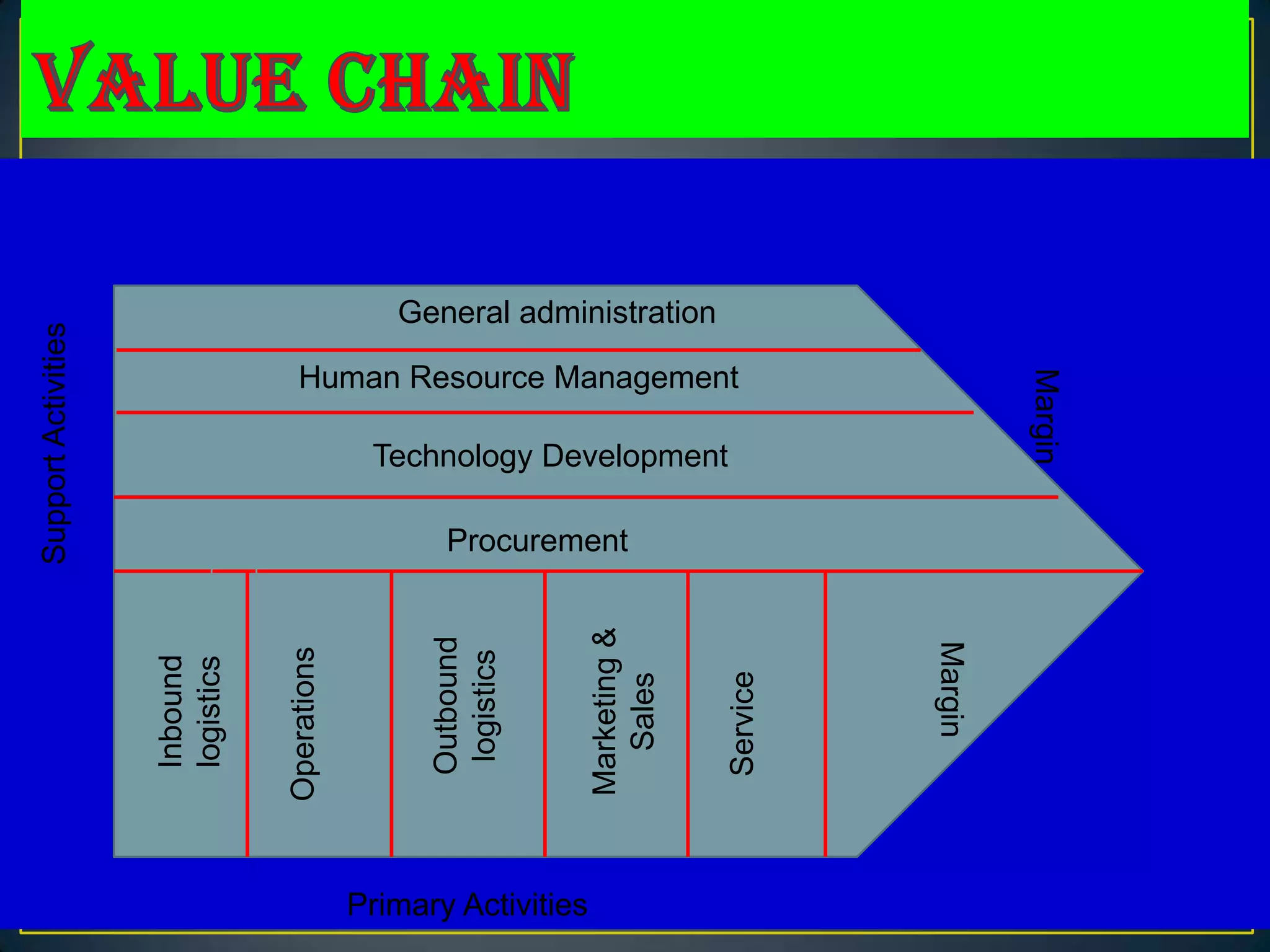
• A method for assessing strengths and weaknesses
  divides the business into a number of linked of activities
  that may each produce value for the customer.
General administration
Support Activities


                                   Human Resource Management


                                                                                                    Margin
                                               Technology Development

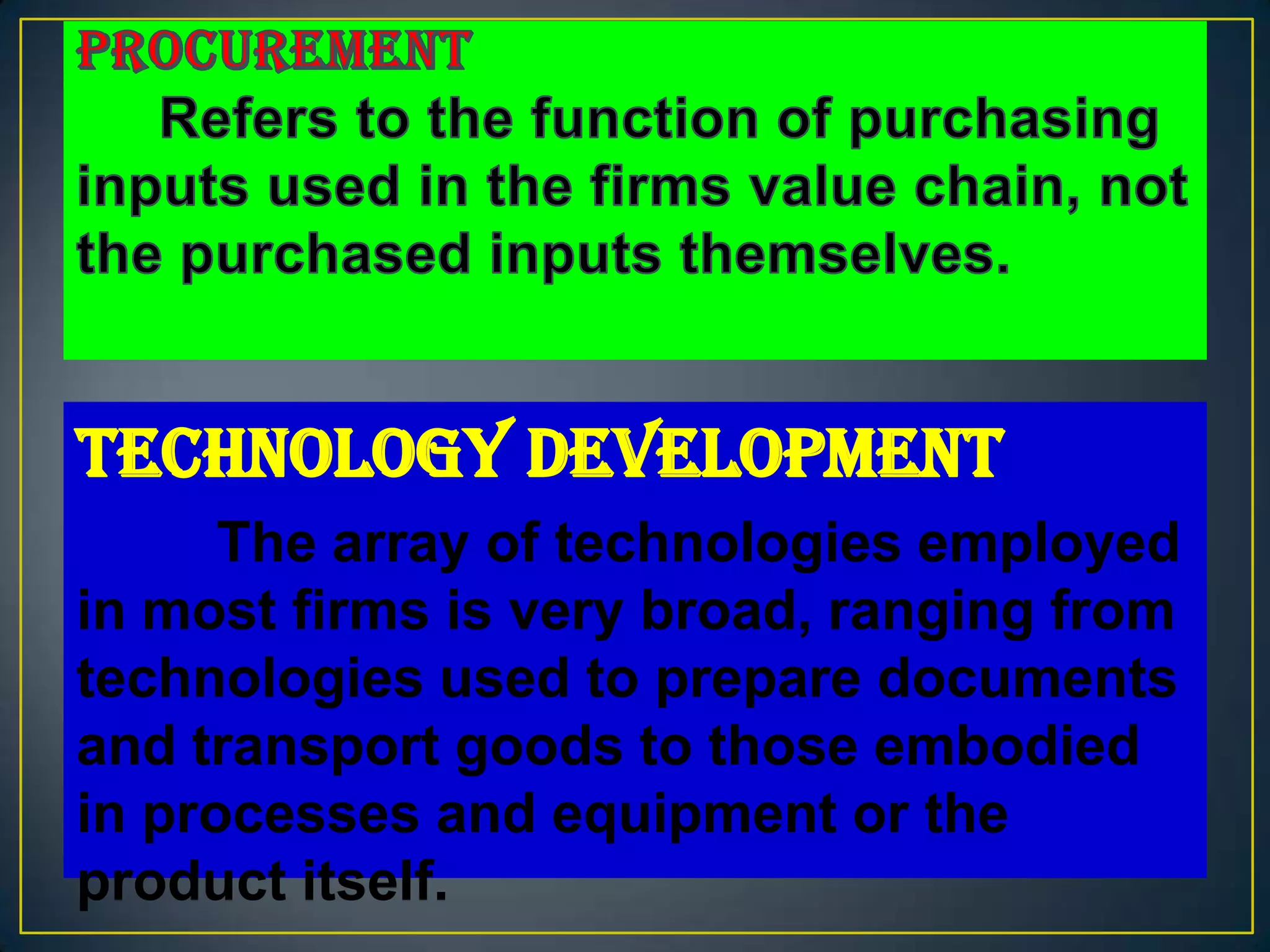
                                                     Procurement

                                                                   Marketing &
                                                    Outbound


                                                                                           Margin
                                 Operations


                                                     logistics
                     Inbound
                     logistics


                                                                                 Service
                                                                     Sales


                                              Primary Activities
Some Factors to
   consider in
Assessing a Firm’s
     Primary
    Activities
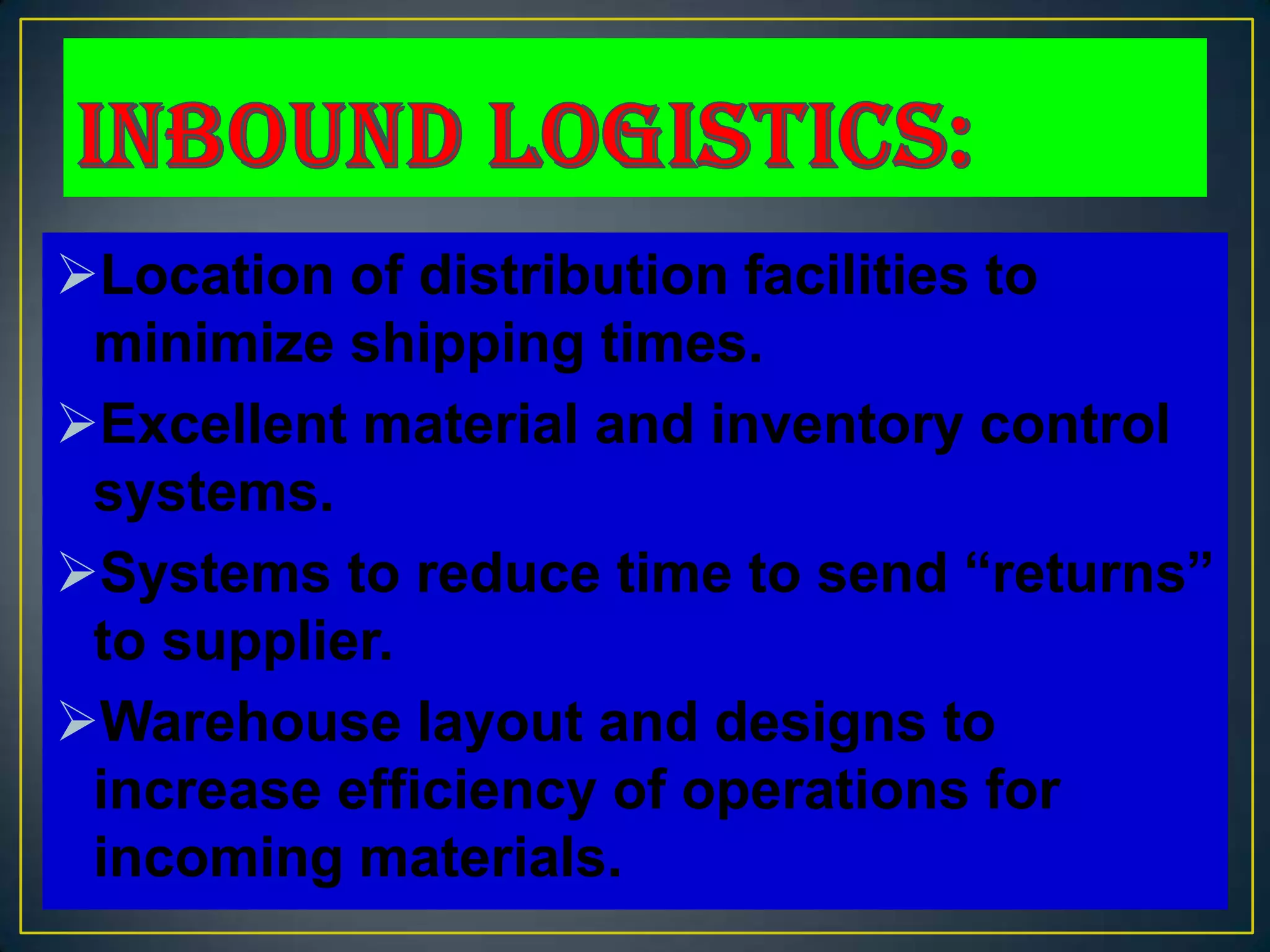
Location of distribution facilities to
 minimize shipping times.
Excellent material and inventory control
 systems.
Systems to reduce time to send “returns”
 to supplier.
Warehouse layout and designs to
 increase efficiency of operations for
 incoming materials.
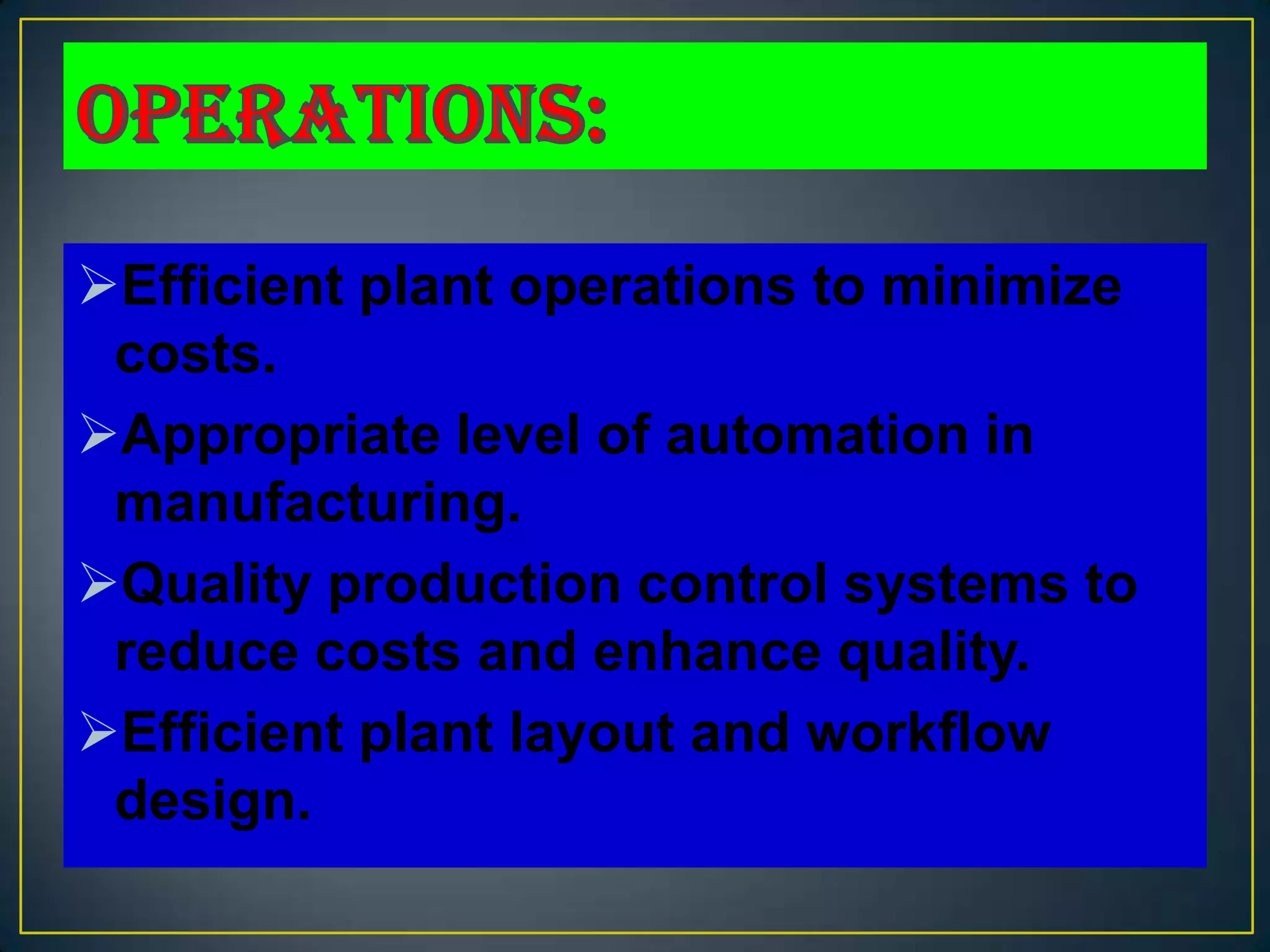
Efficient plant operations to minimize
 costs.
Appropriate level of automation in
 manufacturing.
Quality production control systems to
 reduce costs and enhance quality.
Efficient plant layout and workflow
 design.
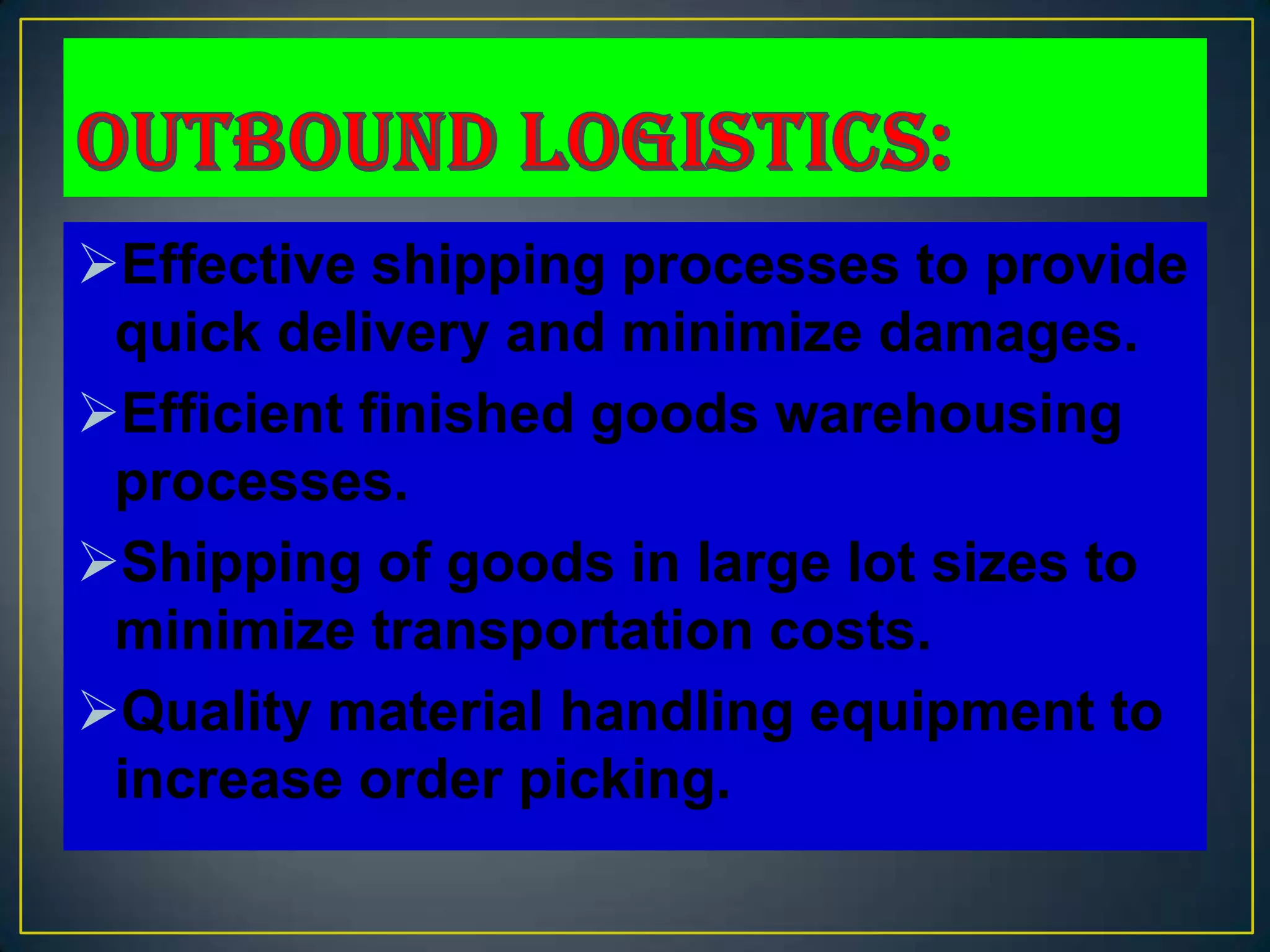
Effective shipping processes to provide
 quick delivery and minimize damages.
Efficient finished goods warehousing
 processes.
Shipping of goods in large lot sizes to
 minimize transportation costs.
Quality material handling equipment to
 increase order picking.
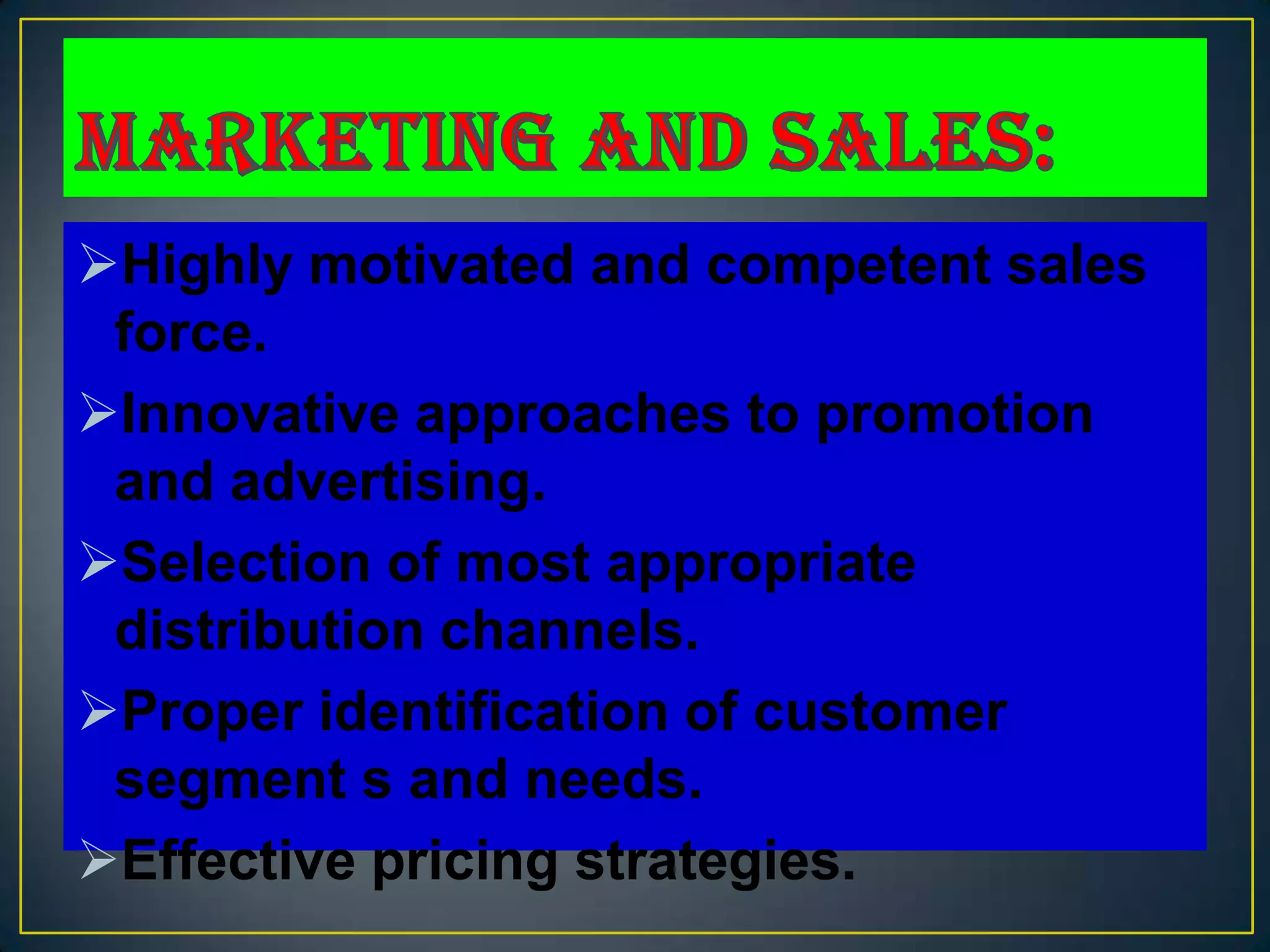
Highly motivated and competent sales
 force.
Innovative approaches to promotion
 and advertising.
Selection of most appropriate
 distribution channels.
Proper identification of customer
 segment s and needs.
Effective pricing strategies.
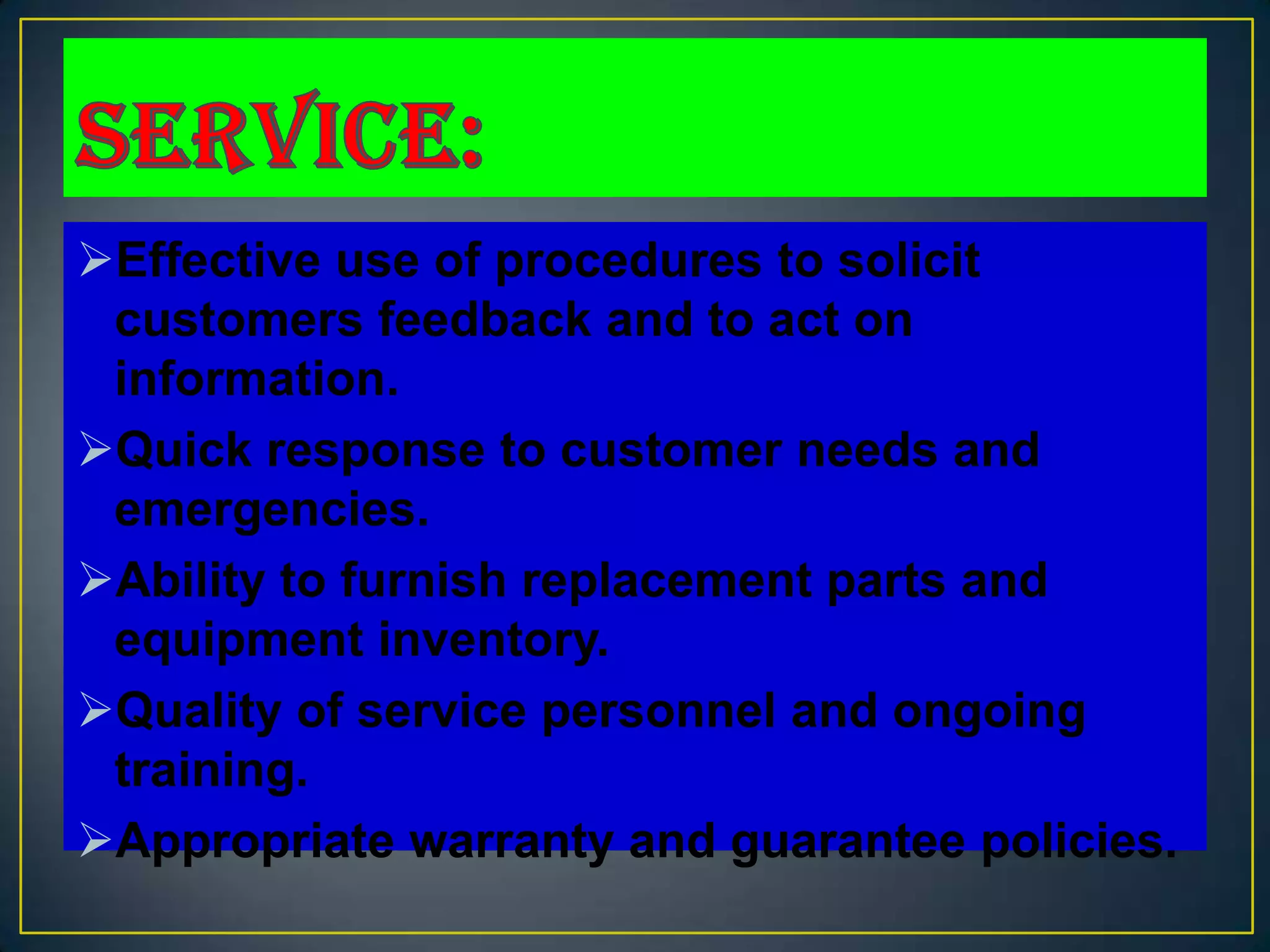
Effective use of procedures to solicit
 customers feedback and to act on
 information.
Quick response to customer needs and
 emergencies.
Ability to furnish replacement parts and
 equipment inventory.
Quality of service personnel and ongoing
 training.
Appropriate warranty and guarantee policies.
ASSESSING
 A FIRM’S
 SUPPORT
ACTIVITIES
Technology Development
      The array of technologies employed
in most firms is very broad, ranging from
technologies used to prepare documents
and transport goods to those embodied
in processes and equipment or the
product itself.
General Administration
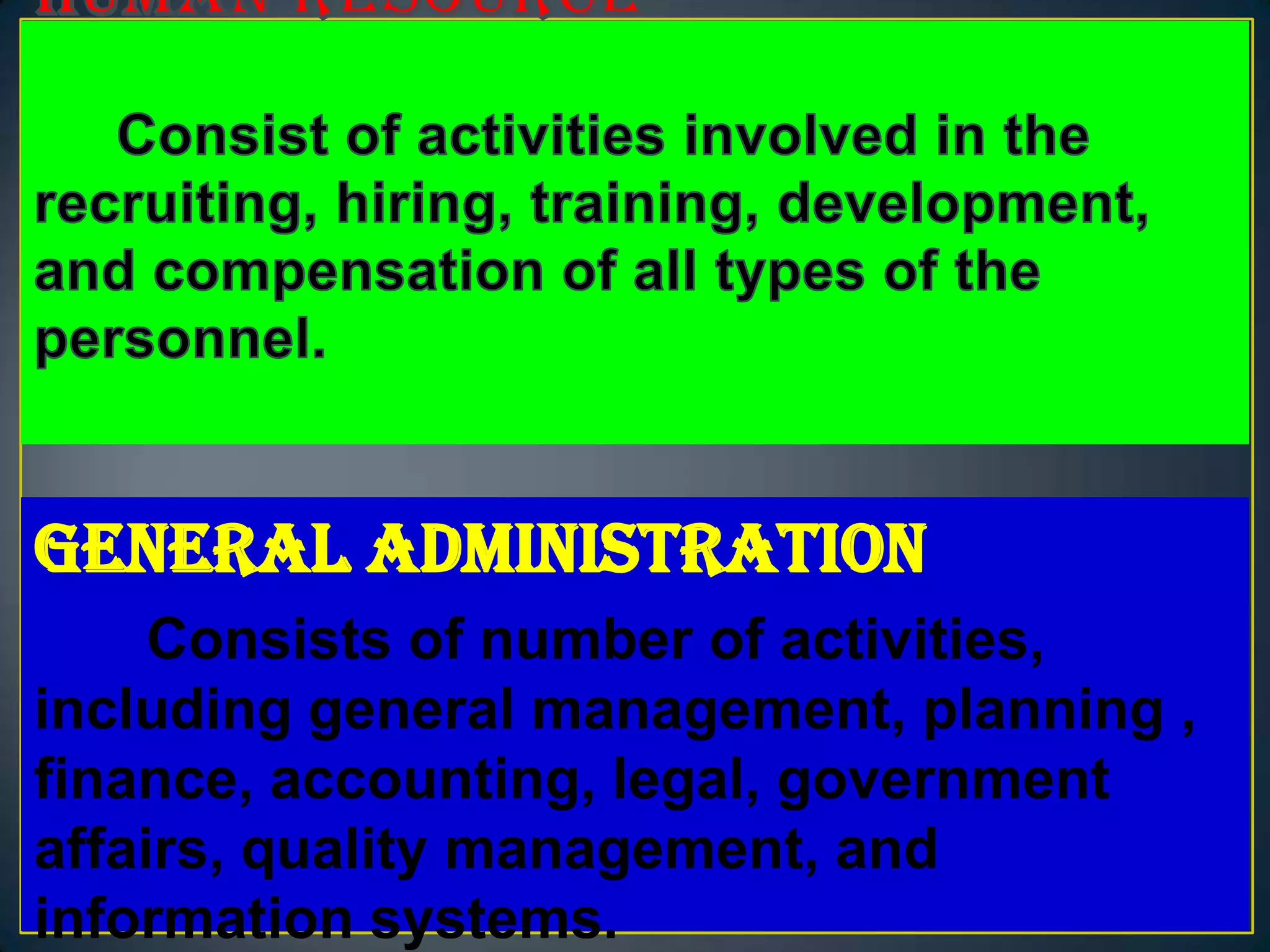
     Consists of number of activities,
including general management, planning ,
finance, accounting, legal, government
affairs, quality management, and
information systems.
• Perspective on understanding a firm’s
  overall success as a based on its
  internal resources has emerged.
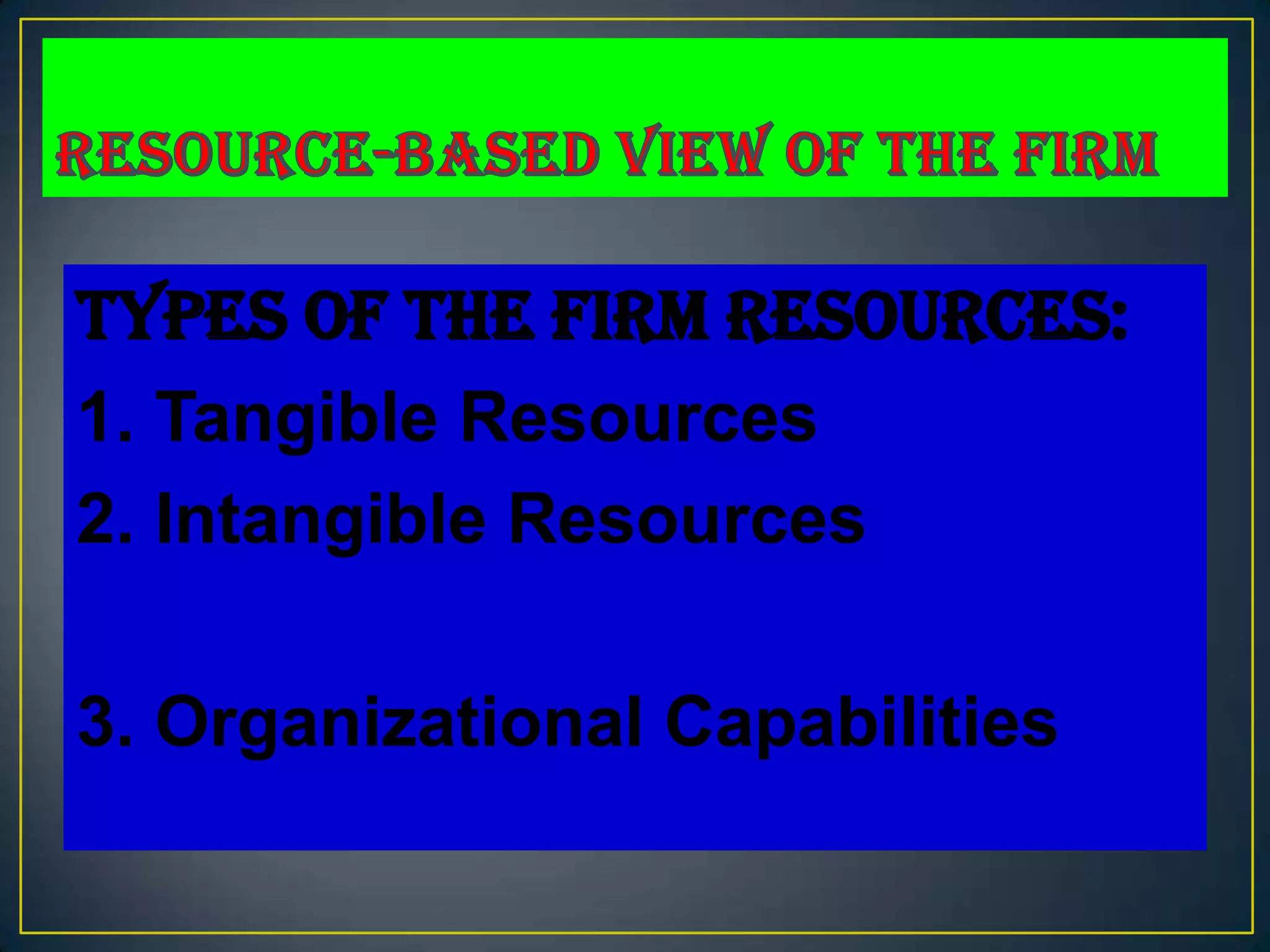
Types of the Firm Resources:
1. Tangible Resources
2. Intangible Resources

3. Organizational Capabilities
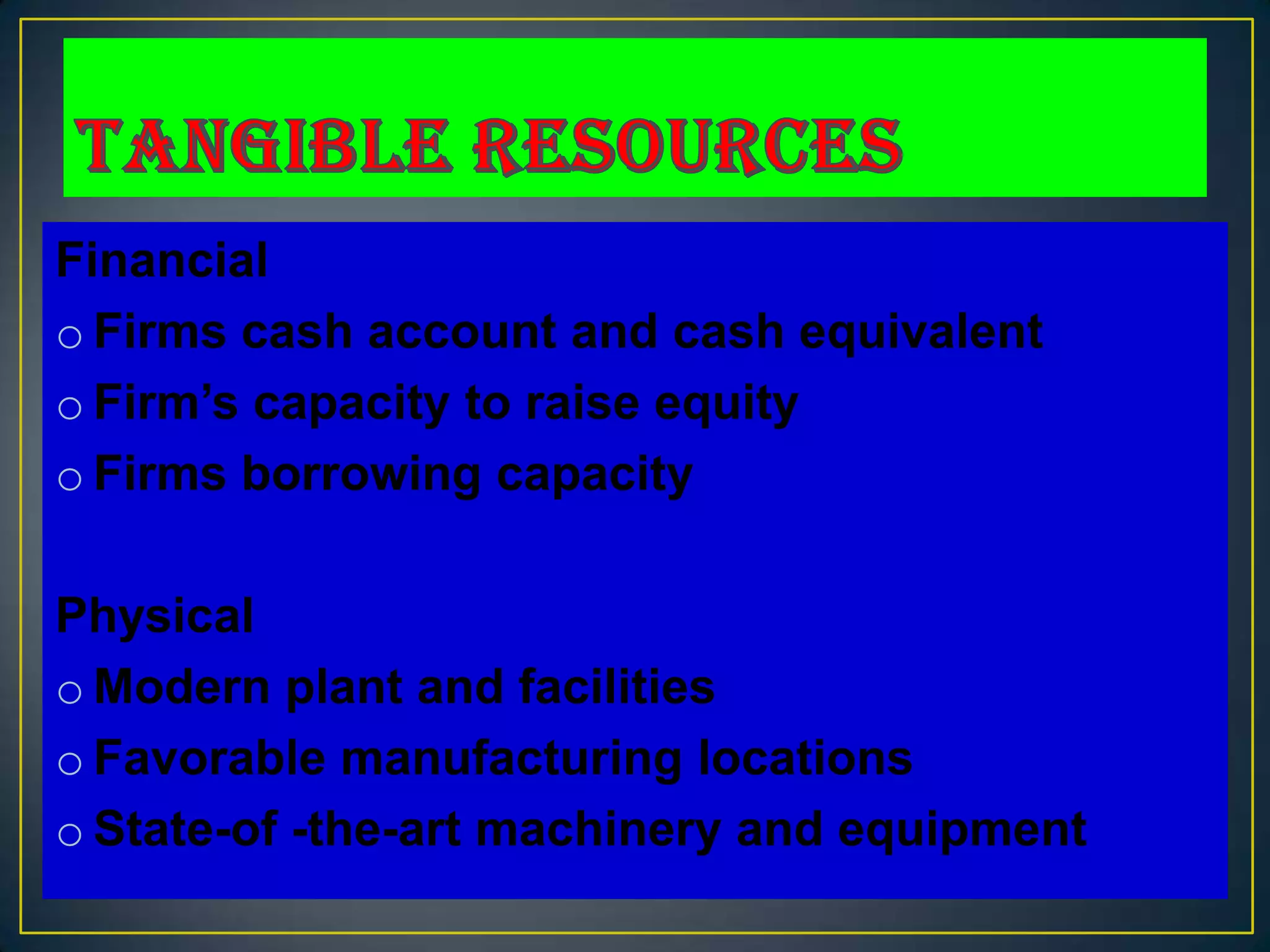
Financial
o Firms cash account and cash equivalent
o Firm’s capacity to raise equity
o Firms borrowing capacity

Physical
o Modern plant and facilities
o Favorable manufacturing locations
o State-of -the-art machinery and equipment
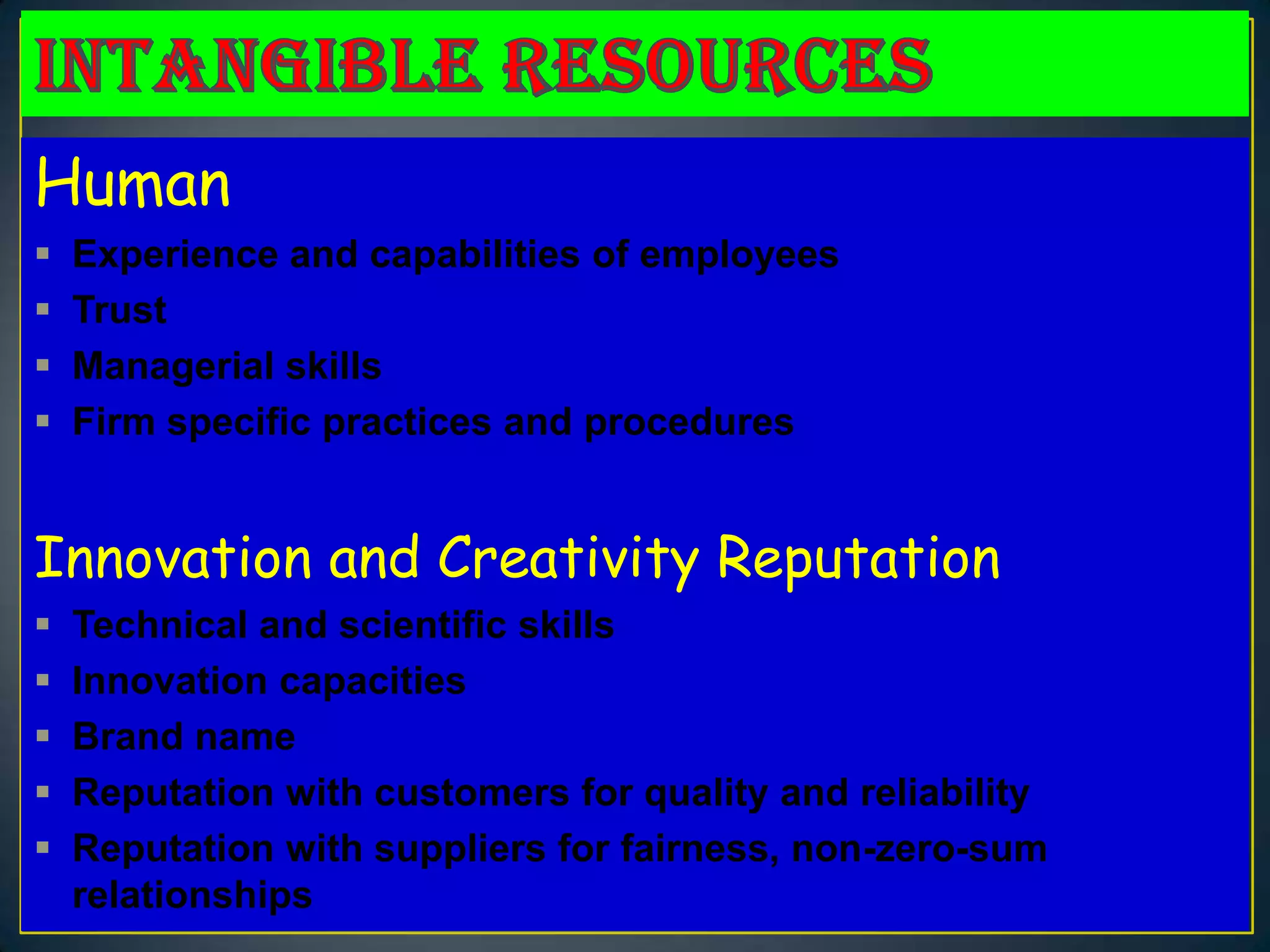
Human
   Experience and capabilities of employees
   Trust
   Managerial skills
   Firm specific practices and procedures


Innovation and Creativity Reputation
   Technical and scientific skills
   Innovation capacities
   Brand name
   Reputation with customers for quality and reliability
   Reputation with suppliers for fairness, non-zero-sum
    relationships
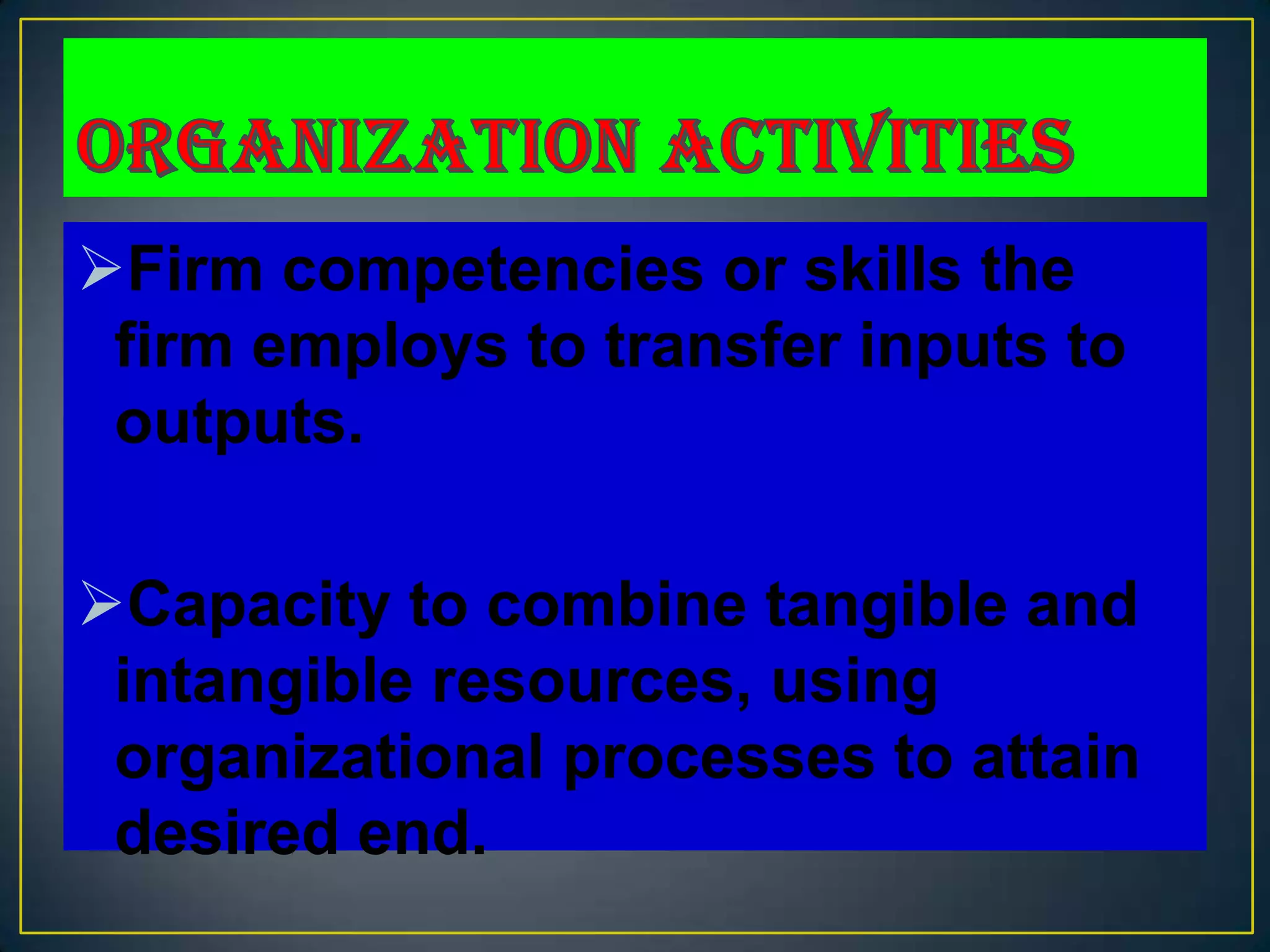
Firm competencies or skills the
 firm employs to transfer inputs to
 outputs.

Capacity to combine tangible and
 intangible resources, using
 organizational processes to attain
 desired end.
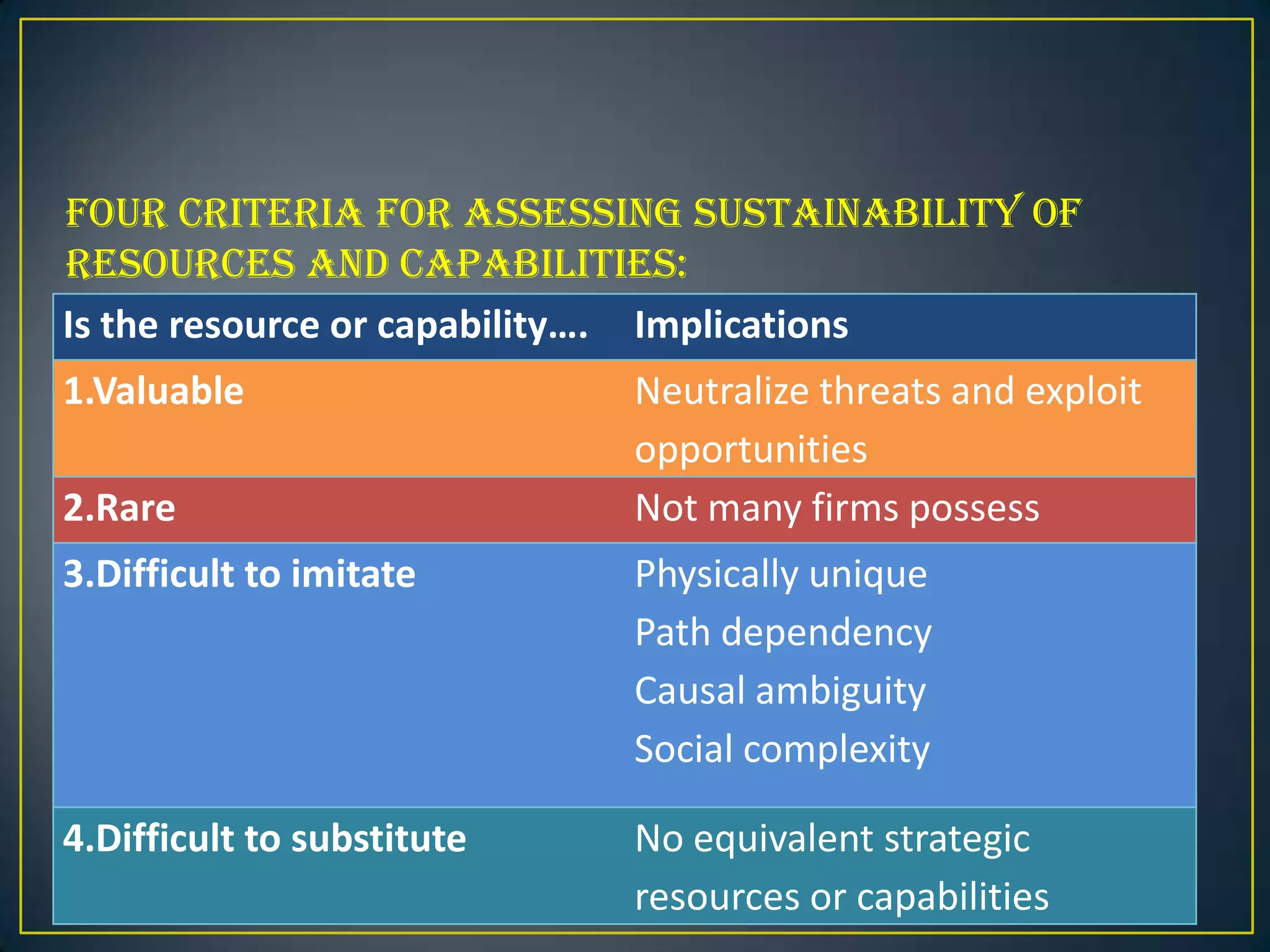
Four criteria for Assessing Sustainability of
Resources and Capabilities:
Is the resource or capability…. Implications
1.Valuable                  Neutralize threats and exploit
                            opportunities
2.Rare                      Not many firms possess
3.Difficult to imitate      Physically unique
                            Path dependency
                            Causal ambiguity
                            Social complexity

4.Difficult to substitute   No equivalent strategic
                            resources or capabilities
• Represents a series of cause and
  effect relationship in which success
  measured from one perspective
  contributes to success as measured
  from other perspective.
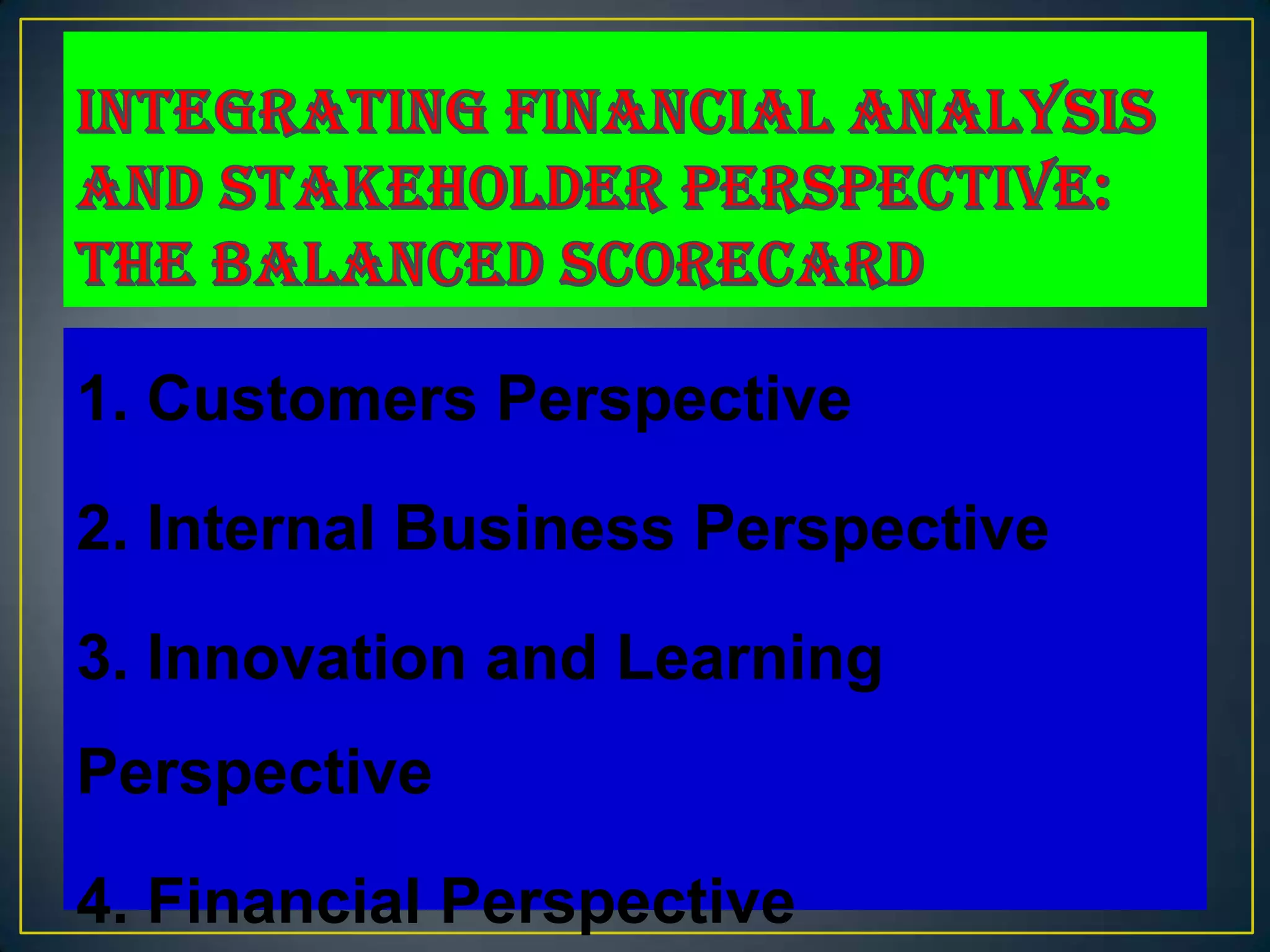
1. Customers Perspective

2. Internal Business Perspective

3. Innovation and Learning
Perspective

4. Financial Perspective

Assessing the internal environment of the firm

  • 1.
    ASSESSING THE INTERNAL ENVIRONMENT OF THE FIRM
  • 2.
    The benefits andlimitations of SWOT analysis in conducting the internal analysis of the firm. The primary and support activities of the firm’s value chain Advantage of value chain within the firm and between the firm and its customers and suppliers. The different type of tangible and intangible resources, as well as organizational capabilities. The four criteria that a firms resources must posses to maintain a sustainable advantage. The usefulness of financial ratio analysis as well as its inherent limitations. How to make meaningful comparison of performance across a firm. The value of recognizing how the interests of a variety of stakeholders can be interrelated.
  • 3.
    • To identifystrengths to build on and weaknesses to overcome as they formulate strategies for competitive advantages..
  • 4.
    • A methodfor assessing strengths and weaknesses divides the business into a number of linked of activities that may each produce value for the customer.
  • 5.
    General administration Support Activities Human Resource Management Margin Technology Development Procurement Marketing & Outbound Margin Operations logistics Inbound logistics Service Sales Primary Activities
  • 6.
    Some Factors to consider in Assessing a Firm’s Primary Activities
  • 7.
    Location of distributionfacilities to minimize shipping times. Excellent material and inventory control systems. Systems to reduce time to send “returns” to supplier. Warehouse layout and designs to increase efficiency of operations for incoming materials.
  • 8.
    Efficient plant operationsto minimize costs. Appropriate level of automation in manufacturing. Quality production control systems to reduce costs and enhance quality. Efficient plant layout and workflow design.
  • 9.
    Effective shipping processesto provide quick delivery and minimize damages. Efficient finished goods warehousing processes. Shipping of goods in large lot sizes to minimize transportation costs. Quality material handling equipment to increase order picking.
  • 10.
    Highly motivated andcompetent sales force. Innovative approaches to promotion and advertising. Selection of most appropriate distribution channels. Proper identification of customer segment s and needs. Effective pricing strategies.
  • 11.
    Effective use ofprocedures to solicit customers feedback and to act on information. Quick response to customer needs and emergencies. Ability to furnish replacement parts and equipment inventory. Quality of service personnel and ongoing training. Appropriate warranty and guarantee policies.
  • 12.
    ASSESSING A FIRM’S SUPPORT ACTIVITIES
  • 13.
    Technology Development The array of technologies employed in most firms is very broad, ranging from technologies used to prepare documents and transport goods to those embodied in processes and equipment or the product itself.
  • 14.
    General Administration Consists of number of activities, including general management, planning , finance, accounting, legal, government affairs, quality management, and information systems.
  • 15.
    • Perspective onunderstanding a firm’s overall success as a based on its internal resources has emerged.
  • 16.
    Types of theFirm Resources: 1. Tangible Resources 2. Intangible Resources 3. Organizational Capabilities
  • 17.
    Financial o Firms cashaccount and cash equivalent o Firm’s capacity to raise equity o Firms borrowing capacity Physical o Modern plant and facilities o Favorable manufacturing locations o State-of -the-art machinery and equipment
  • 18.
    Human  Experience and capabilities of employees  Trust  Managerial skills  Firm specific practices and procedures Innovation and Creativity Reputation  Technical and scientific skills  Innovation capacities  Brand name  Reputation with customers for quality and reliability  Reputation with suppliers for fairness, non-zero-sum relationships
  • 19.
    Firm competencies orskills the firm employs to transfer inputs to outputs. Capacity to combine tangible and intangible resources, using organizational processes to attain desired end.
  • 20.
    Four criteria forAssessing Sustainability of Resources and Capabilities: Is the resource or capability…. Implications 1.Valuable Neutralize threats and exploit opportunities 2.Rare Not many firms possess 3.Difficult to imitate Physically unique Path dependency Causal ambiguity Social complexity 4.Difficult to substitute No equivalent strategic resources or capabilities
  • 21.
    • Represents aseries of cause and effect relationship in which success measured from one perspective contributes to success as measured from other perspective.
  • 22.
    1. Customers Perspective 2.Internal Business Perspective 3. Innovation and Learning Perspective 4. Financial Perspective