Mission Critical: Crafting
Your Communications
Strategy Workshop
30 May 2012


                        #CommsStrategy

                                    1
Assessing your environment


Michele Madden May 2012
Tracking your key audiences

              Public                           Professionals
    British public                      Journalists
•   Charity Awareness Monitor,      •   Charity Media Monitor
    Brand Attributes Monitor            Peers and MPs
    Young people aged 7-25          •   Charity Parliamentary Monitor, Celtic
•   Youth Engagement Monitor            CPM, AAPM (public bodies)
    Scotland, Wales, Northern           GPs and primary healthcare
    Ireland and Republic of Ireland     professionals
•   Celtic CAM                      •   Healthcare Professionals Monitor


                                                                           3
Consultancy and tailored research

We can help you with...               We’re experts in...
Creative development, testing, ad        Focus groups
tracking                                 Desk research
Strategy, brand, fundraising             Depth interviews
development                              Workshops
Supporter satisfaction                   Surveys
Stakeholder audits and consultation
Evaluation and impact programmes
Research audits


                                                            4
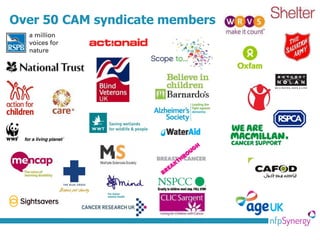
Over 50 CAM syndicate members
Session purpose

Breakout E: Assessing your environment

Before you start your communications strategy it’s essential
to consider your organisation’s strengths and weaknesses
plus any opportunities and threats your position and
environment present.


                                                               6
Discussion

• Thinking about when you have done exercises like this in
  the past

   o   What worked?

   o   What didn’t work?


                                                             7
Exercise

• What can we do to mitigate these issues?


                                             8
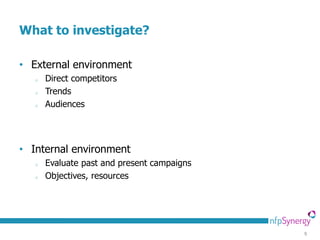
What to investigate?

• External environment
   o   Direct competitors
   o   Trends
   o   Audiences


• Internal environment
   o   Evaluate past and present campaigns
   o   Objectives, resources


                                             9
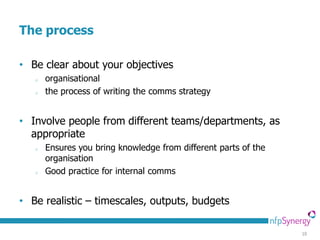
The process

• Be clear about your objectives
   o   organisational
   o   the process of writing the comms strategy


• Involve people from different teams/departments, as
  appropriate
   o   Ensures you bring knowledge from different parts of the
       organisation
   o   Good practice for internal comms


• Be realistic – timescales, outputs, budgets

                                                                 10
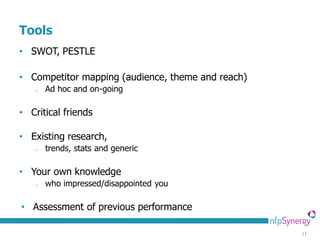
Tools
• SWOT, PESTLE

• Competitor mapping (audience, theme and reach)
   o   Ad hoc and on-going

• Critical friends

• Existing research,
   o   trends, stats and generic

• Your own knowledge
   o   who impressed/disappointed you

• Assessment of previous performance

                                                   11
How to use this in your strategy

• Depends on what you have to produce
   o   Setting the context for the decisions you make

• Detail is often the death of these types of processes and
  documents
   o   Focus on key areas/issues – there may only be a few key facts

• Only use data that you are confident about
   o   Source any data that you’re using

• Think about data that might be replicable for next year

• Consider what you could use to measure progress towards
  your goals


                                                                       12
www.nfpsynergy.net
2-6 Tenter Ground
Spitalfields
London E1 7NH

 020 7426 8888
insight@nfpsynergy.net
www.twitter.com/nfpsynergy
www.linkedin.com/company/nfpsynergy
Registered office: 2-6 Tenter Ground Spitalfields London E1 7NH. Registered in England No. 04387900. VAT Registration 839 8186 72

Assessing environment

  • 1.
    Mission Critical: Crafting YourCommunications Strategy Workshop 30 May 2012 #CommsStrategy 1
  • 2.
  • 3.
    Tracking your keyaudiences Public Professionals British public Journalists • Charity Awareness Monitor, • Charity Media Monitor Brand Attributes Monitor Peers and MPs Young people aged 7-25 • Charity Parliamentary Monitor, Celtic • Youth Engagement Monitor CPM, AAPM (public bodies) Scotland, Wales, Northern GPs and primary healthcare Ireland and Republic of Ireland professionals • Celtic CAM • Healthcare Professionals Monitor 3
  • 4.
    Consultancy and tailoredresearch We can help you with... We’re experts in... Creative development, testing, ad Focus groups tracking Desk research Strategy, brand, fundraising Depth interviews development Workshops Supporter satisfaction Surveys Stakeholder audits and consultation Evaluation and impact programmes Research audits 4
  • 5.
    Over 50 CAMsyndicate members
  • 6.
    Session purpose Breakout E:Assessing your environment Before you start your communications strategy it’s essential to consider your organisation’s strengths and weaknesses plus any opportunities and threats your position and environment present. 6
  • 7.
    Discussion • Thinking aboutwhen you have done exercises like this in the past o What worked? o What didn’t work? 7
  • 8.
    Exercise • What canwe do to mitigate these issues? 8
  • 9.
    What to investigate? •External environment o Direct competitors o Trends o Audiences • Internal environment o Evaluate past and present campaigns o Objectives, resources 9
  • 10.
    The process • Beclear about your objectives o organisational o the process of writing the comms strategy • Involve people from different teams/departments, as appropriate o Ensures you bring knowledge from different parts of the organisation o Good practice for internal comms • Be realistic – timescales, outputs, budgets 10
  • 11.
    Tools • SWOT, PESTLE •Competitor mapping (audience, theme and reach) o Ad hoc and on-going • Critical friends • Existing research, o trends, stats and generic • Your own knowledge o who impressed/disappointed you • Assessment of previous performance 11
  • 12.
    How to usethis in your strategy • Depends on what you have to produce o Setting the context for the decisions you make • Detail is often the death of these types of processes and documents o Focus on key areas/issues – there may only be a few key facts • Only use data that you are confident about o Source any data that you’re using • Think about data that might be replicable for next year • Consider what you could use to measure progress towards your goals 12
  • 13.
    www.nfpsynergy.net 2-6 Tenter Ground Spitalfields LondonE1 7NH 020 7426 8888 insight@nfpsynergy.net www.twitter.com/nfpsynergy www.linkedin.com/company/nfpsynergy Registered office: 2-6 Tenter Ground Spitalfields London E1 7NH. Registered in England No. 04387900. VAT Registration 839 8186 72