
Creating Powerful Communications Strategies:
                CharityComms Seminar 19 January 2011


        What Does a Good Comms Strategy Look Like?
                     By Ben Matthews


Find out more about CharityComms: www.charitycomms.org.uk

Sign up for the CharityComms eNews for all the latest charity communications news, views
and resources: http://www.charitycomms.org.uk/about/enews.aspx
“Remember, we may live in a new world, but the old rules still
apply. Powerful communications has always been about getting
people to pay attention and take action.”
                                            - Fard Johnmar
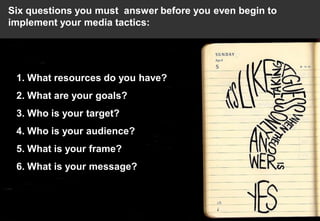
Six questions you must answer before you even begin to
implement your media tactics:


 1. What resources do you have?
 2. What are your goals?
 3. Who is your target?
 4. Who is your audience?
 5. What is your frame?
 6. What is your message?
1. What communications infrastructure do you have?
     1. What communications infrastructure do you have?


       • How much staff time are you willing to devote to communications? If you
         feel you can not afford communications staff, are there communications
         funding opportunities on the horizon?
       • Who will do the work—are they comfortable with and knowledgeable about
 •   How much staff time are you willing to devote to communications?
         communications?
 •   If• Whatfeel you can not affordIf you do advocacy,staff, are there
         you is your program budget? communications are you willing to
     communications that to communications?on the horizon?
         commit 30% of funding opportunities
 •     • How powerful work brand? Is it well known?
     Who will do theis your - are they comfortable with and knowledgeable          about
   communications?
 • What is your program budget?
 • How powerful is your brand? Is it well known?


        The answers to these questions are the foundation from which your comms
The answers thrive or fail.
    activity will to these questions are the foundation from which
your communications activity will thrive or fail.
2. What are your goals?


 •   What are your program, campaign or organisational goals?
 •   Why are you launching communications efforts in the first place?
 •   What do you want to achieve?
 •   What does success look like?
3. Who is your target audience?


Who are you trying to reach?
 • Supporters, investors, volunteers, donors, direct service users, secondary service users
 • Who do you need on your side to get what you want?

Your Audience
 • The people who can to persuade the decision maker to do what you want
 • Know your audience through research: Focus groups, Surveys,etc
4. What is your frame?           • What is this issue really about?
                                 • Who is affected?
                                 • Who are the main protagonists?
                                 • What images communicate this?
                                 • With what organisations do you
                                   want to be associated with?
                                 • What political positions?
                                 • What people?


Describe the issue in a way that resonates with the values and
needs of your audience, and is also interesting to the media
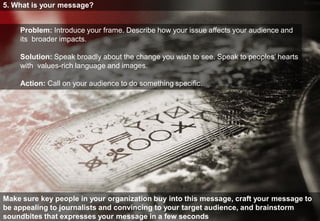
5. What is your message?


    Problem: Introduce your frame. Describe how your issue affects your audience and
    its broader impacts.

    Solution: Speak broadly about the change you wish to see. Speak to peoples’ hearts
    with values-rich language and images.

    Action: Call on your audience to do something specific.


Make sure key people in your organization buy into this message, craft your message to
be appealing to journalists and convincing to your target audience, and brainstorm
soundbites that expresses your message in a few seconds
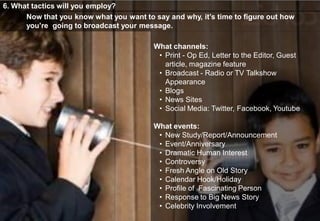
6. What tactics will you employ?
      Now that you know what you want to say and why, it’s time to figure out how
      you’re going to broadcast your message.

                                         What channels:
                                          • Print - Op Ed, Letter to the Editor, Guest
                                            article, magazine feature
                                          • Broadcast - Radio or TV Talkshow
                                            Appearance
                                          • Blogs
                                          • News Sites
                                          • Social Media: Twitter, Facebook, Youtube

                                         What events:
                                          • New Study/Report/Announcement
                                          • Event/Anniversary
                                          • Dramatic Human Interest
                                          • Controversy
                                          • Fresh Angle on Old Story
                                          • Calendar Hook/Holiday
                                          • Profile of Fascinating Person
                                          • Response to Big News Story
                                          • Celebrity Involvement
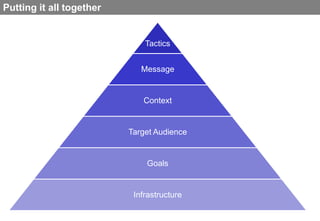
Putting it all together


                              Tactics


                             Message


                             Context


                          Target Audience


                              Goals


                           Infrastructure
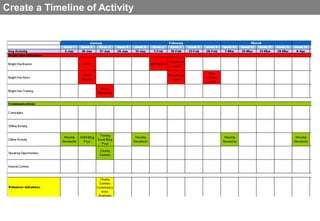
Create a Timeline of Activity
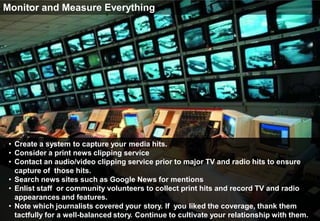
Monitor and Measure Everything


 • Create a system to capture your media hits.
 • Consider a print news clipping service
 • Contact an audio/video clipping service prior to major TV and radio hits to ensure
   capture of those hits.
 • Search news sites such as Google News for mentions
 • Enlist staff or community volunteers to collect print hits and record TV and radio
   appearances and features.
 • Note which journalists covered your story. If you liked the coverage, thank them
   tactfully for a well-balanced story. Continue to cultivate your relationship with them.
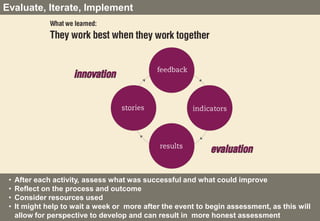
Evaluate, Iterate, Implement


 •   After each activity, assess what was successful and what could improve
 •   Reflect on the process and outcome
 •   Consider resources used
 •   It might help to wait a week or more after the event to begin assessment, as this will
     allow for perspective to develop and can result in more honest assessment
Celebrate


Be proud of your work - It’s making the world a better place!
Any Questions?
Thank you.


        the volunteer-run comms agency for the third sector
Creating Powerful Communications Strategies:
                CharityComms Seminar 19 January 2011


            Find out more about CharityComms: www.charitycomms.org.uk

Sign up for the CharityComms eNews for all the latest charity communications news, views
            and resources: http://www.charitycomms.org.uk/about/enews.aspx

What does a good comms strategy look like?

  • 1.
    Creating Powerful CommunicationsStrategies: CharityComms Seminar 19 January 2011 What Does a Good Comms Strategy Look Like? By Ben Matthews Find out more about CharityComms: www.charitycomms.org.uk Sign up for the CharityComms eNews for all the latest charity communications news, views and resources: http://www.charitycomms.org.uk/about/enews.aspx
  • 2.
    “Remember, we maylive in a new world, but the old rules still apply. Powerful communications has always been about getting people to pay attention and take action.” - Fard Johnmar
  • 3.
    Six questions youmust answer before you even begin to implement your media tactics: 1. What resources do you have? 2. What are your goals? 3. Who is your target? 4. Who is your audience? 5. What is your frame? 6. What is your message?
  • 4.
    1. What communicationsinfrastructure do you have? 1. What communications infrastructure do you have? • How much staff time are you willing to devote to communications? If you feel you can not afford communications staff, are there communications funding opportunities on the horizon? • Who will do the work—are they comfortable with and knowledgeable about • How much staff time are you willing to devote to communications? communications? • If• Whatfeel you can not affordIf you do advocacy,staff, are there you is your program budget? communications are you willing to communications that to communications?on the horizon? commit 30% of funding opportunities • • How powerful work brand? Is it well known? Who will do theis your - are they comfortable with and knowledgeable about communications? • What is your program budget? • How powerful is your brand? Is it well known? The answers to these questions are the foundation from which your comms The answers thrive or fail. activity will to these questions are the foundation from which your communications activity will thrive or fail.
  • 5.
    2. What areyour goals? • What are your program, campaign or organisational goals? • Why are you launching communications efforts in the first place? • What do you want to achieve? • What does success look like?
  • 6.
    3. Who isyour target audience? Who are you trying to reach? • Supporters, investors, volunteers, donors, direct service users, secondary service users • Who do you need on your side to get what you want? Your Audience • The people who can to persuade the decision maker to do what you want • Know your audience through research: Focus groups, Surveys,etc
  • 7.
    4. What isyour frame? • What is this issue really about? • Who is affected? • Who are the main protagonists? • What images communicate this? • With what organisations do you want to be associated with? • What political positions? • What people? Describe the issue in a way that resonates with the values and needs of your audience, and is also interesting to the media
  • 8.
    5. What isyour message? Problem: Introduce your frame. Describe how your issue affects your audience and its broader impacts. Solution: Speak broadly about the change you wish to see. Speak to peoples’ hearts with values-rich language and images. Action: Call on your audience to do something specific. Make sure key people in your organization buy into this message, craft your message to be appealing to journalists and convincing to your target audience, and brainstorm soundbites that expresses your message in a few seconds
  • 9.
    6. What tacticswill you employ? Now that you know what you want to say and why, it’s time to figure out how you’re going to broadcast your message. What channels: • Print - Op Ed, Letter to the Editor, Guest article, magazine feature • Broadcast - Radio or TV Talkshow Appearance • Blogs • News Sites • Social Media: Twitter, Facebook, Youtube What events: • New Study/Report/Announcement • Event/Anniversary • Dramatic Human Interest • Controversy • Fresh Angle on Old Story • Calendar Hook/Holiday • Profile of Fascinating Person • Response to Big News Story • Celebrity Involvement
  • 10.
    Putting it alltogether Tactics Message Context Target Audience Goals Infrastructure
  • 11.
    Create a Timelineof Activity
  • 12.
    Monitor and MeasureEverything • Create a system to capture your media hits. • Consider a print news clipping service • Contact an audio/video clipping service prior to major TV and radio hits to ensure capture of those hits. • Search news sites such as Google News for mentions • Enlist staff or community volunteers to collect print hits and record TV and radio appearances and features. • Note which journalists covered your story. If you liked the coverage, thank them tactfully for a well-balanced story. Continue to cultivate your relationship with them.
  • 13.
    Evaluate, Iterate, Implement • After each activity, assess what was successful and what could improve • Reflect on the process and outcome • Consider resources used • It might help to wait a week or more after the event to begin assessment, as this will allow for perspective to develop and can result in more honest assessment
  • 14.
    Celebrate Be proud ofyour work - It’s making the world a better place!
  • 15.
  • 16.
    Thank you. the volunteer-run comms agency for the third sector
  • 17.
    Creating Powerful CommunicationsStrategies: CharityComms Seminar 19 January 2011 Find out more about CharityComms: www.charitycomms.org.uk Sign up for the CharityComms eNews for all the latest charity communications news, views and resources: http://www.charitycomms.org.uk/about/enews.aspx