HOW TO GET YOUR
STRATEGY ACCEPTED

       MASTERCLASS
  EUPRIO CONFERENCE 2012,
         GÖTEBORG

 Monique Jipping & Tom De Smedt
WHAT WE ARE GOING TO DO:

•   Short introduction
•   Case: analysis
•   Case: approach and alignment
•   Case: presentation and debate
•   Implementation
•   Roundup
INTRODUCTION
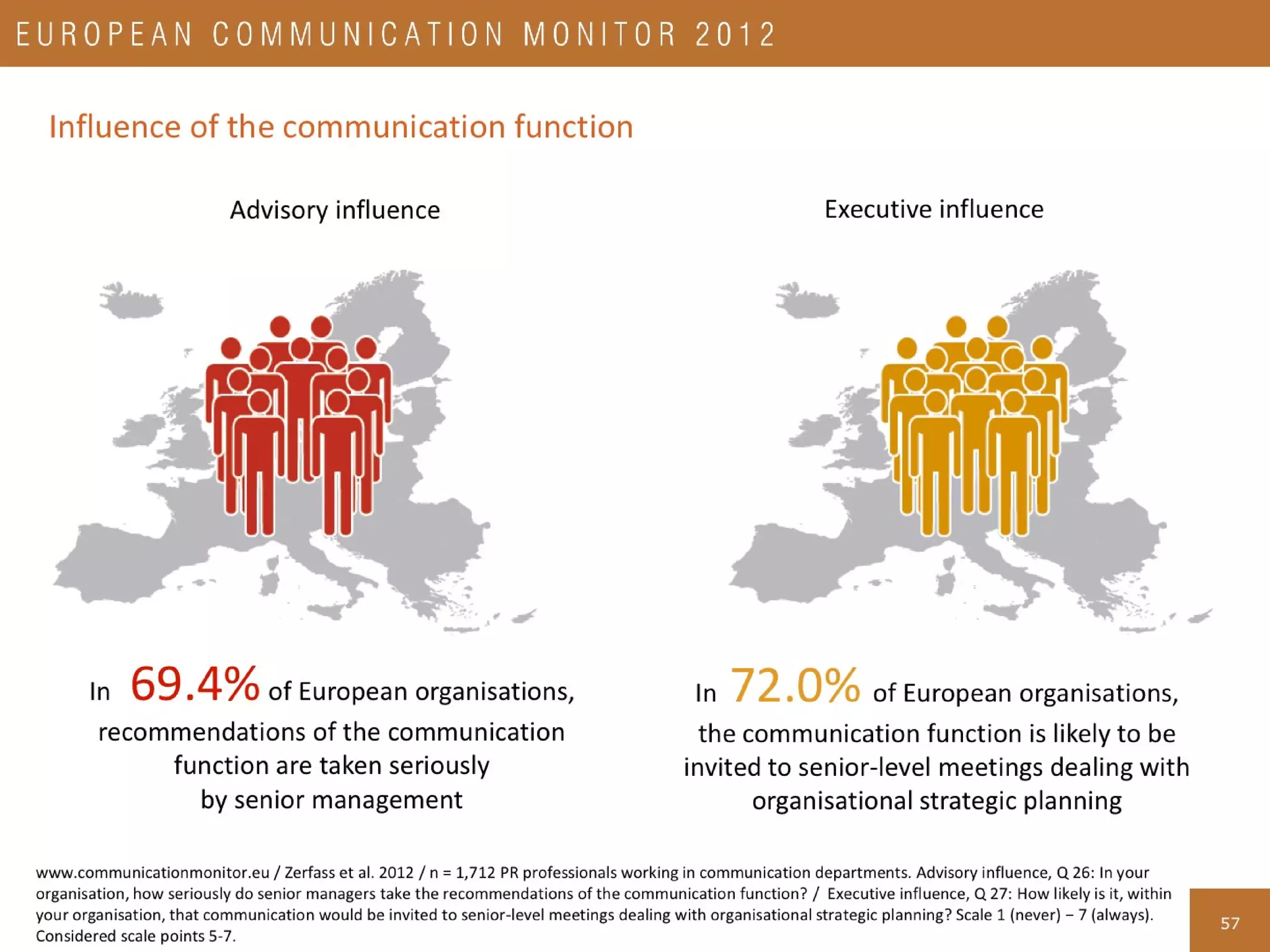
The communicator’s influence
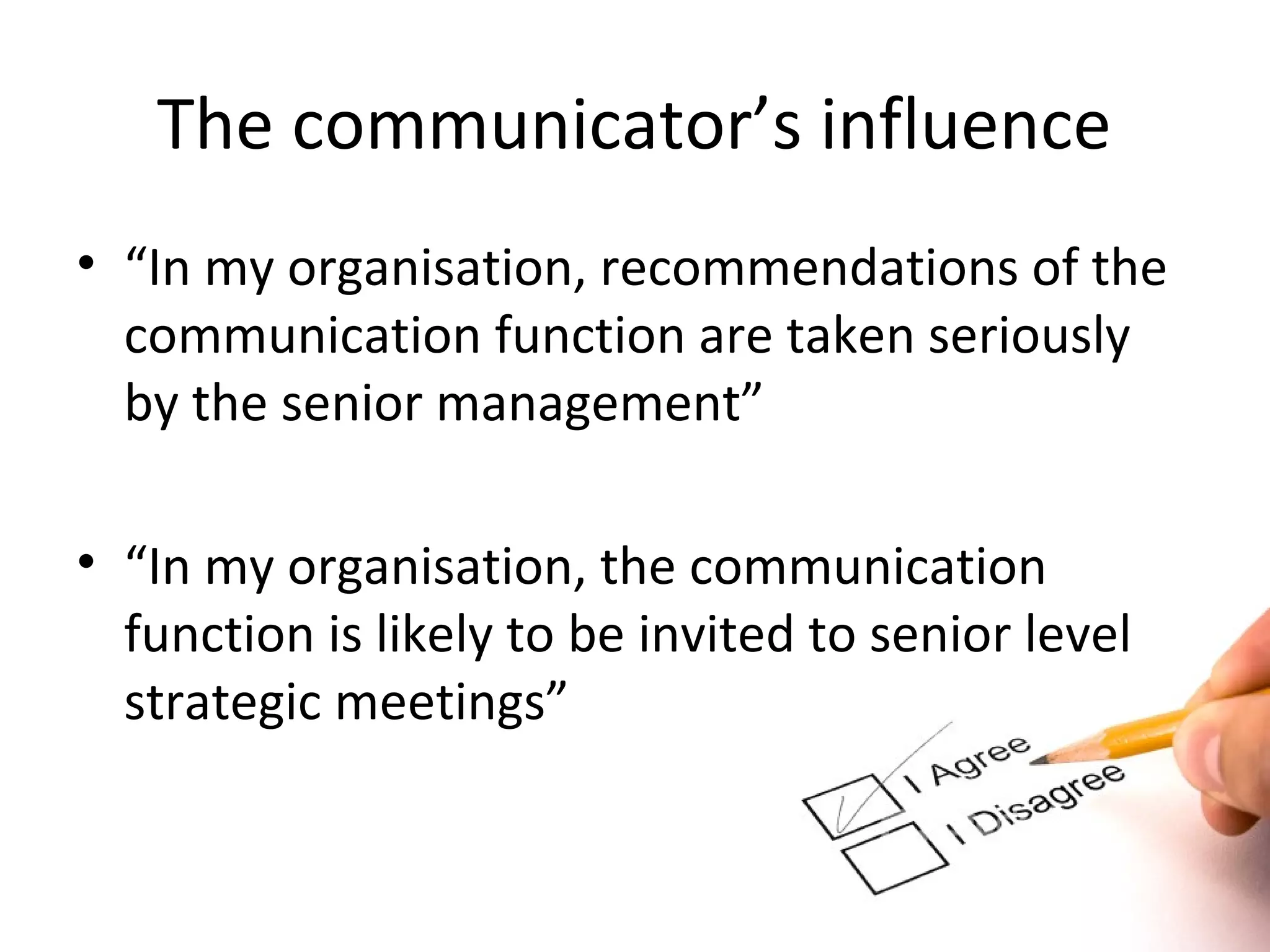
• “In my organisation, recommendations of the
  communication function are taken seriously
  by the senior management”

• “In my organisation, the communication
  function is likely to be invited to senior level
  strategic meetings”
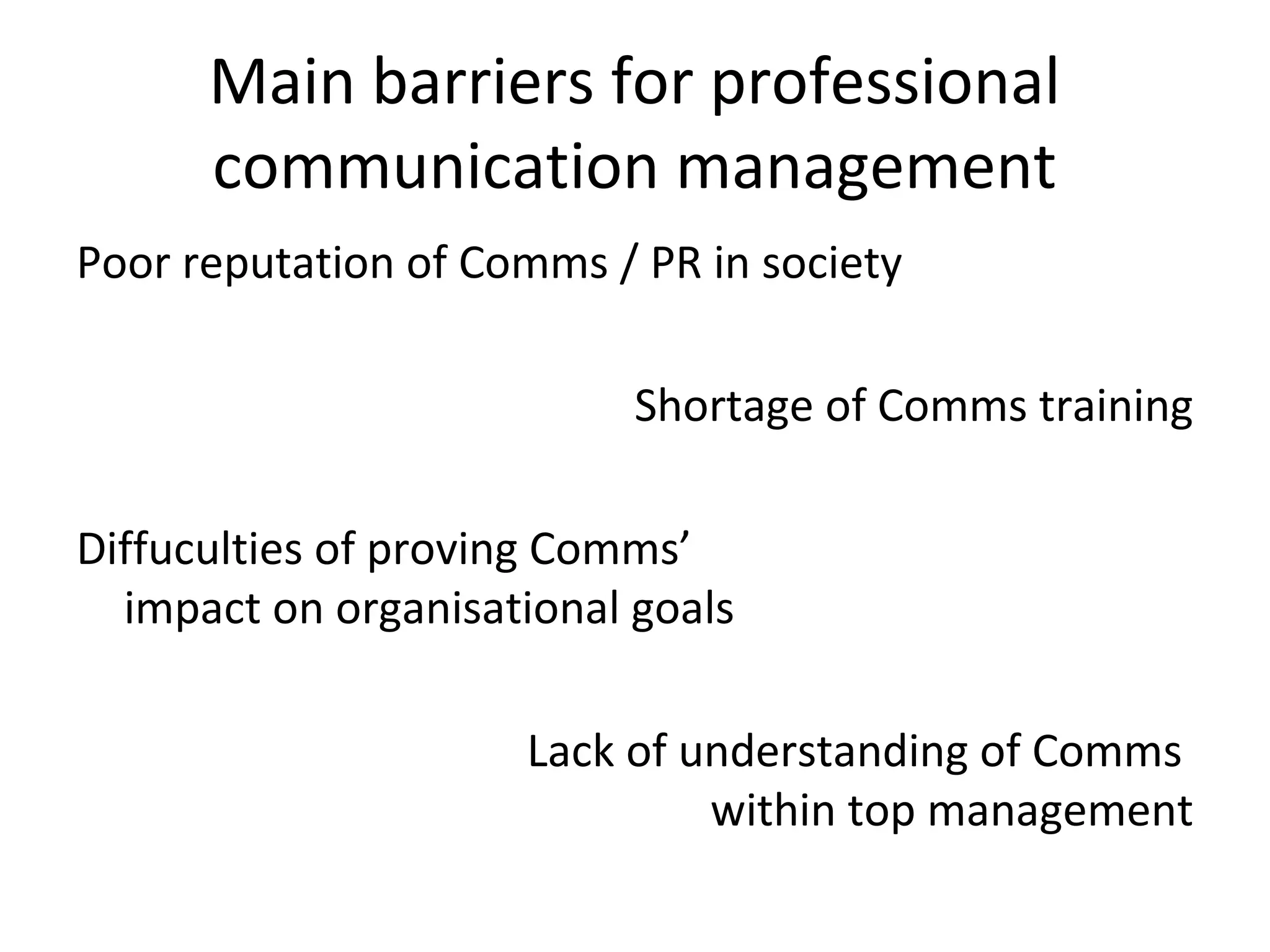
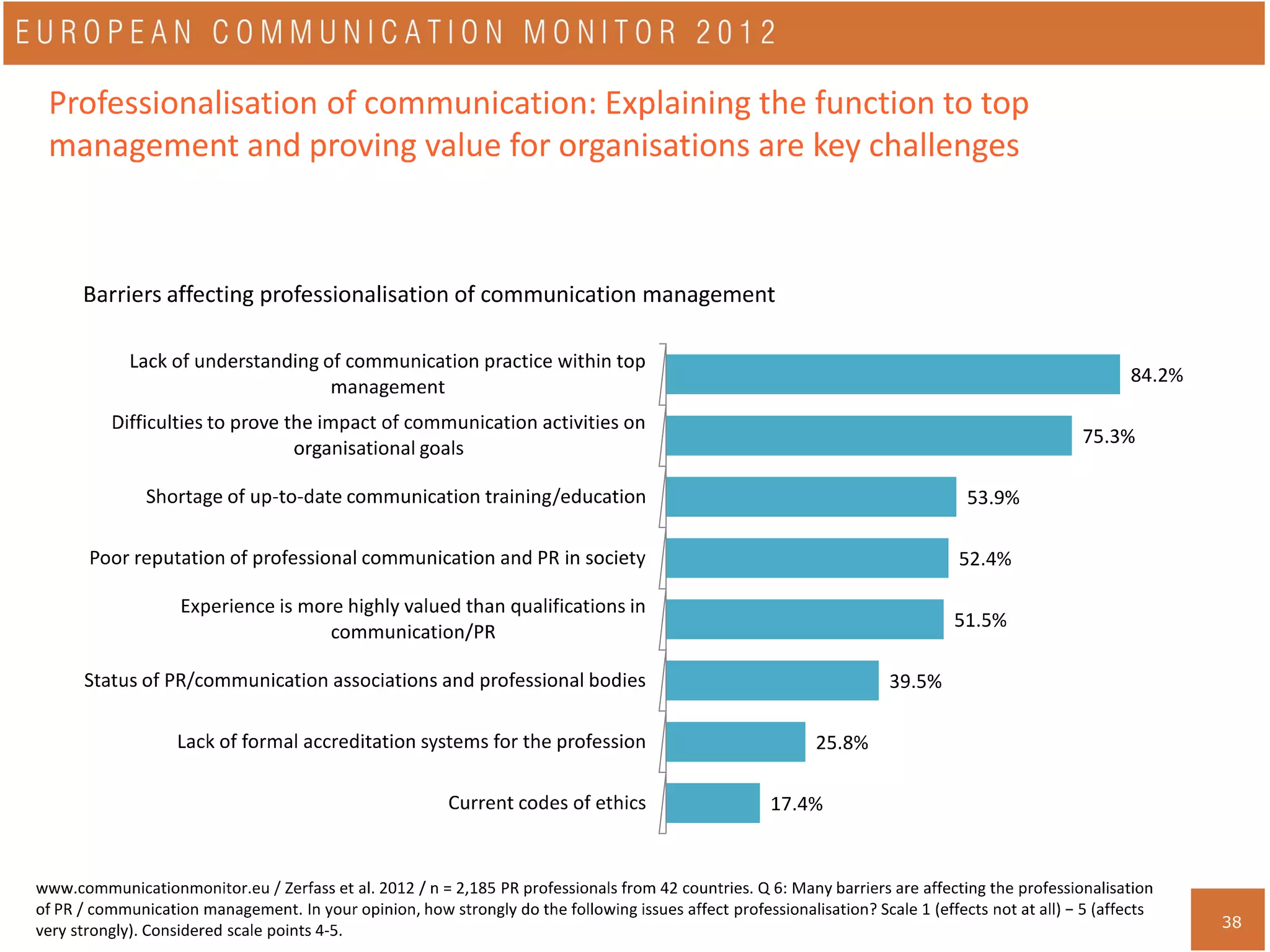
Main barriers for professional
      communication management
Poor reputation of Comms / PR in society

                           Shortage of Comms training

Diffuculties of proving Comms’
  impact on organisational goals

                     Lack of understanding of Comms
                              within top management
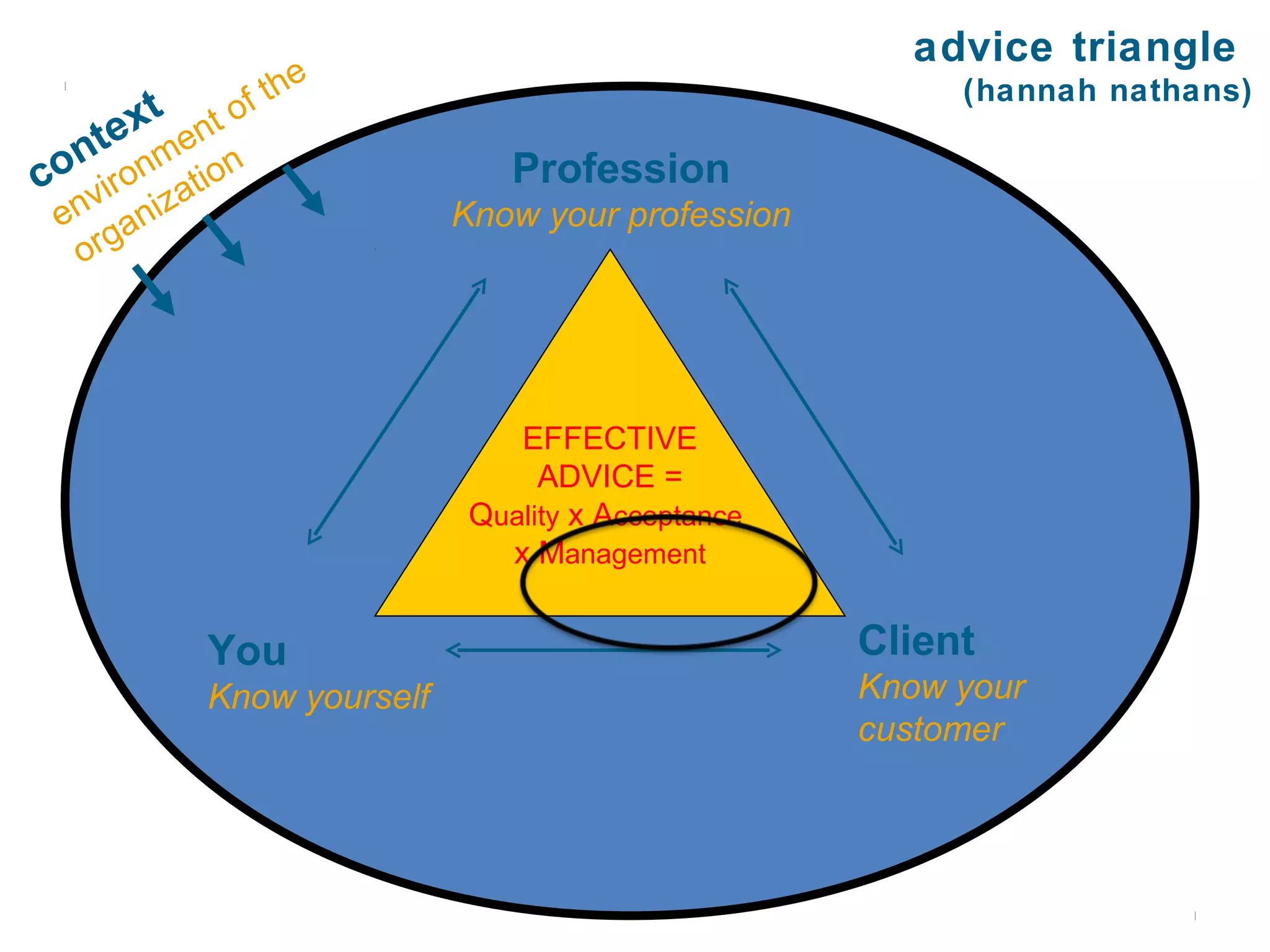
advice triangle
                  e
       t    o f th                                      (hannah nathans)
     ex ent
  nt nm on
co viro ati                    Profession
 en aniz                   Know your profession
  org


                               EFFECTIVE
                                 ADVICE =
                            Quality x Acceptance
                              x Management


           You                                     Client
           Know yourself                           Know your
                                                   customer
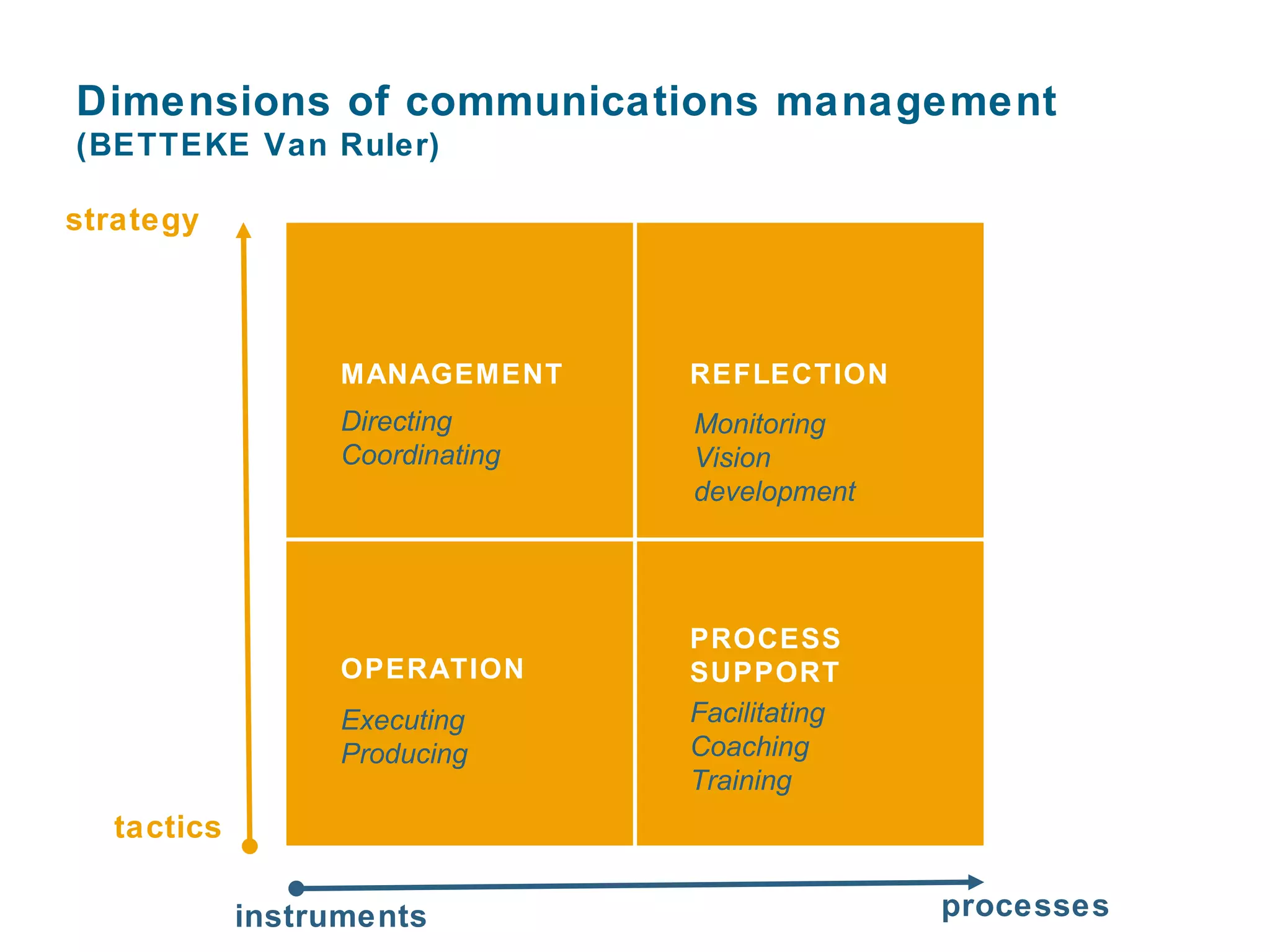
Dimensions of communications management
(BETTEKE Van Ruler)

strategy


                  MANAGEMENT     REFLECTION
                  Directing      Monitoring
                  Coordinating   Vision
                                 development


                                 PROCESS
                  OPERATION      SUPPORT
                  Executing      Facilitating
                  Producing      Coaching
                                 Training
  tactics

            instruments                         processes
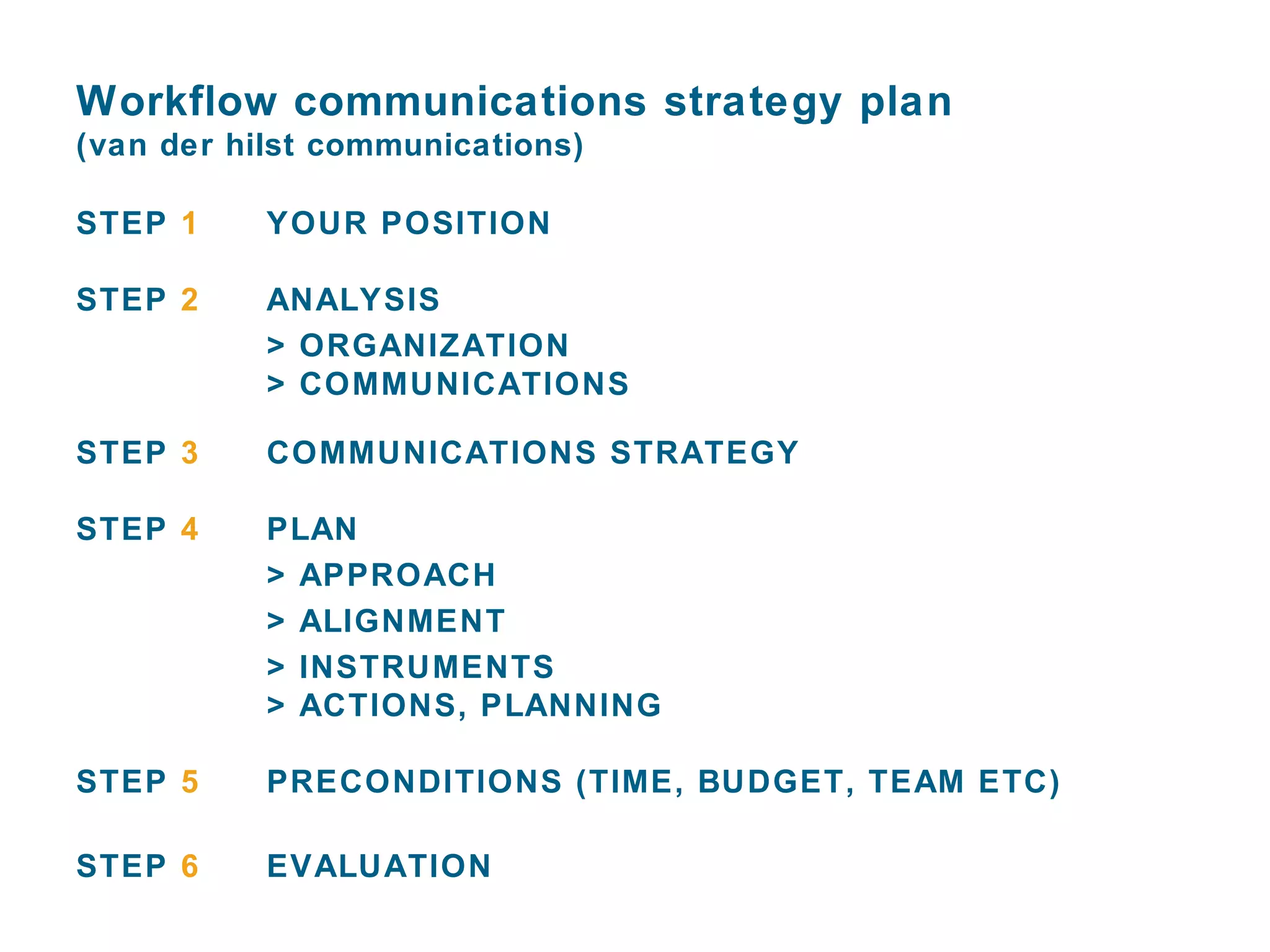
Workflow communications strategy plan
(van der hilst communications)

STEP 1     YOUR POSITION

STEP 2     ANALYSIS
           > ORGANIZATION
           > COMMUNICATIONS

STEP 3     COMMUNICATIONS STRATEGY

STEP 4     PLAN
           > APPROACH
           > ALIGNMENT
           > INSTRUMENTS
           > ACTIONS, PLANNING

STEP 5     PRECONDITIONS (TIME, BUDGET, TEAM ETC)

STEP 6     EVALUATION
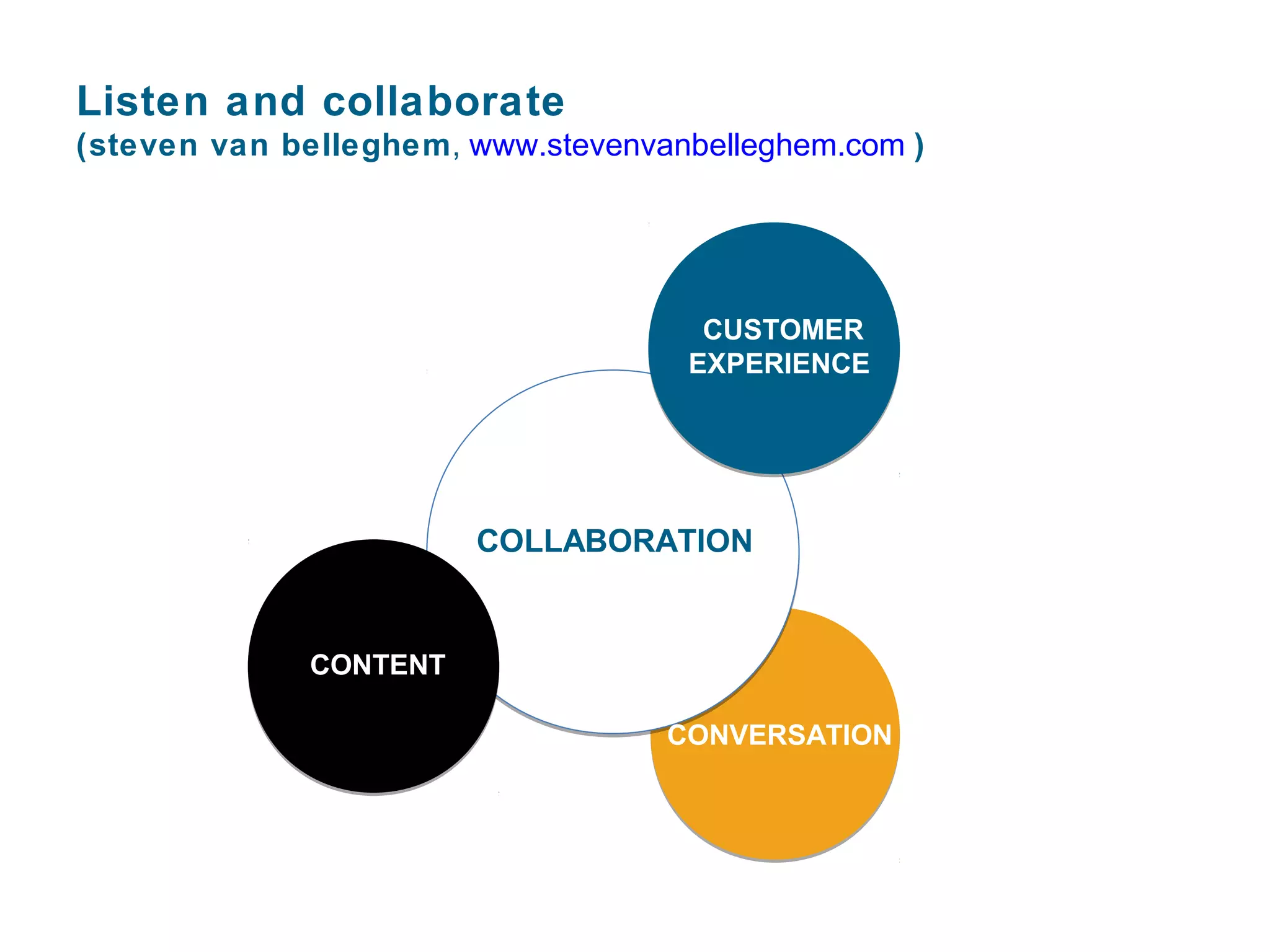
Listen and collaborate
(steven van belleghem, www.stevenvanbelleghem.com )


                                     CUSTOMER
                                    EXPERIENCE


                        COLLABORATION


              CONTENT

                                   CONVERSATION
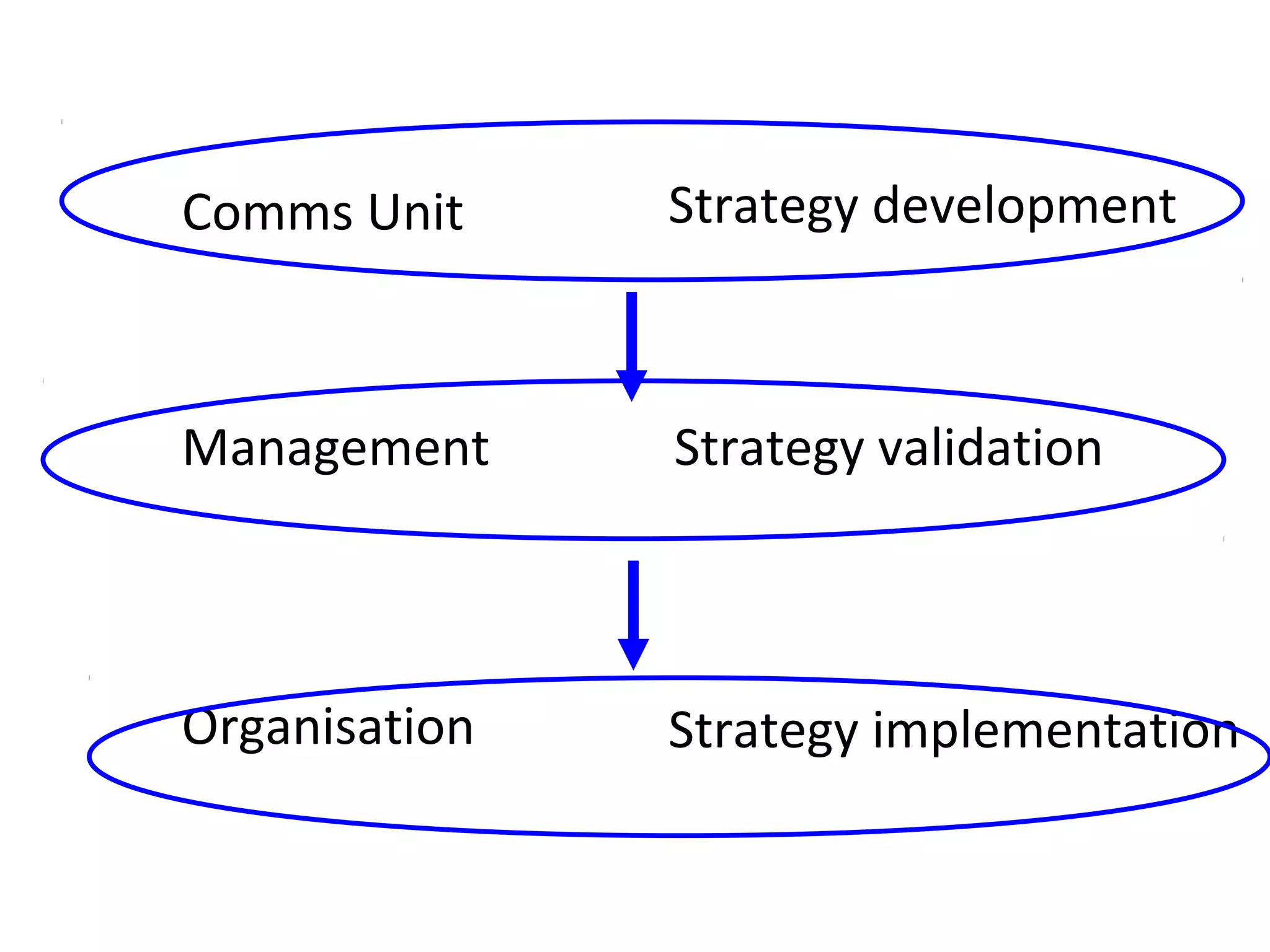
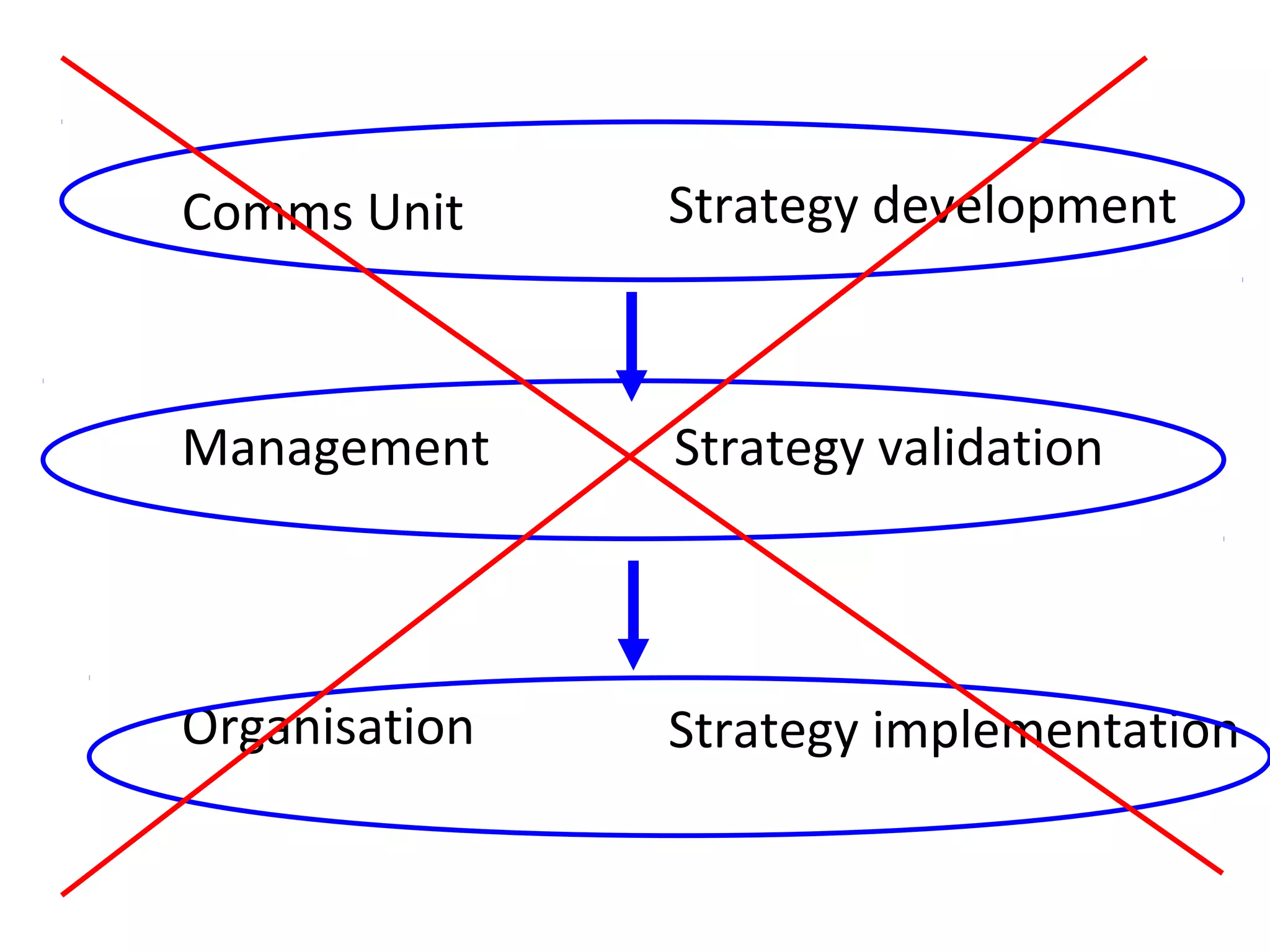
Comms Unit     Strategy development


Management     Strategy validation


Organisation   Strategy implementation
Comms Unit     Strategy development


Management     Strategy validation


Organisation   Strategy implementation
Strategy development is a non-
              linear
      process of co-creation
So:
• Prepare your strategy
• Prepare your management
• Prepare your organisation
Before/While developing your strategy…

• Know your context
  – Organisation, communication, influences
• (Ab)use your corporate strategy
  – Embed and learn from experiences
• Learn form your own research
  – SWOT, DESTEP, etc for communication potential
Before/While developing your strategy…

• Involve and connect
  – Input and support
  – Information, participation, co-creation
• Know your allies (and your ennemies)
  – Invest in your friends
  – Academic and external experts
• Share and communicate
  – Leverage effect of internal communication
  – “Yours” isn’t “ours”
CASE
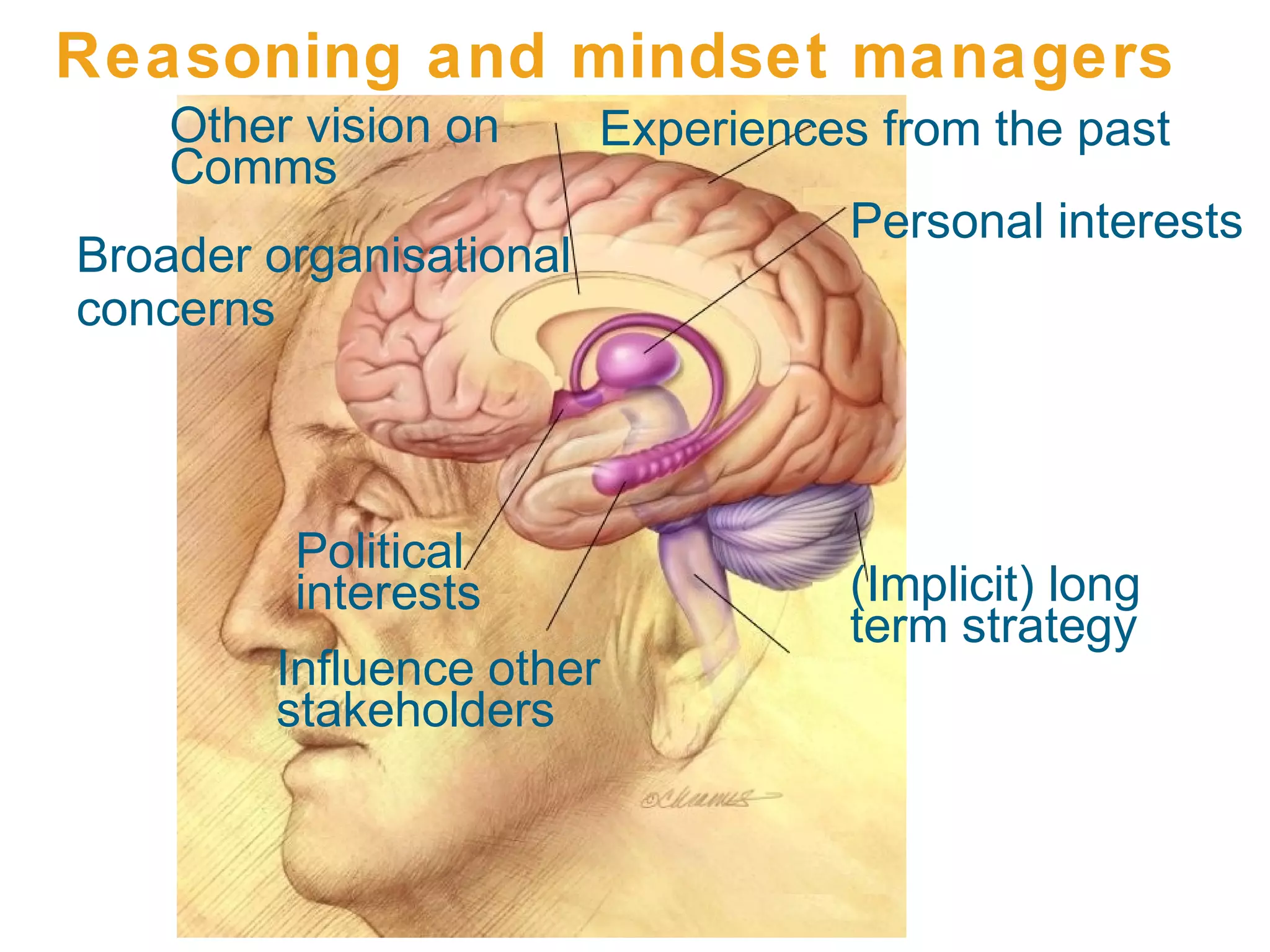
Reasoning and mindset managers
    Other vision on      Experiences from the past
    Comms
                                   Personal interests
Broader organisational
concerns


         Political
         interests                 (Implicit) long
                                   term strategy
        Influence other
        stakeholders
IMPLEMENTATION
  AND ROUNDUP
Ready for validation?

• Timing
  – Use or create momentum


• Procedures

• Prepare your selling strategy
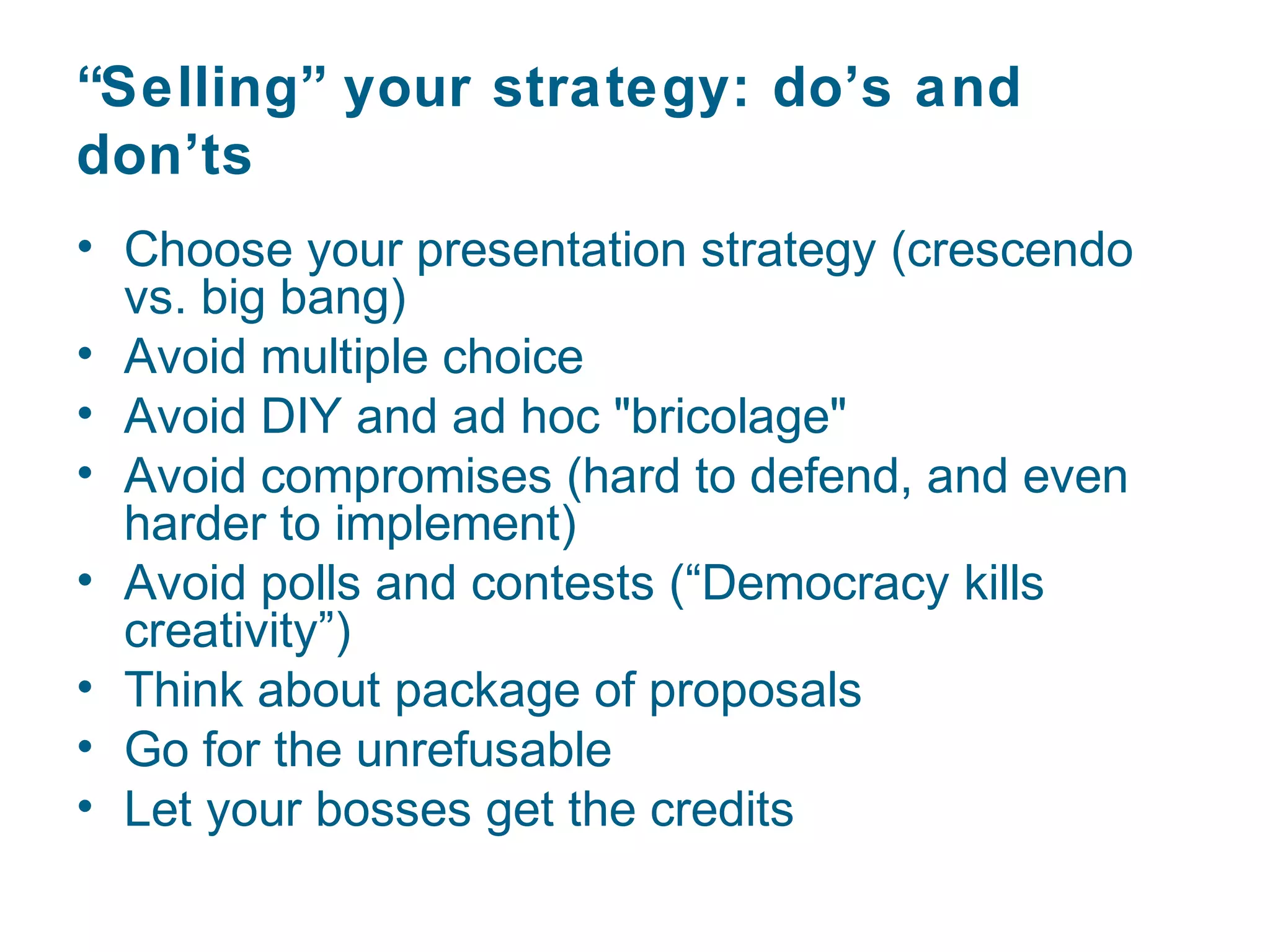
“Selling” your strategy: do’s and
don’ts
• Choose your presentation strategy (crescendo
  vs. big bang)
• Avoid multiple choice
• Avoid DIY and ad hoc "bricolage"
• Avoid compromises (hard to defend, and even
  harder to implement)
• Avoid polls and contests (“Democracy kills
  creativity”)
• Think about package of proposals
• Go for the unrefusable
• Let your bosses get the credits

Masterclass Pp Def

  • 1.
    HOW TO GETYOUR STRATEGY ACCEPTED MASTERCLASS EUPRIO CONFERENCE 2012, GÖTEBORG Monique Jipping & Tom De Smedt
  • 2.
    WHAT WE AREGOING TO DO: • Short introduction • Case: analysis • Case: approach and alignment • Case: presentation and debate • Implementation • Roundup
  • 3.
  • 4.
    The communicator’s influence •“In my organisation, recommendations of the communication function are taken seriously by the senior management” • “In my organisation, the communication function is likely to be invited to senior level strategic meetings”
  • 6.
    Main barriers forprofessional communication management Poor reputation of Comms / PR in society Shortage of Comms training Diffuculties of proving Comms’ impact on organisational goals Lack of understanding of Comms within top management
  • 8.
    advice triangle e t o f th (hannah nathans) ex ent nt nm on co viro ati Profession en aniz Know your profession org EFFECTIVE ADVICE = Quality x Acceptance x Management You Client Know yourself Know your customer
  • 9.
    Dimensions of communicationsmanagement (BETTEKE Van Ruler) strategy MANAGEMENT REFLECTION Directing Monitoring Coordinating Vision development PROCESS OPERATION SUPPORT Executing Facilitating Producing Coaching Training tactics instruments processes
  • 10.
    Workflow communications strategyplan (van der hilst communications) STEP 1 YOUR POSITION STEP 2 ANALYSIS > ORGANIZATION > COMMUNICATIONS STEP 3 COMMUNICATIONS STRATEGY STEP 4 PLAN > APPROACH > ALIGNMENT > INSTRUMENTS > ACTIONS, PLANNING STEP 5 PRECONDITIONS (TIME, BUDGET, TEAM ETC) STEP 6 EVALUATION
  • 11.
    Listen and collaborate (stevenvan belleghem, www.stevenvanbelleghem.com ) CUSTOMER EXPERIENCE COLLABORATION CONTENT CONVERSATION
  • 12.
    Comms Unit Strategy development Management Strategy validation Organisation Strategy implementation
  • 13.
    Comms Unit Strategy development Management Strategy validation Organisation Strategy implementation
  • 14.
    Strategy development isa non- linear process of co-creation So: • Prepare your strategy • Prepare your management • Prepare your organisation
  • 15.
    Before/While developing yourstrategy… • Know your context – Organisation, communication, influences • (Ab)use your corporate strategy – Embed and learn from experiences • Learn form your own research – SWOT, DESTEP, etc for communication potential
  • 16.
    Before/While developing yourstrategy… • Involve and connect – Input and support – Information, participation, co-creation • Know your allies (and your ennemies) – Invest in your friends – Academic and external experts • Share and communicate – Leverage effect of internal communication – “Yours” isn’t “ours”
  • 17.
  • 18.
    Reasoning and mindsetmanagers Other vision on Experiences from the past Comms Personal interests Broader organisational concerns Political interests (Implicit) long term strategy Influence other stakeholders
  • 19.
  • 20.
    Ready for validation? •Timing – Use or create momentum • Procedures • Prepare your selling strategy
  • 21.
    “Selling” your strategy:do’s and don’ts • Choose your presentation strategy (crescendo vs. big bang) • Avoid multiple choice • Avoid DIY and ad hoc "bricolage" • Avoid compromises (hard to defend, and even harder to implement) • Avoid polls and contests (“Democracy kills creativity”) • Think about package of proposals • Go for the unrefusable • Let your bosses get the credits

Editor's Notes

  • #9 Hannah Nathans: Dutch, psychologist, consultant, long career in governemental institutions, writer
  • #10 Betteke van Ruler: Dutch, professor Communications Amsterdam University, publicist
  • #11 A full elaboration of this workflow is included in your syllabus. Use it as a guideline, a checklist. Not every step is needed or useful for smaller strategic questions, for example.
  • #12 Steven van Belleghem: Belgian, markering researcher at InSites, writer of The Conversation Manager and The Conversation Company