Assessing Along the
Way
Using Assessment to
Validate Your Curriculum
Good Teaching is Dependant
upon Good Curriculum
Design
 Teaching for understanding is not the
same as teaching for skill development or
teaching for recall!
 Different teaching purposes demand
different teaching designs
Teaching for Understanding
Requires:
 Routinely using teaching methods from all three
general types
 Didactic: Direct instruction (used to dispense factual
information)
 Coaching: Teachers providing feedback and guidance
to students as they work
 Constructivist: Allowing the student to “construct
their own learning” by solving their own problems.
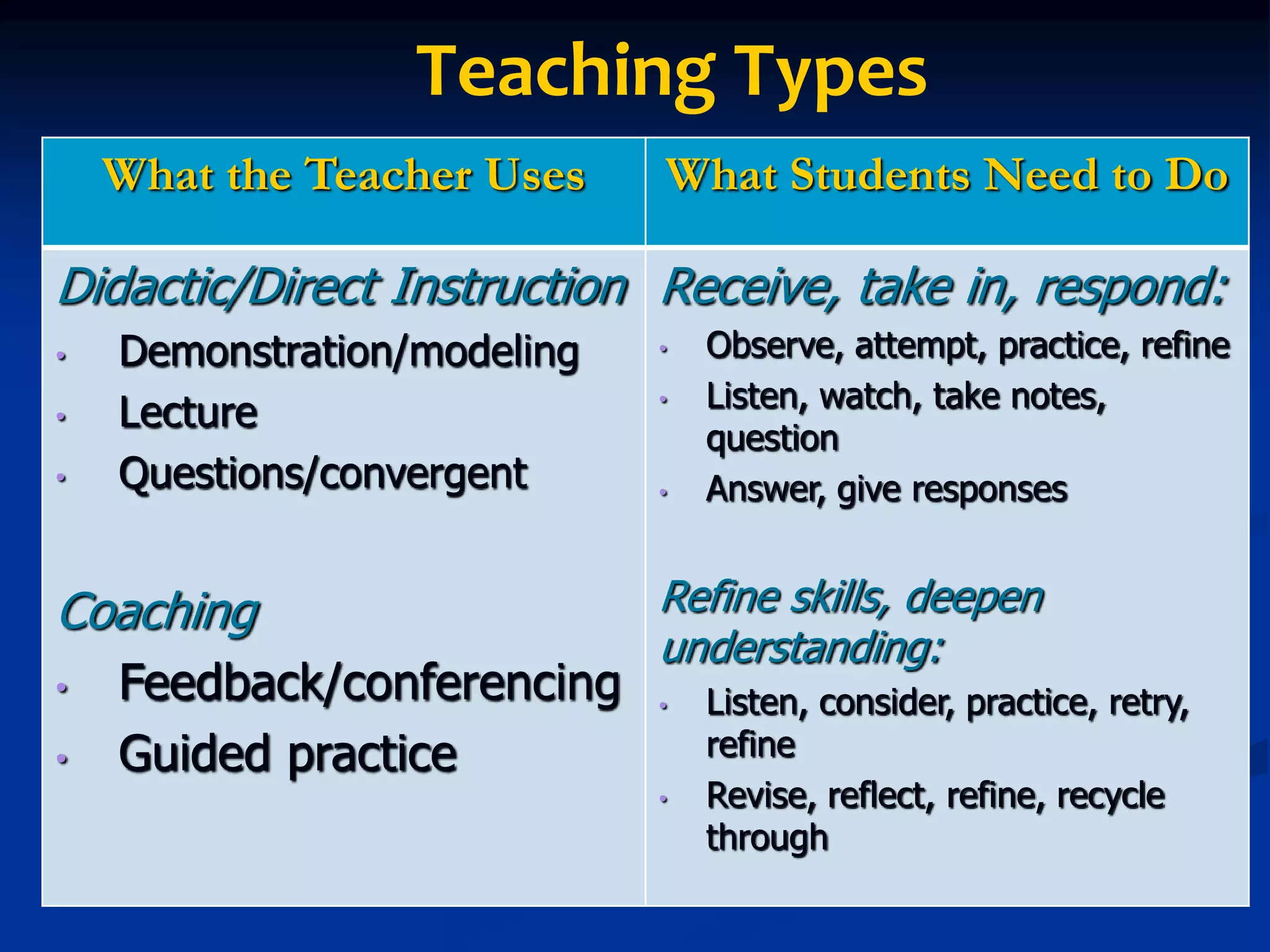
Teaching Types
What the Teacher Uses What Students Need to Do
Didactic/Direct Instruction
• Demonstration/modeling
• Lecture
• Questions/convergent
Coaching
• Feedback/conferencing
• Guided practice
Receive, take in, respond:
• Observe, attempt, practice, refine
• Listen, watch, take notes,
question
• Answer, give responses
Refine skills, deepen
understanding:
• Listen, consider, practice, retry,
refine
• Revise, reflect, refine, recycle
through
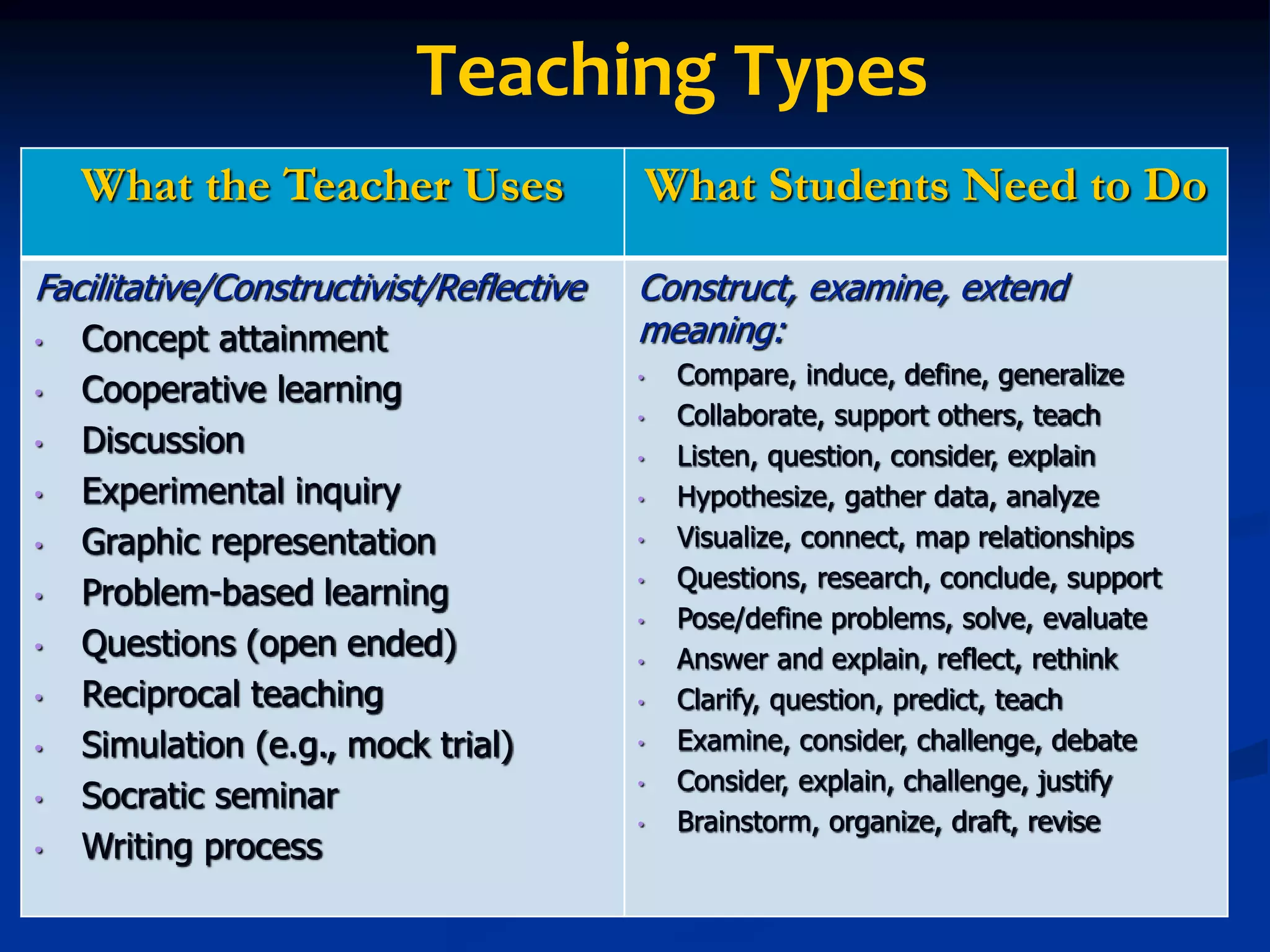
Teaching Types
What the Teacher Uses What Students Need to Do
Facilitative/Constructivist/Reflective
• Concept attainment
• Cooperative learning
• Discussion
• Experimental inquiry
• Graphic representation
• Problem-based learning
• Questions (open ended)
• Reciprocal teaching
• Simulation (e.g., mock trial)
• Socratic seminar
• Writing process
Construct, examine, extend
meaning:
• Compare, induce, define, generalize
• Collaborate, support others, teach
• Listen, question, consider, explain
• Hypothesize, gather data, analyze
• Visualize, connect, map relationships
• Questions, research, conclude, support
• Pose/define problems, solve, evaluate
• Answer and explain, reflect, rethink
• Clarify, question, predict, teach
• Examine, consider, challenge, debate
• Consider, explain, challenge, justify
• Brainstorm, organize, draft, revise
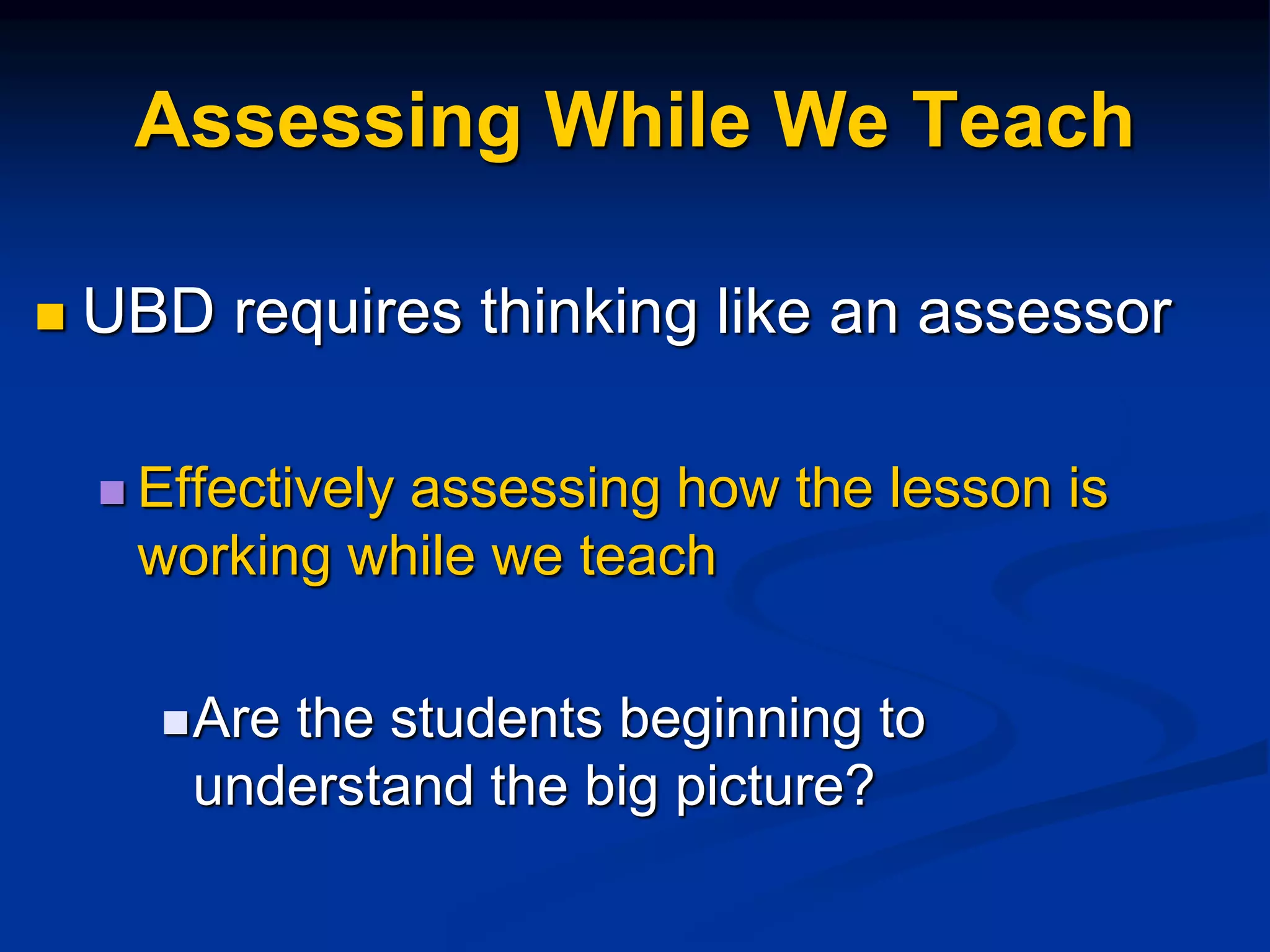
Assessing While We Teach
 UBD requires thinking like an assessor
 Effectively assessing how the lesson is
working while we teach
Are the students beginning to
understand the big picture?
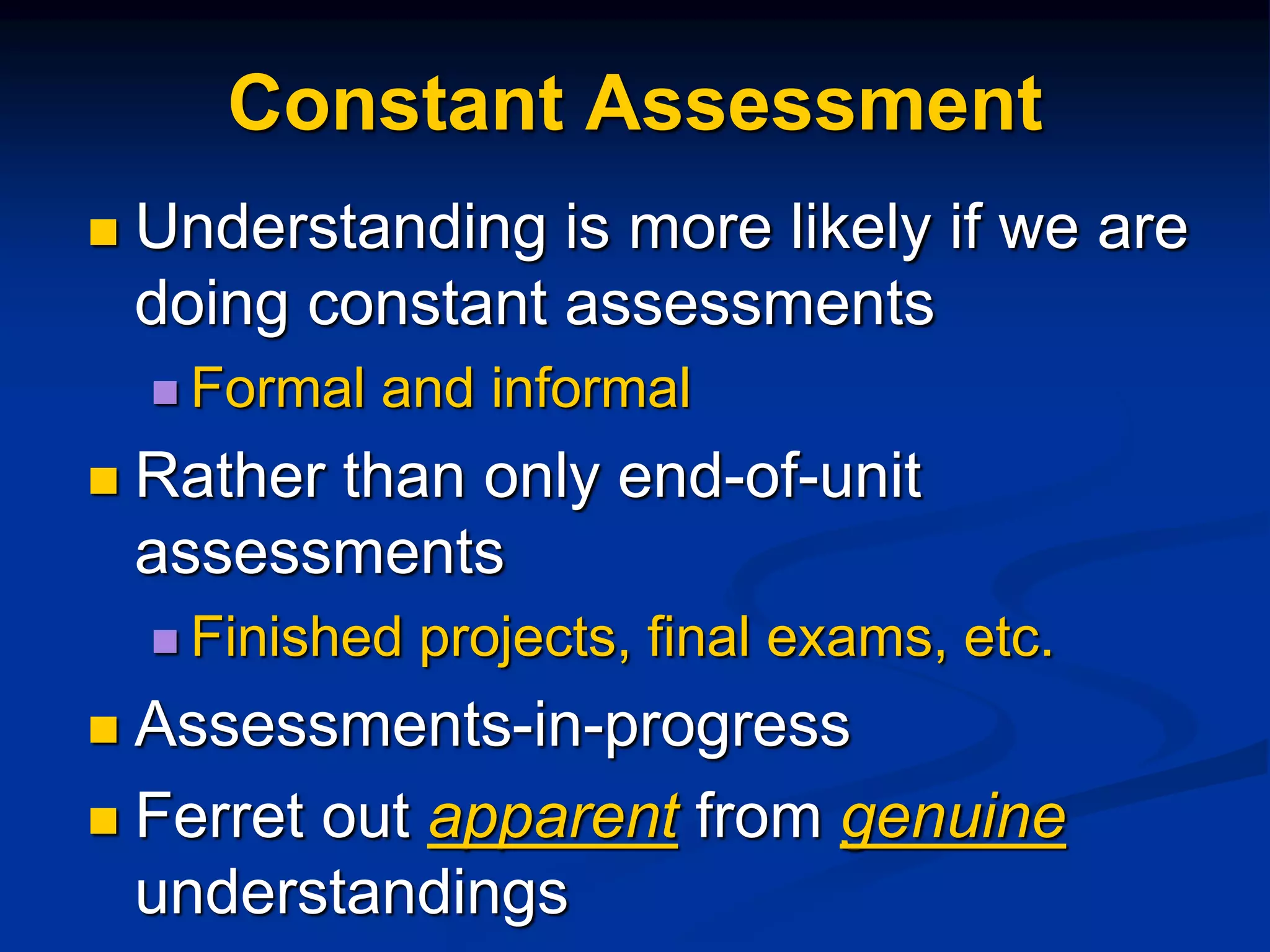
Constant Assessment
 Understanding is more likely if we are
doing constant assessments
 Formal and informal
 Rather than only end-of-unit
assessments
 Finished projects, final exams, etc.
 Assessments-in-progress
 Ferret out apparent from genuine
understandings
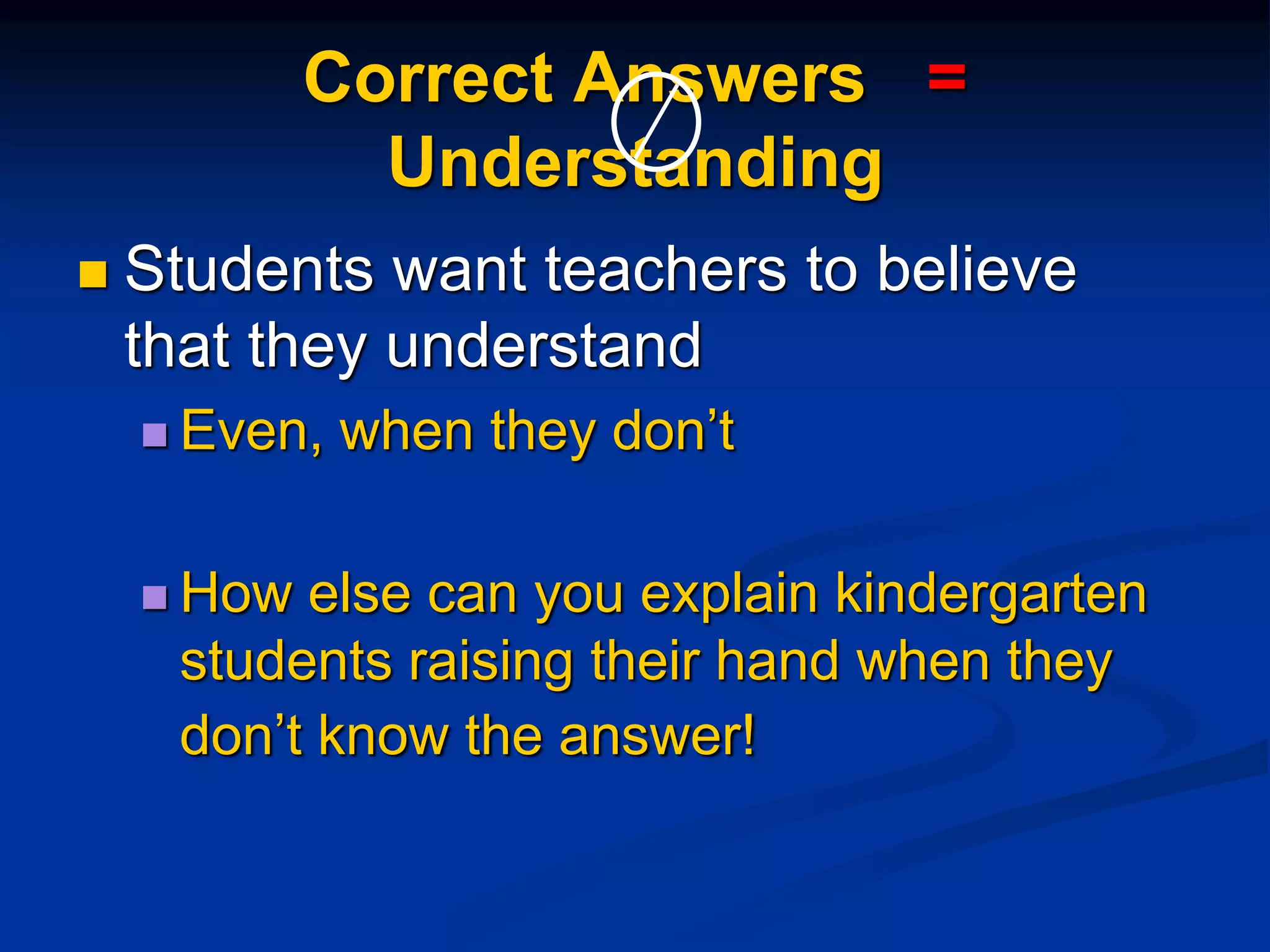
Correct Answers =
Understanding
 Students want teachers to believe
that they understand
 Even, when they don’t
 How else can you explain kindergarten
students raising their hand when they
don’t know the answer!
If I Said it Clearly…
 They must have understood it!
A common misconception
 Remember…
 Less teaching = Better learning (often)
However, we must require
understanding (How?)
We can’t just hand it to the students
(Examples?)
Techniques to Check for
Understanding
 Index card summaries:
 Periodically, distribute index cards and
ask students to:
1. summarize a big idea that they
understand on one side, and
2. identify something that they don’t
fully understand on the other side of
the card
Techniques to Check for
Understanding
 Question box:
Establish a location where students
can leave or post questions.
Students who will not speak in class
may respond in written form.
Techniques to Check for
Understanding
 Analogy Prompt:
Periodically, present students with
an analogy prompt.
(A designated concept, principle,
or process) is like
_______________ because
_______________________.
Techniques to Check for
Understanding
 Visual representation (concept map)
Ask students to create a web,
concept map, flow chart, or timeline
to show elements or components of
a topic or process.
Techniques to Check for
Understanding
 Verbal questioning:
Sample questions
 How is _________ similar to/different from
_______?
 What are the parts of ______________?
 How does ____________ relate to
_____________?
 What is wrong with ________________?
 What evidence supports ______________?
Techniques to Check for
Understanding
 Why?
 How do you know?
 Do you agree?
 Explain.
 Give your reasons.
 But what about ____?
 What do you mean by
____?
 Could you give an example?
 Tell me more.
 What data support your
position?
 Can you find a reference to
support that?
Follow-up probes
Techniques to Check for
Understanding
 Misconception check
Present students with common or
predictable misconceptions about a
designated concept, principle, or
process.
Ask them whether they agree or
disagree and explain why.

Assessing Along The Way-UbD Stage # 2

  • 1.
    Assessing Along the Way UsingAssessment to Validate Your Curriculum
  • 2.
    Good Teaching isDependant upon Good Curriculum Design  Teaching for understanding is not the same as teaching for skill development or teaching for recall!  Different teaching purposes demand different teaching designs
  • 3.
    Teaching for Understanding Requires: Routinely using teaching methods from all three general types  Didactic: Direct instruction (used to dispense factual information)  Coaching: Teachers providing feedback and guidance to students as they work  Constructivist: Allowing the student to “construct their own learning” by solving their own problems.
  • 4.
    Teaching Types What theTeacher Uses What Students Need to Do Didactic/Direct Instruction • Demonstration/modeling • Lecture • Questions/convergent Coaching • Feedback/conferencing • Guided practice Receive, take in, respond: • Observe, attempt, practice, refine • Listen, watch, take notes, question • Answer, give responses Refine skills, deepen understanding: • Listen, consider, practice, retry, refine • Revise, reflect, refine, recycle through
  • 5.
    Teaching Types What theTeacher Uses What Students Need to Do Facilitative/Constructivist/Reflective • Concept attainment • Cooperative learning • Discussion • Experimental inquiry • Graphic representation • Problem-based learning • Questions (open ended) • Reciprocal teaching • Simulation (e.g., mock trial) • Socratic seminar • Writing process Construct, examine, extend meaning: • Compare, induce, define, generalize • Collaborate, support others, teach • Listen, question, consider, explain • Hypothesize, gather data, analyze • Visualize, connect, map relationships • Questions, research, conclude, support • Pose/define problems, solve, evaluate • Answer and explain, reflect, rethink • Clarify, question, predict, teach • Examine, consider, challenge, debate • Consider, explain, challenge, justify • Brainstorm, organize, draft, revise
  • 6.
    Assessing While WeTeach  UBD requires thinking like an assessor  Effectively assessing how the lesson is working while we teach Are the students beginning to understand the big picture?
  • 7.
    Constant Assessment  Understandingis more likely if we are doing constant assessments  Formal and informal  Rather than only end-of-unit assessments  Finished projects, final exams, etc.  Assessments-in-progress  Ferret out apparent from genuine understandings
  • 8.
    Correct Answers = Understanding Students want teachers to believe that they understand  Even, when they don’t  How else can you explain kindergarten students raising their hand when they don’t know the answer!
  • 9.
    If I Saidit Clearly…  They must have understood it! A common misconception  Remember…  Less teaching = Better learning (often) However, we must require understanding (How?) We can’t just hand it to the students (Examples?)
  • 10.
    Techniques to Checkfor Understanding  Index card summaries:  Periodically, distribute index cards and ask students to: 1. summarize a big idea that they understand on one side, and 2. identify something that they don’t fully understand on the other side of the card
  • 11.
    Techniques to Checkfor Understanding  Question box: Establish a location where students can leave or post questions. Students who will not speak in class may respond in written form.
  • 12.
    Techniques to Checkfor Understanding  Analogy Prompt: Periodically, present students with an analogy prompt. (A designated concept, principle, or process) is like _______________ because _______________________.
  • 13.
    Techniques to Checkfor Understanding  Visual representation (concept map) Ask students to create a web, concept map, flow chart, or timeline to show elements or components of a topic or process.
  • 14.
    Techniques to Checkfor Understanding  Verbal questioning: Sample questions  How is _________ similar to/different from _______?  What are the parts of ______________?  How does ____________ relate to _____________?  What is wrong with ________________?  What evidence supports ______________?
  • 15.
    Techniques to Checkfor Understanding  Why?  How do you know?  Do you agree?  Explain.  Give your reasons.  But what about ____?  What do you mean by ____?  Could you give an example?  Tell me more.  What data support your position?  Can you find a reference to support that? Follow-up probes
  • 16.
    Techniques to Checkfor Understanding  Misconception check Present students with common or predictable misconceptions about a designated concept, principle, or process. Ask them whether they agree or disagree and explain why.