Download to read offline
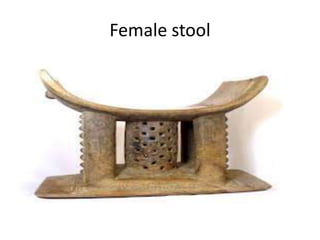
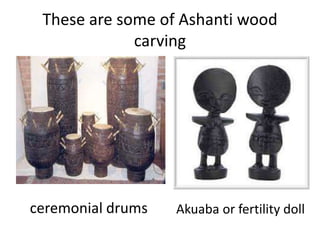
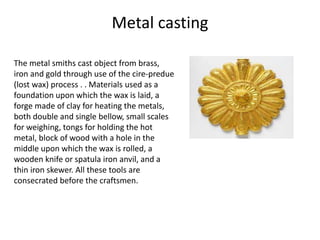
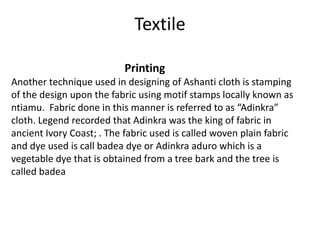
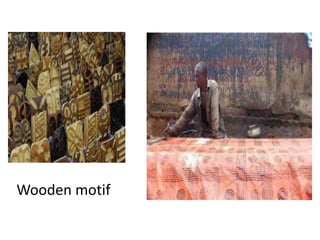
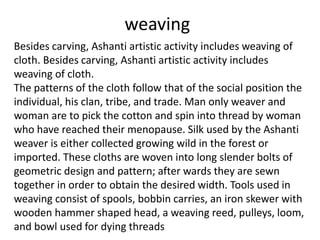
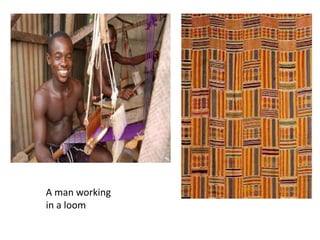
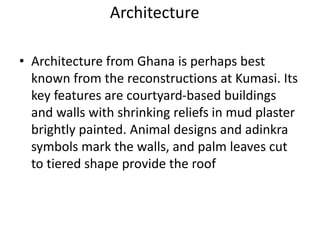
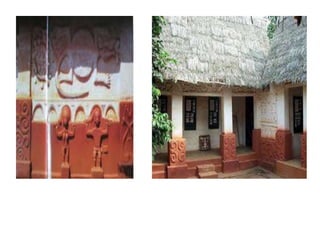
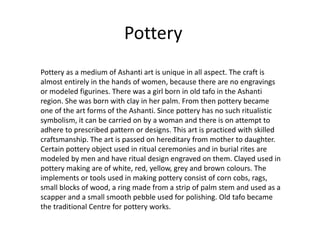
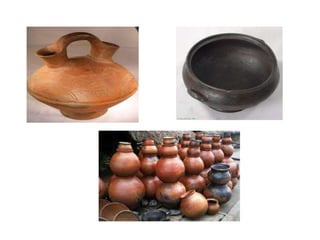
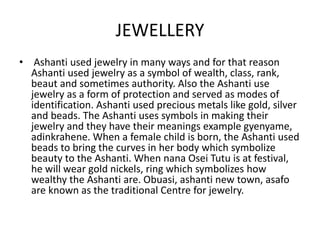
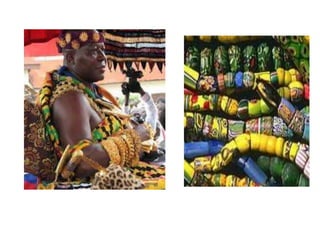

The document provides information on traditional African art from the Ashanti people of Ghana. It discusses various art forms including wood carving, metal casting, textile printing, weaving, pottery, sculpture, and jewelry. Sculptures included ceremonial drums, fertility dolls, and royal stools which symbolized clan unity. Metal smiths cast brass, iron, and gold objects using the lost wax process. Textiles incorporated stamped designs and woven patterns representing social positions. Architecture featured courtyard buildings with painted mud reliefs and palm leaf roofs. Pottery was primarily done by women using local clays and simple tools. Jewelry symbolized wealth, rank, and protection through symbolic motifs.


![Aft Of Africa In The Modern Era[1]](https://cdn.slidesharecdn.com/ss_thumbnails/aftofafricainthemodernera1-100317061224-phpapp01-thumbnail.jpg?width=640&height=640&fit=bounds)


