Geography of Mesopotamia What are the necessary geographic characteristics to sustain life? Why did civilization originate in Mesopotamia? How did Mesopotamia’s unique geography shape its culture?
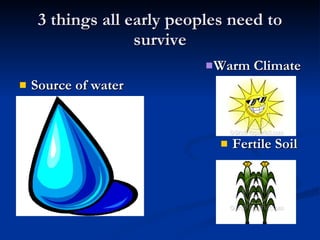
3 things all early peoples need to survive Warm Climate Source of water Fertile Soil
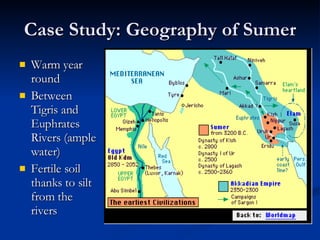
Case Study: Geography of Sumer Warm year round Between Tigris and Euphrates Rivers (ample water)‏ Fertile soil thanks to silt from the rivers
What’s so special about rivers? Melting snow and mountain rain swelled rivers, carrying soil to plains Overflow into  floodplain  – flat land bordering banks Deposited fine soil, or  silt , making land fertile and good for crops In a semiarid climate (with less than 10 inches of annual rainfall) rivers were essential for crops and drinking water
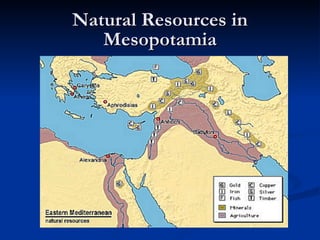
Natural Resources in Mesopotamia
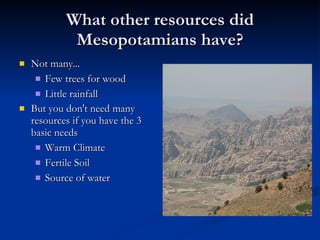
What other resources did Mesopotamians have? Not many... Few trees for wood Little rainfall But you don't need many resources if you have the 3 basic needs Warm Climate Fertile Soil Source of water
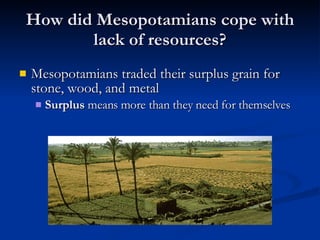
How did Mesopotamians cope with lack of resources? Mesopotamians traded their surplus grain for stone, wood, and metal Surplus  means more than they need for themselves
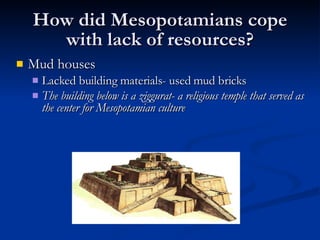
How did Mesopotamians cope with lack of resources? Mud houses  Lacked building materials- used mud bricks The building below is a ziggurat- a religious temple that served as the center for Mesopotamian culture
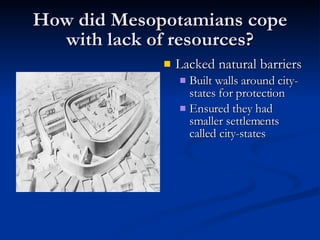
How did Mesopotamians cope with lack of resources? Lacked natural barriers Built walls around city-states for protection Ensured they had smaller settlements called city-states
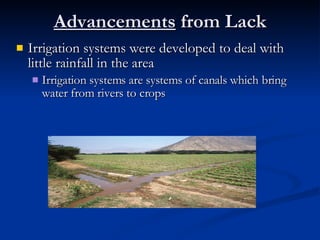
Advancements  from Lack Irrigation systems were developed to deal with little rainfall in the area Irrigation systems are systems of canals which bring water from rivers to crops
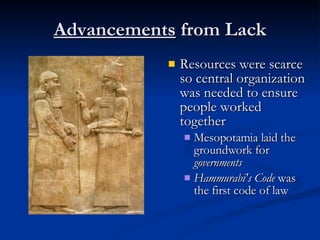
Advancements  from Lack Resources were scarce so central organization was needed to ensure people worked together Mesopotamia laid the groundwork for  governments Hammurabi's Code  was the first code of law
Presentation Summary The Tigris and Euphrates Rivers made the soil of Mesopotamia good for growing crops. Mesopotamia had few resources. They used what they had available to them and traded surplus crops to get other things they needed. From their lack of resources came advancements, like irrigation and government.
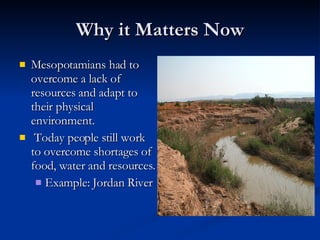
Why it Matters Now Mesopotamians had to overcome a lack of resources and adapt to their physical environment. Today people still work to overcome shortages of food, water and resources.  Example: Jordan River
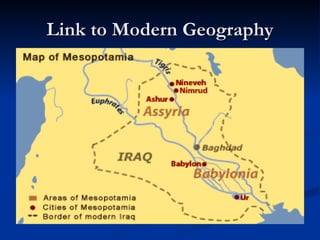
Link to Modern Geography

Geography Of Mesopotamia

  • 1.
    Geography of MesopotamiaWhat are the necessary geographic characteristics to sustain life? Why did civilization originate in Mesopotamia? How did Mesopotamia’s unique geography shape its culture?
  • 2.
    3 things allearly peoples need to survive Warm Climate Source of water Fertile Soil
  • 3.
    Case Study: Geographyof Sumer Warm year round Between Tigris and Euphrates Rivers (ample water)‏ Fertile soil thanks to silt from the rivers
  • 4.
    What’s so specialabout rivers? Melting snow and mountain rain swelled rivers, carrying soil to plains Overflow into floodplain – flat land bordering banks Deposited fine soil, or silt , making land fertile and good for crops In a semiarid climate (with less than 10 inches of annual rainfall) rivers were essential for crops and drinking water
  • 5.
  • 6.
    What other resourcesdid Mesopotamians have? Not many... Few trees for wood Little rainfall But you don't need many resources if you have the 3 basic needs Warm Climate Fertile Soil Source of water
  • 7.
    How did Mesopotamianscope with lack of resources? Mesopotamians traded their surplus grain for stone, wood, and metal Surplus means more than they need for themselves
  • 8.
    How did Mesopotamianscope with lack of resources? Mud houses Lacked building materials- used mud bricks The building below is a ziggurat- a religious temple that served as the center for Mesopotamian culture
  • 9.
    How did Mesopotamianscope with lack of resources? Lacked natural barriers Built walls around city-states for protection Ensured they had smaller settlements called city-states
  • 10.
    Advancements fromLack Irrigation systems were developed to deal with little rainfall in the area Irrigation systems are systems of canals which bring water from rivers to crops
  • 11.
    Advancements fromLack Resources were scarce so central organization was needed to ensure people worked together Mesopotamia laid the groundwork for governments Hammurabi's Code was the first code of law
  • 12.
    Presentation Summary TheTigris and Euphrates Rivers made the soil of Mesopotamia good for growing crops. Mesopotamia had few resources. They used what they had available to them and traded surplus crops to get other things they needed. From their lack of resources came advancements, like irrigation and government.
  • 13.
    Why it MattersNow Mesopotamians had to overcome a lack of resources and adapt to their physical environment. Today people still work to overcome shortages of food, water and resources. Example: Jordan River
  • 14.
    Link to ModernGeography