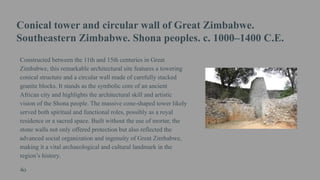
Conical tower andcircular wall of Great Zimbabwe.
Southeastern Zimbabwe. Shona peoples. c. 1000–1400 C.E.
Constructed between the 11th and 15th centuries in Great
Zimbabwe, this remarkable architectural site features a towering
conical structure and a circular wall made of carefully stacked
granite blocks. It stands as the symbolic core of an ancient
African city and highlights the architectural skill and artistic
vision of the Shona people. The massive cone-shaped tower likely
served both spiritual and functional roles, possibly as a royal
residence or a sacred space. Built without the use of mortar, the
stone walls not only offered protection but also reflected the
advanced social organization and ingenuity of Great Zimbabwe,
making it a vital archaeological and cultural landmark in the
region’s history.
4o
3.
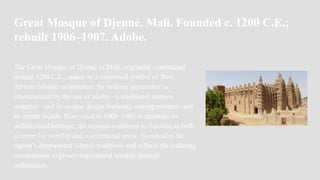
Great Mosque ofDjenné. Mali. Founded c. 1200 C.E.;
rebuilt 1906–1907. Adobe.
The Great Mosque of Djenné in Mali, originally constructed
around 1200 C.E., stands as a renowned symbol of West
African Islamic architecture. Its striking appearance is
characterized by the use of adobe—a traditional earthen
material—and its unique design featuring soaring minarets and
an ornate façade. Renovated in 1906–1907 to maintain its
architectural heritage, the mosque continues to function as both
a center for worship and a communal space. It embodies the
region’s deep-rooted Islamic traditions and reflects the enduring
commitment to preserving cultural identity through
architecture.
4.
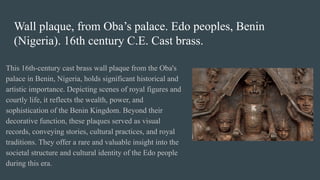
Wall plaque, fromOba’s palace. Edo peoples, Benin
(Nigeria). 16th century C.E. Cast brass.
This 16th-century cast brass wall plaque from the Oba's
palace in Benin, Nigeria, holds significant historical and
artistic importance. Depicting scenes of royal figures and
courtly life, it reflects the wealth, power, and
sophistication of the Benin Kingdom. Beyond their
decorative function, these plaques served as visual
records, conveying stories, cultural practices, and royal
traditions. They offer a rare and valuable insight into the
societal structure and cultural identity of the Edo people
during this era.
5.
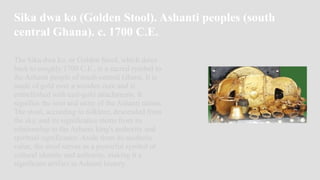
Sika dwa ko(Golden Stool). Ashanti peoples (south
central Ghana). c. 1700 C.E.
The Sika dwa ko, or Golden Stool, which dates
back to roughly 1700 C.E., is a sacred symbol to
the Ashanti people of south-central Ghana. It is
made of gold over a wooden core and is
embellished with cast-gold attachments. It
signifies the soul and unity of the Ashanti nation.
The stool, according to folklore, descended from
the sky, and its significance stems from its
relationship to the Ashanti king's authority and
spiritual significance. Aside from its aesthetic
value, the stool serves as a powerful symbol of
cultural identity and authority, making it a
significant artifact in Ashanti history.
6.
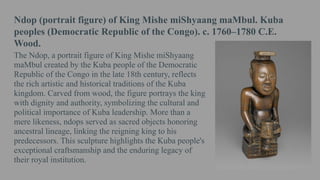
Ndop (portrait figure)of King Mishe miShyaang maMbul. Kuba
peoples (Democratic Republic of the Congo). c. 1760–1780 C.E.
Wood.
The Ndop, a portrait figure of King Mishe miShyaang
maMbul created by the Kuba people of the Democratic
Republic of the Congo in the late 18th century, reflects
the rich artistic and historical traditions of the Kuba
kingdom. Carved from wood, the figure portrays the king
with dignity and authority, symbolizing the cultural and
political importance of Kuba leadership. More than a
mere likeness, ndops served as sacred objects honoring
ancestral lineage, linking the reigning king to his
predecessors. This sculpture highlights the Kuba people's
exceptional craftsmanship and the enduring legacy of
their royal institution.
7.
References
Great Zimbabwe." KhanAcademy, https://www.khanacademy.org/humanities/art-africa/southern-africa/zimbabwe/a/great-zimbabwe.
"Great Mosque of Djenné." Khan Academy,
https://www.khanacademy.org/humanities/ap-art-history/africa-apah/west-africa-apah/a/great-mosque-of-djenne.
"Benin Plaque: Equestrian Oba and Attendants." Khan Academy,
https://www.khanacademy.org/humanities/ap-art-history/africa-apah/west-africa-apah/a/benin-plaque-equestrian-oba-and-attendants.
"Golden Stool (Sika Dwa Kofi), Asante Peoples." Smarthistory, https://smarthistory.org/sika-dwa-kofi-golden-stool/.




![Aft Of Africa In The Modern Era[1]](https://cdn.slidesharecdn.com/ss_thumbnails/aftofafricainthemodernera1-100317061224-phpapp01-thumbnail.jpg?width=640&height=640&fit=bounds)


