


Chapter 4: Scoring and Judging Strategies Katherine Bozec and Rick Reed ARTE 387/687
Objective/Subjective Distinction These terms have been used to describe test types, however, a better use would be the way a test is scored. Objective is not dependent on the mind, it is actual facts, every scorer comes to the same results Subjective is dependent on the mind or an individual’s perception for existence and feelings, the scorers may have different results
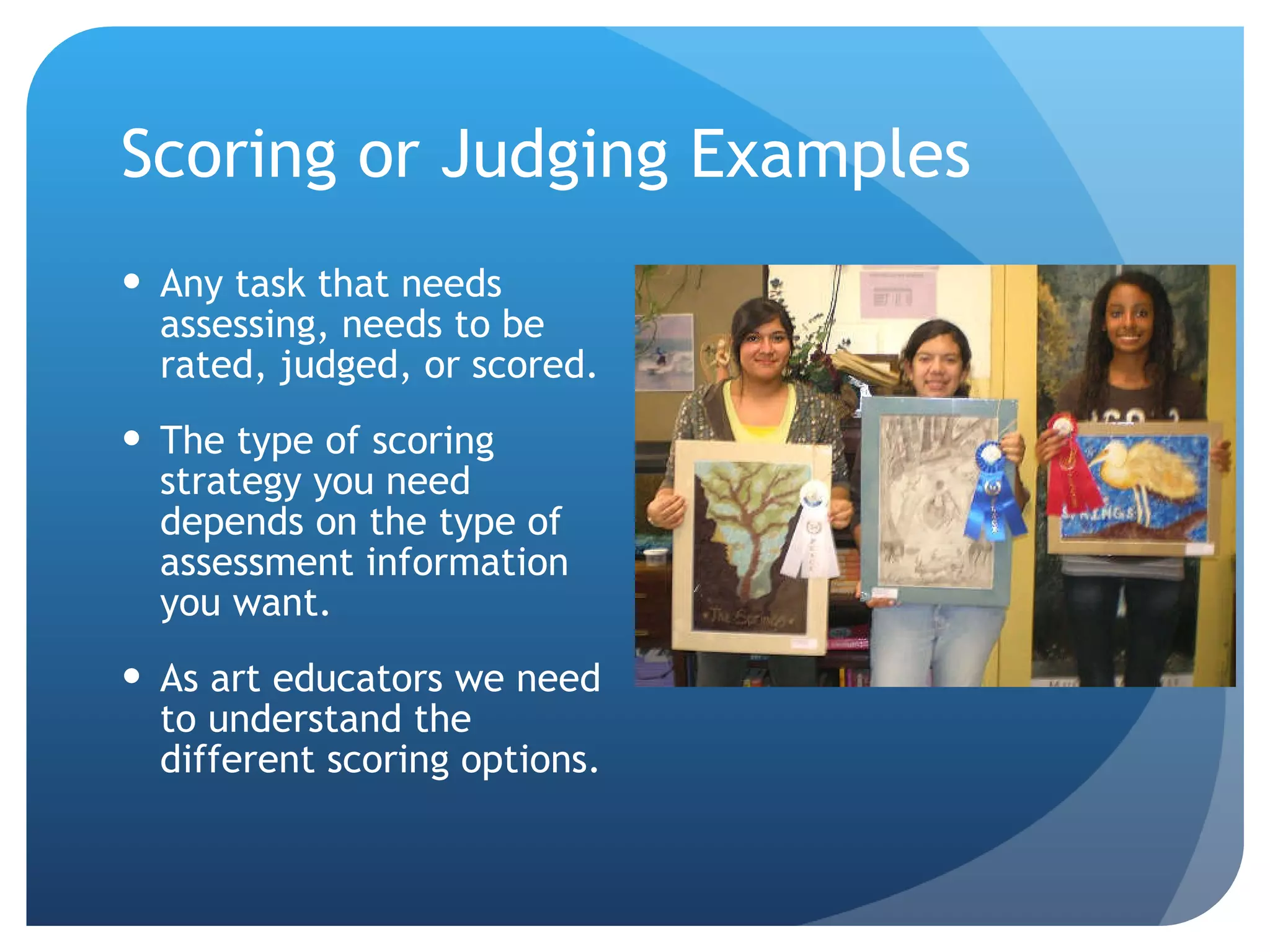
Scoring or Judging Examples Any task that needs assessing, needs to be rated, judged, or scored. The type of scoring strategy you need depends on the type of assessment information you want. As art educators we need to understand the different scoring options.
Checklists Checklists specify behaviors, characteristics, processes, etc. and provide a place to record whether they are present or missing. Checklists are useful for formative and summative assessment. Checklists are used to indicate many things in assessing art and the thinking processes behind the art.
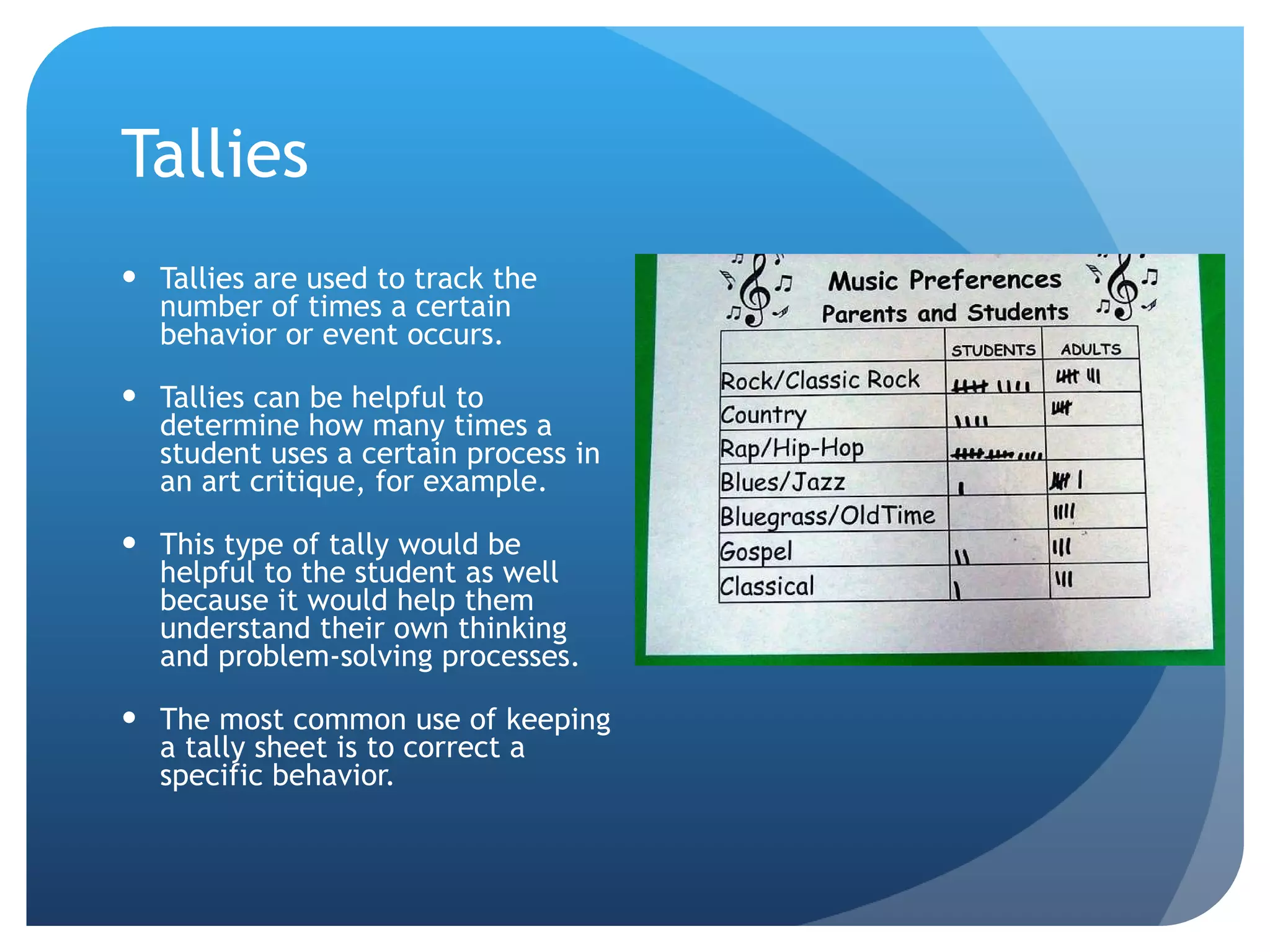
Tallies Tallies are used to track the number of times a certain behavior or event occurs. Tallies can be helpful to determine how many times a student uses a certain process in an art critique, for example. This type of tally would be helpful to the student as well because it would help them understand their own thinking and problem-solving processes. The most common use of keeping a tally sheet is to correct a specific behavior.
Rating Scales Rating scales- rely on a numerical, verbal or graphic system for translating judgments of quality or degree. Appropriate for examining problem- solving processes, products, and attitudes or motivation.  Emphasizes cognitive processes of reflecting and judgment/ evaluating.
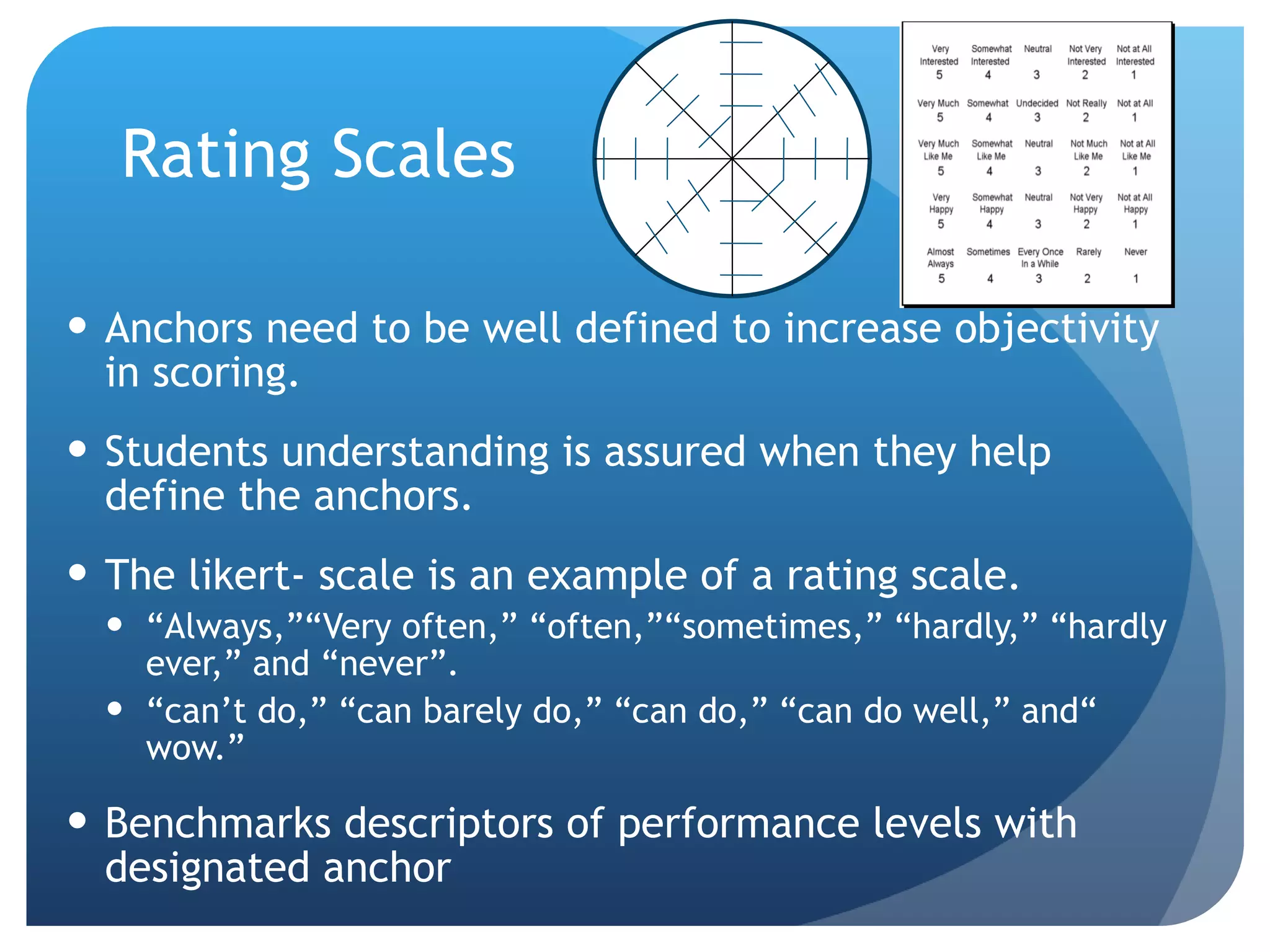
Rating Scales Anchors need to be well defined to increase objectivity in scoring. Students understanding is assured when they help define the anchors. The likert- scale is an example of a rating scale. “ Always,”“Very often,” “often,”“sometimes,” “hardly,” “hardly ever,” and “never”. “ can’t do,” “can barely do,” “can do,” “can do well,” and“ wow.” Benchmarks descriptors of performance levels with designated anchor
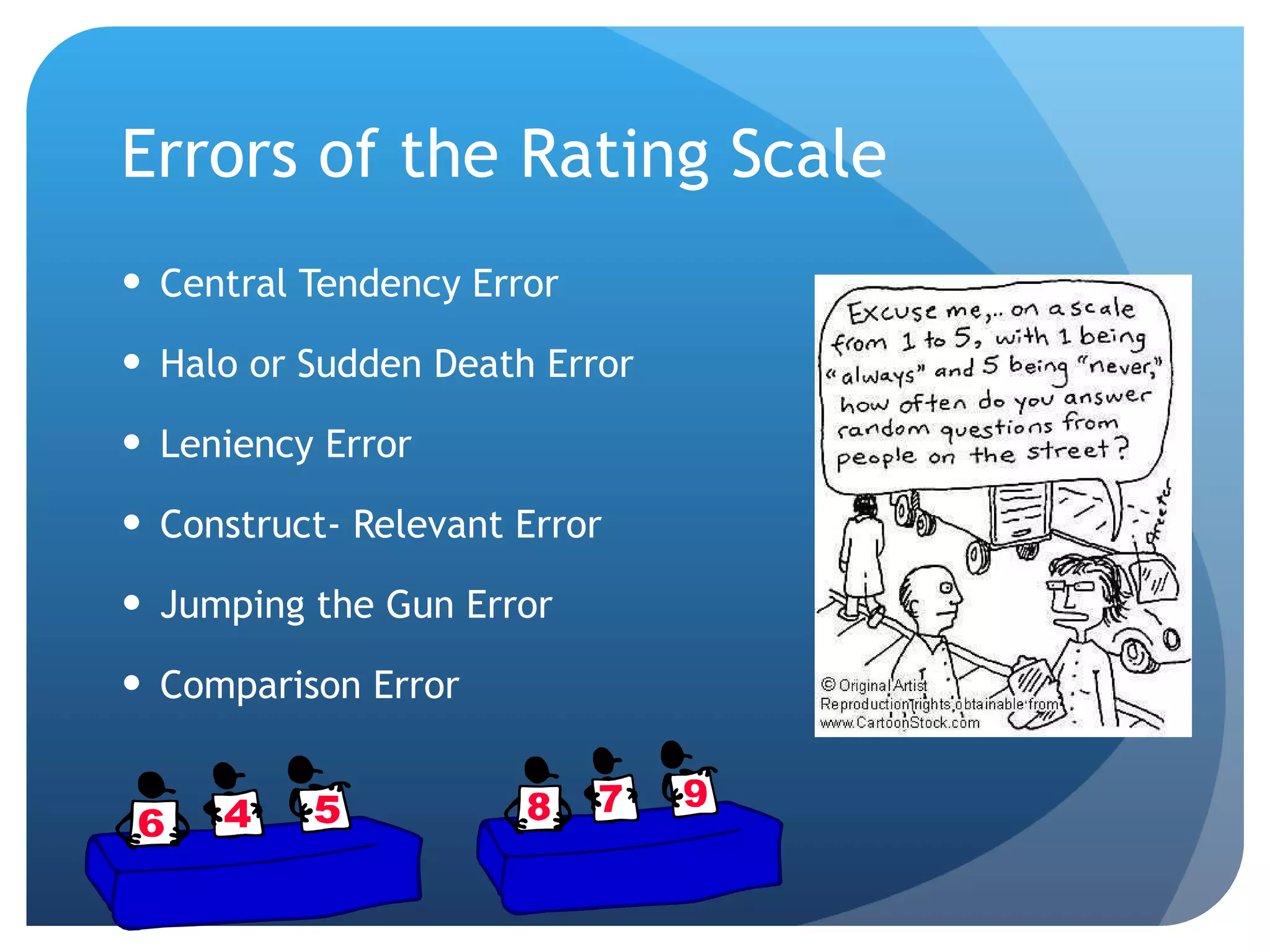
Errors of the Rating Scale Central Tendency Error Halo or Sudden Death Error Leniency Error Construct- Relevant Error Jumping the Gun Error Comparison Error
Critiques Strategy takes place during or after completion of the art performance task and is focused on assessing that art performance task. Informal diagnostic assessment strategy pin points strength and weaknesses of a student Formative assessment Address intended purposes and objectives. Continuous assessment  Strategies- on going assessments with both formative and summative components Select performance task criteria to be discussed in the critique  Define achievement levels for each task criterion Assign scores for each achievement level Design a way for students to record their scores during the critique Critique Example
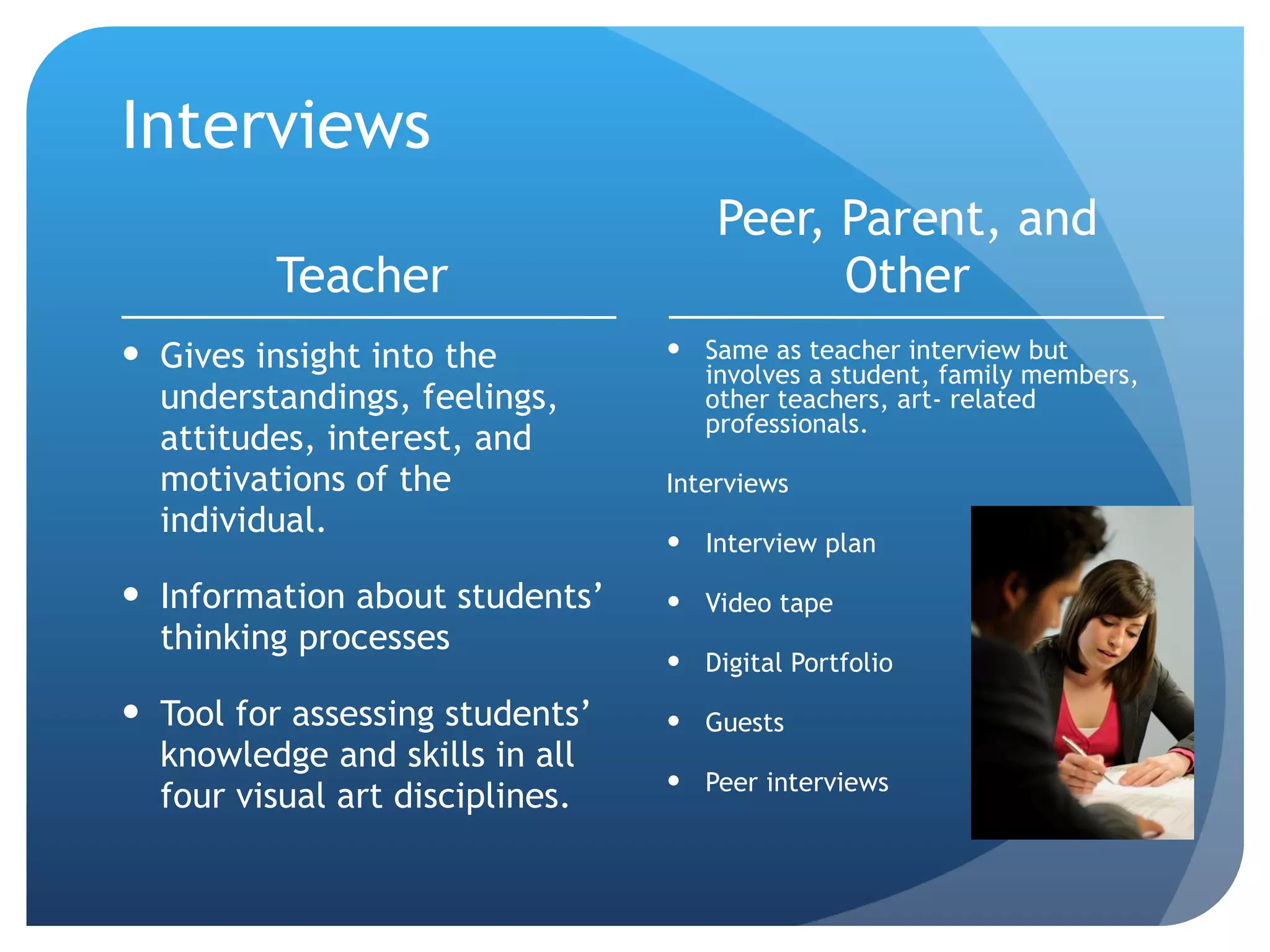
Interviews Teacher Gives insight into the understandings, feelings, attitudes, interest, and motivations of the individual. Information about students’ thinking processes  Tool for assessing students’ knowledge and skills in all four visual art disciplines. Peer, Parent, and Other Same as teacher interview but involves a student, family members, other teachers, art- related professionals. Interviews  Interview plan Video tape Digital Portfolio  Guests Peer interviews
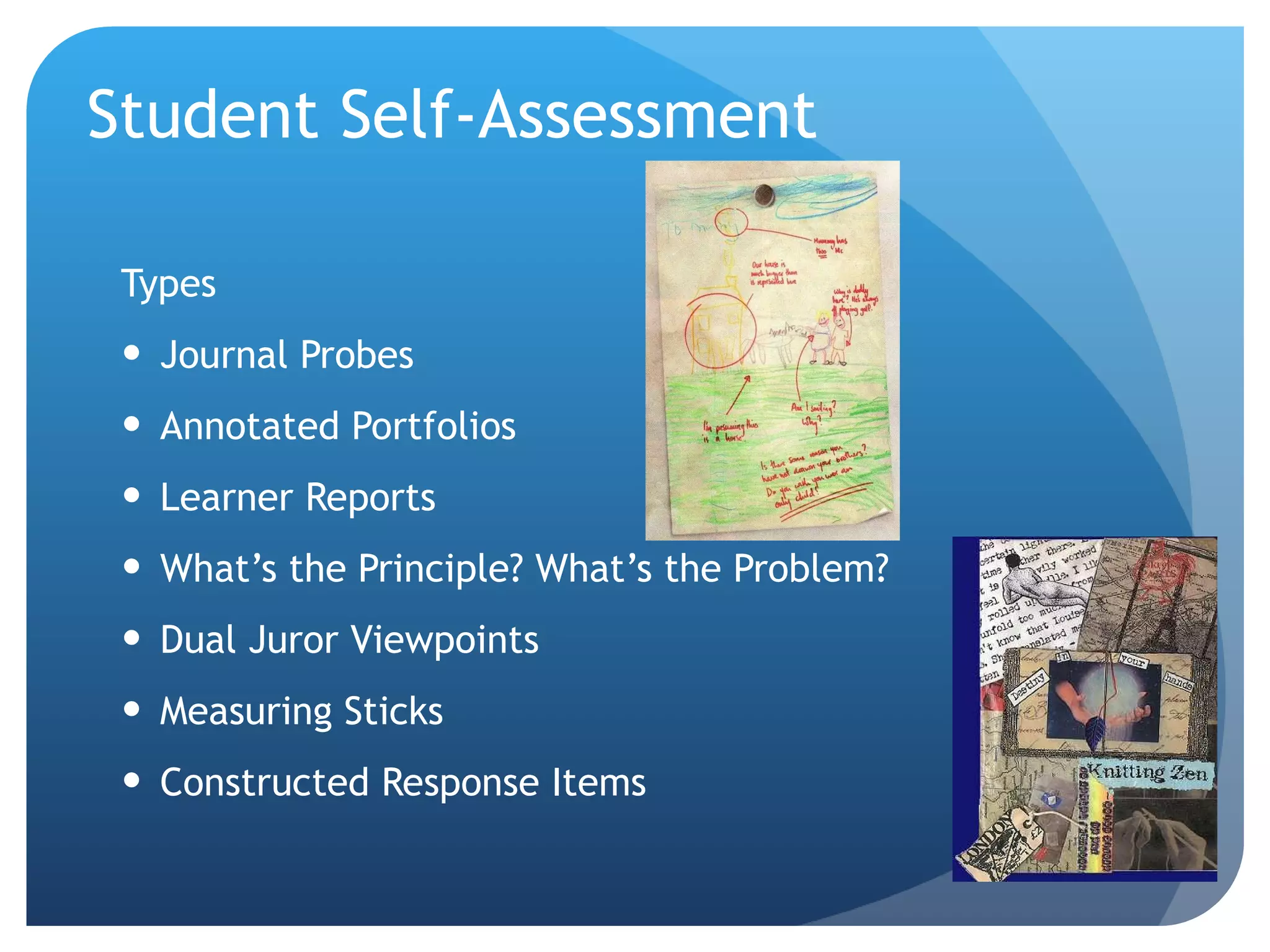
Student Self-Assessment Types Journal Probes Annotated Portfolios Learner Reports What’s the Principle? What’s the Problem? Dual Juror Viewpoints Measuring Sticks Constructed Response Items
Observations Informal or structured Indicates students’ behaviors, habits, and also how well instruction is working. Variables to Assessing Using Observation Techniques Students Attitudes Students Perceptions Students Work Habits Students Thinking Processes
Review & Questions
Jeopardy Choose a category.  You will be given the answer.  You must give the correct question.
Choose a point value. Choose a point value.
In this way of scoring every tester comes up with the same results
What is objective scoring?
This type of scoring specifies behaviors, characteristics, processes, etc. and provides a place to record whether they are present or missing.
What are checklists?
In this way of scoring the scorers may come up with different results.
What is subjective scoring?
These are used to track the number of times a certain behavior or event occurs.
What are tallies?
These scales rely on a numerical, verbal or graphic system for translating judgments of quality or degree.
What are rating scales?
These items need to be well defined to increase objectivity in scoring, they also keep a boat from moving.
What are anchors?
This is a way to assess student artwork and it rhymes with boutique.
What is critique?
When applying for a job hopefully you get one of these, these are also helpful for teachers, students, parents and peers.
What are interviews?
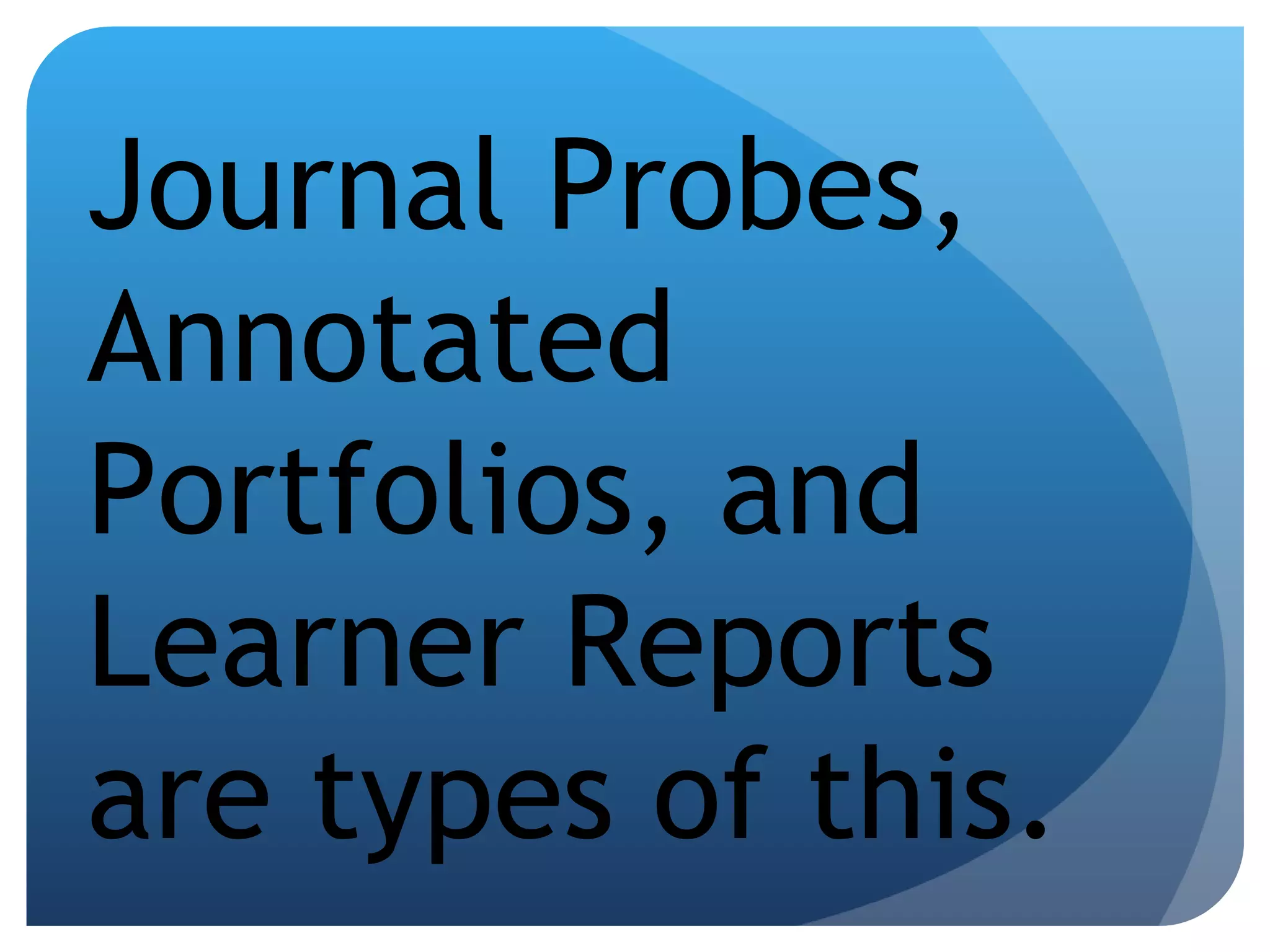
Journal Probes, Annotated Portfolios, and Learner Reports are types of this.
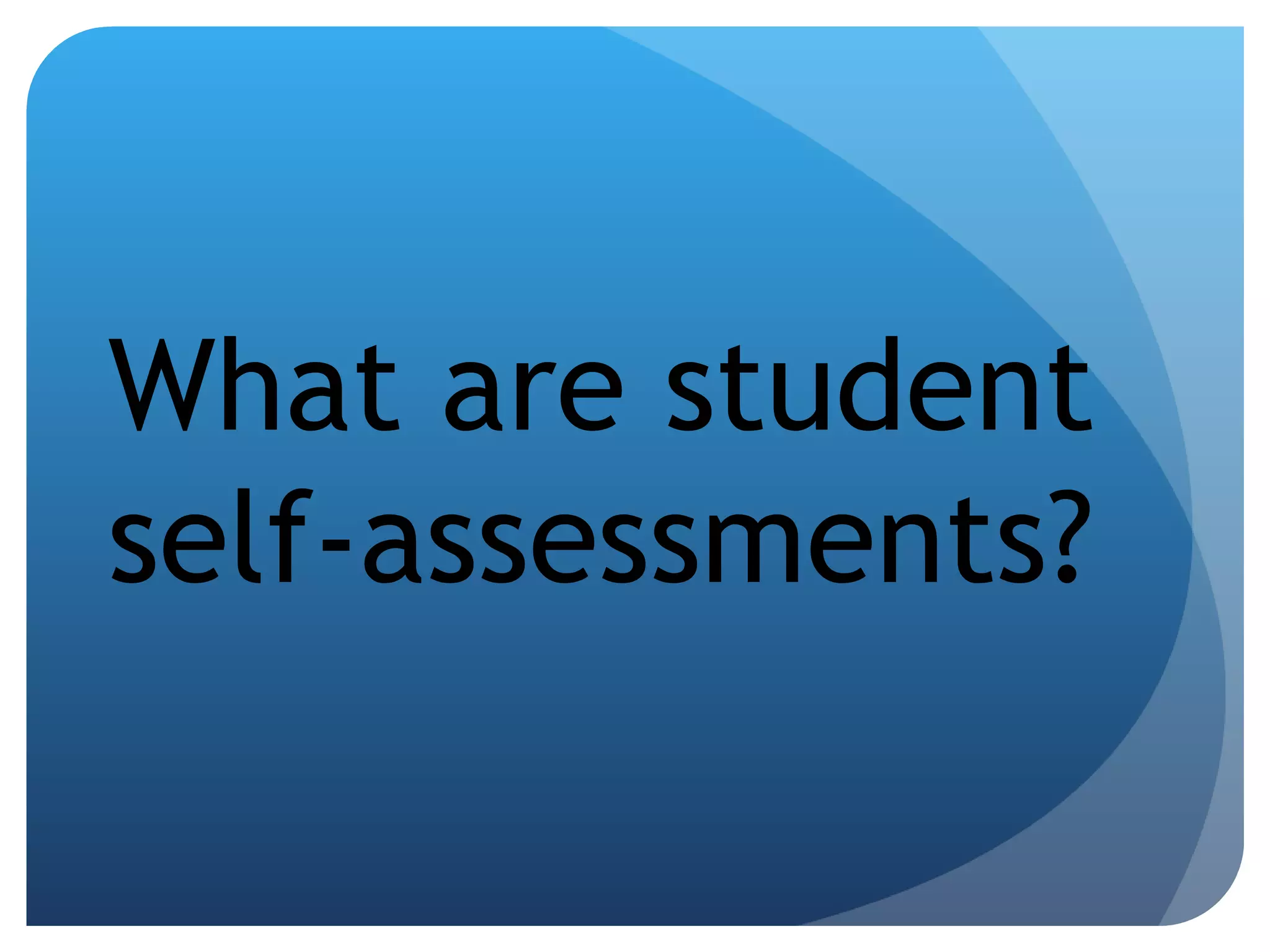
What are student self-assessments?
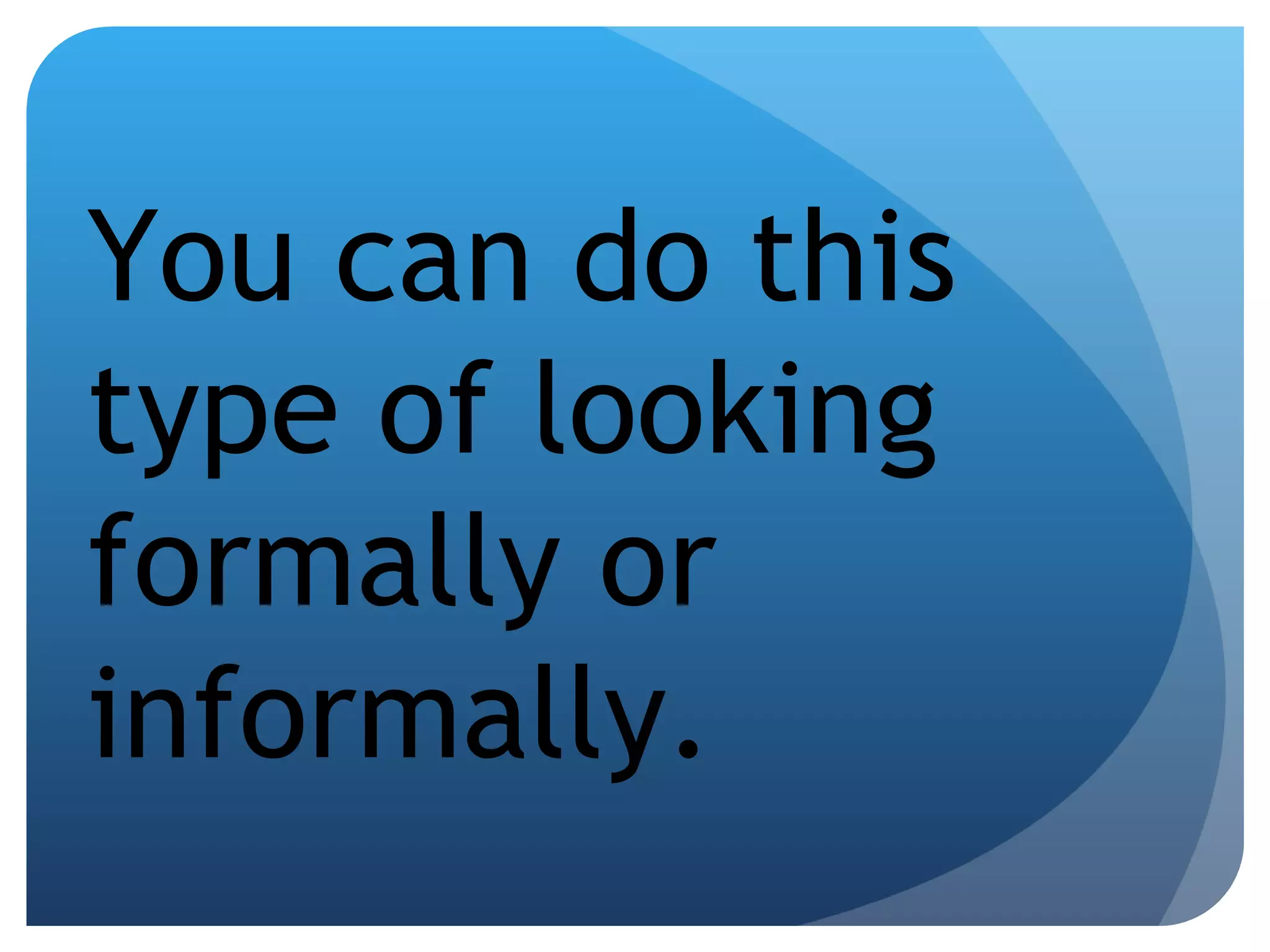
You can do this type of looking formally or informally.
What is observation?
Students Attitudes, Perceptions, Work Habits, and Thinking Processes are variables used during this assessment technique.
What is observation technique?
Final Jeopardy Make your wager
Central Tendency, Halo or Sudden Death, Leniency, Construct- Relevant, Jumping the Gun, and Comparison are these types of errors.
What are rating scale errors?

Arte387Ch4

  • 1.
    Chapter 4: Scoringand Judging Strategies Katherine Bozec and Rick Reed ARTE 387/687
  • 2.
    Objective/Subjective Distinction Theseterms have been used to describe test types, however, a better use would be the way a test is scored. Objective is not dependent on the mind, it is actual facts, every scorer comes to the same results Subjective is dependent on the mind or an individual’s perception for existence and feelings, the scorers may have different results
  • 3.
    Scoring or JudgingExamples Any task that needs assessing, needs to be rated, judged, or scored. The type of scoring strategy you need depends on the type of assessment information you want. As art educators we need to understand the different scoring options.
  • 4.
    Checklists Checklists specifybehaviors, characteristics, processes, etc. and provide a place to record whether they are present or missing. Checklists are useful for formative and summative assessment. Checklists are used to indicate many things in assessing art and the thinking processes behind the art.
  • 5.
    Tallies Tallies areused to track the number of times a certain behavior or event occurs. Tallies can be helpful to determine how many times a student uses a certain process in an art critique, for example. This type of tally would be helpful to the student as well because it would help them understand their own thinking and problem-solving processes. The most common use of keeping a tally sheet is to correct a specific behavior.
  • 6.
    Rating Scales Ratingscales- rely on a numerical, verbal or graphic system for translating judgments of quality or degree. Appropriate for examining problem- solving processes, products, and attitudes or motivation. Emphasizes cognitive processes of reflecting and judgment/ evaluating.
  • 7.
    Rating Scales Anchorsneed to be well defined to increase objectivity in scoring. Students understanding is assured when they help define the anchors. The likert- scale is an example of a rating scale. “ Always,”“Very often,” “often,”“sometimes,” “hardly,” “hardly ever,” and “never”. “ can’t do,” “can barely do,” “can do,” “can do well,” and“ wow.” Benchmarks descriptors of performance levels with designated anchor
  • 8.
    Errors of theRating Scale Central Tendency Error Halo or Sudden Death Error Leniency Error Construct- Relevant Error Jumping the Gun Error Comparison Error
  • 9.
    Critiques Strategy takesplace during or after completion of the art performance task and is focused on assessing that art performance task. Informal diagnostic assessment strategy pin points strength and weaknesses of a student Formative assessment Address intended purposes and objectives. Continuous assessment Strategies- on going assessments with both formative and summative components Select performance task criteria to be discussed in the critique Define achievement levels for each task criterion Assign scores for each achievement level Design a way for students to record their scores during the critique Critique Example
  • 10.
    Interviews Teacher Givesinsight into the understandings, feelings, attitudes, interest, and motivations of the individual. Information about students’ thinking processes Tool for assessing students’ knowledge and skills in all four visual art disciplines. Peer, Parent, and Other Same as teacher interview but involves a student, family members, other teachers, art- related professionals. Interviews Interview plan Video tape Digital Portfolio Guests Peer interviews
  • 11.
    Student Self-Assessment TypesJournal Probes Annotated Portfolios Learner Reports What’s the Principle? What’s the Problem? Dual Juror Viewpoints Measuring Sticks Constructed Response Items
  • 12.
    Observations Informal orstructured Indicates students’ behaviors, habits, and also how well instruction is working. Variables to Assessing Using Observation Techniques Students Attitudes Students Perceptions Students Work Habits Students Thinking Processes
  • 13.
  • 14.
    Jeopardy Choose acategory. You will be given the answer. You must give the correct question.
  • 15.
    Choose a pointvalue. Choose a point value.
  • 16.
    In this wayof scoring every tester comes up with the same results
  • 17.
  • 18.
    This type ofscoring specifies behaviors, characteristics, processes, etc. and provides a place to record whether they are present or missing.
  • 19.
  • 20.
    In this wayof scoring the scorers may come up with different results.
  • 21.
  • 22.
    These are usedto track the number of times a certain behavior or event occurs.
  • 23.
  • 24.
    These scales relyon a numerical, verbal or graphic system for translating judgments of quality or degree.
  • 25.
  • 26.
    These items needto be well defined to increase objectivity in scoring, they also keep a boat from moving.
  • 27.
  • 28.
    This is away to assess student artwork and it rhymes with boutique.
  • 29.
  • 30.
    When applying fora job hopefully you get one of these, these are also helpful for teachers, students, parents and peers.
  • 31.
  • 32.
    Journal Probes, AnnotatedPortfolios, and Learner Reports are types of this.
  • 33.
    What are studentself-assessments?
  • 34.
    You can dothis type of looking formally or informally.
  • 35.
  • 36.
    Students Attitudes, Perceptions,Work Habits, and Thinking Processes are variables used during this assessment technique.
  • 37.
  • 38.
  • 39.
    Central Tendency, Haloor Sudden Death, Leniency, Construct- Relevant, Jumping the Gun, and Comparison are these types of errors.
  • 40.
    What are ratingscale errors?