Downloaded 44 times


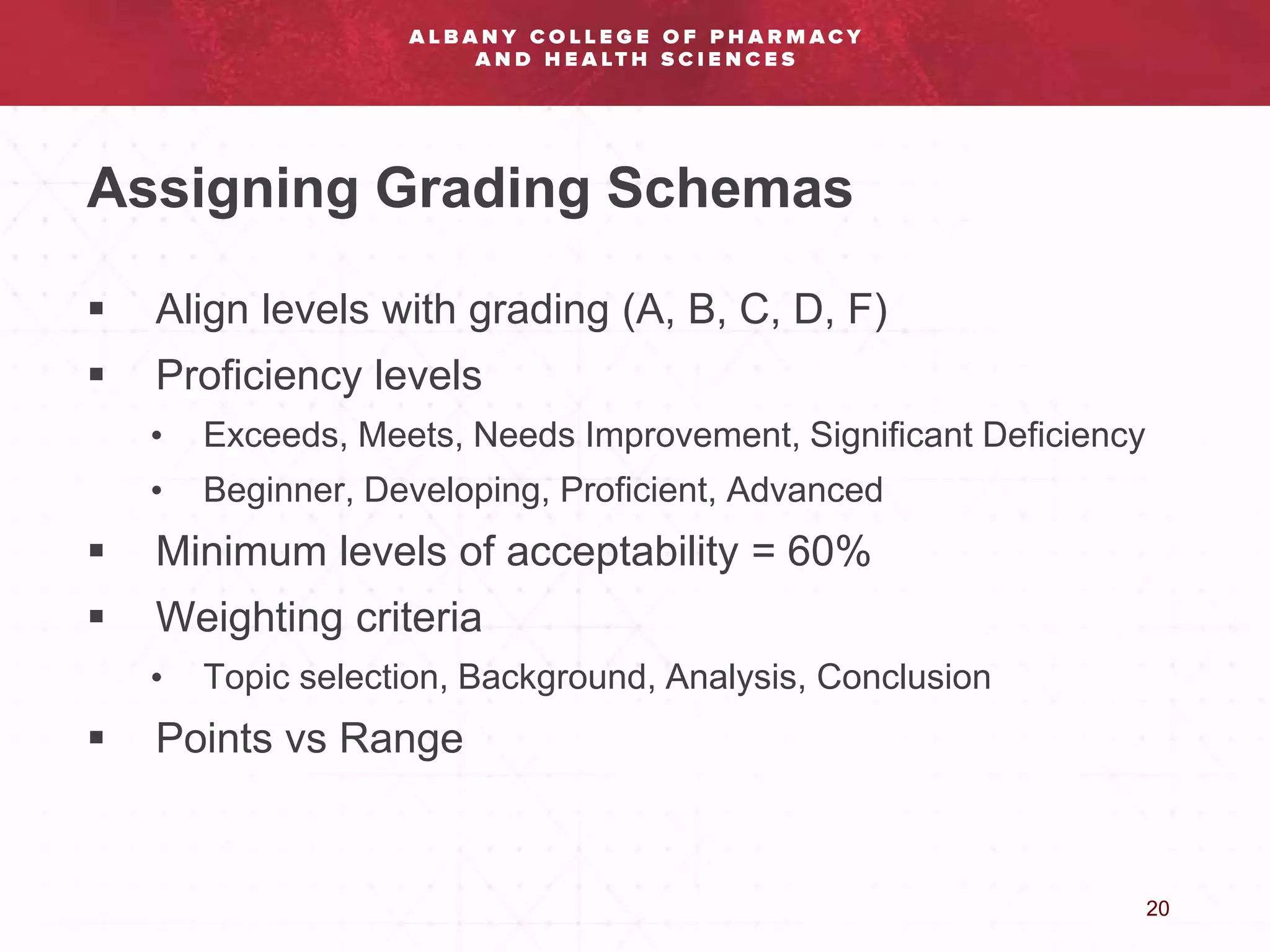


The document provides guidance on creating effective rubrics for student assessment, emphasizing the importance of focusing on learning objectives and selecting performance criteria that accurately reflect student capabilities. It outlines common pitfalls to avoid, such as measuring multiple criteria at once and grading non-essential features, while highlighting the benefits of well-structured rubrics in enhancing learning and ensuring consistency in grading. Additionally, it discusses methods for assessing and converting rubric scores into grades, ultimately aiming to improve the evaluation process in educational settings.


