Renaissance architecture
The Quattrocento                               Florence


       Return to classical decorative and building elements


Semicircular arch, ( Arc de mig punt)
Classical columns and pillars (Doric, Ionic and Corinthian orders),
Barrel ( volta de canó)


                           Human figures are very important at this moment


                                   Rediscovery of the power plants in search of light.
The Quattrocento                  Brunelleschi

 The dome of the Cathedral of Florence (Santa Maria de Fiore)
Brunelleschi was the outstanding architect of the Quattrocento
The Dome (1420-1436)
Example of mathematical and
geometric calculations


                                                   Final Judgement. Vasari And Zuccari. 1579


                       DOUBLE DOME
                                     Inside: hemispherical dome
                                     Outside: pointed dome
San Lorenzo   Brunelleschi (1422)
Médici Chapel
San Andrea de Mantua               Leon Battista Alberti


based on mathematical proportions


facade inspired by Roman triumphal arches

 plant   a barrel vaulted nave


  two side chapels.
Rucellai Palace of Florence    It has been constructed between
                               1446 and the 1451 by Bernardo
                               Rossellino on design of the Alberti
                               on order of Giovanni il Magnifico,
                               member of the illustrious Rucellai
                               family


                              The first Renaissance building
                              using a system of Classical
                              pilasters
Santa María Novella


  Alberti
Facade of Pitti Palace

 Brunelleschi
Palazzo Vecchio
Santa Croce Church
Buildings were smaller , and not as tall as Gothic constructions.
    This was because architects wanted to adapt them to the
                proportions of the human body.


Ornamentation was simple and austere.


     Architetcs tried to create a sense of order and harmony.
THE CINQUECENTO       Magnificient buildings were built under the
                  patronage of Popes Alexander VI, Julius II, Leo X
Rome.
                                   and Clement VII.
                                 Tendency to monumentality
                                 Lose of interest in decoration.

                                   Saint Peter’s Basilica

                                    3 architects
                               Bramante did the first project
                               Michelangelo changed the dome
                               Maderno completed the rest.
Michelangelo                    Basilica of Saint Peter. Dome

Gives a higher profile and delete the towers to give more importance to the dome
The Temple of San Pietro in Montorio    Donato Bramante

Inspired by the Roman
temple of Vesta
 Round, simple decoration
 but an original structure.
RENAISSANCE PAINTING


http://www.youtube.com/watch?v=X7I3IbrSmFk&feature=related
Renaissance painters used colour,
composition and background scenes,
such as buildings and landscapes, to
create an impression of space and
depth.
Inspired by classical Antiquity, their
figures had harmonious proportions
and aimed for beauty by idealising
faces, bodies and movements.
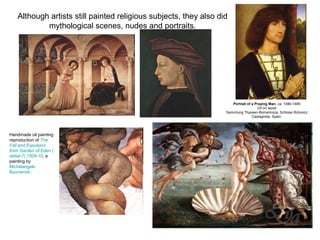
Although artists still painted religious subjects, they also did
           mythological scenes, nudes and portraits.


                                                                     Portrait of a Praying Man, ca. 1480-1485
                                                                                    Oil on wood
                                                                  Sammlung Thyssen-Bornemisza, Schloss Rohoncz
                                                                                 Castagnola, Spain


Handmade oil painting
reproduction of The
Fall and Expulsion
from Garden of Eden (
detail-7) 1509-10, a
painting by
Michelangelo
Buonarroti .
Pictures before perspective

                                                  They discovered perspective.


RAPHAEL: School of Athens


   "View of an Ideal City", a painting by Piero della Francesca.
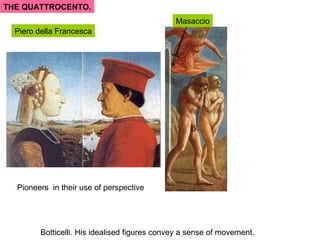
THE QUATTROCENTO.
                                               Masaccio
  Piero della Francesca


  Pioneers in their use of perspective


         Botticelli. His idealised figures convey a sense of movement.
THE QUATTROCENTO.


  Botticelli.       His idealised figures convey a sense of movement.
THE CINQUECENTO                                              Leonardo da Vinci

Brilliantly represented nature. He was a master of sfumato, a techhique which
              involved blurring outlines to create a sense of depht.


   His masterpieces are The Gioconda or Mona Lisa, and The Last Supper
Michelangelo Buonarroti


painted the frescoes in the Sistine
Chapel in Rome, scenes full of
movement and expression.
Raphael achieved perfection in his use       Titian, as a Venetian painter created
of colour, drawing and composition. His      highly colourful works of art. He is
works include frescos for the Vatican        famous for his portraits, and
palace and his madonnas or virgins           paintings     of    religious     and
                                             mythological themes.


                        .


                                              Titian. Woman with mirror
  Raphael, 'The small Cowper Madonna' 1505
RENAISSANCE SCULPTURE
Sculpture also followed the models of classical Antiquity


Great importance was given to proportions and anatomical studies of figures, and this was
of sculptures of nudes. Other types of sculpture which became popular were portrait sculp
statues

      most sculptures were madeof bronze or marble
                      The first Renaissance sculptor was Ghiberti.

         the Gates of Paradise, for the Baptistery of the Cathedral in Florence.
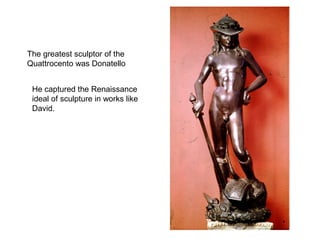
The greatest sculptor of the
Quattrocento was Donatello


 He captured the Renaissance
 ideal of sculpture in works like
 David.
Perseo
Benvenuto Cellini (Florencia, Italia: 1500-1571)
Michelangelo was the most important sculptor of the Cinquecento, and was
considered to be the master of Renaissance sculpture.
Art renaixement

Art renaixement

  • 1.
  • 2.
    The Quattrocento Florence Return to classical decorative and building elements Semicircular arch, ( Arc de mig punt) Classical columns and pillars (Doric, Ionic and Corinthian orders), Barrel ( volta de canó) Human figures are very important at this moment Rediscovery of the power plants in search of light.
  • 3.
    The Quattrocento Brunelleschi The dome of the Cathedral of Florence (Santa Maria de Fiore)
  • 4.
    Brunelleschi was theoutstanding architect of the Quattrocento
  • 5.
    The Dome (1420-1436) Exampleof mathematical and geometric calculations Final Judgement. Vasari And Zuccari. 1579 DOUBLE DOME Inside: hemispherical dome Outside: pointed dome
  • 6.
    San Lorenzo Brunelleschi (1422)
  • 7.
  • 8.
    San Andrea deMantua   Leon Battista Alberti based on mathematical proportions facade inspired by Roman triumphal arches plant a barrel vaulted nave two side chapels.
  • 9.
    Rucellai Palace ofFlorence It has been constructed between 1446 and the 1451 by Bernardo Rossellino on design of the Alberti on order of Giovanni il Magnifico, member of the illustrious Rucellai family The first Renaissance building using a system of Classical pilasters
  • 10.
  • 11.
    Facade of PittiPalace Brunelleschi
  • 12.
  • 14.
  • 15.
    Buildings were smaller, and not as tall as Gothic constructions. This was because architects wanted to adapt them to the proportions of the human body. Ornamentation was simple and austere. Architetcs tried to create a sense of order and harmony.
  • 20.
    THE CINQUECENTO Magnificient buildings were built under the patronage of Popes Alexander VI, Julius II, Leo X Rome. and Clement VII. Tendency to monumentality Lose of interest in decoration. Saint Peter’s Basilica 3 architects Bramante did the first project Michelangelo changed the dome Maderno completed the rest.
  • 21.
    Michelangelo Basilica of Saint Peter. Dome Gives a higher profile and delete the towers to give more importance to the dome
  • 23.
    The Temple ofSan Pietro in Montorio  Donato Bramante Inspired by the Roman temple of Vesta Round, simple decoration but an original structure.
  • 26.
  • 27.
    Renaissance painters usedcolour, composition and background scenes, such as buildings and landscapes, to create an impression of space and depth.
  • 28.
    Inspired by classicalAntiquity, their figures had harmonious proportions and aimed for beauty by idealising faces, bodies and movements.
  • 29.
    Although artists stillpainted religious subjects, they also did mythological scenes, nudes and portraits. Portrait of a Praying Man, ca. 1480-1485 Oil on wood Sammlung Thyssen-Bornemisza, Schloss Rohoncz Castagnola, Spain Handmade oil painting reproduction of The Fall and Expulsion from Garden of Eden ( detail-7) 1509-10, a painting by Michelangelo Buonarroti .
  • 30.
    Pictures before perspective They discovered perspective. RAPHAEL: School of Athens "View of an Ideal City", a painting by Piero della Francesca.
  • 31.
    THE QUATTROCENTO. Masaccio Piero della Francesca Pioneers in their use of perspective Botticelli. His idealised figures convey a sense of movement.
  • 32.
    THE QUATTROCENTO. Botticelli. His idealised figures convey a sense of movement.
  • 35.
    THE CINQUECENTO Leonardo da Vinci Brilliantly represented nature. He was a master of sfumato, a techhique which involved blurring outlines to create a sense of depht. His masterpieces are The Gioconda or Mona Lisa, and The Last Supper
  • 36.
    Michelangelo Buonarroti painted thefrescoes in the Sistine Chapel in Rome, scenes full of movement and expression.
  • 37.
    Raphael achieved perfectionin his use Titian, as a Venetian painter created of colour, drawing and composition. His highly colourful works of art. He is works include frescos for the Vatican famous for his portraits, and palace and his madonnas or virgins paintings of religious and mythological themes. . Titian. Woman with mirror Raphael, 'The small Cowper Madonna' 1505
  • 38.
  • 39.
    Sculpture also followedthe models of classical Antiquity Great importance was given to proportions and anatomical studies of figures, and this was of sculptures of nudes. Other types of sculpture which became popular were portrait sculp statues most sculptures were madeof bronze or marble The first Renaissance sculptor was Ghiberti. the Gates of Paradise, for the Baptistery of the Cathedral in Florence.
  • 40.
    The greatest sculptorof the Quattrocento was Donatello He captured the Renaissance ideal of sculpture in works like David.
  • 41.
  • 42.
    Michelangelo was themost important sculptor of the Cinquecento, and was considered to be the master of Renaissance sculpture.