Sandrine Le Bail AP Art History 
The Early Renaissance in Italy 
15th century
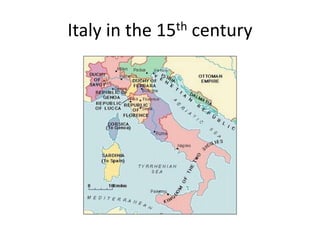
Italy in the 15th century
Florence 
• City-states 
• Intellectual center 
• Financial center 
• Artistic center 
• “Republic” dominated by the Medici family 
• Medici = great Patrons
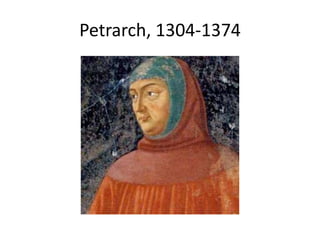
Petrarch, 1304-1374
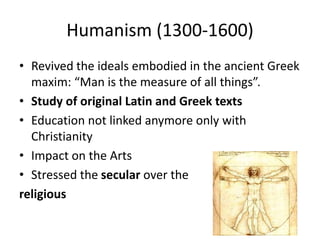
Humanism (1300-1600) 
• Revived the ideals embodied in the ancient Greek 
maxim: “Man is the measure of all things”. 
• Study of original Latin and Greek texts 
• Education not linked anymore only with 
Christianity 
• Impact on the Arts 
• Stressed the secular over the 
religious
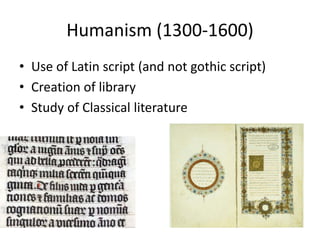
Humanism (1300-1600) 
• Use of Latin script (and not gothic script) 
• Creation of library 
• Study of Classical literature
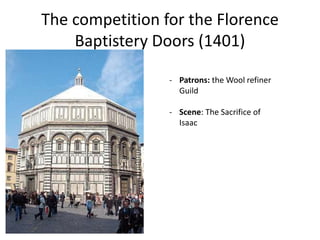
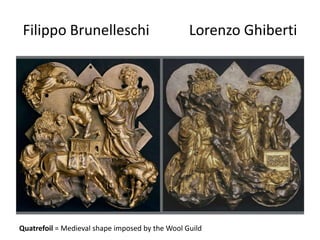
The competition for the Florence 
Baptistery Doors (1401) 
- Patrons: the Wool refiner 
Guild 
- Scene: The Sacrifice of 
Isaac
Filippo Brunelleschi Lorenzo Ghiberti 
Quatrefoil = Medieval shape imposed by the Wool Guild
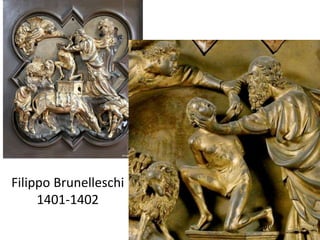
Filippo Brunelleschi 
1401-1402
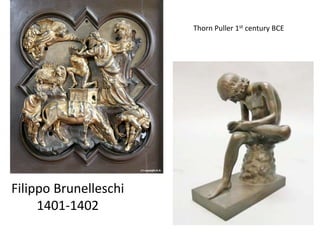
Filippo Brunelleschi 
1401-1402 
Thorn Puller 1st century BCE
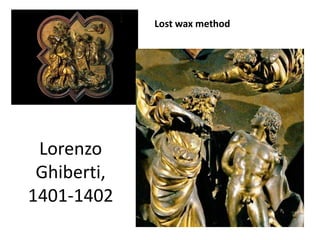
Lorenzo 
Ghiberti, 
1401-1402 
Lost wax method
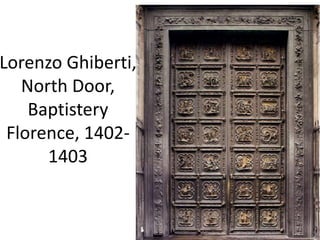
Lorenzo Ghiberti, 
North Door, 
Baptistery 
Florence, 1402- 
1403
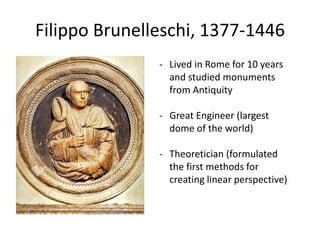
Filippo Brunelleschi, 1377-1446 
- Lived in Rome for 10 years 
and studied monuments 
from Antiquity 
- Great Engineer (largest 
dome of the world) 
- Theoretician (formulated 
the first methods for 
creating linear perspective)
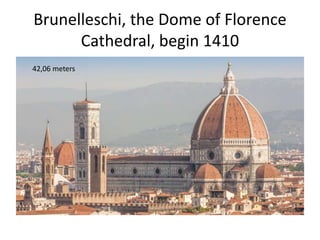
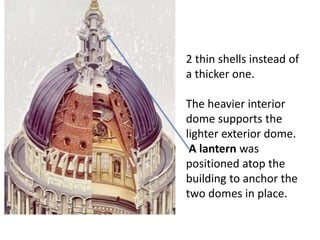
Brunelleschi, the Dome of Florence 
Cathedral, begin 1410 
42,06 meters
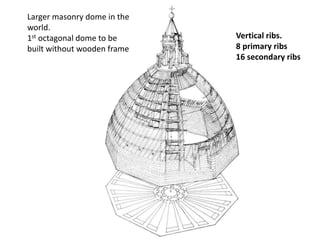
Vertical ribs. 
8 primary ribs 
16 secondary ribs 
Larger masonry dome in the 
world. 
1st octagonal dome to be 
built without wooden frame
2 thin shells instead of 
a thicker one. 
The heavier interior 
dome supports the 
lighter exterior dome. 
A lantern was 
positioned atop the 
building to anchor the 
two domes in place.
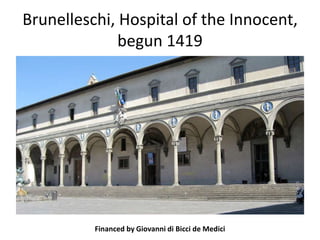
Brunelleschi, Hospital of the Innocent, 
begun 1419 
Financed by Giovanni di Bicci de Medici
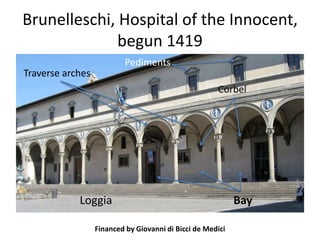
Brunelleschi, Hospital of the Innocent, 
begun 1419 
Loggia Bay 
Financed by Giovanni di Bicci de Medici 
Traverse arches 
Corbel 
Pediments
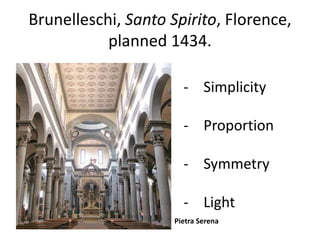
Brunelleschi, Santo Spirito, Florence, 
planned 1434. 
- Simplicity 
- Proportion 
- Symmetry 
- Light 
Pietra Serena
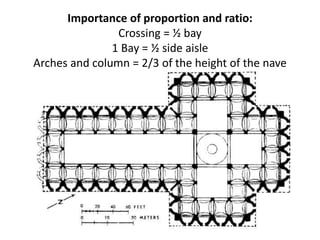
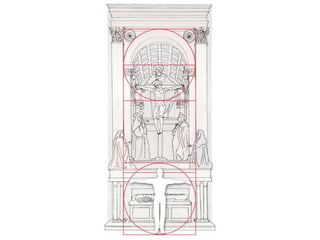
Importance of proportion and ratio: 
Crossing = ½ bay 
1 Bay = ½ side aisle 
Arches and column = 2/3 of the height of the nave
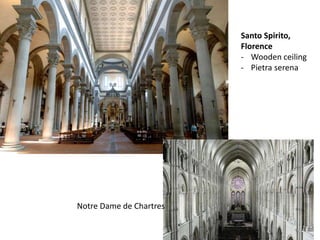
Notre Dame de Chartres 
Santo Spirito, 
Florence 
- Wooden ceiling 
- Pietra serena
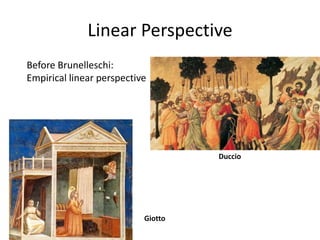
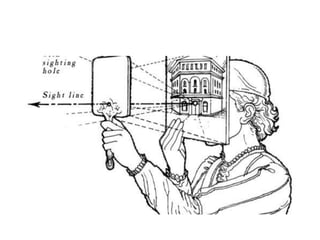
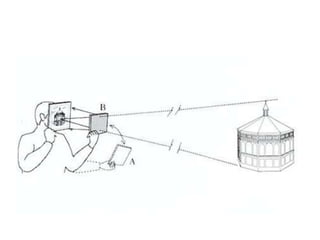
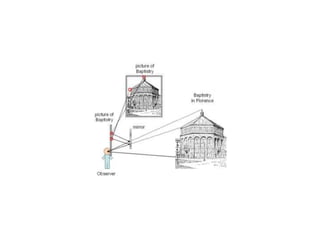
Linear Perspective 
Before Brunelleschi: 
Empirical linear perspective 
Duccio 
Giotto
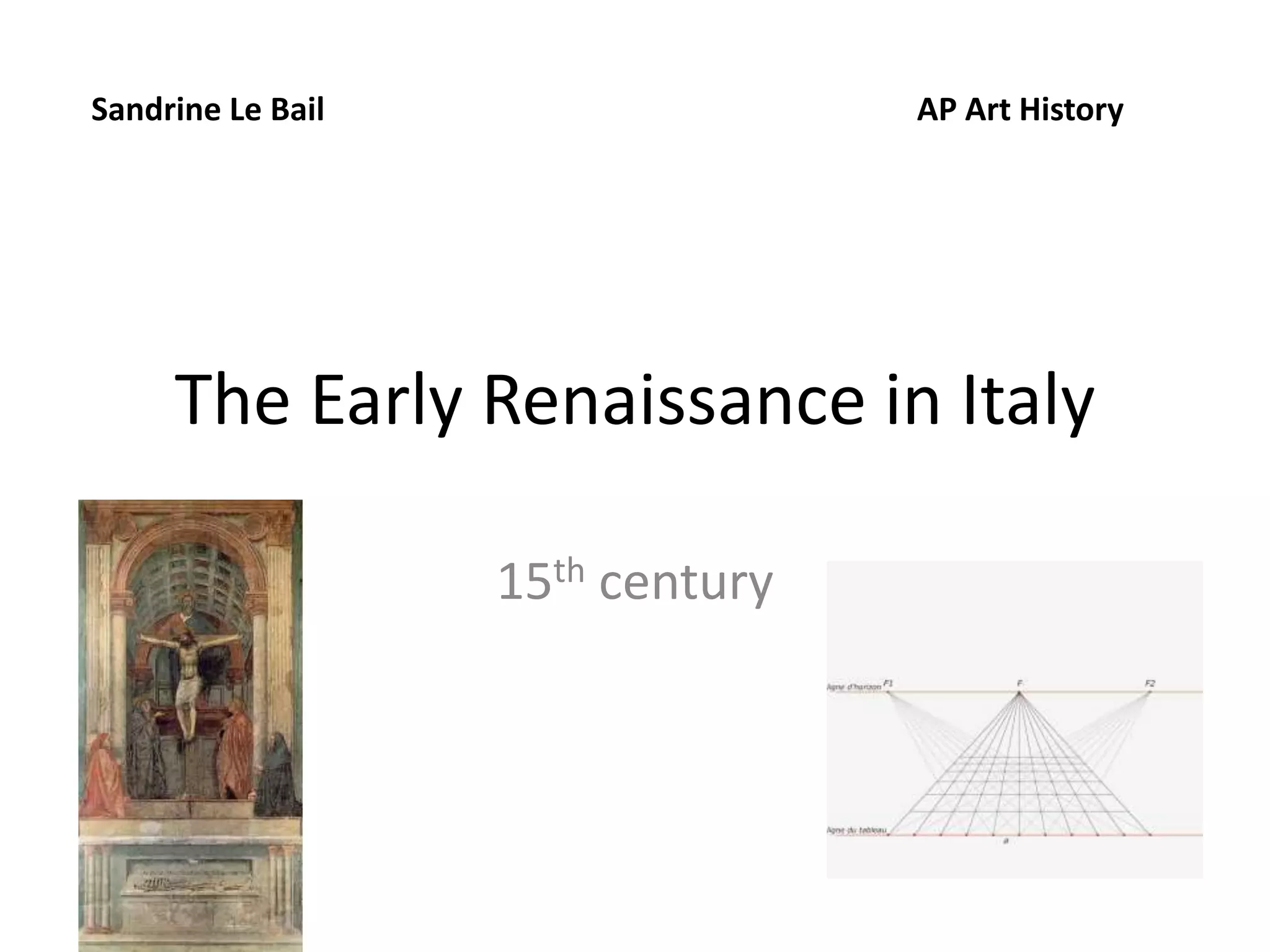
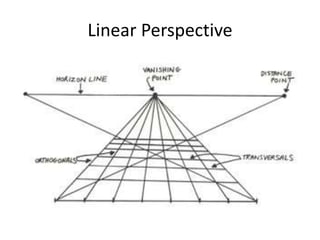
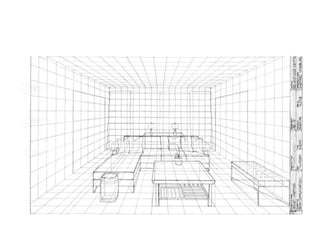
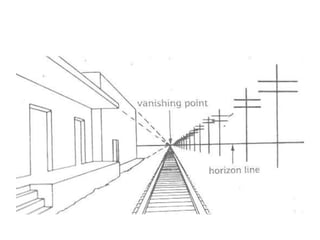
Linear Perspective 
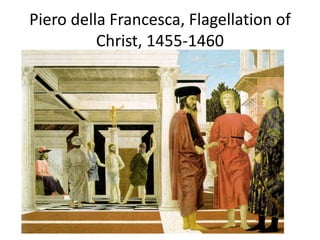
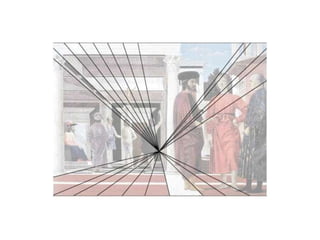
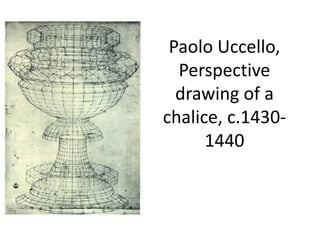
• Invented by Brunelleschi 
• Theorized by Leon Battista Alberti’s De Pictura 
• Based on the observation that distant objects 
seem smaller than closer ones.
Linear Perspective
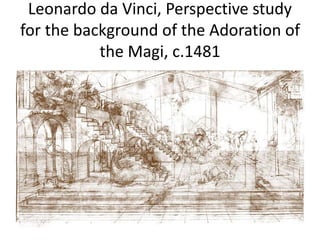
Leonardo da Vinci, Perspective study 
for the background of the Adoration of 
the Magi, c.1481
Piero della Francesca, Flagellation of 
Christ, 1455-1460
Paolo Uccello, 
Perspective 
drawing of a 
chalice, c.1430- 
1440
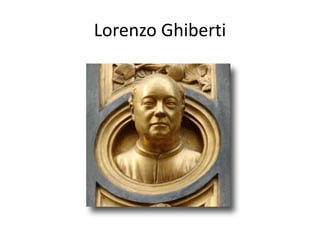
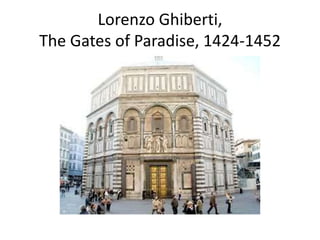
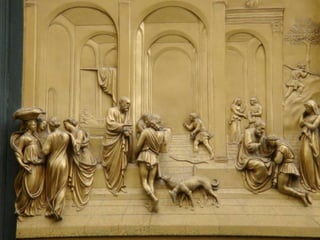
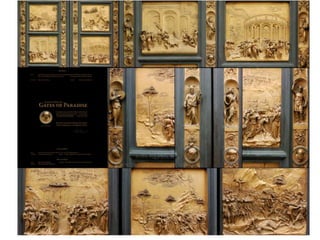
Lorenzo Ghiberti
Lorenzo Ghiberti, 
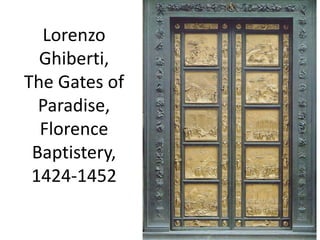
The Gates of Paradise, 1424-1452
Lorenzo 
Ghiberti, 
The Gates of 
Paradise, 
Florence 
Baptistery, 
1424-1452
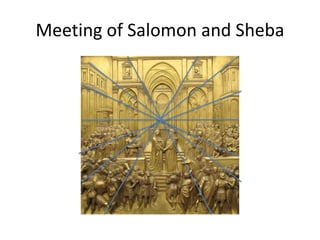
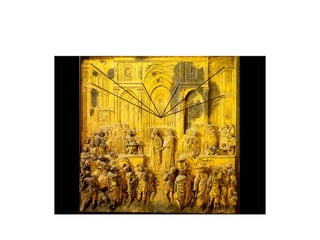
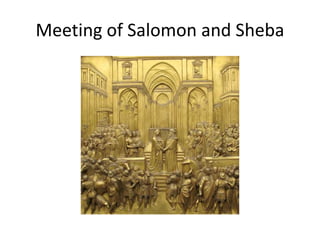
Meeting of Salomon and Sheba
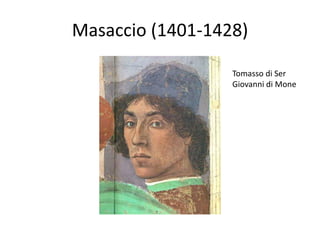
Masaccio (1401-1428) 
Tomasso di Ser 
Giovanni di Mone
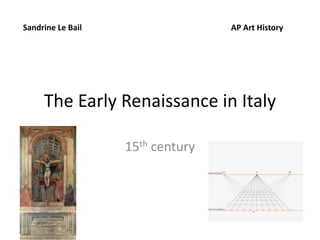
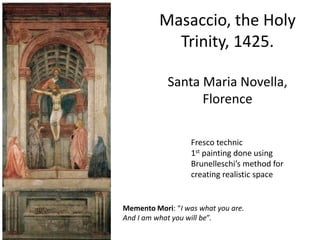
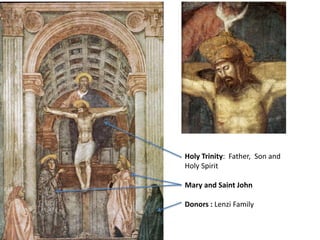
Masaccio, the Holy 
Trinity, 1425. 
Santa Maria Novella, 
Florence 
Fresco technic 
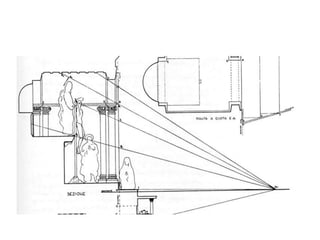
1st painting done using 
Brunelleschi’s method for 
creating realistic space 
Memento Mori: “I was what you are. 
And I am what you will be”.
Holy Trinity: Father, Son and 
Holy Spirit 
Mary and Saint John 
Donors : Lenzi Family
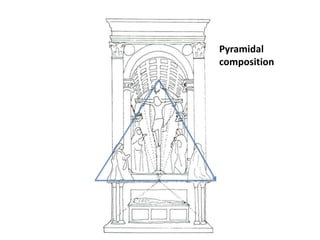
Pyramidal 
composition
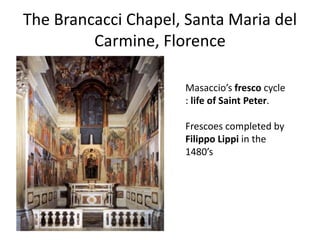
The Brancacci Chapel, Santa Maria del 
Carmine, Florence 
Masaccio’s fresco cycle 
: life of Saint Peter. 
Frescoes completed by 
Filippo Lippi in the 
1480’s
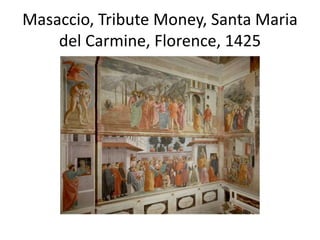
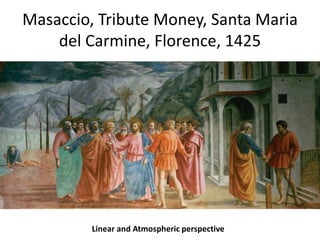
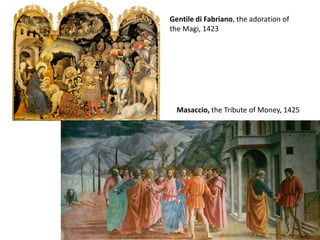
Masaccio, Tribute Money, Santa Maria 
del Carmine, Florence, 1425
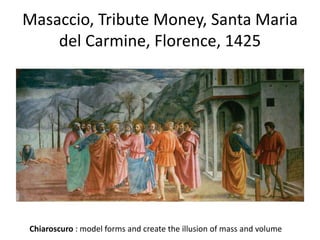
Masaccio, Tribute Money, Santa Maria 
del Carmine, Florence, 1425 
Chiaroscuro : model forms and create the illusion of mass and volume
Masaccio, Tribute Money, Santa Maria 
del Carmine, Florence, 1425 
Linear and Atmospheric perspective
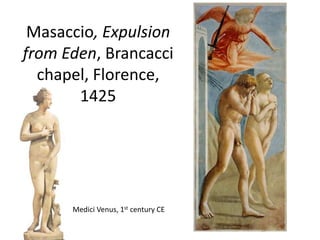
Masaccio, Expulsion 
from Eden, Brancacci 
chapel, Florence, 
1425 
Medici Venus, 1st century CE
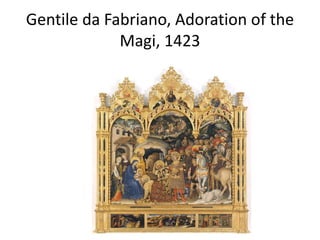
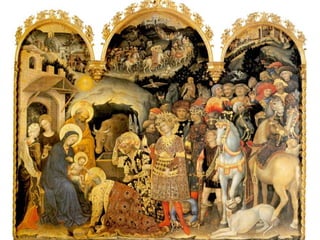
Gentile da Fabriano, Adoration of the 
Magi, 1423
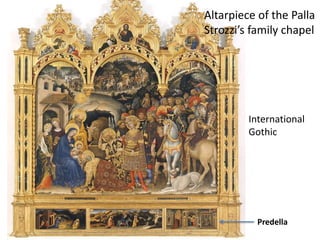
Altarpiece of the Palla 
Strozzi’s family chapel 
International 
Gothic 
Predella
Gentile di Fabriano, the adoration of 
the Magi, 1423 
Masaccio, the Tribute of Money, 1425
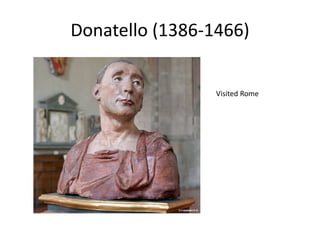
Donatello (1386-1466) 
Visited Rome
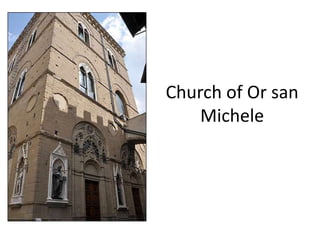
Church of Or san 
Michele
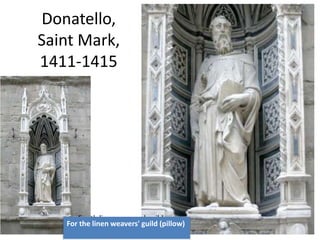
Donatello, 
Saint Mark, 
1411-1415 
For th linen weavers' guild 
For the linen weavers' guild (pillow)
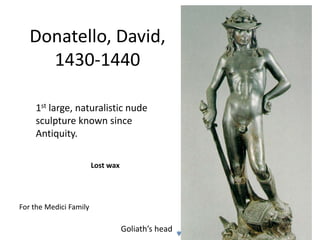
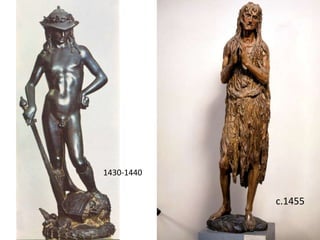
Donatello, David, 
1430-1440 
1st large, naturalistic nude 
sculpture known since 
Antiquity. 
For the Medici Family 
Goliath’s head 
Lost wax
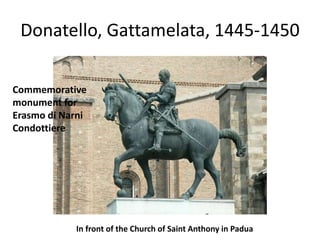
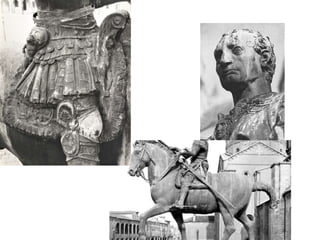
Donatello, Gattamelata, 1445-1450 
Commemorative 
monument for 
Erasmo di Narni 
Condottiere 
In front of the Church of Saint Anthony in Padua
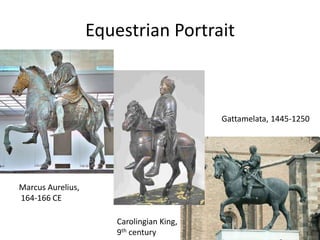
Equestrian Portrait 
Marcus Aurelius, 
164-166 CE 
Carolingian King, 
9th century 
Gattamelata, 1445-1250
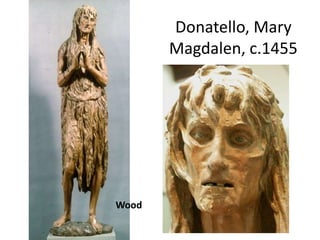
Donatello, Mary 
Magdalen, c.1455 
Wood
c.1455 
1430-1440
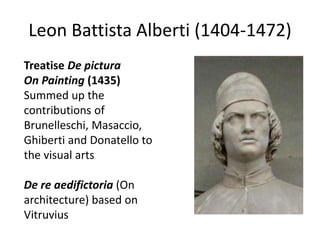
Leon Battista Alberti (1404-1472) 
Treatise De pictura 
On Painting (1435) 
Summed up the 
contributions of 
Brunelleschi, Masaccio, 
Ghiberti and Donatello to 
the visual arts 
De re aedifictoria (On 
architecture) based on 
Vitruvius
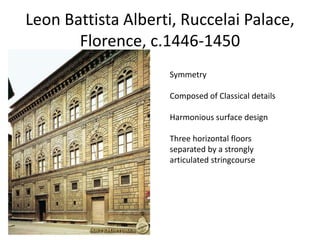
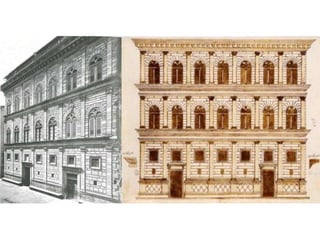
Leon Battista Alberti, Ruccelai Palace, 
Florence, c.1446-1450 
Symmetry 
Composed of Classical details 
Harmonious surface design 
Three horizontal floors 
separated by a strongly 
articulated stringcourse
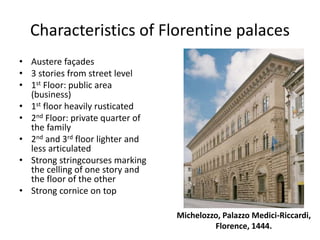
Characteristics of Florentine palaces 
• Austere façades 
• 3 stories from street level 
• 1st Floor: public area 
(business) 
• 1st floor heavily rusticated 
• 2nd Floor: private quarter of 
the family 
• 2nd and 3rd floor lighter and 
less articulated 
• Strong stringcourses marking 
the celling of one story and 
the floor of the other 
• Strong cornice on top 
Michelozzo, Palazzo Medici-Riccardi, 
Florence, 1444.
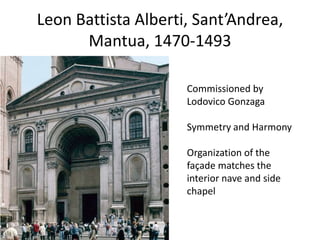
Leon Battista Alberti, Sant’Andrea, 
Mantua, 1470-1493 
Commissioned by 
Lodovico Gonzaga 
Symmetry and Harmony 
Organization of the 
façade matches the 
interior nave and side 
chapel
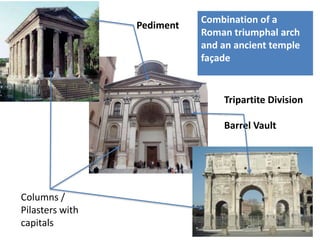
Pediment 
Columns / 
Pilasters with 
capitals 
Combination of a 
Roman triumphal arch 
and an ancient temple 
façade 
Tripartite Division 
Barrel Vault
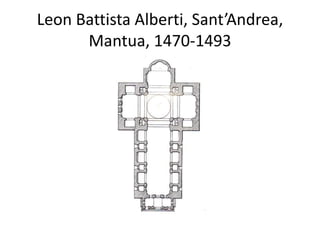
Leon Battista Alberti, Sant’Andrea, 
Mantua, 1470-1493
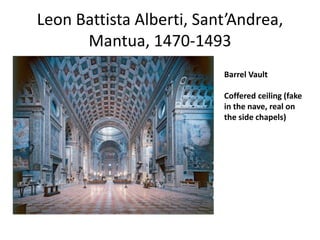
Leon Battista Alberti, Sant’Andrea, 
Mantua, 1470-1493 
Barrel Vault 
Coffered ceiling (fake 
in the nave, real on 
the side chapels)
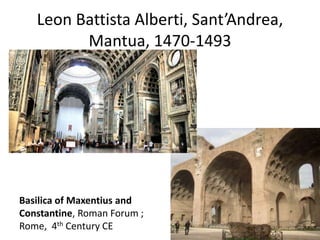
Leon Battista Alberti, Sant’Andrea, 
Mantua, 1470-1493 
Basilica of Maxentius and 
Constantine, Roman Forum ; 
Rome, 4th Century CE
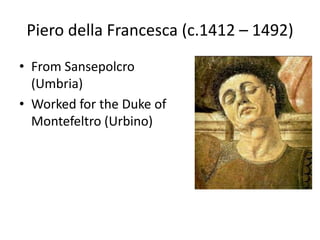
Piero della Francesca (c.1412 – 1492) 
• From Sansepolcro 
(Umbria) 
• Worked for the Duke of 
Montefeltro (Urbino)
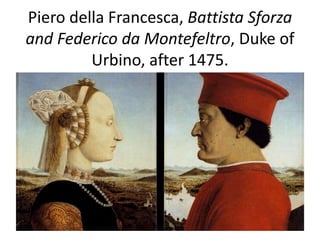
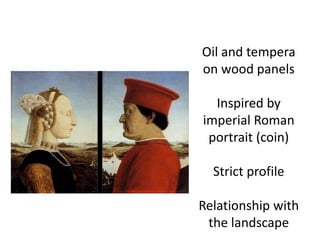
Piero della Francesca, Battista Sforza 
and Federico da Montefeltro, Duke of 
Urbino, after 1475.
Oil and tempera 
on wood panels 
Inspired by 
imperial Roman 
portrait (coin) 
Strict profile 
Relationship with 
the landscape
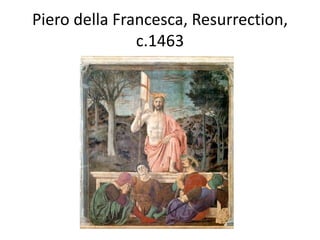
Piero della Francesca, Resurrection, 
c.1463
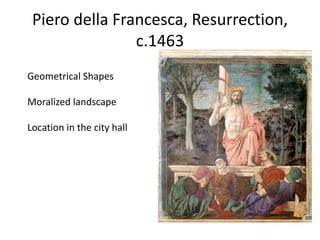
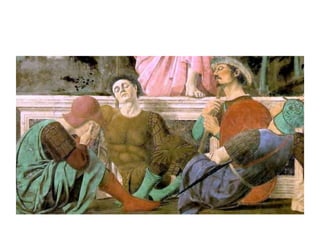
Piero della Francesca, Resurrection, 
c.1463 
Geometrical Shapes 
Moralized landscape 
Location in the city hall
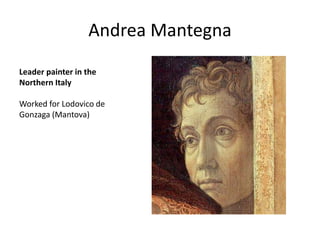
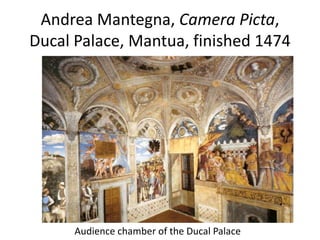
Andrea Mantegna 
Leader painter in the 
Northern Italy 
Worked for Lodovico de 
Gonzaga (Mantova)
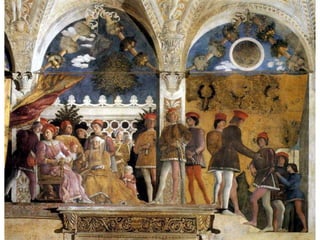
Andrea Mantegna, Camera Picta, 
Ducal Palace, Mantua, finished 1474 
Audience chamber of the Ducal Palace
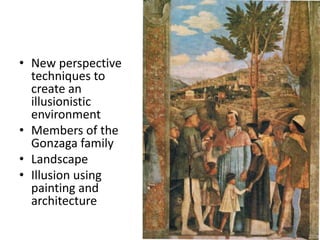
• New perspective 
techniques to 
create an 
illusionistic 
environment 
• Members of the 
Gonzaga family 
• Landscape 
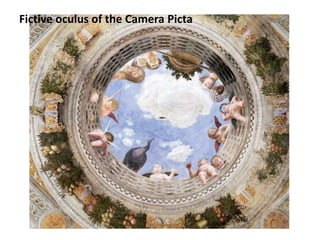
• Illusion using 
painting and 
architecture
Fictive oculus of the Camera Picta
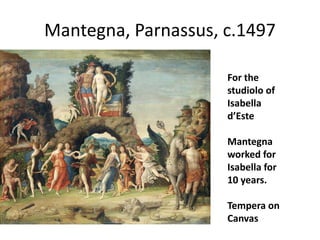
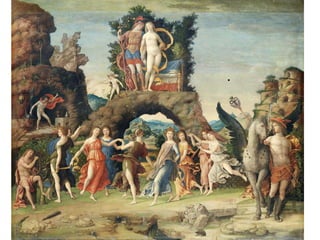
Mantegna, Parnassus, c.1497 
For the 
studiolo of 
Isabella 
d’Este 
Mantegna 
worked for 
Isabella for 
10 years. 
Tempera on 
Canvas
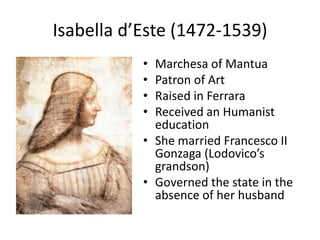
Isabella d’Este (1472-1539) 
• Marchesa of Mantua 
• Patron of Art 
• Raised in Ferrara 
• Received an Humanist 
education 
• She married Francesco II 
Gonzaga (Lodovico’s 
grandson) 
• Governed the state in the 
absence of her husband
Mantegna, Parnassus, c.1497 
.
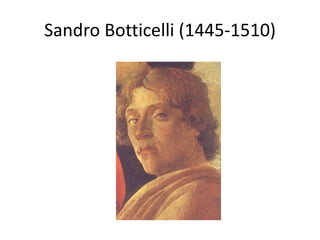
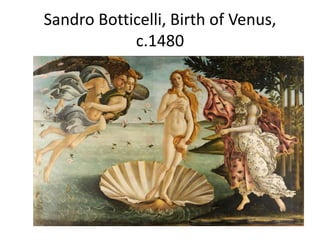
Sandro Botticelli (1445-1510)
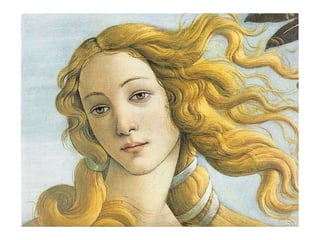
Sandro Botticelli, Birth of Venus, 
c.1480
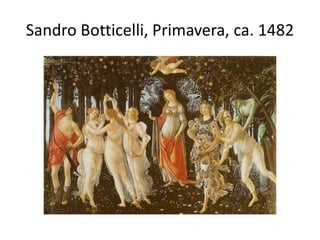
Sandro Botticelli, Primavera, ca. 1482
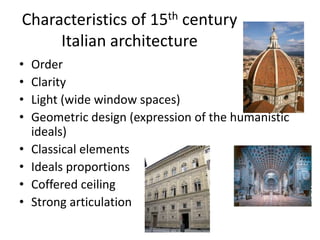
Characteristics of 15th century 
Italian architecture 
• Order 
• Clarity 
• Light (wide window spaces) 
• Geometric design (expression of the humanistic 
ideals) 
• Classical elements 
• Ideals proportions 
• Coffered ceiling 
• Strong articulation
Main architects 
• Filippo Brunelleschi 
• Michelozzo 
• Leon Battista Alberti
Characteristics of 15th century 
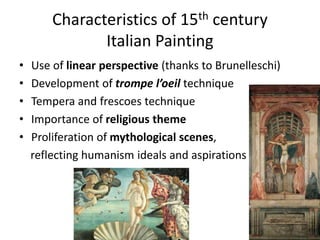
Italian Painting 
• Use of linear perspective (thanks to Brunelleschi) 
• Development of trompe l’oeil technique 
• Tempera and frescoes technique 
• Importance of religious theme 
• Proliferation of mythological scenes, 
reflecting humanism ideals and aspirations
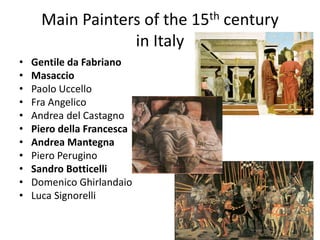
Main Painters of the 15th century 
in Italy 
• Gentile da Fabriano 
• Masaccio 
• Paolo Uccello 
• Fra Angelico 
• Andrea del Castagno 
• Piero della Francesca 
• Andrea Mantegna 
• Piero Perugino 
• Sandro Botticelli 
• Domenico Ghirlandaio 
• Luca Signorelli
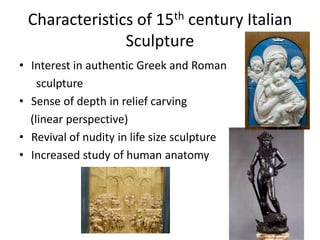
Characteristics of 15th century Italian 
Sculpture 
• Interest in authentic Greek and Roman 
sculpture 
• Sense of depth in relief carving 
(linear perspective) 
• Revival of nudity in life size sculpture 
• Increased study of human anatomy
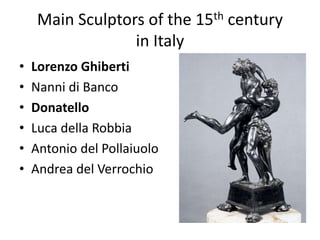
Main Sculptors of the 15th century 
in Italy 
• Lorenzo Ghiberti 
• Nanni di Banco 
• Donatello 
• Luca della Robbia 
• Antonio del Pollaiuolo 
• Andrea del Verrochio
Other Important works
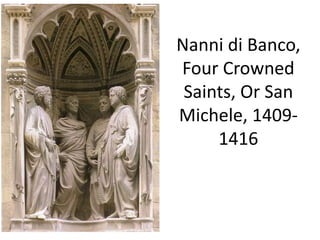
Nanni di Banco, 
Four Crowned 
Saints, Or San 
Michele, 1409- 
1416
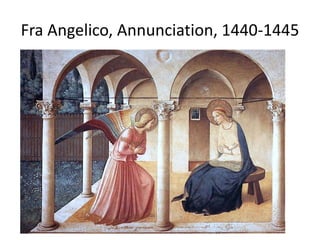
Fra Angelico, Annunciation, 1440-1445
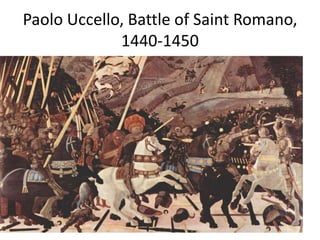
Paolo Uccello, Battle of Saint Romano, 
1440-1450
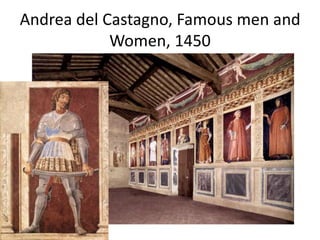
Andrea del Castagno, Famous men and 
Women, 1450
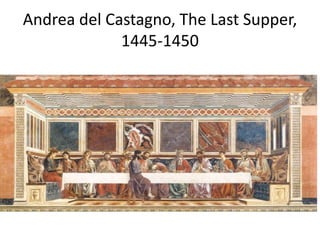
Andrea del Castagno, The Last Supper, 
1445-1450
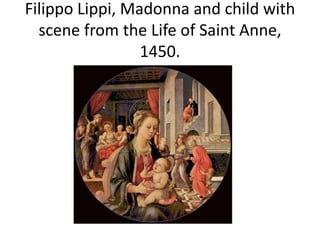
Filippo Lippi, Madonna and child with 
scene from the Life of Saint Anne, 
1450.
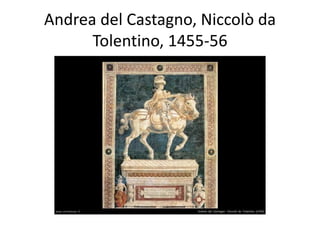
Andrea del Castagno, Niccolò da 
Tolentino, 1455-56
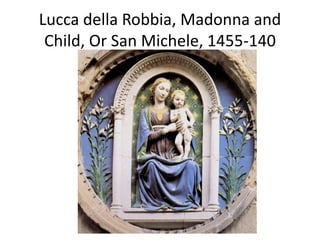
Lucca della Robbia, Madonna and 
Child, Or San Michele, 1455-140
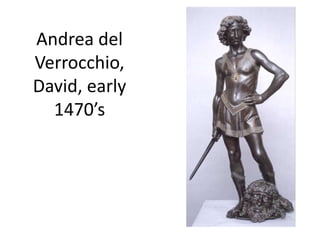
Andrea del 
Verrocchio, 
David, early 
1470’s
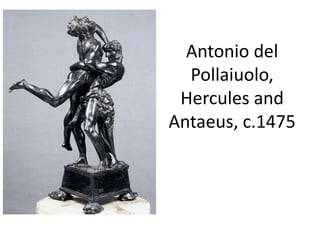
Antonio del 
Pollaiuolo, 
Hercules and 
Antaeus, c.1475
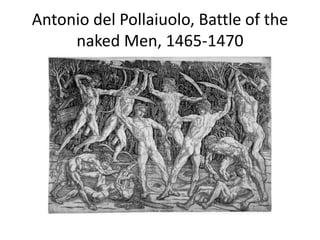
Antonio del Pollaiuolo, Battle of the 
naked Men, 1465-1470
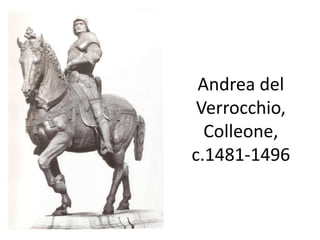
Andrea del 
Verrocchio, 
Colleone, 
c.1481-1496
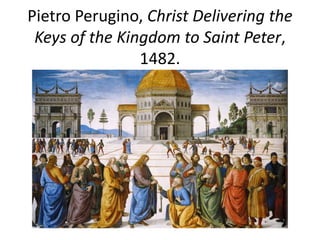
Pietro Perugino, Christ Delivering the 
Keys of the Kingdom to Saint Peter, 
1482.
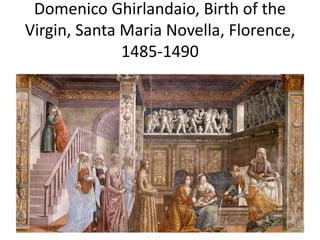
Domenico Ghirlandaio, Birth of the 
Virgin, Santa Maria Novella, Florence, 
1485-1490
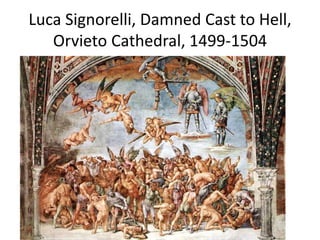
Luca Signorelli, Damned Cast to Hell, 
Orvieto Cathedral, 1499-1504

lhm

Editor's Notes

  • #3 Different states_ some republican other more authoritarian Each prince want to compete in the arts
  • #5 Born in Arezzo Father of humanism Re<discover the antic texts
  • #7 Interest for Plato Consequence for arts
  • #8 For the east door Gilded bronze representing scene of Old and new testament 7 contestants
  • #9 Now in the Bargello museum Ghiberti, less expensive and more graceful Brunelleschi more monumental but more expensive Narrow but convincing landscape Imply perspective Foreshortening Those panels never used because the theme has changed
  • #10 Direct and forceful Energetic
  • #11 Direct and forceful Energetic
  • #12 1st truly Renaissance work Lost wax method not used since Antiquity
  • #15 Brunelleschi died in 1446 Drums 42.06 m. Impossible to copy pantheon or to use a wooden scaffolding
  • #17 Slighlty pointed
  • #18 By silk guilt for orphans 1st true Renaissance building
  • #19 By silk guilt for orphans 1st true Renaissance building Based on square and cube Simple decoration: capital and tondos (by Andrea della Robbia)
  • #20 Simplicty of the Early Christian basilica Pietra serena Arcade with Corinthian capital
  • #21 Square repeated Human scale
  • #22 Natural light Vs Gothic church Coffered ceiling vs vaulted ceiling
  • #23 Duccio, Giotto Oblique view
  • #32 Real illusion of a three-dimensional space
  • #38 2nd set after the North door: Only 10 pannels 8 scenes – Old Testament // New testament // contemporary event Cf. Door of in Bernward’s St Michael of Hildesheim (1015) // Santa Sabina (5th)
  • #39 New ideas about mathematical perspective and inclusion of landscapes 2 technics: Linear perspective and figures in lower releif in the back
  • #40 New ideas about mathematical perspective and inclusion of landscapes 2 technics: Linear perspective and figures in lower releif in the back
  • #42 Esau and Jacob Father Isaac
  • #44 Assimilated Giotto’s lesson Monumental style Most powerful and innovative painter of his generation
  • #45 Open the wall Strong architectural setting
  • #47 Importance of the piramidal composition
  • #51 Important families have private chapel
  • #53 Light from light (window) Massive drapery Clearly defined his light sources so that shadows were logical and realistic More important moment : conflict between Jesus and Peter The scenes are united through one vanishing point Importance of the landsacpe
  • #54 Light from light (window) Massive drapery More important moment : conflict between Jesus and Peter The scenes are united through one vanishing point
  • #55 Most powerful nude since antiquity Intense expressions Bleak background : desolation outside the Garden of Eden Foreshortened angel
  • #57 Gold background
  • #58 Fancidressed / courtly figures Gold Reflects the wealth of the Strozzi family Exotic and ornemental reflect the private menageries of Renaissance prince Not linear perspective Strong forshortening
  • #61 Building belong to corporations Originallt – loggia – close to turn it into a chapel Upper floor –granary in case of famine Every corporation have his saint
  • #62 Original at the 2nd floor Revolutionary method of rendering organic form and drapery that distinguishes the Renaissance from the MA COMPLETELY DETACHED FROM archi St. Mark's face is highly individualized with a lot of detail Knee Contrapposto Fluted colomn
  • #63 Exagerated contrapposto Stone from his sling Complacency for having killed goliath, nonchalance Shepherd’s hat, boots vs Goliath’s helmet Sword vs stone – military vs culture Laurel crown Symbol of Florence’s resistance against enemies and tyranny (Duke of Milan) Not for private view – for private for Medici
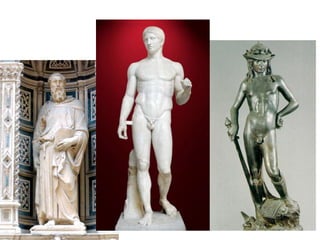
  • #64 Polykleitos Relaxed pose 1430-1440 Many orginal Greeks in Florence Expression
  • #65 Venitian general Paid by the family with Venise approval Sense of power Roman armour with mythological scene
  • #68 Gilded hair – spirituality Face shows the torture of badly led life, ravages of time on her body Inner prayer expresses a world of spirituality Eyes focused on an inner reality Hair cover her body / she wiped Christ’s feet with her hair
  • #71 For rich merchand Giovanni Ruccelai 2nd and 3rd story with round arches subdivied in 2 smaller Capital followed the order of the Colosseum (second – invention) Oppostin: arches / pilaster Coat of arms
  • #73 Seems lighter when he goes up Roman Arches at the bottom used to suppor shops and businesses Strong cornice on the top
  • #74 Alberti died in 1472 Size of the façade dictated by the small scale of the piazza in front of the church Identical proportions of width and height of the façade
  • #75 First Roman triumphal arch in Christian architecture Giant pilasters flank arcg and support pediment Canopy – shield the west window of the nave from sunlight
  • #76 No aisles but barrel vaulted chapels
  • #81 Flemish painter at the Court of Urbino Landcape Connected with the landscape through light
  • #82 San Sepolcro Pale color, flat back ground Man in the center Geometrical shapes
  • #83 San Sepolcro Pale color, flat back ground Man in the center Geometrical shapes
  • #86 New perspective techniques to create an illusionistic environment
  • #87 Member of the family Decorative motifs Fire place // balcony Curtain over Lodocico’s head and pilaster
  • #89 Danger for the observed and the observer Difficult to identify the border between reality and illusion Possible only with invention of perspective
  • #90 Isabella commissioned 7 large paintings for her studiolo about the loves of the Gods She personally supervised the content and arrangement
  • #92 Mars and Venus contrast with Vulcan Apollo, Mercury and 9 muses Mont Heriklon (retreat for the Gods as the studiolo for Isabella)
  • #94 Tempera on panel Zephyr and Chloris (nymph) Floating figures Landscape flat and unrealistic
  • #106 National Gallery
  • #107 Villa Carducci at Legnaia
  • #108 Sant’Appolonia, Florence
  • #110 Florence Cathedral
  • #111 Glazed terra cotta
  • #112 Bargello
  • #113 Bargello
  • #115 Venise
  • #116 Sistine chapel